

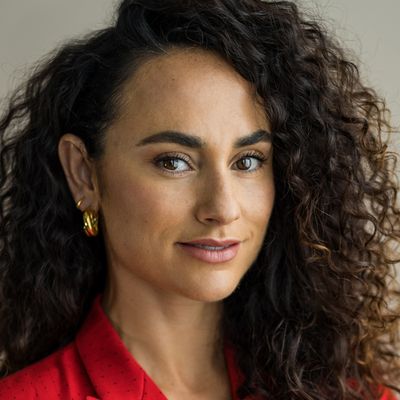
Sophie reflects on her remarkable journey from a passionate young dancer in the UK to a celebrated triple-threat performer on London’s West End and New York’s Broadway. She recounts her early dedication to dance, including her practice sessions in a local church hall and self-recorded rehearsals for critique... Read More
From the show: The Theatre Podcast with Alan Seales
Guests
Featured Shows
About
Sophie reflects on her remarkable journey from a passionate young dancer in the UK to a celebrated triple-threat performer on London’s West End and New York’s Broadway. She recounts her early dedication to dance, including her practice sessions in a local church hall and self-recorded rehearsals for critique. This unwavering commitment laid the foundation for her illustrious career, which began in the West End and culminated in her Broadway debut.
Sophie provides an insightful look into her audition process for “Moulin Rouge!” conducted via Zoom during the pandemic. She shares how she impressed director Alex Timbers with her fresh and dynamic interpretation of the role of Nini. Additionally, she discusses her transition into television and film, highlighting her significant milestone of securing a non-musical acting role in the UK soap opera “Casualty,” which demonstrated her versatility beyond dance and singing.
Sophie also delves into the camaraderie of performing in productions like “Moulin Rouge!” where the cast becomes a close-knit second family. She contrasts her experiences working in the UK and the US, addressing the challenges of accessibility and financial concerns faced by performers. With her deep passion for the craft, Sophie offers valuable advice to aspiring performers: to push beyond their comfort zones and maintain a balanced life that includes both professional growth and personal enjoyment.
Sophie Carmen-Jones has appeared in several West End productions and UK tours, including “Moulin Rouge!”, “Jersey Boys”, “Wicked”, “We Will Rock You”, and “Chicago”. Her film and TV credits include the live-action films of “The Little Mermaid”, “Cats”, “Aladdin”, and “Beauty and the Beast”, and she recently made her Broadway debut in the Broadway production of “Moulin Rouge!” as Nini.
Connect with Sophie:
- Instagram: @sophiecarmenjones
Connect with The Theatre Podcast:
- Support the podcast on Patreon: Patreon.com/TheTheatrePodcast
- YouTube: YouTube.com/TheTheatrePodcast
- Threads, Twitter & Instagram: @theatre_podcast
- TikTok: @thetheatrepodcast
- Facebook.com/OfficialTheatrePodcast
- TheTheatrePodcast.com
- My personal Instagram: @alanseales
Transcript
This transcript was automatically generated and might contain errors.
[0:00] Sophie Carmen-Jones: Hi, I'm Sophie Carmen-Jones, and you are listening to The Theatre Podcast with Alan Seales.
[0:12] Alan Seales: Hello, hello, hello, and welcome to an all-new episode of The Theatre Podcast. I'm your host, Alan Seales, and our guest today, Sophie Carmen-Jones, can currently be seen as Nini in Moulin Rouge! on Broadway, a role she originated in the West End production back when it opened in 2021. Interestingly enough, at least to me, they went through a normal-length rehearsal process as if they were originating a new show, even though the show already existed on Broadway. And this is because, as she puts it, the creative team was very intense on having the West End cast find their own versions of the characters without just being carbon copies of what we already saw on Broadway. Something else that she mentioned that I thought was very cool is that when she was a kid, she would make her mom record her dancing on an old-school video camera.
This was before cell phone cameras, of course. And that way she could watch herself back and critique herself, because she was rehearsing and just dancing with herself in a place without a mirror. She was obsessed with this, which of course led her to the amazing career she has today. But now it's time to do the dance with me. Nice segue, right? Find me on social media, leave a rating and a review if you're listening on Spotify or Apple, and head on over to my Patreon account to join and watch video versions of these interviews. And now, everyone, please enjoy this episode with Sophie Carmen-Jones.
[1:36] Alan Seales: Today's guest has appeared in many West End productions and U.K. tours, including Moulin Rouge!, Jersey Boys, Wicked, We Will Rock You, and Chicago. She has film and TV credits, including the live-action films of The Little Mermaid, Cats, Aladdin, and Beauty and the Beast. And she recently made her Broadway debut in the Broadway production of Moulin Rouge! as Nini, Sophie Carmen-Jones. Welcome to The Theatre Podcast.
[1:58] Sophie Carmen-Jones: Hello, thank you for having me.
[2:01] Alan Seales: And welcome to the, what is it, the fifth year celebration of Moulin Rouge! and everything? That's going on right now.
[2:06] Sophie Carmen-Jones: Yep, it was the fifth anniversary just a couple weeks ago.
[2:11] Alan Seales: Getting to one year is kind of a big deal these days, but especially now, and coming out of COVID, when everything is still slower than it was pre-COVID, just making it to five years, I think, is insane. So, I mean, but now you're here in the Broadway production where it all started, but you did the original cast of the U.K. production, too, of Moulin Rouge!, right?
[2:34] Sophie Carmen-Jones: I did, yes. And that was incredible. First of all, to be cast in an original show always feels super special and such an achievement. And then it was just, it was amazing. The cast were amazing because we had that longer rehearsal period. For anyone that doesn't know, if you do an original cast, the rehearsal period is longer because you're not just, like, slotting into something. You've got to tech it all together, all that stuff. So, you have a longer rehearsal period, which means you have longer to bond with everyone. And, you know, that rehearsal period where you go out for food after rehearsals all together. So, yeah, it was lovely and made some friends for life in that cast, which was amazing.
[3:15] Alan Seales: How was it different mounting an original cast of an existing show? Because you got slotted into the Broadway production, but doing the same... Well, it's not the same thing. I was going to say doing the same thing in the U.K., but it's not, right? So, you're saying you're originating a role. Are you trying to copy what was already done in Broadway, or is it still sort of like a different thing out there?
[3:37] Sophie Carmen-Jones: Well, they didn't actually show us any of the footage. Most of us, well, I don't think anyone had seen it on Broadway, because it was COVID times. And I don't think anyone in the cast had seen the show. And they didn't show us any of the footage. They purposely didn't want us to do carbon copies. And, you know, as an actor, you really don't want to be doing that. So, we weren't shown any footage. But obviously, the creatives had put the show on on Broadway. So, they were creating the same show, but with different actors. And they were wonderful of like giving us freedom and finding our own way. So, as much as the framework was exactly the same, and lots of the, you know, the choreography is exactly the same, and most of the blocking, but there was also freedom within that frame for us to, you know, find it ourselves and find our own way. And, you know, naturally, we're all such different and unique people. You naturally bring so much uniqueness and individuality to a role. And they really let us do that, which was wonderful.
[4:34] Alan Seales: That's really, that's really interesting. So, then you're originating a role, you're originating an existing role out there. So, then the replacements in the U.K., are they then still being told to bring in their own uniqueness? Or is it because you don't want to do a carbon copy?
[4:52] Sophie Carmen-Jones: Exactly. I think in most shows, most creative teams are celebratory of that and encourage everyone to put their own stamp on things and be yourself within the role, you know, bring it to life in your own way. But you do still have to stand on seven, or number eight, or zero, you know, like there's the numbers at the front of the stage that is our exact blocking, because there are lights that you have to be perfectly in or, you know, avoid a bit of set that's like coming off behind you at that point. So, there are, you know, I say within a very strict framework, especially in a show like ours, where there's so many technical aspects, you know, for your own safety, you better be standing on number two downstage, if you don't want to get hit by the diamond that's coming off.
[5:35] Alan Seales: Right. Is the stage size different between the two, like the U.K. and Broadway?
[5:39] Sophie Carmen-Jones: Yes, yes. The West End stage is much narrower. And the passerelles, which are the bits out in the front of the stage, you know, we have the bits that sort of jut out into the audience.
[5:52] Alan Seales: Yes.
[5:52] Sophie Carmen-Jones: They're all a bit skinnier. So yeah, there was a bit of, like coming to Broadway, I was like, oh, so much space. This is great.
[6:00] Alan Seales: I always feel bad for the people who are inside. What's it called? The passerelle?
[6:06] Sophie Carmen-Jones: They call them the can-can seats, those ones.
[6:09] Alan Seales: Yeah, they're inside the can-can seats, because they're always, like, straining their neck to look around and turn around. Like, you can see up people's nostrils, but they don't seem like the best seats, in my opinion.
[6:21] Sophie Carmen-Jones: Yes. Well, it depends what you're after, because some people love it, because it feels like you're in the show with us. And we do have a lot of personal interaction with those people then. So, if you're someone that likes to feel immersive, and that you're super, like, up close and personal to the cast, and our show does lend itself very well to that, that I think some people love it. But I totally get why some people are like, no, I'd rather sit at least five rows back.
[6:47] Alan Seales: Yeah, that's me. I want to see the full picture, which is also a pet peeve of mine when I'm watching pro shots, and it keeps cutting between close-ups, especially in big group numbers, because I'm like, just give me a static wide shot. Fine, you can pan it a little bit left to right or something. But the lack of ability to allow me to focus on something really drives me nuts. Anyway, I digress. We can get into pro shots all day long. But I was interested to dive into the film side, because basically every live-action adaptation of an animated film you've been in the last 10 years.
[7:29] Sophie Carmen-Jones: No, not by everyone. But yeah, I have done a few. I've been really fortunate that in London, well, they filmed a lot of those in London, and there's been some auditions that have popped up at times when I've been out of a show, so being able to go in for them, and they've been so fun. My first one was Beauty and the Beast, and I was just like, oh my gosh, I'm in a Disney movie. This is insane. The sets are incredible. I was just like, I want to do more of these, and then fortunately, I did. Everyone has been unique, different, and just such an experience that I've loved.
[8:04] Alan Seales: So I go back to the Cats movie. It was published unfinished, very famously, notoriously, infamously, whatever word you want to use. I can still go right now and see sneakers on the cats' feet. Have you ever gone back?
[8:23] Sophie Carmen-Jones: Little jazz shoes.
[8:24] Alan Seales: Yeah, jazz shoes.
[8:25] Sophie Carmen-Jones: In some cases, socks.
[8:26] Alan Seales: Yeah.
[8:27] Sophie Carmen-Jones: Yeah, some people are wearing trainers. Yeah, it's bad, isn't it?
[8:30] Alan Seales: So when you're actually in there filming this stuff, are all of you as dancers, I mean, has everybody got the green screen suits on with the tennis balls, like the famous things you see on the behind the scenes features and stuff?
[8:44] Sophie Carmen-Jones: Yes, we did in that one. We had these really clever suits, actually, that had to be calibrated. I don't know. I don't even know what, like, tech inside them that meant that they were live sort of capturing us, rather than, I think the tennis balls is done afterwards. They use as joints, points to capture your movement, whereas we're wearing suits that actually were somehow putting it into the computer straight away. I do not know about any tech. Clearly, I even had a problem logging on today. So yeah, anything tech-wise, not really clued up on, but they were advanced suits. Apparently, that was a very advanced thing that they were using.
[9:25] Alan Seales: Was it the thing where the camera comes around and it's recording their face at the same time? Because what I get into, I got into the tech of this. I'm going to nerd out for a second. I got into the tech of this.
[9:34] Sophie Carmen-Jones: I think those on Avatar, aren't they, those ones?
[9:36] Alan Seales: Yeah, yeah, yeah.
[9:37] Sophie Carmen-Jones: Yeah, no, we didn't have them.
[9:38] Alan Seales: Because, well, what James Cameron, I think he invented this or helped to invent this or something. But the camera on the front sends your face to the computer so that one of the biggest complaints about animated anything is that you lose the soul of the character because the eye movement is so unnatural. But so he fixed that by recording the actual eye movement, right, and the mouths and everything. But something that he was talking about that he was working with, and I don't remember if this was new with Avatar or if he adapted it or whatever, but what you were talking about was he basically, in the studio, you're in a big empty studio with a couple different reference points around you. And the DP, the director of photography or him or whoever, is with a camera pointed at you and it's rendering in real time.
So he's filming this imaginary world, seeing it in Video Village in real time as if it was a real set. Right? So it seems like this big combination, and you were saying the sets were incredible, so it sounds like there was a combination of real sets on top of motion capture, on top of everything else. This sounds like my dream to just watch this be made.
[10:57] Sophie Carmen-Jones: It was awesome. Talking of Avatar, you need to get one of our cast members on, Jen Stafford. She is in Avatar.
[11:04] Alan Seales: Really?
[11:05] Sophie Carmen-Jones: So yeah, she did all of that stuff. So you'll have to get her on this podcast and chat to her. It's super cool.
[11:10] Alan Seales: Oh, all right. Well, all right, Jen, reach out. Let's do this, Jen. Okay. So Sophie, back to you. Make it happen.
[11:15] Sophie Carmen-Jones: So little Sophie, in the UK, when did you get into performing? What age were you when you started singing, dancing? What came first?
[11:25] Sophie Carmen-Jones: I think I started dancing really, really young. And then when you're young and you try all the different hobbies, I quit and went to judo and swimming instead. And then I think I got back into it maybe when I was around like 10, maybe 9, 10. So still super young. And then just got obsessed with dance and then went to drama school on like a Sunday. So started sort of doing all the things in the arts. But I don't think I put it together like this is something I could do for real and like get paid for actually it to be my job until probably a lot later. But a turning point was definitely, I always say this, was seeing Chicago, the movie. And Catherine Zeta-Jones was Velma. And my mom told me that she was from where I'm from, Swansea in Wales. And I just thought that was the best thing ever. And if she can do it, then that means maybe I can do it. So I think that was a real turning point for me. Yeah.
[12:27] Alan Seales: Wow. Okay. So was it seeing the performance of Chicago, the movie? Or is it literally just like, oh, somebody from where I'm from got to that level, I can do it too?
[12:41] Sophie Carmen-Jones: Both. Well, I loved Chicago, the movie. I loved the show as well. I loved the movie. I thought, and Catherine Zeta-Jones in it is incredible. Oscar worthy, obviously. And I think obviously raving about it to my mom and saying how much I loved her and the whole thing and everything. And she was like, you do know that she's actually from where we are and told me her whole story. So I think it was both. Yeah. Married together.
[13:07] Alan Seales: So wait, so Velma, she was Velma in the movie, right?
[13:11] Sophie Carmen-Jones: Yeah. Correct.
[13:12] Alan Seales: And you were Velma in the UK tour.
[13:15] Sophie Carmen-Jones: Correct. Yes.
[13:17] Alan Seales: So you actually followed through with this childhood dream.
[13:22] Sophie Carmen-Jones: Well, kind of. I didn't get an Oscar for that UK tour performance, but you know, as close to it as I could probably get.
[13:29] Alan Seales: Do you remember that moment when you were like, holy crap, this is happening, I'm going to do this? I mean, I don't know what order Chicago came in for you in your career, but when you were given the offer of being Velma, did you remember that moment as a child when you were like, this is it?
[13:53] Sophie Carmen-Jones: Totally. Absolutely. I was like, this is actually crazy. And also, I was a baby. I was baby Velma. I was 24 when I got cast.
[14:04] Alan Seales: Oh, yeah.
[14:05] Sophie Carmen-Jones: It's crazy. So for that to happen at that time, you know, it's like whenever you get cast in something, there's always an element of luck there, I think, because, you know, to get to the point of being able to be cast isn't the lucky part. You've worked really hard. You've, you know, for years and years and years trained a million things have led up to this point for you to be able to even be in the room, to be of standard, to be considered, all of that stuff. But then luck comes into play because there's a million things that go into then casting a show, especially something like a UK tour. Whereas, you know, it depends who they've cast as their Roxy, which maybe they cast first because of whatever reasons or who they've cast as the other roles in the show, whether I fit with them. And so when all those final pieces and also maybe someone else was originally offered.
[14:52] Sophie Carmen-Jones: Second choice, you know, all these things that then fell into place for me to get that part at that time. I was like, wow, if manifesting is real, this is it because I had a life-size poster of Catherine Zeta-Jones and Thelma Kelly in my bedroom from the age of 11 to 16. So, manifest it. I must have done.
[15:16] Alan Seales: That's crazy. So, in the UK though, and I actually just kind of had a related conversation with David Harris from your cast who's playing the Duke.
[15:26] Sophie Carmen-Jones: Oh, I love David.
[15:28] Alan Seales: He's so amazing. So, he's from Australia, and we were getting into the differences culturally between the UK, the Aussie culture, and the US of how society sort of like does or does not put theatrical performers on a pedestal as celebrities, right? So, it's interesting to me that you said that you looked up to Catherine Zeta-Jones, and you mentioned the Oscar thing. That's TV, right? And that kind of relates to what David was telling me is that especially in Australia, you're sort of looked down on as a theatrical performer unless you get a Broadway contract, even though literally you could do Moulin Rouge in Australia or Moulin Rouge on Broadway, and it's the exact same show. It requires the same amount of talent, the same amount of drive, the same amount of luck. So, in the UK, for you, I've been told before that celebrity status doesn't really happen to West End performers like it does to Broadway performers. Is that right?
[16:32] Sophie Carmen-Jones: Yeah, I would definitely say that is right. I do think some people are anomalies and manage to, and rightfully so, you know, get a following and some sort of fame, if you want to call it that, from being in musicals and stuff, and people definitely, you know, have broken that mold. And especially, unfortunately, there is a bit of a difference in the UK between doing plays and musicals, or like depends where the musical was first set or what theatre it originated in, or there is a difference in how things are perceived, especially by industry people, not by the general public, because I feel like it's more of an industry opinion on different bodies of work and the people that are in them and, you know, how valued they are and taken seriously, I guess.
Unfortunately, it is a thing, but maybe not as much as Australia, and people are definitely, you know, we have the Olivier Awards. It's not like people aren't recognized for their incredible performances in musicals, and people have got recognition for their amazing roles in amazing musicals. I would say there hasn't been someone, you know, like Aaron Tveit, right, got crazy famous from doing musicals. I don't, I can't think of anyone that that's happened to in the UK that's got that level of fame and recognition from a show.
[18:07] Alan Seales: Don't go anywhere. We'll be right back after this break. Welcome back to the episode. In the last, what, five, six years or something, musical TV shows, musical movies have really started to like kind of bust out in the US, at least. Is that, does that happen in Britain at all? Or are there the same sort of things happening where it's, you know, we're going to make a musical adaptation of Doctor Who, which is one of my favorite shows, by the way.
[18:31] Sophie Carmen-Jones: Oh, so good. Not so much. I have to, yeah, I would say that musical theater just isn't as popular. Am I going to get absolute hate for that? I don't know. But it just like isn't as widely popular, I guess. And on TV and film, it just doesn't seem to work as well in the UK. Like, for instance, Glee, right, was massive. But in the UK, it only sort of had a cult following from like theater kids, I would say. Yet, we try to do our own version. I think it was called Britannia High, like 15 years ago, a friend of mine actually was in it. And it just didn't kick off. And I think there's been multiple attempts of Glee-type shows that just haven't, haven't kicked off. Like you had Fame, you know, that film, we just haven't, yeah, I just can't think of anything that's done amazingly as a musical.
[19:24] Sophie Carmen-Jones: It was just announced that The Greatest Showman is going to, is in the works for, to be a musical adaptation. So is that something culturally, like that's a TV musical, or sorry, a movie musical that now is going to be set on stage. So something like that, and I know we're deep diving on this, and we'll move on soon, I promise. But is that something that culturally people are clamoring for? Because in the US, people who don't even like musicals still want to see The Greatest Showman as a stage production.
[19:57] Sophie Carmen-Jones: Yes, yes. Now that would happen totally, because the film was such a huge success, people absolutely want to see the stage version. Just like Moulin Rouge. Moulin Rouge does so well in London. It's an absolute packed house every night. Because people are fans of the movie, they've heard how amazing the show is. They've heard what a great night out it is. That is definitely a massive commercial success. And I think that The Greatest Showman would be similar to that.
[20:31] Alan Seales: That's an interesting point. Massive commercial success. Okay, so this speaks to my theory that more producers need to pay for more pro shots to get more content to more people so that they know what they're getting and then want to go see it live. Mic drop. Okay, let's get theater accessible. That's a whole separate podcast. We need more accessibility and we need more availability. Okay, so then what about something like... I'm just thinking of all the announcements out of D23 the other day. So Hercules is going to open now first on the West End. That was just announced.
[21:01] Sophie Carmen-Jones: Yes, amazing. Love that.
[21:03] Alan Seales: So is that being an animated movie? Do you think that's going to do similarly well?
[21:08] Sophie Carmen-Jones: Oh, I hope so. Listen, every show that opens, I want to do well. I want it to be a massive success because we all know that crazy hard work that goes into creating a show and the passion, the love that will be behind every creative and performer and anyone employed by the show working on it. Yeah, like Lion King, look how long that's been running in London. I do think the Disney's do well because families love to take their kids to a show and hope that it entertains them for a few hours. They don't have to think about entertaining them. So yeah, I feel like Hercules will reach a wide audience, hopefully. Yeah, I think it will.
[21:52] Alan Seales: And going back to Chicago and even Moulin Rouge, right? Now that Phantom is closed, Chicago is now the longest running musical on Broadway that is currently still open. And I wonder if it would still have survived as long as it has if the movie hadn't been made because that did make it accessible, the subject matter. It made it widely accessible.
[22:19] Sophie Carmen-Jones: Totally. Right? Yeah. I wonder. And Moulin Rouge too. Yeah. So let's turn everything into a movie. There you go. I said it. Why not? Starring Sophie Carmen-Jones. There we go. Let's see. What is your favorite movie that you would love to see turned into a musical?
[22:39] Sophie Carmen-Jones: I'm trying to think of mine. I would say Back to the Future, but that just happened. That's so hard. Actually, I know what mine is because I worked on the movie. I loved everyone that was on that movie. So if that creative team could come together and do the musical version of Rocketman the movie, that would just be amazing.
[23:03] Alan Seales: Oh, yeah. I was going to bring up Rocketman too. So are you specifically going out looking for the movie musicals or general TV? Do people come to you, your management team, to get you into... Do they come and they say, we need somebody who can act and sing, but it's a TV show or a movie. It's not a theatrical production.
[23:30] Sophie Carmen-Jones: To be honest, I don't think I've ever sat down with the team and been like, let's make sure that this happens next. It's always been sort of a natural flow of, oh, this audition's come up, you know, and that's the one I get. So that's what I've done. Like, you know, there's loads of things that I would have loved to have got that didn't get. So that isn't the road I went down. But there was a period of time when I did say I didn't want to do another theatrical production for a while because I'd done, I think it was five back-to-back year contracts, and I just wanted a bit of freedom. I wanted... I'd never done... I'd done, like, snippets of TV, but I want, you know, heard of lots of things coming over to film and I wanted to get involved in some way.
So there was a period of time when I was like, don't put me up for the musical theatre stuff. And yeah, there were some things that I turned down. Looking back, I probably shouldn't have, but when I was younger, I was like, no, I'm not doing that. I've said I'm not doing it, but that's that. But now I've gotten older and I'd like to think a bit more, why is it I am much more open? And I thought, well, let's, you know, let's try it, see if it, because, you know, half the time you might not even get it anyway. So why not go in, explore, see if you like the material? But yeah, I think it's wonderful if people can be that, you know, in control and sort of say exactly what they want to do next and all these things.
But sometimes in our industry, I do think, you know, having like a sort of go with the flow attitude and just being open and, you know, available for a lot. There's so much brilliant work out there. There's so many things I still want to do and that I haven't done and people I dream to work with. So yeah, I just think I haven't been that strict as to what I would exactly I'll do next. It's like, let's see what comes in and hope for the best.
[25:14] Alan Seales: Well, you manifested Velma in Chicago. Did you see Nini coming on Moulin Rouge! on Broadway?
[25:25] Sophie Carmen-Jones: No, not at all. Really? No. Yeah, I just, yeah, I didn't. I think it was during lockdown, actually, it came in. And I'd just been working on the Little Mermaid movie. We stopped because of COVID and stuff. And yeah, I hadn't done a musical in a little while. And that audition process for me personally was long. It was really long. But during that time, I loved the material. I loved singing. In the audition, you did Bad Romance. I loved that I was singing a pop song. Loved the choreography. Sonia Taye's choreography is just insane. Obviously, meeting the team on Zoom was so weird. I'd never done that in an audition. That was always so weird. But yeah, through the audition process, I realized that I wanted to do it.
If you'd have asked me before, I wasn't actually 100% sure on doing the audition, but because it was all on Zoom and sending in a tape, I was like, oh, yeah, I might as well. What else am I doing in lockdown anyway? So happy that that worked out. My gosh, ended up being on Broadway.
[26:36] Alan Seales: I guess what's the biggest accomplishment that you say you had to overcome or meet to get to where you are? Because Nini is such a demanding role. Moulin Rouge, period, is a demanding show. Because you have to dance your ass off and you're singing. And then you have something like Nini, who's got that beautiful number every single show. For you, what was the most challenging to work through? The acting, the singing, or the dancing? Or all three, putting it all together?
[27:11] Sophie Carmen-Jones: Yeah, I guess so. I think, to be honest, in the audition process, I think the hardest thing for me was winning over the director.
[27:20] Alan Seales: Alex?
[27:20] Sophie Carmen-Jones: Yes, love Alex Timbers. But I think there was, yeah, I think, obviously, it's hard over Zoom and stuff. And I think I was coming across too friendly, not mean enough for Nini, was like the general vibe. Also, I don't look like anyone that had played it before. And when you're auditioning for a role that is iconic in someone's mind already, you'd cast, obviously, Robin was playing on Broadway, they'd already cast Australia. And I think I just looked super different. And maybe I wasn't quite nailing whatever it was. I guess in the casting process, that was the hardest thing for me to actually to win this role. But in my career, there's always been hurdles. Whenever I've wanted to maybe go off on a different direction, or when I first started wanting to do bits of TV and film as an actor, and not be always seen as the dancer and the singer too, it was really hard just being, you know, getting my first ever role on TV was for Casualty, a soap that we have back in the UK.
And that, for me, was like the most massive, biggest achievement, because I finally was employed as purely an actor. I didn't have to sing, I didn't have to dance. They didn't even know that I could probably do that stuff. You know, it was just turning up, do the role, play the part. And yeah, that was a massive moment for me. And then, yeah, it was the snowball of then doing more TV stuff. Because then, you know, once you do one thing, it does open doors for other things.
[29:06] Alan Seales: That's always the hardest thing is you get past that first, it's not even a speed bump, it's a wall with spikes and fire that you have to crawl over.
[29:11] Sophie Carmen-Jones: Sometimes it can be, yeah.
[29:12] Alan Seales: Yeah. So once you get past there, you know, I mean, it proves that you can do something, and people want to go with something that's proven. So, I mean, I want to go back and rewind again. Like you said, you got into performing again when you were around 10, and didn't know at the time you could do it professionally until you saw Catherine Zeta-Jones and etc, etc. But at that time, like, to be where you are now as a triple threat, you have to start with something. So where did you dive in at that point? Because did you want dance? Dance was the first thing?
[29:40] Sophie Carmen-Jones: Dance. I was obsessed with dancing. Literally obsessed.
[29:45] Sophie Carmen-Jones: What is it about dance that got you like that? I mean like my kids want to be on their, be on freaking YouTube all day with that level of passion. They don't want to dance. I don't know. When you have a passion and something that you've become obsessed with, I don't think there's any explaining it. It's just, it's the only thing you think of. It's all you want to do. And I still feel the same now, but it's now a broader thing of everything, the dancing, the thing, the acting. I just, I love it. I love telling stories and entertaining audiences and taking people on a journey and being part of a company of storytellers that do that. I just, there's nothing else I want to do. It's, it's not even a conscious thing.
It's just, I just love it. There's, there's just nothing else out there that I want to be a part of. It's just, yeah, at the moment anyway, who knows, you know, things, things change. And I've had so many friends that have loved it for a period and then moved away into something else and it's happened naturally. And right now it's, it's, I just love it.
[31:10] Alan Seales: Well, make sure you throw your hat in the ring for Meg and Hercules. You never know.
[31:14] Sophie Carmen-Jones: Right, right, right. You never know.
[31:15] Alan Seales: No, it's, it's interesting. Are you, would you call yourself an introvert or an extrovert?
[31:21] Sophie Carmen-Jones: Probably an extrovert. All my mates would definitely say extrovert.
[31:25] Alan Seales: Because it's, it's strange. The reason I ask is because, I mean, I was going to say extrovert, but when you're having one-on-one conversations, especially virtually, we're not in the same room physically, that it's easy for introverts to feel more comfortable and, and appear.
[31:38] Sophie Carmen-Jones: I am an extrovert. I need people. I need physical touch. I need to be, to feel that energy. And I, and I get it. Being on stage and feeling the audience and, and giving them the emotion and taking them on this journey. And so I was, I was just asking if you were an introvert or an extrovert, because I think people get into theater. People are attracted to dancing, to singing, to acting for different reasons, depending on what side of that personality spectrum you come from. And so for you now, as an, as an extra, as an extrovert, then are you getting your dopamine hits, your serotonin releases, you know, like chemically? I know you don't know chemically inside your own head, but like, is, is it, you could step on stage and stand there in the light and feel happy? Or do you have to be, do you have to be singing? Do you have to be in a scene with someone?
[32:26] Sophie Carmen-Jones: Gosh, I mean, yeah. I love a rehearsal, so I don't think I could just go out there and wing it. But yeah, it's, there's something about, you know, playing a role, putting on a wig, being in costume that just, I love it. That sort of, maybe it's an escapism feeling of like, from reality, not that, you know, I need that escapism from reality, but I don't know. Just it's, it's a feeling that I've just always loved performing and yeah, especially, I think I do love being around people. So I do love being in a cast and working with a company that they end up becoming like your family. Like, I really love that. And that is something I did miss when I wasn't doing shows for a period. You know, when you do hop on these TV shows or these, these films as, you know, as an actor or a dancer, you're often on it for a short period of time, unless you're, you know, part of the core team or, you know, one of the main characters.
So you don't have that same feeling of being part of the family when you just pop in for a few days. But whereas, you know, on a theatrical production you do, and I've loved being back in a show and having that second family. And yeah, it is a wonderful feeling.
[33:32] Alan Seales: A second family. Well, it's a second and a third and a fourth because every show you're in, you're, you're creating that familial element. And it's, it's fun to me to think about how, like when swings understudies and standbys, when everyone kind of goes in and off that you're, you're able to still connect with these different people in, you know, in completely different ways, but it's the same. And I know that makes not a lot of sense the way I just described it. But, you know, when, when you're on, there's a different Christian, when there's a different Satine, you know, you're getting a different energy. So are you...
[34:12] Sophie Carmen-Jones: Totally.
[34:13] Alan Seales: For you, is it, do you like that? Or do you want the same? Is it, you know, are you a creature of habit or you're like, I'm going to play with this?
[34:20] Sophie Carmen-Jones: No, I love, yes. I absolutely love to, you know, have different energies on the stage and, you know, it's, it's brilliant when we get new cast members, they bring a fresh energy and a fresh take on things. It's awesome. It's absolutely what it's about. Yeah. It's, it's wonderful. And it is amazing that people step out there. They haven't, you know, we have understudies that might not have played a role for like a month, two months, three months, if not more. And then they step on, like they've been doing it a million times. It's incredible. And yeah, you absolutely get out there and just play with whatever they're bringing. And yeah, it's, it's part of the excitement, especially when you've been in a show for a long time, like that is the stuff that you crave and bounce off and keeps you fresh and still exciting and live and real.
[35:05] Alan Seales: Don't go anywhere. We'll be right back after this break.
[35:08] Alan Seales: Welcome back to the episode. So are you auditioning for more out here in the US or still back in the UK? Like, do you want to stay here on Broadway?
[35:13] Sophie Carmen-Jones: Broadway? I'm so in a space of go with the flow, see what happens. I have a manager here. I have, I have an agent here. I have an agent at home. So we'll see. We'll see what comes in. Like, I'm finishing my, my contract is up in end of January for Moulin Rouge. So we'll see. We'll see what happens. And yeah, stay open to any opportunity that comes my way.
[35:40] Alan Seales: That's a good time for a contract to end. Because like, after the holidays, the second big wave of shows starts to open here and on, on Broadway, you know, leading up to the, the end of Tony season. So, so yeah, I think, I think you'll find, I think you'll stay here. I'm predicting it. I'm putting it out there.
[36:00] Sophie Carmen-Jones: We'll see. I do want to go on holiday.
[36:02] Alan Seales: We'll see. I do want to go on holiday for a bit, maybe for a month.
[36:07] Sophie Carmen-Jones: Yeah. Yeah.
[36:08] Sophie Carmen-Jones: I'd love a month long holiday in Bali or something. And then do, do something else.
[36:13] Alan Seales: Oh, wait, that reminds me, you said something that five years solid, you were on year long contracts. So like you were basically on the road for five years straight.
[36:22] Sophie Carmen-Jones: Not on the road. Four of them were at the West End, pretty much back to back, which was crazy.
[36:28] Alan Seales: Wow.
[36:28] Sophie Carmen-Jones: Yeah, my first, my first five years out of college, actually, were like, pretty much back to back.
[36:33] Alan Seales: Huh. Huh. And was-
[36:35] Sophie Carmen-Jones: Yeah.
[36:35] Alan Seales: So the, the, it's still a grueling schedule. It's eight shows a week. And then, I mean, so are, are you, do you, how does it even work out? I don't know. Like, do you, do you move into London proper so you can be close to, to the shows? Like people move into Midtown here if they want to be real close, walking distance to their theaters?
[36:56] Sophie Carmen-Jones: Yeah, I don't think anyone's, I, I, that's a big difference between New York and London, actually, is a lot of people live real close to where the action is, you know, Midtown. Quite a few people do, whereas in London, that is unheard of.
[37:10] Alan Seales: Really?
[37:11] Sophie Carmen-Jones: Someone lives in Covent Garden, it's like, are you a member of the royal family? Like, how on earth are you affording to live in Covent Garden? I knew someone that lived in Soho, but it was because they, they didn't have like a living room and they turned that into a bedroom, you know, they made it work. But I do not know many people that live very central. We have zones in London, we say like zone one, zone two, zone three. Most people live zone two, maybe three, three, four is the norm probably. But yeah, there's, it's crazy people live. I mean, I did when I was here at first, my first 10 months, I lived a 10 minute walk to the theater. I was, I was living the dream. I'm not going to lie, it was great.
[37:51] Alan Seales: So this is fantastic. This goes back to the accessibility conversation. Okay, so you're out in the UK, ticket prices are less expensive. That means that you have to, you can't pay your actors as much, which means they can't afford to live in...
[38:06] Sophie Carmen-Jones: Wages are lower, definitely.
[38:07] Alan Seales: Yeah, you can't live in zone one, whatever the case is, right? So that's, that's really interesting. So it's a trade off. I mean, the business of show business is so messed up, you've got to pay your actors high and compensate them with high, or compensate that with high ticket prices, which means fewer people can see the show. Oh God. So it's a trade off. Would you rather have cheaper prices and actors that have to travel in farther or actors that can live right next to the theater with higher ticket prices and less accessibility?
[38:38] Sophie Carmen-Jones: Me personally, what would I prefer? Oh, that's awful. I think, I don't know. Because if it would, if it meant less jobs for actors, then I wouldn't want there to be less work out there for people. So I suppose it's an awful one to have to pick between. Can't everyone be happy? Can't we have both? Isn't there a way we can find a happy medium for everyone? I don't know. Can we give actors like 5% of the bar, what they make at the bar? I don't know. People love to drink in the UK. That'll top everyone's wages up a bit. I don't know. Let's try and find a way that makes everyone happy. I think Equity UK have come up with something great recently, which is like, I believe it's a 17% increase on the base rate over the next three years.
Maybe this came in last year, so it's probably already happening, which is great. It's a start. It's 17% on a wage that was probably quite a bit too low for quite some time anyway. And that's just for Band A theaters. It's a whole thing in the UK. It works very differently, but they're trying. And if anyone from the UK is into this and you are an actor, please join Equity because they're only stronger if we all join with them. And membership is quite low. It's much lower than here, let me tell you. Try and support Equity UK if you can. They do their best to try and help us.
[39:58] Alan Seales: Oh, wow. Wow, wow, wow. Yeah, that's really interesting. And a 17% increase is no joke. That's significant.
[40:05] Sophie Carmen-Jones: Yes, it is.
[40:05] Alan Seales: All right. So also significant and fun is this game we're about to play. So plot in 60 seconds, which is lots of fun. You give me a number here, one through 13. It corresponds to a list of popular shows, and then you have to give me the plot in 60 seconds. So I'm going-
[40:26] Sophie Carmen-Jones: Oh, I'm going to be terrible at this.
[40:28] Alan Seales: That's what everybody says.
[40:29] Sophie Carmen-Jones: Oh, no.
[40:30] Alan Seales: You'll be fine. So 60 seconds up on your screen.
[40:33] Sophie Carmen-Jones: Oh, gosh.
[40:35] Alan Seales: All right. So give me a number one through 13.
[40:37] Sophie Carmen-Jones: Seven.
[40:37] Alan Seales: One, two, three, four, five, six, seven. The Sound of Music. Go.
[40:42] Sophie Carmen-Jones: 60 seconds remaining. Oh, my gosh. The Sound of Music. Okay. Is it a nun? No. Is it even a nun? No. Someone looks after a load of- Oh, no. I saw this. I saw my friend in the one in Regis Park. 45 seconds remaining. I'm terrible at this, Kate. There is a nanny looking after loads of children, and then I think the dad comes back from war or something like that. They fall in love, and they sing The Hills Are Alive on the top of a hill.
[41:12] Alan Seales: That sounds great.
[41:14] Sophie Carmen-Jones: And I did that in 30 seconds. That's all you're getting. That is The Sound of Music, isn't it? Do they fall in love at the end?
[41:20] Alan Seales: Yeah.
[41:20] Sophie Carmen-Jones: Everyone's really happy.
[41:21] Alan Seales: Yeah, yeah, yeah, yeah.
[41:22] Sophie Carmen-Jones: And all the kids are happy, too. They've all learned the alphabet through a song or how to sing through Do A Deer, A Female Deer.
[41:28] Alan Seales: 15 seconds remaining.
[41:31] Sophie Carmen-Jones: Oh, I knew I'd be shocking at this. This is even worse than I expected.
[41:35] Alan Seales: That's right. We'll call it a day. I mean, so this is supposed to be like an elevator pitch to get me to go see the show, and I probably would not see that one, but there are some hills and some loves.
[41:48] Sophie Carmen-Jones: That's all I remember about it.
[41:49] Alan Seales: It's good. Okay. So the standard closing questions I wrap up now. In all the episodes, the first one just simply is what motivates you?
[41:57] Sophie Carmen-Jones: Gosh, what motivates me? To be honest, I just love what I do. I don't think I ever have to... It doesn't take much motivation for me to... Every opportunity that comes my way, I have a drive that I just want it. So I don't have to consciously think about a motivating factor. I think part of it, I love to look after my mom. I like to be able to give back to her. So maybe part of my want for success is that I can look after her. And yeah, I just want to continue working and do what I love. So that's the drive to just keep doing what I love to do.
[42:39] Alan Seales: All right. What advice would you give to your younger self and younger people listening now starting out down a similar path?
[42:44] Sophie Carmen-Jones: I think to my younger self would just be keep stretching yourself and keep going to all the classes and stretching myself in the areas that I'm not necessarily as strong as rather than just go to the classes that you're good at. Go to the ones that you're not good at and enjoy. Live your life. Don't say no to the holidays and the fun nights out with your friends or the festivals. Live your life. And also, if you don't want to do that stuff, say no too. Just be happy.
[43:17] Alan Seales: I like that. All right. Last show. Last show. Last question. Hardest one. If you could only see one show for the rest of your life, but you can see it as many times as you want, what would you see?
[43:28] Sophie Carmen-Jones: Oh my gosh. One show for the rest of my life. One show.
[43:33] Alan Seales: One show.
[43:33] Sophie Carmen-Jones: Well, it's got to be Moulin Rouge, isn't it? It's a party. It's fun. I love it. It'll always be a massive part of my life. And yeah, Moulin Rouge forever and ever.
[43:43] Alan Seales: Awesome. All right. So where can we find you online on social media?
[43:47] Sophie Carmen-Jones: Yeah. I'm on Instagram at sophiecarmenjones. Or is it at sophiecarmenjones? No, I think it's sophiecarmenjones. Yeah.
[43:53] Alan Seales: We'll put it in the show notes. We'll put it in the show notes. And you can find me at theater underscore podcast on threads, Instagram, and TikTok on Facebook slash official theater podcast. Leave a rating and a review wherever you're listening. Thanks to Jukebox the Ghost for the intro and outro music and Sophie Carmen-Jones. Thank you so much for this conversation. I think, uh, you, you have your name, like, like Catherine Zeta Jones. So, and you're from the same place. So maybe you're related. You ever thought about that?
[44:21] Sophie Carmen-Jones: Gosh, wouldn't that be cool? Long lost relative of Catherine Zeta Jones is that's my claims of fame. There you go. That's it. Thank you so much. It's been so great getting to know you.
[44:29] Sophie Carmen-Jones: Thank you. You too. Thank you for having me.
[44:34] Alan Seales: Let's make the world a little colorful.
© Broadway Podcast Network, All Rights Reserved