

Aurin Squire’s journey is a testament to the power of embracing unexpected opportunities. Originally on the path to journalism, a paperwork mix-up in college led him into the world of film and theater. That detour launched him into a multi-faceted career as a writer, producer, and playwright... Read More
From the show: The Theatre Podcast with Alan Seales
Guests
Featured Shows

About
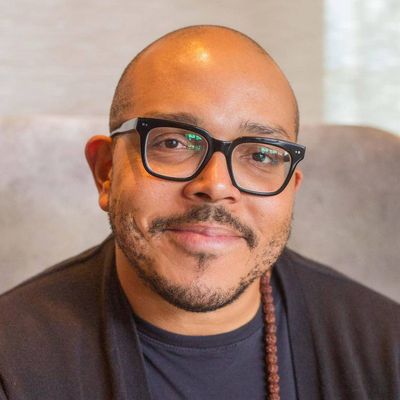
Aurin Squire’s journey is a testament to the power of embracing unexpected opportunities. Originally on the path to journalism, a paperwork mix-up in college led him into the world of film and theater. That detour launched him into a multi-faceted career as a writer, producer, and playwright. From producing hit TV shows like This Is Us, The Good Fight, and Evil, to contributing articles to outlets like the Chicago Tribune and ESPN, Aurin has honed his storytelling craft across various mediums. Now, he’s set to make his Broadway debut as the book writer of A Wonderful World, the new Louis Armstrong musical opening November 11 at Studio 54.
In this conversation, Aurin reflects on the blend of chaos and order in producing for TV versus theater, highlighting how each medium shapes his creative process. He discusses how his Miami upbringing, surrounded by diverse communities, deeply influenced his voice as a writer. Aurin also touches on his passion for telling complex stories through race, identity, and history. Whether he’s sharing how Armstrong’s four wives shaped the musical’s structure or offering advice on following uncomfortable opportunities, Aurin’s insights are both inspiring and practical.
Connect with Aurin:
- Instagram: @aurinsquire
Connect with The Theatre Podcast:
- Support the podcast on Patreon: Patreon.com/TheTheatrePodcast
- YouTube: YouTube.com/TheTheatrePodcast
- Threads, Twitter & Instagram: @theatre_podcast
- TikTok: @thetheatrepodcast
- Facebook.com/OfficialTheatrePodcast
- TheTheatrePodcast.com
- My personal Instagram: @alanseales
Transcript
This transcript was automatically generated and might contain errors.
[0:00] Aurin Squire: Hi, I'm Aurin Squire, and welcome to The Theatre Podcast with Alan Seales.
[0:12] Alan Seales: Hey, listeners, welcome back to The Theatre Podcast. I'm Alan Seales, and this is a brand new episode with Aurin Squire, the playwright for A Wonderful World, the Louis Armstrong musical. As someone who originally wanted to be a journalist, Aurin ultimately found himself writing and even producing some of the biggest shows on TV as of late, all while writing for the stage at the same time, and yes, actually still doing some journalism work. But all of this success was sort of by accident. Due to a paperwork error, he was assigned the wrong major when he showed up for college. A professor talked him out of changing back to what he wanted to be, and then after some careful thought and embracing a few chance opportunities, we find him where he is now.
It's actually a really cool story. But yes, as always, connect with me online, on Instagram, TikTok, all the places you know. Find the video version of this episode on my Patreon account. And now everyone, here is our episode with Aurin Squire.
[1:15] Alan Seales: Today's guest is a writer, producer, and reporter whose skills have shaped some of the biggest TV shows as of late, including This Is Us, The Good Fight, and Evil. In addition to his reporting that has appeared in places like the Chicago Tribune, Miami Herald, and ESPN, he has written many critically acclaimed plays, including Matthew Take's Manahatta and Obamaology, and is about to make his Broadway debut as the book writer for the upcoming production of A Wonderful World, the Louis Armstrong musical, which is slated to open on November 11th. Aurin Squire, welcome to The Theatre Podcast.
[1:46] Aurin Squire: Thank you for having me.
[1:50] Alan Seales: Dude, and you were joining me, you were telling me, from the first day of tech at Studio 54, so it's got to be an exciting day for you.
[1:56] Aurin Squire: Yes, this has been just surreal to go from Miami, then New Orleans, Chicago, and to be sitting in Studio 54, where I've seen so many plays here over the years, like that I can't even, I don't think I could count them now. Pretty much any play that's been in here, I've probably seen over the last several years.
[2:20] Alan Seales: Wait, wait, wait, so you've been, like, not just one or two episodes, but like whole seasons of these major shows that I just read off, and so you didn't have to be in LA at all during this time?
[2:26] Aurin Squire: No, the only show that was in LA was This Is Us. Everything else has been New York-based, and those three shows actually have a lot of playwrights on them, and Robert and Michelle King, who were showrunners on Braindead, Evil, and The Good Fight, are theater fans, so a lot of times people will talk about theater in the room or recommend actors based upon what they saw over the weekend or the previous night, so we are kind of the best of both worlds in New York City, being able to do TV and film and then see theater and then have that flow in between.
[3:06] Alan Seales: I didn't even think about that. That's so cool. Yeah, theater, Broadway is just basically a casting call for TV and film a lot of times.
[3:11] Aurin Squire: Yeah, there have been many actors cast in those shows who are in theater, who were first seen just by me or another producer or by the Kings just in a theater.
[3:17] Alan Seales: So, what does your role as producer on these shows entail? Because producer encompasses so much. You can be executive producer, associate producer, or just producer, co-producer, as I've learned in the Broadway field, there's multiple levels. So, like, what was your involvement in the TV side as a producer? Because you've got writing and producing skills for a couple of things.
[3:34] Aurin Squire: Well, technically, TV is a writer's driven medium. So, the different producer titles, if you start off as a staff writer, are just higher levels of being a writer, and then as you go from staff writer to story editor to executive story editor to co-producer, producer, supervising producer, co-executive producer, and executive producer are the different echelons of writers. And as you get higher and higher, you are given more producing responsibility than casting one year, where I had to keep track of casting, make recommendations for The Good Fight. I've done stuff on set for all of the things, as well as being on set when a director wants something and needs expertise in a particular thing, editing in the editing booth when certain scenes are being edited down, giving advice to editors or directors. So, do a little bit of everything. And the higher up you get, you are usually just given more responsibility.
[4:50] Alan Seales: So, where does showrunner fall into the echelon?
[4:54] Aurin Squire: Well, the showrunner is the highest, usually, a writer. They don't have to be a writer, but in TV, 90% of the time, they are. And they are the producer-producer. So, most of their work as a showrunner is the massive monster of production. And then they do a little bit of writing, or they do as much writing as they want. But usually, being a showrunner is so production and management-heavy with all the different departments and then managing pre-production, production, and then post-production. And sometimes, you're doing three or four different levels while the writing's going on. And so, your head's in these four different spaces.
[5:40] Alan Seales: That's actually incredible. Because when I was younger, I associated producing with just fundraising, bringing in the budget. And it seems like there's multiple levels of that as well. Just to say, if you threw money at a project and you want to get an investment, as an investment, you want to get some return out of it. Or if you're working on the budget, or you're organizing the people who are throwing the money at it, but you're not throwing money at it yourself. There's all these different tiers that you can get into. It just baffles me. And there's never been a straight answer I can get out of anybody, because it seems like it's always different.
[6:17] Aurin Squire: It's always different. But the showrunner is the person who gets the budget in for every episode at a certain level. So, the show's feasible. And they are the ones who come up and design the look of the show and have a book for each director who comes in. Because usually, it's multiple directors. It'd be like, this is the look of the show. These are the lenses we use. This is the style we film in. And then runs the meeting when they're giving the new director the download for their episode. Being like, this is what we typically do here. These are the actors that need help with this. These actually don't. This is how we want our episodes to come in. This is how we want them to look and feel. And lets people know.
And has to be able to convey the message, the tone, and the feeling of the show to every single department. So, the directors, you have to be able to talk about evil in this way. To the sound department, you have to costume. You have to explain, this is a look. To the writers in the writers room, you have to explain, this is what we're doing. And so, as a showrunner, you have to be, you're constantly explaining the mission to people at their level and in their department. And keeping it all clean so that it seems like it's one big unit all working together.
[7:36] Alan Seales: All right. So then, are you interested in that sort of thing? Have you done showrunning? Do you want to direct?
[7:45] Aurin Squire: Yeah, I would love to do showrunning and direct. There were a few projects at the end of last year which were on deck before CBS had a massive overhaul and was sold and all those other things where we were getting into that level. I was exec producer in waiting and we began talking about budgets and we need to have casting and other things before the start of this new year where CBS had this massive earthquake shift and is now in the process of being sold. But yes, I was, from watching these great showrunners I've worked with, prepared and excited to try my hand at fully designing a show, telling this is our budget every episode. This is how we have to film it. This is how we have to do it and create the entire look and fool people into making it look as expensive as possible for as little as possible.
[8:43] Alan Seales: Well, it sounds like Broadway too, for that matter. Yeah, you want to come in under budget and over expectations. I guess when you're translating, I guess your skillset, right? So you're writing, you're producing and we'll get to where you started from in a second because I'm so curious about this because I think it's going to inform the question I want to ask right now. But when you are pulling all the skillset into, I guess, well, TV is one medium. Theater, obviously, stage is another. So are you writing differently, pulling your skillsets into a certain kind of form? I feel like it's all sort of raw clay, right? And you have to mold it a certain way and set it over here for TV, but you can do it completely differently for theater. Is that true?
[9:32] Aurin Squire: Yeah, totally. And when I was at Juilliard 2013 to 2015 for playwriting, I was, for money, writing as a reporter for multiple outlets. And then I was writing and producing web videos and web content for different clients. So that was producing, producing. I would write the script and then I'd be like, all right, here's the budget, here are the departments, here's how much money you have, here's a contingency, here's our shooting schedule from A to B editing. And so that was like mini show running. But I was just doing that because I need money as a student because Juilliard's wonderful. Their grant doesn't quite cover the entire year. So plugging in different jobs and assignments. And I just discovered, oh, well, producing is just managing, being in charge and hiring people.
I mean, and it sounds simple, and in fact, isn't. If you find the right people, it makes you look simple. And spending a lot of time with budget, spending a lot of time with the people who hired me to be like, this is my budget, here's where it's being spent. And then delivering cuts to them was like a mini preview of TV when I was still only doing theater. And so I think for that, because it is more like television, it is like, what does a client or in television's case, the studio want? And then being like, here's the delivery of the scripts, going through script notes. Here's what we want to do on the production, going through that. In theater, it is more nebulous and fluid and more like the poetry of the stage. In television, it is more like you have hundreds of people on a crew who want to be very clear.
[11:19] Alan Seales: How long is this going to take to shoot, and what's the timeline? Where in theatre, sometimes projects go on in this open-ended development that could last for years, and people accept that, and it's fine, and it's beautiful, and it's wonderful, and you get all the curlicues and extra layers when you have that freedom. Do you prefer one method over the other from a writing perspective, right? Because I feel like Broadway, or just stage productions in general, like you said, you can be open and still come in and be like, we're going to change this. We're going to do it different tomorrow. And you don't get that luxury when you're recording on film in any recorded medium, right? But do you prefer one or the other? Because I can see both sides where you're like, it's TV, it's finite, it's done, you move on, and you write the next episode or the next movie. But then theatre is, like you said, it's always changing. It's always able to evolve.
[12:18] Aurin Squire: Yeah, like you said, both have extreme advantages and exercise different parts of the brain. And so I don't have a preference because television is that puzzle-making now on the fly. And depending upon how you shoot the TV show, you might be puzzle-making, planning in post-production and doing all that at once. If you have a show like Pachinko, where they take two and a half or three years to do a season, then you can really break it down, spend six months just writing everything and getting every single episode in the shape you want, and then spend six months just planning how you're going to shoot this and gathering the cast, spend another six months shooting the thing, and then spend another six months editing the thing and have that freedom in each section to sort of dive in.
But most of the shows I've been on have been with showrunners who are trained in traditional TV, which is more network. So you are writing, producing, editing, all overlapping at once. But I think because of streaming now, there are shows where people just complete all 10 episodes, stop, film all 10 episodes, stop, and edit all 10 episodes.
[13:33] Alan Seales: Yeah, that's something else too. Right, because on TV, you can have your story arc and so you have to film beginning to end of the whole season. But yeah, the old school sitcoms and whatnot, you could make last minute rewrites up until that, because sitcoms too, your three-camera setup was essentially a live stage performance. You're in front of an audience and you've got a couple takes, F that, right? And then you got to move on. Otherwise, you just run out of time. You got to send the audience home. And the beauty of that system is because it is controlled chaos, you come up with things that you never would have in a room if you're just writing 10 episodes straight. But if you're writing episode three while editing episode one and planning ahead to episode four, you begin making links because it's a living thing that is finite, but it's a living thing that's flowing in between, as opposed to doing everything at once on a block where you can't, it's harder to change.
So there's a lot of inspiration that happens in that controlled chaos and weaving different phases of a production together. And that is a little bit more like theater, except it's over several episodes where it's the weave of different things happening that are alive, like living a fiber.
[14:47] Aurin Squire: Yeah. And now you get to experience the joy. You're going into tech. So some of the things I suspect that you thought were going to work great or read great or hoped would read well in the space, now that you're in the space on the stage, getting all the electronics all around it, you're like, oh, we got to change that. That doesn't work.
[15:07] Alan Seales: All the time. No matter how much you plan it out when you get into the space or when you get into putting bodies and human beings in the space with lighting, you go, oh, this is redundant. We don't need this. We could take this out or we need to add something in to explain to people. But it was so clear in our heads until you get into reality.
[15:30] Alan Seales: Well, when did you, I guess when you were a kid, right? Did you start, did you grow up wanting to be involved with entertainment in general or was it like theater you wanted to be involved with? Because I would have thought, I don't know. Well, I guess I assumed with no actual basis behind this, maybe I'm projecting, that TV was like where you wanted to go. And then now that you've made that, you got that, checked it off and now you're going to Broadway. But it sounds like you were doing theater first, right? So where did you, when you were a kid, where'd you start?
[16:01] Aurin Squire: I wasn't doing any of that. Growing up in Miami, it was about sports. And then through sports, I was interested in sports radio and then journalism and radio journalism. So growing up and reading New Yorker, reading a lot of the John Seabrook books. So it was like journalism was the focus and the goal and the dream. We rarely watched movies growing up. In Miami, we almost never saw a play. I think when I was five or six years old, we saw Dream Girls at Miami Dade Community College because my parents wanted to see it. I had no idea what was going on. And then a few years later, when we were in second grade, the school took us to an afternoon performance of Midsummer Night's Dream in an empty theater by a touring company. And up until college, I think those were the only two plays I saw. Wow. So it was mostly reading.
[17:06] Alan Seales: So did you do undergrad for journalism? Did you leave school and go towards the reporting route?
[17:15] Aurin Squire: That was my goal and why I applied to Northwestern, because the journalism school, I was accepted. And then there was a computer error that put me in radio, TV, and film, and not TV journalism and radio journalism. So I went to go switch my major. It was no big deal, just go in and switch your major. And the head of the School of Speech, now School of Communication, talked me out of it. So I just went in first week of school to be like, hey, I'm here to change my major. I'm not supposed to be a film major. I'm supposed to be doing journalism. And she's like, let's talk about this for a second. What? And I was like, oh, okay. And she's like, you can take all the journalism classes you want, and you can work in all the journalism jobs you want, because journalism is so hard at Northwestern, people are always dropping out.
So she's like, you'll get into any journalism class. So why don't you stay here and learn film in the arts, and then do journalism over there, and then you could work as a journalist. So I'm all in favor of discounts and wholesale education. That is exactly the argument that would win me over. It's like, I get two things for the price of one, let's do it. So I got involved in the arts because of that, while I was working at Chicago Tribune first summer in their internet newsroom, Miami Herald next summer, and then writing for the school newspaper and working all four years in school at the Northwestern News Feed, which was my, in my field, I was interviewing professors for radio interviews, editing the interviews into soundbites, and then putting them up on AP and UPI wires, and doing the voiceovers, being like, today's story at Northwestern News Feed is about this subject.
The following is a five view reference tone, kilohertz, press the button so they can adjust the monitors. We're like, today, professor so-and-so, and I go through the story, and then I play the clip. And so journalists online could go to Northwestern News Feed, listen to the clips that we build, and then take those and put them into their stories on NPR, like they talk to the professor, when really it was students like me interviewing the professor and coming up with soundbites. So I did that all four years in school while working at newspapers and magazines, and then I was a film major.
[19:40] Alan Seales: Don't go anywhere. We'll be right back after this break. Welcome back to the episode.
[19:44] Aurin Squire: As a film major, we had to write our own scripts, and because all I do all day at the Northwestern News Feed is interview people audio-wise, and then verbatim transcribe every single um, like, and ah, so I can edit it out. And so you begin to notice the fingerprint in people's voices if all day you're taking professors who are stuttering and saying um, and you're like, you have to transcribe every single um, every single ellipses in order to delete it and lift it out, you begin just naturally following people's vocal patterns. So when we had to write scripts as a film major, I would just write like I would hear people talk, and then my professors will pull me aside and be like, these scripts sound really authentic.
It's like, yeah, because I interview people, and I hear people's voices all day. And like, well, why don't you continue pursuing the writing angle as well as audio. I also did audio, one of my specialties as a film major. So that's how the two sort of came together.
[21:01] Alan Seales: I am blown away by, like, in hindsight, it's like, it's a simple story. A little clerical error, and all of a sudden, I just got stuck with it, and now all of a sudden, it made my whole life what it is. That is fascinating and good on you for not, you know, leaning into journalism as a major, right? Like, you kept yourself open. Were your parents too? Was your family? Like, you know, film, that's a pretty shaky career. You need to go into something concrete like journalism. Not that that's all that much better.
[21:18] Aurin Squire: This was 20 years ago. Journalism was a whole lot more concrete. And that was what I told them. That was my plan. Hey, look, I'll get this extra education in arts. Then I'll graduate and become a reporter and an editor. So I graduated from Northwestern. I got a job at a local business magazine. I got a second job as a bureau chief for a real estate magazine. In Miami, I got a third job doing, filming a documentary about the Miami school system for an education consultant. And then as a fourth job, I was commissioned by the AFL-CIO union and AFSEMI union to write a play about AIDS in the black community. So out of school, I was able to work a little bit of TV, excuse me, a little bit of documentary filmmaking, a little bit of theater, and then primarily working at two magazines in Miami as a reporter or as an editor.
[22:13] Alan Seales: Wow. So the hard hitting documentary, Ace Ventura, Pet Detective, all about the Miami Dolphins. I'm sure that was good for you. The background that you have growing up in Miami, and I was reading a little bit about it, but I want to hear you tell the story because
[22:39] Aurin Squire: You are really well-known now for being able to blend or writing about blended communities of races and religions, and that's very apparent in This Is Us and the other scripts you've helped contribute to, and especially now Louis Armstrong, because again, a black man growing up in a very white-led industry. Your upbringing, what did that have to do with this conglomeration of race and religion in Miami? Well, I went to Highland Oaks Elementary and Middle School, which I think is relabeled Virginia Boone Elementary, who was our principal at the time in North Miami Beach. The population was probably 50% Jewish, 20% or 30% Latino, 10% or 15% Caribbean, 10% or 15% black, and a few white people. That was mostly growing up, a natural feel of things.
When I went to Chicago, that was the first time I was like, oh, this is mostly white people, and it's mostly white, black, and some Latinos. That was the first time I was like, oh, there's not 20 different races going on at the same time. That made me very aware. I didn't think my upbringing was that special until you start writing about your childhood or when you grow up, and people look at you like, oh, this is fascinating, because in northern cities, it's very much a black and white issue for the most part. Now, black, white, brown is the way people look at race. In Miami, it was not even a race. It was Cuban, Jewish, Dominican. It was like specific balkanized communities that form these 50 or 60 different neighborhoods that make up Miami.
There are points that are all intersecting as well as points that are separate. That was just natural or just like, oh, yeah, this is just the way it is. You don't realize the treasure of your childhood until you leave and go somewhere else. You begin describing it to people, and they go, oh, that's different from growing up in Buffalo, or that's different from growing up in Canada for me. Yeah. You mean like north, north. That's interesting. When did you know, as a kid, I guess you left, then you're going to college, you're going to Northwestern. Is that when you started to notice things were like your upbringing was a little bit different, or is it when you were starting to write, write down your thoughts, and you're getting the feedback from mentors and teachers?
[25:16] Aurin Squire: Yeah. When I was in high school, I was captain of the football team, wrestling team, and debate team. I was in the newspaper a lot, and I would talk to the local reporters. I got a job at the Hollandale Digest just to sit there and talk to the reporter. I got inspired and said, let me write an article before this is all over. Let me just write an article because I'm bored. The editor agreed. I wrote my article, and it got a lot of positive feedback from the community. The publisher brought me in, and I started writing articles and asking for a fee that I negotiated with the publisher, like, how about you pay me this amount, and I'll write this. That one paper spun out into two papers, the Digest, formerly the Hollandale Digest, then the Aventura Digest.
Then that spun out into three newspapers, the Pembroke Pines Times or Digest. I was writing for three different newspapers and then two online magazines at the time when I was in high school. That was what I did for money. Then I would take people's feedback, hate it, love it, and try to become a more interesting writer to keep people's attention because my money depended upon it. It wasn't an academic exercise. It was like, I need money, so I need to actually make these articles captivating and make people want to read them. I think that was a jumping off point. Then when I went to Northwestern, I was amazed at how, in comparison to Miami, how much more simplified people looked at the world when it's black-white as their primary mode of looking at politics and culture in America. When I began describing stuff, people were like, oh, that's when I got that response on that level.
[27:12] Aurin Squire: Interesting. Very cool. Then where did the interest in Louis Armstrong come in? Well, we were working on a play called Confessions of a Cocaine Cowboy based on Cocaine Cowboy. It's a documentary by Billy Corbin. He was co-writing it with me. This was 2019 in Miami. The artistic director of Miami New Drama, Michelle Hausman, introduced me to Christopher Renshaw, who lived down the street from the theater, like a block away. He was trying to write something about Louis Armstrong. He asked me if I knew anything about him. By coincidence, I had been the gig coordinator for New School for Jazz for almost eight or nine months because my friend had that job. He got hired for something out in L.A., so I took over as the gig coordinator for New School for Jazz.
While I was at that job, I got an unofficial education in jazz because I'm arranging gigs for students around the city and parties and having combinations of different quartets or trios that people want and what specialties they have. On a Secret Santa party before the holidays, I was gifted a copy of a Louis Armstrong biography. I just happened to be stopping by the party. I didn't submit anything to Secret Santa, so I just stopped by to get food, and they said, we have an extra gift. I opened up the gift, and it's a Louis Armstrong biography. I go home, read it, and I began looking up Louis Armstrong YouTube clips for the next four or five months while I'm at work. Just listening to him, watching the documentaries, not knowing anything that this is going to ripen into something later.
I'm just like, oh, this is interesting. Years and years later, I'm having a meeting in between rehearsals for Cocaine Cowboys, and Christopher Renshaw asked me, what do you know about Louis Armstrong? I was like, it's funny that you mentioned that. I actually worked at a jazz university and did a deep dive into Louis Armstrong because someone gave me his book. Then we started sharing, and that's how it began. This is 2019. In between the good fight and evil, I wrote the first draft. Then I thought, this would be nice to write something that my mom could go to and see because most of my theater stuff, it's difficult for her to sit through. Cocaine Cowboys opens with someone with a machine gun.
We got one of the only two existing machine guns that are used for stage. It begins with someone blasting a spray of machine gun, cuss word, cuss word, cuss word, drug deals, and all these other things, people getting killed. Usually, she sits watching my plays. I thought, oh, this would be great. She'll get to see something about Louis Armstrong and not have people dealing drugs and getting shot.
[30:23] Aurin Squire: Wow. All right. All right. 2019, then you write the first draft. Yeah. This has been going on 2024 now. 2019, we write the first draft. 2019 summer, we do a two or three week workshop. I was on the first season of Evil. I go to Evil, and then I go afterwards to the workshop in Midtown. I had a friend in Midtown, Lathe, who was my eyes and ears in the room, who would write stuff on a Google Doc that we would share, like questions, and I would answer them when I'd be in Evil, and then catch up with him in the evening. It was slated for Miami New Drama that March 2020 in the opening season. It was all ready to go. Then the quarantine shut everything down for 18 months. We had the first week of previews before things got shut down.
Then when the 18 months was over and theater resumed, that was the first thing Miami New Drama scheduled at the top of, I think it was end of 2021, beginning of 2022 is when it closed and opened up in December 2021. Then afterwards, Martian Entertainment came and saw it. Then we had out of town, we had a workshop, and then out of town last year in New Orleans and Chicago. So going back to the multiple iterations of things for a second, you said that it's very normal for theater to get this multiple iteration treatment. So when you're thinking about TV and film, I guess coming from the Titan schedule, the concrete deadlines that you have in that world, do you think that helped or hindered you writing for stage now? I mean, are you able to just formulate your thoughts much more concisely and put them on a page with needing fewer rewrites?
[32:09] Aurin Squire: For this and another play, I had a commission for a historical drama about Gullah Geechee culture in the first town of black free men in America called Mitchellville in South Carolina. And so I had a window in between Good Fight and Evil where I said, I have six weeks, we have to sit down and write this now. It just has to be written. I have to outline and write this. And yeah, other people are like, you're going to write two musicals? And I was like, it has to be done. There's no other, this has to be done. It's not going to be great, it's going to be good enough, and then we're going to workshop it. And so yeah, we wrote those or I wrote those two things and we turned them in and Michelle Hausman at Miami Drama was like, oh, okay, we can actually do this almost immediately.
And I was like, great, I got to go work. But I think being on a TV schedule helps create windows of time and understanding like this has to be done in this window or it does not get done. So there's no crying, there's no complaining. You just have to jump through the window and go full steam.
[33:13] Aurin Squire: And so this development time for Lewis Armstrong, for Wonderful World, do you have something straight after it that is like waiting just in the wings, so to speak, for you to finish and open Wonderful World and then you go back to TV or something? I have three or four other theater commissions for Audible and then another producer for a musical and then another commission with Miami New Drama there. And then I have some TV stuff I'm pitching. But if not, I at least have those three projects lined up as well as a fourth project that I finished. But this past year has been so rough with regional theater, they've delayed it until next season about the OJ trial.
[33:59] Aurin Squire: I was commissioned to write this. I was like, are you sure you want something about the O.J. trial in the middle of the quarantine? Like, yes. I was like, well, I got to make this funny. I got to do something that's funny and weird about this. So I wrote it out, and then we had a workshop of it. And they're like, this is funny. We want to do this, but we have no money this season to do something with six people. So the following season. So that would be a dream if this is up and I get the musical up that's slated for Broadway next season. The Audible Commission, we get that off Broadway. And then the two Miami projects for O.J. trial and this other project about democracy that'll be set off site in like a city hall area.
[34:39] Douglas Goldstein: Is the O.J. trial a musical comedy?
[34:43] Aurin Squire: No, it's Coen Brothers' heist of these losers who work at a gym in Miami who decide to steal a bunch of sports cards during the O.J. trial that are of value, including some O.J. cards. And so it is like, you know, it's dark comedy of these people trying to do a heist to take advantage of all the hype around O.J. Of course, in doing that, you have the argument about O.J., but I didn't want something that was just about the O.J. trial because I was like, Ryan Murphy already did that, and it's great. The two O.J. things I already love, so I can't do something that's about the O.J. trial on stage, but I can do something that's set in Miami at a gym with black, Latino and other people who are like, who slowly all become convinced like, yeah, maybe we should do this. This will be good money and it'll be easy money and how, you know, as heists go, things go awry in trying to get these cards. It's like a comedic version of American Buffalo.
[35:41] Alan Seales: Don't go anywhere. We'll be right back after this break.
[35:46] Alan Seales: Welcome back to the episode. Going back a second, I don't know if we ever dived in because you just mentioned, you know, you're talking about the O.J. trial, you're writing, you commissioned some, you were commissioned to write something else about democracy, like Obamology has got to have some sort of political and race implication. And let's see, Matthew takes Manahatta. Manahatta is the original Native American name for Manhattan. Like, obviously there's a thread to what you write. Why do you write that? There's a thread to what you write. Why do you hang on to this thread?
[36:13] Aurin Squire: Well, those are the things people hire me to write. I have many other plays that sit in my drawer that no one puts up. So this seems to be the thread that people are glomming on to. I have a lot of other plays. I mean, I wrote a play about opiate addiction in rural America, a fire season that was done at Seattle Public Theater. That was a commission and I was like, I can totally dive into this and take advantage of it and have fun. And characters are race neutral and it's just people, working class people in rural America dealing with opiate addiction. But I usually don't get those jobs or people don't want to put up those plays when I finish them. So it is a bit of typecasting and many, many other plays. But it seems to be the multicultural thing, which engages people more.
[37:06] Aurin Squire: I never thought about typecasting in terms of writers. Somebody said to me the other day, you're only as good as your last project, right? So you're always trying to find the next thing that's going to either continue down the path you want to go or take you in a different direction that you hope you can be just as good at. So yeah, it's one of those things where, I mean, I think hopefully fingers crossed, Wonderful World is going to get tons of critical acclaim on the national stage, international stage of Broadway, and then you can go out and have your pick of many other things. Fingers crossed that that'll open up some doors. I mean, when I was at school, when I was writing for the New Republican Talking Points memo, it was usually something to do with race or police brutality and George Floyd and Black Lives Matter.
I had other things I wanted to write about, but those were the articles that paid the bills. Those are articles that New Republicans were like, we will pay for an article about that. I was like, okay. It's like, do you want to learn about butterflies? They'd be like, no. I was like, okay. Do you want to learn about origins? They're like, we don't want that from you. And we probably don't want that ever in general, but I was like, okay. Fair, fair enough.
[38:23] Alan Seales: So then just one last question about Wonderful World, then what's something that you think people are going to come away from after watching a Wonderful World, they'll walk away thinking about Louis Armstrong. And I say Louis, most people say Louis because it was James Earl Igelhart who said that the real pronunciation is Louis and it just became this cultural thing to call him Louis. So don't come at me listeners. There's multiple ways to say it. But Louis Armstrong, after they see a Wonderful World, what's something that you think people are going to walk away and be like, oh crap, I didn't realize that or I never thought about it from that perspective.
[39:01] Aurin Squire: His life, his music and his journey covers the American century. We call the 20th century. It pretty much covers that from beginning all the way through and through the trajectory of jazz. He was someone who followed his joy and in the process of following his joy and doing what pleased him changed the world in a way that no other artist has and no other artist probably ever will. And that his life was also formed around his four different wives and four different chapters in his life. So this musical has four different wives, four different chapters that track New Orleans, the Northern migration of black people, escaping lynching from the KKK when Reconstruction ended and Jim Crow began, and the huge Northern migration of tens of millions of blacks leaving the South and going to Chicago, Detroit, and Milwaukee, second phase of jazz in Chicago, meets his second wife, up to the end of Prohibition and the Great Depression.
Then that smashed jazz and then you have Louis Armstrong go to Hollywood during the Great Depression doing movies, which is a third phase of a lot of black artists, Hollywood during the Great Depression up into the end of World War II. And then the fourth phase, post-World War II, were people settling back in major cities like New York and jazz settling back in New York City as the cultural capital. So you can track black migration of black art through Louis Armstrong and the migration of art and entertainment in this country in the 20th century through his trajectory and the four different wives he had embodied those cities. It embodied those eras and embodied those different types of jazz from New Orleans, funky, to tight, tuxedo, Chicago jazz, to Hollywood glamour. And then post-World War II, the deconstruction of jazz in Dizzy Gillespie and Miles Davis, as well as traditional jazz re-establishing itself.
[41:27] Alan Seales: That's fascinating. I cannot wait to see this. We need more original stories like this. This is great. It's so great. All right. So as we wrap up here, we're going to play a little game called Plot in 60 Seconds. And I have a list of 16 popular musicals. You give me a number one through 16. I'll give you the show that corresponds to, and you have to give me the real plot to that show in 60 seconds or less. Sixteen.
[41:53] Aurin Squire: That is six. Go.
[41:55] Alan Seales: Sixty seconds remaining.
[41:55] Aurin Squire: The six different wives of Henry VIII come together for a battle of who is the baddest, most awesome wife of Henry VIII. And by the end, they start to realize that they are more alike than different and decide to unite and sing together in a girl group that is about feminism and empowerment and how they do not need to all be related and find relation through a man to acknowledge each other's greatness as women.
[42:24] Alan Seales: Thirty seconds. I love it. I love it. All right. So the final three questions to wrap up the episode. First one simply is what motivates you?
[42:34] Aurin Squire: Kindness or wisdom. The two wings of things I study, either based upon kindness or wisdom.
[42:41] Alan Seales: All right. What advice would you give to your younger self and younger people listening now starting out down a similar path?
[42:47] Aurin Squire: Focus more on your voice and less on being obsessed with other people's career trajectory.
[42:54] Alan Seales: Voice, literal voice or narrative voice?
[42:57] Aurin Squire: Both.
[42:59] Alan Seales: Okay. All right. Last question. Hardest one. If you can only see one show for the rest of your life, but you can see it as many times as you want, what would you see?
[43:08] Aurin Squire: Oh, my. You're talking about a theater show?
[43:11] Alan Seales: Anything you want.
[43:13] Aurin Squire: Okay. Lion and Winter.
[43:17] Alan Seales: All right. That's a new one.
[43:18] Aurin Squire: Yeah. When I was in high school, they did that every day in dramatic interp, and I would watch them, teenagers, portray this couple, and it was captivating. I must have seen that movie a few dozen times, and I would find something new with Katharine Hepburn or these different people playing the three sons of Henry the Lionheart. It's highly underrated. I'm surprised no one's doing it and reviving it because it's such a good play.
[43:47] Alan Seales: Well, maybe you should. You should put it out there in the world.
[43:50] Aurin Squire: Yeah. Lion and Winter. Do it. Watch the movie, and then do the play.
[43:53] Alan Seales: There you go. All right. Where can we find you online on social media?
[43:57] Aurin Squire: It's just my first and last name, Oren Squire, at Instagram, Oren Squire, or Facebook.
[44:04] Alan Seales: And of course, check out the show notes. We'll have links to A Wonderful World because you've got to go see it.
[44:09] Aurin Squire: Yeah. It opens October 16th in previews, and then we officially open November 11th. But check us out in previews October 16th or on November 11th afterwards.
[44:20] Alan Seales: There we go. And I am on TikTok.
[44:22] Aurin Squire: Studio 54.
[44:24] Alan Seales: Studio 54. Yes. I'm on Instagram threads, TikTok, and Facebook. Leave a rating and a review where you're listening now. Thanks to Jukebox the Ghost for our theme music. And Aurin, thank you so much for this conversation. Your story is fascinating. You're just like, yeah, I'll take that chance. Yeah, I'll take that chance. Boom. Success. Instant.
[44:46] Aurin Squire: I am fortunate that people gave me the advice of taking the chance and doing something unusual and uncomfortable when I was younger. And so if someone gives me something that is exciting but uncomfortable, I will more than likely just do it.
[45:01] Alan Seales: I love that.
[45:02] Aurin Squire: And learn on the fly.
[45:03] Alan Seales: That's advice. That's advice people need to follow. Lean into being uncomfortable.
[45:08] Aurin Squire: Yeah.
[45:09] Alan Seales: Well, thank you so much.
[45:09] Aurin Squire: As an audience member and as an artist.
[45:11] Alan Seales: Thank you so much. This has been great.
[45:13] Aurin Squire: Thank you, Alan.
© Broadway Podcast Network, All Rights Reserved