

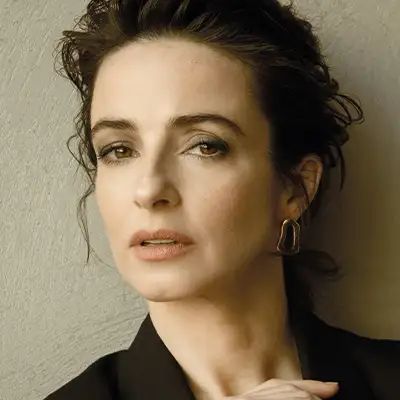
Laura Donnelly shares her powerful journey from her Belfast upbringing to becoming an acclaimed stage actress. In this episode, she delves into how Irish ballet first ignited her love for storytelling and how that passion evolved through drama school and a career full of emotionally rich roles... Read More
From the show: The Theatre Podcast with Alan Seales
Guests
Featured Shows
About
Laura Donnelly shares her powerful journey from her Belfast upbringing to becoming an acclaimed stage actress. In this episode, she delves into how Irish ballet first ignited her love for storytelling and how that passion evolved through drama school and a career full of emotionally rich roles. Laura reveals the deeply personal inspiration behind her performance in The Ferryman, sharing stories of family secrets and how her uncle’s tragic disappearance during the Troubles in Northern Ireland influenced the creation of the play.
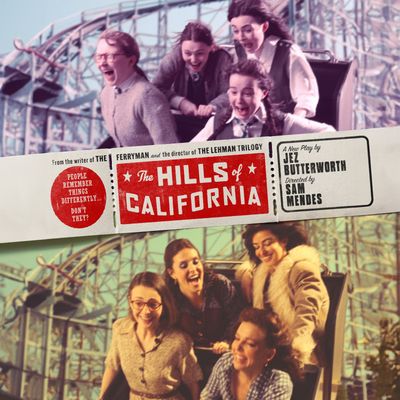
Laura also discusses her current role in The Hills of California, offering insights into portraying two distinct characters—mother and daughter—and the emotional and technical challenges it presents. She candidly reflects on the mental toll of intense performances and how she learned to balance her personal well-being with the demands of the stage. In a surprising twist, Laura recounts her childhood gymnastics experience, revealing a unique connection to her life on stage. With an unwavering belief in the power of storytelling, she shares heartfelt advice on self-belief and pursuing one’s passion.
Laura Donnelly is a Tony-nominated and Olivier Award-winning actress known for her standout performances in theater and television. Born and raised in Belfast, Northern Ireland, she trained in drama in Scotland before embarking on a career that spans critically acclaimed roles such as Caitlin Carney in The Ferryman, Jenny Fraser in Outlander, and Amalia True in The Nevers. Her work also includes credits in Marvel's Werewolf by Night, Britannia, and The Fall. Currently, she stars in The Hills of California on Broadway, continuing her legacy of powerful and complex performances.
Connect with Laura:
- IG: @laurafdonnelly
Connect with The Theatre Podcast:
- Support the podcast on Patreon and watch video versions of the episodes: Patreon.com/TheTheatrePodcast
- YouTube: YouTube.com/TheTheatrePodcast
- Threads, Twitter & Instagram: @theatre_podcast
- TikTok: @thetheatrepodcast
- Facebook.com/OfficialTheatrePodcast
- TheTheatrePodcast.com
- My personal Instagram: @alanseales
Transcript
This transcript was automatically generated and might contain errors.
[0:00] Laura Donnelly: Hi there, my name is Laura Donnelly and you are listening to The Theatre Podcast with Alan Seales.
[0:13] Alan Seales: Hey everyone, welcome back to The Theatre Podcast. This is an all-new episode with Laura Donnelly and I am still your host, Alan Seales. Today we are diving into a truly captivating conversation with Laura, a Tony-nominated and Olivier Award-winning actress. Laura opens up about her roots in Belfast, Ireland and how Irish ballet sparked her passion for storytelling and, you know, the emotionally intense roles that have shaped her career. I love watching her in everything she does because she just pours herself into it. We touch on her compelling performances and the deeply personal stories behind some of her most profound work, including The Ferryman and The Hails of California, now on Broadway.
Plus, she shares a surprising behind-the-scenes moment involving her childhood gymnastics experience and how it connects her to current roles. You'll hear about her unique journey, the power of self-belief and what it means to find catharsis through art. Trust me, this is an interview filled with insights and inspiration that you don't want to miss. But before we jump into it, find me online on the socials, leave a rating, leave a review. If you're listening on Spotify, they let you leave comments now. So everybody, now please enjoy this episode with Laura Donnelly.
[1:32] Alan Seales: Our guest today is a Tony-nominated and Olivier Award-winning actress known for her standout performance of Kaitlyn Carney in the critically acclaimed play The Ferryman. Her career includes the iconic performances in HBO's The Nevers as the enigmatic Amalia True and Outlander, where she portrayed Ginny Fraser, with additional credits including Marvel's Werewolf, By Night, Britannia, The Fall, and Beowulf Return to the Shield Lands. With an ongoing string of successes, including her recent nomination for another Olivier Award for The Hails of California on London's West End, she continues to push creative boundaries and can still be seen in The Hails of California here on Broadway. Laura Donnelly, welcome to the Theatre Podcast.
[2:10] Laura Donnelly: Thank you very much. Hello.
[2:13] Alan Seales: Wow. I actually love your background, by the way. It looks very space-aged and time-travelly, so I like it.
[2:20] Laura Donnelly: It's very Outlander of you.
[2:22] Alan Seales: It's very rental of me, not necessarily. I'm not sure I would be space-aging, but it's working for me while I'm in New York, that's for sure.
[2:34] Alan Seales: Well, I love it. You've been with Hails of California now for how long? Because you've been doing it in New York on Broadway here for quite a while, but it was also, of course, successful and ran a long time on the West End as well.
[2:48] Laura Donnelly: Yeah. We began rehearsals mid-November last year, so nearly a year, and we did a few workshops of the script before that as well. So all in all, about a year and a half, I've kind of had this whirling around in my head. And it's some heavy shit, and we're going to get into this. So put a pin in that, because we're going to talk about how you deal with all this. But if I'm reading correctly, right, you grew up in Belfast, or at least you're from Belfast, Ireland. So not a place known for producing people of the artistic endeavor. So how did you find your way to where you are now?
[3:27] Laura Donnelly: Yeah, it wasn't really a big or any part of the culture whenever I was growing up, but I did have one dance teacher, Patricia Mulholland, who I went to for Irish dancing classes, but she also created a form of storytelling in kind of amateur theater that she termed as Irish ballet. And the dance itself was a kind of mixture of ballet and Irish dancing, and it was just a way of telling the old myths and legends, the old stories from Ireland. And so something about that, something about being able to tell these ancient stories and the stories that were part of my culture and my upbringing, to mix that in with the performance element, all of that being backstage and just getting, well, for a start, getting half a day off school to be able to go and be in a theater.
But really, the being backstage and waiting to go was the part of it, I think, that I really fell in love with. And so I knew that I wanted to be involved in theater in some capacity, but I don't think I really kind of did any acting as such other than a couple of little drama groups in school and stuff like that. It was really then when I went to drama school, and that's when I confirmed that that was the route that I wanted to take.
[4:53] Alan Seales: Well, your family, your parents, did they encourage you to do that route? Where did you go to school for drama? Because again, I think you would have to travel and leave home to find all of this, yeah?
[5:06] Laura Donnelly: For sure, yeah, certainly in those days. I mean, I wouldn't say that they actively encouraged it, but they certainly didn't stop me by any means. I don't think that my dad would have picked acting as a profession for me if he'd had the choice, but he knew that I was serious about it. And he didn't, for one moment, try and talk me out of it. He just kind of chatted to me about it and certainly said, are you being realistic about your expectations of it? And he did remind me, I remember when I was probably about 14 or 15, and he did remind me that I did not come from a long line of theatre or film people, and that often it is those people that will make their way ahead in that world. He said, you're not Angelica Houston, you don't have a dad who's going to be able to help you out here.
But I think that I kind of made it clear to him that, no, it was a genuine passion that I wanted to pursue rather than thinking that it was going to be all glamour and money and all of that. And then I applied for drama school in Scotland, so there certainly weren't any drama schools available in the north of Ireland or any kind of accredited British drama schools. I would have to go to Scotland or London for that, and so I chose Scotland and I got in and I had a brilliant time.
[6:28] Alan Seales: In Scotland, I mean, there are a lot of Scottish actors that make their way into, of course, the UK and American TV as well. And where did you kind of find your foothold with performing? Because, you know, of course, there's so many different genres within the stage and within film, even too, you know, comedy, drama and musical theatre and yada, yada, yada. And the stuff that I absolutely love about your career is how much of a different level you take your period pieces and the dramatic roles, the stuff that really is dealing with past trauma ultimately in these characters. And so, did you realise that during this whole time? And I guess, where were you? You're like, oh, I don't like comedy. I'm just going to go over here and, you know, cry my ass off eight times a week, have to work more comfortable.
[7:22] Laura Donnelly: Yeah, I definitely am drawn to the more emotionally challenging roles, but I did, I certainly didn't make any kind of decision that I wanted to do, you know, genre material or that I wanted to consistently be in a corset or anything like that. Really, you know, for most of my career, it's just been what has come my way and what I was attracted to. And I think that as an actor, you will generally go in and do better meetings and auditions and stuff when material really speaks to you. So, obviously, those roles were speaking to me in a way that meant that I had something to offer whenever I went into the room. And I guess that for the most part, the kind of common denominator there was just probably not typical female roles.
I'm not playing a lot of wives and mothers and girlfriends. They tend to be roles that have some agency and that these women are more complicated than a lot of the stuff that I would have read. And that, yeah, they have a past and they also have a drive forward. And I think that for me, always the most interesting or one of the most interesting things about a character is the secrets that they hold, the stuff that is in the background, that is informing right now, but isn't just all right there on the surface. I think that it's so much more interesting to be able to play somebody who has subtext, you know, who doesn't just have it, yeah, have it all kind of on the page and in the script. So it just kind of, yeah, it makes it so much more interesting. And therefore, I guess those are the ones that I have been pulled towards.
[9:15] Alan Seales: And you pull yourself down into it and you let yourself go to a place that I think a lot of people may be afraid to go to. And I venture to guess that's a bit of a form of catharsis in a way as well. But I mean, we'll get into the Hills of California and like kind of the subtext there, I think it's taken a lot from your partner, Jez Butterworth, the writer of Hills, his experience younger as well. So we'll touch on that. But I feel like I didn't realize until I was researching this, that the origin story of The Ferryman, which is very cool. So I want you to tell it because I think it's a very cool story.
[9:52] Laura Donnelly: Well, the very first discussion that we had about it was because I was what we, Jez and I were together watching a documentary on the disappeared in Northern Ireland. It was a group of about 16 or 17 people who during the Troubles were just that. They were taken away and murdered by the IRA and their bodies were hidden. They were buried in secret locations and their families were never allowed to know where they were. This is all true, by the way.
[10:30] Laura Donnelly: Yeah, yeah. And so we were watching this documentary and at the end of the documentary, my uncle's face and name came up on the screen and I just said, oh, that's my uncle. And I think in a matter of fact nature that Jez was absolutely flummoxed by because he was like, how can we have got to this point, particularly at the end of this documentary and this have not come up as a conversation? And it surprised me just as much because I realized that that moment did not have a huge effect on me. I wasn't thinking, oh my God, I've just realized something I've put two and two together. It was something about the nature of how I was raised and how many people were raised in the North of Ireland at that time that things weren't discussed and you didn't really know details of.
[11:23] Laura Donnelly: Of what had happened in families and, you know, when it came to the violence there. But at the same time, it was all very normalized as well. So, Jez then almost immediately, I think, had an idea for the play, because it was that idea of those secrets that are held in that way. And we went to the funerals of two of the boys who had been most recently discovered, because many of these people, I mean, my family were fortunate in a way that my uncle's body was found four years after he disappeared. Whereas for many of the families, it could be 40 years. And it just happened to be around that time that two of the young lads who had been disappeared were found and their funerals were taking place in the same couple of days in Ireland.
And we went along to both of them. And really, I think it was at that point that it solidified the play in Jez's mind, because he was watching people who had all grown older and had children and grandchildren. And yet at the same time, they were there mourning their brother, cousin, friend, who had died when he was 17 and had been nowhere to be seen in the meantime. It's got to be such a great amount of closure for these families who just, you know, they had packed it away of like, of accepting they'd never know. Massive, massive. And that was what the IRA knew at the time. They knew how important that is as a human ritual, the need for our souls to know that there has been an ending that has been properly recognized and ritualized.
And they knew what torture it was to prevent those families from being able to have that closure. So then diving in and writing The Ferryman, obviously, was Jez writing it with you in mind for the role of Caitlin? Or were you like, I need to do this? Because I feel like it could be really painful to kind of open this up a little bit.
[13:14] Laura Donnelly: He was absolutely writing that one with me in mind. It was kind of a deal struck. What has happened was, I had just finished a much less than satisfying TV job. And it was a show that I was possibly maybe going to have to do another season of. And in fact, within a 24-hour space of time, the season, the show got canceled. And also, I found out that I was pregnant with my first child. So I was thrilled about the child but devastated about my career. And had been doing, you know, generally not very satisfying work, not that I mean, I've done some really fun jobs and stuff that I had a good, but nothing of a great length of time that I felt I could really get my teeth into and something that I kind of felt would challenge me.
I'd find everything that I had been doing, you know, up to that point, to be less than challenging. And he had been saying he was going to write this play, going to write a play. And then when I found out about my baby, he said, right, I'm going to write that play. I was like, you can't promise that you said yourself, you don't know when they're going to show up. And he was like, no, no, trust me. This is, I usually need to be backed into some kind of corner. I'm going to write this play. And I was like, okay, quite cynical. And in fairness, about two weeks after the baby was born, he handed me the script of The Ferryman.
[14:54] Alan Seales: Wow. And was that initial draft anything like it ended up being? Or did you look at this?
[15:02] Laura Donnelly: Oh, yeah. This is total crap? No, it was incredible. I mean, I had read maybe about a first act or a first act in a bit earlier in the year. So I knew that he was really on to something, but whether or not he could finish it, or whether it would go by the wayside for several more years or whatever was a very real possibility. And so when I read the complete script, I think the thing that struck me most that I just could not believe was the authenticity of the voices in it for somebody who had not grown up where I grew up, and was not seeped in that culture. The authenticity of even just the cadence and the syntax and in the dialogue was just mind-blowing. And that's when I realized that he really, really had a capability of writing about something of which he had no direct experience, because he could pick up on those little things so intuitively.
And then when it's married with real emotional material that is based in his own experience, then that together creates magic. In fact, he has said himself since then, he needs a mask to put on. He doesn't want to write directly about his own experiences. He wants to be able to put a mask on in order to be able to tell the truth.
[16:30] Laura Donnelly: Well, that's what I think kind of The Hills of California resulted from is that the act of living through a dying, a close dying relative is relating to him and his brothers, watching his sister die, right? While then the whole, the rest of the scene was like jumbled up with a bunch of other stories, facts from your life, and things that he'd read about that kind of turned into basically a fever dream of sorts.
[17:00] Alan Seales: Yeah, yeah.
[17:01] Laura Donnelly: That he just wrote down and put on stage. And I think that's one of the most incredible talents that I will never have.
[17:05] Alan Seales: Me either.
[17:06] Laura Donnelly: Absolutely incredible. Yeah. Don't go anywhere. We'll be right back after this break.
[17:12] Alan Seales: Welcome back to the episode. Your family though, like having actually lived through this, was it hard for them to come and watch this story be retold?
[17:22] Laura Donnelly: I think my, because obviously the person who it came from more directly and who had the most direct experience with it was my mom. I mean, I wasn't born whenever my uncle disappeared. I was born when he was found, but she talked to me, you know, I want it really, it was the first time that I'd sat down and asked questions that it hadn't occurred to me to ask whenever I was younger. I'd always had the impression that this is the same for a lot of people growing up where I did. The reason, one of the reasons why a lot of it didn't get discussed was because you just got the impression from a young age that it was too painful for people to talk about and you don't go near it. And so I had never really asked for the details.
And when it came then to preparing for the play, I did. And she also put me in touch with other people from our family and from our community who had their own perspectives on what happened as well. And for her, I think at the time it was really, well, again, cathartic because she found that it was almost literally a light was being shone on something that had never had a light shone on it before. And in fact, she had campaigned for a long time as a counselor in Belfast. She'd worked with the families of the other disappeared and had campaigned for their bodies to be found. And so this is work that she had been doing for many years. And it was the kind of bringing attention to a story that had been long buried.
And she did find it difficult to watch it the first time. She said she herself had just girded herself a little. She was kind of preparing herself for it and then came to watch it and had a little bit of a self-preservation barrier in place to watch it the first time. And then she came many, many times after that.
[19:29] Alan Seales: Wow. Yeah, I feel like you'd have to really prep yourself. But then I'm trying to put myself in her position to watch my child retell a story that I lived through, that my child didn't have the direct experience of going through. But yeah, the way you said it was written and captured the cadence, the voice, the atmosphere, everything, it sounds like it was done in such a well-constructed way that, yeah, it would be the catharsis and, yeah, just a release of probably a ton of blockage that allows you to talk about it again.
[20:05] Laura Donnelly: Yeah, exactly. So, I mean, you said you were asking questions, but were you finding it easier for you to relate to your mom? Did she open up at this point?
[20:09] Laura Donnelly: I mean, she did to an extent. I still come from a family where not a lot gets discussed. That's just so much part of our culture that it's going to take more than a play to go back and really dig. But I think that is so much the point of story. I really do believe in what I do for a living and what we're trying to do when theater and when storytelling is at its best and its highest form. I think that it allows us to process what it is to be a human through a very, very difficult life. And I mean that by everybody's life is difficult. It is difficult to exist in the world. There will be such massive loss in everybody's life. And we process that by telling stories. That's how we've always done it from the beginning when we were sitting around campfires after the hunt, discussing how that had gone and who we lost. And that just continues right through today. I think it is one of the greatest ways to create connection and empathy between people.
[21:27] Alan Seales: I 100% agree. And I add on to that something you said earlier, was that you take on these characters, these roles of women who have substance, who have backstory, who have more than just the purpose of just being a girlfriend or a wife. They are there to exist for their own reason. And I remember reading along these lines a while ago, I was watching Outlander, and then there was some scene that was cut between Canada and the U.S. It was the breastfeeding scene.
[21:47] Laura Donnelly: Oh yeah, yeah.
[21:53] Alan Seales: And Canada cut it, but it's got tons. This is a show with tons of sex and murder and assault, but they cut a natural thing. It's an astonishing decision.
[22:03] Laura Donnelly: Yeah, it's a really astonishing decision. It would be fine if those breasts were ripe during a sex scene, but it's not okay when they need to feed a baby. I thought that that was incredible, but I'm glad it opened up that conversation. When that script first arrived and that scene was in it, I remember asking the director because I hadn't thought about it. I had no experience at that point. I had no children. And I was also very used to being required to come into roles and at some point you're expected to take your top off. That was very much the kind of stuff that came my way.
[22:46] Laura Donnelly: I was more thinking down the lines of, well, is this necessary? Do I have to do it? Because I was getting to that point in my career where I was just getting, I was getting really sick of just reading characters who come in and at some stage have to get into some form of nudity because I was a woman in my, you know, 20s or, and so I remember having a discussion with the director and I said, but you know, it can be implied. Do we have to see it? I don't want to have to get my top off yet again for something if it doesn't have to be that. And it was him, in fact, that had said to me, no, I think this is really important that we do because that is why breasts are seen all the time on the television and in film.
So you never see this. This is a woman who needs to feed her child or needs to, you know, to release the milk because she is away from her child and we never get to see what they're actually for. And I suddenly, of course, then that light was switched on and I completely agreed. And then to find out afterwards that it had been cut for those reasons, it just kind of made me laugh and despair at the same time. Yeah, it was one of those things that was just like, really? You'll show all these other things and, but what they're actually needed for you, that's what you cut? That's messed up. Also, you realize like, once you've had a baby, everybody sees them. It's like, it is so not a big deal for any nursing mother at all.
It's just like, you'll be in a restaurant, whatever. It's like, oh, whatever. You just start, it becomes such a functional thing. And of course, for Jenny and that's either that or that's pure function.
[24:30] Alan Seales: Oh my goodness. It's massive. And I'm just very, very proud now to have been part of a little cultural moment where that conversation got to be had. Well, now you're creating more conversation with Hills of California, of course, and you get to play two different characters, mother and daughter in the same show. And I wonder, I mean, it's two, obviously two, two different characters, two costumes. We see you as two different people, but in your head, are you playing the same person or are you distinctly kind of separating them and coming on as two different characters? And like, is there a switch you do between?
[25:07] Laura Donnelly: They're very distinctive in my head. And when I'm playing Joan, I utterly forget that I just played Veronica. It's kind of, I'm not in the same play in a way because I have not met those other characters as adults, you know, in the previous two acts. So for me, they are, they are two very, very different moments. But there obviously had to be effort put into that in the creating of those two characters. I was very conscious that I would have to make them as different from one another as possible and choose where I wanted them to be more similar to where I wanted them to overlap. Because of course, there is a purpose to, you know, the same actress playing the daughter, who is the consequence of her mother.
That's part of the storytelling rather than just me being greedy. And so I wanted to be able to recognize the moments where I could allow them to be similar, but most of the work was in making them as separate as possible. And so that was from the very beginning that informed all the decisions about accents and voice quality and physicality and everything that I could think of. And so here was kind of where the work on the switch happened. And when it comes to performance, not much has to be done. I mean, while I'm doing, I do a pretty quick change. And while I'm doing it, I will just get my voice into Joan's voice and accent. So while I'm doing makeup and we're doing hair and costume, I'll run over lines out loud just to make sure that the first time I'm not speaking as Joan is, you know, when I'm walking on stage.
But other than that, that switch has become very automatic. And it's in the writing, you know, there's such different people in the writing. So it's, yeah, it doesn't, it doesn't kind of require any kind of conscious thing on my part.
[27:02] Alan Seales: It's such a well written script. And I mean, initially, like, oh, okay, it's a three act play. That's unusual, but it sets itself up so perfectly for this because it's three distinct chapters. And also, side note, I love a good play with a set. This is a set.
[27:26] Laura Donnelly: Oh, my goodness. My God, when it moved, I was like, whoa, I didn't see that.
[27:32] Alan Seales: I know. I love it. And I yeah, so much about it. I love I love the whole point was to make the possibility of it moving, be invisible to an audience. So they would come in and absolutely believe that they were just going to be watching this set for the next three hours. And for that, for that move to come out of nowhere. And I heard somebody liken it to a turntable, you know, a record turntable, which, of course, that hadn't occurred to me. But yes, that I don't know how much of that was conscious on jazz's part and on Rob, our designers part. But you know, the music being such a huge theme of this play, and so importantly, rock and roll and pre rock and roll and post rock and roll. The idea that we're on that we're on a music turntable, I just love.
[28:20] Laura Donnelly: Yeah, yeah, I was gonna say that it's a memory play. Of course, it's flipping back and forth between two different time periods, just pre and just post rock and the birth of rock and roll, the explosion of rock and roll in America. And I think it's such this perfect time. And again, there's parallels to your own life, too, because in the character in the in the story, these four girls, these daughters are supposed to be this, you know, pitch perfect, move perfect, like, absolute pristine group. And then when you were a kid to your mother's trying to get you and your sisters to be gymnasts to no, no, no, no.
[29:00] Laura Donnelly: This kind of got I had to text my dad the other day and say Time magazine have said that I have was pushed into gymnastics. I never said I was into gymnastics. And no, my mom never went into gymnastics. Absolutely. No, whenever we were all very young, just in the way that any parent signs their kids up to hobbies. My mom signed us all up to gymnastics. Well, me and my sisters up to gymnastics. And then as time went on, my dad actually got really into it, they ended up becoming one of our coaches. So, so we did we there was a little crossover between you know, what is kind of what is purely for fun, and then what becomes somewhat like a militarized pursuit of perfection. But it was me and my sisters, and we did a specific kind of gymnastics called sports acrobatics, which means that you're you're doing all of those, you know, all of those balances on top of each other and all of that kind of thing.
And so we did routines as a team rather than all just solo. So I know what it is to, you know, step out onto a stage of sorts with my sisters and have to present something and try and get a perfect 10 for it. And for that to be perhaps a little muddled with the love of your parents at the same time. So they, the Veronica, the mother character, very militant, very, you know, again, everything has to be perfect, exact. And, and I want to know what your thoughts are. Do you think Veronica truly loves these four daughters?
[30:32] Laura Donnelly: Absolutely. I think, I think in so many ways, and particularly when we take it in context of the mid 1950s, I think that she is generally a wonderful mother. And I think that all of her intentions are, are completely well meaning, I don't think that there's any part of Veronica that wants the girls to be famous and successful, because she wants to live vicariously through them. I don't think that she wanted that for herself. There's no, there's nothing in the play that says that she was ever a performer or wanted to be a performer or had any ambitions for herself. I think that her ambition for the girls is informed by wanting them to be safe, and wanting them to have spectacular lives in a world that was not going to provide that for them.
You know, they were girls growing up in the 50s in the north of England, they were absolutely destined for being somebody's wife and somebody's mom and just working their fingers to the bone for the rest of their lives. And that's what she's had. She's had a really tough time. You know, she has had dad or dads of the girls who haven't stuck around for one reason or another. And she's created her own mythology around that. And I think that there is, she creates a myth around her world. You know, she has named all of the rooms in the guest house after states in America. And she, she dreams of just bigger and greater things beyond this limited existence of hers. And I think she just wants them to have much better lives than she did, and what is available to them where they are.
And I think that she, the other thing as well is about those girls genuinely enjoy what they're doing. They love singing and dancing. You know, when, when Jonas brought on an act two for the audition, she says, I love it. I would, you know, there's nothing else you'd rather be doing. And they do all and when later on in the play, when grown up Ruby talks about, do you remember what it felt like for us all to sing together? They do love it. She's not, she hasn't pushed them into something that they're not enjoying that they don't want to do. But she, she wants, she wants to give them opportunities. And that's, it's kind of the only way that she, she knows how and it, it, it goes wrong. She makes, she makes mistakes.
She makes one very big mistake. But at the same time, I think in, in so many ways, we look to her to be responsible for that mistake when she's not the person who created the danger in that household. I think she knows, I think she knows right away. And also there's that point too, where, and this is my interpretation where she's, she's like, well, I know this is wrong, but I have to let it happen because it's kind of the only way.
[33:19] Laura Donnelly: I don't think so. I think that she's hoping that it's not that. Yes. I think that she thinks it is or is worried that it is. She goes around several ways. She puts herself in the position that, you know, she would, she will, she tries to put herself between her daughter and danger. And I think in the way that she is spectacularly manipulated and outsmarted by somebody else, she is left in a position where she thinks I might be calling this completely wrong. And I might be about to destroy my, my girl's chances of a future because I am being overly protective. And she just in a split, split second takes the risk that this is not what she has been worried about. And I think that she.
[34:08] Laura Donnelly: The way that Luther's and John, we don't have to like necessarily spoil what the whole basis of it is, but the way that Luther's and John manages to create a, what's the problem? I have no idea what you're talking about. Okay, well, then I'll be off. Just puts her in a spot where she has to make a call right in that second. And she thinks either way, she is going to possibly make the biggest mistake she can possibly make. And now with all of the information that we have today, it's so easy to judge Veronica through the eyes of a much more informed culture. What we know today would be, you don't risk that no matter what. The second you have the tiniest inkling of something, it doesn't matter if you are going to wreck her future, you take that on, you be the parent, you draw that boundary, and you just suck up the ire that you are going to receive from your daughter afterwards. But she thinks she's got it wrong. She thinks that she's called it wrong. And then very soon after realizes that she's made a massive mistake.
[35:29] Alan Seales: Wow. Wow. Yeah. Okay. All right. Well, thank you for that. That makes sense. And I see that. I see that in how you played it.
[35:34] Laura Donnelly: Yeah. Well, it's all open for interpretation, of course.
[35:37] Alan Seales: Yeah. Don't go anywhere. We'll be right back after this break.
[35:41] Welcome back to the episode. How do you shake that though? Like personally, Laura, at the end of the day, when you're doing this eight times a week, this is a long show, just in and of itself. It doesn't feel long. Because it sucks you in. I love everything about it. But at the end of it, I imagine it's got to be draining from an energy perspective and whatnot. So dealing with all of this and how do you keep yourself kind of like Laura? How does Laura recover?
[36:03] Laura Donnelly: I didn't do that very well in London, I have to say. And I'm doing it so much better here. And there is one fundamental difference, which is that Act Three is rewritten.
[36:07] Alan Seales: Really?
[36:08] Laura Donnelly: Yeah. I find it really, really interesting. So I never feel like I have any problem shaking off Veronica, because I do that in the act of playing Joan. By the time I'm in Joan, Veronica's long gone. I don't think about her again until tomorrow. But the version that we had in London was a very different Joan. And also, the ending itself was left much... The best way I could find to describe it is there was less of an exhale at the end. There is something about how the women come together at the end of Act Three. Not that everything is resolved or that everybody's happy, and it's all fine. It's not that. But there is stuff that is dealt with in the course of Act Three that was not dealt with in the London version.
And we loved the London version. And Jez from First Preview knew that he wanted to rewrite it. He knew exactly how he wanted to change it. But we did 159 shows of that. And there was something about how that got deep, deep under our skin. And all four of us women in Act Three all felt this. We've all talked about it a lot since. There was something about the way it got deep, deep under the skin, and there was no release of it on the stage. That meant that we did carry it in a much more heavy way through our everyday lives. And we all found that we had no energy to do anything outside of the play. It was really a case of just try and stay as still and as calm and regulated as possible in your house until you had to leave for the theatre, and then somehow get back into that again.
And it did feel a lot heavier. And now in this version, there's just something about the way that things get resolved and they get acknowledged and things get brought out into the open that we have all felt so much lighter walking around New York.
[38:04] Alan Seales: That's really interesting and very cool, too. I think it touches the audience in that way, too, because I'm glad that it ends the way it does because it gives me as the audience something to understand and feel better that the girls at least, you know, all the women and then the girls have acknowledged it and they realize they can work together and lean on each other. Like you said, it's not everybody being happy, but they're family.
[38:30] Laura Donnelly: Yeah, there's just an acknowledgement and things get said that need to be said. And there doesn't necessarily have to be a chord. And you know, when Joan finishes up the play, how we see her finish up, I think is the way that that continues. I don't think that she is changing her life to kind of come back and all of that. But I think that, yeah, it's just about the fact that they get to have the conversations that needed to be had.
[39:00] Alan Seales: Very cool. Very cool. After all of that down conversation, serious conversation, we'll say not down, we'll play a little uplifting game called Plot in 60 Seconds. Are you familiar with this from previous episodes?
[39:11] Laura Donnelly: I am not. No.
[39:14] Alan Seales: So I have a list of 16 popular musicals and then I'm going to put 60 seconds up on your screen here. How much do I need to know about musicals to do this?
[39:28] Laura Donnelly: Not very. I mean, these are like pretty popular. So you give me a number one through 16, it'll correspond to one of the 16 musicals I've got on my list. And then you give me that plot in 60 seconds or less. So one through 16.
[39:42] Laura Donnelly: Okay, seven.
[39:43] Alan Seales: That is the sound of music. Go!
[39:45] Laura Donnelly: 60 seconds remaining. The sound of music. A nun goes to a general's to raise all of his children and ends up escaping the Nazis through a song.
[40:02] Alan Seales: All right. That was what? 13 seconds? I'll take it. I'll take it.
[40:06] Laura Donnelly: Works for me. I know some of these summaries are so accurate.
[40:11] Alan Seales: Yeah. Okay. So then three standard closing questions I use to wrap up the episodes. The first one just very simply is what motivates you?
[40:16] Laura Donnelly: I think what motivates me? The search for expansion in myself, my experience of the world, what I know about myself and how I want to experience my life. So it's about doing things that I do not know whether I can do it. Things that leave me just out in the water a little too far for my toes to touch the ground, as David Bowie puts it. And therefore, I know I'm in an area where things can get exciting.
[41:00] Alan Seales: You don't grow unless you're uncomfortable. That's what I like.
[41:04] Laura Donnelly: Okay. What advice would you give to your younger self and younger people listening now starting out on a similar path?
[41:09] Laura Donnelly: I would really, really encourage myself. Back myself. I honestly think in this profession, I think that there are only two things that you need to succeed and one is some form of talent and the other is self-belief. And I think that people can get somewhere with talent and no self-belief. They can get quite far with self-belief and no talent. But I think if you've got two, I think if you've got both of those things, you're pretty unstoppable.
[41:42] Alan Seales: Oh, I love that. Okay. Back myself a lot more whenever I was younger, it would have made a big difference.
[41:46] Laura Donnelly: Nice. All right. Last question. Hardest one. If you can only see one show for the rest of your life, but you can see it as many times as you want, what would you see?
[41:53] Laura Donnelly: I would, which goes rather against my love of plays over musicals. But in fact, I think it would be a musical and it would probably be Cabaret because I don't think I'll really ever tire of those songs and that story. And I think that despite loving the plays that I love, I think that I could just, I think there'd be only so many times that I'd be able to watch them. But I think that, yeah, I think with Cabaret, I just, I think I'll always want to see whatever version of that is available.
[42:35] Alan Seales: That's a very, it's a deep level. You're right. It has a lot of different layers.
[42:40] Laura Donnelly: A lot of different layers.
[42:41] Alan Seales: Okay. And then you've just got the sheer entertainment of songs, you see, because you don't get that in plays. And it's like I say, I definitely have a preference for plays, but just the sheer entertainment of music in a show is going to really help with the repetition.
[42:53] Laura Donnelly: Oh, that was something else I meant to bring up about Hills was the way that all of you sing together is so good and so tight. It has to be like, how much did you drill in? How much musical practice did you have for this play?
[43:09] Laura Donnelly: So we didn't, I mean, the younger girls had a lot of drilling, you know, they're the ones that have to do the hard yards there with dancing and everything. For the older girls, it was sheer luck because we were sitting around, everybody had been cast and some people had only just been cast. And we sat around for the first read through and the first song came up, which was one that gets begun by Ophelia Loverbond's character, Ruby. And Sam, our director looked at her and went, yeah, go on, give it a go. And she sang. And of course, Ophelia sings like an absolute dream. And then in the lunch break later on, Sam said to her, oh, so you can sing. And yeah, he went, lucky. He had completely neglected to test any of our singing ability in the process of auditions.
And of course, he'd been auditioning all the younger girls based on whether or not they could sing, whether or not they could dance. We had some great little actresses there, but they weren't quite going to cut it, you know, singing and dancing wise. And so that was very much part of their process, but hadn't been for the older sisters at all. So it was sheer luck. And me and Leanne, who plays Gloria, kind of get through as best we can. And Jill and Ruby, played by Helena and Ophelia, are both real proper singers and they kind of keep us straight, I think.
[44:34] Alan Seales: I know. Oh, it's so good. And I love tight harmony. And no, I thought that you all were just like cast and audition and came together as a group. And oh man, it's great.
[44:39] Laura Donnelly: Yeah. It's really cool that that was all like kismet, right?
[44:44] Alan Seales: Yeah, totally. Totally.
[44:47] Laura Donnelly: So everyone go to thehillsofcalifornia.com. The show is on Broadway now through December 22nd only. And where can we connect with you, Laura, on social media?
[44:58] Laura Donnelly: I mean, if I had a clue, I think it might be Laura F. Donnelly on Instagram. I'm not even sure that is the name. I'm on Instagram. Go there. That's the only one that I'm on.
[45:08] Alan Seales: I'll find it. I'll find it. I'll put it in the show notes. And then of course, connect with me on Threads, Instagram, TikTok, Facebook. Leave a rating and review. Leave a comment wherever you're listening. Thanks to Jukebox the Ghost for the intro and outro music. And Laura Donnelly, this has been so much fun. I've loved this chat.
[45:24] Laura Donnelly: Thank you very much. It's been really lovely chatting to you.
© Broadway Podcast Network, All Rights Reserved