

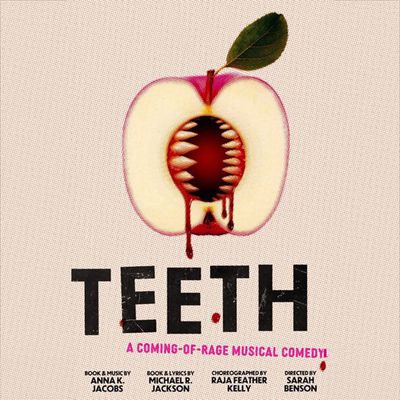
Jared Loftin takes us on a captivating journey from his Alabama roots to his thriving career in theater and television. With notable credits including Teeth at New World Stages, Tick, Tick… Boom!.. Read More
From the show: The Theatre Podcast with Alan Seales
Guests

Miniseries Inclusions

Featured Shows
About
Jared Loftin takes us on a captivating journey from his Alabama roots to his thriving career in theater and television. With notable credits including Teeth at New World Stages, Tick, Tick… Boom! on Netflix, and Little America on Apple TV, Jared reflects on the unique process of developing new works, the highs and lows of regional theater, and his experiences in the evolving post-pandemic performing arts world. This episode shines a spotlight on his ability to bring complex, layered characters to life, sharing insights into the emotional and technical challenges behind his performances.
From the thrill of audiences turning against his character in Teeth to navigating the early days of his career without a showcase or agent, Jared’s story is one of resilience, creativity, and community. His advice for aspiring performers is as inspiring as it is practical: dive in, embrace the challenges, and stay open to the magic of collaboration. This episode offers a blend of humor, heart, and hard-earned wisdom that will resonate with theater lovers and aspiring artists alike.
About Jared Loftin:
Jared Loftin is a New York-based actor with a diverse array of credits in theater and television. His stage work includes Teeth at Playwrights Horizons and New World Stages, Gigantic, The Panic of ’29, and regional productions of Peter Pan, All Shook Up, and Joseph and the Amazing Technicolor Dreamcoat. On screen, Jared has appeared in Tick, Tick… Boom! on Netflix, Little America on Apple TV, and Red Oaks on Amazon. Originally from Alabama, he studied musical theater at Elon University and has become a sought-after collaborator in new musical theater works.
Connect with Jared:
- Instagram: @jloftin2
Connect with The Theatre Podcast:
- YouTube: YouTube.com/TheTheatrePodcast
- Threads, Twitter & Instagram: @theatre_podcast
- TikTok: @thetheatrepodcast
- Facebook.com/OfficialTheatrePodcast
- TheTheatrePodcast.com
- My personal Instagram: @alanseales
Transcript
This transcript was automatically generated and might contain errors.
[0:00] Jared Loftin: I'm Jared Loftin. Welcome to the Theatre Podcast with Alan Seales.
[0:25] Alan Seales: Hey, theatre lovers! Alan Seales here, and I'm back with another all-new, exciting episode of the Theatre Podcast. This is episode three of four of the Teeth the Musical Takeover here on the pod, this one with Jared Loftin, who has a truly interesting character within the show. And something interesting he told me is how he gets such a thrill from watching the audience's shift from rooting for his character to actually literally gasping during his shocking turn, all while reflecting on the unique journey of developing Teeth over the years. Want to know what I'm talking about? You've got to go see the show. I'm not going to spoil this one for you. We also talk about the unexpected opportunities COVID brought to his career and the surprising challenges of acting during a pandemic.
This conversation is full of humor, insight, maybe even a little inspiration for you. So don't forget to follow the podcast on socials and check Spotify and Patreon for the video versions of this episode. And now, everyone, please enjoy this episode with Jared Loftin.
[1:33] Alan Seales: Today's guest is a magnetic performer with extensive off-Broadway and New York credits that include The Panic of '29, Gigantic, and Saturday Night. In addition to his acclaimed work in Teeth at Playwrights Horizons, recently he has showcased his range in productions such as Peter Pan, All Shook Up, Fame, and Joseph, and has on-screen work featuring roles in Tick, Tick… Boom! on Netflix, Little America on Apple TV, and Red Oaks on Amazon. And then now, most recently, he's been earning rave reviews for a standout performance again as Ryan in Teeth. Now that it has moved to its open-ended run at New World Stages, Jared Loftin, welcome to the Theatre Podcast.
[2:04] Jared Loftin: Hello, thank you.
[2:07] Alan Seales: You have seen Teeth in multiple incarnations, right? And how early back did you get involved with the production? I guess, were you part of the workshops? Were you part of the development?
[2:21] Jared Loftin: Yeah, I joined in 2018. I got asked to do a reading of a new show. Well, actually, back up. 2015, I did a show at the Vineyard called Gigantic, and Michael R. Jackson saw that show. We had been around each other kind of through work at the Musical Theater Factory that Shakina Nafak had started, but we never worked together. But we knew of each other, and apparently, I found out later that Michael was like, Jared could do this reading. Maybe we should ask him to do it. So I was supposed to do a production, like a full production of another show, but I got an offer for this two-week reading of this musical called Teeth that Michael and Anna were working on. And something in my gut was like, do this one.
Do the reading instead of the production, which is crazy financially speaking. But for some reason, I was like, I want to do it. I read it. It was bonkers. It was bonkers in a way that I was like, I feel like there's something here. So I ended up saying no to that production.
[3:40] Alan Seales: That was Bad Cindy, don't lie.
[3:42] Jared Loftin: It was. It definitely was.
[3:43] Alan Seales: It's Bad Cindy, and you made the right choice.
[3:46] Jared Loftin: Totally. But I did a two-week reading at the O'Neill in Connecticut, and immediately, I was like, this is so fun and also such a good fit. And then luckily, they've kept me around since 2018. And we've pretty much done some version of a reading or a workshop at least once a year, excluding deep, dark COVID times, until we did the actual production at Playwrights.
[4:20] Alan Seales: Wow. I like that it still sheds light on the fact that even before you hear about something, I didn't really hear about Teeth until it was opening at Playwrights, like already set. But then there were years and years and years of workshops and the readings. And of course, there's got to be investor performances and staged readings. So you can just get it up on its feet and see if anything's even going to work. I love how all this stuff just sometimes takes years. Not sometimes, most times will take years. And then you never hear about it until it gets to the point where it's either off-Broadway or on-Broadway. But even right now, the stuff that's happening behind the scenes that we don't know about is not going to make it to the Macy's Day Parade, for example, for another six years.
[5:03] Jared Loftin: Yeah. Yeah. It's wild. I feel like so many of us actors, a lot of our bread and butter sometimes is readings and workshops. And then we just kind of hope that they continue and come to fruition and that also we're kept around for it. And luckily, this was one of those for me. And I love it so much. And so I'm thrilled that we can actually do it for audiences now.
[5:32] Alan Seales: Well, so your character of Ryan. So for those who haven't seen Teeth, who don't know Ryan, explain who Ryan is.
[5:39] Jared Loftin: Ryan is a troubled teenager.
[5:44] Alan Seales: As most of us are.
[5:45] Jared Loftin: Yeah.
[5:46] Alan Seales: Were.
[5:46] Jared Loftin: He is in community. Well, he is a part of New Testament Village Church, which is an evangelical church at the center of the story in Teeth. But Ryan is someone who's like, if he were to live his authentic life, then he would be at odds with the community he surrounds himself with. And so there are what the audience will view as some like horrible decisions Ryan makes, but they at the root of them is the like fact that Ryan doesn't really understand that there is community to be found outside of the only community he's ever known. So he is his actions are. Well, let me be clear. Our show has deals with sexual assault, and I'm not excusing any of the men's actions in our show. But I also, as an actor, need to like understand why my character is doing something, even when it's horrible. And a lot of what Ryan is doing is for self-preservation. He's just trying to like survive in this extreme environment.
[7:00] Alan Seales: Was that hard for you to kind of walk that line to find that balance between playing somebody authentically that doesn't feel like they're doing wrong, right? Like bad guys don't wake up. I say this all the time in the podcast. Bad guys don't wake up and say, how can I be the worst person I can think of today? They think they're doing right. They really do. But then these people are doing things that generally hurt themselves and mostly others. But you, Jared, if you're approaching this, like how do you kind of remove yourself and remove Jared from all of this and slip into Ryan? And then, like, I guess, do you have to slip in and out of this to sort of be okay with the bad things, you know, that we say on the outside are bad things that he does?
[7:32] Jared Loftin: I think at first it was a little tricky because objectively, I know that he's doing something bad. Like I know that he is like Jared knows that that Ryan is like not behaving in an acceptable way and throwing someone under the bus that he has said that he cares for. But I also think that I had to find the truth of it. And the truth of it is this guy, the idea that he's doing something wrong is so far away from his brain because he thinks that he is doing something good for himself. And if it negatively affects somebody else, that's like an after after afterthought because he has to do the thing that is good for him in the moment at the time. And so I haven't really looked at it as like I'm doing something bad because every night I have to do the bad thing, but I also have to do it honestly, I have to do it truthfully.
And this guy will maybe. Well, he won't because we know what happens in the show, but maybe there would be a day where he wakes up and realizes that that was wrong. But that is not in that moment when it's happening in the show. So I think just being as silly as this sounds like actor speak, like honoring what my character is doing, like knowing that it is the highest stakes for him. And yes, he's doing something wrong, but he thinks it's right. So I'm going to do it.
[9:27] Alan Seales: Well, there's a lot of training that you just described, a lot of experience and training that you're speaking from and that I can tell you've had. So let's use that as a semi-poor transition to get into your beginnings and where you started with this acting journey at all. Where did you actually grow up and what got you into performing?
[9:51] Jared Loftin: I grew up in Montgomery, Alabama. Honestly, I know our show. Let's bring religion back on that later. Okay, sure. Put a bit in that. Yeah. I mean, like honestly, I know our show is an extreme version, but I grew up in a church not unlike our show. But my parents liked musicals. My parents liked the big ones that would come on tour to Alabama or to Atlanta. We would go to Atlanta a lot to see shows. So I was exposed to theater from a young age and also I had cast albums that my parents had and I listened to them and I was like, well, this is something that I like. And then because my parents are also very musical. And so because I was expressing interest in that, they were kind of helping to foster those talents.
And so I went to, I started going to arts magnet schools from a very young age. I started going from elementary school on. And then in high school, I had two teachers, Miss Dixon and Mr. Foster. Mr. Foster recently passed away. But both of them were kind of like the people who said, like, people actually do this with their lives. Like you can you can make a career of this because it was just a fun thing that I really liked to do my whole life. But then as I got closer to potentially leaving and going away to school somewhere, it was like I kind of needed those. Not that I needed permission, I guess, but I I like really appreciated them saying, like, you're allowed to to do this, like you can choose this for your life. And so then I went to Elon in North Carolina for musical theater for.
[11:37] Alan Seales: Yeah, I grew up in North Carolina.
[11:38] Jared Loftin: Oh, nice. Where'd you grow up?
[11:42] Jared Loftin: Wilkesboro, which is west of Winston-Salem. There was like a summer program, there was like a pre-college program that I did in Philadelphia between junior and senior year of high school. And there were a bunch of kids my age who had all kind of decided already or were toying with the idea of like auditioning for a bunch of colleges or just not going to college and like moving straight to New York or moving straight to LA. And so I was around a bunch of people that had similar interests but also were seriously considering doing this as a career. And then that kind of helped solidify the idea that like, oh, if I'm here with all of these other people who see this as like a viable career path, like why not?
Why not me too? And so then I kind of kept up with a few of those people and we kind of like were discussing where we were potentially going to audition for schools. And I think as I started to audition for colleges, I was like, oh, there are so many people who I have seen in shows who went to all of these schools. I can be one of them. Like, I can totally be one of these people. It's like, I think between junior and senior year of college was like the turning point of, yeah, you can do this too. There's a confident ignorance there. Is that the right word? Yeah. Right phrase. Yeah. A confident ignorance in that like, oh yeah, this is the path that I want. And oh, other people that I look up to have done it.
I can do that too. Totally. And there's no like, I know how hard this is. I know how like trying it will be. It's just, oh, I'm good at this. Other people are good at this and they've made their life doing it. I can totally do that too.
[14:33] Alan Seales: Yeah. No, I totally get that. I remember those moments too. And it was one of those things where like as a child, I saw other children my age on TV, in movies. And I said, oh wait, that's something you can do and you can get paid for it. And that's a career that people can grow into. I thought it was the coolest thing because it didn't seem real at the time, right? And then once you have trouble paying your rent, it's very real.
[15:02] Jared Loftin: Totally. Yeah. So going back to like the industry in general, right? You moved to New York and then you've got some TV credits. You've got a lot of New York and regional credits. Was it easy for you to kind of like, I guess, what am I saying? Was it easy for you to just show up in New York and say, right, all right, town, I'm here. I'm going to go out and do my thing now. Or from Elon, did Elon help you get in showcases, get an agent? So along those lines, how did you just keep progressing?
[15:31] Jared Loftin: I don't know if it's different now, but when I was at Elon, we did not have a showcase. So I moved to New York and was kind of like, here we go. And I mean, it was clunky at the beginning. It's like a lot of trial and error, a lot of figuring out. You see other people's pathways and you're like, oh, maybe I try that. Maybe that'll be the way for me. Most of them aren't because you kind of have to find your own way. I think I'm not really even sure. I don't know if I can pinpoint the exact way in, but I started finding myself getting asked to do a lot of new work, like a lot of readings for new musicals. And I think that that's where I have continued to work. And so I think that there was like a little cohort of us who were kind of popping up in the same rooms over and over again.
And then a composer or a director likes working with you and they ask you to do their next projects. And so you keep meeting more people from the next reading or the next workshop, and then it kind of grows into, and now we're doing this production. Do you want to do this production? And so I do think there is luck involved, certainly for any job that happens. But I also think that I was able to be a person that showed up and did my work and people liked to be around. And so I got asked to come back. And so I don't think that it was like, it certainly wasn't like a smooth transition. There was like a lot of time of, I don't know what I'm doing, but I'm going to try something. And then something wouldn't work and I would try the next thing. And then because of whatever reason, something started to, the ball started to roll. But yeah, it definitely wasn't without its challenges.
[17:38] Alan Seales: Well, I suspect nothing, nothing in New York is without its challenges. It's walking to the corner. You're like spending $20. Yeah. Right. Right. No, that's very cool. And at what point did the TV and film side start getting integrated with that as well? Is that all the same agent or are you, uh, was it COVID? I've been like, Hey, I can audition at home now. This, I have to be a lighting director and a director of photography in addition to an actor.
[18:07] Jared Loftin: I had done some stuff before COVID. So it it's the TV and film stuff has been like much more infrequent than theater. It's just kind of been like peppered throughout. It's certainly something I would love to do more of, but it's kind of just like you also get auditions for film and TV as you're auditioning for theater stuff. And so some of them, some of them work out and then you do a couple of TV shows here and there. Um, tick, tick boom did happen during COVID. Um, I had done it. I had done like a table read of the movie, maybe like a year before the world shut down, maybe a little before that. But then they had started shooting when COVID shut everything down and I didn't shoot then. But when I, when they, they ramped back up, I just got a random text from my agent at the time who was like, Hey, are you, are you available?
If we needed you to like quarantine in a hotel starting like Thursday, I was like, yeah. So I like lived in a hotel for like nine days before I could shoot anything because it was like before vaccines, before anything. But yeah, the TV and film stuff has kind of been like here and there, everything I did was inside. And it was like, we were shooting in late October, early November of 2020. Um, we were like shooting on election day and yeah, we were inside, but, but there were so many rules about what was safe and what was not safe. We had to take like a class from Netflix to be like, are we doing this right? And every time they called cut the, the windows, um, to the room would be open. So then we were freezing.
So then we all would like wear coats and wear, wear masks and also wear face shields. So we had to be like touched up constantly because we were constantly wearing masks, but I mean, it worked and we made a successful movie. So that was cool.
[20:11] Alan Seales: Wow. I wouldn't have known at all, I guess. Yeah, that that's what we're that I remember. Yeah. 2020 and every, there were so many things in progress. Tick, tick, boom was one of the things that shut down. Of course the wicked movie was like, I think that was filming in the time and that got shut down. And the prom movie was like three days from, from completion, from totally wrapping and then they, they had to shut down and wait months before they came back. Yeah. That was, that was weird. And so as somebody in, in your, in your position at the time in New York, you're coming there, your, your career is just starting to take off. And then the whole industry, like the rug just gets yanked out from under you. Like what was that moment? Like,
[20:52] Jared Loftin: it was rough. I mean, it was, it was dark. I think the only thing that made it even kind of bearable was that we all were going through it at the same time. Like we, everybody, no matter what like stage of their career, we all were on pause. So even if I felt like I was just about to start cruising or like, even if somebody was like, Oh, I'm killing it right now. Like nobody could do anything. And so there was a sense to me of like, we have to have each other because like, there's no other options. Like we, like we truly cannot do anything. So there were so many like zoom readings of a play better, like so clunky and rough, but also we needed community. We needed, we needed art and that was the only way that we could do it. And so honestly, when I got it, the text about doing Tic-Tac-Boom, I was like, Oh, I'm so relieved that like anything can happen at all in this dark time. But I did a lot of those zoom readings of plays for sure.
[22:13] Alan Seales: Don't go anywhere. We'll be right back after this break. Welcome back to the episode. I attended some zoom performances. I even tried on the, in the podcast space, we did some recordings of, of some audio plays and audio comedies during that time in 2020 that were just, it was so difficult because especially you talk about the community. That's one of the things that I, that I love about theater in general is that you're in a room of strangers, sometimes thousands and thousands of strangers, all feeling relatively the same thing at the same time. And that energy builds upon each other and whatnot, but you just lose that over what someone once called it a postage stamp performance. You're just literally, literally looking at someone's almost static head for however many, however long it is.
And you just don't get that shared experience the same way you do when, when you hear everyone else like sniffling and sobbing or laughing around you all at the same time, it's contagious. And you also like, as the actor, you, you like feed off of the audience's energy too. And so there's like that missing element that made it feel a little hollow, but also we really were trying to do.
[25:54] Jared Loftin: I enjoy the splash zone. I don't know when the last time was that I went to a show with a splash zone that wasn't at SeaWorld. So that's really cool as well. Yeah, I think that that's kind of one of the fun gimmicks that we've been able to lean into. I think that that was one of the limitations that we felt at Playwrights, because people were going to Playwrights Horizons and not expecting that there was anything that would cross from the edge of the stage to the front couple of rows. And we really were trying to like restrain it, but stage blood has a mind of its own. And as much as I try to like rein it in, I can't. We kind of like have leaned into the idea that like, yeah, this is just a part of it.
And like, this can be a fun part of it too. And we can like, yeah, we like, and I do think that the people that are wearing those ponchos in the front few rows, they're like, we feel the energy of like, bring it on. Like we want to be, we're wearing these ponchos, we chose these seats, because we want this experience. So that has been fun. We don't have to worry about like, getting blood on people. They chose that. So it's kind of great. So this, the message from the show, the learnings, even though it's a comedy, it has some very serious takeaways that I think are positive, very positive takeaways.
[27:27] Alan Seales: So the audience reaction to this, to you specifically in this being someone that may not be seen in such a favorable light, but doing something like this, along with this message in the show, compared to the other things you've done, like what's been one of the most pleasantly surprising audience reactions that you've had this time?
[27:45] Jared Loftin: I think that I get lucky in that a lot of people do some really heinous stuff in our show, guys, and my character for a long time has the audience on his side. And so I think that it's really fun to feel like they're rooting for you. And then you get a turn, like you get to, you get to like, betray them. And feeling them turn against me is thrilling. Like, it's like, when I have the scene where I have a turn, and I do something bad, there are gasps. Sometimes there are like, audible reactions, because they thought that this was a guy that they could count on. They thought this was a guy who wasn't going to be bad. But every guy in our show is bad. And like, that's, I think the most fun because then my bad stuff launches Don, Elyse's character, into like, becoming a monster. And it's really, it's really fun to like, be the person to activate that.
[29:11] Alan Seales: That's fun to be the catalyst. Yeah, to get to play with the audience like that, again, like, feeling the audience, the audience is always the last character that you add to any production. And it's always at the end of rehearsal. And you've always got to adjust it because you're getting laughs where you didn't expect them and not getting laughs where you did or cries or gasps or whatnot. And, and I'd love, you're right, I've been there, just feel that energy shift. When you still got the audience with you, but all of a sudden, they want to throw tomatoes at you instead of give you hugs.
[29:42] Jared Loftin: And because I'm spoiler, when she kills me, and so they're watching them or feeling them root for her to kill me is extreme, but also is so fun, because it is like, I've earned it like I've earned the like bad that like the bad energy that I'm receiving. I've earned the revenge.
[30:09] Alan Seales: That's a positive affirmation. It's a validation that you're doing well in your...
[30:15] Jared Loftin: Yeah, it feels good. Because I'm like, oh, they, I like got them. I was successful in getting them to the point of like, them hating me enough to want me to die.
[30:25] Alan Seales: They care. They care one way or another. And that's what you want. You want to care about your characters, whether positively or negatively. Yeah, I get that. I totally get that. I respect that. And congratulations, because that's a fun. Okay, so we're gonna play plot in 60 seconds. As we wrap up this conversation here.
[30:42] Jared Loftin: Okay, your face just dropped.
[30:47] Alan Seales: Wait, I'm like, what? I say the plot of something of teacher.
[30:52] Jared Loftin: You're like, no one told me about this.
[30:59] Alan Seales: 60 seconds up on your screen here, right? You see 60 seconds. So I have a list of 16 popular musicals that hopefully you should know one of them, actually several of them you've been in. So yeah, so then you give me a number one through 16. It will correspond to a show on my list. And then you have 60 seconds or less to give me that plot. Just a fun game. If you don't know it, make it up.
[31:16] Jared Loftin: Perfect. 11.
[31:23] Alan Seales: All right. Oh, okay. 11 corresponds to one of our most popular shows right now, in both stage and screen. Wicked. Go 60 seconds.
[31:29] Jared Loftin: Okay, a girl goes to college, she is she's different. People make her feel bad for being different. Although her differences, perhaps are her superpower, the person who has been rude to her becomes one of her allies. And they go, or her talents get her a visit with the wizard's remaining. The wizard is someone she thought she would be working with in a positive way. Turns out he's bad. So then that alters her life's trajectory. She becomes public enemy number one, because she defies the wizard. And she spends the rest of her life trying to right his wrongs. I don't, that was bad. Was there any mention of witches? I don't think. Okay. They were girls. They were girls. They went to college. They're witches. Good. Good. Okay. I'll take it.
[32:36] Alan Seales: Okay. That was, that was solid C plus there. Okay. All right. So closing standard, three questions. I ask everyone to wrap up the episodes. The first one just simply is what motivates you.
[32:46] Jared Loftin: I don't know. That's bad. I guess the feeling that you get when you make good art. Is that anything? I don't know.
[33:02] Alan Seales: Yes. Okay. I would say it's something of taking people on a journey on a story.
[33:09] Jared Loftin: I get that. Sure. That what you said, you use copy and paste. Sure. There we go. On your, my lips to your mouth. All right. Whoa, that sounded weird. Okay. So what advice would you give to your younger self and younger people listening now starting out down a similar path?
[33:20] Jared Loftin: I would say, don't be afraid. I would say just jump in there. It's going to be clunky no matter what it's going to be. There's, there's going to be challenges no matter what. So just jump in and you're going to figure it out on the fly because everybody has to.
[33:41] Alan Seales: All right. Last question. If you can only see one show for the rest of your life, but you can see it as many times as you want, what would you see?
[33:46] Jared Loftin: Dreamgirls.
[33:52] Alan Seales: Oh, okay. I'll take it.
[33:52] Jared Loftin: Yeah, it is.
[33:52] Jared Loftin: Um, I have Instagram. It's jloftin2.
[33:53] Alan Seales: Where can we connect with you online on social media?
[34:01] Alan Seales: Was there a one?
[34:07] Jared Loftin: Well, it would, it used to be my, uh, email address for my college email, but no longer exists. There was a one there as well. And so I was just like, that's easy. I'll just make it two.
[34:12] Alan Seales: But is it to the number or T O O?
[34:18] Jared Loftin: To the number.
[34:23] Alan Seales: Okay. Okay. Cause that would've been cool if you did T O O the number, then it's like, Hey, I'm over here too. You do that, right?
[34:30] Jared Loftin: Okay. So find him online. I'm online on theatre, theatre underscore podcast on threads, Instagram, Tik TOK, you know, the places find me, uh, leave a rating and review wherever you're listening, including Spotify. You can leave comments now on Spotify and Jared, thank you so much. I've enjoyed chatting with you.
[34:39] Jared Loftin: Thank you.
© Broadway Podcast Network, All Rights Reserved