

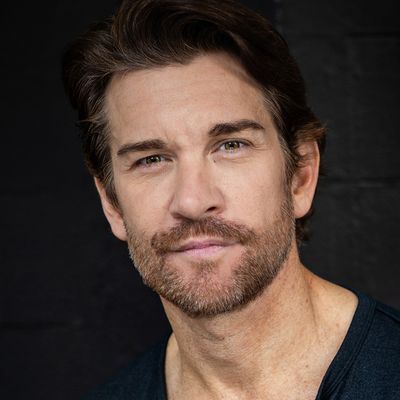
Andy Karl returns to the pod for the first time since episode 4, bringing his signature charm and thoughtful insights. Andy reflects on his incredible journey since his first appearance back in episode four, sharing how his career has grown and evolved over the years... Read More
From the show: The Theatre Podcast with Alan Seales
Guests
Miniseries Inclusions

Featured Shows
About
Andy Karl returns to the pod for the first time since episode 4, bringing his signature charm and thoughtful insights. Andy reflects on his incredible journey since his first appearance back in episode four, sharing how his career has grown and evolved over the years. From his Olivier Award-winning role in Groundhog Day to tackling diverse characters in Rocky and Pretty Woman, Andy dives deep into the physical and emotional challenges of performing on stage. He also discusses revisiting Groundhog Day in the UK years later, highlighting the profound personal and professional growth he experienced along the way.
Currently starring as Pastor Bill O’Keefe in the boundary-pushing Teeth: The Musical, Andy shares what it’s like to explore such a unique and provocative role. He opens up about the importance of collaboration, mentorship, and maintaining joy in the ever-demanding world of theater. This episode offers a perfect blend of inspiration, humor, and behind-the-scenes stories, making it a must-listen for Broadway fans and aspiring performers alike.
Andy Karl is a three-time Tony-nominated actor and Olivier Award winner known for his dynamic stage presence and versatility. His celebrated performances include Groundhog Day, Rocky, Pretty Woman: The Musical, Legally Blonde, and On the Twentieth Century. He has also appeared on television in Blue Bloods, The Good Fight, and Prodigal Son. Andy currently stars Off-Broadway in Teeth: The Musical, showcasing his ability to take on bold and innovative projects.
Connect with Andy:
- Instagram: @andy_karl
- Twitter: @andy_karl
- Facebook: Andrew Karl
- Official Website: teethemusical.com
Connect with The Theatre Podcast:
- YouTube: YouTube.com/TheTheatrePodcast
- Threads, Twitter & Instagram: @theatre_podcast
- TikTok: @thetheatrepodcast
- Facebook.com/OfficialTheatrePodcast
- TheTheatrePodcast.com
- My personal Instagram: @alanseales
Transcript
This transcript was automatically generated and might contain errors.
[0:00] Andy Karl: Hi, I'm Andy Karl. Welcome to the Theatre Podcast with Alan Seales.
[0:30] Alan Seales: A deep dive into the world of Broadway with one of its most versatile performers. Today's guest is Andy Karl, a three-time Tony nominee and Olivier Award winner who first joined us all the way back in episode four, that is, single digit four. Since then, Andy has continued to wow audiences with all of his performances that include iconic roles in Groundhog Day, to Rocky and Pretty Woman, and even his latest show-stopping performance as Pastor Bill O'Keefe in Teeth, the musical. This conversation is packed with inspiring insights as Andy reflects on his journey, how his approach to theatre has evolved over time, especially even since we've last talked since episode four, and the lessons he's learned while even revisiting Groundhog Day years later because he just got to do it again over in the West End.
So, as now this is the final episode, the fourth of four of the Teeth the musical takeover, we of course dive into the fascinating world of Teeth and what makes it push boundaries on stage. So don't forget to follow me on social media, check out my Patreon or Spotify for the video version of this episode, and now everyone please enjoy this episode with Andy Karl, again.
[1:49] Alan Seales: Today's guest is a Broadway powerhouse whose career continues to shine brighter with each passing year. Known for his Olivier Award-winning turn as Phil Connors in Groundhog Day and his critically acclaimed performances in shows like Rocky and Pretty Woman the musical, he has proven time and time again that he's one of theatre's most versatile and compelling performers. He first joined me on the Theatre Podcast way back in episode four, single digits people, four, where we explored his journey from Baltimore to Broadway and beyond. So if you want to hear the full backstory, go back to episode four. And since then, his career has flourished with exciting projects in theatre, TV, film. He can now be seen as Pastor Bill O'Keefe in the off-Broadway hit Teeth the musical. Andy Karl, welcome back to the Theatre Podcast.
[2:35] Andy Karl: Thank you. It's good to be back. What episode is this?
[2:37] Alan Seales: This is gonna be, I don't have an exact number for this one yet. This is gonna be probably late 360s.
[2:46] Andy Karl: 360?
[2:47] Alan Seales: Yes.
[2:48] Andy Karl: From four to 360?
[2:50] Alan Seales: As we're recording right now, I just dropped 364 with Leah Delaria.
[2:54] Andy Karl: Wow.
[2:55] Alan Seales: Yes. So we're in the high numbers and we haven't been speaking in a long time.
[3:00] Andy Karl: I wanted, yes, I wanted to thank you, first of all, because before, barely knew each other back then, I just texted you on a whim and I was like, hey, I'm starting this really silly idea. It's called a podcast and we're gonna talk about some silly things. You want to do it? And you didn't even ask anything. You're like, sure, I'll do it. Yeah. And so like, you're part of the reason that we are now almost 400 episodes deep.
[3:24] Alan Seales: Was that pre-COVID?
[3:26] Andy Karl: Yeah, that was 2018, man. It was summer of 2018.
[3:28] Alan Seales: Before podcasts were really cranking.
[3:31] Andy Karl: Yeah, yeah.
[3:32] Alan Seales: That's the only thing people could do. You were ahead of the game.
[3:35] Andy Karl: Dude, there was a microphone shortage during COVID and everything. It exploded. It was a thing. But yeah, you've had quite the journey since we last spoke, right?
[3:47] Andy Karl: Yeah. What was I doing?
[3:50] Alan Seales: Yeah, that was Pretty Woman, I believe, in 2018.
[3:53] Andy Karl: Oh, wow. Yeah. Yeah, then COVID hit. Yeah, that was sort of like the last Broadway show I did before COVID. And it was interesting coming off of Groundhog Day and going into Pretty Woman. Very, very different roles, accessing a different part of what I do. I think Phil Connors was just, it was such a performance that required so many things, including just deep diving into character substance. And Pretty Woman is like, I better just sing pretty, look good in a suit, and make sure that the lead looks good. So it's like, share these scenes that it's like, it's not my journey of a show. My character's journey goes through definitely something interesting. But I think it's like, the title is called Pretty Woman, not Pretty Andy.
[4:48] Andy Karl: Pretty Richard Gere character guy.
[4:50] Alan Seales: Yeah.
[4:50] Andy Karl: Yeah. No, it was a lot of fun to watch. And yeah, you're right. Groundhog Day is very, very different. But Groundhog Day kind of changed you, I think, emotionally and physically for a while, right? Because you actually, like it was during previews when you tore your ACL, right? During Groundhog Day?
[5:03] Andy Karl: Yeah, I was like, two nights before opening, which was, it really was bad timing. Yeah, that was a real mess with my head moment, because I was just trying to push, like, I wrapped up my leg and, you know, when you have an ACL tear, you just have no stability on a leg. So I got back in for opening night, and I had like, maybe a few shows off in between there, and then until I could actually like, you know, make sure that I'm taking care of my leg. But I actually made it through, pushed through, and by, you know, a couple months later, I was like, no, no, no strap on my leg at all. Just my muscles had gained a certain amount of strength around that area. I just had to be careful about, you know, moving laterally and that stuff.
So on top of thinking about that show, on top of having so much physical activity and mental activity and vocal activity, I had to constantly think of the things that I'm doing that won't disturb, you know, my leg, which sucked, because it was like, having another thing to think of on top of all the things that I am thinking about, very physical and demanding show. And I guess that was, that proved I could push through a lot. And I think I had done that before with things like Rocky, I could just push, like, if I push through, I'll be fine, you know, climb the mountain and be strong. But it made me take my eye off the prize of what that show is really about. It's about community. It's about looking beyond yourself.
It's looking into bigger things in your life and being selfless. And it's weird to try to be selfless when you're only thinking about your leg half the time. So it was constant adjustments of thought, which was fantastic when I could go back to the UK in 2024 for the revival and sort of have all the pressures of, you know, getting a show up, making it a big hit, trying to do all the Tony Award stuff, thinking about my leg, doing all this stuff and, you know, trying to promote myself in a certain way. I could just sit back and enjoy, with a lot of sweat and tears and emotion within that show, but I could enjoy all of it, enjoy the people that were in the cast and enjoy my time on stage. COVID really reset that for me.
It's like, once you do this stuff long enough, you start to get a little bit of a callous of like, what works? What doesn't work? What am I worth? Your ego starts to chip in and tell you, like, you know, how you're going to be in the theatre and how people look at you and what am I really doing here? COVID gave me a chance to reconnect with why I love what I would do, because it was not there for us to do anymore. And so we had to create our own stages via Zoom and all that kind of stuff. So it was just a blessing to go back into it. Really, really a blessing. One that is pretty rare, is very rare. I can't imagine a person, you know, playing a part and then coming back eight years later or six years later and doing it again. I mean, it must have been like eight years from the very beginning.
[8:10] Andy Karl: It's six years between Broadway and UK revival. That's insane. Yeah, I think I told you this the first time we chatted. Back in episode four, I blew out my ACL playing soccer and then the doctor said, you can keep playing, but you're probably going to hurt it worse, right? They actually didn't recommend it one way or another, gave me the choice. And I said, I don't want to hurt it worse. So I can't imagine. I mean, what were you doing on stage, though, to get like that lateral movement? Because most football players get tackled from the side and then they tear the ACL.
[8:36] Andy Karl: I was running full speed, one direction, tried to cut back almost the exact opposite way I was running to get around a guy who was coming up behind me. And that's when my leg went boop. So I can't imagine that kind of force happening on stage, though.
[8:57] Andy Karl: Oh, I was running. I done that show. First of all, we had a rake stage. Secondly, I was done the show so many times and running and leaping over somebody in order to catch somebody falling from a ladder and then catch a cat falling from the ceiling. Very active. At that point in the show, I'm running across stage in full speed, just trying to like, you know, save everybody's day. You know, once you do something a thousand times and when I did this, you know, leap over a person, a complete leap over a person and landing and landing wrong. It's just the force of it just said, nope. I'm sure people know out there, when you watch a Broadway show, it is very active. We are, there is some people who are in the best shape that people can be.
Show bodies, that's what they call them. You, you, it's because it's a sport in a lot of ways because you have to, the energy required to give the performance you're giving, but also the what the asks are on trying to make something exciting and what your energy level does when you're on stage, when that adrenaline is pumping and you're like, I want to give the best performance I have ever given every night. And you get that. It's like when, once you're, once the lights hit you and you're, you're full out as, as Jerry Mitchell would say. And I think that certainly assists in people getting injured if they're not taking care of themselves. And, you know, I didn't know to take care of my ACL. I'm not sure how I got to taking care of my ACL.
[10:28] Andy Karl: Yeah. There's really not a lot you can do. You can get strength in a ligament. Yeah. But after that, uh, with all the, you know, with all the recovery and now I know to what, what I'm looking, what I'm dealing with. And I know I take care of certain pieces of my body. My, my back was hurting the other day because I do a lot of knee spins in the show and in cartwheels. And, and I was like, okay, time to time to lay off, but also, uh, stretch, get the PT, uh, make sure you're lifting weights in a certain way. Uh, it's doing plank. Yeah. These, these shows, Broadway, any show, it doesn't have to be on Broadway. It could be anywhere. Uh, eight shows a week is, um, going to wreak havoc on your body. Sure.
[11:11] Alan Seales: Yeah. So talk to me about the, about opening night, Groundhog Day on Broadway versus opening, uh, recently in the UK, you said, you said, by the way, you're like, yeah, it was back in 2024. We're still in 2024, dude. It's not over yet. You can't take 24, 24 away from me. It feels like a year ago. Right?
[11:26] Andy Karl: No. Like you said that you opened on Broadway in pain, unfocused. It was 2023. You're absolutely right. Okay. There we go. I remember celebrating, uh, I found this. Oh, there's Siri.
[12:10] Andy Karl: There were actually good moves. It wasn't trying to reduce the size of the show. It was just trying to see what's important. There were constant revolves on the stage. On Broadway, there were five different revolves that revolved in five different directions at any given time. You can imagine the legs were always under some sort of duress. Those were cut. Honestly, you couldn't even notice. It was a really good idea, but the practical version of it only enhanced the show as far as technical wizardry. It also created us having to use more of the space upstage and downstage instead of bringing a lot of stuff downstage for the audience to see. It created a little depth with the show that I think Groundhog Day has a little bit more of an intimacy than using the entirety.
In cutting them, it actually helped. Also, tightening up some of the jokes in the dialogue. It wasn't vastly different. Same outfits, same characters, minus two characters that showed up early on and went away.
[13:24] Andy Karl: On the picture of me doing it six to eight years later, my adult brain got more adult and more able to look at things, having a bigger, expanded way of looking at things in my brain. Thanks to Groundhog Day, starting that in the early days, and now my brain has developed in ways that we're able to grasp onto things I hadn't seen before within the show, which I think is beautiful about the show is that you can look at it from several different perspectives in your life and draw from anything. You can really draw from anything in that show. It's something deeply profound, and anybody that plays Phil Connors will know what I'm talking about. There's things you need to grasp onto in your life to expand.
In any case, I had grown as a person. I was now coming in with a different attitude. I was like, I just need to freaking enjoy this and ride this incredible wave of show. It is not about me. It is about the audience. It is about the cast members. It is about me living through this character and doing it as funny and as proud as I possibly can and finding all the bits and the interesting things that are about it and keep riding it and play every night and be open to playing every night and making people feel like they're watching a live performance.
[14:55] Andy Karl: Every night, I sang this song called Seeing You at the end of the show, written by Tim Minchin, and just a profound song about taking in the things of your life and looking at people every day and seeing something new every day. I sang that first verse now directly to the audience. I was like, you guys are here. I was so happy that you're here to watch this show. I will never not perform it that way again, should I ever perform it.
[15:25] Alan Seales: Hmm. Did that come from partially, I mean, you mentioned getting older, but did it partially come from just being without your livelihood, being without your industry for as long as we were when Broadway shut down, when COVID hit? Because that put so much in perspective for people.
[15:40] Andy Karl: I think there was a lot of perspective for a lot of people. Also, just the stuff that I had done on Broadway seemed like it was so exhausting and so much Mishigas and Tony Awards and let's go for it and everything's got to do all the interviews and make sure you're staying on top of things so the show can keep going. It's all on your shoulders. You have to take that junk off of you. I guess I was trying to live up to something that doesn't really exist. It's only depends on how good the show is. It only depends on how nice I am. It's not going to be about like some interview is really going to change the going to get us all those tickets that we need to or some Tony Award is going to make the show last forever.
It rarely does. It just depends on what people truly respond to. I think I just took the pressure of all that stuff off and wanted to do something beautiful. Once you allow yourself to do that, and it happened in the UK again when we were there, the people just came in droves. We broke box office records at the Old Vic Theatre that I'd ever been. We broke all the records. We had an attendance level that was incredible, including people that had come back and seen the show from six years before, which is beautiful. To hear what had happened to them since then was really interesting.
[17:18] Andy Karl: I met a woman who six years earlier was at a crossroads in her life and had seen Groundhog Day in the UK and wasn't sure if she was going to take a job or wasn't sure what she was doing in her life. Something about the show really connected with her in saying, we only have this time to really be profoundly proactive in our lives and we have to make choices that are going to affect us in the best way. It changed her direction. I was proud that she was some manager of a Fortune 500 company. She attributes that to coming and seeing Groundhog Day, which I think is pretty amazing. Just hearing stories from young people that were still discovering themselves, the show really connected to them. Tim Minchin's music really connects to them and where they are now and how they've found strength in knowing that there's a song called Hope in Groundhog Day.
Basically, it's a two-way street. It's a hope about killing himself, but he can't kill himself. He's at his wit's end and he can't do the thing that he just wants to do. He just wants to die. When he realizes he can't die and he realizes through the help of Rita's character that he can actually change the way he's thinking to take advantage of the day as opposed to thinking of it as a hindrance upon himself, he is therefore able to change his entire perspective. I think that has something profound to say to especially young people who are coming to see the show and dealing with trying to find their way in life and wanting to give up on things, but then we're not going to. If you just survive past this one point, you have the ability to find the beauty in your life.
[19:19] Alan Seales: Don't go anywhere. We'll be right back after this break.
[19:31] Andy Karl: Welcome back to the episode. After I saw it, what I walked away with it from was a perspective saying, in the moment, things could be bad that are happening. In the moment, you have a choice to either take a good route, door number one, door number two, and door number three. They're all going to lead to different things. You ultimately have no control over that, but you have to roll with what comes with it. It helped me just put things in perspective and let negative things that are out of my control slip off my back a little bit easier.
[19:54] Alan Seales: That's really nice. I like that.
[19:57] Andy Karl: It was just easier to be like, you know what? There are a million things happening to a million different people at a million different moments, and I just happen to be this tiny little speck that's happening in this big space-time continuum, so who am I to complain about this stuff, right?
[20:12] Alan Seales: It's hard to keep that perspective sometimes, especially when things seem so daunting. Believe me, I know what I'm talking about.
[20:20] Andy Karl: Let's see. This was six years ago. The podcast 2018, that was six years ago. My almost 10-year-old was then almost four. I was just having this conversation with him the other day. He was like, you know there's a billion, billion stars in the universe. Do you think there's aliens? Of course, little green men, I don't know, but I think there's life on other planets. There's just got to be by matter of statistics, right? It's funny to see all the different possibilities. I believe in the multiverse. I believe in all this stuff. I like to think time is not linear. You get so philosophical with this seemingly simple little comedy that we like to call Groundhog Day. I love it. I absolutely love it. Yeah. You can go as far as you want with it, but you can also just look at the surface and see how funny it is.
[21:08] Andy Karl: It's just a funny thing. Just the concept of the idea of reliving the same day over and over again, but you somehow can take advantage of it, and then you sometimes get lost in it. Then sometimes you can use it as something to take you beyond your circumstances. I think it's beautiful.
[21:23] Alan Seales: Well, since 2018, of course, you've done, let's see, you've done Blue Bloods. You've done The Good Fight. You've done Prodigal Son. You were in a film called Hereafter. You've done a bunch of stuff, but then now you are back at New World Stages in Teeth, as we said in the introduction. Tell me about Pastor Bill O'Keefe. Where do you approach this evangelical mastermind?
[21:46] Andy Karl: Yeah. It's a role I've never really played before, which is great. That's the first challenge. My first question was asking the director, like, what's the tone here? How far? Is this camp, or is this like, because I'm reading it, and as I read it, he's pretty serious about what he believes. It's also some of the lines the pastor uses, you know, to hell with you, demon spawn. Go join your mother in the lake of fire. Things like these are like way over the top Michael R. Jackson dialogue, which how does one play this seriously? But I guess it's, you know, the show is so based in like this horror cult comedy, musical mix that we're writing a lot of lines with everything. So I guess what I was asking for tone, and I don't think Sarah didn't really explain it, because she could only explain like, well, we have like fire, and we have lakes, and we have these great effects that are happening on stage, and we have, you know, severed penises coming down from the ceiling, and it's like, oh, okay.
So these are the tones we have to play with. I think the thing for me with Pastor was like, it's just like any character that seems like a quote-unquote villain. He just truly believes in everything that he's saying. And so he's blocked off his mind from accepting anything that's awful about what he's doing, but he truly believes he's leading his community, and these young PKG.
[23:20] Andy Karl: Into making sure that they're keeping on the path of God and being their savior by, you know, suppressing anything sexual that they're doing or thinking and keeping everybody under a tight fist with, you know, fear Father God. I am the word of Father God and therefore you should listen to everything I have to say, which is, you know, how many times have you heard that is the problem with religion. So I just think he truly believes in that through whatever, you know, his past is, which was obviously troubled. And the way he treats his son is just a reflection on how he was treated. So through his suppression upon this town and upon these young people, out of that grows a beast. Out of all that suppression comes a lot of, um, something will come out of all that suppression.
And what happens is the teeth come out of it and everybody goes wild. And so I think there's like, uh, it's, it's taking the ideology from being a pastor and taking the ideology from something that grows out of it and becomes bigger than the religion. That's sort of what that show is about. So I guess like, I just have to play the truth of all the things that I'm saying. Did you see the movie when it came out in '07 or any point after that?
[24:50] Alan Seales: I've seen it after that. I saw it like maybe once early on and then I recently watched it before I started rehearsals. And yeah, I was like, Oh wow. Yeah. There's something really wonderful about the movie because it, I feel like it probably means something to me different than it would mean something to a woman different than I would mean it would mean to somebody, anybody else. I'm sure there's parts of the movie that you just go, Oh God, like I actually, I should I be afraid or should I like be cheering on this young girl who is like now in power because of the, you know, the issue that she has between her legs now. So I, it was, it was interesting and watch cause it is a really like, uh, it's a piece to think about it.
If any good horror film does, it takes an allegory and it really like throws it in your face and makes you think. And I think that's a beautiful part of the movie and easily a beautiful part about the musical. There is a message, it's complex, but it's surrounded in this horror and comedy and music and, you know, grand performances. Well, it's going to kind of compare it to what we were just talking about with Groundhog Day. You could look at it at the surface and think it's something very simple, but when you peel back the layers, there's a lot of message there. And so when you're diving into this character and starting rehearsals and getting deeper into the show, what's something that you found surprising about like discovering within your character and within the show itself?
[26:15] Andy Karl: Because the, some of the stuff I'm saying is so, uh, suppressive, I was like trying to be heavy with it and dramatic and like, how do I, how do I keep everybody down? Do I have to be like mean and angry? And I don't know, it's just sort of this, this combination of finding a tone. That's what he's saying. He truly believes is an uplifting thing, even though it sounds awful. And I found, you know, with other characters I've played, I realized like, oh, you can't really play into the anger of it. You have to actually find a way of believing in it, making it funny sometimes, or just making it, um, making it so that it's like, it's so ridiculous when he says it and he so believes it, that that's the funny thing.
It's like, he so truly believes everything he says and the things that he comes out of his mouth without a, without a wink or a nod or being upset about what he says means, oh, this person is deranged. So I think I found that line with it. And of course I go on to play other different characters that have different nuances to them. So I feel like I'm being able to, I'm able to show everything I got in the show, uh, with what I, with the different characters I play. So there's a time and place for everything. It's just a matter of like finding what does this character do for the story and how can he do that the best possible way and then move on to the next character.
[27:43] Alan Seales: Do you see any weird audience reactions at any particular moment? Like consistently audience is just surprised, like crazy. Cause it's a small, it's a small-ish theater, right? It's 500 seat stage one, new world stages. So New world stages back there again. Yeah. And so like, are, are you seeing at the same moment every time you're like, you're always catching the audience off guard or they're not expecting phallic objects to fall overhead or, you know, things, things that traditionally we don't expect when we think of Broadway.
[28:10] Andy Karl: I think this whole show is fantastic. I think it's true, which is, you know, one of the reasons I was like, yes, I really want to do this. I needed this show. I needed something that was going to push some boundaries. I think a lot of the characters in the show say a lot of things that push people into an uncomfortable place in the audience. It's, it's, what's beautiful about it. And I think, uh, Michael R. Jackson and Anna K. Jacobs really found this great way of making people uncomfortable, but also creating a great thematic story. What can they can expect? I think when people arrive and the first four rows put on ponchos to protect themselves from any splatter that's happening on stage, I think you're getting that initial like, oh, is something going to happen tonight?
And a giant, you know, drop that says teeth on it with a bloodstain. You kind of feel like they're getting to this place where something's going to happen tonight and I'm not sure what it's going to be, but I'm ready for it. And so the reactions we get from the actual like blood splatter and things that are happening on stage, some great technical things that are never, that have never been done in new world stages. And also a show that really like rides this great line of like Rocky horror and little shop of horrors and maybe like Jennifer's body with Megan Fox sort of runs in those types of areas. Really, really it's an experience. You kind of have to show up and see it and experience it. I think it's a, it's, you know, like Rocky horror when you have to go see Rocky horror either live or at the movies and everybody is going to, you know, scream back at the screen or they're going to, they know their favorite part.
I think teeth is one of those shows. It's just this classic, strange show that people aren't expecting. People aren't expecting certain things to happen. And when they do, it's just, they are thrown back and they, and I hear gasps from the audiences and then laughs immediately after, and then just, uh, a wild rush at the end of the show. And everybody's just cheering on the, the dentata that has arrived. It's truly everything is it's, it's held in such a great way. The story and when they get the release at the end and it's just a, it's beautiful to watch the audience just go, Oh my God. Yes. I wasn't expecting this, but I am all I'm here for it. And, um, that's exactly how I feel taking the show.
It seems very on brand for what commercial off-Broadway is doing right now. And I, I'm all in for it. I love what off commercial off-Broadway is doing, bringing these totally, like you said, boundary pushing, uh, just unusual stories, things that you would have never thought would work, but are working like crazy. And they're, they're making people laugh and think, and I love that something like this at the surface, again, it seems like something very simple or even something ridiculously silly, but it makes people question their values around like, what do I, what do I really think about religion? And what do I really think about sexual exploration, or, you know, especially I, I will never be able to, to identify with as a young woman and growing up in the South myself, I saw how oppressed all of that was.
And even in non Southern States, I still see how oppressed that is. So just being able to let people walk away, laugh about something and then still go, Oh yeah, maybe I need to be a little different. I can be a little better.
[32:02] Andy Karl: Yeah. I think, uh, it was interesting after this, you know, current election that the show that we did that not, uh, the next day was, was, uh, the cast, uh, the young women are a cast where, you know, certainly adding a certain something to the show. I think that it was really, uh, interesting to, to watch. And, um, you know, because it has such a comment on women empowerment in the show, um, that it's that and it's, and it's not, I wouldn't, it's, it's only heavy handed in a way that it's like, it's horror heavy handed. It's not like, we're going to sit here and like tell every, you know, man, you shouldn't do it's like, no, we're going to bite your, your dicks off. We're coming for you, which I, which is hilarious and, and fantastical.
So that's the, you know, the sort of imagination that's going on and magic that's happening on stage. But, you know, there is a very strong message behind that and it makes you try to say like, I better like gird my loins and garner some respect. I think it's, it's really interesting. It's really interesting as, and, and I think any good horror film, uh, and certainly any good musical about a horror film really has to lean into the messages that it's trying to tell. And I think Teeth does it in a great way where you're just like, you're cheering on and going like, yes, and laughing and grossed out at the same time. I think the shock value softens the blow of the hard lessons that we walk away with.
It's, it's a lot of fun. But now at this point in your, in your career, are you, and you're working with, um, I love the saying, like I keep getting older and everyone else stays the same age. You're working with people who are consistently coming out of college or are still younger. Are you seeing yourself shifting into a more of a mentorship role or like when putting yourself in the shoes of the, of the young, of being young and looking up to the people you are working with that of whose age you are now, what am I trying to get at? Are you seeing yourself in a different way? Like more of a mentor now?
[34:02] Andy Karl: It's definitely, it's definitely a question. It's like shifting into, into certain things. Cause like, you know, like I'm not going to play, uh, you know, Link Larkin in Hairspray. I'm moving into roles that, uh, he's, he's either the heavy or, uh, carries a certain amount of knowledge that can be, I don't know, spread around in a certain way. It's, I don't know, the roles are interesting and different, but I also find myself interesting and different now. So I'm, I'm, I'm, I feel like I'm aging well into things, what I can do for the cast. And it's, it's hard to put yourself in a position of like, Oh, I'm Andy Karl from Broadway. Let me, you know, write this down, kid. I want to tell you something. I don't, I don't really approach it like that. I join a cast equally as, uh, creative and playful as somebody who's half my age. I, I want that.
[36:56] Alan Seales: Welcome back to the episode where I come from, especially in those times when we're all gathering together and making sure that everybody's heard. I offer this ability to say we have the chance to express ourselves, and we have this chance to actually change our lives and other people's lives in this creative space. What we're doing on stage matters so much; it matters so much to people who are seeing the show. We are a force, and we're a community of people that has an effect on the world. That's why I love art in general.
[37:40] Andy Karl: Yeah, and it's beautiful. Anytime I can stand up and speak for a group as a whole, as a family, that can push through a lot, especially during tech rehearsals. We had a very short tech rehearsal; we had flames going off everywhere, we have giant walls falling, and things coming from the ceiling. I said, let's all just make sure we check in and make sure we all are aware of everybody else on stage. Keep an eye out for your friend on stage who's next to you, and be aware that things can go right, but they can also go wrong. I've seen things go wrong so many times, so everybody just keep your eyes open, your heads on swivels. I appreciate and love you all, and this show can have a great effect on every one of you.
I think once you leave this show, you'll realize that everyone in the cast has a voice. Everyone's listened to, everyone's heard. I just looked it up real quick; we were talking, and Teeth has an intimacy director, Krista Marie Jackson. That position, the first time I had ever heard of it really being used commercially, was having an intimacy director or intimacy coordinator was Claire Warden in Slave Play, and that wasn't even all that long ago, right? So it's like, especially with something like this where it's funny, there is some physical comedy, physical humor, but it's also of a very physical nature sexually. You've got to make everyone feel comfortable to do the same things eight times a week and make sure everyone's heard.
You can't do the same thing in the same way depending on who's playing the role because there's understudies and swings and blah blah blah, right? So, you know, I love that that's a thing. How has that changed from early in your career to now, carving out space for those types of situations?
[39:32] Alan Seales: I think it's hugely important, especially for this show. In hindsight of awful things that have happened, especially in the Me Too movement, it gave voice to things that are unspoken. We now have people like our intimacy coordinator to start a conversation so that no one's ever mistaken for doing something, and also no one's ever mistakenly not going to offer what they feel uncomfortable about. There were times where I was like, I don't know what I should ask, but she would start a conversation around it, and then we would find it. I think it's beautiful in a lot of ways because it creates conversation around it, so people feel like they have a say in things that are happening to them as opposed to, "Oh, this is what we're going to do; make it look good."
It's more like, "Well, how do you feel about that? Is this okay?" Those are really the questions. I think it's a necessary part of especially the entertainment business, and I think it's a really good addition to the entertainment business, but certainly to this show, which Teeth does push these boundaries of sexuality, sexual purity, suppression of things, and then everybody just gets emasculated at the end. It's like this horrific, amazing, awful, wonderful, hilarious expression of anger at the end from the feminine perspective. We all have to check in, and we all have to make sure we're doing okay. I think it's absolutely necessary for this show in particular. I don't know if that's going to happen in like Mary Poppins or something.
[41:40] Andy Karl: Yeah, it's like the intimacy director for Mary Poppins.
[41:44] Alan Seales: Yeah, different story.
[41:48] Andy Karl: Sounds like an adult spinoff of Mary Poppins.
[41:51] Alan Seales: Okay, so wrapping up with a new segment that we do now that you didn't get to do in episode four called Plot in 60 Seconds. Do you know what this is?
[42:00] Andy Karl: It is describing a plot of something in 60 seconds.
[42:03] Alan Seales: You got it. You're a smart guy. All right, so I'm going to put 60 seconds up on our screen here. There we go. So I have a list of 16 popular musicals. Actually, I should add Altar Boys in here. So let's see. I'm going to randomly add Altar Boys. So maybe you'll get that one. All right. So now I have a list of 17 popular musicals, and you give me a number from 1 through 17. It will correspond to a show, and you give me that plot in 60 seconds or less.
[42:29] Andy Karl: Let's do 17.
[42:37] Alan Seales: That is the show Six. Go.
[42:40] Andy Karl: 60 seconds for me. Six women who were wives of King—I forgot the King.
[42:49] Alan Seales: George?
[42:49] Andy Karl: Maybe. All were wives and ex-wives. Some were beheaded, some were tortured, some had children with him, and it is their expression of what happened during their marriage in a pop, awesome, danced, quite tight, closely knit, vocally harmonized way.
[43:10] Alan Seales: And why should we care about these six women? What makes them unique?
[43:14] Andy Karl: They all have their own unique perspectives on what this King was about and how he made things impossible and/or lovely, but also the perspective of a woman in a marriage with an aristocrat and someone who had less feelings for their personal welfare.
[43:35] Alan Seales: All right, I'll take it. I'll take it.
[43:37] Andy Karl: Oh, stop, stop. There we go.
[43:39] Alan Seales: All right, who is the King?
[43:40] Andy Karl: I can't—oh, King Henry the Eighth.
[43:43] Alan Seales: I say George has it.
[43:44] Andy Karl: Yeah.
[43:44] Alan Seales: You said King George, who was from Hamilton. Wrong musical.
[43:47] Andy Karl: Yep.
[43:48] Alan Seales: Was it which George was in Hamilton? Was it the first, second?
[43:51] Andy Karl: I actually don't know. I need to be better at the histories.
[43:56] Alan Seales: The singing one.
[43:57] Andy Karl: Yes, the singing one. The Jonathan Groff King George.
[44:00] Alan Seales: All right, so then same three standard closing questions that we have now been doing for close to 400 episodes, and then we're going to take your answers now because, of course, you're allowed to change. First one: What motivates you?
[44:11] Andy Karl: What motivates me? I would say it's a mix of passion and fun—passion and passionate fun.
[44:23] Alan Seales: What advice would you give to your younger self and younger people listening now starting out down a similar path?
[44:29] Andy Karl: If you can, not be so stressed about something and trying to get it right and be as relaxed as you possibly can in order to play and create—that is the best part of your journey.
[44:44] Alan Seales: All right, if you can only see one show for the rest of your life, but you can see it as many times as you want, what would you see as many times?
[44:50] Andy Karl: I want—is this a movie, is this theater, is this anything you want?
[44:54] Alan Seales: That's what makes it super hard.
[44:56] Andy Karl: What's my favorite movie? You know, I think I could pause and stop Deadpool or Wolverine a bunch of times. I'm having a fun time with that. I keep watching it over and over.
[45:11] Alan Seales: Okay. So this is so funny because I just pulled up the transcript for Episode 4. You actually asked the same question. Is this a theater show or a movie or something? And then you said The Who's Tommy on loop for two straight years.
[45:23] Andy Karl: Wow, it was a different time.
[45:26] Alan Seales: Different time back then. All right. So how can we connect with you on social media now?
[45:29] Andy Karl: Andy underscore Karl on Instagram and Twitter. Facebook for Andrew Karl out there has my face on there, and go see Teeth: The Musical dot com.
[45:42] Alan Seales: I believe.
[45:44] Andy Karl: Yeah, it must be that. That must be the dot com.
[45:47] Alan Seales: Just Google Teeth: The Musical.
[45:48] Andy Karl: It is Teeth: The Musical dot com.
[45:50] Alan Seales: You are correct. You are correct. Thank you, Andy. Again, it is so lovely to see you.
[45:53] Andy Karl: It's good to see you too.
[45:56] Alan Seales: 400 episodes later. Geez, I'm tired.
[45:59] Andy Karl: Still, you're tired. Shows a week.
[46:03] Alan Seales: No, it's good, dude. I know one day, one day I will guest star on Broadway as myself. I don't know. That's my only hope these days. We'll see.
[46:10] Andy Karl: Yeah, it's a lot of fun. It's a lot of play, like passion, play, passion and play.
© Broadway Podcast Network, All Rights Reserved