

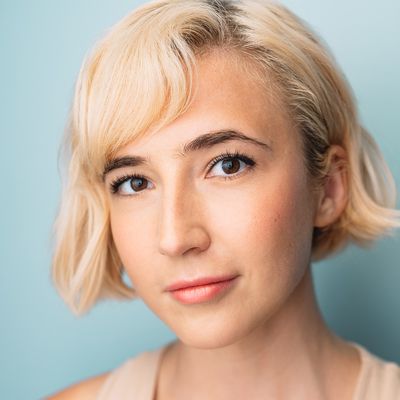
Julia Knitel grew up immersed in theater, with parents who ran a community company out of a church basement. From an early age, she was surrounded by costumes, sets, and the collaborative chaos that comes with putting on a show — and she was hooked... Read More
From the show: The Theatre Podcast with Alan Seales
Guests
Featured Shows
About
Julia Knitel grew up immersed in theater, with parents who ran a community company out of a church basement. From an early age, she was surrounded by costumes, sets, and the collaborative chaos that comes with putting on a show — and she was hooked. After booking her Broadway debut as a teen in Bye Bye Birdie, Julia continued to carve her own path through the industry, landing the lead in Beautiful, touring with Come From Away, and now earning her first Tony nomination for Dead Outlaw. In this conversation, she opens up about what it means to embrace your weirdness, trust your instincts, and find your place in a profession that often tries to put you in a box.
We talk about her journey from ensemble kid to leading lady, why she swears by film photography and beta blockers, and how Dead Outlaw gave her the rare opportunity to be fully herself onstage — quirks, noodle cowboy, and all. Julia also shares her thoughts on staying grounded, celebrating individuality, and the power of telling yourself you’re a star before you step into the spotlight. Julia Knitel is a Tony-nominated actor currently starring in Dead Outlaw on Broadway. She made her Broadway debut in Bye Bye Birdie, later starred as Carole King in the national tour of Beautiful, and appeared in Come From Away. She plays eight characters in Dead Outlaw, a genre-defying musical with seven Tony nominations, including one for her performance.
Connect with Julia:
- Instagram: @juliaknitel
- Film photography account: @knitelonfilm
Connect with The Theatre Podcast:
- Support the podcast on Patreon and watch video versions of the episodes: Patreon.com/TheTheatrePodcast
- Twitter & Instagram: @theatre_podcast
- Facebook.com/OfficialTheatrePodcast
- TheTheatrePodcast.com
- Alan's personal Instagram: @alanseales
- Email me at feedback@thetheatrepodcast.com. I want to know what you think.
Transcript
This transcript was automatically generated and might contain errors.
[0:00] Julia Knitel: Hi, I'm Julia Knitel, and welcome to The Theatre Podcast with Alan Seales.
[0:11] Alan Seales: Hey, everyone. This is The Theatre Podcast with Alan Seales. That's me. I'm your host, and our guest today, Julia Knitel, is a Tony-nominated actor whose Broadway journey started in a church basement doing shows with her parents. She made her Broadway debut as a teen in Bye Bye Birdie after attending a random open call. Then she went on to star in Beautiful, toured with Come From Away, and now she's back on Broadway in Dead Outlaw, where she plays eight totally different characters, sometimes in the span of a few seconds. I mean, she's interestingly quirky. She's wildly talented, has no computer or TV, and takes film photos just for the love of it. I mean, she's just really cool. She's the kind of person who reminds you that being exactly who you are is actually your biggest superpower.
So don't forget to connect with me online on all the social medias. Look for clips on Instagram, TikTok, other places. Look for the video version of this episode on Spotify or my Patreon account. And now, everybody, please enjoy this episode with Tony nominee, Julia Knitel.
[1:22] Alan Seales: Today's guest is a Tony-nominated powerhouse whose journey to Broadway started in a church basement community theater run by her parents. She made her Broadway debut as a teenager after landing Bye Bye Birdie through an open call, went on to star in Beautiful, toured the country with Come From Away, and now she's back on Broadway, this time originating a role that critics and audiences are raving about. Giving her a Tony nomination, she is the heart and soul of Dead Outlaw, where she plays eight distinct characters, sometimes switching between them in a matter of snap seconds, and brings raw emotion, humor, and humanity to a genre-defying show that's already picked up seven Tony nominations, her being one of them. Julia Knitel, welcome to The Theatre Podcast.
[2:00] Julia Knitel: What an introduction. Hello. Thank you. And that's it. This whole podcast is just introductions.
[2:06] Alan Seales: Oh, I love it. No, I'm kidding. I'm kidding. I mean, I said that you grew up in a church basement run by your parents doing theater and singing and stuff like, talk about that. What was that first scene?
[2:18] Julia Knitel: Oh, my God. First scene of your life, curtain up. Curtain up on my mother on stage pregnant as Maria Von Trapp in The Sound of Music. An actual pregnant Maria Von Trapp. An actual pregnant nun, and I was inside of her, and that was my stage debut. No, but as I entered the world, my parents are both performers, they're both musicians, and so I just was really immersed in the arts in every aspect of my life, sort of all the time. And what we did together as a family was put on shows for the community. And so I just, I did as many shows as I could a year, and through that, through them especially, I got a real understanding of every aspect of what it takes to put on a show, from the costumes, to the sets, to what the requirements of a stage manager are, and I sort of, I was like this tiny little baby intern for everyone, and trying to absorb as much of it as I could.
And it really gave me an appreciation for just how much work goes into putting on a show, whether it's in a church basement or on a Broadway stage, and I became obsessed with it. And sometimes people ask me like, oh, when did you know you wanted to be a performer? And it's kind of like, I just, there was never anything else I wanted to do. I just hoped that I would get to do this professionally.
[3:39] Alan Seales: How did you explain, how did your mom explain the nun pregnancy?
[3:44] Julia Knitel: Well, I think like, logistically, it was like a dinner theater, and so it was a really long run. And she found out, she found out she was pregnant like right at the beginning, and was already in rehearsals, and was like, oh, it's like five or six months, like I'm gonna be showing by the end of this. And I, I'm like, scared that they're gonna, they're gonna like replace me or whatever. And so she just tried to keep it under wraps. And then eventually people, people saw the baby. I know.
[4:15] Alan Seales: I guess they didn't, they didn't add a line in anyway. But, so you were growing up around all of this, and it sounds like, I mean, it was a dinner theater, so it was a long run. It wasn't, I mean, I guess it wasn't community theater, because community theater is really, a lot shorter.
[4:28] Julia Knitel: Yes, my parents, that was a show that my mom was doing professionally. Their community theater, we had like, two weekends of shows, which was very fun.
[4:40] Alan Seales: Right. But then, so were you always growing up, they were doing it professionally, were you always growing up around that? And then there had to have been some switch, where you said, all right, this, this is fun, and I want to do it forever, because it's so easy, and I'm always gonna cast in everything.
[4:56] Julia Knitel: Actually, I will say my parents kept me very humble, and never really let me play any parts, like they were like, you're in the ensemble, which was actually so amazing, and gave me a lot of skills that I used to this day. I'm very much an ensemble character in Dead Outlaw, I just have my, my step outs and my features. They did let me play Annie, which I will say it was like the big one for me. But uh, yeah, no, I just, it there was the open call that I went to for, for Bye Bye Birdie was the first moment where doing it professionally entered my world. And I, I didn't think they would say yes to the audition. And I asked them anyway, and they did say yes. And I obviously thought I wouldn't book it, because it was my first professional audition ever.
And it was an open call. And you know, how much of that was actually them looking, and how much of that was just like a publicity stunt. And they were actually looking and many of us who ended up in the cast came to that, that open call. But that was the first moment for me, where it was like, maybe I can do this professionally.
[5:57] Alan Seales: Wait, after you did your first professional audition, and then was cast in said professional Broadway show, then you said maybe I can do this professionally.
[6:06] Julia Knitel: Yes. Exactly.
[6:10] Alan Seales: Okay, okay, that's, that's a good it's embracing, embracing the chance that came your way. I absolutely respect that. And that's kind of how I've always lived my life to have like, hey, I can do like these 10 different things. I'm just going to try all of them a little bit. And whatever pulls me the strongest, that's what I'll go with. Some might call that yeah, indecisive. I just call it keeping your options open.
[6:34] Julia Knitel: Yeah. And like going with the flow, fly by the seat of your pants. Like, if whatever the universe means for you to do, you'll end up doing.
[6:42] Alan Seales: What would you have done? Do you think had you not gotten anything out of that audition?
[6:47] Julia Knitel: I probably would have gone to like, a conservatory like I would have I would have definitely still pursued the arts, I probably would have done more educational, the educational track that I did, like sort of all of my learning was done on the job, for the most part. But I, you know, I was still young enough. I was a sophomore in high school that I hadn't like fantasized about the schools I would want to go to yet. So I was sort of at this perfect crossroads moment of like, well, anything could happen. Maybe I'll book a Broadway show. Maybe I'll do two more high school shows and then go to wherever I would have ended up.
[7:21] Alan Seales: Wait, so where did you grow up? You grew up around here?
[7:24] Julia Knitel: New Jersey.
[7:25] Alan Seales: Yeah, New Jersey. Right. Right. So then the open call was just like, what a train ride into Manhattan, I guess.
[7:31] Julia Knitel: Yeah, we drove at four in the morning and like parked in a garage.
[7:34] Alan Seales: Oh, God.
[7:35] Julia Knitel: I know.
[7:36] Alan Seales: Oh yeah, that's a commitment from your parents then. Get up and drive at four in the morning.
[7:40] Julia Knitel: My dad was very, a very good sport about it.
[7:43] Alan Seales: And then did you have to then, I guess, 16? When can you start doing eight shows a week? Is it at 16? Or is it 18?
[7:51] Julia Knitel: I think it's under 16, as long as you have a child wrangler. So like I wasn't at 16, you don't need a wrangler. But there were kids younger than me in the show. So we had one backstage. Yeah, because I think the Randolph's did eight a week, if I remember correctly. I don't know. Child labor laws? Who knows?
[8:12] Alan Seales: Right. Now, I remember. So then were you doing commuting from Jersey, still going to high school doing your shows? What happened on two show days?
[8:21] Julia Knitel: I had to drop out of high school. I'm a high school dropout.
[8:25] Alan Seales: Really?
[8:25] Julia Knitel: Yeah. And a college dropout.
[8:27] Alan Seales: Congratulations.
[8:28] Julia Knitel: Thank you. Thank you so much. Yeah, basically, like I was going to public school. And I remember my parents, who are public school teachers, like my mom teaches in that district. And the principal was just kind of like, yeah, as soon as she misses 14 days or whatever, like the rule was, we would have to keep her back. And I was like, but I have a tutor at the theater. And they were like, no. So I just dropped out. I fully was like, all right, peace, and started online high school, which just did not work for me. I was like, again, I don't own a computer. So like 32 year old Julia doesn't own a computer. 16 year old Julia trying to learn math on a computer was like, never going to work. So I took my GED and got 100% on it. Not to brag, I know. And then was just sort of free once Birdie closed to audition for a little while and try with an agent this time to try to see if I could book anything else.
[9:28] Alan Seales: And I guess, were you moving into the city at that point and then like hitting the pavement, doing the normal grind?
[9:32] Julia Knitel: Yeah, I was still commuting. I commuted until I moved in for ultimately college, which was around like 18, 19. I commuted from 16 to 18, auditioning all the time, and was getting to the final two for like every other audition I had, like Broadway, tour. I had like a couple of TV things. And I was like, I'm getting so close. And then I'm missing it. Like something is not clicking for them. And they're choosing this other person very consistently over me. And I think a lot of it was an age thing. Because you don't really, if you can cast a 23 year old, why would you cast a 17 year old? And I was also like 5'11 and had a baby face and like didn't look like a kid, but also didn't look like an adult.
But I like sort of sat with myself and looked at the last two years of auditions and was like, what am I missing? If I can expand myself, if I can go and get some better training, like I've danced 10 classes a week my entire life. My parents are both voice teachers. I have a lot of training in those two arenas. But like acting training, I had never taken an acting class. I was just like, working off of instinct. And so I got to this point where I was like, all right, I want to go to a BFA acting program. I want to get a BFA in acting. And that was hard with a GED to find a place that aligned with that and that would accept me as a student. But I found Marymount Manhattan on the Upper East Side and started two years of their BFA acting program.
[11:04] Alan Seales: Wow.
[11:08] Julia Knitel: Yeah.
[11:08] Alan Seales: And so what made you then, I guess, decide that wasn't for you?
[11:13] Julia Knitel: Well, that was more of a situational thing, similar to what happened in high school, where I didn't stop auditioning throughout those two years. And I had that conversation with the people at school where I was like, hey, I am a professional actor. I've already made my Broadway debut. I don't want to lose the connections that I've been building. I don't want to lose the momentum that I have. I don't want to lose my agent. So I'm going to keep auditioning. And they were like, okay, we'll cross that bridge when we get to it. Whereas like, I had a final callback for Newsies and failed an English class because it was like a three-hour class and you could only miss one. And I was like, all right, so maybe they're not working with me the same way they said they were going to.
But eventually, I got to the end of my sophomore year and booked a regional production of Brighton Beach Memoirs. And that was just like, I loved that play so much when I read it in high school. And I wanted to play Nora so bad. And I knew that like, my window for playing Nora wasn't that much longer because she's so young. And so I was like, hey, I want to do this play. And they said, okay, you can do it. But you can't come back to the BFA program. You'd have to do the BA Theatre Arts. And I was like, okay. And I think I sort of thought that maybe I would be able to convince them to take me back. So I was like, I didn't take that very seriously. But while I was out in Portland, Maine doing this play, I got my first audition for Beautiful. So I ended up not being able to go back to school, ultimately, and joined the Broadway company of Beautiful.
[12:41] Alan Seales: Oh.
[12:42] Julia Knitel: Yeah.
[12:43] Alan Seales: Great story.
[12:44] Julia Knitel: Thanks.
[12:45] Alan Seales: And there's a lot of people in very similar situations who have just said like, you know, screw it. I'm continuing to work or continuing to get auditions. And I'm getting my life experience on the job because I can. I don't need the things that sometimes others need to get through, you know, the college experience. And there's no right or wrong way, I don't think, especially in this particular profession, in this location, where literally, you can't throw a stone in Midtown without hitting an audition space.
[13:16] Julia Knitel: It's true. I think a lot of times it's like six of one, half a dozen of the other, where like, yes, going to a great school and getting a great...
[13:23] Julia Knitel: It's a great way to have a base of training and connections too, like when you got to the city to have that network of people. And I think that works for a lot of people. And I also know that what we do every night on stage can't be taught in a classroom. It can only be taught on a stage in front of an audience. And so it's like, I do, they're both valuable. And I think whatever path you sort of wind up on is going to be what's meant for you. But no wrong and no right for sure. I enjoy that. And I know that you've talked to about like, being you're incredibly goofy person, incredibly, like, I don't know, I don't want to, I don't want to say weird, but I am weird. And therefore I like your weird.
I'm weird. Yeah. Okay. And so that's that sort of thing. I do feel like it's sort of helped or hindered. And I mean, you're 5'11, you're, you're tall for a woman, for someone who presents as a woman. And I guess, I think newsies, you brought up newsies, right? Like you and Jeremy Jordan, you'd be towering over him. Yeah. Right. So how have you incorporated that sort of the weirdness, the height, the I mean, you know, everyone says embrace what makes you different. But how do you how have you worked? How have you had this work to your advantage?
[14:48] Julia Knitel: Well, I will say, it's Dead Outlaw in many ways celebrates all of the parts of me that have gotten in the way of getting other jobs, where like, in earnest, I have been too tall for people. Sometimes they cast the male lead first, and he's five, seven, and I walk into that audition. And immediately, even if I blow them away, they have a certain idea of what a male-female relationship looks like, which is very archaic, I will say. But, you know, they may have this visual idea, and I don't fit that visual idea. But it's, it's something that I feel so celebrated in Dead Outlaw, because all of those things that have made me weird or different or stand out are celebrated every night on stage. And I will say like, yeah, I've been told by a few mentors and people, like directors that I really love, especially post-pandemic, I had a conversation with one of my friends where I was like, maybe it's not going to happen for me.
You know, like, I've been a working actor for, at this point, like 14 years, and I am consistently working, I always say, like, my real true gift is that I've had health insurance for the last entire time, like, I've never had a lapse in my health insurance, which is saying something. Do I have an enormous savings from all the regional gigs I've done? Not necessarily. But like, I'm a working actor, I'm doing it. And I had this conversation with a friend of mine, where I was like, maybe it's just, maybe it's never going to happen. Maybe it's never going to hit for me. And he said, Julia, you're a unicorn. And it's not everyone can see where you fit. And it's going to take a special team of people who see you for your unicornness, and know exactly where to put it.
And then he's like, once that happens, you're fine. And it does feel like that was sort of prolific of him, because this extremely spectacular and special group of people just so happened to be David Cromer, David Yazbek, Eric Della Pena, and Itamar Moses, who did see my weird, my unicornness, my differentness, and knew where to put it.
[16:56] Alan Seales: Well, okay, so dive into Dead Outlaw, then, because, I mean, you said that it's the best script you've ever read. But how did you even get the script?
[17:04] Julia Knitel: Well, I got an audition. I got an email that said, Untitled David Yazbek Project. And I'm in. I had actually, I was like, I know, like, who isn't in? Who doesn't immediately, like, my palms started sweating as soon as I opened that email. I was like, this could be the one. It's interesting, Peter Van Damme, our casting director, I had just had a near-miss with him on a project that, like, I loved and I felt so aligned with. And it got down to me and one other girl. And they went with the other girl. And I remember, like, I got a really kind email from him being like, hey, I loved you. The team loved you. It was just like, you know, splitting hairs. But like, please know you've made such an impression on me.
And the next thing he brought me in for was Dead Outlaw. And so I knew I already had a fan in the room with Peter there. And I was very intimidated. But they sent an MP3 of A Stranger and the script. And that's all I got. And I read the entire script, start to finish, put it down and was like, this is so fucking good. Oh, my God, I can't believe this. Listened to A Stranger. Immediately, like, I felt it imprint on my heart. And I really like you can't get attached to things when you're just auditioning. But I was like, I think this is mine. And I walked in and luckily, luckily, they all agreed.
[18:33] Julia Knitel: I think I only had two auditions. I auditioned with the Maggie material for the first audition and then the Millicent material as well for the second audition. And I will say like having to walk in and do that first Millicent moment mom that I'm home from scream in an audition situation was challenging and hard. But we got through.
[19:01] Alan Seales: Do you get intimidated by auditions still?
[19:01] Julia Knitel: They're horrible. They're horrible. And it does depend on the team. Like I think a lot of people are more aware these days, I felt a shift, actually, especially post-pandemic, where people realize how much it takes to walk into a room and give a performance. And I think we're luckily leaving behind that like old school belief of like, come in and impress me. Like I've found a certain warmth across the board of teams and trying to put you at ease. And especially once you get to know casting directors really well, it's like, oh, I'm seeing my friend, Peter, my friend, Frankie, or my friend, Tara, or my friend, Mary, and I'm like, walking in saying hello to them and then trying to do my best. But I definitely take a beta blocker for every single audition. No shame.
[19:52] Alan Seales: Oh, same, same. I mean, yeah, I went to my first audition in 17 years a few months ago. And whoa, a professional I've never, I was just like, I want to perform in New York because I never have. And here I go. But yeah, that was the first time I'd ever taken a beta blocker. And I was like, hey, this is magic.
[20:09] Julia Knitel: Magic. I swear by them.
[20:11] Alan Seales: Freaking magic.
[20:12] Julia Knitel: Because like once you it just it just tells you like, it's gonna be okay. I feel like beta blockers are like a little like portal to being able to do your best work when you're nervous. And then like, you know, we all deserve a little love.
[20:25] Alan Seales: I know. Anyway, I could get off on auditions.
[20:30] Julia Knitel: Go off different different podcasts. I could go off on auditions all day long.
[20:34] Alan Seales: Yeah.
[20:34] Julia Knitel: With Dead Outlaw, do you? I mean, do you have a favorite moment for the different characters that you play?
[20:42] Julia Knitel: Yeah, I mean, I think it does. It changes every day, depending on where my headspace is. But consistently, I really enjoy playing Millicent. Like I really do. I feel so connected to her. I feel like she's an expression of my inner child. And it's so cool. You know, jumping back to like the being celebrated for my weird, like, the fact that I get to do something so tender, and so sweet, while also so weird. It just it feels so singular and special. And every single night that I do it, I like I come down, I come downstairs from my dressing room with my little like schoolgirl outfit on and like my little like glasses and my little pinback hair. And I like catch myself in the mirror. And I'm just like, this is so stupid.
I can't believe they let me do this. And yeah, it's just I love I love playing Millicent. But there's so many weird little characters that I play throughout that also just like sparkle and light me up every once in a while. Like I love my weird circus lady who speaks like a tenor and sings like a coloratura. I love my noodle cowboy that I get to play for a while. It's truly like it's a it's a it's little assortment of treats that I get to snack on every night.
[22:02] Alan Seales: Was that easy to come in to bring the weird? I mean, because they always say like, go big, you can always be pulled back, it's harder to push you forward. So I, I literally, I don't mean to harp on the weird, but I just love it. Okay, I do mean to harp on it. I'm like being celebrated for being weird. And so the coming in and being weird. I mean, because your noodley cowboy ye person, right? You know, yeah. How do you come in? Or was it hard or easy for you to come in and be like, I'm just going to be the weirdest person I can be Julia? And you're also the only woman in the cast. Right? Which I think maybe makes it easier or harder. I don't know.
[22:49] Julia Knitel: Yeah, I mean, I think what's interesting is the way that David Cromer has directed this piece. Everything is like really specific, like it's, there's a lot of variation, but we're all sort of like, within this one lane of like, you know, he uses this metaphor of the entirety of Dead Outlaw is like one long run on sentence. And we all like pick up our little words within that sentence, and continue the story forward. So you do like, for all the weirdness, you do have to like, still fit seamlessly and smoothly into the piece. And what I think is really cool is that all of us are bringing our like, our very natural weirdness to it. It's like still a very naturalistic piece. And instead of like feeling like I'm going to make this big, big choice, we're actually just like making the most truthful choice from the weirdest place, if that makes sense.
Like it's not big swings. It's actually just like, like what makes Millicent weird is that she's just doesn't actually move. Like she just stares at the dead body and uses her voice and her words. And when she does move, it's like very important because there isn't a lot of it. And like, for example, Millicent was really hard to find. And we, we didn't know how best to handle the absurd task of five foot 11, 30 year old woman standing on a stage and making the audience believe that she's eight, or 13, or 19, even, like, how do you do that? And it was a big conversation. It was like work with our choreographer Anitaj. It was a lot of conversations with David Cromer. It was trying things, swinging really big.
Like there was a whole time where like, Millicent had a walk and Millicent was like, a real like, a real like little kid, like almost toddler style. And we were like, no, that's, that's not it. It's not it. And even off Broadway, like she was sort of the last piece of the puzzle to get a, like a solid amount of work throughout previews. And when we finally got there and broke through and we're like, Oh, actually just the simplest choice is the best choice. And the funniest choice. It was like this epiphany for all of us. And even coming back to it for Broadway, we scaled back even further from like how much she does. And it's, it's, it works. And that's because David Cromer is a genius.
[25:21] Alan Seales: So going from off Broadway to Broadway, did you revisit everything? Or was it just little bits and pieces? Because I know that, you know, I love a saying I just heard that was like, art is never done, you just put it down.
[25:32] Julia Knitel: Oh, that's beautiful. Right. And, and so I feel like when you have the option to go just during workshops to 29 hour readings to off Broadway to previews of Broadway, and blah, blah, blah, like you're always like tweaking and refining, but like, between these different moments, did you, did you go to them? You're like, Oh, man, like Nielsen, we got it. We got to figure this out. Or Cowboy needs to be more noodly, less noodly. We need, you know, during all these phases, was there anything that you were just nagging on you? Or do you or when do you allow yourself to settle into two, eight different roles?
[26:05] Julia Knitel: I think it never settles. I think, because the art form itself, theater is ephemeral, you know, every single night, we have to go and start again, start at the beginning and work our way through. And, yeah, maybe there are nights where you're sick, or you're exhausted, and you like sort of slip into autopilot in certain moments and do something that you know works. But like, my, my, my artistry feels most alive when I am like, fully living in the moment and investigating each thing as though it's new. And that means that like, I don't, you know,
[26:47] Julia Knitel: I don’t know how a line is going to come out. I don’t know how a choice is going to manifest. I think, in this show, in particular, my written words are so few and far between. After I finish the first section as Maggie, I think I say one or two more sentences, and so much of it is sung. You do have to know how you’re going to sing, especially for someone as specific as David Yazbek, who wants things to sound a certain way. I love to do that for him, because I respect him and his artistry so much. But especially with the scene work, you just have to truly listen and receive and respond, and let whatever is moving through me, Julia, as the vessel for this art tonight, impact it. Sometimes Helen, Elmer’s mother, she’s telling him that his dead father wasn’t even his real father, and she’s abandoning him.
Sometimes there’s more empathy there than less. Sometimes it’s harder for her than it is on other nights. It’s sort of just like, I feel the way that that impacts Andrew. That’s like, it is the give and take of what live theater is. If you can live truthfully in that moment, then it’s more interesting for the audience, and more interesting for you. If you had said, not told me that we were talking about theater, and just said that you were talking about being a psychic medium, we could have applied the exact same conversation. I know the vessel through which the characters flow. That’s me. No, I do think there’s truth to that, though, because if you’re truly living in the moment and reacting as if everything is happening in real time, then yeah, you don’t know how it’s going to come out.
You’re letting these other people speak to you. I think it’s like you’re adjusting the frequency in your brain to just become not a little less of you, a little more of you, but maybe like an audio board, all those different sliders and faders. You have like, empathy goes up, and compassion goes down, or whatever it is, right?
[28:56] Alan Seales: Yes. What makes you trust yourself as an artist is when you take your fingers off that board, and you say, I’m not going to try to have more empathy tonight. I’m going to see that the way that he just looked at me gave me more empathy for him, so that’s turning up. I think that’s why you train. That’s why you work. That’s why you rehearse, so that you can get all that stuff happens over there. Speaking of weird. Then you can just sort of settle and try to live truthfully.
[29:27] Julia Knitel: I love that. I’m really talking with my hands today.
[29:29] Alan Seales: Oh, I love it. I’m giving you a whole show.
[29:31] Julia Knitel: I like it. I’m a big hand talker, too. I was looking at everything behind you, and I just come up with a segment that I want to do now for you. Let’s play a new game that I’ve just invented on the spot called Let Me Guess Your Personality by looking at the objects behind you.
[29:45] Alan Seales: Let’s see. You like nature and being outside more than you like your material things, so you’ve bunched up your curtains to give your plants light.
[29:55] Julia Knitel: I did.
[29:59] Alan Seales: Right, right, right. You like plants. Is that your camera? You like capturing art in the moment?
[30:07] Julia Knitel: I do. I do. This is one of two film cameras that I own.
[30:11] Alan Seales: Actual film?
[30:13] Julia Knitel: Yeah, 35 millimeter.
[30:14] Alan Seales: Wow. You go and shoot with that?
[30:17] Julia Knitel: I do, yeah. This is actually a new-ish camera. I have a really old Nikon FM that I prefer to shoot on, but this one is auto-focus, so that one’s fun for parties and things like that.
[30:28] Alan Seales: Why do you prefer film?
[30:31] Julia Knitel: I just think it’s more beautiful, and I think it’s more challenging. I think in this world where we have access to a camera on our phones all the time, I just think having something where it’s like you don’t know how it’s going to turn out until it develops is so intriguing to me and so exciting. I just love it. I have a film Instagram you can follow.
[30:52] Alan Seales: Oh, what is it? Plug it. Plug it on the phone.
[30:54] Julia Knitel: It’s called Knitel on Film. I haven’t posted in forever because I’ve been focused on this, but I’ve taken some really beautiful pictures of the show and of our run off-Broadway, and I love shooting landscapes and people.
[31:09] Alan Seales: I know. There’s some really cool stuff, even the selfies and the stuff that you post on your own Instagram, too. It’s all got an artistic lens to it.
[31:17] Julia Knitel: Oh, thank you. Thank you so much.
[31:17] Alan Seales: I like it. Let’s see. You’re a big reader, obviously. You got a whole shelf behind you.
[31:22] Julia Knitel: Mm-hmm.
[31:23] Alan Seales: Are there any cookbooks on your shelf back there?
[31:25] Julia Knitel: Actually, yes. Here are all of my cookbooks.
[31:28] Alan Seales: Wait. Did you organize them by color?
[31:30] Julia Knitel: I did. Yeah. I did. I love them.
[31:38] Alan Seales: Is that just visually appealing or does it help you find them?
[31:41] Julia Knitel: I will say it’s only visually appealing. It’s very hard to find unless I have a memory like, Oh, yeah, that book did have a red spine, didn’t it? It’s not going well, I will say.
[31:52] Alan Seales: It looks very nice, your co-coordinated shelf and your glass, little glass ornament, glass thingies, glass tchotchkes.
[32:01] Julia Knitel: That go, obviously, with the colors.
[32:02] Alan Seales: Yes. Yes, they actually do.
[32:04] Julia Knitel: You can see. Okay, yeah.
[32:06] Alan Seales: Wow. That is more decorating initiative than I would have ever taken in my life.
[32:12] Julia Knitel: I did it all in one afternoon and I was like, I’m never thinking about this again.
[32:16] Alan Seales: Let’s see. I don’t see a TV. You don’t have a computer.
[32:19] Julia Knitel: I don’t have a TV or a computer.
[32:21] Alan Seales: You don’t have a TV either?
[32:22] Julia Knitel: I don’t.
[32:23] Alan Seales: Oh, I was going to I was I almost I need to trust myself more. My gut said she doesn’t have a TV with all those books. She doesn’t have a TV.
[32:30] Julia Knitel: I don’t. Yeah, it’s true.
[32:33] Alan Seales: Wow. Okay. So then what is like the biggest TV show everyone’s talking about that you just give zero shits about?
[32:39] Julia Knitel: Well, it’s hard because I love television. This is like I moved into a new apartment right before I started rehearsals for this. And I was like, I’m going to see how long I can go without a TV. So it was really hard for me not to watch this season of White Lotus, I will say. And like the boys in the show had a really hard time with the fact that I was not watching it because I couldn’t participate in the conversations. And I kept being like, No, I am going to watch it. So don’t ruin anything. And then I didn’t. So.
[33:10] Alan Seales: What about Severance? Severance would be mine.
[33:12] Julia Knitel: Severance people are obsessed with. I haven’t watched a single episode.
[33:15] Alan Seales: Don’t go anywhere. We’ll be right back after this break.
[33:26] Alan Seales: Welcome back to the episode. All right. So let’s pivot over to the actual game that I play to round down, wind down the episodes. I am like running around like crazy. I’m a little hyper today.
[33:39] Julia Knitel: I love it.
[33:40] Alan Seales: I have a list of 17 popular musicals in front of me. You will give me a number that is 1 through 17. That will correspond to a show on my list. And then you have 60 seconds to give me the plot to that musical.
[33:55] Julia Knitel: I am going to fail miserably at this. Okay.
[33:59] Alan Seales: You can make up anything you want. Make it up. Okay. All right. Give me a number 1 through 17. Which number?
[34:07] Julia Knitel: 11.
[34:07] Alan Seales: 11 corresponds to Phantom of the Opera. Go.
[34:12] Julia Knitel: I have actually never ever seen Phantom of the Opera. But I do know that in it, there is a phantom and he lives in the opera. And he falls in love, I think, with the girl who dances. And she has a little friend named Meg. I know because I auditioned for that and they told me I was too tall. But they like do fall in love. I think they love each other. And then he like sings that song and there’s a chandelier and it crashes. And then there’s like a boat and they row on the boat. And do I have to talk the whole 60 seconds about Phantom of the Opera?
[34:44] Alan Seales: No, just tell me how it ends. Give me...
[34:47] Julia Knitel: Does he die? He probably dies. He dies and she cries and then she moves on. And I know that there’s another one called Love Never Dies. So maybe he dies, but her love lives on.
[35:00] Alan Seales: Heinous.
[35:01] Julia Knitel: Ish. Big old ish.
[35:05] Alan Seales: Any of that right?
[35:06] Julia Knitel: There is a phantom and he does live in the opera house. Yes.
[35:10] Alan Seales: That is correct. That’s for sure. Okay, so now the three standard closing questions I use to wrap up the episodes. The first one simply is just what motivates you?
[35:20] Julia Knitel: The great question. Two things. Gratitude, number one. I feel so grateful for this career that I’ve been able to build, for the ability to make art in a very turbulent and terrifying time, because art is healing. And I feel so grateful to get to do, to make my art within the confines of a show that really celebrates all of the things that I believe in, which are uniqueness is the most important thing. And to show kids who are maybe wanting to make a life in this themselves, that if you just do you and try to be the best you can be and be kind to everyone in the process, there will come a time where you will be celebrated for exactly who you are. And the fact that I get to stand on a stage every night and be celebrated for exactly who I am and be an example of that, hopefully to future generations is definitely motivating to me.
[36:32] Alan Seales: That's beautiful.
[36:33] Julia Knitel: Thank you.
[36:34] Alan Seales: What advice would you give to your younger self and younger people listening now starting out down a similar path?
[36:40] Julia Knitel: Oh, I’m going to cry. Okay, this is like the big one for me in this time, actually, is like self-trust, self-love. At the end of the day, it’s like you create your universe with your thoughts and with your actions. And if you have a lot of self-deprecation, that’s just like playing in your head all the time. It creates like negative energy around you, whether you realize it or not. And as soon as you can flip that script in your head, and every time you have like a, I’m not talented enough, I’m not pretty enough, I’m too tall, whatever those things are, and shift them to, actually, I’m really talented, and I’m really beautiful, and people value me, and I love my life. And I literally every night in the wings before I walk on stage, my best friend Sharon Zieg, who I met on Come From Away, we were the only two new people joining the company, and we had her put in together, and I was really nervous, and she was standing in the wings, and she goes, stop it, you’re a star, you’re a Broadway star.
And I say, with Sharon in my mind, I’m a star, I’m a Broadway star, every night before I walk on stage. And that is not like a, maybe it’s hard if you don’t know me, but that’s not like an ego thing at all, it’s actually just a like, calm yourself, you are worthy, you are special, stand in that power. And I walk on stage, and I say it. So tell yourself every day, you’re a Broadway star. It really works.
[38:12] Alan Seales: Stand in that power. I love that, that's a great phrase. All right, this is the last question, the hardest one. If you could only see one show for the rest of your life, but you can see it as many times as you want, what would you see?
[38:25] Julia Knitel: I gotta say, the first one that came to my mind was Into the Woods. I love that show so much, and I think there's so much depth to it. But I don't know, another one might be Gypsy. Like, I just think that like, something that is, do I get to see like different revivals of it?
[38:46] Alan Seales: Sure.
[38:46] Julia Knitel: Or do I have to see the same production?
[38:48] Alan Seales: It's the same show. We didn't say same production. So okay, you found a loophole.
[38:52] Julia Knitel: I found a loophole.
[38:53] Alan Seales: Different casts.
[38:54] Julia Knitel: Yeah, I think that it might be, might be Into the Woods. I like burned a hole, a hole through my VHS when I was a kid of that show, with the original cast with Bernadette, and Chip Zine, and Joanna Gleason. Like, I just, that was so formative to me. And yeah, it's a perfect musical, in my opinion.
[39:15] Alan Seales: It is. It's very, very good. You're not, you're not alone. Other people have picked that. All right, where-
[39:20] Julia Knitel: No one is alone, Alan.
[39:21] Alan Seales: No one, you're not alone. Where can we connect with you online? How do you play the social media game?
[39:28] Julia Knitel: I, as someone without a TV or a computer, all I have is my Instagram.
[39:33] Alan Seales: But my Instagram is my name, Julia Knitel.
[39:37] Alan Seales: You can get more of me at thetheaterpodcast.com. I am on Threads, Instagram, TikTok, Facebook. Leave a rating and a review wherever you're listening, thanks to Jukebox the Ghost, for the intro and the outro music that you're hearing right now underneath this episode. And Julia, thank you for being weird. That's why we're-
[39:55] Julia Knitel: Thanks, Alan. Oh my God, thanks for being weird as well. I appreciate it.
[40:00] Alan Seales: Yay! We can be wacky, wacky noodly cowboys.
[40:03] Julia Knitel: Noodly weirdos, let's go.
© Broadway Podcast Network, All Rights Reserved