

Transitioning from competitive swimming to the stage requires a specific kind of discipline, but Sadie Dickerson has mastered the pivot. She opens up about the intense audition process for Just in Time, which spanned months and a cross country move to Los Angeles, only to receive the life changing offer while house sitting with some very old dogs... Read More
From the show: The Theatre Podcast with Alan Seales
Guests
Featured Shows
About
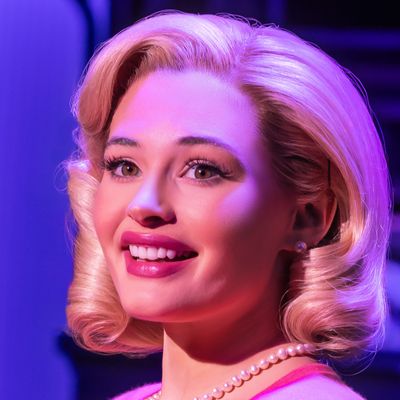
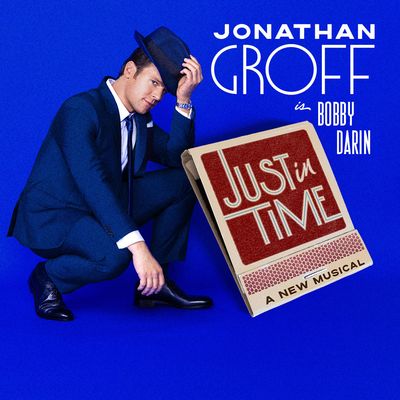
Transitioning from competitive swimming to the stage requires a specific kind of discipline, but Sadie Dickerson has mastered the pivot. She opens up about the intense audition process for Just in Time, which spanned months and a cross country move to Los Angeles, only to receive the life changing offer while house sitting with some very old dogs. She also shares stories about her time working at a Comic Con t-shirt stand and coaching swim lessons before finally getting her big break.
Stepping onto a Broadway stage for the first time is daunting enough, but doing it after sitting backstage for an entire act adds a unique layer of anticipation. Sadie discusses the nerves of that first performance, the supportive environment backstage, and how she balances the technical precision of camera acting with the energy required for live theater. We also get into her love for Newsies and the drive that keeps her pushing for perfection.
Sadie Dickerson is an Austin, Texas native and a graduate of Missouri State University where she earned a BFA in Musical Theatre. She was previously seen Off-Broadway in Vladimir at Manhattan Theatre Club and is currently making her Broadway debut as Sandra in Just in Time.
Connect with Sadie:
- Instagram: @Sadie.Dickerson
- TikTok: @Sadie.Dickerson
Connect with The Theatre Podcast:
- Support the podcast on Patreon and watch video versions of the episodes: Patreon.com/TheTheatrePodcast
- Instagram: @theatre_podcast
- Facebook.com/OfficialTheatrePodcast
- TheTheatrePodcast.com
- Alan's personal Instagram: @alanseales
- Email me at feedback@thetheatrepodcast.com. I want to know what you think.
Transcript
This transcript was automatically generated and might contain errors.
[0:00] Sadie Dickerson: Hey, I'm Sadie Dickerson. Welcome to The Theatre Podcast with Alan Seales.
[0:11] Alan Seales: Hey everyone, you've found The Theatre Podcast with Alan Seales, and that is me, your host Alan, and our guest for this episode is Sadie Dickerson, who is currently making her Broadway debut as Sandra in the new musical Just In Time. You know, you never quite know where you're going to be when that life-changing phone call comes in, and for Sadie, it was house-sitting in a stranger's home with some very old dogs. And just like receiving that call, her journey to the stage was also unexpected. We dove into her background as a competitive swimmer, discussed why she moved to Los Angeles to sell t-shirts at Comic-Con for her grandfather, and we got into breaking down exactly what goes through her mind when she has to wait through an entire Act 1 before making her first entrance alongside Jonathan Groff in this phenomenal show.
It's a really fun look at the resilience required to navigate this industry and an absolute thrill of stepping into a massive role. So find her online, find me online. You can watch the video version of this podcast on Patreon or on Spotify. Leave a rating, leave a review. Wherever you're listening now, it helps the podcast grow. And now, everybody, please enjoy this episode with Sadie Dickerson.
[1:33] Alan Seales: Our guest for this episode is originally from Austin, Texas, a graduate of Missouri State University and has been seen off-Broadway in Vladimir at the MTC, that is Manhattan Theatre Club, and is now making her Broadway debut as Sandra Dee in Just In Time. Sadie Dickerson, welcome to The Theatre Podcast.
[1:49] Sadie Dickerson: Hi. Happy to be here.
[1:55] Alan Seales: Thank you for joining us on what is probably a massively busy eight-show-a-week schedule that you have in one of the hardest shows I've seen anybody perform in a long time.
[2:09] Sadie Dickerson: Well, I'm only in one act, so I guess I get a little bit more rest than anybody else does.
[2:13] Alan Seales: Technically, then, you say you're working like four days a week?
[2:18] Sadie Dickerson: Four days a week.
[2:18] Alan Seales: The equivalent of four days a week?
[2:20] Sadie Dickerson: Four shows a week.
[2:21] Alan Seales: Four shows. Wait, eight shows. Hold on. My math is not mathing. Never mind. Okay. So at school, you got a BFA in musical theater and a certificate in acting for camera. What is the certificate?
[2:35] Sadie Dickerson: So the certificate was included my junior year is when they started doing it, and it's basically kind of like a minor. I don't know the difference between a minor and certificate. I couldn't tell you. But basically, you just took a bunch of extra acting for the camera-specific classes. We had acting on film, acting and auditioning for the camera, TV acting for sitcoms and stuff like that, commercials, really, really cool stuff. Yeah.
[3:07] Alan Seales: So is it basically like you take the same material, and one of them makes you go big, and the other one makes you go small?
[3:13] Sadie Dickerson: That's kind of the idea. That's kind of the idea. Because I mean, at least when we were taught, basically, the fundamental difference of stage acting and screen acting is that on the stage, you're feeling all those feelings and expressing them in a way that will read to the back of the house. And on film, you're feeling all those feelings, but it's contained. So it's not that there's a lack of feeling and a lack of emotion is that you are feeling it. It's all processing, but it's just slightly more contained and you're only playing to that camera rather than like the back of a theater house.
[3:51] Alan Seales: Which version is more closer to the normal Sadie, the everyday Sadie?
[3:56] Sadie Dickerson: I'd say probably stage. I started stage. I have a fairly bubbly, fairly big personality, I think, and most of the time. And so I think for me, playing to a larger audience seems to come a little bit more naturally, but I always enjoy seeing how much I can put myself in a little pressure box of emotion.
[4:26] Alan Seales: Yeah, I've always had trouble with that myself. Because when I'm on camera, I have a tendency to be big, but when I'm auditioning for stage, I have a tendency to be small. So it's this weird problem. I think I need to go get a certificate for acting on camera, is basically what I've gleaned already. Well, where did it come from though? Did you have a big performing kind of environment around you or originally from Austin? There are a lot of Texas people that make it to Broadway. Was it just like you saw theater around you?
[5:03] Sadie Dickerson: I started competitively swimming growing up, and I only started theater because my sister started theater, and she's older than me. And so as a younger sister, I just naturally had to copy everything that she did. And so I got into theater, and then I was swimming and doing theater both at the same time. And it got to a point where I was like, okay, I kind of have to decide, which is crazy, going into your freshman year of high school being like, okay, I can't do both. So I kind of have to decide what my career, what my life is going to look like. And I chose theater. And I know I was lucky enough to grow up in an area that was very... I mean, high school theater in Texas is just a whole other thing.
And Austin is a huge high school theater community. There's so many opportunities outside of high school. I trained at... There's a theater called Zach Theater in Austin, Texas, which is one of the bigger regional theaters in Austin. And they have a pre-professional company. And I was able to train at Zach PPC for a couple years, most of my high school years, as well as do my high school theater program, which obviously just gave me so much experience. And I loved it. I loved it so much. I was exposed to all the incredible things.
[6:18] Alan Seales: They call it the PPC.
[6:19] Sadie Dickerson: I was going to call it the PreProCo. I think that's more fun to say.
[6:21] Sadie Dickerson: Yeah, yeah, yeah, yeah.
[6:23] Alan Seales: Let's call it the PreProCo. So then, okay. Competitive swimming, that is intense. Swimming in general is intense. You still got the lats to...
[6:30] Sadie Dickerson: I have huge shoulders. I don't know if I have the muscle anymore, but the width of my shoulders definitely was impacted by that butterfly constantly. And it was year-round competitive. All of my summers were gone. It was intense. It was very intense. Yeah.
[6:52] Alan Seales: So did you want to get into swimming first, or did your parents put you in, and then you did the theater just to say you're better than your sister?
[7:01] Sadie Dickerson: Oh my gosh. I started swimming at a very, very... I just naturally could. I was born in California. My grandparents had a pool. We were there all the time. And so I learned how to swim very easily. It came very naturally to me. And so it was just like, no pun intended, but like a duck to water. And it just was a very obvious choice to go to. And I loved it until I didn't anymore. And I love something else better, and I like doing it because my sister... She doesn't do it anymore, but she's incredibly talented.
[7:40] Sadie Dickerson: Plot twist. She's an Olympic swimmer now, so that whole thing happened.
[7:45] Alan Seales: We had like a Freaky Friday situation, actually.
[7:48] Sadie Dickerson: Yeah.
[7:48] Alan Seales: No, that's interesting. I wonder how much of the lack of enjoyment for swimming came because it was competitive. Like if you had just been allowed to do it for fun, if you would have wanted to still do it, and you then gravitated towards theater because it was the more fun option at the time, and maybe still is.
[8:08] Sadie Dickerson: Definitely. I also think that it is very competitive, but it's also competitive in the sense of you're only competing with your own last time. It is very individual, and it's very isolated in that sense. And I think I found a community within theater that was just so open and so team-oriented that I really loved.
[8:32] Alan Seales: Yeah. Theater is very team-oriented.
[8:34] Sadie Dickerson: It is, yeah.
[8:35] Alan Seales: Yeah. People who don't belong... I see this all the time. People who don't belong anywhere else all belong together on stage.
[8:39] Sadie Dickerson: Yeah, totally.
[8:41] Alan Seales: Did you feel that though? I feel like you probably, being swimming, you're good at it, doing well in theater. If you're good enough... I'm going to jump ahead for a second because if you're good enough to make it to Broadway at the youngest, one of the earliest points in your career that you can right now, you were probably pretty good in high school too. So did you feel like in high school you didn't fit in or did you fit in once you found your theater people?
[9:06] Sadie Dickerson: I think once I found my theater people, I definitely found a community there that... It's interesting because I felt like I definitely fit in swimming-wise too, but I don't know. It just felt like a right fit for me, and I loved my experience in high school. I had great friends. I was able to do some really incredible shows and be a part... Again, the outside of high school community was also a really big part of that, and branching out and meeting kids from other schools and other backgrounds, and all of us coming together to create was so fine to me.
[9:52] Alan Seales: Do you still, I guess, get that same sort of feeling? I mean, this is still... It's been decades. It's been literal years. But coming out of Texas, I was going to ask, creating something new with your work at MTC, and then now you're stepping into a massive show with a massive character, with a massive lead. I mean, it's just like you kind of just got shot off to the top real quick, but do you still feel any... Do you still feel the creative passion, the creative validation where you are, or is it now all of a sudden like, oh, crap, this is more like a competition?
[10:24] Sadie Dickerson: Not at all, actually. In fact, I think it feels less competitive now, which is really... I don't know. I feel like there's something to be said about the actor who moves to New York or anywhere, I guess, and is fighting so hard to get seen, to get in the room, and to get the opportunity that I have now. And it feels like once you're through those doors, yes, it is difficult, and there are still obstacles, and it's still competitive, but it feels... I don't know. I'm almost relieved to have... I'm very, very grateful and very privileged to have been put in this position so early, because it is such a hard thing to get to that room to begin with.
[11:16] Sadie Dickerson: So that's kind of how I feel. I'm like, okay, I can still audition, I'm still grinding, I'm still doing my thing, but there's kind of a weight taken off of it a little bit.
[11:26] Alan Seales: Interesting. Well, how did you get into the room in the first place? When did you move... How quickly after college did you move into New York, and when did the credit start rolling in?
[11:38] Sadie Dickerson: I graduated in May of 24, and then I moved home right after, and then I got my manager's from my showcase, my senior showcase, and I moved home, and I was just submitting all summer. I was submitting and submitting and submitting, and I finally booked this understudy job at Manhattan Theater Club, and that brought me to New York for a few months last fall. So I was here from September to December last fall. I was on a sublease. I loved it. It was incredible. During that time that I was understudying, I got a tape in my inbox for Just In Time for Connie, actually. And so I put Connie on tape, sent it in, they called me back in. I did the Connie material, went away, they had me come back in. I did a work session with our incredible music director, Andrew Resnick, with... Sorry, now with the Connie material, and then I came back and I did the Connie material again.
And then after what felt like so long, it was like, it's not going your way. I was like, okay, that's fine. Moving on with my life. A couple weeks later, they reached out to me, and they were like, and this was early December now, and they were like, okay, can you put the Sandra stuff on tape? And I did. And then they asked me to come in and do a chemistry read with Jonathan. And so I went in and I did the chemistry with Jonathan. It was like a bunch of material. I mean, basically her entire, the material that they had at the time for Sandra, a bunch of sides, a bunch of songs. And it was great. I felt that was one of the only auditions that I've gone and been like, okay, I felt really good about that.
And the next morning, didn't go your way. I was like, okay, well, that's all right. Okay, that's okay. The very next morning. And then I moved to LA after that. December 24, January 25. December 9 was my final audition in the room for Just In Time, December 9th of 2024. And then I moved to LA. And I got in between, the same casting team sent me, Jim Cartaghan, he sent me an audition for a workshop for a new show. I ended up doing this workshop that brought me back to New York for a couple weeks in between moving. So I moved in January. I was here for a couple weeks doing a workshop in March, April. And the very last day of our presentation for this workshop, Jim Cartaghan came. He saw the workshop and he was like, you have to go see Just In Time.
Jonathan wants to meet you. And I was like, what? I was like, my parents are here. And so they got me and my parents in. Just In Time was still in previews. And we went in, we watched the show. And then I went backstage and I met Jonathan again after. And it was just a really beautiful moment. He was just like, I just wanted to tell you that I loved your audition. I think you're incredible. We talked with my parents, we took a photo. And then I went home and that was it. And I was like, what? This is crazy. This is crazy. Anyway, so that was April. And then flash forward to August 4th. I remember this day very distinctly because my boyfriend was house sitting. And we were both at the house that he was house sitting at, except he was at work.
And so it was just me in this house that I didn't live at, that I didn't know, with these very old dogs, very sweet, but very old dogs. And I had a Zoom audition later that day. And usually my team checks in with me when I have Zoom auditions, any kind of in person, just at the beginning of the day, you're ready for this. So they texted me that morning and was like, hey, can you jump on a quick call? I thought they were just going to check in about this Zoom audition. And I get on the call. And they're like, hey, we have the whole team here. I was like, it's both my managers, both my agents. And I was like, I thought I was in trouble. I thought I was getting fired. I was like, oh, no. What did I do?
And they're like, no, no, no, you're not in trouble. We have the offer for Sandra on Broadway. After seven, eight months, I had no idea they were considering me. They didn't ask me to send anything else back and it was crazy. And I just started freaking out. And these dogs, I was like, I have nobody to talk to about this. I'm in this random house with these dogs. And yeah, I just freaked out. I just freaked out. It was crazy. It was the most insane day of my life, hands down.
[16:28] Alan Seales: Wow. Wow. I mean, that just goes to show you, right? At the time they say no, you don't know why they say no. It might not be because you weren't right for the role. You have no idea. And I feel like that's something that's so, it's exciting. It's a little draining, but it's also very exciting about our industries that you could get a call at any time and completely have your life flipped upside down, which is crazy.
[16:56] Alan Seales: Don't go anywhere. We're going to take a quick commercial break.
[17:00] Alan Seales: All right, everyone, now we're back. But rewinding to something you said that you moved to LA, it sounded like you were just gung-ho theater. Then why did you move to LA?
[17:09] Sadie Dickerson: I really wanted to move to LA. I've always wanted to live, I'm from Southern California. I was born there. All my family is from there. We moved to Austin after my brother was born. I was like five. And I've always wanted to move back to California at some point.
[17:27] Alan Seales: So you're a middle child?
[17:28] Sadie Dickerson: I am a middle child.
[17:29] Alan Seales: Hey, there you go. There's the theater. There's the theater.
[17:32] Sadie Dickerson: Look at me, everybody.
[17:35] Alan Seales: So dramatic for no reason. Oh my gosh. No, you're totally right. There was a part of me after graduating college that was just like, okay, I'm going to have to move and I'm going to have to find a day job and also audition. And to me, like my initial thoughts after graduating before I booked the job that brought me to New York initially was like, okay, LA seems like a happier place to have a day job and also be auditioning. That made sense to me. The fresh air, the space was appealing to me. And so I had originally actually wanted to move to LA right after college. And then obviously things changed. And so after what felt like years, it wasn't, it was just a couple of weeks, auditioning for Just In Time.
And after kind of getting attached to the idea that I was going to maybe book this and like have a plan and like move to New York with my dream job. And then that didn't happen. I was like, okay, maybe this is a sign. I jumped on a lease with my friends that were already moving. And I was like, great. Fresh new beginnings. It's a new change. And I actually loved it. I loved living there. I had a great job. I was a swim coach for kids, which was like kind of full circle. I also worked for my grandpa. He runs this like t-shirt stand at a comic con type thing like on the weekend. So I was coached swimming during the weekdays and I sold t-shirts on the weekends and it was very, I loved it actually.
It was so much fun. And I was able to audition and then I got this and I had like two weeks to like figure out my apartment there, find an apartment here and fully move and jump right into rehearsals. It was crazy.
[19:29] Alan Seales: That's insane. So then what was the rehearsal process like coming into Just In Time? Because I mean, I know there's shows like Wicked and Lion King and Book of Mormon, these machines that have existed for decades. Just In Time, it's been around for a while, but it's still a season old. So like, what was that process of integrating you into this show where a lot of the originals are still there?
[19:48] Sadie Dickerson: Yeah. Yeah. And it was fast and it was furious, but I feel like it ended up not being as daunting as I thought it was going to be, number one, because she's only in act one or act two and there isn't like a copious amount of material to take on. It's like a good, maybe like 45 minutes of material. And I had like two weeks, two and a half weeks to like really settle into it. But in terms of like the rehearsal process, everyone was so incredible and so kind and so welcoming. And most of my rehearsals were with our assistant director and our swings, basically Matt Magnuson, who plays our Bobby standby and covers all of our male roles, was incredible in my process because he's incredible and he was a huge help through that entire thing. And all of our swings were incredible and just integrating into the show. And then I had like two put-ins before I was thrown into it.
[21:05] Alan Seales: What was that first night like? Do you remember your first? Was it probably a Tuesday going in or something?
[21:12] Sadie Dickerson: Yeah. It was a Tuesday. And I've never shook more profusely in my entire past. I wasn't going to say that live on the podcast. I mean, I was just sitting there all of act one, like, okay, I'm going to do it. It was kind of like a torturous thing to make me wait an entire act before I go on. And it was the first time that I wore my shoes. It was like the first time that I like did anything with the band and the audience. It was the first time I did it with the audience, which the audience is like such an integral part of the show. It was like so jarring. And I knew that going into it, but I wasn't fully prepared for the audience of it all. And it was crazy. I got through it. I won't say that it was my best performance by any means, but I got through it. I survived it. And now we're here.
[22:16] Alan Seales: Well, okay. So, you've had a while to settle in now. What are you doing differently now that you did when you first shit your pants?
[22:24] Sadie Dickerson: Right, right, right. Well, I took some Imodium and that really does help.
[22:27] Alan Seales: Good, good, yes. Very helpful.
[22:29] Sadie Dickerson: I think I've established a routine. A lot of it was about learning. I've never done eight shows a week. I think the longest run that I had ever done was for a month or two at an outdoor theater in Austin, Texas, like my junior year. And so, there was just a lot of learning curves that I had to figure out. I needed to learn how much rest I need. I need to learn what foods I can and can't eat, what my warmup routine looks like. And there are days I'm like, okay, that didn't work, clearly. And there are days that I'm like, okay, I feel great. And here's all the things that I did that set me up for success and taking notes of that. So, that's been very fun as well.
[23:20] Alan Seales: Hmm. And have you had the pleasure of working with multiple swing outs or standby covers and whatnot? Just massive shout out to Standbys, Understudies and...
[23:31] Sadie Dickerson: They're incredible.
[23:32] Alan Seales: Alternates. Yeah, everyone. Swinging is one of the hardest things I've ever done.
[23:38] Sadie Dickerson: It's insane.
[23:38] Alan Seales: And I don't know if I would ever do it again. It made me so neurotic of like, who am I going to go on? Am I going to go on? And it was for Forever Plaid where the harmonies are like half steps apart and my brain was...
[23:49] Sadie Dickerson: Right, right.
[23:51] Alan Seales: Anyway, but have you had the pleasure of being able to feed off of all of these different people playing the same role?
[23:59] Sadie Dickerson: Yeah. I mean, my first week, Matt Magnuson was on for Caesar. And that was very cool because Matt and I had been doing rehearsals together. And so, that was really fun for him to be on. And then Caesar came on and we were able to find our groove there. And then Larkin has been on for Connie. And it's just been such a beautiful- Oh, and our other swing, Shaki, went on for the first time a couple of weeks ago. It was so much fun. And everybody has their own energy and their own light and their own joy that they bring to it. And it's just this big buffet of...
[24:43] Sadie Dickerson: Buffet? Is that a word?
[24:44] Alan Seales: Yeah.
[24:45] Sadie Dickerson: Sure. Yeah, yeah, it's a word.
[24:46] Alan Seales: Yes, okay. Yeah.
[24:47] Sadie Dickerson: This big buffet. I was like, what am I saying? This big buffet of talent and love and joy. And it's so much fun when people go on. And it's the first experience that I've had where like, because since it's the longest run that I've ever done, that we've had multiple swing-ons and stuff. And it's so fun. It would be absolutely nerve-wracking for me, but it's exciting when someone else does it.
[25:13] Alan Seales: Yeah.
[25:15] Sadie Dickerson: Right, right. So backstage, I was looking at your Instagram earlier, and it looks like you guys had a Halloween party.
[25:23] Alan Seales: We did.
[25:24] Sadie Dickerson: It seems like the cast, though, I mean, there's nothing I've heard bad about Jonathan Groff, except he almost hit somebody on his bike by accident once. But that was for fun. But being backstage with the cast like it is, is this experience kind of new with you? It's a level of professionalism, I think, that it's relatively new to you, yeah? And so compared to what you have had and what you know about Broadway in general, is it exceeding expectations or just meeting them because you knew things?
[26:02] Sadie Dickerson: It has exceeded any kind of dream or want that I could have ever had for my first experience. Everyone, every single person, from Jonathan to our stage management team to our front-of-house team to the people that work the merchandise stand and the bar and our ushers, every single person is so kind and so amazing. And you walk in every day, and there's just this air of, okay, things are going to be okay. I felt very taken care of. I didn't feel like a very intimidating, even though it was a very intimidating thing to step into, everybody tried their best to make me feel human and normal. And yeah, everybody's been incredible, and it's exceeded all of my... I mean, it's truly like I could not have dreamed for a better group of people. They're incredible.
[27:04] Alan Seales: Well, if you are actually a hidden lizard person, you're doing a good job of being human. So good job there.
[27:11] Sadie Dickerson: Thank you.
[27:12] Alan Seales: Yes, yes.
[27:13] Sadie Dickerson: I'll switch after we get off. I'll shed my skin.
[27:16] Alan Seales: Yeah, you pull off the human mask.
[27:23] Alan Seales: I guess, are there moments when you still get kind of nervous about doing certain songs or different numbers? Because I mean, there's some people I think sometimes that are like, oh, I cracked on that note last night. So coming up to it every single night, it's anxiety pushing or something. Do you have any of those moments? Or is it just like, smooth sailing now?
[27:45] Sadie Dickerson: Oh, yeah, all of it. The whole show, actually.
[27:49] Alan Seales: Oh, okay.
[27:54] Sadie Dickerson: No, the hardest song for me is my very first song out for me. And that one always gives me anxiety every single day, every single day. And also Megamix also gives me anxiety every single day. But you know, I think it's exciting to be on your toes a little bit. You know, and it's, oh, no. It also really forces me to not get too comfortable. And to have to like, lock in and be very focused and do exactly everything that I need to do to make it the most successful. And sometimes it works. And most times I'd say it works. And sometimes it doesn't. And that's okay. And you have to move on. But I will say it is very, I had this night on last, on Tuesday, it was a very rough show for me. And it's hard. If that song goes wrong, since it's the very first thing that I do, it's hard to like, get the train back on track once it's derailed so profusely.
[28:54] Alan Seales: Well, if you're not uncomfortable, you're not growing. That's something else I say a lot on this pod. So yeah, I think you're going to build a strong foundation for many, many shows to come, fingers crossed, unless you move back to LA. And then, you know, who knows?
[29:08] Sadie Dickerson: I don't think my team would ever let that happen again.
[29:14] Alan Seales: Fair, fair. Okay. So we're going to shift over now to a fun game called plot in 60 seconds. I have a list of 17 popular musicals. And you will give me a list, you'll give me a number that is one through 17, which will then mean you choose a show from my list, which then you have to give me the plot for in 60 seconds or less. And you can make it up if you don't know it.
[29:35] Sadie Dickerson: Oh, no. Okay, I will do my lucky number eight.
[29:41] Alan Seales: Your lucky number eight, 60 seconds is up on the screen, your lucky number eight corresponds to The Sound of Music. Go!
[29:47] Sadie Dickerson: 60 seconds remaining. Okay, The Sound of Music. Nun. Nun babysits wealthy children, lots of them German. They sing lots of songs. And then they have to flee because the Nazis. And so they run away and then the nun falls in love with the dad. That's the entire plot.
[30:14] Alan Seales: It's the whole thing. I haven't seen The Sound of Music in like 15 years.
[30:23] Sadie Dickerson: Fair, fair. That would have made you like 15. No, younger than that. Jesus.
[30:30] Alan Seales: I told you math is not math.
[30:31] Sadie Dickerson: That was really, that was really tragic. I'm so sorry.
[30:33] Alan Seales: No, it was great. And the dad made curtains on top of some mountains that were alive, we'll add to that. The hills were alive with the sound of curtains.
[30:44] Sadie Dickerson: Something about the hills being alive.
[30:46] Alan Seales: And the curtains, yes.
[30:47] Alan Seales: Okay, so three standard closing questions to wrap up. First one simply is just what motivates you?
[30:55] Sadie Dickerson: I think this is a, oh, geez. I feel like I'm very motivated by doing poorly. Is that a weird thing to say? I feel like I'm always, I'm sure most people are, but they're very perfectionist based. And the days that I have that go really terribly wrong, I allow myself to get in the dumps about it. And then I find that from that, it gives me just a little bit of a boost and I can push forward a little bit. And that does help me.
[31:35] Alan Seales: I think that makes perfect sense.
[31:37] Sadie Dickerson: Does that make sense?
[31:37] Alan Seales: It makes perfect sense, because I was going to say, I think I'm the exact same way. And I actually want to pause the second two questions and dive into this one, because it's a need for, like you said, perfectionism, which have you dove into, dived, dove into your psyche to figure out where that need comes from?
[31:55] Sadie Dickerson: Not enough. Not enough, probably. I just know it's there. I don't know. I don't know if it's just like, I don't know. I'm not sure. But it's definitely there. And I'm sure most performers have this just innate quality to be perfect. And it will never happen. It will never happen. But the strive to get there, I think not being entirely satisfied all the time is not a bad thing. And not being super happy with every single thing that you put out, every performance that you do, every audition that you do, I don't think that's a bad thing. I think it means that you can learn and you can grow and you're not getting too comfortable.
[32:42] Alan Seales: That's what I was going to actually say, was that when I do poorly, like I told you, I'm the exact same way. And if I do something well, and I can't find something to improve, I get bored. I want to always be improving because like you just said, it's about learning and about being better. So if you can always just be a better version of yourself, while asterisk everybody around you is coming up and being better with you, that's what makes me good. If I can be the best me that I can be and everybody else is along for the ride, then that's the satisfaction. That's the motivation. So I completely get what you were saying. I get it. All right. Now, second question, what advice would you give to your younger self and younger people starting now down a similar path?
[33:22] Sadie Dickerson: I would tell myself not to try to fit myself into a box, not to try to fit a square into a circle box or just be authentically yourself. Sing with your authentic voice. I feel like a lot of times in this industry, especially vocally, we can try to copy somebody's choices or sound like other people that we think are doing well. And I think the most successful version of yourself is the version that sings and that lives freely as you, as who you are, because you are unique, you are interesting, and that's exciting. That's beautiful.
[34:06] Alan Seales: Okay. Last question. Hardest one. If you could only see one show for the rest of your life, you can see it as many times as you want, what would you say?
[34:12] Sadie Dickerson: This is really hard. I do have an answer though. And it's my guilty pleasure musical of all time, Newsies.
[34:24] Alan Seales: Ooh, okay. I love Newsies. I really do. I like that. And I'm not afraid to admit it. I'm not afraid.
[34:32] Alan Seales: There's no judgment and no shame on this podcast. We are judgment-free cone of safety. Just you and me and whoever's listening.
[34:40] Sadie Dickerson: Yeah, I enjoy it.
[34:46] Alan Seales: All right. Where can we find you online and connect with you on social media?
[34:52] Sadie Dickerson: Yeah, I'm on Instagram, Sadie Dickerson, and I'm on TikTok, Sadie Dickerson.
[35:02] Alan Seales: Sweet. All right. I am on Instagram, threads, TikTok, Facebook. I'm out there. Leave a rating, review, tell your friends, say, Hey, friend, check out Sadie. This is awesome. Thanks to Jukebox the Ghost for the intro and outro music. And Sadie, thank you so much. I've enjoyed getting to know you.
[35:11] Sadie Dickerson: Oh my gosh. Thank you.
© Broadway Podcast Network, All Rights Reserved