

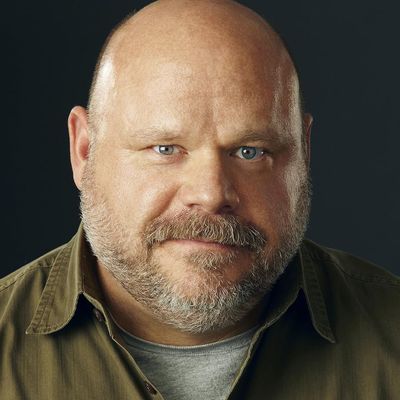
Kevin Chamberlin sits down to discuss the serendipitous nature of a forty year career that has spanned from the Jersey Shore to the heights of Broadway and the global reach of the Disney Channel... Read More
From the show: The Theatre Podcast with Alan Seales
Guests
Featured Shows
About
Kevin Chamberlin sits down to discuss the serendipitous nature of a forty year career that has spanned from the Jersey Shore to the heights of Broadway and the global reach of the Disney Channel. He shares the story of his first big laugh as Smee in Peter Pan, an experience he describes as a drug that instantly solidified his career path. Kevin also dives into the "Uncle Fester contract," a unique industry standard he inadvertently helped create during the development of The Addams Family, and reflects on the bittersweet experience of being the sole Tony nominee for shows that were otherwise struggling with critics.
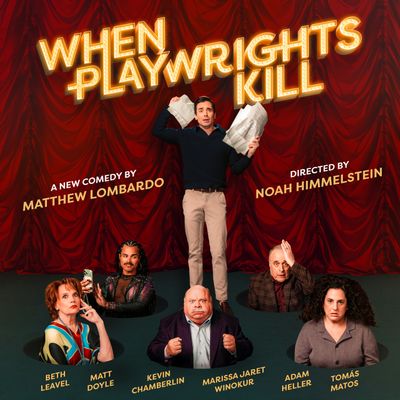
The conversation shifts to Kevin’s modern evolution as a digital creator, where he has amassed a massive following on TikTok and Instagram. He opens up about finding a creative outlet during the pandemic and how he balances his theatrical roots with the fast paced world of social media branding. Kevin also gives a look behind the scenes of his current project, When Playwrights Kill, discussing the joy of playing a role that allows him to pull from decades of experience working with legendary directors while finally portraying a gay character on stage for the first time in his theatrical career.
Kevin Chamberlin is a three time Tony Award nominee for his performances in Dirty Blonde, Seussical, and The Addams Family. His extensive Broadway credits include My Favorite Year, Abe Lincoln in Illinois, Triumph of Love, Chicago, The Ritz, Disaster!, and Wicked. On screen, he is widely recognized for his work in Die Hard With a Vengeance, the film adaptation of The Prom, and for his long running role as Bertram on the Disney Channel series Jesse. He is currently starring in the world premiere of When Playwrights Kill in Boston.
This episode is brought to you by WelcomeToTimeSquare.com, the billboard where you can be a star for a day.
Connect with Kevin:
- Instagram: @chamberlin.kevin
- TikTok: @chamberlin_kevin
- Threads: @chamberlin.kevin
Connect with The Theatre Podcast:
- Support the podcast on Patreon and watch video versions of the episodes: Patreon.com/TheTheatrePodcast
- Instagram: @theatre_podcast
- Facebook.com/OfficialTheatrePodcast
- TheTheatrePodcast.com
- Alan's personal Instagram: @alanseales
- Email me at feedback@thetheatrepodcast.com. I want to know what you think.
Transcript
This transcript was automatically generated and might contain errors.
[0:00] Kevin Chamberlin: Hey, I'm Kevin Chamberlin. Welcome to The Theatre Podcast with Alan Seales.
[0:12] Alan Seales: Hey there, Theatre Podcast fam. Welcome back to another episode. This is Alan Seales, and our guest for this episode is Kevin Chamberlin, who has just been all over stage and screen throughout his widely varied career, constantly doing new things. He's a three-time Tony Award nominee who has originated some of the most iconic roles in modern musical theatre history. We dig into the early days of his career when he was paying his own way through college as a singing waiter on the Jersey Shore, and he tells a little bit of a story about the challenges of the out-of-town tryout for Seussical, how he ended up with a specific type of union contract named after him because of a very complicated puppet moon, and we talk about his massive second act as a social media powerhouse with over 11 million followers that just kind of grew out of nowhere, and why he thinks being your authentic self is the only way to beat the algorithm.
I've really enjoyed getting to know him and exploring how he just finds the joy in everything he's doing, no matter what he is doing. As always, find me online on Instagram, Twitter, Facebook, you know the places. You want to watch the video version of this? It's on Spotify and Patreon. And now, everybody, please enjoy this episode with Kevin Chamberlin.
[1:33] Alan Seales: Today's guest is a three-time Tony Award nominee for his performance in Dirty Blonde, Seussical, and The Addams Family, and his extensive Broadway credits include My Favorite Year, Abe Lincoln in Illinois, Triumph of Love, Chicago, The Ritz, Disaster! and Wicked. On screen, he's known for his work in Die Hard with a Vengeance, The Prom, and as Bertram on the Disney Channel series Jessie. He's now opening When Playwrights Kill in its world premiere in Boston. Kevin Chamberlin, welcome to The Theatre Podcast.
[2:03] Kevin Chamberlin: Thank you very much, Alan. Nice to be here.
[2:05] Alan Seales: Nice to have you, and we've been working together for a little bit on the show, When Playwrights Kill, and it's nice to get to know you as a person, and I mean, I've known of you for a million years, as I'm sure many listeners have.
[2:18] Kevin Chamberlin: You know, we never met after all these years. We were parallel lives.
[2:21] Alan Seales: I know! Okay, so you grew up in Morristown, New Jersey, right? So what was your start?
[2:27] Kevin Chamberlin: Well, luckily, it was a little upper-middle-class town, so they had good arts funding, and they had a great summer theater program. We moved around a lot when I was little, but we settled in Morristown when I was 10, and I started playing piano around six, so I loved musicals.
[2:48] Alan Seales: That's right. I did hear you play piano really well.
[2:50] Kevin Chamberlin: Yeah, I've done a lot of musical direction and stuff, and so I was obsessed with Oliver and Wizard of Oz and those movies, and I bought the piano books, and I would always play them. And then the summer arts program in Morristown was holding auditions for Tom Sawyer, the musical, and I got cast as Huckleberry Finn.
[3:17] Alan Seales: How old was that? How old were you?
[3:19] Kevin Chamberlin: It was '73. I was 10.
[3:21] Alan Seales: '73?
[3:22] Kevin Chamberlin: Well, yeah, okay. I was born in the '80s, so okay, we're not that far apart.
[3:25] Alan Seales: Not far. And so we did plays every summer, and I did them in elementary and middle and high school. I did Oliver, Peter Pan, Wizard of Oz, Fiddler, South Pacific, West Side Story, a lot of plays too, Our Town, and the classic high school, The Crucible. I played John Proctor in The Crucible.
[3:50] Alan Seales: Were you always singing? I mean, you were singing in those musicals, but did you have a singing background before that, or did you just kind of lend yourself to it?
[3:57] Kevin Chamberlin: I just loved musicals. And my mom was a Sweet Adeline, which is like the female barbershop kind of chorus. And I always sang in church choir and concert choir in high school, and I was in a madrigal group that we would tour all over the world. We did a lot of cultural exchanges with Romania and Greece, Poland. So, I mean, by the time I was a senior in high school, I knew I wanted to be in the performing arts, whether it was—
[4:34] Alan Seales: This was in high school you were doing this? Wow.
[4:36] Kevin Chamberlin: Yeah. So I knew that I wanted to either musical direct or act. I loved acting, and my parents were incredibly supportive. I mean, they saw it at an early age that I was really good at this. And I remember getting my first laugh in Peter Pan. I was Smee, and Captain Hook said, "Smee, where is Peter Pan?" And I just went, "We let it go. I'm really happy." And the audience just roared with laughter. And I just turned and I looked at the audience, I was like, "Oh my god, it was like a drug. I was hooked."
[5:16] Alan Seales: Come on, come on. Oh, no pun intended.
[5:18] Kevin Chamberlin: Yes. But I'm pumped.
[5:20] Alan Seales: But I'm pumped. So senior in high school, you've been going all over the world touring with this stuff. You know you wanted to do it. And so where did you apply? Because at this point, you can go down musical theater, you can go straight plays. There's several different paths because performing is not just one straight line. So where did you know you wanted to go or where did you think you were going to go?
[5:39] Kevin Chamberlin: Well, I knew I wanted to do theater, whether it be plays or musicals, both. I loved both. And I had a lot on my resume by the time I graduated high school. And I auditioned for a bunch of colleges, and Rutgers accepted me, and it was only $700 a semester in 1981. Can you imagine?
[6:03] Alan Seales: I know. And I was a singing waiter down on the Jersey Shore. And I paid my own way through college. I paid for my—well, my deal with my parents was I would pay tuition and they would pay room and board.
[6:23] Kevin Chamberlin: That's not bad.
[6:23] Alan Seales: No. And they were about equal.
[6:26] Kevin Chamberlin: Yeah.
[6:26] Alan Seales: At that time, craze lit up. I don't know how kids do it these days.
[6:31] Kevin Chamberlin: I don't know. I was looking at the 529s for my kids, and it's like, so hard.
[6:36] Alan Seales: Brutal.
[6:38] Kevin Chamberlin: And then what was the first big thing that really felt solidified you in this industry? Because I think a lot of people in going through high school, going through college, sometimes I've heard from multiple Tony-winning people that to this day, they still have imposter syndrome, right? And so was there ever a time in your life when you're like, "I don't know if this is still for me," or "I don't—this is now when I know I've solidified my—planted my flag in this world?"
[7:06] Kevin Chamberlin: I never got that imposter syndrome thing.
[7:08] Alan Seales: Good for you, dude.
[7:09] Kevin Chamberlin: Yeah. I always knew what I wanted to do right after that first laugh I got. And Rutgers was not a musical theater school. It was more—and I kind of wanted to go—I knew how to do musicals, and I wanted to really learn how to act like a true actor. I mean, not that musical theater people are not actors, of course they are, but I would do the heavy stuff. And William Esper, do you remember William Esper, the acting teacher? He ran the program at Rutgers. And one of his requirements for the—to be on faculty is you had to be working professionally. So there weren't people who—those who can do, those who can't teach. And so we had a guy named Ed Stern, wonderful director. And he was the artistic director of Cincinnati Plays in the Park and Cincinnati Playhouse and a bunch of other ones. And he gave me one of my first jobs out of school because I guess he recognized my talent. He was one of my professors as well.
[8:20] Kevin Chamberlin: And I was doing The Foreigner. Remember that play by Larry Shue?
[8:25] Alan Seales: Yeah, yeah.
[8:25] Kevin Chamberlin: And then I started doing The Foreigner everywhere because all the regional theaters were doing it. And then Nagel Jackson, who ran the McCarter Theater in Princeton, he had directed me in Our Town at college and asked me to be in the resident company, McCarter Theater, which is an actor's dream.
[8:47] Alan Seales: Wow.
[8:48] Kevin Chamberlin: Because you get to do a whole repertory of shows.
[8:51] Alan Seales: Yeah.
[8:52] Kevin Chamberlin: So we did a musical called Smoke on the Mountain there by Connie Ray and Alan Bailey, and it moved off-Broadway. So that was my first big show in New York. And it was at the Lamb's Theater, which is no longer there, but really one of my favorite theaters in New York.
[9:13] Alan Seales: And did you stay in New York after that point or were you still kind of based out of New Jersey?
[9:17] Kevin Chamberlin: Well, I graduated in '85 and lived in Jersey City because I couldn't afford Manhattan. And I think I was making $300 a week doing Smoke on the Mountain off-Broadway.
[9:30] Alan Seales: Crazy. And then I moved into Manhattan in '91 and got my first Broadway show.
[9:42] Kevin Chamberlin: I was in the chorus of My Favorite Year at Lincoln Center.
[9:45] Alan Seales: How quickly was that? Because I mean—
[9:47] Kevin Chamberlin: I graduated in '85. So my first Broadway show was seven years later. So I'd done a lot of regional theater.
[9:52] Alan Seales: Right. So yeah, seven years. Okay. So that's a respectable time to, we'll put in air quotes, pay dues.
[9:59] Kevin Chamberlin: Cut my chops. Yeah.
[10:01] Alan Seales: Yeah. Because a lot of people come straight out of high school or straight out of college or whatever, and they're like, "I'm here in New York, cast me." And then it's a decade and they go home defeated and terrible.
[10:12] Kevin Chamberlin: So you've seven years, get that first thing. And so do you remember that moment when you got the call or you got the pager beep? Your agent's like, "911, call me."
[10:26] Kevin Chamberlin: Well, it's interesting because the process of getting into a Broadway show is now you do the reading, then you do the workshop, then you do another workshop. So it's not that you audition, then you got a Broadway show. You're like, you're part of the process and you know that you're going to do it. Eventually, if you keep getting asked back, that's been my experience in all of the shows I've done. I mean, The Addams Family had like seven, eight workshops.
[10:55] Alan Seales: Well, was it that many?
[10:56] Kevin Chamberlin: Wow.
[10:57] Alan Seales: There was one that was just for Fester's moon number. It was to work out the puppetry with Basil Twist. And it's now equity kind of had a thing. It's so funny because we have a lot of jokes about Actors' Equity when Playwrights Kill, but they were up in arms about it because you can't do a workshop of just one production number. It had a unique category. And so now it's called the Uncle Fester contract. And it is for specifically for working on a section of a show.
[11:41] Alan Seales: Oh, so this is outside on any show. They call it the Uncle Fester contract.
[11:44] Kevin Chamberlin: Yeah.
[11:45] Alan Seales: And does anybody know why they're just like, "Oh, I got an Uncle Fester contract"?
[11:48] Kevin Chamberlin: Because the producers were called.
[11:51] Alan Seales: We know because you originated it. But if I were to get an Uncle Fester contract, would I know why it was called that?
[11:57] Kevin Chamberlin: No.
[11:58] Alan Seales: Probably not. That's crazy cool.
[12:00] Kevin Chamberlin: Yeah. It was for the moon and me number. I don't know if you—do you remember seeing that?
[12:06] Alan Seales: No, this was before—
[12:08] Kevin Chamberlin: For your time.
[12:09] Alan Seales: Before my time. Yeah.
[12:10] Kevin Chamberlin: Yeah. This is 2010. And it was very, very intricate puppetry with everyone thought I was flying up in the moon, but I actually had puppet legs and black on my regular legs. And then I just walked sideways up a black staircase. And there were people manipulating my legs behind me, the puppet legs. And it's a Japanese art form where you black out the, whatever you don't want the audience to see and you sidelight it.
[12:44] Alan Seales: Kabuki? Kabuki, right?
[12:46] Kevin Chamberlin: I think it's like no theater. Have you ever seen Matrix ping pong?
[12:51] Alan Seales: Yes.
[12:52] Kevin Chamberlin: Where the guys are playing?
[12:53] Alan Seales: Yes.
[12:54] Kevin Chamberlin: That is exactly where they got it.
[12:56] Alan Seales: Yes, yes, yes. I know exactly what you're talking about. Yeah, I've seen a lot of those, and they use those in, what was it? Wonka for the Oompa Loompas and they've done some other—
[13:08] Kevin Chamberlin: Harry Potter.
[13:08] Alan Seales: Harry Potter. Yeah. They do a couple of different things like that. Yeah. So, all right. But Addams Family specifically, I think is an interesting one because it's known so well now. It is the most, I think still the most produced regional production, licensed production period.
[13:25] Kevin Chamberlin: Yeah. And Seussical.
[13:28] Alan Seales: Yeah. I got two in the top 10.
[13:31] Kevin Chamberlin: But Addams Family at the time was not well-received on Broadway.
[13:34] Alan Seales: Neither was Seussical.
[13:35] Kevin Chamberlin: Right. Oh, right. But I remember Addams Family specifically. And then I talked with Wes Taylor about this too. That it just kind of like, being young, as young as he was at the time too, was just very dream crushing, right? Like, did you feel that something as big a property as this, a big IP that had such big expectations that just—
[13:55] Kevin Chamberlin: I'd been through it before. I'd been, you know, when Seussical opened the day after we opened in Boston, which another callback to when Playwrights Kill because—
[14:08] Alan Seales: We're going to Boston.
[14:09] Kevin Chamberlin: We're going to Boston and the show takes place in Boston, the first act. And the Seussical, the day after they fired the set designer, the costume designer, and the director.
[14:21] Alan Seales: The day after opening.
[14:22] Kevin Chamberlin: Day after opening in Chicago. I mean, in Boston. And it was just a bloodbath. And then we went back into rehearsals with a new director, with Rob Marshall, Kathleen Marshall's brother. And Kathleen was choreographing. And they totally revamped the show. And so I was like, I can't believe I'm in this out-of-town nightmare again with Addams Family. But I was a little older and a little wiser. And I felt like I was really part of the process of really helping. My number never changed, which was nice.
[15:01] Alan Seales: Pat on the back.
[15:01] Kevin Chamberlin: Yeah. But what was weird with both shows is that when the Tony nominations came out, I was the only one nominated. And to go to work the next day and A, know that your show won't be performing on the Tony Awards. No one. And so everyone's like, "Congratulations." And this is like Nathan Lane and B.B. Neuwirth and some major names.
[15:27] Alan Seales: I know. I know. It was brutal.
[15:31] Kevin Chamberlin: Brutal.
[15:32] Alan Seales: Brutal.
[15:33] Kevin Chamberlin: It was. I just coined a word, because it was beautiful for me. I got to go to all the Tony parties. But that was my, yeah. So my second and my third Tony nominations were bittersweet. But was that kind of hard for you backstage? I mean, of course you're happy and you're like—
[15:52] Kevin Chamberlin: Yes. Although Andrew Lippa's score got nominated. So we kind of quietly jumped up and down in my dressing room.
[16:03] Alan Seales: Yeah, I can imagine. I always wonder about that when you have either two actors that are in the same category, in the same show, or two actors, actresses that are in the same category. If it's competitive or if you're the only one. And famously right now, as we're recording the whole Wicked part two snubs that happen, the energy backstage after this stuff comes out. I mean, you got to work through it because the show must go on. But backstage, do you feel this stuff? Do you talk about it?
[16:31] Kevin Chamberlin: You know, for a couple of days. But people forget. I mean, people think I won a Tony award. I've never won one. So I'll let them believe that. And it's just, you realize it's just, you know, it's just an award. I actually, I've been in the industry now 40 years, and I just won my first award. I won a Helen Hayes for Guys and Dolls at the Kennedy Center.
[16:58] Alan Seales: Nice. And I guess you actually have this wonderful monologue in When Playwrights Kill, actually, because you play the character of the director. And, you know, you go on and talking to the playwright and like, you know, I'm going to butcher this monologue, but you're like, "I didn't get my first Broadway show until my—"
[17:17] Kevin Chamberlin: 35.
[17:17] Alan Seales: "35 and—"
[17:18] Kevin Chamberlin: Nominated at 42 and didn't win one until my 50s.
[17:21] Alan Seales: Yeah. I mean, this stuff, like, if you love it, you do it because you love it. You don't do it for the awards, right? And I even heard, I interviewed Morgan Freeman years ago, and this still sticks out to me because he didn't get, I forget exactly what it was, but it was like in his 50s when anyone knew his name. And he had been performing for years.
[17:43] Kevin Chamberlin: He was on The Electric Company.
[17:44] Alan Seales: Yeah. Yeah. Like he'd been performing for years and it was, you know, it was in his 50s that he started just blowing up. And now in his 80s, he's reaping this, but he just never gave up and he did it because he loves it, you know?
[17:57] Kevin Chamberlin: Yeah. Yeah. And then he's playing the president.
[18:01] Alan Seales: Playing the president. He's been God and president and everything else. Yeah. Yeah. I get that. Don't go anywhere. We'll be right back after this break.
[18:10] Alan Seales: Welcome back to the episode. For you then, when did you make the shift into TV and film and that side? Or was it always kind of parallel?
[18:18] Kevin Chamberlin: Seussical had closed and then 9/11 happened. And we were like, before I was like, "I want to live in the center of the world." And then all of a sudden like, "Oh, we're in the center of the world. Let's get out of here." So I always was, you know, I always tested for pilots and got flown out to LA and was getting really close to getting TV series. And my husband was a writer at MTV. He did a celebrity death match and he created a show called Spy Groove, an animated show. It was in the Daria and Beavis and Butthead days.
[18:58] Alan Seales: Yeah. Yeah.
[18:59] Kevin Chamberlin: And so he was getting momentum in the writer's world, TV writing with his partner, Richard Register, writing partner. And so we went out to, moved out to LA after 9/11 and he sold a pilot right away. And we were like, "Oh, we made the right move." And I started getting some TV work. And then I started coming back and doing, I'd done a play called Dirty Blonde with James Lapine, and they wanted to do it in the West End. So I got to go do that in the West End. And then all the movie stuff started happening, but I still wanted to keep my foot in New York theater. And I would keep coming back and doing workshops and readings and did The Ritz at Roundabout. And so I've been able to balance this bi-coastal career for now since 2001.
[20:08] Alan Seales: 2001.
[20:08] Kevin Chamberlin: Or two.
[20:09] Alan Seales: And Jessie, doing anything on Disney Channel is career-changing.
[20:15] Kevin Chamberlin: Yes. Right after Addams Family was over, I moved back to LA. I'd been here for a little over a year doing Addams, and it was the first thing I auditioned for. And I was so really wanting a TV schedule, and a sitcom schedule is awesome. And if it's a sitcom with kids, it's really awesome because—
[20:38] Alan Seales: You can't work too long.
[20:39] Kevin Chamberlin: You can't work too long. And they don't pay as well, Disney, but you do make up for it in residuals because they run them forever. I mean, you can still, Jessie’s still on 20 times a week.
[20:56] Alan Seales: Really?
[20:56] Kevin Chamberlin: Yeah. It's crazy. And so the residuals are really nice, but it changed my life. I mean, I cannot walk down the street now.
[21:06] Alan Seales: Do you really, around here in Times Square and everything, do you get recognized everywhere?
[21:11] Kevin Chamberlin: It's crazy. Well, because there's so many school groups.
[21:13] Alan Seales: Oh, yeah.
[21:14] Kevin Chamberlin: And anyone who's from 14 to 24, that's really the demographic of people who've been watching Jessie since 2011.
[21:24] Alan Seales: That's interesting. I can't imagine. I mean, New York is one of those places, too, where you can sit down and be sitting literally next to a celebrity. I went to the zoo once, and I sat down and looked to my left, and Elizabeth Banks is with her kids. And I'm like, "Yeah, what's up?"
[21:40] Kevin Chamberlin: It's also fascinating because when COVID hit, I was feeling this artistic, you know, this lack of creativity. I wasn't, you know, we couldn't do anything. And I was like, "How am I going to, you know, fill this creative need?" And a friend of mine, Sam Kite, who you've met, he convinced me to start a TikTok account.
[22:07] Alan Seales: I was going to bring that up.
[22:09] Kevin Chamberlin: Yeah. And so—
[22:10] Alan Seales: You have 11.3 million followers.
[22:12] Kevin Chamberlin: 11.4.
[22:13] Alan Seales: It went up? It went up this week? Okay.
[22:15] Kevin Chamberlin: This week has been crazy because we just had a Jessie reunion.
[22:19] Alan Seales: Right. Oh, that got covered in like USA Today. I saw that. Yeah.
[22:22] Kevin Chamberlin: People, again, are crazy.
[22:24] Alan Seales: And E! Entertainment, whatever. I've never—we broke the internet with just my pictures that I took on the street. My Instagram has 23 million views.
[22:37] Kevin Chamberlin: Oh, good.
[22:40] Alan Seales: I can't even—I don't understand it. But it's worldwide. You know, that's the thing. Jessie is worldwide.
[22:48] Kevin Chamberlin: So the creativity—you started the TikTok channel for, what, for yourself just to like give yourself a creative outlet? And you do—like, you can do whatever you want on there, right? And that's why I really love about social media. And I think something that attributes to your success on social media is that you're just yourself, and that's what people want to be connected to now.
[23:04] Kevin Chamberlin: Authenticity, yeah.
[23:12] Alan Seales: Yeah. And I get to do my own musical. I'm a composer from way back. I've written a couple bad musicals. But I've always been—I’ve always had a piano and I always am working on stuff. And we've gotten a couple branding deals where they wanted musical commercials. We did a whole thing with Sprouts where we did a different musical commercial every month. And it's become lucrative.
[23:41] Kevin Chamberlin: Yeah.
[23:42] Alan Seales: It's really—and it was—I was able to make some money during COVID, which was really refreshing. And then we've done branding deals for like games and lots of different products. And it's fun. It's really—I'm my own production company.
[24:03] Alan Seales: Well, for a lot of people who hate the slog of posting on social media—because unfortunately now, and I can even attest to this from the producing side, followers help, right? When you're looking at who will sell tickets. And unfortunately, that's the business—part of the business of show business. And do you feel like you are slogging through this sometimes to like put yourself out there or because you are just being authentic? It genuinely seems like you're having fun. But is that real?
[24:36] Kevin Chamberlin: Most of the time, it's real. There have been dry patches where we haven't posted in like a month or two. And Sam, my digital media guy, like, "Kevin, we have to do something. This is trending. Go do this dance." We live about 100 miles apart. And so a lot of times when I have to just drum something up and, you know, you see what's trending. And then sometimes I literally will go click on my iPhone, film it for 30 seconds and post it and it'll get millions of views. Other times we buy props, we do camera angles, we do lighting and spend a couple days on a TikTok and it dies. A quick death. You know, so there's no rhyme or reason to it.
[25:30] Alan Seales: I heard, and I think Sam backed this up when I was talking with him too, that if you just open up the TikTok app, record yourself and post it without—like when you record something in the app and not upload something you've already made that behind the scenes, it promotes it, it features it more or something. Also a little hint to people who want more views, put a song, a trending song with your video, even turn the volume down to hardly nothing. As long as it's attached to your video, it'll go up in the algorithm.
[26:07] Kevin Chamberlin: I'm going to steal that. I need to start doing that.
[26:09] Alan Seales: There you go. We posted one for the photo shoot. It has like over a million views because it's that song that's attached to it.
[26:15] Kevin Chamberlin: I love that. Well, okay, let's shift over to Playwrights. When Playwrights Kill, having its world premiere in Boston at the beautiful, recently renovated Huntington Theater, April 3rd through 18th. So let's see, as this episode drops, it's going to be... All right, we will be knee-deep in tech when this episode drops, which will be fun. I want to ask you a question. How did you get involved?
[26:45] Kevin Chamberlin: How did I get involved? Oh, okay. So for those who don't know, I'm co-lead producer of this thing, and I could not be prouder of what's happening with this show. And this is my first foray into lead producing. I've co-produced a nice handful of things for a while. So how I got involved is the playwright, Matthew Lombardo. He and I have been friends through the theater scene for years. And legitimately, he was trying to shop this around. The play is so meta. It's so unbelievably meta. What I'm describing now is plot points in Playwrights Kill, but this is literally real life. He was shopping this around. He was trying to find producers. He was trying to get this going on his own as a playwright and doing this workshop.
And I came to the workshop in, I think it was July. And you were in it. You were already in it. And I texted him. He invited me. And we hung out. He was actually the one who introduced me to eyebrow threading, thank you, which I am long overdue to get. I need to get some eyebrows threaded. But he invited me. And I texted him at intermission of that workshop, that reading. And it was just you guys standing with your scripts and music stands. I texted him intermission. I said, "I don't care how. I just need to be involved with this. It's so hilarious. It's so funny." And so we went out to lunch a few days later, and we just started talking. And we're talking about the business. And I go off on a tangent with whoever who will listen.
And I think Broadway producing is broken. I think that the industry has got this chokehold that is slowly suffocating the ability for new works to be made. So unless you're a preexisting IP, you can't get tickets and blah, blah, blah. And I started firing off all the stuff that if I were in charge, I would change. And he was like, "Well, how about you come on and try to do some of this stuff?" And I was like, "Yeah, sure. Happy to go pro." He's like, "No, no, no, no. I want you to be one of the lead producers." And I was like, "Shut the front door." And so I then followed up with the other lead producer, Brian McCaffrey. And the three of us had a wonderful meeting, and away we went. And that was end of July last year.
Yeah, so it's been a good chunk. I was talking with Jalon Levingston, the director of Jelly's Last Jam, the other day. And we were talking about the same thing. And he was like, literally, how you get to where you are is just the relationships you have.
[29:18] Kevin Chamberlin: Totally.
[29:19] Alan Seales: The relationships you have and the advice that Michael Urie gave on this podcast years ago, which was be the person everyone wants to work with the next time.
[29:27] Kevin Chamberlin: Exactly. Rarely have I gotten a job in the theater by auditioning.
[29:32] Alan Seales: Well, how did you get connected to Playwrights?
[29:36] Kevin Chamberlin: Matthew's a fan. Matthew was a fan of my work and suggested me to the casting director. And luckily, I was in town, and it just worked out timing-wise.
[29:48] Alan Seales: What did you think of it the first time you read this?
[29:50] Kevin Chamberlin: Oh, it's a page-turner. It's so fast. And it's great because it's a love letter to the theater, but it's also got heart and farcical elements and an incredible leading lady role. And I mean, all the roles have their big moment in the show. And I was definitely feeling like I needed a little challenge. And this is something, a kind of role I've never played before.
[30:18] Alan Seales: I was going to ask, because normally you're kind of like the funny—
[30:22] Kevin Chamberlin: Yeah, second banana.
[30:24] Alan Seales: Yeah. And you're a straight man, but you're still funny.
[30:31] Kevin Chamberlin: Yes, but he is gay.
[30:32] Alan Seales: He is gay, yes.
[30:34] Kevin Chamberlin: I've never played a gay man on stage.
[30:36] Alan Seales: Really?
[30:37] Kevin Chamberlin: No.
[30:38] Alan Seales: That's terribly sad.
[30:39] Kevin Chamberlin: And I've only once in a movie, a trick. Great movie. Very musical theater-centric movie.
[30:48] Alan Seales: Yeah. And I've known so many directors, and so I have a lot to pull from, from all their different... And Matthew based this director on John Tillinger, Joey Tillinger, who ran the Long Wharf for many years. And he always said, "Darling."
[31:11] Alan Seales: Darling, yeah.
[31:13] Kevin Chamberlin: So it's really fun and challenging. And boy, for my 62-year-old brain to have to think this fast again, because it is bam, bam, bam, bam, bam, bam, bam, back and forth. And I've really had to retrain that muscle.
[31:30] Alan Seales: That's interesting. But isn't this similar to doing something like Jessie, where you're in front of a studio audience?
[31:34] Kevin Chamberlin: You can stop.
[31:36] Alan Seales: Oh, that's fair. That's fair. Yeah.
[31:40] Kevin Chamberlin: If you screw up a line, you can stop. You cannot stop theater. And I'm so used to doing TV and film, where you're doing things in little bits. So the stamina of doing a whole show is—you have to get your legs back. And I'm just looking forward to getting into a night show schedule.
[32:08] Alan Seales: Yeah, and having an audience. My audience on this podcast is probably sick of hearing me say this, but the audience is the final character of any show. And to get a room full of people together that are going to laugh at things that you didn't expect, and didn't laugh at the things you did expect. Because in the rehearsal room, the crew is seeing the same thing over and over again.
[32:31] Kevin Chamberlin: Yeah.
[32:32] Alan Seales: We're laughing because one of the worst—it's notorious in the theater, the designer run-through, which is the first audience you have in a rehearsal room, is always the worst. Because they're doing their work in their scripts. They already know the script, so they're not laughing. And their heads are down in their scripts, making notes and things. And it's always like, so our first run-through, we were like, "Oh, gosh." But yesterday, we had an audience, and it was just gangbusters. And I got such a wonderful response. I brought two friends to the run-through.
[33:08] Kevin Chamberlin: Yeah.
[33:09] Alan Seales: That's very cool.
[33:10] Kevin Chamberlin: They just loved it.
[33:11] Alan Seales: Yeah. Everybody I've sent it to, whether it's just friends who are interested, or potential investors, or whatever it is, everyone's like, "I literally read it in one sitting." It's just, like you said, it's a page-turner.
[33:21] Kevin Chamberlin: Yeah, it is.
[33:21] Alan Seales: And I'm really excited to get this out in the world. And it's hard. I'm not going to say this is easy. This is one of the hardest jobs I've ever had. And part of it is because it is new work. It is original. And so again, how do you get that out? I remember standing out here at TKTS 15 years ago, before digital tickets and everything, and tourists would come up to me and say, "Hey, what should I see? I've never seen a show before." I'm like, "Oh, go see Peter and the Starcatcher. Go see this. Go see that. Everything's great." "I've never heard of that. I'm going to go see Chicago. I've heard of that one, so it must be good." So that's the challenge. That's the marketing challenge to get any of this out there.
[34:07] Kevin Chamberlin: Oh, I could talk about this.
[34:08] Alan Seales: And it's such a niche market. And I always say, I was doing Wicked for a year. And that's one of the biggest houses, the Gershwin. It's almost 2,000 seats.
[34:24] Kevin Chamberlin: That's huge.
[34:25] Alan Seales: And so you sell 2,000 tickets a night for eight shows a week. So that's 16,000 tickets, right?
[34:38] Kevin Chamberlin: You multiply 16 times 52 weeks. That ain't a lot. That's 160,000 maybe. One day, you're in an episode of Jessie will be seen by 5, 6, 7 million people.
[34:55] Kevin Chamberlin: Yes.
[34:55] Alan Seales: One of my TikToks can be seen by millions of people every day. And you have tickets that are not cheap. They're up there. So that shrinks your market as well.
[35:12] Kevin Chamberlin: And that's what I want to change.
[35:14] Alan Seales: Well, I have to tell you, the response I've gotten just from our social media posts, people are blown away by this campaign. And you guys are doing an awesome job at May and everybody.
[35:28] Kevin Chamberlin: The regular people. Shout out to regular people.
[35:30] Alan Seales: And you know who really was... Michael Arden really oversees the social media on his shows. And it really is response. Maybe Happy Ending has a great—
[35:41] Kevin Chamberlin: Oh, yeah.
[35:43] Alan Seales: Parade had a great one. They released a music video of one of the numbers.
[35:48] Kevin Chamberlin: Yeah.
[35:48] Alan Seales: And it just went through the roof.
[35:49] Kevin Chamberlin: Yeah. Don't go anywhere. We'll be right back after this break.
[35:54] Alan Seales: Welcome back to the episode. That was something that we very consciously went after in the social media side. So shameless plug, go visit When Playwrights on Instagram and TikTok. We purposely filmed rehearsal scenes from a play. Plays don't do that. Musicals do. Musicals are like, "Here's our number. Here's our rehearsal performance we did for the press day." You don't do that for plays. And there was no good reason why not. And so now I'm getting text from friends like, "Holy shit, you guys are filming this and putting it online? This is brilliant. This is so funny." Especially the scene, anything Beth is doing at the table with her salad scene. Like Beth Lovell, Another World, you and Matt Doyle, Marissa Jarrett Winokur, Tomas Matos.
[36:44] Kevin Chamberlin: Adam Heller.
[36:45] Alan Seales: Adam Heller. God, the six of you. Go ahead.
[36:49] Kevin Chamberlin: I got a call. I got a text from Drew Hodges, who started Spotco, Broadway's biggest advertising yesterday. And he went, "You guys are killing it on social media." And coming from him, yeah. That means a lot.
[37:07] Kevin Chamberlin: I cannot say enough nice things about regular people. They're a new agency, relatively new agency here in the city. And younger people, fresh eyes. And we all talked about that need to change the game. And we want to do it differently. And I think we're doing okay. And Drew was a game changer when he came on with Chicago. The look of Chicago, those black and white photos. And using sex to sell. I mean, that had never been done before.
[37:36] Alan Seales: Really?
[37:36] Kevin Chamberlin: People weren't using photography. They were doing artwork on posters. They would not have pictures.
[37:45] Alan Seales: Yeah. Isn't that Rent? Had pictures of all the cast members. Remember that? It was in a grid.
[37:52] Kevin Chamberlin: Yeah, he's the first. There's a great book out of Spotco's history. It's a nice coffee table book. And they did Seussical as well. And hired David LaChapelle to photograph. Really, really smart guy.
[38:09] Alan Seales: And that's all that they do now. It's really interesting how these specific moments like this have changed the game. And when you look back, you can pinpoint it. But it seems like it's always been there. And like Telsey and Co. Massive, massive casting agency. Bernie Telsey was nobody before Rent. Jeffrey Seller gave him a chance to cast Rent and look at where they are now. And look at where all the cast of Rent is, and where Jeffrey Seller is, and all of this. So hopefully, by doing things a little bit differently and trying to swim upstream a little bit, we're doing something right. But it's hard. I'm losing some sleep.
[38:50] Kevin Chamberlin: I know. I know. It's a gamble. When you think about Broadway posters and art, like Follies, Hair. Remember that kind of mod? Sweeney Todd. It was a cartoon version of Sweeney and Mrs. Lovett. There was never photography. And I mean, I love our poster. I think that's really great. And people can recognize their Broadway names and faces. So you guys are doing it right.
[39:00] Alan Seales: Thank you. Thank you. Well, I feel like we could talk forever. And we'll come back for part two. Hopefully, fingers crossed when the next iteration of the show is coming somewhere sometime soon. All right. So we're going to wind down now with Plot in 60 Seconds. I've got 60 seconds up on the screen over here. So I've got a list of 17 popular musicals in front of me. You're going to give me a number one through 17, which means you pick from my list. And then I tell you what you picked. You give me that plot in 60 seconds or less. You don't know it. You can make it up. One through 17.
[39:58] Kevin Chamberlin: 11.
[39:59] Alan Seales: 11 is Phantom of the Opera. Go.
[40:01] Kevin Chamberlin: 60 seconds remaining. A diva opera star in Paris comes across a very ghostly figure who ends up being her mentor. And she goes down to his lair in the sewers of Paris and learns how to be a really good opera star. And he is obsessed with her to a very dangerous degree. And he haunts the Paris Opera and seeks revenge. Because I guess he was a famous director at one point and ends up cutting the cord of the chandelier out of his murderous madness. And it has a very tragic ending, and it's very operatic. And it was written by Andrew Lloyd Webber.
[40:59] Alan Seales: Which is a major plot point. Yes.
[41:01] Kevin Chamberlin: How'd I do?
[41:03] Alan Seales: Pretty good. Pretty good. All right. Three standard closing questions then. First one, simply, is just what motivates you?
[41:07] Kevin Chamberlin: Joy. I find joy in the theater and in acting. Artistic gratification, something that feeds the artists in me. And to entertain, that is incredibly gratifying. To have a communal experience with a bunch of people in a dark room.
[41:40] Alan Seales: Going on a journey.
[41:40] Kevin Chamberlin: And yeah, tell the story, and maybe they come out a little happier with a smile on their face.
[41:49] Alan Seales: All right. What advice would you give to your younger self and younger people listening now starting out down a similar path?
[41:54] Kevin Chamberlin: Don't give power to the people behind the table at your audition.
[42:01] Alan Seales: Mm-hmm.
[42:02] Kevin Chamberlin: Keep the power to yourself. Walk in saying, "I am the right person for this job." I spent so many auditions sabotaging myself by letting my nerves get to me. And the day that I walked in not giving a flying hoo-hoo about this job, just doing my best and being authentic, is the day I started booking. So know what to exploit in yourself. And I use the word exploit in a good way. It's to sell. And be savvy. There are so many dumb actors out there. I can't believe it. I mean, it's really frustrating to be in an industry that has so many, like, "Oh, I don't want to be a lawyer anymore. I'll try acting." I'm like, "Yeah, I have a degree in this." But on the other hand, I tell the story. I was on Jessie.
I was doing the same exact thing as a 10-year-old kid next to me. So just being truthful under imaginary circumstances, that's what acting is. And it is weird. And she was probably getting paid more than me. And so it is an odd art form in that you can have a natural talent and be brilliant, even as a 10-year-old. So it's a very unique journey being an actor.
[43:35] Alan Seales: Yeah. And you gotta, yeah, just embrace what makes you uniquely different.
[43:39] Kevin Chamberlin: Yeah. Yeah. Embrace your quirks.
[43:41] Alan Seales: Okay, last question. Hardest one. If you could only see one show for the rest of your life, but you can see it as many times as you want, what would you see?
[43:48] Kevin Chamberlin: Sweeney Todd.
[43:50] Alan Seales: We got another vote for Sweeney Todd.
[43:53] Kevin Chamberlin: Not the first, right?
[43:54] Alan Seales: No, it's interesting because before COVID, that was overwhelmingly the answer that people would give. And then post-COVID, it's been all over the place. And it's been really interesting to see like that shift of, now we need to laugh. We need to come together. We need to laugh. We need to be happy. I'm not saying Sweeney Todd isn't a great show. It is a phenomenal show. But yeah, I think people just are feeling overwhelmed with everything going on and we need to laugh.
[44:21] Kevin Chamberlin: We certainly do. We need a good comedy.
[44:24] Alan Seales: Like When Playwrights Kill?
[44:26] Kevin Chamberlin: When Playwrights Kill.
[44:27] Alan Seales: Opening in Boston, April 3rd through 18th. Yeah.
[44:29] Kevin Chamberlin: That's right.
[44:30] Alan Seales: Yeah, okay. So where can we find you online and connect with you on your major social platforms?
[44:34] Kevin Chamberlin: Type in Kevin Chamberlin. I'll come up with a blue check next to me.
[44:38] Alan Seales: On all the platforms. And I am on Instagram, threads, TikTok, Facebook. Yeah, I guess type in Theatre Podcast. That's too generic. I'm going to change this name. No, I'm not. I'm 500 episodes in. Okay. Leave a rating, leave a review, spread the word. Tell everyone you just heard Kevin Chamberlin on The Theatre Podcast. Thanks to Jukebox Ghost for the intro and outro music. Thanks to welcometotimesquare.com for the use of this lovely studio. And Kevin Chamberlin, thank you so much for coming here before your final day of rehearsal in New York, before heading up to Boston tomorrow. I will see you tomorrow in Boston, sir.
[45:11] Kevin Chamberlin: We're hitting the road.
[45:12] Alan Seales: Hitting the road.
© Broadway Podcast Network, All Rights Reserved