

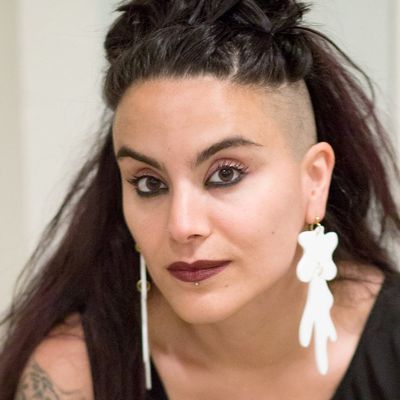
Sonya Tayeh made her way from the city of Detroit to New York City to find herself choreographing for some of today’s biggest names including Madonna, Miley Cyrus and Florence and the Machine... Read More
From the show: The Theatre Podcast with Alan Seales
Guests
Miniseries Inclusions
Featured Shows
About
Sonya Tayeh made her way from the city of Detroit to New York City to find herself choreographing for some of today’s biggest names including Madonna, Miley Cyrus and Florence and the Machine. She’s been nominated for two Emmy Awards for her work on So You Think You Can Dance, and won the Lucille Lortel and Obie Awards for “Outstanding Choreography” for her work on David Henry Hwang’s dance-play Kung Fu, for which she also received a Drama Desk nomination. She recently made her Broadway debut as choreographer for the smash hit Moulin Rouge the Musical and is also working on the upcoming production of Sing Street.
Sonya's process may be unique - sometimes she has to dance in silence before adding the music back in so that she makes sure she doesn't get trapped in the music because "If it's interesting without music it will be interesting with music." In all her work, she utilizes the ensemble to push the story along and doesn't just have them dance because they're there. In Moulin Rouge, the story progression relies heavily on the ensemble and the dancing.
Connect with Sonya:
- IG: @sonyatayeh
- Twitter:@sonyatayeh
- sonyatayeh.com
Connect with The Theatre Podcast:
- Support us on Patreon: Patreon.com/TheTheatrePodcast
- Twitter & Instagram: @theatre_podcast
- Facebook.com/OfficialTheatrePodcast
- TheTheatrePodcast.com
- Alan's personal Instagram: @alanseales
- Email me at feedback@thetheatrepodcast.com. I want to know what you think.
Thank you to our friends Jukebox The Ghost for our intro and outro music. You can find them on Instagram, Twitter, and Facebook @jukeboxtheghost or via the web via jukeboxtheghost.com.
A very special thanks to our patrons who help make this podcast possible!
Cheryl Hodges-Selden, Paul Seales, David Seales
If you would like to see your name in this show notes or get a shout out on the pod itself, visit ttp.fm/patreon to become a member and show your support!
Transcript
This transcript was automatically generated and might contain errors.
[0:00] Alan Seales: Welcome to The Theatre Podcast. Intimate, personal conversations with theatre's biggest names. I'm your host, Alan Seales, and you're listening to the Broadway Podcast Network. This episode is with choreographer Sonya Tayeh, who made her Broadway debut choreographing the smash hit, Moulin Rouge! The Musical. You may also know her work from So You Think You Can Dance. She got a couple of Emmy nominations for her work on that show. I just adore her. She is humble. She has a bit of imposter syndrome. She is just so incredibly nice and talented. And we had such a nice chat in the VIP room of the Hirschfeld Theatre. She was working on something on stage, so she took time out of her day to have a great conversation.
And I just really appreciate everything she had to offer. She is a hustler. She was talking about how she moved to LA from Detroit and was just putting together her own showcase, essentially putting out flyers on cars and just doing everything to try to find an agent. Because at the time when she moved to LA, you could do anything without an agent. So she finally got one. Her showcase worked. And her agent was like, so what do you want to do? What do you want to focus on? And she goes, I want to do it all. I want a diverse career. And the agent said, what? Pick a lane. And she said, nope. And it's obviously working for her because she's done TV, she's done Broadway, she's done music videos, she's done choreography for tours for people like Madonna and Miley Cyrus.
And she's just all over the place. She's got her next gig coming up. She's choreographing Sing Street, which is going to open on Broadway very shortly. So my gosh, I'm just really excited to share this with you. This is part of the Moulin Rouge takeover for the month of February. So please continue to listen, continue to subscribe because there's more coming at you all month long from the cast of Moulin Rouge. So now, please follow me online at theatre_podcast. Leave a rating, please leave a review. I love reading those. Now without further ado, here's the episode with Sonya Tayeh. Here you go. One, two, three.
[2:27] Alan Seales: My guest today made her way from the city of Detroit to New York City to find herself choreographing for some of today's biggest names, including Madonna, Miley Cyrus, and Florence and the Machine. She's been nominated for two Emmy Awards for her work on So You Think You Can Dance and won the Lucille Lortel and Obie Awards for Outstanding Choreography for her work on David Henry Hwang's dance play Kung Fu, for which she also received a Drama Desk nomination. And she has recently made her Broadway debut as choreographer for the smash hit Moulin Rouge! The Musical. Sonya Tayeh, welcome to The Theatre Podcast.
[2:58] Sonya Tayeh: Hi, thank you. I'm so happy to be in this cool space.
[3:02] Alan Seales: Yeah, we're up in the VIP room lounge. Yeah. And here in the Al Hirschfeld Theater.
[3:09] Sonya Tayeh: Prior to the VIP lounge, it was where we had all our very intense meetings.
[3:15] Alan Seales: Oh, your production meetings?
[3:15] Sonya Tayeh: Yes. It's all flashing back on, you know.
[3:20] Alan Seales: So in my intro, I said that you made your way from Detroit to New York. And I think you identify with being from Detroit, right? But you were actually born in Brooklyn.
[3:29] Sonya Tayeh: I was. Yes. I was born here. I don't remember this part of my life, but we moved to Detroit soon after I was born.
[3:36] Alan Seales: So what part of Brooklyn do you remember?
[3:42] Sonya Tayeh: Fort Greene area.
[3:45] Alan Seales: Oh, that's near my place.
[3:45] Sonya Tayeh: Which is where I live now, which is very strange. I'm down in Boreham Hill, so we're neighbors.
[3:49] Alan Seales: Sort of. I love Boreham Hill. It's a nice place.
[3:53] Sonya Tayeh: It's so beautiful there. Yeah, I love it. Okay, so Brooklyn, moved to Detroit. What took you to Detroit? I mean, what took your family to Detroit?
[4:01] Sonya Tayeh: My mother and father divorced, and I have two older sisters. I moved from New York to Detroit. My father's family is here, but my mother's family is in Detroit, and had a really incredible, amazing, challenging life in Detroit.
[4:23] Alan Seales: Well, yeah, we can get into that. I mean, you can go as deep as you want. It's early in the interview, so we're not warmed up yet. But Detroit, you were part of, you were saying like an underground sort of dance scene, right? I was reading in another article that you were interviewed in.
[4:40] Sonya Tayeh: Yeah, there was in the 90s, 80s, 90s, there was an incredible underground house music, techno music scene in Detroit. I mean, music in Detroit is so profound. So many innovators have come from that city. But there was the dance scene, the house music dance scene, the underground rave parties before they got a little messy, were a huge staple in my sister's lives, and in my life too. When I think back, it's so crazy. I never had the moments with my sisters where you don't want to take your youngest sister around, or you don't get along. We always got along. So everywhere they went, I went.
[5:25] Alan Seales: What was the age difference?
[5:29] Sonya Tayeh: I'm 42. My oldest sister's 49. My middle sister's 46.
[5:33] Alan Seales: So you're all relatively close. But when you're 10, yeah, they're 17, 16. Yeah, that's a big difference.
[5:40] Sonya Tayeh: Yeah, but they were protecting me. And I was friends with their friends' sisters, younger sisters. So it was a huge link. It was very amazing to have that type of relationship. And just walking into these parties that started at 2 a.m. and went until 9 a.m. I'm a dad. That's like four hours past 12.
[6:04] Alan Seales: Well, no, it's torture now. When I think about it, I say to myself, this is why I have zero social energy now, because I used it from my teenage years till 26. But it was such a huge turning point in my life for dance. And just seeing all of these artists and watching these incredible DJs make names for themselves and watching them have one of those visceral experiences all together was in these old churches, abandoned buildings in Detroit, was profoundly amazing.
[6:44] Alan Seales: So you were 10 and whatnot. I mean, I guess, how young were you when you started going to the raves?
[6:49] Sonya Tayeh: 14.
[6:51] Alan Seales: Wow. I mean, looking back as an adult, were you seeing things that you shouldn't be seeing or shouldn't be experiencing at 14?
[6:56] Sonya Tayeh: I don't remember seeing those things. I remember standing because we were friends with a lot of the DJs. So I remember just being by the speaker close to the DJ and dancing, just running to dance. You wear sweats and a sports bra or a tube top and wide pants because it was the 90s. I don't remember that dangerous stuff. I just remember feeling like I was levitating.
[7:31] Alan Seales: Just having... So that's what dance brought to you?
[7:34] Sonya Tayeh: Yeah. And I remember when I was little, not understanding what that feeling was. What is this overwhelming feeling that I have? But now looking back, I remember while I was dancing, I would stop and just watch the sea of dance. And I think because I was thinking in my mind, I want to make this.
[7:56] Alan Seales: So when did you actually start making? When did the choreography come in?
[8:04] Sonya Tayeh: I had to pay to go to do extracurricular activities. I had to get a job at a young age. We didn't come from much, not poor, but it was a working family. And so when I was 17, I was trying to go to a dance school around my house. But all of the students that I would walk into would say, you're 17. These kids have been dancing here since they were four. There's nothing we can do with you here. And I found that to be so strange. And I just wanted to learn. I just wanted to understand the foundation. I knew I could move, but I knew that there was a format of moving. My mother got me books about Twyla Tharp and Martha Graham. And I was just like, these women, these women with these big ideas, what is that?
I want more of that. And then I went to one school for the last year of my senior year in high school. And then I fell into incredible professors at Henry Ford Community College into Wayne State, who just, thank God, saw something and said, you're a choreographer. This is how it starts.
[9:19] Alan Seales: Well, okay. That's strange to me. I'm trying to picture in my head how a professor looks at you and says, well, you're not a dancer, but you're a choreographer.
[9:30] Sonya Tayeh: They didn't say that. They said, here's the route of how to move. Here's the skeleton. Here's the anatomy coloring book. You love dance, right? And I said, yes, but I want to make dance. And when I would be in the classes and I would take my composition classes, they said, there's something there. I jumped so that they could see that. And I knew because I didn't start at three, so I had a point of view and an opinion about myself. And I knew that the difference and the feeling when I was on stage and then when I would watch, it was just a different feeling. I couldn't break out of being hyper aware of myself when I danced. I didn't get lost, but I would get lost when I would choreograph.
[10:17] Alan Seales: Does that make sense?
[10:24] Sonya Tayeh: Yeah, totally. I think it's a different section of your brain. And if there's any neuroscientists out there listening, write me and let me know if I'm completely off base. But my hypothesis is that recollection and creation are different centers of the brain.
[10:36] Sonya Tayeh: Absolutely. So while you're creating, it takes you out of your mind. It takes you out of whatever experiences or trauma or whatever life that you're trying to move past, right? And you're finding it to express yourself. And just the yearning, the longing to see it is what I would feel when I was dancing. The longing to see what I was doing rather than feel what I was doing. Does that make sense? I just wanted to see it and I wanted to create it on all forms of human bodies. I just had the craving immediately. Especially, I grew up with Paula Abdul, Janet, incredible dance makers.
[11:19] Sonya Tayeh: And was so excited, but overwhelmed because I didn't know I would have access to finding that voice in me. Wow. Yeah, that's a voice. I have never kind of put choreography in that sort of way before. But yeah, it's true because you, I would call it a style, but it is a voice. It's your, I think one of the reviews for Moulin Rouge was saying like, you don't whisper, you're screaming on stage, your choreography screaming, is it? That was for this, right? Yeah. Yeah. Yeah, that the choreography is just out there and it's intense and it's wild and it's sensual and it's everything. And you can't help but watch every movement on stage because it's all screaming to be seen. Thank you. Yeah, you're welcome.
But okay, so going to your career, where, I mean, it seems like you've been with So You Think You Can Dance for what, like six, seven years now, right? I was there for six, five or six seasons. I started at season six. And then now they're about to release season 12. Wow. Crazy. I didn't know that. That's amazing. Yeah. Yeah. Amazing. I haven't been there in a few years. I miss them. Well, between that and Detroit and choreographing in college and whatnot, like how did you get to So You Think You Can Dance? How did you get to national television? I graduated college when I was 25. And then I didn't go until later. I didn't start school until later. Everything was later. I just had to analyze things first and really make sure that the approach I was taking was the approach I wanted.
And then after I graduated, excuse me, I moved to San Francisco first. My best friend had a small company in San Francisco. I knew when I graduated that I wanted the world to see my work, but I wasn't ready for the world to see my work. I didn't feel like I had a strong enough voice in terms of do I have the confidence, the knowledge and the sense of myself to approach dance the way I want. I was still feeling insecure about how I was moving. I had tightness and this hyperphysical desire when I moved and it was really aggressive and I was a bit embarrassed by it. And I couldn't format why. So I knew San Francisco was a great place because I had comfort with my best friend, who I love, who is so talented, a beautiful choreographer.
He had a small company and I just locked myself in a studio with them and just kept building material over and over and over and just hours and hours in the studio. And then when I was 30, I decided to move to LA. And I was intrigued by the commercial side of dance, but also was confused of all these boxes, like all that they couldn't fuse themselves together. And I come from concert dance. I have my degree in dance, but I wanted to fuse it all together because I felt like I was that type of artist. And so, So You Think was in its second or third season when I moved there. And to work in LA, you need an agent at the time. And I was like, okay, I moved to LA and no one knows me. What am I going to do?
So I decided to have a show. I decided to put my money together and create a show and bring in all these dancers that I loved. So I had a bunch of dancers sleeping in my living room for two months, dancing for free. And I created these small pieces like this could be a Gap commercial. This could be an iPad commercial. This could be on So You Think. This could do this. Yeah, I remember all the iPod commercials with the silhouettes and everything. When dance was really starting to take its reign in commercials and movies and such. So I thought if I could create a palette of ideas, maybe not fully formed, but ideas and hire and invite agents to come and watch, hopefully I'll get an agent. And this is when you passed out flyers and put the flyer in the windshield wiper.
So we made these posters and I was posting them everywhere and it turned out to be a really successful show. And the next morning an agent that I really wanted to sign me called and signed me and I met with them and they said, what do you want to do? And I said, I want a versatile career. And that was jarring for them because sometimes picking a lane is the first thing you have to do and hold onto that lane. And I never understood that concept or never wanted to. And I think it was because, again, I had a sense of myself because I was in my thirties. And then I got, and I said, So You Think would be fun. That would be cool to really expand. And they sent a couple pieces from my show. And I met Jeff Thacker, who was one of the producers and a dear friend of mine now.
And the rest just exploded. It exploded. Wow, you hustled. I hustled. You hustled and it worked out. I hustled. Yeah, I still hustle. Yeah. I know. It was a serious hustle. Yeah. And I feel like that's one of those movie moments where you're like, you're just building up and building up and then in real life, it's like, it doesn't work. And you're like, now what? But you had that moment. Yeah. And now here you are sitting in the VIP room of your show that you helped put together at the Al Harshfeld Theater. Yeah. Moulin Rouge! The Musical, this show just came out of the gate sprinting. And it was a smash overnight. Critics are raving. You're getting so much praise for your choreography. Everything is just off the charts, right?
Thank you. But back up a little bit to talk about how did you get connected with the team? So you're in LA doing things. So you're taking dance. Where were you like, I'm not versatile enough. I want to try Broadway now. I just take where the path takes me and my instincts. I never have like, this is my dream thing. I just want to work with people that are inspiring and ambitious and big, big makers of art. So I was living in LA for four years and fell in love with theater. I did The Last Goodbye at the Williamstown Theater Festival many, many, 10 years ago, I think it was. Oh my God. That was my first musical theater experience. And from that moment, I was mesmerized and wanted it and just wanted it so badly.
So I truly just made the decision to move to New York while I was meeting with Lee Silverman, another dear friend and mentor of mine, to do Kung Fu. And I knew it was time. I sold all of my stuff in LA. I put everything in boxes and had all my friends come over and I brought a couple of suitcases with me to New York. I just said, I'm moving. And I moved with Kung Fu and nothing else. And I did Kung Fu and met Alex Timbers, another mentor, dear friend. And we did The Last Goodbye again in San Diego. And I knew he was someone that I wanted to work with, just a big imagination and an incredible artist. And he called one day and said, will you come have coffee with me? I was like, of course. And he said, I'm directing Moulin Rouge.
And I was like, what? What was going through your mind? Were you like, they're making a stage show out of Moulin Rouge, the movie? I said, it's about time. That movie wants to be on a live stage. I remember seeing it an opening night in Detroit at this incredible theater and seeing the premiere and running out of the theater so inspired and amped and just so charged by it. So when he told me he was doing it, I was not surprised that they would want Alex. And since then, it would just been a whirlwind of, wow, by this time, I'm 40. So by this time, I'm 40. I know what I want to see. I'm not settled and I have it all together. I just know who I am. I'm constantly searching for more of who I am, but I know what type of dance I want to do.
And the access and the highly physical nature and the hot-blooded nature of the movie to a live stage, it was just inside of me ready to scream out. So it was nothing short of a dream, truly, just to have an ensemble that is so virtuosic, an ensemble that is driving the story, that dance is driving the story. I think that is lacking. I think the ensemble responsibilities are lacking. They can handle. They thrive in acting, singing, and dancing. The body can tell so much story.
[21:12] Alan Seales: Oh, totally.
[21:13] Sonya Tayeh: I mean, so to have the body in the show moving and not hearing words for a good five minutes is remarkable. And people being moved by it and following that is incredible. And it is a dream of mine and I'm so proud of it, but it's because of them. It's because of their execution and willingness because it's difficult. When you start to approach a project, do you, how do you build your vocabulary? You're talking about the voice, like dancing is a voice, right? So how do you build your vocabulary for that project? It varies per project. For this one, pre-production was a necessity. Pre-production is when you're able to get space and hire dancers that may not necessarily all be in the show, which can sometimes be tricky, but because of the four to six week rehearsal process and looking at the scope of Moulin Rouge and that the opening number alone is almost 11 minutes long, you need a lot of pre-production time.
So I was blessed to have an incredible amount of people lead me to the opening night of Moulin Rouge and so many incredible dancers that I admire and love. So I would go into the space and there's a huge amount of music in the show, but for me,
[22:39] Sonya Tayeh: I have to dance in silence for a while. I get trapped by music sometimes. I love music. But I get trapped in the immediate start of it because I need to make sure it's coming from my insides and coming from my own instincts of, for example, Roxanne or Backstage Romance, the opening of Act Two. I know what the story is. So if it's interesting without music, it'll be interesting. That's my thought process. If you're in a rehearsal room and you're in fluorescent lights, and there's no music, and there's no singing, but it's interesting, I'm onto something. So I would create a lot in silence, and then press play. And sometimes the dancers would be like, wait, wait, wait, wait. No, it's just a feeling.
It's just a feeling. If we're able to express a feeling that, you know, in Backstage Romance, there's an affair, there's a secret, and they're inches away from each other. If we can express that quietly in this room with just us, then we're on our way. And what could possibly happen when the music comes on, you know? It sounds like you're choreographing micro-expressions, almost.
[23:55] Sonya Tayeh: Yeah, that's a very interesting way of putting it. Yeah, yeah. So you're trying to tell a secret without telling a secret through choreography, like using no words to tell a secret. Yeah. The body is really an incredible instrument to move people and to move a narrative. And when an ensemble is used as placeholders, I find that to be infuriating. I'm just going to use a lighter word. You know, the reason why, right, the baseline, the basics behind musical theater, from what I know, is they sing and dance because they don't have the emotional capacity to just speak anymore, right? Yeah. But the singing and dancing is still narratively driven. So let's utilize them. They have so much to say. And Moulin Rouge was craving it.
It's not dance for dance's sake. And I love dance for dance's sake sometimes. But for this, it would be, I said this before, a disservice if I didn't try to hold on to the swiftness and the adrenaline and the access that those cameras, those rail cams and steady cams were able to formulate in the movie. I obsessively investigated how to do that with the body.
[25:21] Alan Seales: Did you watch the movie a lot first?
[25:21] Sonya Tayeh: I did. Did you? Not a lot. I watched it because first, in terms of the mental state of things, when I got the job, it was panic, panic, panic, panic, panic. Ego, ego, panic, ego. I can't, I can't, I can't. Oh no, watch what you wish for. What's going to, oh God, the pressure, the pressure, the pressure, right? So I have to go through all of that. And then I watched the movie and then I added more pressure and watched it again and then cried. I watch it and I hold tight to what I remember and what connected to me and then I let it go. But I take what my body's holding onto and I pay homage to that. But I don't, I can't overwatch because I want to make sure Baz Luhrmann and CM, our incredible leaders here, gave us the blessing. We did this, but this is now yours. Do it, explode it open. So having that blessing allowed me to just watch it, remember, hold on to the nostalgia and pick your moments of paying homage and being inspired by and then move on.
[26:43] Alan Seales: Yeah, the show is, it seems too big to fit on the stage. And I know that's like, it's by design, but every, the energy coming out is, it slaps you in the face in a very good way. And you said the opening number was what, 11 minutes long?
[26:58] Sonya Tayeh: It is so well-deserved because you're coming here, the audience comes here with expectations.
[27:08] Alan Seales: Yeah.
[27:08] Sonya Tayeh: Because they've seen the movie, most, I'm sure most of them have, and if not heard the music, and this has just got to take it up a completely new notch.
[27:18] Alan Seales: Yeah.
[27:18] Sonya Tayeh: And it does.
[27:20] Alan Seales: Thank you. It takes it up a notch. But okay, so putting it all together, you've got your set designs, I'm sure you're looking at, and the stage plots and your little miniatures of what everything's going to be like. So I'm going to place this here and I'll put that there. But you're also choreographing Sing Street, which is opening later this year. And we'll get to that. But my point of bringing that up is that Sing Street, about a bunch of high school kids, much different vocabulary than Moulin Rouge!, which is about deception and corruption and sex among three of the main plot points, right? So for this, was it more in your wheelhouse to dial up the sex here or for Sing Street, is it harder to dial down the sensuality, the physical expression?
[28:13] Sonya Tayeh: I think sensuality can be expressed in many different forms, right? I think that Moulin Rouge! needs, craves, begs for excess, and Sing Street needs, craves, begs for simplicity. That doesn't mean both don't have tons and tons of heart and emotional substance, that they're not substantial in their emotional focus. But it's different. It's different because Moulin Rouge! is this incredible mash-up musical with a reference point of, excuse me, color and excess. Sing Street is about oppression and dysfunction. These kids come from zero. And Moulin Rouge! celebrates truth, beauty, freedom, and love. Sing Street celebrates truth, beauty, freedom, and love in a different way. It really does. It's about these kids who come from nothing.
And this kid who came from a wealthy family and is losing everything because of the economy and has to go through a lot of hardship. And has to go from a private school to a public school and has to wear this uniform and walks into the first day and is bullied like crazy and made fun of. And his identity is stripped from him and he's looking at a world where there's so much corruption and abuse and sees this girl holding an unlit cigarette across the street and builds the courage to go talk to her and acts like he's in a band. And then creates this band and learns to sing and learns to play and learns about hope and love and faith coming from nothing. Moulin Rouge! is about a woman who came from nothing and is holding on to her family because they have something.
And this one thing that is holding them together, which is art. I mean, it's like the links are, you could just, it's so beautiful, but then they're so different from each other. But that's one of the links of why I was so aggressive about the pieces that I wanted to do and trying to push constantly knock down doors of being held in a box because it's all about it. The end game is being moved, is wanting the audience to be moved. And an artist who loves what they do can do that. So I don't have to stay on So You Think You Can Dance. I don't have to stay on Broadway. I just want to do all of the work with collaborators who wish for their audiences to be moved. Does that make sense?
[31:30] Alan Seales: Absolutely. Yeah. So it seems to me like it's not hard for you to develop the vocabulary if the inspiration, if the need for movement is there, then it just comes.
[31:37] Sonya Tayeh: Yes, because in Sing Street, so in Moulin Rouge, you have the classic can-can, the classic tango, and my interpretation of that, but it's a show house. So it needs all of that dance. It's a show house. It's a club. And it's meant for entertainment. And Satine is one of the most incredible entertainers of that time. So you need that. Sing Street is an 80s, a movie set in the 80s, about kids that want to be in a band. So their reference points are Depeche Mode, Duran Duran, The Cure. And so you go back in time of those videos and what type of movement were in those videos. And that's so fun to reference. I mean, come on. It's like our childhood. I mean, it's like, remember that? It was like, you just wanted to be depressed because The Cure was just long and smooth, Friday I'm In Love, and you're driving down the street depressed for no reason, just like wearing black lipstick.
And it was like such an emo time. But having these kids that, again, come from nothing, reference these videos is so fun. But also with those reference points, that's inspiration. But also, what does the guitar feel like on your body? Is that the weight of that, the longing of that? Let's utilize this instrument as another person. How do you hold your instrument when you're staring at the girl you're falling in love with? How do you stand when you're trying to impress someone? All of that is choreography. All of that is taught and expressed. A choreographer does a lot in shows. Sometimes that stuff gets swept or isn't acknowledged or people think it's, wow, it's so simple and beautiful. That, Sing Street is sometimes harder than building Moulin Rouge because of its simplicity.
[33:35] Alan Seales: Right.
[33:36] Sonya Tayeh: Right?
[33:36] Alan Seales: Right. You have to be big while not being big.
[33:39] Sonya Tayeh: Yes. It's understated.
[33:41] Alan Seales: Yeah, yeah.
[33:41] Sonya Tayeh: And it's about longing and it's about imagination. And that's really, really hard. And everyone in the show plays an instrument. So if that guitar is staged right, it needs to be staged left two songs later. It's a navigation system. It's a Google.
[33:59] Sonya Tayeh: Of all of these instruments, so it has its own challenges. But, again, we're talking about being moved, and we're talking about how things move. And you can find substance in how things move, when you talk to an actor about the why. For me, there has to be a purpose. Every purpose is substantial. So even though Moulin Rouge is sensual and sexy, I hear that word a lot, sexy, I think you're seeing that because of how highly physical it is. Sexy, the definition of that is so huge, right? But it's just because of the heat that you feel from the show, but that doesn't make it less substantial in its emotional value. Moulin Rouge also is paired with the costumes, because if they were all wearing two tops and sweatpants, it would be less, I put an air quote, sexy.
[35:03] Alan Seales: Do you think?
[35:04] Sonya Tayeh: I think, hmm, you know, hmm. A can-can with sweatpants, I'm waving my arms around like I'm holding my dress, it's going to present differently than if I'm holding my big fluffy can-can dress, right?
[35:23] Alan Seales: That's true, that's true, yes.
[35:25] Sonya Tayeh: Because the whole idea, I guess, of the can-can dress is like, you know, women put on, back in the day, they actually put on merkins so you could pretend you were seeing real stuff under there. It's a very dangerous art form, the can-can.
[35:37] Alan Seales: Is it?
[35:38] Sonya Tayeh: It's meant for danger, yeah.
[35:39] Alan Seales: Why? Because the kicks and everything?
[35:40] Sonya Tayeh: I mean, the tricks that they, the aggression behind the tricks they would do, those jumping, I mean, the can-can that we have, they do 36 or 39 kicks in the first 11 minutes of the show.
[35:55] Alan Seales: Wow.
[35:56] Sonya Tayeh: Yeah.
[35:57] Alan Seales: Where do you find dancers, the casting process? How long did that take?
[36:04] Sonya Tayeh: I remember there was many auditions, but not as many as you would think for this, for the Broadway run. There were many, but this, I remember the final callbacks of Moulin Rouge will be one of the most incredible audition experiences that I will ever have. The sweat and the heat that was dripping down the mirror, it was so hot. Everybody wanted it. It was just one of those feelings, right? Where everyone in the room feels the same in terms of the want. And most of who are in the show was there, and I was just blown away by how competitive it was, how challenging the vocabulary was, and how incredibly amazing they were executing it. It was phenomenal. Truly. I was looking at Alex. My eyes were, I mean, my eyes were hanging out of my face.
And I was weeping. I was so excited. Like, okay, this is right. This is what it should look like. These are the people that should be. It takes a certain person to, and I think for anything in Moulin Rouge, it takes a certain person to be in it. It is incredibly challenging, vocally, physically, and emotionally. It's a difficult show. Beautifully difficult. Couldn't be done another way, in my opinion. But that's why I think the cast takes so much pride in it. You can see the pride when I watch, when I come and watch still, I still feel it. And I'm so proud of it. But I think that's what sets us in this really beautiful way because it's a certain artist that can handle it, that wants it.
[38:04] Alan Seales: Yeah, I agree. I agree. It's just watching everybody out there and even the post on social media now, because you get to see so much behind the scenes and everyone is just so proud to be in the show. And gosh, it's created, I mean, every show is a family, but this has created a very special family from what I've seen.
[38:26] Sonya Tayeh: Yeah, I love them.
[38:30] Alan Seales: My last question about the casting is, I guess, was it an open call that you were just kind of picking out of? Or were you like looking, scouring YouTube for people that had a big following that you knew could dance? You're saying it's a certain type of person that can do this. So how do you tell casting agents, I need someone who can kick like this or I need someone who's comfortable in a can-can dress or like, where does the process start?
[38:58] Sonya Tayeh: Well, you give them a description. So our description was it's a highly physical technical facility is important. It's a highly physical show. So you're walking in already knowing that it's going to be a hefty audition day. And then you start and you can tell, you can really feel, okay, this is, these are the pile of people, of amazing artists that can handle it. Maybe not, maybe not yet. But that was the set description. And we had ECCs, which were acquired equity calls that I love because you get so many people that you may not be able to see in the invited calls. And found many dancers from there and for other shows as well, which I think is really amazing. But then this call just happened to be incredible artists who are Broadway vets and some that have made their debuts. I'm so incredibly lucky. Truly, we are so lucky.
[40:05] Alan Seales: Oh, yeah. The entire cast, like every single person just is part of the machine that holds it all together.
[40:13] Sonya Tayeh: Truly.
[40:14] Alan Seales: It's absolutely incredible.
[40:15] Sonya Tayeh: I mean, it feels like, yeah, it's theirs. That's, it's theirs. You know what I mean? You can feel that it's from their selves.
[40:25] Alan Seales: Yeah.
[40:26] Sonya Tayeh: The ownership.
[40:27] Alan Seales: Yeah, yeah. Like you gave them, you're teaching them the vocabulary. You give them, they come with the ability to speak. You give them the vocabulary and then they make it their own and put it all on stage. And yeah.
[40:43] Sonya Tayeh: Yes. That's what's beautiful is because all are welcome at the Moulin Rouge, every walk of life. So the beauty to see all these little individual lives and characters they built for themselves. And then when they all come together and you see this huge unison moment, it's so satisfying because there's so much of a world and then they find this link together. And then when those big unison moments happen, it's just such an incredible feat to watch.
[41:18] Alan Seales: I agree. And well, it is an incredible show. Thank you so much.
[41:21] Sonya Tayeh: Yeah, you did a wonderful job. So we'll wrap up here with my three standard closing questions that I ask everybody on the podcast. So the first one is very simply, what motivates you?
[41:31] Sonya Tayeh: Being alive.
[41:32] Alan Seales: All right.
[41:33] Sonya Tayeh: Do you want more details?
[41:39] Alan Seales: If you want to give more?
[41:41] Sonya Tayeh: Just being, I've seen a lot of loss in my life at a young age and time has always been a big part of my life. Seeing friends, loss from ages 30 to 40 since I was 12. Too much. So time, taking every day and cherishing it is my motivation because of loss.
[42:09] Alan Seales: Okay. What advice would you give to your younger self and younger people listening now starting out down a similar path?
[42:15] Sonya Tayeh: You may feel like there isn't access because of your coming from not having much. But if you do the work and keep seeking, you will find it. You will find it. You will find the access.
[42:30] Alan Seales: And hustle.
[42:31] Sonya Tayeh: Oh, hustle. Do the work. Hustle and do the work. Don't be lazy.
[42:39] Alan Seales: Yeah. Because there are a million people who are not lazy, who are going to get it because they're hustling and they might not be as talented.
[42:48] Sonya Tayeh: You just got to hustle.
[42:49] Alan Seales: Yeah. Yeah. Okay. So last question is, if you could only see one show for the rest of your life, but you can see it as many times as you want.
[42:56] Sonya Tayeh: Oh God.
[42:57] Alan Seales: What would you say?
[43:04] Sonya Tayeh: Pina Bausch's Beaumont.
[43:05] Alan Seales: What is that?
[43:07] Sonya Tayeh: Did you want me to say a musical?
[43:09] Alan Seales: No, no, no, no. Whatever you want. I just want to know what that is.
[43:12] Sonya Tayeh: Pina Bausch. Do you know who Pina Bausch is?
[43:15] Alan Seales: No.
[43:16] Sonya Tayeh: You need to know who Pina Bausch is.
[43:17] Alan Seales: I think I should.
[43:18] Sonya Tayeh: That's really hard though, because I have like four that I... There's many. I only can say one. Okay. Only one. He's looking at me like, only one. Pina Bausch, she's passed, but her company is still thriving. She's an incredible artist beyond theatrical experience. I mean, incredible. Every single piece. Watch her documentary called Pina. It'll change your life. The Pina Bausch's, Martha Graham's, Twyla Tharp's, those women, and the reason why I love Pina and the links of Martha and Twyla. I'm trying to get the more than one in there as you can see. They're innovators. Just that they're innovators and they're innovators in their own right and have always done them. They seek to find who they are in their art.
Those are my pushers, I call them. Those are who push me to keep finding and searching and demand your voice. Because you only get... This is the one life. But it's a beautiful piece. You have to see it. It was at BAM a few years ago. It's water, these huge... I can't give you too much. You just have to see it. It'll blow your mind.
[44:35] Alan Seales: Okay. Okay. I will. So we can find you online at Twitter and Instagram at Sonia Tayeh and sonyatayeh.com. T-A-Y-E-H is how you spell that. You can get more of me at thetheaterpodcast.com. Support the podcast via thetheaterpodcast.com slash Patreon. I'm on Instagram and Twitter at theater underscore podcast. Please leave a rating, leave a review and spread the word. This is edited by Matthew Hendershot. Thank you to Jukebox the Ghost for the intro and outro music. Sonia, thank you most of all to you. This has been incredible. Thank you so much. I had a blast. Take a deep breath, make the world a little colorful.
© Broadway Podcast Network, All Rights Reserved