

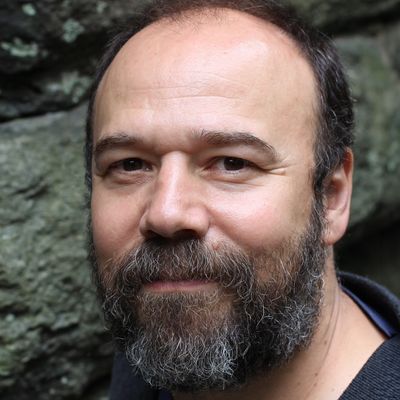
Danny Burstein is a six-time Tony Award nominee who made his Broadway debut in 1992 and now has 18 Broadway credits including Company, Titanic, The Drowsy Chaperone, South Pacific, Women on the Verge of a Nervous Breakdown, Follies, Fiddler on the Roof, and most recently My Fair Lady opposite Laura Benanti... Read More
From the show: The Theatre Podcast with Alan Seales
Guests
Miniseries Inclusions
Featured Shows
About
Danny Burstein is a six-time Tony Award nominee who made his Broadway debut in 1992 and now has 18 Broadway credits including Company, Titanic, The Drowsy Chaperone, South Pacific, Women on the Verge of a Nervous Breakdown, Follies, Fiddler on the Roof, and most recently My Fair Lady opposite Laura Benanti. He can be seen all over the small and big screens, currently as D.A. Lewis Cormier on the CBS TV series Evil, and can even be heard lending his voice to video games such as Grand Theft Auto and more. He is now on stage as Harold Zidler in Moulin Rouge the musical.
After deciding at a young age that performing was for him, he attended the High School of Performing Arts in New York, Queens College, and then University of California, San Diego to take an MFA in Acting. Throughout his highly acclaimed career, he almost said no to the offer of what then came The Drowsy Chaperone. While performing 8 times a week, he also makes the time (often at the expense of sleep) to also maintain an active TV, film, and voice over career.
On a more serious note, we discuss Rebecca Luker's (his wife) recent diagnosis of ALS, more commonly referred to as Lou Gehrig's Disease. He is candid and emotional about the toll it has taken on both of them in addition to the incredible drive and strength Rebecca has to stay well. Please visit http://prosetin2020.org/ to donate to further research and test an ALS drug candidate that Rebecca will be trying.
Connect with Danny:
- IG: @dannybur
Connect with The Theatre Podcast:
- Support us on Patreon: Patreon.com/TheTheatrePodcast
- Twitter & Instagram: @theatre_podcast
- Facebook.com/OfficialTheatrePodcast
- TheTheatrePodcast.com
- Alan's personal Instagram: @alanseales
- Email me at feedback@thetheatrepodcast.com. I want to know what you think.
Thank you to our friends Jukebox The Ghost for our intro and outro music. You can find them on Instagram, Twitter, and Facebook @jukeboxtheghost or via the web via jukeboxtheghost.com.
A very special thanks to our patrons who help make this podcast possible!
Cheryl Hodges-Selden, Paul Seales, David Seales
If you would like to see your name in this show notes or get a shout out on the pod itself, visit ttp.fm/patreon to become a member and show your support!
Transcript
This transcript was automatically generated and might contain errors.
[0:00] Alan Seales: Welcome to the Theatre Podcast. Intimate personal conversations with theatre's biggest names.
[0:17] Alan Seales: I am Alan Seales and this episode is with Danny Burstein. This is the final episode of the Moulin Rouge takeover for February. It has been an incredible month and we've had some incredible guests. So please scroll back in time. The previous four episodes have all been guests from Moulin Rouge. So a big thank you to that team for helping put this together. And thank you to those listening because you guys obviously love it. The fan engagement has been incredible. So keep writing, keep giving me feedback. I always enjoy hearing it. Danny Burstein is one of the warmest people I've ever had the pleasure of chatting with. He is so friendly and he came in and just has this energy about him like I've known him forever.
And it helped us get into the conversation before we even really got in the conversation. I started recording in the middle of something we were already talking about. And in the final form, it's edited together. So it sounds like the beginning, but we were just chatting and having fun. And he's just so incredibly nice, so incredibly smart. And I want to give respect where respect is due and point out how incredibly wonderful and open and candid he is about the news that he and his wife received recently about her recent diagnosis of ALS, which is not news that really I don't think anybody wants to get. But this guy genuinely enjoys performing. He says this in the interview, he's never seen himself doing anything else.
And when we talk about his career, when we talk about him being on stage and just going from one job to the next, basically out of making great connections and great friends and great relationships, his eyes light up, his body language is open. He just loves being on stage. He made his Broadway debut in 1992, which was 28 years ago, which a lot of people working the same job for 28 years, you probably get tired of it. But he talks about it like it's his first job. I mean, he just loves every bit of it. So Danny, thank you for the wonderful conversation. As always, please find me online at theater underscore podcast on Instagram at Twitter. Show your support for the podcast. Please help us continue the transcriptions. We'll start doing some more episodes at a certain level of support. So you can find more information at ttp.fm slash Patreon P-A-T-R-E-O-N. And now please enjoy this episode with Danny Burstein.
[2:46] Alan Seales: My guest today is a six-time Tony Award nominee who made his Broadway debut back in 1992 and now has 18 Broadway credits, including Company from 1995, Titanic, The Drowsy Chaperone, South Pacific, Women on the Verge of a Nervous Breakdown, Follies, Fiddler on the Roof, and most recently, My Fair Lady, opposite the amazing Laura Benanti. He can be seen all over the small and big screens currently as D.A. Lewis Cormier on the CBS, did I say that right? Yeah. Okay. On the CBS TV series Evil and can even be heard lending his voice to video games such as Grand Theft Auto and several more. Now on stage as Harold Ziedler in Moulin Rouge, the musical. Danny Burstein, welcome to the Theatre Podcast.
[3:28] Danny Burstein: Thanks for having me, Alan. Great to be here.
[3:30] Alan Seales: Did I do that justice?
[3:32] Danny Burstein: Well, my God, yes. I sound old, which I am.
[3:37] Alan Seales: You are experienced.
[3:39] Danny Burstein: Okay. I'll take that.
[3:42] Alan Seales: Okay. So take me back to Little Danny and Mount Kisco, right? That's where, at least on Wikipedia, you're credited as being born.
[3:49] Danny Burstein: That's where I was born. I never lived there. My folks lived in the Bronx and they were visiting Mount Kisco and that's where I wanted to be born.
[4:00] Alan Seales: Oh, really?
[4:00] Danny Burstein: Yeah. I wasn't like, I'm coming out. That was it. And I popped out in Mount Kisco.
[4:07] Alan Seales: Well, okay. So you're visiting and then again, I'm going off of Wikipedia to start. It says your biological parents divorced at two months.
[4:16] Danny Burstein: When I was two months old. Yeah. And my mom was the caretaker then for my older brother, Phillip and I, who was two and a half years older than I am. Yeah. So she didn't speak much English.
[4:29] Danny Burstein: No, she came here when she was 17 from Costa Rica. And when she was 21, had two kids all of a sudden. And then we lived in a studio apartment in the Bronx and she's an amazing human being. She would sew people's clothes in the building to make money and knit sweaters. And she's an amazing human being. And now she's an artist and a teacher and really had to invent herself and invent her life. And she's a remarkable person.
[5:01] Alan Seales: Yeah. I respect that. Just like coming up and making something and doing what you can for your kids.
[5:09] Danny Burstein: Exactly. And it really taught my older brother and I about work ethic. It really did. You have to work for everything that you get. And she did. And I have such great respect for that.
[5:22] Alan Seales: And then when did your stepfather come in?
[5:23] Danny Burstein: My stepfather came around when I was about five. And I have a younger brother with my stepdad and my mom who came around when I was around six. My younger brother, Matthew. So three boys in the house growing up.
[5:38] Alan Seales: Oh, still in the studio apartment?
[5:40] Danny Burstein: No, thank God. We moved to Queens because my stepdad got a job teaching at Queens College.
[5:45] Alan Seales: And he's still teaching there.
[5:47] Danny Burstein: Okay. So he's a professor of Greek philosophy, right?
[5:51] Danny Burstein: He teaches ancient Greek philosophy at Queens College, yeah.
[5:54] Alan Seales: And he's Jewish. And so your mother being from, this is me assuming, Costa Rican Spanish, is that a Catholic background?
[6:03] Danny Burstein: Yes. It's a very Catholic country, yes.
[6:05] Alan Seales: So how did the Catholic and Judaism come into play?
[6:09] Danny Burstein: We're all, can't we all just get along? They sort of raised me, not sort of, they raised me without a religion. And they raised me with good, I hope, moral values and allowed me to make my own decisions. And my older brother has converted to Catholicism.
[6:30] Alan Seales: Oh, no kidding.
[6:31] Danny Burstein: But my younger brother and I are both irreligious as it were.
[6:36] Alan Seales: That's sort of where I fall. Because my dad is Baptist, my mom is Jewish. And so I was raised not with anything, just like be nice to people. And so now in my life, actually, I'm starting to read books on Buddhism.
[6:52] Danny Burstein: I understand that.
[6:53] Alan Seales: And it's just about be nice. It's just about appreciate yourself and appreciate others.
[6:58] Danny Burstein: And it works. If you want to call that a religion...
[7:02] Alan Seales: Right. Say we're spiritual, that's all.
[7:04] Danny Burstein: Right, right.
[7:05] Alan Seales: And we practice kindness.
[7:08] Danny Burstein: Yeah.
[7:08] Alan Seales: I try to.
[7:10] Danny Burstein: For the most part, until someone's cell phone goes off in the audience.
[7:14] Alan Seales: Yes. Well, that can set me off.
[7:17] Alan Seales: Does that ever distract? I mean, this is completely on subject.
[7:20] Danny Burstein: Yes, absolutely. No, no, it's perfectly on subject. Sometimes I do. And especially as Harold Ziedler, I can, because they are my audience at the Moulin Rouge. So I can absolutely do that.
[7:33] Alan Seales: What have you done to somebody?
[7:35] Danny Burstein: Can you curse here?
[7:36] Alan Seales: Yeah.
[7:36] Danny Burstein: I've told people to turn off their fucking phone.
[7:39] Alan Seales: Do you really?
[7:40] Danny Burstein: Yeah, I have. Why not? I mean, just in a very sweet way, turn off your fucking phone, darling, that kind of thing. When it's not on me, usually, the focus is on something else. And I'm walking down the aisle, because we all walk through the audience, and someone has their phone on, I'll say something like that to them.
[8:02] Alan Seales: Oh, that's so much fun.
[8:03] Danny Burstein: And you know what, actually, everybody in the audience laughs around it, and the person does turn off their phone, and you move on. That's all.
[8:11] Alan Seales: Yeah, you and Alex Brightman. Alex loves, Beetlejuice loves talking about you.
[8:15] Danny Burstein: Yes, of course. I love Alex. He's such an amazing human being.
[8:18] Alan Seales: Oh, absolutely. So then, okay, so you were growing up in this area, and were you close to the theater scene, to the performing arts? I mean, your mother being an artist, is like a painter type of artist?
[8:31] Danny Burstein: Right, yeah, she works in oils and oil and canvas. She is wonderful. My whole family is artistic, but nobody was in the arts, per se. Nobody was in the theater, that's for sure. I had no connections or anything. I was the first one to decide, when I was 13, that I wanted to go to the high school of performing arts. I had a teacher in junior high school in Queens, a guy named Stuart Glaser, my English teacher, who said, you know, you're good. You should go to the high school of performing arts. And I said, great, what's the high school of performing arts? And he explained it to me, and told me that Liza Minnelli went there, and Ben Vereen, and all these great people had gone there. And I said, wonderful.
What do I do? He said, you have to perform a couple of monologues. And I said, great, what's a monologue? And he had to explain everything to me. And that put me on my path. I was very lucky. The year I auditioned, over 4,000 kids, New York City school kids auditioned for the high school of performing arts, and 127 made it in. And by some miracle, I just worked my ass off on those monologues. And, you know, I got lucky. I also got lucky in stepdads, because I was not a very, I was not much of a reader. And he gave me all different kinds of books, and I would start them and just never really get into them. And then he handed me a play. And I loved it. And then he handed me another play, I understood the dialogue form, I understood two people working things out, and figuring out ideas, and having a discussion or an argument. And I thought, okay, there's something in this for me. And that's why I loved all of a sudden, I loved plays, and I started watching more and wanting to be in more theater.
[10:30] Alan Seales: So, you were in the performing high school, but you went to college in San Diego, UC San Diego.
[10:37] Danny Burstein: For my master's degree.
[10:38] Alan Seales: Oh, master's.
[10:39] Danny Burstein: Yeah, I went to, for bachelor's, I went to Queens College, because everybody in my family went to Queens College, because that was the law. My dad taught at Queens College, you're going to Queens College. So, we all went to Queens College. And then after that, for my master's, I went to UC San Diego, where the La Jolla Playhouse is in residence. And Des Mackinac was out there doing some really wonderful work. And I thought, yeah, let me go out there. And it was different, very experimental. I was also, while I was at Queens College, I met one of my great mentors, a guy named Ed Greenberg, who ran the St. Louis Muni, the largest outdoor theater in the country. And when I was 19, he gave me my equity card and brought me out to St. Louis to work there.
And I had all these musicals on my resume, and I couldn't get seen for any plays in New York or any television or any film work. So, I decided to go back to graduate school and put those kinds of serious plays and serious theater on my resume.
[11:41] Alan Seales: So, you went back to grad school, primarily just for acting?
[11:41] Danny Burstein: Just for acting. Yeah, it was a professional actor training program. Yeah.
[11:44] Alan Seales: Oh, wow. So, you could already sing, and the dancing movement was there.
[11:49] Danny Burstein: Yeah. I've never had real lessons in anything per se, but I just pretty much did it. And when I was a kid, I auditioned for Anything Goes in community theater, and they said, do you tap? And I said, yes, I do. Exactly. And basically, that's how I've learned how to do things, just by being in the right place at the right time and getting very lucky and having lazy auditioners, I guess, or addition. Yeah, who didn't bother to see if I could tap.
[12:23] Alan Seales: I hear that quite a bit, especially on this podcast, is people who have, air quotes, made it, right? Who have gotten to a level that most people will never achieve, is they've said yes without thinking about either how difficult it's going to be or even trying to figure out what the problems might be to get there. So, once you get out of your own way, in general, people out there listening, you'll get a lot farther than you might think you will.
[12:50] Danny Burstein: Yeah, say yes. Early on, especially, I advise people, because people ask me all the time, I tell them, say yes to everything, within reason, of course, and see what you might learn. Because you always pick up something, and you always meet people, and you never...
[13:09] Danny Burstein: Yeah, it's one thing, you know, the person who you mentioned brought you out to the Muny from California, you know, California, St. Louis, or no, it was Queens. That was Queens first, yeah. Queens to St. Louis. Yeah, out to the Muny, like the way that you just run into somebody, and you're like, oh, yeah, come in on this for this one thing, and then it changes your life.
[13:30] Danny Burstein: Yeah, and my first Broadway show came about because I worked with Tony Randall, the actor, in St. Louis, in one of the summer stock shows. He was doing Around the World in 80 Days, and I had some featured roles in that show with him. And he had been trying to get this repertory company in New York for years, and had not been able to, and it looked like he was about to get the money to do it. And little did I know, he was two years away from it. And I said to him, look, if you ever do that on Broadway, if you ever get your National Actors Theater on Broadway, let me know. And we got along so famously, and he said, I'll do that. And then two years later, the phone rang, and I picked it up, and he said, Danny, Tony Randall!
And there he was, and he offered me a job for my first Broadway show, just like that. And all those years of trying out for Broadway shows, and you know, and all the rejection, and those awful feelings, and then all of a sudden, just one little phone call one day turned it all around. It was pretty amazing. Sorry, I keep knocking that. The luck aspect of this, it's making friends, and being nice, and whatnot. But you just touched on something that a lot of people struggle with, is the rejection, and the constant struggle, and everything. I mean, did you ever have a point where you're like, I might want to do something else?
[14:48] Danny Burstein: No, I've never had that. I don't know whether that's good or bad, but I just never have. I've never considered doing anything else. I've always known that this is what I've wanted to do. There have been down times, but I never doubted that this was the right path for me. The trouble with this business is, you know, you do A, B, C, and D never follows. It always jumps up to W, or something like goes to Q, and then bounces around a bit before D comes along. And then E, and then it goes to Z, and then it goes to J. That's the way it works. You just never know how it's going to work.
[15:32] Danny Burstein: The first show that I got nominated for a Tony Award for was called The Drowsy Chaperone. The reason I got that show was because my buddy, Steve Routman, booked a commercial, and they needed somebody in two days to take over for him in a reading. And the reading consisted of him playing five different characters, all with different accents. And so, you know, I did it for him as a favor. And Roy Miller, the producer of The Drowsy Chaperone, was in the audience of that reading, and called me a week later and said, Hey, I've got this show called The Drowsy Chaperone. I think you'd be great in it. And I was sitting there with my wife, and I was on the phone. She could hear the conversation, and I was doing so many things at the time, and I almost said no. And she sort of, you know, waved at me, and she went, Do it!
Do it! God, do it! And I said, Yeah, okay. Yeah, sure. I'll do it. You know, and I squeezed it into my schedule. And that turned into The Drowsy Chaperone, which turned into a big hit for me. Oh, it was a huge show. So, you know, and it turned into a wonderful thing for my career. And just because my buddy, Steve Routman, booked a commercial, and I just happened to replace him and be at the right place at the right time, in the right place at the right time.
[17:03] Danny Burstein: Well, I love it. Yeah. It's a third talent, a third drive, a third luck. Yeah. So, that's what it takes to be on Broadway, for the most part. But you said you never wanted to do anything else. I mean, at this point in your life, you know, maybe Broadway debut in '92, so you've been doing this for a while. Can you pinpoint still, or is it still sort of a mystery about what specifically draws you to the stage? Like, what personal fulfillment do you get from that?
[17:26] Danny Burstein: I love the exchange of ideas. I guess I get a lot of that from my dad, my stepdad, who I call my dad, who raised me, who teaches philosophy. And he studies and teaches the dialogues of Plato. And I think that has a lot to do with it. It's the exchange of ideas, and the illuminating ideas and seeing things in a different way. And looking at different viewpoints, being able to understand other people's viewpoints. And also, I get such a kick out of playing different people. Some people are always who they are, you know, like John Wayne was always John Wayne. He was fantastic, you know, and wonderful. But for me, the fun of the job of being a character actor is being somebody different each and every time, and, you know, seeing how they walk differently, and how they talk differently, and how they think differently, and what they need, and what they want.
And having people come to a show and go, that's the same guy who played that. I saw him two years ago in that, you know, it doesn't even seem possible. He seems so different. That is thrilling to me, and the exciting part of the business for me.
[18:49] Alan Seales: Yeah, I totally agree with that. It's fun when I can see someone who I think is going to be one way, play something completely different, and way better than my expectations ever could have been.
[19:01] Danny Burstein: Yeah, well, yeah, that's the kicker, if you can do that, yeah.
[19:05] Alan Seales: Right, right. And you've done, yeah, you've had a wide range of characters, too. So, now, you're Ziegler, which for the longest time, after the movie came out, I thought it was Ziegler with a G, but it's Ziedler with a D, people.
[19:21] Danny Burstein: Yeah.
[19:23] Alan Seales: What was your first reaction? Do you remember when you first heard, like, Moulin Rouge is going to be a musical?
[19:29] Danny Burstein: I actually, yeah, I did. And I thought, you know, what a wonderful thing. And I knew that they'd done a workshop of it downtown. And then I heard that they were looking for somebody to play Harold Ziegler. And then I heard that they were thinking about me. And Alex Timbers called me and said, I'd like to meet with you. So, we met at a diner on 72nd Street and Broadway, and he handed me the script. He said, read it over. Let me know what you think. And a week later, we met. And I thought, yeah, this is unlike anything I've ever done before. And, you know, that's really the key for me, you know, when I first read a script. And I think, you know, it's got great potential. And I, you know, I made some suggestions.
I thought maybe we could go a little bit in this direction, a little bit in that direction, which he was very amenable to. And he has 9 million, you know, you expect some directors to have a, you know, sort of a scheme for things and idea which way to go. He has hundreds of them, hundreds of ideas. And he's in, you know, never ending font of great, truly imaginative things going on in his head at one time. And they're really, he's, in a way, he's a painter with ideas. Alex, you know, it's really, really amazing to be around him because of that. And so, you know, he was playing with things and ideas, and I was throwing more ideas, bouncing off of what he was thinking. And I thought, yeah, let's do this.
Let's go to Boston to the Colonial, which is an amazing theater in Boston, that they were reopening and has an amazing history. The Odd Couple, for God's sakes, opened there and the South Pacific and many, many Sondheim, many of Sondheim's shows opened there out of town. And I thought, yeah, I want to go and take this ride. And it turned out beautifully. And we did the show there, and about a third of the show has changed since Boston from now until now. And it just keeps getting better and better. And I think even from the day we opened till now, it's gotten even better and tighter. And people are really settled in. And it's also a great, great company. That has a lot to do with it. Usually, there are, you know, one or two people who you could go to work and you go, Oh, my God, this one, you know, this is the greatest company ever. It is so, so wonderful. It's such a pleasure to go to work. And we lift each other up. And we all have so much fun together. And I can't say enough about them.
[22:19] Alan Seales: Do you remember what year it was or how long ago it was, your meeting with Alex in the diner?
[22:23] Danny Burstein: That was about three years ago.
[22:26] Alan Seales: Okay. So, you were part of the creative process long before it went to Boston, obviously.
[22:32] Danny Burstein: Yeah.
[22:33] Alan Seales: Yeah, yeah. So, then how much of the Ziegler we see you do on stage, how much of that is what you brought to it originally versus Jim Broadbent, who did the character in the movie? You know, like he was wearing a fat suit and makeup and everything and all this. And like, I see similarities, but you're two totally different people.
[22:55] Danny Burstein: Yeah. But did you try to imitate him? Or was it like you approached it like a brand new character?
[23:00] Danny Burstein: I've only seen the movie once.
[23:01] Alan Seales: Really?
[23:02] Danny Burstein: Yeah. Yeah. I don't like to necessarily imitate other people. I learn as much as I like when I was doing Fiddler on the Roof. There's so much footage of everybody and their father doing Tevye in Fiddler on the Roof. And I even went to the Lincoln Center Library and got special permission from the Jerome Robbins estate to see the 1976 version with Zira Mostel at the Winter Garden Theater, which Jerry Robbins hated. He hated that version and during his lifetime, wouldn't let anybody see it at the Lincoln Center Library. But I got special permission from his estate because I was playing the role, obviously. And I just basically, what I do is I learn as much as I can about every character that I'm going to play and gather up that information and basically put it in a backpack and wear that backpack during rehearsal, and then eventually try and make it my own and then let go of that information and try and blossom in a different way. And all of it, as much as possible, I try to make it as real as possible, given the rules of the game for that particular show.
[24:25] Alan Seales: Do you ever get tired of the set? I remember, and I've seen the show, I remember walking in and I just said, holy shit, Alex has done it again. Because Beetlejuice 2, which is also on Broadway that he did, it's the whole thing, house included, is this immersive experience. And it's like, I think, yeah, I was talking to Morgan Marcel, I equated it to standing in line at Disney World. When I said, I said, yeah, even the atmosphere, you walk in and all of a sudden before the show starts, you're already in the show.
[25:01] Danny Burstein: Yeah.
[25:02] Alan Seales: I mean, do you remember the first time you walked in, the set was done, what happened?
[25:06] Danny Burstein: Oh, yeah, the entire cast, they saved it for us in Boston. They wouldn't let us in to the theater. And then when they were ready, they opened up the doors and the entire cast walked in. And Derek McLean and Justin Townsend, our lighting designer there and set designer, and Kathy Zuber, of course, our costume designer, and we all walked in with our cameras, like tourists. Our minds were blown and the windmill was churning and the elephant, it's just, we were agog. So I never really get tired of it, because I remember that moment. And I know that everybody in the audience is having that same moment right before we start our show. It's immersive in the most beautiful way.
[25:46] Alan Seales: Absolutely. And did you... I was going to ask about when you went out, you injured yourself on December 10th, you left and Austin Durant took over.
[25:54] Danny Burstein: Yeah.
[25:55] Alan Seales: Because you tore your meniscus.
[25:57] Danny Burstein: Yes, the fourth time.
[26:00] Alan Seales: Over my lifetime. No, I'm trying to get good at it. So...
[26:04] Danny Burstein: You'll eventually get really good at tearing your meniscus.
[26:07] Alan Seales: Did you injure it in the show?
[26:10] Danny Burstein: I did.
[26:10] Alan Seales: Oh, no.
[26:11] Danny Burstein: Yeah, I actually injured my, that was my right knee that I injured recently. And I injured my left knee in Boston.
[26:18] Danny Burstein: And right after Boston, I had the same surgery on my left knee. It's just, you know, here's the truth. You know, it's been almost 40 years of jumping around and dancing and even more, you know, since I was a kid doing community theater and theater in school. So my knees and my body has taken quite a beating. And so I'm 55 now. And it's, you know, it's starting to go, okay, all right, take it easy. You need to back off a little, you know, you shouldn't jump so high. But you know, when you get in front of that audience, you just have that feeling, you just want to give it all 110% every single night. And it's really hard for me not to do that.
[27:04] Alan Seales: Could you finish the show where you got hurt? Or do you took the jump? You're like, I'm out.
[27:08] Danny Burstein: No, I did the show for four months with a torn meniscus and my knee would swell up to the size of a softball after every show. And yet, you know, you'd miss a show and people would come up to you. I came to see the show and you were out. You know, like you go, people have no idea how hard it is to do a Broadway show eight times a week. And sometimes you're not a superhero. You know, you have to take care of yourself and act like a normal human being.
[27:39] Alan Seales: So, the show opened in August, right?
[27:42] Danny Burstein: It opened at the end of July.
[27:43] Alan Seales: End of July. So, you injured yourself right after you opened then?
[27:49] Danny Burstein: Yeah, sure.
[27:50] Alan Seales: So, then there's the pressure, correct me if I'm wrong, right? I mean, why not leave immediately? Is there the pressure to be there for opening and get the reviews and the Tony voters and all that?
[28:00] Danny Burstein: For me, it was just, I thought I could push through and I did different things. I had injections of cortisone and I thought I could maintain it. And I even had this, these, and the doctors thought, you know, was the tear wasn't so bad. I had an MRI and they gave me gel injections. And each time I was waiting for it to maybe stabilize or get a little better. But by the end, it was just impossible to, I would, by the time I would walk to work, my knee was already swollen. And I thought, you know what, that's it. You know, and I talked to the producers, I talked to my agent, we all sat down and it was very civilized and they were so kind and we worked it out. And Austin, who I'd worked with three years before in A Midsummer Night's Dream at the park, was an old friend. And I couldn't think of anybody better to take over while I was away. He was wonderful in the role. I saw him three times.
[29:07] Alan Seales: I was going to ask, yeah, that's why I brought it up. Most people never get to see the show they're in. And so the fortunate part, again, air quotes, is that when you're out on medical leave, you have the opportunity to go see your show.
[29:19] Danny Burstein: Yeah, that only happened to me once. One other time during Drowsy Chaperone, I was shooting a film with Ewan McGregor and Michelle Williams. And it was a huge flop called Deception. But I got out early one day, and I ran to the marquee to see the show. And I sat in one of the great house seats. And I sat there and cried the entire show, because it was like watching your old home movies. But everybody was alive. And everybody was still young and vibrant and beautiful. And I literally sat there and cried for an hour and 45 minutes. It was beautiful.
[29:59] Alan Seales: Was it different for you watching Moulin Rouge, experiencing it from the audience? I'm sure much different than being on stage and being in character and performing.
[30:07] Danny Burstein: Oh, yeah. Much easier.
[30:09] Alan Seales: The audience is easier?
[30:10] Danny Burstein: Yeah, being in the audience is easier.
[30:12] Alan Seales: Yeah. When you were watching this, I just keep going back to my own experience, like I didn't know where to look, because there's so much going on, in a good way.
[30:24] Danny Burstein: In a good way, it's like, I want to dissect the detail of the elephant and the windmills moving, and you've got all your background in the dancing. I mean, just the opening number alone, 11 minutes of just nonstop moving all over the stage. I don't know who to watch, because everyone's so amazing.
[30:40] Danny Burstein: Yeah. It's one of those shows. It's 24-7 energy. And it starts off like a jet plane, and it just keeps going higher and higher and higher. And then two and a half hours later, you go, wow, what was that? Incredible. And hopefully, having said what you just said, maybe people who've seen it want to come back and watch another aspect of the show that they might have missed.
[31:09] Alan Seales: Yeah. Did you change anything when you came back? First off, before we get there, did you know you were going to come back? Was that always the plan?
[31:17] Danny Burstein: Oh, sure. Yeah. I took six weeks. I could have taken less. I could have taken more.
[31:21] Alan Seales: Oh, so you decided on six weeks.
[31:22] Danny Burstein: I said, six weeks should be safe. And I came back, and it was fine.
[31:27] Danny Burstein: Yeah. It gets stronger all the time. Anybody who's had a knee injury, it generally takes six months to a year to be normal again, when you're walking down the street and go, oh, I feel normal. And I'm waiting for that time yet. But, you know.
[31:45] Danny Burstein: I severed my ACL. Didn't tear it, severed it. Straight out of my femur, popped it, playing soccer. People in the stands were like, we heard a rubber band snap. I said, no, that was my ligament. Thank you. I actually have... I mean, you want to talk injury? We can talk. This conversation is going everywhere. I actually was playing when I was doing a class act on Broadway. I was standing by for Lonnie Price. And I was playing softball in the Broadway Show League. And I thought I twisted my ankle. I fell in the outfield. And I thought I twisted my ankle. I thought, oh, no, I don't want to be out of the show tonight. I think I'm on. And I looked down and my foot wasn't there. It had spun around and was facing backwards.
That's what everybody's reactions were. There were these huge stagehands who ran up to me and hey, man, you're going to be all right. Oh, no. That's basically what happened like six times right in that first five minutes. But they got me to Lenox Hill Hospital very quickly.
[33:00] Alan Seales: Well, obviously your feet are on the right way now.
[33:02] Danny Burstein: Thank God, yeah.
[33:02] Alan Seales: So you're doing okay. So the question I was asking earlier was after you got your feet pointing in the right direction, you watched Austin, came back, you said you watched it three times while you were out, right?
[33:14] Danny Burstein: I did, yeah. Just to re-familiarize myself.
[33:16] Alan Seales: Did anything change? Did you get a new perspective after watching it?
[33:20] Danny Burstein: I did. I really did. I couldn't tell you exactly what I've changed, but I do have a greater appreciation for the story. Watching something, getting that other perspective and also feeling more comfortable on the stage after having watched it. There's a comfort level there that wasn't there before. And giving people kind of what they want in the moment. There's that too that I learned from watching it. And I learned a lot from Austin, because he's such a wonderful actor. So I was able to see him tell the story in his own way. So it was really, really helpful.
[34:06] Alan Seales: Yeah. That's interesting. I feel like there's little things that I did. I never been on Broadway, but there are things that I did when I did regional theater that when people swing in or whatever, I would see and I said, oh, that's really cool. And I would try something that they would do and vice versa. So I feel like it would be a lot of fun to see a swing or a cover or something go in and really try to see, because they're a different person. They're going to try different things.
[34:30] Danny Burstein: Exactly.
[34:31] Alan Seales: You also have lots of TV and film credits. And you're filming your series regular on Evil now on CBS.
[34:38] Danny Burstein: I'm recurring.
[34:40] Alan Seales: Recurring.
[34:40] Danny Burstein: Yeah.
[34:41] Alan Seales: How are you able to find time to do all this?
[34:44] Danny Burstein: That's a very good question. I somehow make the time. Sometimes you go with very little sleep, but you just do it. I think I did between Boston and New York, I did 10 TV shows and two films, and I was super busy. And I planted a lot of seeds for that kind of work for the future. And I just got on a roll. And when it happens, you got to take advantage of it.
[35:21] Alan Seales: I just don't understand this. I mean, I understand lifestyles. There's so much, though, that people don't quite realize goes into being an actor, especially at this level. Because even if you have nothing else, you're not doing TV, you're not doing film, eight shows a week itself is hard as hell.
[35:34] Danny Burstein: A lot. It is hard as hell.
[35:42] Alan Seales: And then you've got press engagements, like what we're doing right now.
[35:45] Danny Burstein: Oh, yeah. Absolutely.
[35:46] Alan Seales: Rehearsal for Good Morning America, and then the performance of Good Morning America.
[35:51] Danny Burstein: And rehearsals for the show, too.
[35:52] Alan Seales: Oh, yeah. And so Aaron Tveit's out this week, so you had to rehearse last week for his put in. So all of this, people don't realize how hard it is. And then in between all of this, you're auditioning for sometimes other theater, sometimes TV, sometimes film. You've got your voiceover career with your video games and whatnot.
[36:12] Danny Burstein: Yeah, I'm on a new series for Nickelodeon, for example.
[36:17] Alan Seales: Are you?
[36:17] Danny Burstein: Yeah. It's a beautiful new series. Oh, I wish I could talk about it. I don't think I can. Because it hasn't started yet, and they haven't announced anybody yet or anything like that. And I just did something as well for the people who are making, for Josh Gad, who's working on a new animated series called Central Park. The same people who created Bob's Burgers created this. And I just recorded that yesterday, guest starred on that. I'm always doing something and just keeping busy.
[36:47] Alan Seales: Do you have like a dream voiceover part, like The Simpsons, or something like that?
[36:52] Danny Burstein: Sure. I have a dear friend, Michael Price, who's one of the writers and producers on The Simpsons. And I've never begged him. Maybe I should have.
[37:02] Alan Seales: Bucket list.
[37:03] Danny Burstein: But that would be lovely. Yeah, sure. Someday to guest star on The Simpsons. Michael, if you're listening. I love you, ma'am. Yeah, his wife and I went to grad school together, Monica.
[37:16] Alan Seales: Is he one of the mathematician writers?
[37:19] Danny Burstein: Mathematician writers?
[37:20] Alan Seales: Yeah. Do you know about this?
[37:21] Danny Burstein: No, I don't.
[37:22] Alan Seales: All of the math in Simpsons episodes is real. The formulas, all of that, what you see, because I saw an author speak years ago, and it was a book on the hidden math inside Simpsons. And for whatever reason, mathematicians somehow make great writers for Simpsons.
[37:29] Danny Burstein: I had no idea.
[37:41] Alan Seales: So anytime you see a formula, or they're talking about some abstract concept or anything, that's all legitimate math stuff.
[37:47] Danny Burstein: That's amazing. That's also wonderful to know. That really is really cool.
[37:51] Alan Seales: Yeah. So they're not making any of that up. That's all highly, highly intelligent stuff.
[37:54] Danny Burstein: He's brilliant. I think he's brilliant. So it wouldn't surprise me at all.
[37:59] Alan Seales: Right. So on a more serious note, in getting into how you manage your time and everything, are you okay talking about your wife?
[38:08] Danny Burstein: Yes, absolutely.
[38:08] Alan Seales: Okay. So you both just announced that she was diagnosed with ALS late last year.
[38:15] Danny Burstein: That's true.
[38:16] Alan Seales: Which is Lou Gehrig's disease and more commonly known. So I'm very sorry.
[38:20] Danny Burstein: Thank you very much.
[38:21] Alan Seales: That is hard news to get.
[38:23] Danny Burstein: It's hard news to live through. Believe me, it is. And she's been amazingly strong. It is very, very difficult. The physical limitations that have been put upon her, especially lately, it's demoralizing. And it's really, really hard on her. Thank God she can still sing. And she's trying to do that. And that brings her great joy. She's doing it from a sitting position right now. But it's beautiful to hear around the house when she does.
[39:02] Alan Seales: Rebecca Luker, we haven't said her name yet.
[39:05] Danny Burstein: I'm married to Kitty Carlisle-Hart.
[39:08] Danny Burstein: Yeah, Rebecca. I mean, she's also a performer as well, with her own Tony nominations. I mean, when did this, when did you first, or did both of you start noticing that maybe something wasn't quite-
[39:21] Danny Burstein: Well, it started about, it was almost a year ago, March of last year. And she-
[39:27] Danny Burstein: His book is available in bookstores all over the world at www.dannyburstein.com.
[43:47] Danny Burstein: Oh, that's difficult to deal with. I guess my last question about this is, why decide to share it? I mean, because you guys went so public about it on social media.
[44:05] Danny Burstein: I think she needed to. It's also, it became difficult to hide it. She's basically, she can't really walk very well anymore. Walking is very, very difficult. So, it's an important, it wasn't, you know, people are going to see her eventually, and people are going to know eventually. So, we thought, why not just be honest about it and open about it, and also maybe help people, other people who are in this similar situation, who are in a similar situation? You know, that seems to be the best way to do it. And we thought so anyway.
[44:52] Alan Seales: Well, I think it takes a lot of courage. And for me, I think it would be something where, you know, I guess I get ahead of it. I feel like I'm controlling it a little bit.
[45:01] Danny Burstein: Yeah.
[45:02] Danny Burstein: Where I can, you know, it's my time to bring it to the world instead of them seeing it.
[45:06] Danny Burstein: Right. You know, what really takes courage is the day to day stuff. You know, getting up, you know, and when you have no strength, and getting yourself to the bathroom, you know, in the morning, you know, that kind of thing, where you can't lift yourself off the bed, and you know, it's those kinds of things. That's where your real metal is tested. And then, and also for all the caregivers out there, which is, you know, your whole life is turned upside down, too. And you're taking no time for yourself. And there's a lot of that, you know, for both of us. It's a very, very difficult change in our life, but one that we're trying our best to adjust to.
[45:47] Alan Seales: Well, all right. I have a Patreon account, Shifting Gears. And so people get to write in with their own questions.
[45:54] Danny Burstein: Oh, yay.
[45:55] Alan Seales: And I've got a couple for you. The first one.
[45:57] Danny Burstein: Wonderful.
[45:59] Alan Seales: Did you prepare differently for Moulin Rouge! than any other show in the past?
[46:04] Danny Burstein: No, I prepare the same way I always do. I do as much research, as I mentioned earlier, as possible. And then I play as much as possible. Teachers of mine, older actors, I mean, would tell me about other actors who would go in and try, you know, really extreme things in rehearsal, makeup and putting a stone in their shoe and wearing a hump and, you know, all kinds of crazy, crazy shit. And I thought, all right, yeah, I don't know what I want to do with this character yet. And I want to play and see what he's like. And so I sometimes will try crazy things in rehearsal just to weed out what doesn't work.
[46:49] Alan Seales: Right.
[46:49] Danny Burstein: You know, and so that's basically what I do. It is called a play after all.
[46:55] Alan Seales: Yeah.
[46:56] Danny Burstein: So you might as well play and have a good time. And so that's what I try and do most of all, have a good time.
[47:01] Alan Seales: All right. So the second question, you sort of answered this already, but how were you able to balance Moulin Rouge! while also shooting Evil?
[47:09] Danny Burstein: I don't sleep. That's it in a nutshell.
[47:13] Alan Seales: Yeah. All right. So the last question from patrons, and this is a serious question.
[47:17] Danny Burstein: Yeah.
[47:17] Alan Seales: And I quote, if you were a rich man all day long, would you really bitty bitty bum?
[47:22] Danny Burstein: Hell no. Hell no. I would go out and do altruistic things. I'd give away my money as often as I could to help people. I truly believe when you're really living your best life, you're living it not just for yourself, but for others. And if I were a rich man, I would do my best to take care of my fellow man.
[47:49] Alan Seales: That was a much more serious answer than I thought you would give.
[47:51] Danny Burstein: Well, you said it was a serious question.
[47:52] Alan Seales: Well, I was being ironic, but I love your answer.
[47:55] Alan Seales: Now you tell me.
[47:58] Danny Burstein: No. Okay. So I have my own standard three closing questions that I ask everybody.
[48:02] Danny Burstein: Wonderful.
[48:02] Alan Seales: So the first one for me is what motivates you?
[48:05] Danny Burstein: What motivates me? Being a good example to my sons.
[48:12] Alan Seales: How many sons do you have?
[48:13] Danny Burstein: I have two sons, 27 and almost 24. Alexander is my older son, and my younger son is Zachary.
[48:19] Alan Seales: Is it a great funny how having kids changes you?
[48:23] Danny Burstein: It does.
[48:24] Danny Burstein: You want to leave something good for them.
[48:26] Alan Seales: That's exactly right. Also, I want every day to be an example for them.
[48:31] Danny Burstein: I love that. Next question is, what advice would you give to your younger self and younger people listening now, starting out down a similar path?
[48:39] Danny Burstein: I would say to myself, what the hell were you so worried about? I was always a worrier. I tend to have that streak. I guess that's the half Jewish streak. But you sort of said it like, what the hell were you so worried about? But just as I said earlier, say yes to everything. And it took me a long time to do this, and older actors told me this as well. And so if you're younger, you have plenty of time to do it and learn as soon as possible. You have to listen as much as possible. The great director and producer and actress, Eva Legallion, used to say, you have to listen with your blood. And I believe that's the most important part of acting, listening.
[49:30] Alan Seales: All right. And then the final question, if you can only see one show for the rest of your life, but you can see it as many times as you want, what would you see?
[49:37] Danny Burstein: Sweeney Todd.
[49:38] Alan Seales: Oh, another one for Sweeney.
[49:40] Danny Burstein: It's such a brilliant score. And I admire Steve's work so much. And I have enjoyed working with him in the past and I hope to work with him in the future. And I just think he's a genius. And I think that show is about as perfect as it gets. And kudos also, of course, to my hero, Hal Prince, who just taught us all so much and was such an amazing human being and a great friend.
[50:12] Danny Burstein: They hit it out of the park with that one. I mean, I could go down there. I have a list of other shows. You know, South Pacific is another one that comes to mind because it's so beautiful and the themes in it are so important. But Sweeney Todd is just, it just, they went for it and they got it. It's really about as perfect as any show that I know of.
[50:34] Alan Seales: Yeah. All right. So, we can find you online on Instagram at Danny Burr, B-U-R. Is that the only, you're not on Twitter, right?
[50:40] Danny Burstein: I'm not. No, my wife is on Twitter as Rebecca J. Luker.
[50:43] Alan Seales: All right. And are you on Facebook?
[50:45] Danny Burstein: I am on Facebook, yeah. I have a fan page on Facebook.
[50:48] Alan Seales: Do you run your fan page or somebody else do it?
[50:50] Danny Burstein: It's a little of both.
[50:51] Alan Seales: Oh, yeah?
[50:52] Danny Burstein: Yeah. I look and I check and that kind of thing, but I do have a friend who does that.
[50:55] Alan Seales: So, all right. At least it's not a complete stranger.
[50:58] Danny Burstein: No, no, no. Oh, God, no.
[50:59] Danny Burstein: There's so many fan accounts. There's so many Moulin Rouge fan accounts out there that I've been connecting with through this takeover for the month of February. Oh, they're so passionate. I mean, the internet allows people, like-minded people, to find people that they never would have 10, 15, 20 years ago. And just these people who come together for specific shows just blows me away. And then we're getting off on another tangent, but you have shows like Be More Chill and Lightning Thief and Now Sex and these things that come to Broadway with these massive online followings that it's changing the game.
[51:37] Alan Seales: Yeah. I wish I had seen Be More Chill. I'm so sorry I didn't.
[51:40] Danny Burstein: Sit and go to London.
[51:41] Alan Seales: Yeah, that's right. Yeah, I follow Chase Brock is a dear friend, and I follow him on Instagram, so I do see that he's doing it there. I'm very, very happy for him.
[51:50] Danny Burstein: It just got extended. It was announced today, I think.
[51:52] Alan Seales: It did. Oh, wonderful for them. That's fantastic. I couldn't happen to a better guy or a more talented guy. Chase is an amazing human being and super talented.
[52:04] Alan Seales: All right. Well, let's wrap up here. You can get more of me at the theaterpodcast.com. Support and get your questions in at the theaterpodcast.com slash Patreon, P-A-T-R-E-O-N. You can get me online at theater underscore podcast on Instagram and Twitter, facebook.com slash official theater podcast. Please leave a rating, leave a review. And thank you to Jukebox the Ghost for the intro and outro music. And Danny, thank you. Most of all, this has been so much fun.
[52:30] Danny Burstein: It's really been wonderful, Alan. Thank you so much.
© Broadway Podcast Network, All Rights Reserved