

To watch the video version of this episode, click here. Listen to the SIX studio cast recording, or grab the sing-a-long edition! Vidya Makan is a composer, singer, actor, and musician based in Melbourne, Australia, and most recently starred as Dot/Marie in Sunday in the Park with George... Read More
From the show: The Theatre Podcast with Alan Seales
Guests
Miniseries Inclusions
Featured Shows
About
To watch the video version of this episode, click here. Listen to the SIX studio cast recording, or grab the sing-a-long edition!
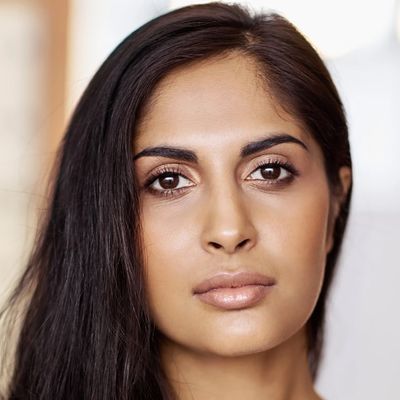
Vidya Makan is a composer, singer, actor, and musician based in Melbourne, Australia, and most recently starred as Dot/Marie in Sunday in the Park with George. Vidya’s other credits include: Lady Capulet in Romeo And Juliet, Green Day’s American Idiot, Merrily We Roll Along and Little Inez in Hairspray. As a composer, Vidya is currently working on My Home Too, a song cycle about Australia and home, while her debut full length musical Woman, inspired by the lives of bohemian artists Gerda Wegener and Lili Elbe is also in development. She is currently part of the original Australian cast of SIX the Musical as Catherine Parr.
Vidya’s parents grew up in apartheid South Africa, later moving to Australia in the 1990’s to get away and start their family. She remembers going to the theater frequently with her family as a child, and when talking about her parents, calls her mom an “absolute arts nerd”, while her dad has a “beautiful” singing voice. Vidya started playing the piano when she was 3, and began singing in choirs when she was 5 years old - but was also a self-declared “tom-boy”. Her first dream was to play soccer for Australia, and at 15 years old Vidya received a scholarship to train at the Manchester United Soccer School in England for a week. While in England, she and her father attended a performance of Wicked, and Vidya recalls, “There was something about that show that just got under my skin.” They returned home to Australia, she auditioned for the school musical for the first time - The Wiz - and landed the role of Dorothy. And that was it! From there it was ‘goodbye soccer, hello theater’. Vidya went on to study musical theatre at The Queensland Conservatorium’s Griffith University.
During our conversation, Vidya talks with us about the journey of finding her place in the performing arts industry in Australia. As a woman of color she “hasn’t had the cookie-cutter career because she isn’t the cookie-cutter performer” - as successful musical theater shows that transfer from America to Australia aren't necessarily crafted to showcase more ethnically diverse performers. She shares that a large part of her journey has been about finding those companies (usually with younger people at the helm) where she can be seen just as a woman, outside of type or ethnicity or race. And so it seems SIX the Musical is very naturally the next step in this journey, as casting was “not about anything else other than getting the right person for the role”, boasting diverse casts across all its productions.
In this episode, we talk about:
- How the postponement of the Australian production of SIX affected her
- The outpouring of love and support they have received from the SIX fan base
- The importance of being a role model now that she’s in the spotlight
- How English actress Jameela Jamil’s social media activism against female body shaming has changed her life
- Taking the sexualization of women in pop culture/music and turning it on its head in SIX
- The differences in the performing arts industry in Australia versus America
- What she calls a “Muggle Job”
- Composing her own music, and working on creating an original musical of her own
Connect with Vidya:
- IG: @vidyamakan
- Web: vidyamakan.com
Connect with The Theatre Podcast:
- Support us on Patreon: Patreon.com/TheTheatrePodcast
- Twitter & Instagram: @theatre_podcast
- Facebook.com/OfficialTheatrePodcast
- TheTheatrePodcast.com
- Alan's personal Instagram: @alanseales
- Email me at feedback@thetheatrepodcast.com. I want to know what you think.
A very special thanks to our patrons who help make this podcast possible!
Cheryl Hodges-Selden, Paul Seales, David Seales
If you would like to see your name in this show notes or get a shout out on the pod itself, visit ttp.fm/patreon to become a member and show your support!
Transcript
This transcript was automatically generated and might contain errors.
[0:00] Alan Seales: Welcome to The Theatre Podcast, intimate personal conversations with theatre's biggest names.
[0:18] Alan Seales: This is still May, so we are still in the Quarren Queen takeover, and this episode is with Vidya Makan, who is Catherine Parr in the Australian cast of SIX, and yet another Australian coming to the podcast. I absolutely love all these international chats that we've been having lately, so if you're out there, you want to be heard on the podcast, you're in another country performing, let me know, we would be happy to talk. So, a common thread I'm noticing in the casting of all of these women for SIX, and I've talked to quite a few now, is basically just how truly nice everyone is and how much they love being on stage with the other five equally powerful women. They're all there to tell a story, they're all there to build each other up.
It's just one of these things that I think again is sort of captured lightning in a bottle and just speaks to so many different types of people on so many different levels. So, I'm really excited to bring all of these amazing stories with all of these talented people to you throughout the month of May, and hopefully beyond we can get some more interviews going on later as well with more cast. But before we get into it, as always, remember, you can view the video version of this interview at ttp.fm slash patreon, P-A-T-R-E-O-N, and find me on Instagram and Twitter, theater underscore podcast. And while you're at it, if you could just go into your iTunes app if you've got one or your Apple podcast app, if that's how you're listening, leave a rating, please leave a review, they help. Every little rating helps. That's how we climb the charts and get the word out. So, for now, everybody, please enjoy this episode with Vidya Makan.
[1:55] Alan Seales: Listen up, let me tell you a story. A story that you think you've heard before. We know you know our names and our fame and our faces. You know all about the glories and the disgraces. Today's guest is a composer, singer, actor, and musician based in Melbourne, Australia. Having recently starred in Sunday in the Park with George, she has additional credits such as Romeo and Juliet, American Idiot, Merrily We Roll Along, and Hairspray. She's currently in the Australian cast of SIX, the musical as Catherine Parr. Vidya Makan, welcome to The Theatre Podcast.
[2:31] Vidya Makan: Hello, thank you so much for having me.
[2:35] Alan Seales: Thank you. How are you? How are you holding up in quarantine down there?
[2:39] Vidya Makan: Oh, look, it's definitely been ups and downs and then ups and downs. It's been a bit of a roller coaster ride. But we're doing okay, I think. And one of the amazing things about this show is that we have a beautiful family. And we check in with each other every single day. So that's been a real rock in this crazy, crazy time.
[3:03] Alan Seales: So the production, you guys closed the opera house in March, the Sydney Opera House. And did it close earlier? Or did you actually get your full run in?
[3:13] Vidya Makan: No, we actually got a full run in. So we closed on the 5th of March. And that was just when all of this was starting to ramp up. But it was still quite uncertain. And when we closed, we were certain that we would be opening in Melbourne in five weeks' time. So it was a bit strange for us, because when all of the news of the shutdowns and the cancellations and the postponements were happening, we were on essentially a break, a holiday, five weeks. So it kind of didn't hit us as much, I think, for me in that time, as it did on the day that we were meant to start to be back. And then the day we were meant to open. And that's when it started to, I think, sink in. And I think it must be affecting the audience as well, because if you had tickets to this show that you've been waiting to see for so long, I think that's when it hits the most. So yeah, it was a strange kind of turn of events for us. It worked in a slightly different way to most of the other casts, I think.
[4:12] Alan Seales: It's interesting, because the day Broadway shut down was the day that the Broadway cast was supposed to open, have their opening night, right? And so there were a bunch of people who have flown in and were so excited. And the story of SIX, the fandom of SIX is incredible. I mean, obviously, this episode is one of several now for the May Corn Queen takeover. And I've said this before, but just the devotion that people have for the music and the storyline, I cannot imagine the kind of personal loss that people are feeling by not being able to see the show. Because there are those of us who are not fortunate to live in a place where we can just go to a show whenever we feel like it on a Wednesday night or whatever it is.
You save up your money, you drive in, you fly in, whatever it is. So did you get any sort of outpouring or feedback on social media when you found out that, or when it was announced that the shows wouldn't go to... It was Melbourne, Adelaide, and Wellington, right?
[5:18] Vidya Makan: Yes. Yeah.
[5:18] Vidya Makan: It's so much so. I think people were grieving in a way, which is totally fair. And we were as well, like masses of messages. But what's a really cool thing about the Queendom is, and was, was there's a lot of those messages were, hey, Queens, I hope that you're okay. Hope that you stay safe. This is for a reason. And at the end of the day, it sucks, but it's a health crisis. And it was cool having fans. Fandoms at the best of times can be super intense and so, what's the word? Passionate. Sometimes that can become a little bit of a toxic thing that can blind people. But I really feel with the majority of the fandom that I've interacted with anyway, it's been this outpouring of support and love and kind of holding each other's hands and just waiting, being with each other to wait till we will get through this. And I think a really cool thing about our announcement is that they said it was postponed, which means there's still hope. And hope is the most powerful thing I think we have right now.
[6:28] Alan Seales: Yeah. It's just been so weird, especially I'm here in... I live in Brooklyn and I go into the city almost every day, or I did. And everybody's just waiting. It's not an if, it's a when. It's like when Broadway comes back, right? And the passion and the stage door and you see the energy, you see the crying and the laughing and everything that these shows bring to people. And it's just all of this emotion is just gone. And people are stuck at home. And for the first time, being made to stay at home and dealing with the isolation and the mental stress and the anguish that comes with that is brand new to some of these people. And it's different. It's interesting to me how different people are reacting completely differently.
And I mean, you know this very well, the theater community, the community of actors are often like sort of the misfits that may not feel comfortable in a group of friends in a public situation. There's a lot of very shy people in theater, and they find their home safely on stage, right? So they go home and they've lost that outlet of creativity, of expression. And I feel genuinely... Man, I feel bad for them. And there's people who don't know how to handle it. Others are like, you know what? I'm taking this time. I'm not going to do any interviews. I'm not going to do any press. I'm just going to sit at home and talk to my plants or hang out with my kids or whatever it is that they don't get to do.
There's a lot of moms on Broadway that are like, no, and dads too, actually. But parents on Broadway who are just like, I can put my kid to bed every night now. This is weird. This is really weird. But from your perspective though, has your perception shifted in terms of how you view social media now that you're on the other side of the fandom? Instead of being a fan, you are someone people are a fan of?
[8:29] Vidya Makan: Yeah, I mean, for sure. A big part of having a platform is you have the opportunity to be a role model. And I think that that's really cool. I know that in my growth as a young adult, I've really looked up to people like Jameela Jamil. I don't know if you know who she is.
[8:47] Alan Seales: Oh, yes, yes, yes, yes.
[8:52] Vidya Makan: Yeah. And she runs this really cool account called I Weigh. And the whole thing is this revolution against body shaming. And looking up to that, it's like her ideas and words have seeped into my brain. And now any form of self-hate or self-deprecation, is that a word?
[9:12] Alan Seales: Self-deprecation. Yeah, of course.
[9:15] Vidya Makan: Due to body image. Now it's like it just turns off. My brain goes nut. By you feeling those things, you're actually saying yes to all of these societal pressures. By you loving yourself is actually a form of rebellion. And it's like that has had the biggest influence in my life. And so getting the role of Parr in SIX, and then suddenly having these thousands of young people starting to look up to you, it definitely has made differences to the way that I want to show myself into the world and what I stand for and what I believe in. And yeah.
[9:54] Alan Seales: Do you have, or I guess, have you had issues with body image in the past? I mean, you went to that very specifically, it seems like.
[10:02] Vidya Makan: I mean, I'm a female, and I'm a female, a woman of color. I don't know anyone who hasn't. It's never been something that's overridden my life. I think a big thing is for me, actually, more seeing the people around me. I've got women in my family, as we all do, friends who have really, really, it's cost them a lot. I have women in my family who are like, it's all they think about. It's all they talk about. And I look at them and I think, what a shame. So for me, it's kind of more of a nipping it in the bud type of thing. Of course, I've had body image issues like everyone, but I feel proud that I feel like I've kind of, I haven't conquered it, but it hasn't gotten to a really dark place for me, which I think is a positive and a hopeful and hopefully inspiring thing.
Embarrassment, I think, is learned. I really do. I think being embarrassed, especially about your body, is a learned thing. And learned either, and shame too. Feeling shame, I think, is taught. So as a parent, I'm like, all right, there's a time and a place. At home, if you want to whip it out, whip it out. Do your thing. Just don't stand in the front door with the window open or the window with the shades open and just shake it to the neighbors. It's a bad call.
[11:25] Alan Seales: Yeah, it's a bad call, whatever. I mean, so anyway. Yeah, so the body image, I totally get that. And it's interesting to me how you brought that up in that SIX is a show about female empowerment. It's telling stories that people haven't heard in theory.
[11:41] Vidya Makan: Yeah, so I didn't know the history of the Six Wives. And I didn't know all of this stuff. But the costumes, it's the show is modeled after a Beyoncé concert. And Beyoncé is a feminist. She puts herself out there in a very positive way. And I'm hoping you get, I legitimately, this is a serious question. And I'm hoping you can help me with this. Because as a straight white man, of course, I have blind spots because there are certain prejudices that I've never experienced.
[12:24] Vidya Makan: And for me, I see six attractive people on stage singing in dresses and pop songs, and I'm like, okay, that's normal. But it's on the other, like normal in that it's almost sexualized, but the show isn't about sex. So like, where is that fine line? You know what I'm trying to ask? But do you know what I'm trying to ask? I think it's to do with alluding to pop music and pop culture and the power of the show using that mechanism to give it power, right? I feel like the sexualized idea behind what may seem outfits and whatnot, I think that's a thing that the world has thrown on women. And especially if you look at it from a historical point of view, the way that these women were portrayed. I mean, you look at Catherine Howard, you look at Anne Boleyn, they were seen as the adulteress and like the temptress.
But you look at their lives. I mean, Anne Boleyn, the reason that she was so scandalous was because she refused to sleep with King Henry. Catherine Howard was abused as a child. She was so young. And I think what is really smart about the show is that it's taking these stories, it's inverting them, and telling them from the female perspective and doing that through pop music. Then you need to use the form of pop music, right? So it's about flashy lights, it's about costumes that assert your presence. A really cool thing in the show is Carrie-Anne, who choreographed, her choreography is brilliant. A big thing in it is that none of the moves, no matter what song or what moments, they're never sexualized.
There's never like, you never spread your legs apart. It's like not that there's anything wrong with that, like own you, girl, okay? But in the show, they've made a very clear cut away from that, and it's all about owning you and being you. And if you have a short skirt and fishnets and you're dancing and you're singing, there's no reason actually that that should be something that's sexualized. If your power is in a stance and you're looking down someone's eyes, there's no reason that really should be sexualized, except for the fact that the world has said you are a woman and so therefore temptress. And I think, I don't know if that answers the question, but I think that is the power of it.
Yes, certainly from some viewpoints, you might look at it as this sexy show, but I think if you really listen, I think that's what it is. It's not about asserting your view on what it is. No, sit back, listen to the show, really listen to what all the costume elements and those things that you thought might be portraying a particular thing. Listen to what they actually are saying, and you'll discover something very different. And it's to do with femininity, it's to do with owning yourself and the other women on the stage and lifting each other up. That's what is at the core of it, and that can be so taken out of context.
[15:37] Alan Seales: Yes, yes, and you did answer my question. I think that is a very beautiful answer. And you know, I've used this analogy before too. It's like to quote Hamilton, right? Who lives, who dies, who tells your story? And when you're describing a show, I guess it depends on who, if you're talking to a man who all they see up there are like sexualized objects, then I guess that's the lens through which you're going to hear the story. Or if you see somebody who said, wow, you know, that really taught me a lot of history or it helped me realize things about, like you said, you could have independent strong women all up in a line next to each other on stage without being catty or trying to take each other down.
And it's about building each other up, exactly what you said. So no, I totally, I totally, totally get that. So yeah, thank you for the answer. That was very good. We totally skipped over where I normally start on this podcast, by the way, which is like your roots and where you began as a child. So yeah, take me through baby Vidya. What happened when you grew up? And I was reading on your website too that like you were a football, soccer nerd.
[17:02] Vidya Makan: I did, yeah, I was. And like the amount of Beckham comments that have been made to me in my life, yeah, sure. So my parents are from apartheid South Africa. They moved to Australia in the 90s to get away from that. And as such, with their lives having to live through segregation, they never got to experience things like theater. They never got to pursue potentially artistic dreams that they may have had. My mom is the absolute arts nerd. She loves music, she loves theater. She went and saw this production of Fiddler on the Roof, an amateur production in South Africa, five times in one week because she was that obsessed. And my dad has a beautiful, beautiful voice, and I think if he had it differently, he may have become an actor or a singer.
I think that's where I get the doing of what I do. But I think I get the passion and the love for it as a craft from my mom. So that's kind of the background of that. So when they moved to Australia and they had me and my sister, theater is what we spent our money going to. And it was never something that we did. Like I never performed, I was never a theater kid, but we went and saw shows like you wouldn't believe. We did a lot of traveling as kids. When I was eight, they took us out of school for two, two and a half months, which you could do back then. And they were like, we're going to teach, like homeschool you, not really homeschool, but they bought a flight to England and they bought a flight back two and a half months later.
I was eight, my sister was six, and we got there, we stayed with some family, we rented a car, we just traveled. And on that trip, we saw so much theater, like in the West End, and that really shaped, I think, the roots of my love for what this is. But when it came to what I was doing, I was never actually performing. I was an instrumentalist, and I was playing piano from the time I was three. My mom said that I said this to her when I was five years old. I said, "Mom, you just don't understand, the music runs through my blood." But along with the instrumental side, I was really a tomboy, and I played a hell of a lot of sport. And I loved running around and being with the boys and just getting messy and playing soccer.
So that was my first dream. My first dream was to play soccer for Australia and to be in the pit for a musical one day. That was the dream. And where it all kind of turned was when I was 15. I was actually, my dad likes to tell this story because it's a bit of a name drop, but I'm going to do the name drop. When I was 15, I got a scholarship to train at the Manchester United Soccer School summer schools for kids from all around the world, which is really, really cool. And it was like one of the highlights of my life, being 15 years old. And we went to this, traveled all the way to England into this country town, and this school that looked like Hogwarts. And it was just a week of soccer training with the world's best, and that was so cool.
And we finished up that week on a high, and my dad and I had a couple of days in London. And as I said, I'd been to theater for a very long time, but we got tickets to see Wicked, as most teenagers do. And we were sitting in the back row of the Apollo Theatre, and there was something about that show that just got under my skin. It's like it had been tapping away my whole life, and there was something about it that just like grasped it. And I went home and auditioned for the school musical, and we were doing The Wiz. And my whole family was like, just go for Dorothy, like why not? I was like, nah, nah, nah, there's no way. So I was going for the witches. And then at the very end, just before I walked into my audition, we had to fill out a sheet, and the bottom said, "Up and Dorothy" at the very bottom.
And I ended up getting the part, like the lead role in our school musical. And between that and having seen Wicked, and at that point I was also obsessed with Idina Menzel, so I was getting obsessed and all of that. That was it! That was goodbye soccer, hello theater. And from there, it was all I wanted to do.
[21:18] Alan Seales: Where did singing come in? Because like, were you singing while you were playing the piano too?
[21:23] Vidya Makan: Yeah, I was always writing songs, and I'd sung in choirs from the time I was five. So I was always super musical. And I wonder whether, I think I always loved to perform. I think when I was really young and we were seeing shows in the West End and on Broadway, I think I might have a couple of times thought, "Oh, I might love to do this." But it was always like, you know, that's so not your personality because I was the tomboy, right? I was kicking the soccer ball. So to even admit maybe I want to perform, that didn't fit with the persona of who I was back then. This tough kid who really just was a super sweetheart and super gentle. And that was where I think I failed at soccer because my mom always says, "You were good at the tricks and you were good at the technique of it, but when it came to playing a game and having to push people and be a little bit aggressive, that was not something I was great at."
[22:15] Alan Seales: Too sweet for that.
[22:22] Vidya Makan: Yeah, I think I've always been a theater soul. The bio on your website is interesting because you list yourself as a composer first. Like you say, not on the website, on the SIX the Musical website. So that's where I, for the intro for this episode, I took that. You know, you list yourself as composer, singer, actor, and musician in that order. And it's interesting to me how people self-identify with different genres within the area of performing and within the area of music. Is that your ultimate goal that you want to do later on down the line? Is it to write songs and be like an indie pop artist? Or what kind of music do you write, actually?
[23:15] Vidya Makan: I write for me. I write for musical theater. And I think I've wanted to just do standalone songs, but everything that I write, I think, is so story-oriented. Even when they're standalone songs, they become musical theater because they always have a story arc. I think at the heart of who I am as a creator, and even in my work as a performer, as an actor, it's always been about creating something. I think that stems from my demographic. The type of work I've had, I've gotten as a performer, I haven't just had the cookie-cutter career because I'm not the cookie-cutter type of performer. Even if I, you know, if my sketch was or I wanted to be, the way that I look and the way that musical theater is crafted, unfortunately or fortunately for me, that's not how it's been.
So in every show that I've done, it's always come from a creator point of view, and I've been really lucky in that. But yeah, composing is something that sits very, very close to me. And yeah, I think down the line, that's what I see myself doing because you can always tell stories from behind the piano and sit and write lyrics and, you know, get someone else to sing them, get someone else to do it eight times a week.
[24:37] Alan Seales: Do you think you would miss it though, like being on?
[24:42] Vidya Makan: For sure, yeah, because you said, you know, there's been something inside you that Wicked just like broke the mold away from.
[24:48] Vidya Makan: Are there theatres there that always have shows? Like, is there a show that's a theatre show that's been running for like a decade anywhere? Like you've got Les Mis and Phantom and Wicked and Hamilton. Hamilton will get there, but yeah, like these shows that run for 10 years, 15 years, 20 years—that doesn't exist? Not really, because the industry here is much smaller, right? So you usually have about four or five shows that come through in a year. The amount of theatres we have nationwide, they're growing, but it's a much smaller industry than in places like Broadway and London where there's a theatre there, theatre there, this, this, this. We have like four to five big commercial shows happening at one time, so it's not the situation where you have something running for like 10, 20 years.
A long contract here would be something like three years. I'm pretty sure Wicked ran for five or so years, but even those massive, massive contracts, even like Aladdin, they never stay in one space, right? You're always touring. So you'll be in one city for a year, if that's like two years maybe if it's a massive, massive show, but then after that, that will tour around. So yeah, you might be working for ages, which a lot of people do, but it doesn't have that sense if you're in one spot. You're in Melbourne, and then you're in Adelaide, and then you go to South Asia, and then you'll go to New Zealand, right? Touring is the life of a performer in Australia. But in saying that, you know, things like Harry Potter—that's been going here, oh, one or two years, I'm not too sure.
I should know this. But that's gonna have a long life. That's funny, it is New Zealand is part of the tour as well, I guess, because it's so easy to get to down there, right? So everybody tours out there, right? I think so, I think so, yeah.
[27:49] Alan Seales: Also, your contract was just the four cities, or those are the four that they've announced? I mean, you did Sydney, and then the three that are postponed. Were there more after that, or is that it? You're like, "All right, that's the end of your contract, hugs and bye"?
[28:02] Vidya Makan: Um, there are always possibilities.
[28:09] Alan Seales: Fair, fair. Yeah, that's interesting to me that, I guess, to have to be consistently working, you always have to be traveling in your region, in your area. Like, how does that lead to any sort of personal life?
[28:24] Vidya Makan: It's—that's a thing that usually happens. You work in the industry for a couple of years, and then what often—not usually, often—happens is you get to your late 20s, or you might be with someone, and realize that this is a really hard life to live because there's no stability, really. Your sense of home is constantly changing. What does that mean for someone who wants to have a life or wants to have a family? And it is always this crisis that I would say 90% of Australian performers have to come to, and you go, "All right, what are the decisions that I make here? How do I make this work?" And that in itself has a whole scope of possibilities. A lot of performers here—I'm sure it must be the same in New York—but I mean, most of us here have our other jobs that are just normal, you know?
Like, that's a normal thing to have to go to because sometimes you don't want it to—sometimes you do just want to teach or work. We call it here our muggle jobs, like in Harry Potter. If you're a muggle, you're not a wizard. So our muggle jobs are like, you know, non-performing jobs. Yeah, it's a really tricky one, to be honest. Here, it's a survival job, and a friend of mine calls it your "for now" job because it's not what you really want to do. It's just a job for now.
[29:55] Alan Seales: I can't kind of fathom that. I mean, just the career you want, I guess. There's nothing there that keeps it stable and in one place at the level that you could make a profession out of it at a front-of-stage sort of career, if that—you know what I mean? Like, you could own a theatre, you could write, you can compose, you can do all the behind-the-scenes stuff, and you can do that from almost anywhere, more or less. But to be on stage, you have to be with the show, and then it sounds like, you know, if you get a year out of it, you're lucky, which I guess for Broadway that's true too. But there are—there's a stigma here too in the States, or at least on Broadway, with the people that I know and that I've talked to, is that like once you get on Broadway and you've been on Broadway, that like you can't go back to waiting tables.
Then you can't be seen doing a job that a Tony nominee would not want to have or whatever the case is, right? And it's a little bit of—it's career shaming, I guess. I'll make up that phrase now. It's like career shaming, right? So you have this person who maybe made their Broadway debut as a lead of this show that did well, and then it closed, and for whatever reason, maybe a pandemic hits, and they—that's a crazy idea. Maybe it'll happen one day. And then they need some money. What do they go do? And there's all this stigma.
[31:28] Vidya Makan: So, I mean, I can think back to before the internet because now with the internet, there is all the opportunity to do online classes and teaching, and you can connect with people and give voice lessons through Skype across the country. I mean, we're literally, you know, how many thousands of miles apart right now having a conversation like we were sitting together. And, you know, 20 years ago, that didn't exist. Even 10 years ago, this kind of technology didn't exist as widespread as it does now. So, I mean, maybe times have changed. Obviously, I was not alive 50 years ago, 40 years ago, but the idea of having a survival job—maybe the stigma around that has changed because now that you have social media, it's easier to shame people.
And like maybe that goes back to the whole body image thing too—the body image thing and like over-sexualizing this. And there's like, yeah, I mean, like it's easier to get your message out, but it's also easier to be mean if you have a message that's mean.
[32:34] Vidya Makan: Yeah, right? Yeah, absolutely. I feel like there's been—I mean, positive thinking and self-love and spreading positivity, I feel in my world, is almost a trend at the moment. It's fashionable to be kind. I feel like when you look at Lizzo and a lot of people are saying and what spreads around social media. And I think with that, I mean, that's really cool. And with that comes this idea of not judging. There was a little movement going on a few months ago that had—was exactly—I can't speak today, it's the morning—that was directed at this exact thought of there's no shame in having to go back and work your particular job. But in saying that, with the way that our industry works here, what I find is a lot of Aussies, because the work is so—I mean, theatre anywhere is unstable, right?
The way that it works here is a lot of touring, and when you add that to the mix, a lot of Aussies become creators themselves. A lot of Aussie performers end up collaborating and writing cabaret and writing this and that, and you see a lot of overlap between being a creative and being a performer. That happens a lot here, I think. So that's kind of the beauty in an industry that works that way. As crappy as it is, that is a beautiful side to come out of it.
[34:06] Alan Seales: Well, you've been commissioned to write stuff, right?
[34:11] Vidya Makan: I have, yeah. It's been kind of cool. It's really fancy when someone else tells you, "Hey, we'll pay you some money to write this." Okay, all right, cool.
[34:22] Alan Seales: So it was for an art installation, did I interpret that?
[34:25] Vidya Makan: Yeah, yeah. So I was—it's just crazy how things link together. I performed a song at a comedy, random comedy night in like a back alley comedy venue up seven stories high in this tiny little room, and then from that, I got this message from this woman saying that she worked for NGV, National Gallery of Victoria, and she was really interested in my stuff and wanted to commission me to write this piece on this exhibit called As She Becomes the Muse in Art. And that was really interesting because for me that year, I had just finished playing Dot in Sunday in the Park with George, where I played a muse, a female muse. And there's a musical that I put on hold at the moment, but I was writing called Woman, which is all about the way that females are represented in art.
And so when she sent me this, I was like, "Oh my god, how fitting! I have so much to say about this." And it was really cool. There's a particular room in this gallery, and there were a few paintings and this statue of Circe, which is a Greek god. And she just said, "You can use anything in this room for inspiration. Go for it. We'd love to see what you create." So yeah, I wrote two songs based on the paintings and the sculpture in the room, and that was really fun.
[35:55] Alan Seales: So you were already working on Woman. That's been two years in the making so far?
[36:00] Vidya Makan: Two years, yeah. How far along are you?
[36:04] Vidya Makan: I've written Act One, and I did a development of Act One last year, but I've put it on hold a bit. And the reason for that is the story of Woman. It follows Lily Elba and her wife, Gerda Wegener, who were this amazing bohemian couple. And Lily Elba was one of the first recorded sex changes to happen, so she was one of the first recorded trans women in that way, even though, you know, transgender people have existed for thousands and thousands of years. And it explores their relationship and this coming-of-age story, I guess, in a way, that utilizes also the idea of the representation of women in art at the turn of the 20th century. So it's full of stimulus and things to say, and it's very, very rich. But the reason I wanted to put it on hold was the vernacular around that subject is constantly changing, and I was working with a collaborator, Rosalind Silva, who is a wonderful trans artist here in Australia, working together to...
[37:12] Vidya Makan: Try and create this piece. And because of the constant changing of the politics and what you can say, you know, one big thing was I'd never want to write something as a minority myself. You never want someone to put their ideas of what your story is. And in a way, that's what I was doing to this story, which is why I had Rosalind join the team. But we realised that we weren't sure what exactly we were wanting to say when it came to that part of the story. And that I needed to step away from it, actually, and really think about what is the story? What is the meta? What is the message we're getting out to the world? And in following a trans story, that in itself is kind of problematic, because you're showing this man to woman thing that cisgendered people seem to be super fascinated by.
But actually, if you want to give power to a trans story, as I found from Rosalind, it's about focusing on that is not giving power to someone's story. Focusing on what that trans woman then or that trans person or whatever gendered person does with their life is power. So yeah, taking a step away from the project just to figure out what it is we really want to say and how we can approach it in a way that is powerful and uplifting and not another sad story. It was interesting. Oh gosh, I had a chat with Nick Offerman. You know who he is from Parks and Rec? Yeah. Yeah. I was chatting with Nick and he had a new movie out at the time. It was, gosh, I'm butchering the timeline and I don't remember the name of the movie.
But his daughter in the movie is gay and the actress who plays this character is lesbian in real life as well. And so when he was co-writing with the director and whatnot and they would actually run the script by the actors who were playing this lesbian couple and they're like, what do you think about this dialogue? How is this going? And they're like, we don't sit around and talk about being lesbians. We just exist. You know, you don't sit around and say like, man, it's really cool to be straight today. Like people don't do that. So it's and to your point, too, it was like and I really, really loved the fact that in that story, it was just the daughter just happened to have a girlfriend. It was not the focal point of the story whatsoever.
The focal point of the story was this father daughter relationship and her coming of age and leaving for college and his dealing with loss of his wife and whatnot. And just having it be there as a normal part of life was really refreshing, even as someone who doesn't identify as straight. And just being able to see that and be like, yeah, I'm glad that it's not yet another story about like how hard it is to be gay. And I'm not diminishing the fact that it is hard to be underrepresented in minority. But I want to like to your point, I want to see that as being normal and being mainstream because it should be it is it isn't in real life. It is. Absolutely. Yeah. You don't want to watch something where you watch like, you know, the hardship of your plight in your own life when you go back, you go back to your own life, you're reminded of it every second when you watch something.
Not everything has to be escapism, but you don't want to necessarily see that heartbreak over and over again. You want to see someone like you succeeding. You want to see someone like you doing what you want to do in the world. Yeah. Do you identify as straight or bi or lesbian? It's queer. Yeah. So that's the turn. Yeah, that's all the kids. The kids are using the word these days. Yeah. So and that's that's what like I learned of obviously not to make assumptions. I think there was some post on your Instagram about I identify my identify. I know my sexuality is like I identify as mutually consenting or something. It was that's all it is. Yeah. As long as you both want it. Great. Absolutely.
Yeah. So I I'm happy that that more stories like that are coming out. I mean, it just needs to be out there. It really does. And and to be a queer person of color in a region that doesn't focus on theater, like to find yourself represented must have been tough, you know? Yeah. It's to do with why I started writing, you know, in Australia we get with the big shows you get when generally they say like five years behind Broadway. So a show will do really well on Broadway and then generally it will take a couple of years to come here. And Broadway is definitely diversifying, but diversifying within its own demographic. Right. So the demographic of Australia is super, super diverse. We have so many people from so many different backgrounds, but they're not necessarily the same ratios of the type of backgrounds you get in America.
Right. So when you're trying to make those stories that work so well in an American setting come here, the lens of that is very different. So what happens is often for African American roles in particular, but Latinx roles, you get people of a whole huge different range of cultures auditioning for these roles. And I've come to find that it's not necessarily something super wrong with that because otherwise we wouldn't ever work. But what I was finding was I would get quite far in the auditions. And then at the very end, it just wouldn't be quite right because I wasn't quite right. The work that I ended up getting aside from Hairspray, which was my first show, were all shows where the creative team were most of the time a younger panel.
And they were looking at either redefining the show and they weren't casting specifically ethnically or an exotic or whatever. I've never really done those shows. I've done shows where I just get to be seen as a human, which has been interesting because the majority of the commercial productions don't necessarily see you like that. Or when they're casting, there'll be a specific role like you're a woman of colour so you're the sexy one, you're the best friend or you're this. You're never seen as the leading lady or the person that people can relate to. And whether that is intentional or subconsciously done, I don't know, but I think it is the way that things are cast here. I can't even remember what your question was, but my whole journey of finding myself in this industry has been finding those companies where I get to be seen just as a woman, to get to play Dot in Sunny in the Park with George.
That had nothing to do with the colour of my skin. That was all just about storytelling. And even in Six, Six is known for its diverse casts, but the show has nothing to do with what that in a meta sense says a lot. But actually, it's just about getting the right people for the role. And I think if you see any cast, they are perfectly cast because of all the women who play these characters are them in their own, like in the essence of them. And that's really cool. I can't remember what your question was, but that's where I got to. It's finding yourself represented on stage must have been hard. And yeah, and even film like Crazy Rich Asians was the first film in like two decades or something to feature an Asian person in a leading role in the US.
So even in modern times when everyone is woke and other buzzwords, there's still a huge lack of diversity and there's a huge lack of I guess, yeah, diverse casting and true, true colourblind casting. And I think it's going to take another couple of maybe another 10 years or so, or maybe a little bit longer because the people who are kind of in power now, we will say are the people who hold the money, right? So that's the people, traditionally white men. But Disney changed everything 20 something years ago with Disney theatrical Beauty and the Beast was the first show that they did. And now you've got this generation of kids or now people in their mid to late 20s, early 30s who saw Beauty and the Beast as a stage production.
And it was the first musical theatre show they saw that their parents took them to because it was a name that they knew, right? So it wasn't a Chicago, it wasn't a Phantom, it wasn't a Cats, it wasn't something that wasn't in movie form because tourism comes to Broadway and they're like, what should I see? I'll go see something, a name I've heard of, right? So people saw Beauty and the Beast and now those kids grew up and are now writing and are now creating and are now producing. And you're seeing it, I've been seeing it like in the 12 years, 12 and a half years I've lived in New York, I have seen a huge shift in the type, not only the people who are cast in the roles, but the types of shows that are being written.
And I think it's only getting better. And then you've got trailblazers like, of course, Lin-Manuel Miranda, who wasn't getting cast, so he just wrote his own show. And look what that turned into. He's created his own work. So there's a lot of success stories like that. But I think we're only getting better. I think it is heading in a good direction. And sorry, listeners, that rain is insane. I am in a room with a skylight. And if you can hear the rain, it's loud. I can hear it through my headphones.
[47:22] Alan Seales: So we're going to wrap up this episode here with three standard closing questions that I ask everyone on the podcast. The first one very simply is what motivates you?
[47:37] Vidya Makan: What motivates me? Just in general? Interpret however you'd like.
[47:40] Vidya Makan: I think just being a good person, being kind. I think that motivates me.
[47:51] Alan Seales: All right. And then what advice would you give to your younger self and younger people listening now starting out down a similar path?
[47:55] Vidya Makan: Don't waste time listening to those voices in your head that are telling you you can't or you're this or you're that. You're anything. You're literally anything that not you want to be that you can do. So if you sit at the piano and you bash away some chords and you make no sense, you can be a writer. You can do whatever. Just do it. Just do it.
[48:17] Alan Seales: Cool. And last question. If you could only see one show for the rest of your life, but you can see it as many times as you want, what would you see?
[48:23] Vidya Makan: That is so hard. I don't know how to answer that question. Maybe Hamilton because it's so rich. Be able to find something new every time. Every time you listen, you hear something new. That's the genius of the lyrics. I like that.
[48:43] Alan Seales: Okay. Where can we find you on social media?
[48:49] Vidya Makan: I'm on Instagram at Vidya Makan, V-I-D-Y-A-M-A-K-A-N. And my website is videomakan.com.
[48:55] Alan Seales: You can get more of me online at thetheaterpodcast.com. You can get me on Instagram and Twitter at theater underscore podcast on facebook.com slash official theater podcast. Please leave a rating and a review. I love getting ratings and reviews. This is edited by Matthew Hendershot and Vidya. Thank you most of all. I have really, really enjoyed this conversation. I love hearing about everything six, everything Australia. You have been amazing. Just thank you so much.
[49:23] Vidya Makan: Thank you so much for having me. This was awesome.
[49:35] Alan Seales: Thank you.
© Broadway Podcast Network, All Rights Reserved