

Throughout June and July, we are working with the Perelman Performing Arts Center reimagined production of CATS called CATS: "The Jellicle Ball" to bring you a series of episodes with the cast and creative team... Read More
From the show: The Wrong Cat Died
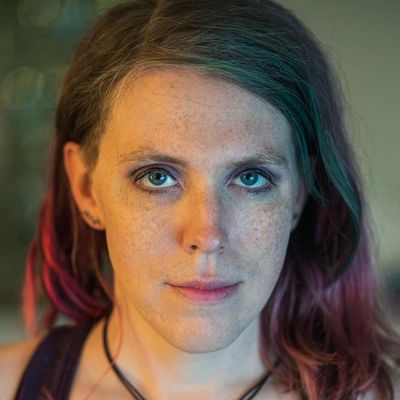
Guests
Miniseries Inclusions
Featured Shows
About
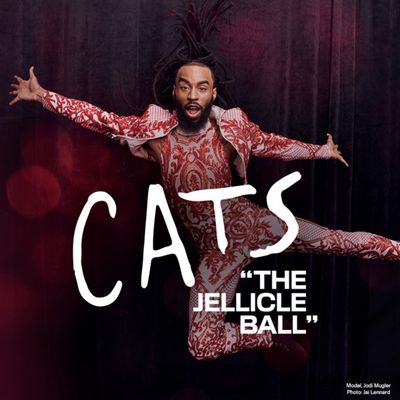
Throughout June and July, we are working with the Perelman Performing Arts Center reimagined production of CATS called CATS: "The Jellicle Ball" to bring you a series of episodes with the cast and creative team.
"If I had a dollar for every time someone said ‘I’ve always hated CATS but I love this CATS’ I’d have doubled my salary on the show." This episode features Josephine Kearns who was the dramaturg & gender consultant for the production. Hear Josephine share the four year journey to bring this to life, her thoughts on some of the changes made in the production, and how the team integrated ballroom history into the Moments of Happiness. Plus, Josephine shares which house which cat would be a part of.
- Check out Josephine on Instagram: @josephine.kearns
- Check out Josephine's website: www.josephinekearns.com
- Check out CATS: "The Jellicle Ball": pacnyc.org/whats-on/cats-the-jellicle-ball
Produced by:
Alan Seales & Broadway Podcast Network
Social Media: @TheWrongCatDied
Transcript
This transcript was automatically generated and might contain errors.
[0:00] Mike Abrams: There's a cat over here. There's a cat over there. And the wrong one died. And the wrong one died.
[0:15] Mike Abrams: Welcome to The Wrong Cat Died, the podcast breakdown of Cat's Astrophe. I'm your host, Mike Abrams, and today we have another amazing guest. We are working with the Perelman Performing Arts Center reimagined production of CATS called CATS: The Jellicle Ball to bring you a series of episodes during the run. Today's guest has been involved with the show since the beginning. She is the dramaturg and gender consultant on the show and has done so much more. So welcome, Josephine Kearns, and thank you for joining me.
[0:36] Josephine Kearns: Thank you. I'm excited to be here.
[0:40] Mike Abrams: Yeah, I am excited because you have been around since day one on this. So I actually want to start from that beginning idea when you and Bill were chatting. What was the inception? I mean, it's been over two years to this idea to bring it to where it is today.
[0:57] Josephine Kearns: Yeah, it's been four years.
[1:00] Mike Abrams: Yeah, so it started, I was introduced to Bill by our agents during lockdown. And we, our agents were putting a thing together just because theater artists had very little to do during that time. We were at the same agency and our agents were putting together calls of just people they think should meet. And after I was on one of those calls with Bill, he reached out to me directly and said, I have this nugget of an idea for CATS. Would you be interested in talking about it? And the nugget of the idea was basically just CATS, but people and queer, even more than original CATS is queer. And yeah, we just started, I think pretty early on, we started having weekly calls to talk through ideas. We had a lot of thoughts of setting the show in either 1939 when TS Eliot's poems were published or 1981 when CATS debuted.
And leaning on those years, we talked for a while about maybe setting it in like a disco studio 54 kind of era. But pretty quickly, Bill had the thought of maybe this is Ballroom. And he got connected to Omari Wiles, the choreographer. And yeah, it all kind of took off from there.
[2:13] Mike Abrams: Yeah, I love that. So it was kind of just the like, good people meet good people and ideas spark from that, which is such a way the world works of, you know, the right place at the right time. So then you, you know, you kind of have the idea of Ballroom and you said it's been four years. I think the world learned about it two years ago because your casting notice sparked some like really interesting social media of what is this. So can you walk me through the rest of that journey? Because like, I don't, I think people are seeing now the final product, but there was so much more from that idea to the Ballroom idea to what we see today.
[2:52] Josephine Kearns: Yeah, there were a lot of steps. And I think there were sort of two processes happening at once. One was, let's develop what we want this show to be the way that you would a new work, even though we have the music, we still had to, you know, a lot of the don't spoil too much, but a lot of the story has been re-imagined and reinvented. And so figuring out what we wanted that to look like and how it fit this container of Ballroom, or I guess more how Ballroom fit this container of CATS. Yeah. And then there was this other process happening very much in the background of talking to Andrew Lloyd Webber's company about what we would be able to do and working out details with them and sending them samples.
And none of them had any familiarity at all with the ball scene. And so there was a lot of education happening and things like that. And there were a lot of, boy, we did one, two, three, four, five, maybe six workshops of varying types. One was just like an initial dance and music, like get some ideas on video with like three or four dancers. One of those dancers was Primo, who ended up playing Tumble Brutus in the full production. And then there were two other dance workshops. There was a music workshop and we had two full, I can't remember if they were two or three week long, like let's work our way through as much of the show as we can. And a lot of the folks who were involved in those two workshops ended up in the final cast.
[4:23] Mike Abrams: So when you're doing workshops like this, you know, re-imagining, what's the process for you all to where you take the source material, but blend it into this new version? Like how did you decide throughout each step of, I don't want to change this, but I want to tweak this. And I want to change this dance, but I want to keep this song. Like how did you go through all of those step-by-step throughout the show for especially something so well known? Like most people, like this show has been around 45 plus years.
[4:50] Josephine Kearns: I keep meaning to go back and look at our original planning documents to see how much is different. But we sort of laid out the show and I fortunately, this was such a random thing, but I was lucky that when I was in college, I worked at a summer stock theater that did CATS and I was running follow spot for it. So I learned the show backwards and forwards because I saw it, you know, 40, 50 times that summer. And so I was sort of a resident CATS expert just because of this random experience. Bill and Omar, I didn't know the story that well. And it was a lot of fitting the, it was like, okay, let's look at the CATS show. Cause we knew we would keep every song with the possible exception of the two that are often not done, "Peaks and the Policles" and "Growl Tiger."
And we just sort of laid it out next to like how a ball normally goes, right? The ball, everybody arrives, they do the LSS, the legend statements and stars that matched up with "Naming of Cats." And so as much as we could just sort of like lining those stories up and figuring out how to make sense of it.
[6:04] Mike Abrams: Yeah. Did you notice that it lined up perfectly? I mean, it lines up really cleanly.
[6:11] Josephine Kearns: It became pretty clear as we were working through that, like, oh, this is like, I remember very early on us saying like, oh, this is going to make more sense of CATS actually. Um, and there were some numbers like "The Naming of Cats." We knew immediately that it was going to be Marcus Strapp, the commentator, the MC, um, sort of delivering that in an LSS style. We knew that "Jellicle Songs for Jellicle Cats" was going to be everyone arriving at the ball. And then some of the other pieces were much less clear. And we had to sort of figure out how they fit in. Um, our original concept for the overture was that it was going to fill the space with projections of our characters, like at home, getting ready for the ball, um, doing makeup, running to CBS, catching a cab, like all of those, uh, sorts of pieces, um, and morphed into that.
I don't even know how many different ideas over time before we landed on, um, what's actually happening in the show now. So some of the numbers, like we knew very quickly and never really changed and others changed over and over and over again, as we sort of tried to figure out how it was going to all fit together. And there were two sort of pieces to that too. There was the piece of, um, the overarching story of the ball and especially how numbers like, um, "Naming of Cats," "Old Deuteronomy," um, uh, "Memory," "Little Memory," um, how those sort of plot numbers fit the show, all the little mechanic bits, that sort of thing. And then there was also, so we knew again, very early on that the sort of parade of characters numbers would all be categories in the ball.
Um, but we had to figure out what categories and how that would work. And some of those were very easy and some of those were very challenging. Um, we knew from the outset that Mistoffelees would be runwaying, um, just because that's sort of the peak of the show and the peak of the ball. Um, but some of the others were changing up until a few months ago, honestly.
[8:14] Mike Abrams: Yeah. Yeah. The competition aspect is something I was so excited for because I had my, one of my initial jokes about seeing the show was I saw Leona Lewis as Grizabella. So I thought I saw the X Factor on drugs. And so I had felt like that from day one. And so when I heard that you were going to have this competition-based element and there was going to be winners and there was going to be like the, the actual piece of that, I thought this is brilliant because this is what a lot of us thought when we saw it the first time. And so the weaving that part in was, was beautiful and fantastic. And something you said earlier, which I completely agree with is, I think this version brings the story and poetry out maybe more clear than other versions have.
And I've heard some CATS haters have loved this production or at least tolerated this production because I think it's given them a dollar for every time someone said, I've always hated CATS, but I love this CATS. Like I'd have doubled my salary on the show. It's been a lot. I think that's great because part of the CATS is an easy joke. It's an easy punchline, but also it can be confusing if you're not the super fans or someone like me, who's just heard hundreds of different explanations of the story at this point to piece it together and you all bring those elements in. So was that intentional or was that something that just came by the by-product of trying to do it in ballroom?
[9:38] Josephine Kearns: I think one of the other things we knew really early on was that we wanted to be really authentic with the show. And we've always been very, very aware of what it means to take this very like underground scene of marginalized, very marginalized people and placing it into a container like the PAC that is so corporate. And, and so I think the budget on the show ended up being several million dollars. And we wanted to just like treat the ball scene with such care and such reverence. And I hope we accomplished that, but that drove a lot of the decisions too. Like we knew that, you know, for example, in the original CATS, I don't even remember what the doubling is, but like the actor that plays Gus also plays Bustopher maybe, or something like that.
Yeah. And an ensemble dancer in the beginning. And so, and it's like when they're playing Gus, they're in age makeup. And when they're playing Bustopher, they're in a fat suit. And we were like, no, no, no, no, no. This is a show actually about people of different ages and different sizes. And Deuteronomy is actually going to be old and Grizabella and Gus are actually going to be elders. And as much as possible authentic people from the ball scene, Junior LaBeija who plays Gus is a, I don't know his official title, if he's a legend or an icon or what, but he's very, very esteemed in the ballroom scene. Temporis who plays Grizabella, same thing. So that drove a lot of it too, just in terms of like, you know, if we were going to do CATS, but people, we wanted the people to be real people. And so figuring out how to make sense of that as well. And like minimizing costume doubling also was important to us.
[11:30] Mike Abrams: One thing I would love to hear a little bit about because I thought it was a really interesting piece. I was not expecting was the beginning of act two, you kind of drop a curtain down essentially and show a video that highlights some of the legends and icons of the ballroom scene. And that was someone who knew, who came in with all CATS knowledge and pretty minimal ballroom knowledge. I thought that was a really, really cool aspect of the show. So what was, you know, again, what's actually happening there and how did that decision come to life?
[11:57] Josephine Kearns: Yeah. It's, it's actually one of the things I'm most proud of. That was an idea I had a couple of years ago. It again, came out of that reverence for the ball scene and just like knowing that like, you know, one of the things we've tried to hold from the outset is that our audience would include folks who were very familiar with ballroom, who were in ballroom. Our audience would include a lot of queer folks. Our audience would include a lot of black and Latinx folks and also would include a lot of cishet folks, white folks, people who aren't familiar with ballroom. And so we wanted to make sure that we were telling a story both that and various familiarity with CATS also. Right. And so we wanted to sort of hold all of that at one time and tell a story that was informative for folks who were less familiar with these things.
While also, you know, not it being, we didn't want it to be like a ballroom 101 that folks who were from the scene might not have as much to gain from the show. So we were trying to hold that balance really carefully and "Moments of Happiness" came from that place. And it just like, you know, it's a show of, it's a song about history. So it felt so important to me to say like, okay, yes, this is where we're going to integrate the history of this scene into the show, overlaying Deuteronomy singing. And it could all at once be for folks who aren't familiar with ballroom means of say, of seeing the journey that ballroom has gone on from the earliest pageant days. And also for folks who are familiar with ballroom, a celebration of all that it has been in the history that they of course are, are much more familiar with. So it served that dual purpose. And also I think just served as like a really beautiful image to open up to with.
[13:53] Mike Abrams: Yeah, it was again, I, you hit the nail on the head with your audience. I was at the second preview and we were at the cabaret tables, but around us were some guys who were talking about how they are like theater fans. And then there was to the left of us, there was a group from the, I think there were some with the judges, but they were clearly the ballroom group because they were loving that. And then around all around there were families and there was clear, it was just a very diverse audience. And I, as we were talking to the people next to us, it's like, oh, there's this group knows CATS and knows theater. And then this group knows ballroom, but doesn't know CATS. And so being able to see like, I, when I come back, I want to sit almost in the back.
I want to sit in the back and just watch the audience a little bit to kind of see how everybody reacts because there is such a different, like you, you're going to pick something up. And I've told everyone who loves CATS that you have to see it because you're going to love it because it's true to the story, but also tells you in a different way. And if you hate CATS, you got to go see it because you're going to probably, if nothing else, you're going to have...
[14:56] Josephine Kearns: If you were picking your Jellicle choice, who would you pick and why? I think in our Cats, there's really no other choice. I think it's very clear that part of what it means to be a legend, to be an icon in ballroom is longevity. Most of the Cats that are in our show just don't establish themselves as that, as characters who have that. I think maybe the one who gets closest is Bustopher. I keep coming back to Bustopher, I think, partly because Nora's performance is so brilliant in that role. But yeah, none of them feel right to me. The only one that feels right to me is for Isabella. And I agree with what you said earlier, that Gus just isn't ready. Well, shout out to Nora, because that Bustopher Jones is usually a fairly ripped-on Cat as a Cat. Bustopher Jones is fun, this number is fun and lively, so I agree.
[24:50] Josephine Kearns: Let me ask you one more question about this then, because I think the crux of my argument depends on what you define the Heaviside Layer as. I don't think I'm spoiling anything; people know she's going to go to the Heaviside Layer. It's pretty well established at this point. If they're listening to your podcast... Yeah, yeah, they should know. What is your definition of the Heaviside Layer for your particular production? Yeah, I mean, because they're not literal cats, the whole sort of, like, my wife's conceit doesn't make a lot of sense. We sort of defined it in our heads as, like, we didn't associate... There are lots of different words that are associated with the absolute annals of ballroom history and who those people are.
We didn't pick a particular one, but, you know, maybe it is being an icon or something like it. But the idea was that, like, you enter... The winner of this competition enters a hallowed place in ballroom history that they hold forever. So that, to me, is a very different-than-question than what I've been posing from day one, because mine has been, you're put to your death, essentially, in Cats. And that is an entirely different discussion of which one deserves that and needs that versus here of, like, which one deserves that status.
[26:19] Josephine Kearns: Right. So from that standpoint, I'm not even going to try to argue the point, because I agree. Although you could argue with that it could be Gus then again, because of the same, similar type of thing. But I love that, because it was... And the way you all stage it, too, I don't want to spoil that, but I thought that was also great, because it didn't... I've kind of joked that going up in the tire has always been like you're getting sacrificed, like you're going to your death. Right. And you kind of made it a lot less that way, which, again, brings the story back together. So such a fun, fun way to, again, reimagine this show. And I hope people are... I mean, I know people are running to get tickets, because it's very hard to get tickets right now, which is incredible. But this has been so fun. Thank you so much for sharing your experience.
[27:01] Josephine Kearns: Thank you. And I'm glad that four years later, your vision is on stage, and it's awesome to see it. And I'm glad the reception's been amazing. It's been amazing. Yeah. And it's been... It was very cool to... So many of our people on the team walked into the space, and we're like, oh, my God, look at this space. And I walked in, and I was like, yep, this is it. Yeah. This is what we've been talking about. And it's been very cool to see that brought to life. And also, just like, shout out and so much love and respect to our cast, to our creative team, to Rachel Houck, our set designer, to Queen Jean, our costume designer, to our entire wardrobe crew, which does... Oh, my God. I mean, we've been saying for years that this is a show about quick changes.
Yeah, there's just so much heavy lifting done by so many different departments at the same time. And it's been cool to see all of that come together, to create something that is very, very close to a vision that we had years ago, which is really cool.
[28:04] Josephine Kearns: Yeah. That's amazing. Amazing to see. How can people stay in touch with you on social media and everything? I have a website. It's just josephinekearns.com. Kearns is K-E-A-R-N-S. And I'm on Instagram under the same handle. It's just josephine.kearns. And we'd be happy to take inquiries either way. Amazing. Well, thank you so much for coming on and sharing your story and telling us a lot of really cool parts to the behind the scenes of this, which I hope everyone who gets to see this will now have a different appreciation of it.
[28:37] Josephine Kearns: I hope so, too. I so appreciate your taking the time to talk, and I'm so glad you enjoyed it. And I'm so glad to also make you rethink the title of your podcast, even if only for a moment. Yeah, it did. I did have a moment when we walked out where I was like, this one's going to be hard to argue against. I'm going to have to think. But my argument's not against Grizabella's story or her arc or her redemption. It's about the sacrificing her at the end. Totally. And so that's where it's like, again, this reimagined version almost eliminates some of that, which means that I'm asking a different question. Totally. But it's always fun to hear different interpretations of everything, which is why this show still exists, is being able to, or my show still exists, is being able to capture different thought processes and the way people interpret backstories and everything that goes, because it is different from cast to cast. Totally.
[29:26] Josephine Kearns: Well, this has been so much fun, so thank you and thanks everyone else for listening to this episode of The Wrong Cat Died, the podcast breakdown of Cats Ashby. To follow along, you can subscribe on Apple Podcasts, Spotify, or anywhere else to listen to the podcast. Follow us on Twitter, Instagram, TikTok, and threads at TheWrongCatDied, or check our website, thewrongcatdied.com.
© Broadway Podcast Network, All Rights Reserved