

Throughout the summer, we are working with the Perelman Performing Arts Center reimagined production of CATS called CATS: "The Jellicle Ball" to bring you a series of episodes with the cast and creative team. "That was my immediate first question... Read More
From the show: The Wrong Cat Died
Guests
Featured Shows
About
Throughout the summer, we are working with the Perelman Performing Arts Center reimagined production of CATS called CATS: "The Jellicle Ball" to bring you a series of episodes with the cast and creative team.
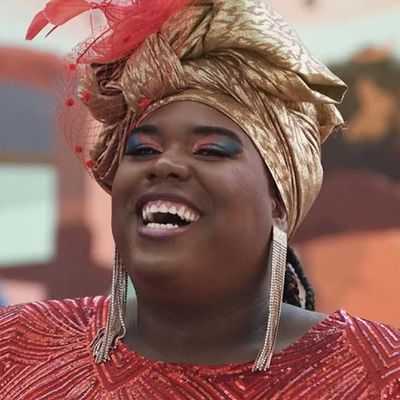
"That was my immediate first question. I was like, are we doing tails? What’s the tea? I had some other ideas." This episode is with Qween Jean who was the costume designer for CATS: "The Jellicle Ball." Qween Jean dives into the creative process that went into creating these icon costumes, how the process iterated over time, and how footwear played a part in each character's identity. Plus, Qween Jean gives a passionate defense for Syllabub as her Jellicle choice.
- Check out Qween Jean on Instagram: @jacobbrentstagram
- Check out Black Trans Liberation: blacktransliberation.com
Produced by:
Alan Seales & Broadway Podcast Network
Instagram/Twitter/Tik Tok: @TheWrongCatDied
Transcript
This transcript was automatically generated and might contain errors.
[0:00] Mike Abrams: There's a cat over here. There's a cat over there. And the wrong one died. And the wrong one died.
[0:15] Mike Abrams: Welcome to The Wrong Cat Died, the podcast breakdown of Cat's Atrophy. I'm your host, Mike Abrams, and today we have another amazing guest. We just wrapped up working with the Perlman Performing Arts Center on a reimagined production of CATS called CATS: The Jellicle Ball, where we brought you a series of episodes during the run, which ended on September 8th. I thought, why not add one more? Because I think everyone has a ton of questions about the costumes, so I'm excited. Welcome, Qween Jean, and thank you for joining me.
[0:41] Qween Jean: Hi, how are you?
[0:43] Mike Abrams: I'm excited.
[0:45] Qween Jean: I'm so excited. The excitement overlaps.
[0:47] Mike Abrams: I heard your name through multiple interviews talking to the cast and creative about the work, because one of the biggest questions with this production early on was, they're not going to be in CATS costume. What are they going to do? They're not going to be in tails, and they're not going to have this. And then everyone raves about it. So I want to hear from you about your process as the costume designer and the person behind all that. But before we start, I got to ask your CATS history. So before this production, did you have a lot of CATS knowledge? What was your CATS background before this?
[1:23] Qween Jean: That's such a great question. I mean, I feel like the 10-year-old Little Qween was definitely singing "Memory."
[1:31] Mike Abrams: Okay, so you knew.
[1:32] Qween Jean: Yes, guilty and lovingly. What a guilt and a pleasure. You know, this is truly a masterpiece. Lord Andrew, Lord Webber's work. And I don't know, I just feel like in addition to the legacy of what ALW was able to do in terms of really bringing something such a unique offering to American theater, and also thinking about the masterminds with our directors and the entire creative and collaborators on our team, it just felt like this was just a really beautiful and majestic way to tell a story. And so for me, that was my way in.
[2:23] Mike Abrams: Yeah. So let's start with the question that everyone wants to know. How did you, when you heard about it, start thinking about this process? Because that's one of the biggest changes of this. I mean, there's obviously the ballroom and aspects, but a huge change is not being in CAT costume. And so how did you approach just that kind of overall knowledge of like, here's something I have to start almost from scratch?
[2:48] Qween Jean: Honestly, this question is so powerful and necessary because there is a legacy. And also there are undeniable historical references. We have in our minds, in our psyches, what CAT is. And so I think when we as artists and designers are re-imagining or re-adapting stories, you really have to do it from the top down, all the way around. And so when I first joined, that was my immediate first question. I was like, wait a minute, are we doing tails? What are we supposed to see? And so I had some other ideas. And so I was like, look, I have some other things I'm cooking in the kitchen. So the team was like, absolutely, which is always a joy to be received, welcomed, embraced on a team, a project, a new offering that we're putting together.
Oftentimes, you know, you can be with folks. Anyways, sometimes the limitations are greater than the imagination. And this was the opposite. The imagination truly for this entire production grew and grew exponentially. And so I wanted to make sure that what we were doing with clothing, wardrobe, with, you know, Nakia Mathis's artistry, and Rania, who is doing our makeup design. And so we really wanted to work from all angles to make something truly, truly unique. And hopefully, you know, memorable, something exciting, something that feels like community, something that feels and looks like us, that people in the audience will get excited. Our artists, the storytellers who are stepping into these characters can also feel excited.
And I'm very grateful that we were able to accomplish those ideals within the design. Yeah. So to answer the question, I just was like, I'm doing me. I'm doing me. I'm bringing Queen Jean to CATS. And this is what I got to say. And it's truly been a blessing beyond blessing to see how folks light up once the music starts, to see young people in the audience, to see folks dressed up as their favorite cat. I mean, it's been unreal. So much like artistry, a continuation of artistry that has been launched this entire summer. It feels like a dream come true, honestly.
[5:30] Mike Abrams: Yeah. So I want to ask a little bit more about two different particular parts of the costume design. So there's obviously the characters in their normal. This is what they're in for most of the show. And then there's also the ballroom elements where they're walking the categories. So let's start with the characters, because there is a little bit of like, there are, there's, you have to make sure that it's still known who the cat is. So how did you think about this as either maybe the color schemes or just the look or the personality? There are some indicators. There's some that I loved. And so we can get into a couple of ones where I really loved how you nailed that. But how did you think about creating the personas or creating it so that way people that walked in could still identify, oh, this is this particular character?
[6:19] Qween Jean: This is an integral question to the overall design. And the answer is so simple. I listened and responded to the artists. We had a few workshops beforehand. I was honored to have been welcomed to come and sit, but also just to share space with the artists in that workshop. I got to meet everyone. A lot of the company from that workshop were able to join us for this production at the Perlman Arts Center. And it unlocked so much for me, seeing how folks were approaching their own character, seeing how folks interpreted cat, what movement they were beginning to develop. And so I saw that and I was like, okay, I can. And so I just started drawing in rehearsal, to be honest, looking at folks' movement and movement in terms of their physicality, but also their cat language.
That was something that I wanted to be authentic to the character as soon as people, you know, I didn't want it to be like, okay, we're putting this person in a costume. That's not, that wasn't my initial aspiration. But I really wanted it to feel like, no, this is Mistoffelees pumping through the entire venue. And so that was, it took time, obviously. But I also was able to bring my full history of ballroom, my entire history of performance art, movement art, and dance to the design. And so a lot of the, I would say, the engineering of it is actually quite skilled and quite, you know, quite meticulous in that, you know, something that'll look like a pair of jeans actually is a whole different innovation in itself that allows each person to move, to jump, to make a split, to have a little feline fashion on it.
And so those are the things that I tried to, I tried to develop for each cat base. And so that was, so we started with the cat base, and then we went into the cat-togory design, which, and some folks honestly translated seamlessly. I mean, like a lot of folks, they translated seamlessly. And there are some characters that their transformation was so fabulous and so unique. We wanted to kind of share that with everyone, like, and it feel like the very first time for everyone. And so that, in terms of ballroom legacy and history, we want for folks who may not have an opportunity or may not be seen in the world to step out onto the runway and to shine, to be a luminous. And part of that, for their radiance to really push through systemic oppression, push through, push past the barriers that a lot of our community members face, queer, trans, BIPOC, who I feel in this show, their humanity is centered in a way that feels right, that feels like a Jellicle Choice moment.
And so that is truly my simple offering is that I wanted every character to feel that, yeah, I could win Jellicle Choice tonight. And that's the level of intention, and that's the level of care and detail each person has put into their offering. And so from the moment we see in the opening montage, we get these vivid snapshots of folks getting ready. It's like, boop, boop, boop, boop, boop, boop, boop, you know, and really follows the, like, the chords and the orchestration in the opening. And so that is to allow folks to get a real sense of personality, the joy, and also the fierce fabulosity that's about to come your way.
[10:29] Mike Abrams: Yeah. So when you were doing certain characters, was there anyone that was super difficult or on the other end of the spectrum, right away, you're like, oh, this is it. I know exactly what I'm drawing for this one.
[10:42] Qween Jean: I'll be very honest. I felt that way about everybody.
[10:44] Mike Abrams: Okay. Okay.
[10:46] Qween Jean: That doesn't always happen. I felt like that about everybody. I mean, I will say, I mean, for Buster for Jones, I was like, look, this curvy body is about to sing down and really wake and shake up the entire space, right? When they are deemed winner, babe, I mean, we want that eruption and that genuine love, right, for someone's power, right? Like, that moment is so powerful. It should read from the moment we get a first tearaway. And so that continuation was something that was very important to the design and in each phase of it, ultimately, for that category, which was the body category. I will say for Grizabella, I mean, that was another pinnacle moment and a true definition of transformation. I don't know how much folks, you know, I don't know. People know. People know at this point, and we're after it.
[11:42] Mike Abrams: Yeah, okay. We can get into it.
[11:43] Qween Jean: Can't spoil anything anymore. But our Grizabella in this phenomenal production, played by the iconic Temporis Moore, Chastity, who is a living legend, and most importantly, is a phenomenal beauty. Like, beauty, beauty, beauty. And so I, um, we needed, uh, for the audience and for, in order for the character to have this moment of evolution, even within the one night, we needed to really see how does this person show up in the world in this moment, in this current day. And so we joked, uh, well, I mean, I offered, you know, I was in the, um, in our initial conversations, I was like, you know, we want Grizabella to feel like Diane Carroll outside of Port Authority, right? That there is a sense of joy, but also, um, a sense of, uh, I don't think sadness is the right word, but, but that there is a, a, a loaning for care.
This is someone who needs care and, um, who unfortunately has not been able to receive, um, their flowers and the, and the love, um, that they've brought and that they've built, uh, in this world. And so we then have a real opportunity, um, at the end, uh, with her grand aria, Big Memory is what we call it, um, for us to really see why she looks back, um, at her days in the sun and how important it is, uh, for the entire world to know, every audience member to know that when you choose yourself, um, there is no wrong ways that you can go, right? Choosing yourself, loving on yourself and believing in your truth and your voice, uh, that is how one, any person, um, can achieve and earn their Jellicle choice, um, and be a Jellicle pride, you know, so that, those qualities were very important, um, to me in the design and obviously, um, yeah, and so that's for Grizabella.
For Old Deuteronomy, huh, I, um, I knew that it would be, um, the icon, André De Shields. Yeah, Old Deuteronomy is the highest form of power authority in this story. And so when we see them, we should feel like we need to bow. And so that was, you know, that there is a, a grand, uh, opulence and tailoring and a true sense of deity, uh, once the audience and our people, uh, even, you know, once Deuteronomy is revealed, uh, we spend the first, you know, big moments in the show talking about Old Deuteronomy, once they arrive, you know, and so there's a huge sense of communal preparation to receive, um, our, our king, um, our, you know, eternal moon in that way. And so for the design, we spent a lot of dialogue and, and went through a lot of different phases, um, to arrive at something that, uh, speaks to Old Deuteronomy, but also speaks to the entire lineage of André De Shields.
Um, and, and that started to me was from the crown to the shoe. We will bow. And so that, um, uh, where we arrived with the design, um, there is a beautiful abstract, um, detailing and tailoring. There is a patchwork detail that we, uh, that I found in terms of different references, uh, it within ballroom, but also within like, uh, very prolific leaders, um, from, you know, the, uh, diasporic, um, areas of our lives. And so I wanted to, uh, really speak to all of those ideas, um, for André De Shields's design and the top of Act Two and moments of happiness in terms of our design. I mean, I've always, uh, loved, uh, this number, but the, um, the moments of happiness, uh, was so important because it, it reminds and invokes the, uh, history and the spirit of our ancestors into the space.
There is a sense of, of, of, uh, regality, but also, uh, uh, this, uh, procession we are describing and memory, you know, and so we, we actually see the, the faces and footage life, you know, actual footage of, of these, uh, icons and, and the trailblazers and the founding mothers, uh, to the legacy of ballroom. And so that needed to, uh, reflect in André De Shields's garment as well. And so there's a floor length drape, um, that, that allows there to be a continuation of drama and elegance, um, and notoriety.
[16:54] Mike Abrams: Yeah. It's so cool to hear you talk about it. Cause like it was as someone who went into the show knowing too much about cats, but not a ton about ballroom. And so it was cool to see how you put all those moments together. Cause like you could see how intentional they all are. Like, there's nothing is, is out of place. It's all there for a reason. It all adds to it's an element of the storytelling, um, in itself. And, uh, it was cool. Cause I, I noticed certain things where I'm like, oh, this helps. Like, this is the cats, like paying homage to the cat's piece, like Tugger's jacket feels very homage to cat's piece. Um, Jenny any dots is coat, you know, like there's some moments I'm like, this is very clear what's happening here to kind of let you know, Hey, this is still, this is still what, you know, but a different version of it.
Um, and I loved it. So I want to ask though, a little bit of the reverse question now, cause I, since I brought up Tugger, how much time and thought goes into when Tugger decides to remove most of their costume for you, or like, did you, did you like, was that part of like the process for you of thinking through like, all right, when this moment happens, here's, he's gonna rip it off and here's what's gonna happen. And, and then we got to go get them back into something else different. Like, what is that as a designer? What is that experience like?
[18:09] Qween Jean: Every moment in the show is deeply orchestrated and curated. Um, that's my approach to life. Um, these characters and these humans that are embodying each character, um, all have a set of armor. And so to me, my foundation, uh, for each design is, um, rooted in what makes each person powerful, what makes them feel unstoppable, what makes them feel that they are going without a doubt, going to get there at the end of their grand prize and, and truly, um, resonate in, in each of their numbers. Uh, so for example, with, uh, Rum Tum Tugger, uh, and Realness, Pretty Boy Realness, those elements in those details all felt integral, right, in the orchestration and how we're building up. So there's a grand building up of revealing who they are, their appeal, this jacket, I mean, you know, that their armor, that their Tugger armor is, uh, is so desirable, right?
It's, it's deeply intoxicating. It's like, okay, we all want more of this. Um, but then it all tears away. Um, and then there is still that element, those details, that precision, that, that, um, that tiger prowl, that roar, um, is then seen in every phase of their, um, of their reveal and their different evolution. So that is all. Yeah. So that was, I mean, I think in a way, I also was surveying, right? Like, so, you know, you will have this phenomenal sibling, uh, who is taking command, uh, Buster for Jones. And then, you know, the judges have, it's a tight choice. And so, and so, um, we want them to feel that either person absolutely could get it, but this, you know, but, but these elements and the way that it's been presented and the way that the story is told, we're seeing someone step into something that may not have been, uh, what we perceived about them, but, but it's not limiting.
And so that is something that really is, um, detailed, like, like that, that specificity is important. Um, because we're actually stretching even our audience's imagination, right? Like who actually is going to win? Uh, babe, everyone has the opportunity to win. Everyone has the, the skillset. Um, and everybody is, is, is so beautiful each in, in, in our way they show up and celebrate.
[20:47] Mike Abrams: We're going to take a quick break and then we'll be back for more of The Wrong Cat Died. I want to ask one more question before we go to some kind of catch rapid fire, but I want to hear, I want to hear about footwear because I loved some of the choices. Like I love the Jordans on Mungo Jerry and Rumpelstiltskin. I love like some of the different stuff that you were able to do, but there's also an element of like, this is a dance-heavy show. And so they have to be able to also move in it. And I still can't believe Mistoffelees was able to do some of what Silk did in heels and in, you know, the shoes, but what was the like footwear aspect of it? Like how much do you have to think about what they can do to be able to do the dance they have to do, but also the aesthetic to fit the, the actual costume?
[21:29] Qween Jean: This question never gets asked. And I am so grateful for you for asking it honestly, in some, in some moments in the show, uh, it's what leads some of the conversation, for example, for Silk, where we can, if we can dive right into Silk, um, for Mistoffelees, uh, they are the runway master. They are the runway magician. They are the all-powerful cat. And so they need to move and glide in a way that, um, feel seamless, but also that feels utterly, utterly, utterly magical. Right. And so there's this like, okay, well, what's what, you know, what does a magical cat look like? Uh, and so the, the workshop that we went to, uh, or that I, um, uh, participated in, um, in the initial phase, the, we were at the, at Mistoffelees' number, at Silk's number, Silk came in with, uh, in, in true iconic, came in with, uh, with the visual offering.
And I was like, oh, okay. I mean, they came in. I mean, so I was responding really to, to how they felt and they perceived themselves as a magical cat. Uh, I took that and said, oh, this is all right, but maybe we're about to make it even more magical. And so, um, and to be honest in the conversation, I mean, every artist we, I mean, we went through weeks, I mean, we changed footwear up until we opened even after, I mean, so that conversation is something, uh, I also want to uplift our incredible co-choreographers, Arturo and Omari, who, um, are probably, to me, like one of the most magical collaborators, a team of collaborators that I, um, have been blessed to work with. They are deeply connected, uh, to the spirit of, of each character, but also to the need of the show.
And so our conversation started very early, um, about each category, but also how does each person move through the night? Um, and so there's some footwear that, that never changes. Um, for example, you know, like a monkey strap, uh, you know, they're like, okay, I lied, Lord. Oh my God. No, no, no. They definitely have a grand reserve. Okay. So everyone changes. Okay. Everyone changes, but the progression is also part of what allows them to carry out each of their, um, uh, responsibilities, right. And in each of the physicalities of each number, um, there are folks that, um, a lot of tons of customization. Uh, I'm so grateful for the entire team, our costume team, um, Emily White, Ryan, Amelia, Camila, like we work hours, hours, hours to make sure that everyone's offering, uh, was appropriate and that it was magical.
Um, and I'm saying magical in that, like, once the actor puts it on, they're twirling, they're spinning and they're going to land into a dip, you know, we want that, um, that reaction and that visceral, that immediate, um, moment is what helps us build and layer on each design. And that is something that, uh, even with the sneakers, I mean, customized, um, I mean, you know, these aren't any, uh, none of these shoes is something that you're going to be able to find, you know, in the street or maybe you will, but, um, each character has, has modified them, um, to fit, um, themselves and to, you know, and, and to be undeniable. So with Mungojeri and Rumpelstiltskin, uh, you know, they are the most, you know, they're the chicest and fab set from Jersey and they are not about, um, you know, their, their, their, their view on, on life and themselves is, is, is about, um, joy.
And so that detail went right into footwear for the sneakers. Um, and even in the transformation, I mean, it is something, you know, we want the audience to gag, you know, but also it's about how to even heighten their number even more, you know? And so that, um, that is something the actors really helped lead us. And then the design really helped to sustain us and then really fortify each number.
[26:12] Mike Abrams: Wow. Kudos to y'all. It was, I mean, it's such an important part of the show and helps tell the story. And I think a big part of, of this particular production is what, what worked is almost not being in CAT's costume and having that different view and kind of also bringing all that to the ballroom culture. So it was so fun to watch. So cool. And I'm glad we got to hear the magic behind it, but I want to go into some rapid fire about cats. So if you could perform as one of the cats for one night, which track would you want to go on for best of the best of the Jones? Who is your favorite and least favorite cat personality wise? Like which one would you want to hang out with and which one would bug you to hang out with?
[26:59] Qween Jean: Oh, I'm definitely hanging out, uh, with Old Deuteronomy, uh, and definitely hanging out with, okay. See, I'm going to add more definitely hanging out with, uh, with my cavity and, um, and the, oh my gosh. And the question is like, who's the least bug you. I mean, can't nobody bug me. I mean, I would say, oh my God, this is a hard question. I plead the fifth.
[27:31] Mike Abrams: Okay. All right. I'll let you off the hook. Favorite song from the show.
[27:39] Qween Jean: Gus, the theater cat.
[27:41] Mike Abrams: Gus. And then if you could be in one of the cat's houses, cause I know there's a few houses, which house would you join?
[27:46] Qween Jean: I mean, it is without doubt. My heart is with the dots. Jenny and he died, but my aesthetic and my proud, I, Ooh. Yeah. I mean, I think I would be in the dots, Kiki house, and I would be in the McAvity mainstream.
[28:07] Mike Abrams: Okay. Okay. And then my final question, cause this is my been the thesis of my show is I've argued that I don't think Grizabella is the right Jellicle choice, which I think the, this production makes it a lot harder to argue, but want to hear who is your Queen Jean's Jellicle choice. And why?
[28:24] Qween Jean: I will say personally, I found not even found, I related so much to Syllabub's character, moving to New York City and being, um, introduced to family that I didn't even know existed. Uh, changed my life. Being able to participate in my first ball in New York City, uh, at Vogue nights, uh, was the most powerful thing I've ever experienced being at Escolitos on 38th street changed my life to see the most gorgeous, like, uh, trans fems who embodied everything that I desired to be in this production. I will say, uh, they work behind the scenes and they are so, uh, vibrant, their light is so vibrant and you can tell that they finally have found a place to be home. And I think that that doesn't get rewarded, celebrated enough.
Uh, yes. You know, we all have to, you know, pay our dues, pull up those, uh, bootstraps that the people talk about, but in real time, when we see folks, uh, navigating some of the most craziest things, some of the most unimaginable things, uh, due to systemic oppression and due to a, a, um, a very, uh, sometimes a frigid world that does not, um, allow people to bloom. And, and if we could all actually love on each other, as we deserve to be loved, this world would be in a much better place. And I feel that Syllabub's character and, and the beautiful work that Teddy Wilson does in this show, is deeply inspiring and, and helps propel and, and reignite a fire that folks can believe in themselves.
Um, and we see someone on the journey. Oftentimes, like I said, you know, we'll see folks in the very beginning of the journey, right? And then we'll see folks at the end, uh, with, with the, uh, accomplishments and, and the thing, but in the process, in, in the midst of it all, um, that to me is, um, where I most feel connected, uh, inspired. And that was my, uh, personal truth. And so for me, they're getting Jellicle Choice.
[31:02] Mike Abrams: That's, it's beautiful because it is such a, it's an important part of the show. And I think why Syllabub kind of almost acts a little bit as like, I always said Syllabub is if you're watching this production is follow Syllabub because Syllabub sees the show and kind of tells you where to go and has these moments with Grizabella and is one of the first ones to accept Grizabella back. And so there is a lot of like, to have that selflessness while dealing with so much of it. And the curiosity too is great. So I love, I love the, any different reason and also any reason that's not Grizabella. So anything that helps, anything that helps my numbers and votes. Um, but no, I think it's great because it's, it is such a, I love how you said, it's not the beginning or the end of the journey, but catching somebody in the middle is, is beautiful. So it's, that's a, let's reward that. Let's let it's over, but like, let's bring the ladder down and go back up so we can let, let Teddy go up.
[32:50] Qween Jean: Yeah. And also too, they're a documentarian. I mean, they're snapping photos. I mean, folks that are, I mean, there's so much beautiful detail to indulge in, but their track and their sensibility is really powerful. They're archiving and they're holding on and into what we now as this audience will be able to say and how to describe it. And so that is a role in a lot of communities that doesn't get sung and doesn't really get uplifted, but it's, it's crucial. It's, it's what described, you know, those folks that have that, you know, that, that mindset or that hindsight to actually archive what is happening to me is just as important as the actual fight itself.
[33:00] Mike Abrams: Well, I want, I want Teddy's, the, all the photo album to come out after now that, now that it's, now that we're closed, we can get those pictures developed.
[33:04] Qween Jean: Yes.
[33:05] Mike Abrams: And we deserve to see a yearbook essentially at the end here, but this has been so much fun. How can people stay in touch with you on social media and see all the rest of your work?
[33:12] Qween Jean: Absolutely. I am at Q-W-E-E-N underscore J-A-E-N. Oh my God. Queen Jean. I forgot my own name. Queen Jean. And that's on Instagram, Facebook. I'm the founder and executive director of Black Trans Liberation. It's an organization here in New York City where we feed and provide space and fellowship for queer and trans community. We meet every week. We have what I call Trans Church and we partake in so many of these rituals that are essential to our wellness, our mental wellness, our physical wellness. And that's what I'm called to do in this moment, to be an artist, but to also be a fist in the fight for liberation.
[34:09] Mike Abrams: I love it. Well, thank you again for coming on and sharing and congrats to all the success of the cast of Jocko Ball.
[34:16] Qween Jean: Thank you so much. Thank you for having me. And shout out to our incredible directors, Bill Rausch and Jalen Livingston. I love you both with everything in my heart.
[34:25] Mike Abrams: Amen. Well, thank you and thanks everyone else for listening to this episode of The Wrong Cat Died, the podcast breakdown of the cat's atrophy. To follow along, you can subscribe on Apple Podcasts, Spotify, or any of us on some podcasts, follow us on Twitter, Instagram, TikTok, and threads at TheWrongCatDied, or check out our website, TheWrongCatDied.com.
© Broadway Podcast Network, All Rights Reserved