

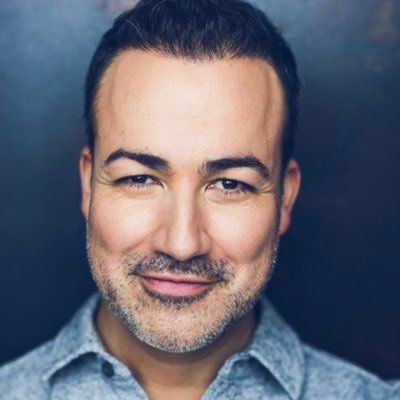
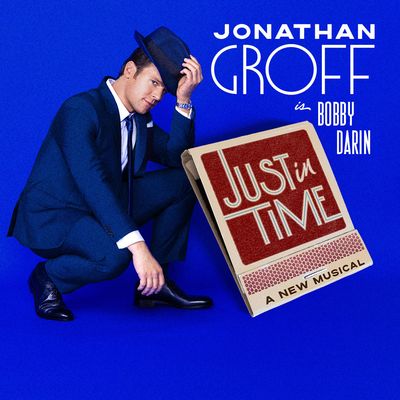
" I went to see CATS about five times with notebooks and took notes throughout the performance." This episode features Caesar Samayoa who performed as the Rum Tum Tugger in an "illegal" high school production of CATS in New Jersey and is currently performing as Don Kirshner and many more characters in Just In Time on Broadway... Read More
From the show: The Wrong Cat Died
Guests
Featured Shows
About
" I went to see CATS about five times with notebooks and took notes throughout the performance." This episode features Caesar Samayoa who performed as the Rum Tum Tugger in an "illegal" high school production of CATS in New Jersey and is currently performing as Don Kirshner and many more characters in Just In Time on Broadway. Hear Caesar dive into his fascinating journey from performing in multiple Cats productions, including the alleged 'illegal' high school version, to his current role as Don Kirschner in the hit Broadway show Just In Time. Cesar shares amusing anecdotes, behind-the-scenes stories, and insights into the immersive world of theater. They also discuss the deep relationships between characters on stage casting CATS into the world of Just In Time. Whether you’re a CATS aficionado or new to the theater world, this episode offers a delightful mix of nostalgia, humor, and genuine passion for performance.
01:01 Illegal High School Production of Cats
04:28 Regional and Broadway Auditions
07:56 Performing in CATS
13:31 The Depth of CATS Characters and Relationships
22:04 Just In Time on Broadway
23:08 Just In Time Immersive Theater and Audience Reactions
27:02 Casting CATS Characters in Just In Time
33:24 Rapid Fire
- Check out Caesar on Instagram: @caesarsamayoa
- Check out Just In Time on Social Media: @justintimebway
- Check out Just In Time on Broadway: justintimebroadway.com
Produced by:
Alan Seales & Broadway Podcast Network
Social Media: @TheWrongCatDied
Transcript
This transcript was automatically generated and might contain errors.
[0:00] Mike Abrams: There's a cat over here. There's a cat over there. And the wrong one died. And the wrong one died.
[0:15] Mike Abrams: Welcome to The Wrong Cat Died, the podcast breakdown that casts atrophy. I'm your host, Mike Abrams, and today we have another amazing guest. Right now, you can see him as Don Kirshner in Just In Time on Broadway. But before that, he was in, I think, many productions of Cats, including what I was told is an illegal high school production that I want to hear so much more about. So welcome, Caesar Samayoa. Thank you for joining me.
[0:36] Caesar Samayoa: Thank you so much, Mike. What an intro. I'm happy to be here.
[0:40] Caesar Samayoa: What an intro. Yeah, I was teased. I still don't have the details. So I was teased this, like, hey, here's somebody. Come on. I saw Just In Time. I loved it. I loved your character. I loved the show. It was so much fun.
[0:53] Mike Abrams: Thank you. I knew you have some other cats in your cast there.
[0:57] Caesar Samayoa: Absolutely.
[0:59] Mike Abrams: I was told about this. So let's dive right into this. What is an illegal high school production of Cats?
[1:04] Caesar Samayoa: Let's go. Well, first of all, when I was growing up, Cats was the thing. It was the show. It was the amazing show. I was in this performing arts center when I was younger, junior high, high school called Act Two Performing Arts Center in Glen Rock, New Jersey. It was basically a step above kind of like doing performances in your living room. Basically, our parents and friends would come, you know, come and see the shows that we did. And we did an absolutely illegal production of Cats. I think I was in high school at that point. I played Rum Tum Tugger in that production. And I mean, we had full on costumes and makeup and crawling through the audience. We thought we were doing the full on Broadway production.
I remember embarrassingly, one of my dearest friends in the world to this day, Michelle Peacock, you know, Michelle Harvey and I went to see Cats about five times with notebooks and like took notes throughout the performance because we wanted to make sure we got everything right in terms of our characters and our staging and everything. But we did a full on production of Cats in, you know, kind of like the gymnasium of a high school that we that the, you know, Performing Arts Center rented out, you know, with all the music and everything you could imagine with it. We thought we were the coolest people in the world.
[2:31] Mike Abrams: What was in your Tugger notebook? Like, what did you pick out from seeing it five times for him?
[2:36] Caesar Samayoa: Oh, no, you have no idea. I mean, we're talking about like head turns.
[2:41] Mike Abrams: Oh, wow. Okay. This poor cast now being on the other side, you know, being an actor, what they must have thought to have these, you know, kids in the audience with full notebooks out, just taking notes the entire, the entire, like show.
[2:58] Caesar Samayoa: That's amazing. Okay, so this is and you did the whole show, like full two and a half hours intermission.
[3:04] Caesar Samayoa: Yeah, we didn't do highlights. We did the whole show, including, you know, going up to the Heaviside there, which really meant stepping on like four steps. Yeah. Like the lights dim as the gymnasium curtain, like psychedelic curtain, like just started closing in front of you.
[3:14] Mike Abrams: All right. So you were in it from early on, like this was a show for you. And you were I mean, you have notebooks, you were studying it at a rate nobody else was. This is so embarrassing.
[3:37] Caesar Samayoa: I like to think this is the show that captures things that nobody else is talking about, because this is only about your tie to cats. And so you did I love that concept. Like, hey, yeah, we're not gonna even ask the real useful group. We're just gonna go do it. We're gonna make our own costumes.
[3:50] Caesar Samayoa: Yes. And we had I mean, we had the full on kind of like body suits, you know, spray painted to look exactly like the, you know, what was happening on Broadway. At least we thought in our heads. I would love to see pictures now. But yeah, we just thought we were the coolest people in the world. I love it. Statue of limitations is out. So we're fine.
[4:12] Mike Abrams: You're good. You're good. They can't they can't come asking for any royalties or anything. But and then you did it. We paid to do it.
[4:16] Caesar Samayoa: Oh, yeah. Yeah, exactly. You're paying to put it on the production. And okay, so then you did it regionally, too, for a little bit as well. Like, what's your cat's history performing in the show? Besides this high school production?
[4:35] Caesar Samayoa: Yeah, well, you know, when I first moved into the city, cats was winding down, I think it maybe had a year or two left, but I kept on being called in for the Broadway production and the national tour. And at that point in our history, you would audition on the Broadway set. So I think I went like five, six times for monk a strap in the Broadway production. I think it was going to be the last, you know, cast doing it and for the national tour. And I'll never forget walking, you know, backstage into that theater and then, you know, getting ready and then getting yourself on stage and learning the choreography and actually doing the choreography in the middle of the cat set at the Winter Garden Theater.
And then I got a call if I wanted to do the monk a strap role for the national tour. And on the same day, I got a call to do a production called Shakespeare's R&J off Broadway, which was a four person production of Romeo and Juliet. And I, you know, I wanted to do cats so badly, but this was a huge opportunity to stay in town. And R&J became the longest running Shakespeare in world history, when we played off Broadway. And so I'm glad I made that choice. But I was this close to be to being in a, you know, an actual real production.
[6:01] Mike Abrams: You would have been on the tour. This would have been probably the fifth tour. The fourth tour was the non equity one. No, it was the equity one. It probably was my fourth tour then. Yeah. And it was it was definitely a year, either the year cats was winding down on Broadway or, or, you know, two years, you know, before it before it closed. But yeah, I'll never forget it. Because we had the opportunity to audition five times for this to audition right on that stage.
[6:32] Mike Abrams: That's amazing. Yeah, at the Winter Garden. It's kind of sad that they don't do that anymore. I feel like I'm not a performer. But I hear all these stories about like, yeah, going on the Winter Garden stage and doing your audition and versus going to like a studio room in midtown now that like everyone pops into is a very different experience. And it's gonna be so cool.
[6:45] Caesar Samayoa: Yeah, well, I remember my first Broadway auditions walking into all these theaters, you know, and and auditioning on stage. But also, I don't understand why they don't do it. Because you get a very real sense of what this performer this actor is going to be like in the show with the actual theater and set that it's that it's taking place on.
[7:10] Mike Abrams: Yeah, it's also probably will weed out some not weed out. I mean, everyone is doing this or way more talented than I am doing this. But it's a different feeling of being in front of the stage with people staring at you then like, in a small room with like a, you know, a piano on the side, you know, it's like a very different, truly into the moment.
[7:31] Caesar Samayoa: Oh, definitely. And I always feel that you know, these auditions that we have in, you know, these tiny studios in midtown now are much more intimate version of what's actually going to be happening on a Broadway stage. So I'm not sure it's to the benefit of the creative team to be doing auditions at that setting. But, you know, that's me. I'm sure lots of people thought a lot about it. And there's a very good reason for why they're doing it that way now.
[7:53] Mike Abrams: Yeah. So you've so you played tugger, you almost played mongoose trap. Did you fill out the brothers? Did you ever audition for Macavity here?
[8:04] Caesar Samayoa: I never auditioned for Macavity. I was never that good of a dancer, but I did do an actual real production at gosh, this was West Virginia musical theater, not West Virginia, Virginia musical theater. This was back in 2005. And it was one of those summer gigs that was like two weeks of rehearsal and a week of performance. And I did the Buster for Jones Gus grout tiger. Okay. And that was a blast because I was like, finally, I did the real choreography of the show. We had all the original choreography. And I absolutely love that Gus track. I think it's just a beautiful kind of storyline in the show. Very touching storylines. And for me that week was just enough. It was just enough to put up the costume, do all the makeup. And I was like, great, I did it. I'm good.
[9:08] Mike Abrams: So you've got a week and a half. You've got a week and a half of cats under your belt.
[9:13] Caesar Samayoa: Yes. I probably saw the show more times than I actually performed the show.
[9:18] Mike Abrams: So I'm curious, I'm assuming for your week run of regional, you didn't go to the theater and take notebooks in to watch plus Gus. But how much do they tell you about the characters when you're only going to do a week? Like, do they go into the backstory of that much depth for you?
[9:32] Caesar Samayoa: Oh, they totally do. We got actually some, you know, like notebooks of all kind of like the backstories that you hear about, you know, cats lore. And also, you know, our director Stephanie Lang, you know, was just a part of the cats family. So she really filled out as much as possible. And we were definitely doing the original choreography of that show. I'll never forget learning that choreography and probably the entire show we learned in about two, three days. Then it was really about running it over and over again to get it into our bodies, because that is deceptively hard, that choreography.
[9:58] Mike Abrams: How many times did you do it in your high school production? Like also a week a weekend?
[10:02] Caesar Samayoa: I'm sure it was a weekend. I'm sure it was like three whole performances.
[10:18] Caesar Samayoa: Completely. So I saw the first time I ever saw the show was 2016. I know it's different. It's the Andy Blake and Björk choreography. But my reactions when I walked out as someone, I had just moved to New York. I had not seen that much theater. I'd seen some, but not to the extent that I have now. And I remember saying two things. One was, what was the story I just watched? And two was that looked so physically challenging and demanding. That is probably, you know, I go to a lot of sporting events. I was like, this is an athlete. Like these are, these people are athletes to be able to do that ball is like 13 minutes of nonstop dance. At the end of your only break is Mungojerrie and Rumpleteazer.
Otherwise you're all on the stage at all times dancing through the whole thing. And if you're not dancing, you're probably crawling. So you're not getting a break by any means. And I remember walking out being like, that looked like the most difficult, physically demanding thing I've ever seen. And I was blown away by that. And so I can't imagine learning it in two or three days and then doing it for a week. Or if you would have taken the tour gig, getting on a bus, doing a split week, going somewhere, doing it, you know, getting right off the bus and doing it again. I mean, it is an incredibly challenging show. It's no joke. I mean, really, I think you said, you hit the nail on the head when you said it's, you know, these are athletes up there doing this.
You know, you have to be able to have that in your body in order to be able to kind of do this show. But it's beautiful choreography, really, when you break it down. I think what I love it, it's all encompassing, you know, because you're portraying felines up there, right? So yeah, it's, it's, you're using your entire body to, to, to show some of these emotions and expressions that you may not normally. So it is really kind of just a huge feat to get through a performance that props to anybody who does a long run of this.
[12:13] Mike Abrams: Yeah, yeah. So I do love that. Because I one thing that we've I've people mentioned, I've heard a lot is Cats is one of the few shows that you really could play throughout your career, because you can do it early as a kitten, and then you can play the teenagers and then you can play the Gus or the Jenny. And I love that you already have kind of done some of it. I mean, you're definitely by no means towards the Gus level of your career. But you did get to do Bus for Jones and Gus and Growl Tiger and probably a dancing unnamed or loosely named Cat in the beginning. And you did Tugger.
[12:46] Caesar Samayoa: And you almost did Monk Is Trap. And so, is there anybody else, like, what would be the dream one that you would, if you could do any of the characters, which one would be like right now in your life, it's like, I would love to do that role? I would actually love to go back to Gus, to be totally honest. Yeah. You know, I loved that role. And, you know, people have all types of opinions about Cats, but I absolutely loved it. And then being in it, I got a whole different kind of perspective on it. And I think it's a gorgeous show, especially if you truly fill it out with the backstories that are being offered out to you, you know, by people in the know. But being able to kind of like dig into that Gus role again, this theater cat, would just be wonderful at this stage.
[13:33] Mike Abrams: So, what is your pitch to the people that aren't Cats fans or haven't gone? Like, what are you going to tell somebody on the first time they're seeing it? Like, hey, here's what you should go in and watch. Because you mentioned, if you know the story and the backstories, like at this point, when I watch a show, it's totally different than I watched it in 2016, because I know way too much about every Cats backstory. And so it makes it kind of a different viewing. But what's your, if someone's coming to watch the tour or any of the regional productions that are doing it right now, what are you telling them?
[14:02] Caesar Samayoa: If you are watching an authentic production of Cats, right, that is done with the original choreography, and it's done with all the intentions were shared to that cast about what the show is really about. I would go and watch that show with different lenses on and really try to figure out what the relationships on that stage are. Because it's, it's very deep. You have to remember, you know, when this was first developed, these were the tops in the industry. This is when, you know, some kiddie show thrown on stage. So there's real stories happening on that stage and real relationships, very deep relationships that span these characters' lives. I know, I know this sounds silly to say, because you're playing Cats, and people think it's, you know, almost an amusement park show at this point. But it is so not. And it's, it would be really wonderful to try to figure out what the relationships are with each character and what their histories have been.
[14:59] Mike Abrams: I am glad you said that, because you said two things that are actually perfect timing for when this episode will air. Because one is, is that you called it an amusement park, and there's a regional production in Lancaster, Pennsylvania at the Fulton Theater that is doing an abandoned amusement park version of Cats this summer. And our episode with that will already been out for a couple weeks. But also, there was a production in Aurora, Illinois, near Chicago, that actually posted in their playbill their version of The Family Tree. And I will send it to you when we hang out, so you can see it. At some point by the time this is out, I will have probably posted it, because I did an episode with them too.
And I asked them questions, because they made some choices. Because there are some things that aren't 100% clear. Like it's definitely, I've heard from different productions, they played them different ways. But there are some things that are clear. So how much time, again, you were on stage for a week and a half total. How much time do you flush out those relationships when you're doing this for a week?
[16:00] Caesar Samayoa: You know, I believe, you know, that if you are entering, you know, a production of Cats, and it's not just about this glorious choreography that you're doing, you know, it's your job to really flesh out what these relationships are, and what they could be, and what your history was. So for me, that, as difficult as it was for me to learn that choreography, because I've never been a dancer first, I happen to be able to dance, but I've never, I wouldn't have never considered myself a dancer first. As difficult as that was for me, for me, the real joy was filling the rest of the show and filling my track with this, you know, very in depth backstory for these characters.
[16:44] Mike Abrams: I'm ready. I'm ready to hear it. What do you remember of it?
[16:47] Caesar Samayoa: Well, you know, honestly, every single after on that stage has a story. Yeah. You know, and they also have a history with each other. Some of them are related, some are not. They have their likes, they have their dislikes, they have occurrences in their lives that have happened. I wish I could remember the specifics of everything, because at this point, it is very in depth that, you know, what can happen. Um, but it makes me think of what that original room must have been like, what that original room back in the UK, like back in the day, when they were really creating the show and what the story of it, you know, could be. What was that like? That must have been one of the most creative, you know, experiences of some of these people's lives.
[17:35] Mike Abrams: Completely. I do, I always go back to that of like, how much story have you added or written? Or did you need to write to be able to do this? How many times a week? And other things that could just be, be forgone. Or there's some scenarios where you could play it a different way each night, and it's not going to dramatically change the whole story, but it would be a slightly different feel for you on stage. And I think like, I've always gone back to the example is in the Paramount one, the one in Chicago, or just outside Chicago, they made Bomb and Demeter Sisters. And I have heard sisters, I've heard best friends, I've heard lovers. And there seems to be no consensus. And I feel like you could do that differently every night. And it's not going to really change because the dynamic of that Macavity song is still there, whether they're sisters, best friends, or lovers. It's just like a look might be a little bit different.
[18:27] Caesar Samayoa: Yes. So I think what we're getting to here is that there has to be something, right? It's not about the athleticism and the beauty of this dance. And like, oh, they're, you know, they're all playing cats on stage. If you're going to really be doing a production where the audience is actually feeling an emotional kind of release with that last number of memory, and someone being chosen, and whatever that means in that production, you have to fill it up with a true story all throughout it, or else that doesn't mean anything at the end. It's just, it's just kind of like a showy belt song, you know what I'm saying? And, and I just, I love that this show, any show really, but this show really allows for so many different interpretations. I mean, look at the version of the Jellicle ball that we just did.
[19:21] Mike Abrams: Yeah, you know, it's incredible what could happen with this material. I think it's in the absence of having a clearly defined story that's spoken to you, it leaves the interpretation wide. And that's why there's fan fiction and all kinds of different versions. And you can add characters, and it's probably not going to change too much. They've renamed the characters, they've pulled pieces out, because it's just a world that's been built. You've built this kind of Jellicle world, you've got a couple known truths, and then the rest could be tweaked and adjusted. And I mean, right now, I've been fascinated by this, I think there's like a Jellicle renaissance here, because every regional production in the country seems to be doing it.
But there's one in Texas that's doing a rodeo themed Jellicle ball, circus cats is the one in Chicago, or just outside Chicago and Aurora. And then there's the amusement park cats. And then I'm sure there's gonna be more, there's ballroom cats. There's so many kind of interpretations that it's, again, it's all still the same story, for the most part, with some tweaks, or just some different, some layering in. And I think that's kind of why I've been able to do 200 plus episodes, too, is talking to different people, because I hear a different story almost every time, or I hear a new theory or a new relationship that I might not have thought of before.
[20:38] Caesar Samayoa: But you just reminded me, you know, another aspect of this that made it such a joy to do this show is that your relationships are just going to change, just because of the company, the specific company that you're in, you know, so I already happened to have a bunch of friends doing that, that production at Virginia Musical Theatre, for instance, that deepened our relationships, because we already had a relationship and a past. And for, say, a role like Gus, you know, there's so many opportunities to look at your fellow actors on stage and fill that with your imagination and with moments of what that person might have been in, say, in your career, in your life, or a family member, or maybe someone that you were in an argument with.
Again, it's like, it sounds crazy, you know, talking about all this stuff, because people are like, oh, you're playing cats. But I think doing a production of cats is one of the most creative experiences, if you allow yourself to go that way.
[21:39] Mike Abrams: Completely. And you become a family. And I've done a few interviews with married couples from cats, and I love it, because I'm like, wait a second, your two characters should not have been dating or together at that point. Like, this is so, you know, it does probably, their performances probably slightly were tweaked because of that, because they were offstage dating at the time, which is, again, fun. We're going to take a quick break, and then we'll be back for more of The Wrong Cat Died. We got to talk about Just In Time, so I want to move us into this, because I do want to, we'll bring cats back into Just In Time, but I had heard about this a while back, because this has been kind of teased for a while of going in, and I didn't, as someone who didn't know as much about Bobby Darin's life, like, I knew a few of the songs, I knew a little bit of it.
I walked in kind of blind, and I knew that you were going to be, I knew about Jonathan, I knew about Christine, and then I've obviously been a big Lawrence fan, so I was really excited when I saw Gracie Lawrence was in it. I was blown away by the show. It's so well done for the Jukebox Musical, but also because of the setting, it engages the audience so well, because you're, you feel like you're in it in all times, because you're all moving around the stage, the theater, I mean, it's just so beautifully put together, and it's getting amazing reviews, and everyone's loving it and raving about it. So, what's your journey with this show been like, um, being, you know, in it, and getting to kind of, like, again, explore the space on the stage, and what the audience is?
[23:12] Caesar Samayoa: This show has been, honestly, we are having the time of our lives up there, and everyone says it who sees the show. Honestly, it's a huge joy to do this show. I was involved with the workshops and the readings. This is my fourth collaboration with our director Alex Timbers, so when he called me and said, you know, I'm working on this new piece, and Jonathan Groff is starring in it, it's about Bobby Darin. Oh my gosh, I love listening to vinyls of live recordings, and one of my favorites is a Bobby Darin recording at the COPPA. And he said the magic words that this show is being, it was taking place in the COPPA of like your dreams, and it's about Bobby Darin. And I was like, what? Because it's like one of my favorite vinyls in the world.
So I immediately jumped on, and what I love about Alex is that he creates a room of such openness and kindness that all you can do is step in there kind of with an open heart, and with joy, and just create. And that's what we did with the show, and watching a person like Jonathan Groff take a role on like Bobby Darin is also just one of the honors of my life, because no joke, this is a not-to-be-missed performance, you know. But equating it with Cats, talk about immersive. I feel like Alex really took the concept of immersive theater and just threw it on its head, and up-leveled it in a way that people have never seen.
[24:38] Mike Abrams: Yeah, I mean, you are working your way through the theater. There's, you know, the cabaret-style seats in the middle that everyone's going, and I did really enjoy that. Again, I was waiting, the introduction to Jonathan Groff, I was like, oh, it's kind of awesome. You're calling it a dream sequence, or in your mind really lands on that, because it kind of made light of some of the parts of Jukebox that sometimes get the criticism, and it immediately took that away, and then it was just so fun. Everyone just immediately was like, okay, I know what I'm here for, and leaned in, and maybe I saw a great audience, and it was completely sold out, standing room only, and everyone was just having the time of their lives, and it was so fun, and the performances are so amazing.
[25:23] Caesar Samayoa: Thank you. I agree. I mean, the audience reaction to this show has been unbelievable, and I'll never forget our team saying that this is not a Jukebox musical, that they're really taking what people...
[25:32] Caesar Samayoa: I love so much and we've heard it now over and over and over again, multiple times a night. It's people coming to us, up to us, maybe at the stage door as we're leaving the theater and saying like, wow, I really, I really needed that. Like, I really needed that kind of joy and entertainment, you know, in my life right now. And, and all I can say is, well, we needed it too. It's very much a shared experience happening in that theater.
[26:58] Caesar Samayoa: Yeah. I, I have to, I want to cast the cats into this show because it's one of my favorite things to do. And I do, I did spend some time thinking about it and I do think some of these line up better. There's some shows I'm like, we're stretching here and there's others where like, this actually fits all right. So I'm going to give you, I'm going to give you the, the Just In Time character. And I want you to tell me which cat personality-wise would play them best. So we're going to start with, with your character with Don Kirshner.
[27:29] Caesar Samayoa: Don Kirshner. You know, I, I'm just always going to go to Gus because I love this character and I love the whole Gus Grouse Tiger, uh, you know, experience of it. I saw a little Skimbleshanks too.
[27:41] Caesar Samayoa: I could go with that. Definitely. You're kind of keeping Bobby in order a little bit more, like you're keeping him on time and you're moving him around. I was like, this feels a little Skimbleshanks. Well, Don is definitely that in Bobby's life. You know, you really want to go literally, I was going towards the multi-character aspect of the show. Cause we, all of us, we do all play a lot of different characters. Yeah. Um, and for me, what I loved about this Gus Grouse Tiger or Bustopher Jones track was that if they were just three completely different characters, you know, that's what I do a lot of that in my career. So I love doing it.
[28:16] Caesar Samayoa: Yeah. I should know doing it in Cats. My notes are all purely personality. Like, which is the character? Like, cause you know, like you said, there's a backstory and there's like a thought on, on who they are. So let's go, the sirens. I, I have, this one was the hardest one. I think.
[28:35] Caesar Samayoa: Really? Uh, you know, for me, because I know we have, gosh, I love this cast. We have our personal relationships, right. Backstage and stuff. And we are just fools back there. You know, we are very, so for me it would be like a trio version of, uh, Mugler, Jerry and Rumpelteaser because that's, that is the kind of relationship.
[28:55] Caesar Samayoa: Okay. I can see that. I went with the other sets of twins, which is the Tantamount Corcopat, because they're kind of doing a lot of stuff. They're always, I felt like when the sirens came out, it meant that something else was happening about to happen. And that's the way they are in the show. Yeah. What about Polly? Oh, Polly. Maybe, uh, maybe Polly could be, um, uh, a quick question. What's the name of the guy? I'm sorry. The names are slipping, but when the days hustle and bustle is done, Jenny, Jenny, Jenny, Jenny, Jenny, that's what I had to, um, Connie Francis, Connie Francis. It's I, I personally want to hear that voicing memory to be totally honest, but I do. Yeah. But I do think that's, uh, that's Erica's track. Uh, if you look at her kind of, uh, your, her trajectory with her character in the show, I think, I think that would be, uh, that would be the Grizabella Jack, but Connie Francis.
[30:04] Caesar Samayoa: Oh my gosh. Um, this is a good one, but I'd also love to hear her singing that. What do you think? I had her as Demeter, um, kind of feels a little bit like a little bit of a overbearing father figure, a little bit of the, like, especially in the end when there was the, like, I'm on my fourth husband. I was like, I could see Demeter having that type of type of life. Yeah. If you can get Grace and Lawrence to sing a few of these cat songs backstage, that'd be great. If she can sing memory or, or Macavity or anything, she doesn't have to put it on social media. She can just send it to us. That'd be great. Um, yeah, yeah. You answered the next one, Sandra Dee. I, I do agree with you on Grizabella.
Um, I thought it was either Grizabella or Bombay Arena, like the younger version, I think. Yes. Yeah. What I love about that character is that you see everything, you see the whole journey in the show. Right. So that would be a fun, that would be a fun cast. What about the Nina Mary track?
[30:57] Caesar Samayoa: Oh, Nina Mary. Honestly, that also has a little bit of a Grizz, uh, feel to me. Yeah. You know, same, same Grizz and Bombay Arena. I like that. Yeah. Yeah. Could have left. Yeah. I don't want to spoil the show for people, but no, but that, that track really gets me in the gut. Like every night that I, I watch it off stage, I'm just like, Oh God. And yeah, you know, Emily Burgo is just a gift to the American theater, to be honest. Yeah. Okay. We got two left. Charlie.
[31:30] Caesar Samayoa: Charlie. Um, well, I know Charlie would want to be Rum Tum Tugger. I just know, I know just personally that, that Joe would want to be Rum Tum Tugger in the cast, but, um, gosh, what do you think his personality would bring out? I thought Munkus Trap a little bit, like has to take on a little bit more responsibility than maybe they want, um, could be in line. Yeah. It's kind of hard. It was, it was definitely a little bit more of a subdued, but serious character in some cases. Yeah. Yeah. It's hard because I, I'm taking in their personalities. He loves that Elvis section. Like he loves it so much. Um, and like, I've seen him work on it over and over and over again. So I know in his mind, he would want to be doing that, uh, Rum Tum Tugger track. Yeah. Okay. And then we got to close that with Bobby.
[32:24] Caesar Samayoa: Oh, but we also have, uh, you know, Lance's track too, which I think would also go to like, uh, it's hard because I I'm protective of the Gus track, but I think he would also go okay. Yeah. Towards the Gus, uh, side of stuff. And then Bobby, um, I mean, Bobby could be an amazing Rum Tum Tugger as well. Um, I think also an amazing Munkus Trap cause he is just an incredible leader of our cast, you know, and person. Yeah. I had Tugger as my first thought. And then I did think there's a Grizabella potential. I was just going to say that. I was just going to say that I would love to see a, uh, a Grizz do not only because we have an elevator that shoots them up into the, into the stage. Yeah. He gets his heavy side layer in a different way.
[33:13] Caesar Samayoa: Okay. Let's close it out and get to the, the important question here, which is the joke of choice. But before I think you already answered this one, which is if you could go on any night, you said you wanted to play Gus. So for one night, yeah. Who are your favorite and least favorite cats from a personality standpoint? It's like, who would you want to hang out with and who would drive you crazy? Um, I'd always want to hang out with the Grizz. Uh, I'd always want to hang out with, uh, I think Mungo Jerry Rumple Teaser, like that, that devilish kind of like friendship and quality. I love, yes. Okay. I have a little bit of that in my personality as well. Um, you know, Macavity was never one that I wanted to hang out with.
Okay. Yeah. You want the, the harmless mischievous kitten version of Macavity, not the actual like hard. Exactly. That's exactly right. Okay. That's exactly right. I like to chill. I like to chill in the background. I love a Gus. I would sit there and listen to theater stories for hours and hours and hours. I love it. Favorite song in Cats.
[34:17] Caesar Samayoa: Ooh, uh, I'd say it's still, you know, even when I saw it in the Jellicle ball, I keep on going back to Gus y'all, but like, I just love that track, but you know, uh, when you're singing Gus, he's a cat at the door. I love that. All right. My fun one is if we could insert one of the cats into the band Lawrence, who are you going to put in there? Ooh, wow. I mean their voices, their musicality, that band is no joke. So good. I mean, can we get a Grizz in her prime? Ooh, prime Grizz. Okay. Yeah. We're going to get, we're going to get Grizz before all the problems before she left the tribe. Okay. She was, she was in her prime. Definitely. Yeah. This is just my ploy to try to get you to have Lawrence sing cat songs, uh, backstage before the show. Um, okay. My, my thesis is that I don't think Grizzabella is the right Jellicle choice. I am hopeful as a Gus that I'm going to be able to convince you otherwise, but who is your Jellicle choice and why?
[35:24] Caesar Samayoa: You know what, you know who, you know, my Jellicle choice is it's Gus. Team Gus. Yeah. It's gotta be Gus. It's gotta be Gus. I find him such like a beautiful, like a father figure with this history and that, that, that he just like insists and wants to impart and make sure he's not forgotten. And I find that so important. I find that important in life. I feel like we're forgetting our history every, you know, by the minute, uh, and not too many people are sitting down to actually listen to what's happened before us. Um, so I am all for it. Team Gus.
[36:02] Caesar Samayoa: Not going to get any arguments or a follow-up questions. I'm going to just mark you down as Gus and we're going to keep going and try to get it. My only question is this is I'm assuming you didn't talk about the Jellicle choice or like picking a different Jellicle choice when you did your productions in high school and regional. Have you talked to Christine about Cats?
[36:20] Caesar Samayoa: No. I'm going to today. Today. Today is the time because she was Bomb Ballerina in 2016 and one of my first guests, uh, on this show. I cannot wait. And she is hilarious about it all too. So she's, you will have a blast discussing. Um, how can people stay in touch with you? I'll link everything about getting tickets to Just In Time, but how can people follow on everything you're doing?
[36:44] Caesar Samayoa: Amazing. I'm mostly on Instagram and it's just my name at Caesar Samayoa. Amazing. Yeah. Thank you so much for coming on. Uh, I love capturing a legal high school productions was one I did not have on my bucket list for the show, but now I'm glad we got it in there. Um, and then Michelle is going to kill me. It's great. It's so great. Um, and then everybody, I mean, run to see Just In Time is so fun. If you haven't seen it, go, if you can get yourself to New York, if you're in New York, it is fantastic. I cannot say enough good things about it. Everybody who I've talked to has seen it, has loved it. Um, and it, like you said, it's a good time that people, it's a, we need the type of show right now.
And like you will walk out feeling better. And that's, um, that's always great for me with theater is I like theater that, that makes me feel good at the end of it. I love it. I, you know, I think, um, I hear it over and over again, that it's, it's a cast of vets, right. Of Broadway vets. And yeah, it's amazing watching people at the top of their game up there. It really is. It's beautiful.
[37:44] Caesar Samayoa: Yeah. And unbelievable, unbelievable cast a great show. Um, and I, again, I had a blast, so I hope people, I hope everyone gets to see it. I know it's, it's mostly sold out every night, so you're all, you all are having a great success with it. Thank you. Well, thanks for coming on and thanks everyone else for listening to this episode of The Wrong Cat Died. The podcast breakdown, the Cats fee to follow along. You can subscribe on Apple Podcasts, Spotify, or anywhere else you listen to podcasts, follow us on social media at The Wrong Cat Died or check out our website, thewrongcatdied.com.
© Broadway Podcast Network, All Rights Reserved