

Reality Winner details her experience post-Carswell. Her release to a halfway house, home confinement, and probation. Reality and her mother Billie detail how inhumane experiences in the prison system have affected their lives and how they plan to continue to advocate for prison reform... Read More
From the show: This is Reality - The Reality Winner Podcast
Guests
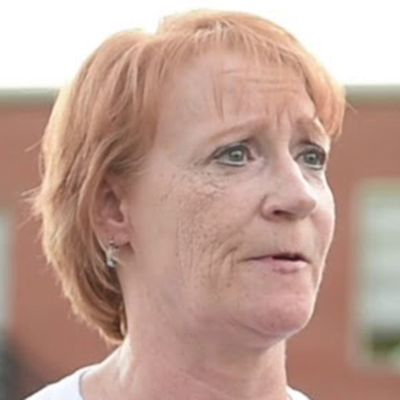
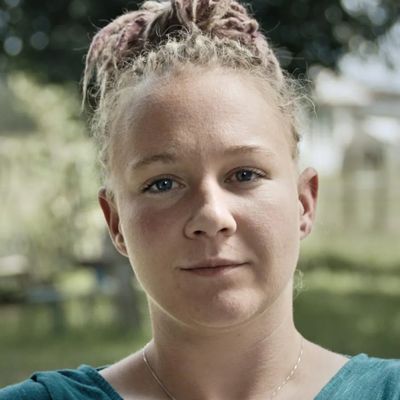
About
Reality Winner details her experience post-Carswell. Her release to a halfway house, home confinement, and probation. Reality and her mother Billie detail how inhumane experiences in the prison system have affected their lives and how they plan to continue to advocate for prison reform.
TO LEARN MORE
- Press Release from the Department of Justice: https://www.justice.gov/opa/pr/federal-government-contractor-georgia-charged-removing-and-mailing-classified-materials-news
- Affidavit for Arrest Warrant- Reality Winner: https://www.justice.gov/opa/press-release/file/971331/download
- CRIMINAL COMPLAINT- Reality Winner: https://www.justice.gov/opa/press-release/file/971336/download
Visit bpn.fm/ThisIsReality for more info, to sign Reality's petition for clemency, and to get tickets to any productions of Is This A Room.
Transcript
This transcript was automatically generated and might contain errors.
[0:00] Sally Horchow: Welcome to episode 10, Reality's Reality Part 4: Life After Prison.
[0:11] Sally Horchow: In 2017, Reality Winner, a highly decorated former Air Force linguist, was charged with leaking proof of Russian interference in the 2016 election. Her goal was to help protect democracy. Reality received the longest sentence ever imposed for unauthorized release of government information: five years and three months. This is Reality is a real-life true crime podcast recently recommended by Apple as new and noteworthy, which takes a deep dive into Reality's life, her time in the Air Force, her decision to protect America by releasing that information, her interrogation, trial, imprisonment, and the extreme obstacles she faced along the way.
[0:54] Dori Berinstein: I'm Dori Berinstein.
[0:56] Sally Horchow: And I'm Sally Horchow.
[0:58] Dori Berinstein: And this is Reality.
[1:32] Reality Winner: So that's basically where you go to a facility that's within 50 miles of your hometown, and you're allowed to go to and from that facility at different hours of the day. You're allowed to get a job, more contact with family and society. And in some cases, you're actually allowed to go into home confinement. But a lot of people, the vast majority of people coming out of prison, don't have a family home to go to. And so they're walking out with just the clothes on their back from prison. And it takes months to build up the sort of closed wardrobe property before you can even start saving up to make rent. So that's why they need that transition time to get a job and to have someone paying basically their basic housing, water, electricity, and food.
[2:26] Reality Winner: I share some of the terms of my home confinement. So for the halfway house from June 2nd to November 23rd, the rules were that the house was inspected by the U.S. probation. My father had to put away all of his firearms and have it be obvious that I have zero access. My parents had to give up all alcohol within the house or on the property. My phone had to be given to the halfway house for monitoring. And basically, they install an app on your phone. They would actually be able to go into my phone and read everything that I was doing at any time and see if I was active on social media. The thinking is that I'm still in prison. And when you're in prison, you don't have social media.
[3:15] Reality Winner: But adjusting back to home life after prison was difficult for me. My mother, Billie, recalls.
[3:22] Billie Winner-Davis: I mean, she was very much still an inmate when she came home to us, thinking that she had to fight for everything, thinking that everything was kind of a game because that's what it is inside. She had to learn how to survive that system, and she had no preparation for that. My heart goes out to any detainee in the system who gets released and doesn't have a good support system to help them or to just be there for them while they try to adjust to the world again.
[4:02] Reality Winner: Due to the remote location of my home, my ankle monitor would often malfunction, creating anxiety and stress. The range on my GPS ankle monitor was never clear. One time I went out to check the mail, and as soon as I got to the mailbox, it started buzzing and going off. So I had to run back to the house and call them. Sometimes I would go into the living room and my ankle monitor would go off, or I would be asleep in my bed at night and the ankle monitor would go off. And you're calling every time it goes off, you call them. "Hey, do you see anything?" "No, just hit the button, reset it." "Okay, well, it's still buzzing." "Oh, well, it might be bad. We might need you to come in." And if I did not answer the phone, that was labeled an escape attempt.
And like I said, the app that they loaded onto my phone would actually make my phone glitch when the halfway house in particular would call. So sometimes if I'm on the phone with somebody else, the halfway house would call. And like any other phone call, you should be able to switch over. When the halfway house calls, my whole phone would shut off and freeze. Which meant not only do I miss the call, but it's at least three minutes before I can call back and explain. And again, even missing a phone call by three minutes for them, they always be sure to add at the end of that conversation, "Okay, well, I'm just gonna take you off escape status."
[5:31] Reality Winner: There were times when I would be working on something and I would miss the call by like 30 seconds, or I would have wet hands and I wouldn't be able to answer the phone in my hands. There was one time when I had somebody taking me to a drug test, and that part of the city in which the halfway house is in, it's very hard to find. And they gave us 60 minutes to go 53 miles with traffic, which is unreal. And it was going on 65 minutes, and they called, and I can see the halfway house, right? We're just trying to figure out which road to take to gain legal access to it. And my phone freezes. That's when I finally am able to call back. And that's when they tell me, "Oh, well, your escape status." Just different moments like that where it re-traumatizes you.
[6:24] Reality Winner: I was able to secure a job working from home during my confinement. But that situation created its own challenges. Since I worked from home, they just needed me to call at the beginning and at the end of every shift because despite the pandemic, they have never heard of somebody working from home. So one night it was 10 minutes after my work shift, and I'm still on the phone with my boss, and the halfway house calls. And like typical, every time the halfway house calls, what happens? My phone glitches, freezes, and hangs up and drops everybody's call. So within a minute and a half, I'm calling them back. And basically, again, the word escape status is used. And I tried explaining that I was on the phone with my boss, and both of the calls dropped.
They didn't want to hear it. The next day I went and stuck up for myself, and I called my case manager. And her response was just you heard like a pause and a very heavy sigh. And then she finally said they need to stop using that word. Because basically, what you were having is that these people are working the front desk. Anytime they need somebody to answer the phone or call or get there sooner or do anything, they just tell them, "Oh, well, your escape status." And with that, re-traumatizing people, they just don't care.
[7:42] Reality Winner: Mandatory drug testing was required several times a month, which was stressful for the entire family. And because I wasn't approved to drive, they had to pretty much be ready to drive a hundred miles round trip at least once a week for a drug test. Billie recalls how difficult it was.
[8:00] Billie Winner-Davis: She had to do her mandatory counseling and group sessions when she was still on home confinement for the halfway house. But she sought out another source of therapy for herself because the resources that were set up with her, that therapist would forget about their sessions, would forget to call her. You know, it wasn't until I reported to her case manager that then there was a regular routine weekly session. But before that, the therapist would forget, you know, and this is somebody who's being paid contract dollars, but to them, it's nothing.
[8:40] Reality Winner: In November of 2021, I was finally released from the Bureau of Prisons custody, yet I will still be on probation for the next three years. It is important to remember that my crime was leaking one document, and I served out my sentence of five years and three months in prison. In comparison, former General David Petraeus gave notebooks containing, quote, code words for secret intelligence programs, the identities of covert officers, war strategy, and deliberative discussions with the National Security Council, unquote, to his biographer, Paula Broadwell, who was also his mistress. And he received only a misdemeanor charge. He spent no time in jail.
[9:23] Reality Winner: When I was finally released, it was not a happy moment. And that was a week that we tried to do as little press as possible, do as little interviews as possible. Nothing had changed. My ankle monitor was taken off, and I reported to federal probation on Tuesday, November 23rd. The outcome is that I should expect a drug test every month, and I have a curfew from 10 p.m. to 6 a.m. And I have to be at my parents' house every single night. I cannot leave the Southern District of Texas, which extends from just south of Houston along the coast. There are no passes or exceptions for this.
[10:18] Reality Winner: But for the next three years, I will not be allowed to travel in any way, shape, or form. I will not be allowed to spend an overnight trip, even within my own town. It really was bittersweet because it does feel like other than the fact that I can now get a job in the local community, I'm still on home confinement. I'm still restricted by lines on a map.
[10:43] Allison Grinter Allen: Reality's lawyer explains that this situation isn't unique to her. It's called supervised release. And it can vary what the parameters are. Really, the only requirement is that they be reasonable, and that word reasonable tends to be interpreted fairly broadly. Generally, supervised release will start out more restrictive, and those restrictions will ebb a little as the three-year period of supervised release goes. Yes, the curfew is kind of extreme from what I've seen, but really, there's only one rule of supervised relation or probation, and that is just keep your probation officer happy.
[11:36] Billie Winner-Davis: The family's extremely difficult experience with the federal justice system has led them to change their views. They let me in a room with them, you know, to sign documents and to sit comfortably and things like that. So we had never had, I had never had any kind of experiences with the jail system the way that I had when Reality was arrested and put in jail. You know, this has truly been an eye-opener as far as what our American jail and our American prison system is like and just how cruel and inhumane the system is. I certainly don't wish this experience on everyone, but I think everyone needs to experience what it is like to have a family member who is inside of jail, who's inside of prison to experience the hopelessness, the powerlessness, just the anxiety all of the time, the worrying, hearing from them, you know, when you can't do anything to help them at all, and then not understanding the system itself, like why things are happening to them.
[13:08] Billie Winner-Davis: By taking a job in the prison system, I increased my knowledge of prison operations and was better able to support my daughter. As a family member, you have no insight into the system or how it operates. I've actually taken a job within a correctional facility. And part of that was I wanted to experience what it was like inside. Going to visit with Reality on the weekends, I was locked in my side of the room, but I never knew what went on or what it looked like on the other side. And it's been an eye-opener for me. And it was incredibly hard for me as a parent to try to help her and then to go through it myself. And I think that in a way, that's why I took the job as well, so that I could understand.
[14:02] Billie Winner-Davis: I always need to know the reasons behind things. You know, what is the reason for the strip searches? Now I understand that that's how you keep the facility safe because people do smuggle things in. You know, the reason for the shakedowns, you know, when Reality was in jail, you know, she would tell me that they did, you know, they would do like the shakedown of their room, which means basically they turn everything upside down and they take away anything that's not permitted. And you know, for her, it was so destructive because like she would have pictures of her family and cards and things on the wall. Well, that's not allowed. So during these shakedowns, everything gets destroyed, everything gets torn off the walls and ripped apart, and then the detainee has to come in and they have to put their life back together.
And this happens time and time and time again. And so going to work in the system, it helped me to understand why. Why do they do these things? And I understand why they do them. It's to make sure that the contraband is being kept out. It's to make sure that they're not creating weapons and things like that, and that they're not building up excessive things that could be harmful to other inmates or to staff. I understand that, but then the method to it is something that needs to change. You don't have to completely destroy someone's bunk and everything that they have in their possession to do this, you know.
[15:45] Billie Winner-Davis: What I noticed, first of all, when I first, you know, started working, the dehumanization of people. And then, you know, they're put in cells with strangers, but they have to get along and they have to somehow figure out how to live together when they're very, very different. And they have to follow the rules to the T, yet the guards, the staff at the facility don't have to follow the rules the same way. I don't even know how to even describe just how degrading that is day after day for a person who's inside. And like you said, yes, we talk about recidivism. You know, when you treat someone as less than human and you beat them down day after day, and some of the staff are very cruel and they like to play games with the detainees.
They like to get them riled up and see what they can do to get them into trouble so that they can put them in solitary. That goes on every single day in every jail in every prison system in our country. You have to ask yourself then, how are they going to be when they come out of that? I mean, we actually expect them to be reformed. We actually call it a correctional system. Like they're going to come out of this a better person. There's no coming out of this a better person. You are going to be scarred forever. You're going to be traumatized forever. You're constantly going to have triggers that will trigger you. And you're going to learn how to live as a criminal because that's the way that you're being treated. That's what you're being taught. And that's the only way that you can survive inside of there.
[17:49] Billie Winner-Davis: Their clothing is all taken away from them. They are strip searched. It's really humiliating and degrading to them. You know, there's a reason for it, there's a purpose for it to keep the system safe so that people can't bring anything in. But when you have to experience it, you know, you see just how cruel it is. We're treating them like they're not human. And so then everybody gets the same uniform. While they're supposed to maybe get four, a set of four sets of clean uniform, typically they'll just get two. Like when Reality went to court, she was given a brand new uniform to wear to court because they don't ever want to show the courts what the typical inmate looks like. Their, you know, uniforms are dirty, they're tattered, they're torn, they're faded, they don't fit right.
So, like I know that when Reality went to court, I didn't really understand it until I experienced it that yeah, she was given a crisp, nice, bright orange uniform, clean. It made it look like the system really was taking really good care of her. Then when she got back to jail, they would change her out and she would have to go back into her tattered uniform. She was in that county jail for over a year. They only gave her one uniform to wear. And, you know, they have the rules that they have to be fully dressed at all times. So when it was laundry day, it was very difficult for her to navigate that. She would have to be in her long underwear that she bought on commissary. What system is it that they can't give her more than one uniform to wear?
And when she was transferred from Lincoln County to another facility on her way to prison, they would not allow her to wear the jail uniform. So my daughter was transported around the country in her long underwear. I don't even understand this system at all.
[20:10] Billie Winner-Davis: I'm a mass incarceration abolitionist, so I think that the prison industrial complex needs to be completely abolished. I don't think that means in America without prisons entirely, but it does mean that we need to decrease our prison population by at least 75%. And this is at the federal, state, and county levels. People need to stop spending three months in jail over a traffic stop, which is happening in cities all across this country. Our system is a system that only works for people who have money or connections. Everyone else is, I'm sorry to say it, but they're screwed. Reality was very lucky that she had access to a really good legal team, but it still didn't do anything for her. She was still denied bail and kept in the county jail pending a trial.
But so many other people don't aren't even that lucky. They get a public defender appointed to them, somebody who has a caseload of maybe 200 people that you're just a number, you're just a name and a number. Our cases in our court, it's not like on TV, it's not like Law and Order where you know there's evidence presented and you're clearly guilty. Most of our cases are being resolved through plea deals. It becomes a game between prosecutors and the defense attorneys, the back and forth and back and forth when it's somebody's life that they're playing with.
[21:55] Billie Winner-Davis: Reality talked about how they had always had five years on the table as a plea deal to her. And because the prosecution didn't like that, they actually had to work. Reality's team had put in for like 41 subpoenas. And because the prosecutors actually had to work on that and getting those thrown out, then that's why they tacked on an additional three months to her sentence. I mean, that was just petty, and it was vengeance on their part. Just the way that our cases in court are being settled is wrong. The way that people are being treated in jails and prisons across our country is really wrong. We need for more people to understand what's happening with the system, understand what happens behind the walls, so that we can start to demand changes of our lawmakers.
[23:04] Reality Winner: The fact that I'm able to share this cause with my mother, who has spent the last two years working at a detention facility, has brought us really close together, closer than we could possibly be, because I could have gotten out of prison and not cared about what happens behind me, what is still happening at Carswell. And if she didn't work at a jail, if she didn't work at a detention center, she wouldn't have to care either. But she sees the conditions. Even though I'm out, the conditions that she has to witness every day still affect her because she's still able to see me within the detainees. And so when I'm really upset or bothered by something that I see going on or that I hear about going on, she's able to empathize as well.
So last week I found out from a friend that at the federal prison in Carswell, instead of having the three approved meals by the Bureau of Prison's menu, they're now back to sack lunches for dinner, which consists of four pieces of bread, one piece of bologna, and a piece of cheese. So no vegetables. But now that's their standard dinner simply because the prison isn't willing to rearrange the staff to keep it open to fulfill a federal requirement. What they are doing is illegal. It's inhumane and illegal, and it's depriving people of basic nutrition. So she's able to empathize and basically help me come to a course of action.
[24:53] Billie Winner-Davis: And my work right now, I go into work, and I only have really one goal of the day, and that's to do something to make someone else's day better in there. Just one person. If I can help one person, then I've met my goal for the day. And that's what I do. I don't know. I always think that if I'm not there, then that the chances of somebody helping them with something, something little, something like getting them to the doctor, getting them to get medical care. Medical care is really bad inside of jails and prisons. They're on a waiting list. And when you see people who are in obvious pain, like maybe it's a toothache. Think about you know, your worst toothache that you've had. You don't have access to even Tylenol.
And then they tell you you're on a list to see the doctor or the nurse. You know, and so I try my best to bring concerns to whoever's attention I need to bring them to, to even help, you know, to help out wherever I can to be that one person that might be able to help them that day.
[26:28] Billie Winner-Davis: You can support Reality by signing her petition for clemency at StandwithReality.org. Please join us for the next episode of This Is Reality. And make sure to check out all the podcasts on the Broadway Podcast Network. We're incredibly grateful to special guests, Reality Winner, Billie Winner-Davis, and Allison Grinter Allen. This podcast is created, written, and produced by Dori Berinstein, Sally Horchow, Rebecca Aparicio, and the Broadway Podcast Network. Sound engineers are Alan Seales and Kimberly Garris. Podcast editor is Alan Seales. Executive producer is Liz Armstrong. This is Reality is part of the Gotham's Fiscal Sponsorship Program under the Sound and Light Project. Please join us for our next episode of This Is Reality by following and finding out more information on bpn.fm/thisisreality. And finally, special thanks to Bea Westby, Ayana Prescott, and the rest of the team at the Broadway Podcast Network.
© Broadway Podcast Network, All Rights Reserved