

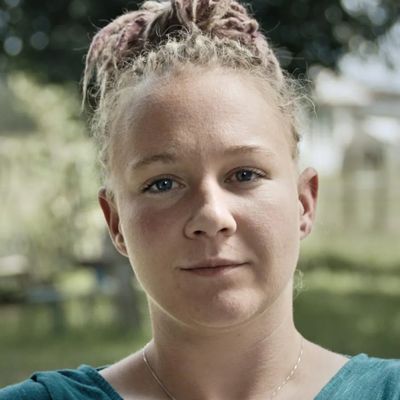
Reality Winner details her traumatic experiences as prisoner in Carswell Federal Prison. Reality struggled with bulimia, drug use, and anxiety following months of lockdown and surviving sexual assault. This inhumane treatment has inspired Reality to fight for Prison Reform... Read More
From the show: This is Reality - The Reality Winner Podcast
Guests
About
Reality Winner details her traumatic experiences as prisoner in Carswell Federal Prison. Reality struggled with bulimia, drug use, and anxiety following months of lockdown and surviving sexual assault. This inhumane treatment has inspired Reality to fight for Prison Reform.
TRIGGER WARNING: This episode includes discussion of self harming behavior, disordered eating, sexual assault, and addiction.
TO LEARN MORE
- Press Release from the Department of Justice: https://www.justice.gov/opa/pr/federal-government-contractor-georgia-charged-removing-and-mailing-classified-materials-news
- Affidavit for Arrest Warrant- Reality Winner: https://www.justice.gov/opa/press-release/file/971331/download
- CRIMINAL COMPLAINT- Reality Winner: https://www.justice.gov/opa/press-release/file/971336/download
Visit bpn.fm/ThisIsReality for more info, to sign Reality's petition for clemency, and to get tickets to any productions of Is This A Room.
Transcript
This transcript was automatically generated and might contain errors.
[0:00] Reality Winner: We'd like to warn our audience that this episode includes discussion of self-harming behavior, disordered eating, sexual assault, and addiction.
[0:09] Reality Winner: Welcome to episode nine, Reality's Reality, Part 3, Prison Life.
[0:20] Reality Winner: How and why did a 25-year-old with a Pikachu bedspread become the number one terrorist in the United States?
[0:27] Reality Winner: In 2017, Reality Winner, a highly decorated former Air Force linguist, was charged with leaking proof of Russian interference in the 2016 election.
[0:38] Reality Winner: Her goal to help protect democracy.
[0:41] Reality Winner: Reality received the longest sentence ever imposed for unauthorized release of government information.
[0:47] Reality Winner: Five years and three months.
[1:44] Reality Winner: With no hope in sight, Reality pled guilty and accepted the longest sentence ever for releasing a classified document five years and three months.
[1:55] Reality Winner: After her plea, Reality was transferred to Carswell Federal Prison in Texas.
[2:00] Reality Winner: At first, it seemed like the conditions would be better than they were at Lincolnton.
[2:04] Reality Winner: When I first got to Carswell after being in that county jail for so long, Carswell was kind of magical.
[2:11] Reality Winner: It's one of the few prison campuses that has trees, and there were squirrels, and it was really peaceful.
[2:17] Reality Winner: We could be out till 8:30 at night.
[2:19] Reality Winner: And so, of course, I was outside walking nonstop all the time.
[2:23] Reality Winner: Reality's sister recalls this time.
[2:27] Reality Winner's Sister: We really, as a family, had hope after Reality was transferred to Carswell because we thought that Reality would be moving on to something at least a little bit better.
[2:37] Reality Winner's Sister: Again, it's still federal prison, but anything's got to be better than county jail.
[2:42] Reality Winner's Sister: And I think that we were ignorant of how bad things could also really get.
[2:47] Reality Winner's Sister: But what we experienced was worse than we ever could have imagined.
[2:51] Reality Winner: To start, the living conditions at Carswell were challenging.
[2:55] Reality Winner: In order for a prison to actually stay afloat financially, they have to be over a hundred percent capacity.
[3:02] Reality Winner: And so Carswell right now is always at like 130%.
[3:06] Reality Winner: We were four women to a cell that was 11 by 13.
[3:10] Reality Winner: So now you're thinking there's two bunk beds, four lockers, a table, and a pull-out chair.
[3:15] Reality Winner: It's uncomfortable for all four of us to stand up just for the guards to come by and count us.
[3:21] Reality Winner: Because you have approximately two feet between beds.
[3:24] Reality Winner: So when we were on lockdown for COVID, you can't leave that cell, and there's four of you.
[3:29] Reality Winner: It's almost like you want to take turns standing.
[3:32] Reality Winner: That's how small these cells were.
[3:34] Reality Winner: Carswell will tell you on their website that there's only two women per cell.
[3:38] Reality Winner: But every cell pretty much has four bunk beds, and most cells have four women per cell.
[3:44] Reality Winner: Why does the system have to be over a hundred percent capacity to function?
[3:49] Reality Winner: It has to do with the money.
[3:50] Reality Winner: And so then it's not a matter of justice, it's not a matter of making society safer.
[3:56] Reality Winner: Reality found herself sharing close quarters at Carswell with women found guilty of committing a wide range of violent crimes.
[4:04] Reality Winner: So Carswell was very interesting because it did have all levels.
[4:09] Reality Winner: But as for the different charges that I had personally experienced, ranged from everything.
[4:14] Reality Winner: I mean, I knew Rita Gloosman.
[4:16] Reality Winner: She was convicted on conspiracy to kill her husband.
[4:20] Reality Winner: So she and her cousin basically teamed up and they both swung axes at his head at the same time.
[4:27] Reality Winner: She is very sociopathic, and so you just kind of have to keep your guard up around her.
[4:31] Reality Winner: There was another woman, she was from Israel, and basically she tried to kill her husband with ricin, and for whatever reason the charges got downgraded to just having a toxic material without a license.
[4:43] Reality Winner: And I was in a room with two of them, and then another girl who was from Oklahoma.
[4:49] Reality Winner: All three were white supremacist group affiliated, and it was really difficult because it wouldn't come up, and they knew better than to make sideways comments around me.
[5:04] Reality Winner: But I knew how they felt, and so I basically used that semester in college because I was taking correspondence courses and basically using all my sociology and humanity credits to write about gang affiliation and white nationalism within the United States.
[5:22] Reality Winner: Despite these challenges at Carswell, there were some silver linings.
[5:27] Reality Winner: Reality was able to teach GED classes and offer group fitness instruction.
[5:32] Reality Winner: So I had a lot of fun as a fitness instructor, just trying to expand people's worlds, expand their confidence.
[5:41] Reality Winner: Someone said, you know, when I got to Carswell, I weighed over 400 pounds.
[5:46] Reality Winner: You've really inspired me.
[5:48] Reality Winner: And so she's down to like 220 now.
[5:50] Reality Winner: So she's lost like major weight, like half her body weight.
[5:54] Reality Winner: This is who I was meant to influence, you know.
[5:58] Reality Winner: However, once COVID-19 hit, it was the beginning of a new nightmare for Reality.
[6:03] Reality Winner: In March 2020, they started ending all religious and educational programs.
[6:09] Reality Winner: So anything that was inside.
[6:11] Reality Winner: And then that affected my job because we could no longer have fitness classes inside.
[6:18] Reality Winner: All indoor facilities were closed.
[6:21] Reality Winner: And so now the only place people were allowed to go was outside.
[6:25] Reality Winner: That didn't actually create social distancing.
[6:28] Reality Winner: It just meant 300 people wandering around the track with nowhere else to go.
[6:33] Reality Winner: My first coping mechanism was to start cleaning.
[6:36] Reality Winner: So I would clean the unit about four hours in the morning, and then on weekends, I would clean in the morning and the afternoon.
[6:43] Reality Winner: So that would be sweeping, mopping, bathrooms, no matter what, you know, just whatever needed to be done.
[6:49] Reality Winner: And then in the afternoons on the weekends, I would host like these exercise classes.
[6:54] Reality Winner: And there'd be like six to eight people every night coming in the blind spot where the trash cans were.
[7:04] Reality Winner: And I had one of my best friends, Keith, send in transcripts of the insanity workout DVDs.
[7:10] Reality Winner: So I memorized those.
[7:11] Reality Winner: And then so we would do the insanity routines every night, or I would make them up.
[7:16] Reality Winner: In June 2020, the prison went into lockdown following the murder of George Floyd.
[7:22] Reality Winner: This was a major turning point.
[7:24] Reality Winner: That first national lockdown, which was a response to the George Floyd riots, the authority and restrictiveness with which they had to treat us went straight to their heads, and we may as well have been a different species.
[7:38] Reality Winner: We were not treated like Americans anymore.
[7:41] Reality Winner: The stress of that was the first time that I started using anything I could get my hands on to get high to escape.
[7:49] Reality Winner: It was just one of those moments where I just became so angry and so disruptive, and people were trying to look out for me, so they started giving me things to calm down and chill out.
[8:02] Reality Winner: I just remember yelling at the officers, like y'all did this, y'all are the ones that killed them.
[8:08] Reality Winner: Why are we on lockdown?
[8:10] Reality Winner: To me, just the principle of the matter, that broke me down faster than anything else because I saw the bigger picture and it was just so wrong.
[8:20] Reality Winner: Then in July 2020, Reality's entire unit became infected with COVID.
[8:27] Reality Winner: It got very odd at times, just the level to which you are stripped of anything to human or deserving of decent treatment.
[8:39] Reality Winner: An officer who had been regularly harassing me decided that apparently COVID's not airborne because she doesn't need to stay outside my room.
[8:47] Reality Winner: She ripped apart the curtain, took her mask down, and said, "Uh uh Winner, I just wanted to congratulate you on your positive COVID results."
[8:56] Reality Winner: And so again, it was just another scary situation, and it immediately became us versus them, more harassment, more degrading conditions.
[9:07] Reality Winner: I remember one time, I mean, we clearly had it, and this should have been your sign that the officers had it because basically in the sack lunch, they brought one day in everybody's sack lunch was half an onion.
[9:22] Reality Winner: They were out of food and they didn't know what else to put in these bags.
[9:26] Reality Winner: So, like one day it was like moldy lettuce, and then the next day it was literally half an onion for 200 women.
[9:32] Reality Winner: So the stench should have been overwhelming because a lot of people weren't eating, so they were just leaving them there, nobody was there to take out the trash.
[9:41] Reality Winner: Like this was at the height of the illness, you know, like nobody was moving or stirring or eating or anything.
[9:48] Reality Winner: It was just they even left the lights off except for count time because it was like a sick ward in this prison unit.
[9:55] Reality Winner: So I was cleaning every day, trying to maintain sanitary conditions, and I remember that I woke up one morning, and I mean, of course, I knew my bunky had it, so I knew instinctively, like, okay, well, I'm probably gonna test positive if they do a unit test.
[10:13] Reality Winner: So, of course, I knew, but the first symptom was I woke up one morning and I thought I had injured my back because my entire upper back was locked up, and the pain was very much like a previous back injury that I've had from lifting, and it wasn't until the COVID headache started that night that I realized, like, okay, and now I'm symptomatic.
[10:36] Reality Winner: So I had a headache, and then it hit my muscles, and I slept like I've never slept before, but I was also using and getting high around the clock.
[10:48] Reality Winner: Like the only time I wasn't was when I was cleaning.
[10:50] Reality Winner: You know, I was like, I'm not gonna do it on the job.
[10:53] Reality Winner: But then soon after I would just, yeah, I'd tear it up.
[10:56] Reality Winner: So, like, I mean, I stayed eating and drinking because I was high and I had the munchies.
[11:01] Reality Winner: And I think that's what helped me get through.
[11:04] Reality Winner: But that's that was the only thing that helped.
[11:07] Reality Winner: Oh, and that was the only thing that was available.
[11:13] Reality Winner's Mother, Billy: So we were dealing with it every day in the news and people dying, the hospitals being full, hearing about the horrible outcomes about people, you know, being put on ventilators.
[11:25] Reality Winner's Mother, Billy: I know that at Carswell, they actually had like a high-profile death.
[11:30] Reality Winner's Mother, Billy: And so reading about that, and then having Reality call us and tell us that, you know, yes, she had COVID her entire unit.
[11:38] Reality Winner's Mother, Billy: 300 people in her unit had COVID.
[11:41] Reality Winner's Mother, Billy: It was clear that the prison was not equipped to handle COVID from Reality's perspective, they made no effort to provide adequate medical care.
[11:49] Reality Winner: I had a roommate at the time, she had a previous medical condition.
[11:55] Reality Winner: I think it was a brain tumor because she had a shunt in her head, and you could like feel the empty part of her skull where you know the skull wasn't there anymore.
[12:03] Reality Winner: And so the COVID headache for her was very real and it was very scary.
[12:08] Reality Winner: And so she thought that if she tapped out, when you asked for medical help and to be pulled off the unit to get more intensive care for COVID, we called it tapping out.
[12:19] Reality Winner: So she said it was the worst decision she had ever made in her life because they took her and put her in the medical unit, which was the old hospital building.
[12:30] Reality Winner: They were eight to a room.
[12:32] Reality Winner: So picture like your typical two-person hospital room, and then put bunk beds and mats on the floor.
[12:38] Reality Winner: You know, there were people just lying on mattresses on the floor when she got in there.
[12:43] Reality Winner: She didn't know what to bring with her, so she didn't really bring any hygiene or clothes.
[12:48] Reality Winner: And they left her in there for two weeks with no clothes, no hygiene.
[12:53] Reality Winner: She said they would put the food, the bags of food on the floor in front of the door, crack the door open and kick them in at them, like animals, and then close the door.
[13:03] Reality Winner: When the nurses came by, they were giving them psychiatric pills and sedatives.
[13:09] Reality Winner: They just wanted to keep them quiet.
[13:11] Reality Winner: The air conditioning was out.
[13:13] Reality Winner: So she said they were there and they were too weak to move.
[13:16] Reality Winner: And so the food would just accumulate by the door where they kicked it in, and they would just lay on the floor in this hospital room.
[13:24] Reality Winner: And then once they had the strength to get up and take care of themselves, they had to, you know, hand wash the clothes that they were wearing and then hang them up.
[13:33] Reality Winner: But then, of course, they weren't allowed to be undressed, but they didn't have clothes.
[13:37] Reality Winner: So it was just this continual neglect and abuse.
[13:41] Reality Winner: She alerted the officers that she wanted to be tested or rapid tested and pulled off the unit because she thought that going to a unit like that meant more help, that she would actually see a nurse, not somebody coming by to do a quick temperature scan like they were doing for us on the housing unit.
[13:59] Reality Winner: But she would have been taken better care of if she had just stayed with us.
[14:03] Reality Winner: And that was the common belief in our unit is that we didn't see anybody die with us.
[14:09] Reality Winner: The only people that died were the people who got taken away.
[14:13] Reality Winner: And so it was just very much the attitude of if you want to make it through this, you have to stay with your friends.
[14:21] Reality Winner: But it was a very, very real time where you know you make those bonds with people because you need them to have your family's information in case you disappear.
[14:30] Reality Winner: Unfortunately, this was just the tip of the iceberg.
[14:34] Reality Winner: Reality shares her traumatic encounter with a female officer.
[14:37] Reality Winner: Another thing that Carswell's known for is sexual assault.
[14:41] Reality Winner: So in March 2020, an officer during the 3 a.m. count came into our cell and touched me in bed.
[14:50] Reality Winner: And I just dwelled on it for like two days.
[14:55] Reality Winner: And I heard two other inmates talking about that officer and how that officer was known to go in and watch people shower, and how that officer was banned from a unit because of all the sexual assault claims made against them.
[15:12] Reality Winner: And it just really triggered me. And I just realized that happened to me. You know, at first it was just like, hey, this weird thing happened, I'm not sure how to process it. But then you actually just hear, no, this officer is a predator, and that's what happens to me. So everywhere you go at Carswell, on all the walls, they're by the water fountains, by the hot water taps, by the computers, the phones, is the DOJ, sexual assaults, prevention, how to contact. There's a secure email, there's a secure phone line, and at the very bottom, it was just like contact a trusted staff member, you know, but you can't trust these fuckers. So I go on to the secure email line and I drafted up my report and my complaint.
[16:00] Reality Winner's Mother, Billy: During this whole ordeal with Reality, I just prayed and prayed and prayed that this would never happen to her. When she was in Lincoln County jail, she was assaulted physically, and she did not tell me until like a month afterwards. She would not tell me the worst of the worst things that were happening to her. The same thing with regard to the sexual assault that happened at Carswell Federal Prison. She didn't tell me until that guard that sexually assaulted her was moved back into her unit. And Reality did everything right. And she did that, and she heard nothing. And then all of a sudden, this same guard who touched her inappropriately at night in her dorm, is back in her unit. And that's when she freaked out. And that's when she realized that somebody on the outside needed to know this because she was at risk of being victimized again.
[17:09] Reality Winner: Reality shares that encounter. And within a week is just more abusive than I had ever seen anybody treat a unit at Carswell, to the entire unit. I remember like one night, the instruction was given that people needed to be out of the showers by 11:15 p.m. Well, it was like 10:55 p.m. And this officer, I swear on my life, is running after people, screaming, get out of the motherfucking showers, get to your motherfucking rooms, I'm gonna destroy you. And basically tears this shower bag out of a woman's hands and throws it across the housing unit, tells her to sit down and then starts destroying, actually ripping things out and tearing them in front of her eyes. And of course, women are yelling at this officer, like, what are you doing?
It's not 11:15. You said 11:15, it's not even 11:15 now. And she turns and she's like, I do whatever the fuck I want. I change the rules tonight. And so people started like waving to the cameras for help to get a lieutenant because according to the rule, if we ask for a lieutenant or a higher ranking staff, they're supposed to bring one. That's our last route for protection if we feel like we're being wronged. That doesn't mean things go your way. They usually side with their subordinates, but it's a way to defuse the situation. She refused to call a lieutenant because she knew she was dead wrong. So people were waving to the cameras for help. So the entire unit is basically at this time locked down in their rooms, and she's out in the center, and a lieutenant comes.
And so she gets out into the center of the unit and is giving this speech about how she was the only one that cared when we had COVID. Mind you, we had COVID in July, and this was December. She would always come out and say, like, oh, well, y'all's bathrooms are filthy. Like, what if I need to use your bathroom? Which is against federal policy. Officers are not allowed to use our bathroom no matter what. She would say things like, you know, y'all don't know how to wash your bodies, always commenting on our bodies, always commenting on sexual activity between inmates. But this time she came out, was like, I'm the only person that cares about you. I'm the only person that makes sure y'all get your phone calls.
Who asks how you're doing? Nobody else does that. Like, just completely inappropriate, but psychologically priming. And the lieutenant doesn't do anything. He just stands there and people are crying to him, like, hey, come talk to us, come help us. Like, do not leave this unit. Like, you don't know what she's gonna do to us. You're seeing the abuse happen. And I just snapped. I snapped. So I came out to the rail because I was up on the second story. And I just started screaming, Lieutenant, what about the Prias? Priya just means a sexual assault harassment complaint. The prison rape elimination act is what the acronym stands for. But we just say Priya to mean you filed rape against an officer.
Um, I said, officer or lieutenant, what about the Priyas? I said, There are three women here who have filed Priya complaints. One of the women, I mean, basically kept filing over and over again because she would make comments about her body. I filed a Priya. I said, Lieutenant, where's my Priya? Um, and that's when that officer turned and looked at me and was just like, You're a liar. And I just snapped. I was like, no, I'm not. You touched me, like in front of the whole unit. Just said that. And I said that in front of the lieutenant. And, you know, this officer's reaction was like, You're lying about me. I'm coming for your blood. And it just says that in front of everybody. And the lieutenant turned around and walked away. So it's like, do I'm fucked. You know, she's coming for me. Like she literally just said, I'm coming for your blood, and nobody cared.
[21:04] Reality Winner: Reality was terrified of what the officer might do that night. So she started moving her belongings out of her cell. Reality had learned from fellow inmates if you cross an officer, they will come for your stuff. She goes back into her office and just sits there the whole night, doesn't do anything. And right after the 10 p.m. count and starts upstairs, basically says, get your shoes out with their receipts. So this is like a Texas State prison thing. But if you have a pair of shoes and you don't have the receipts for, they can be confiscated. Now, mind you, we have been under a COVID lockdown for six, seven months now. Shoes have not been sold to us in seven months. So nobody actually has receipts for shoes.
Shoes have been traded, sold, upgraded because you just can't make your shoes last. So everybody's freaking out because nobody has receipts and nobody has the ability to print out the receipts anymore. So she goes with this cart and starts room by room by room, moving in a semicircle towards my room. And she's like making pit stops along the way. Anybody she doesn't like is just like destroying their stuff, like going into rooms till 11:55, basically, like, dude, you need to clock out in five minutes. Like the other officer was downstairs waiting to clock in, stops at the room right next to mine, looks me in the eye and says, I'm done tonight, but I'm starting over tomorrow night. That was December 30th.
So the next day, of course, was the 31st. That was basically the day I started reaching out to the special investigative services. So the people who are watching me, the counterterrorism people, I reached out to them and said, Hey, I need to talk to somebody and I need the captain. I need the captain. I need somebody here. Get the warden. I don't care. And they said, Well, it's a holiday. We can't do anything for you. I said, She threatened me, and I'd like to list this lieutenant as a witness. Bring him in and have him testify. I said, I can give you a list of uh I was just like looking around, like, I don't know, 220 women willing to confirm that I was threatened in front of everybody, and she's coming back tonight.
And basically that night they had to send somebody else in. So, you know, they were skeleton crew. It seemed that Reality's complaints were finally being taken seriously. However, a week later, that same abusive officer returned to her unit.
[23:36] Reality Winner's Mother, Billy: And at that point, I knew that I had to do something. And so I, you know, made various inquiries and complaints to the BOP system, to the DOJ system. I contacted her attorneys. I told her attorneys, you guys need to do something. Somebody needs to inquire about this. And it was only then, after that, that they started an investigation into her original complaint that this guard had touched her inappropriately in her bunk at night. But uh, that guard continued to work there. To me, it made no sense. According to Reality, her complaint was never fully investigated. That type of conduct isn't enough to have you removed from your job as a corrections officer in the Bureau of Prisons. Just rampant sexual assault. Reality's frustration at the lack of any action resulting from her assault sent her into a downward spiral.
[24:35] Reality Winner: Exercise was my lifeline, and even that could be taken away from me. That was my ticket to cleaning up my life. And then they would come in and they'd be like, Oh, I heard you were exercising. Let me find out. I'm gonna write you up. You know, and so I'm just like looking at this officer like they think they're being petty. Well, we're just not gonna let Reality Winner do what she wants to do. And I'm looking at them like my life is on the line. My very life depended on whether or not I could exercise to stay clean or keep food down or not cut myself. They didn't realize that because they were so cruel and so callous that they couldn't see like maybe this person is just trying to stay alive, and I'm just gonna come at them and take their last survival coping mechanism away. Reality suffered for the remainder of her time at Carswell, but she also learned a lot about what it means to survive in the prison system.
[25:31] Reality Winner: So before all of this, I definitely was not a social person, and unfortunately, in a space of women and in a space of basically human-to-human contact and human nature in the worst way possible. You kind of have to learn how to be social and you have to learn how to work with people. That was probably the biggest fallout for me. And then also just like the language skills of how certain people talk from certain parts of the country. So I remember when I was a um GED tutor, I had some inmates and they were squabbling, making fun of each other. And that woman looked at me like, Are you coming for me? And I was like, Absolutely, yes, I am. Reality, new to prison vernacular, didn't realize that saying coming for you is never taken as a joke.
I don't understand. Yeah, I was making fun of her, and the teacher's like, No, that means do you want to fight? And I'm sitting here, like, I grew up on a farm. I don't know what this shit means. So I said, Yeah, you know, I didn't understand it. And she was just like, you know, you got a lot to learn. Figuring out how to navigate life in prison was crucial to Reality's survival.
[26:37] Reality Winner: The only way you can really survive or acclimate to that is if you're used to being traumatized. If you grew up in poverty, if you grew up without, if you grew up with your first incarceration being by age 16 in juvenile, if you're used to the sound of keys. The only reason why you wouldn't be prepared for that is if you grew up privileged, if you didn't understand how the system worked. If you didn't have a life where you were constantly pitting people against each other because it benefited you. So yeah, I wasn't prepared. The one thing that I almost benefited from was my eating disorder. Bulimia is about control. You don't become bulimic because life is great. You were surviving, you're trying to survive something else.
It's a survivor's disease. And so when any time prison became too much, it was like, am I surviving prison or am I surviving bulimia? Because that's almost easier, right? Then you're just you're contending with that. And so I was never focused on surviving prison until they took exercise away. And then I had to actually focus on being in prison and processing what that picture meant, what it meant to be an American in prison. And that's when I fell apart, and that's when I became less than who I was. That was when I had to find another avenue for just the anger and the grief. And so that was when the drugs started. That was when cutting myself started. Because I wasn't focused on surviving bulimia anymore. I was focused on surviving prison.
[28:09] Reality Winner: In our next episode, we look forward to sharing more of our interview with Reality Winner. You can support Reality by signing her petition for clemency at Standwithreality.org. Please join us for the next episode of This Is Reality. And make sure to check out all the podcasts on the Broadway Podcast Network. We're incredibly grateful to our special guests, Reality Winner, Brittany Winner, and Billy Winner Davis. Reality's interrogation by the FBI was captured in the critically acclaimed Broadway show, Is This a Room, conceived and directed by Tina Satter. This podcast is created, written, and produced by Dori Berinstein, Sally Horchow, Rebecca Aparicio, and the Broadway Podcast Network. Sound engineers are Alan Seals and Kimberly Garris.
Podcast editor is Alan Seals. Executive producer is Liz Armstrong. This is Reality is part of the Gotham's Fiscal Sponsorship Program under the Sound and Light Project. Please join us for our next episode of This Is Reality by following and finding out more information on BPN.fm slash This is Reality. And finally, special thanks to Bea Westby, Ayana Prescott, and the rest of the team at the Broadway Podcast Network.
© Broadway Podcast Network, All Rights Reserved