

We sit down with writer Jennifer Shoop, creator of Magpie and author of Small Wonders: A Field Guide to Life’s Quiet Joys, to talk about the winding path that led her to a creative life she never quite imagined for herself... Read More
From the show: Was It Chance?
Featured Shows
About
We sit down with writer Jennifer Shoop, creator of Magpie and author of Small Wonders: A Field Guide to Life’s Quiet Joys, to talk about the winding path that led her to a creative life she never quite imagined for herself. Jennifer was supposed to be a professor, a nonprofit executive, and a tech founder. Instead, she followed her need to write, publishing daily, building a devoted literary community, and eventually turning her passion into a full-time career. Her story is a powerful reminder that sometimes the opportunities that change our lives come from doing the thing we simply cannot stop doing.
Jennifer shares what it means to take creative risks without knowing where they'll lead, from leaving a technology business to pursue writing full time to experimenting with poetry and fiction that push her beyond her comfort zone. We talk about the value of showing up even when the work isn't perfect, why writing can be a way to understand what we think and feel, and how every seemingly unrelated chapter of our careers can prepare us for what's next. We also explore the philosophy behind Small Wonders and the transformative power of paying attention to ordinary moments, especially when life feels difficult or uncertain. Because sometimes, the biggest shift isn't changing your circumstances. It's realizing that the imperfect life you're living right now is the main event.
Connect with Jennifer:
- Magpie: jencheep.com
- Instagram: Find Jennifer on Instagram through her website.
- Small Wonders: A Field Guide to Life’s Quiet Joys: Available wherever books are sold. Find it through Bookshop.org or your favorite bookseller.
Connect With Us:
- Join Write Club
- 📩 Email us at wasitchancepodcast@gmail.com
- 🎧 Follow Was It Chance? on your favorite podcast platform
- 📱 Connect with us on TikTok and LinkedIn
- ✨ More about Heather at her website, subscribe to her Substack and on LinkedIn, YouTube, and more
- Visit Heather's Bookshop
- Visit The Reading Well
EPISODE TAKEAWAYS
- Creativity doesn't always lead where you expect, but following your curiosity can open doors you never knew existed.
- You don't have to know where your creative practice will take you to justify doing it.
- Perfectionism loses some of its power when you give yourself permission to create in low-stakes environments.
- Writing can be a way to discover what you think, not just a way to communicate what you already know.
- Showing up consistently matters more than producing perfect work every time.
- The creative risks that scare you most can also be the ones that teach you the most.
- A winding career isn't necessarily a series of wrong turns. Every experience can prepare you for the next opportunity.
- Taking a financial risk on your passion requires courage, but sometimes the thing you do on the side is pointing toward your future.
- You don't have to wait for life to get easier or more perfect to start living it fully.
- Paying attention to ordinary moments can reveal extraordinary meaning. Sometimes, the small wonders are the whole point.
Transcript
This transcript was automatically generated and might contain errors.
[0:09] Alan Seales: All right, all right. So we start the show.
[0:12] Heather Vickery: Okay, Makanay.
[0:13] Alan Seales: I was gonna say, alright, alright.
[0:18] Heather Vickery: All right, alright.
[0:20] Alan Seales: And I hate, I hate that we all love that line because it's the creepiest fucking character ever.
[0:30] Heather Vickery: Gross.
[0:30] Alan Seales: Well, that lot, yeah.
[0:32] Heather Vickery: But I mean, he was a predator, right?
[0:34] Alan Seales: It's really quite simple.
[0:35] Heather Vickery: That's what I like about them high school girls.
[0:38] Alan Seales: I keep getting older and they stay the same age.
[0:41] Heather Vickery: Yeah, it's disgusting.
[0:42] Alan Seales: Except I love that line.
[0:44] Heather Vickery: And I love no.
[0:46] Alan Seales: No.
[0:46] Heather Vickery: It shouldn't have, it shouldn't have been well then.
[0:50] Alan Seales: Hey folks, welcome to Was It Chance?
[0:54] Heather Vickery: I'm just gonna do it. I don't know where you're gonna put that music in.
[0:58] Alan Seales: Who produced that show?
[1:00] Heather Vickery: Was it Weinstein?
[1:01] Alan Seales: Because that would make sense.
[1:02] Heather Vickery: Oh, snap.
[1:04] Alan Seales: I don't know. Who produced that movie?
[1:06] Heather Vickery: Anyway.
[1:06] Alan Seales: Anyway.
[1:07] Heather Vickery: I'm pretty sure you will have that Google.
[1:09] Alan Seales: To Was It Chance? The podcast about taking intentional risks for creative success, even if sometimes it doesn't age well.
[1:17] Heather Vickery: I'm Heather Vickery.
[1:18] Alan Seales: Why did I put in a gummy bear right when I had to show you?
[1:21] Heather Vickery: Why did you?
[1:21] Alan Seales: I don't know.
[1:22] Heather Vickery: I'm Alan Seales and I'm starving, so I'm eating soft and non-noise-making gummy bears right now because I need a little sugar kick.
[1:30] Alan Seales: And I'm gonna make some. Anyway, listen in as we chat with other successful people about the risks they've taken to put themselves on a path to creative success.
[1:38] Heather Vickery: Hey, Alan.
[1:40] Alan Seales: Hey, Heather.
[1:40] Heather Vickery: How are you?
[1:41] Alan Seales: Wow, we have a really patient guest who thankfully told us right before we started recording that they've been enjoying our silliness.
[1:47] Heather Vickery: Because we just dove in.
[1:49] Alan Seales: We dove in with the silly.
[1:51] Heather Vickery: Alan's eating gummy bears.
[1:52] Alan Seales: And we were talking about his new show that is on its way to Broadway.
[1:58] Heather Vickery: I'm just going there.
[1:59] Alan Seales: We used to get it.
[2:02] Heather Vickery: I'm Oprahing that.
[2:03] Alan Seales: I fuck that. I'm anti-Oprah these days.
[2:06] Heather Vickery: You're Vickerying it.
[2:07] Alan Seales: Yes.
[2:08] Heather Vickery: I'm Heathering it.
[2:11] Alan Seales: Yes.
[2:12] Heather Vickery: Yeah.
[2:12] Alan Seales: I could just be a one-woman name.
[2:14] Heather Vickery: You should.
[2:14] Alan Seales: Heather.
[2:15] Heather Vickery: Heather.
[2:17] Alan Seales: Who's that?
[2:18] Heather Vickery: Heather.
[2:19] Alan Seales: But you have to say it like really intense.
[2:21] Heather Vickery: Why does it have to sound like that?
[2:23] Alan Seales: Because it means so much.
[2:26] Heather Vickery: Heather.
[2:27] Alan Seales: Who?
[2:27] Heather Vickery: Heather is the least popular name in history, except for the year 1974, 1975.
[2:32] Alan Seales: The year I was born and the year after I was born.
[2:34] Heather Vickery: Really?
[2:35] Alan Seales: Yes.
[2:35] Heather Vickery: Why?
[2:36] Alan Seales: Why?
[2:36] Heather Vickery: Oh, least popular because there's just so many of them from 74, 75.
[2:40] Alan Seales: No, because nobody ever wanted to name. Like it was, it's not, it's never charted except for those two years.
[2:44] Heather Vickery: I dated a Heather.
[2:46] Alan Seales: Yeah.
[2:46] Heather Vickery: Yeah.
[2:47] Alan Seales: Well, she was she older than you?
[2:52] Heather Vickery: There you go.
[2:54] Alan Seales: Yep.
[2:55] Heather Vickery: I dated Heather.
[2:56] Alan Seales: Yeah, she was, she was a good, yeah.
[2:59] Heather Vickery: She was older than me.
[3:00] Alan Seales: Um, how other Heathers do I know?
[3:03] Heather Vickery: I know a lot of Heathers.
[3:05] Alan Seales: I know Heather Bador from the Broadway fan club.
[3:07] Heather Vickery: She's on the Heather on the Broadway fan club, uh, Broadway Podcast Network.
[3:11] Alan Seales: Um, there.
[3:13] Heather Vickery: There's you.
[3:14] Alan Seales: I think, yeah, Heather Bador was upset because you got the @Heather username on Calendar PA first.
[3:20] Heather Vickery: Oh good.
[3:22] Alan Seales: I would be so pissed if I didn't have it first.
[3:25] Heather Vickery: Well, you were like one of the first people I told go sign up.
[3:28] Alan Seales: I know.
[3:29] Heather Vickery: And I get to be your test dummy.
[3:30] Alan Seales: I actually you said you texted the other day, hashtag first child.
[3:33] Heather Vickery: Like I all the issues are with me.
[3:37] Alan Seales: I get to fix the issues.
[3:38] Heather Vickery: Yep.
[3:39] Alan Seales: Yeah.
[3:39] Heather Vickery: You're making it better for the rest of the world.
[3:41] Alan Seales: Anyway, um, well, I'm looking forward to this.
[3:43] Heather Vickery: I've been looking forward to you.
[3:45] Alan Seales: Me too.
[3:45] Heather Vickery: That's why we dive in, by the way, listeners.
[3:47] Alan Seales: That's why we dive in and just start yapping because like this is how Heather and I talk all the time anyway.
[3:53] Heather Vickery: It's usually via text, but it never stops all day.
[3:55] Alan Seales: And then when we get together, the rare times we do, it's like the skies open up and the heaven shines down on us, and we get to do this like for hours and hours, and it's so great.
[4:04] Heather Vickery: It's so fun.
[4:05] Alan Seales: It is so we have we have a good time.
[4:07] Heather Vickery: It's my favorite thing.
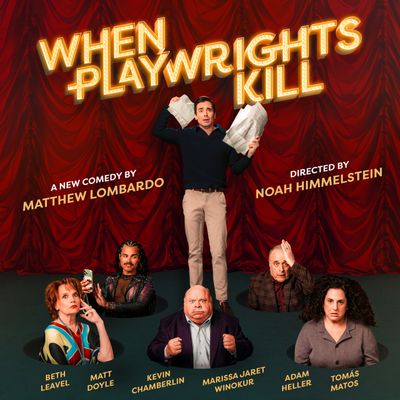
[4:08] Alan Seales: Anyway, I was telling about the gummies because that's a uh a theme in Alan's play when playwrights kill.
[4:14] Heather Vickery: So now you'll understand why we were joking about gummies when you go see the show on Broadway.
[4:20] Alan Seales: Fingers crossed, it's gonna be there.
[4:21] Heather Vickery: No announcement date yet, but it's coming.
[4:24] Alan Seales: Yeah, yes.
[4:25] Heather Vickery: Alan, speaking of 1974, this is a bit of a random segue, but we did talk about Heather being a popular name only for two years.
[4:32] Alan Seales: Uh earlier this week, I took my daughter, who's 16, to see Bruce Springsteen in the E Street Band in their protest tour.
[4:41] Heather Vickery: Nice.
[4:42] Alan Seales: First of all, you have to be as famous as someone like Springsteen to put together an American tour in like two weeks as a response to a tyrannical government.
[4:55] Heather Vickery: It's really fucking impressive.
[4:56] Alan Seales: Like when Springsteen calls, you pick up.
[4:59] Heather Vickery: Right.
[4:59] Alan Seales: I think so.
[5:00] Heather Vickery: I think so.
[5:01] Alan Seales: But he it was an incredible, incredible show.
[5:04] Heather Vickery: Like three straight hours of these 70 plus year old men and women literally rocking.
[5:12] Alan Seales: I mean, the only rock concert I've ever been to that was more intense than that was U2.
[5:17] Heather Vickery: Me too.
[5:17] Alan Seales: It was incredible.
[5:19] Heather Vickery: No, not me too.
[5:20] Alan Seales: U2, which was amazing.
[5:22] Heather Vickery: But it brought it up at the very end, like as he was about to do the last song, he goes, Damn, Chicago.
[5:26] Alan Seales: I think the first time I played here was 1974, and I was 25 years old.
[5:31] Heather Vickery: My daughter goes, Isn't that the year you were born?
[5:33] Alan Seales: I'm like, yep.
[5:35] Heather Vickery: So he's 75 years old.
[5:37] Alan Seales: I'm like goddesses, please give me whatever it is.
[5:42] Heather Vickery: It's a muscle that gives them that, it's a stamina muscle.
[5:46] Alan Seales: Plus a lot of steroids and drugs.
[5:49] Heather Vickery: But yeah.
[5:49] Alan Seales: Probably, probably sorry.
[5:51] Heather Vickery: I don't think that the man can do drugs.
[5:52] Alan Seales: I don't think you could perform as well as he did and be in a few.
[5:55] Heather Vickery: I meant like prescription drugs.
[5:57] Alan Seales: Like well, there's probably some painkillers.
[5:59] Heather Vickery: Like some painkillers.
[6:00] Alan Seales: Because it hurts me to get out of bed somewhere.
[6:03] Heather Vickery: It doesn't hurt me physically.
[6:05] Alan Seales: It hurts my soul.
[6:06] Heather Vickery: Oh god.
[6:06] Alan Seales: Oh, well, just wait. Give it 10 more years, pal.
[6:09] Heather Vickery: Today I have to get out of bed again.
[6:12] Alan Seales: But then I was like, well, Heather, today, bling.
[6:16] Heather Vickery: Bling.
[6:17] Alan Seales: I know two in where we get to record two in a row.
[6:19] Heather Vickery: And I'm gonna go ahead and plant a little seed there and go, isn't that just a lovely small wonder that we get to spend three hours together today?
[6:26] Alan Seales: Oh, what do you mean by that?
[6:28] Heather Vickery: What's a small wonder?
[6:29] Alan Seales: A small wonder just happens to be the name of the book of our guest today, Jennifer Shoop.
[6:34] Heather Vickery: Did I say that right?
[6:35] Alan Seales: I should have checked that.
[6:36] Heather Vickery: I did.
[6:36] Alan Seales: Okay.
[6:37] Heather Vickery: But we have to be like we have to do shoop straight.
[6:42] Alan Seales: Okay, that's okay.
[6:43] Heather Vickery: When you hear shoop, do you go TLC or do you go Dreamgirls, like Diana Ross?
[6:50] Alan Seales: Me, I go TLC.
[6:51] Heather Vickery: I do too.
[6:52] Alan Seales: What about you?
[6:53] Heather Vickery: Yeah, Jennifer.
[6:54] Alan Seales: That's my point of reference.
[6:55] Heather Vickery: But there's also a Whitney's song, the shoop song.
[6:58] Alan Seales: There's a lot of great.
[7:00] Heather Vickery: I know.
[7:00] Alan Seales: There's a lot of great shoop songs.
[7:02] Heather Vickery: Um, there's a cool TLC.
[7:03] Alan Seales: Well, hold on, hold on.
[7:04] Heather Vickery: Hold on, Shooper.
[7:05] Alan Seales: We gotta, we gotta give you your bio.
[7:07] Heather Vickery: Read the.
[7:08] Alan Seales: I know, I know.
[7:08] Heather Vickery: I'm gonna read the bio, but I gotta say this first.
[7:10] Alan Seales: Hold on, hold on, hold on.
[7:11] Heather Vickery: Because there's a trend on TikTok right now that says I'll know what generation you are when you tell me what is the next word that comes to mind, and it's always a song when I say this word, right?
[7:19] Alan Seales: So I now I feel like I need to go on in promotion for this episode and be like, what's the first song that comes to mind when you hear the word?
[7:19] Heather Vickery: That definitely TLC.
[7:29] Alan Seales: Yeah.
[7:30] Heather Vickery: I'm with you.
[7:31] Alan Seales: Um TLC.
[7:33] Heather Vickery: No, I'm Salt-N-Pepa.
[7:34] Alan Seales: Oh, yes, or less.
[7:34] Heather Vickery: Yes, exactly.
[7:35] Alan Seales: Don't mix up your no amazing girl rap bands.
[7:39] Heather Vickery: My bad.
[7:39] Alan Seales: Don't do that.
[7:39] Heather Vickery: My bad.
[7:40] Alan Seales: It's Salt-N-Pepa.
[7:40] Heather Vickery: Salt-N-Pepa, baby.
[7:42] Alan Seales: Anyway, Jennifer was supposed to be a professor and then a nonprofit executive, and then a tech founder.
[7:49] Heather Vickery: And I don't think you were supposed to be a teacher.
[7:50] Alan Seales: I think I just read that wrong.
[7:52] Heather Vickery: So um I'm gonna start over.
[7:54] Alan Seales: And you're gonna edit that, Alan.
[7:55] Heather Vickery: Uh yes, I will.
[8:00] Alan Seales: It's a Friday.
[8:02] Heather Vickery: Jennifer was supposed to be a professor and then a nonprofit executive and then a tech founder.
[8:07] Alan Seales: And instead, Jennifer Shoop writes about chipmunks and dandelions and somehow built one of the most loyal literary communities on the internet while she was doing it.
[8:16] Heather Vickery: Her debut book, Small Wonders, is proof that paying attention to the tiny stuff is actually the biggest creative risk of all time.
[8:25] Alan Seales: And I am so here for this as a joy warrior.
[8:27] Heather Vickery: Oh my gosh, Jennifer, welcome to the show.
[8:29] Jennifer Shoop: Thank you so much for having me.
[8:31] Heather Vickery: Thanks for being patient with us as we got to this point.
[8:34] Jennifer Shoop: It was delightful. I love your rapport.
[8:37] Heather Vickery: Well thanks.
[8:38] Jennifer Shoop: So the you built a following of small animals or writing about small animals.
[8:44] Heather Vickery: And weeds.
[8:45] Jennifer Shoop: No, I'm glad weed.
[8:46] Heather Vickery: Oh, okay, okay.
[8:47] Jennifer Shoop: Okay, okay.
[8:48] Alan Seales: I'm just picturing all these very studious squirrels, just like up in the channel.
[8:51] Jennifer Shoop: I would have I would have yelled at him.
[8:52] Alan Seales: Do you sing?
[8:53] Jennifer Shoop: Shut the fuck up, Alan.
[8:55] Alan Seales: Yeah.
[8:58] Heather Vickery: You go.
[8:59] Alan Seales: Oh, you were gone yesterday.
[9:01] Heather Vickery: Heather and I are part of the feminist podcasters group, this organization.
[9:06] Alan Seales: And uh, we were we were in the event yesterday, and I made a pun in the chat, and you were gone.
[9:15] Heather Vickery: But the organizer was like, Heather, are you here?
[9:18] Alan Seales: How do you even put up with this guy all the time?
[9:20] Heather Vickery: Yes.
[9:22] Alan Seales: I'm surprised that Nicole, who's a regular listener and also a member of the collective, didn't say shut the fuck up, Alan.
[9:29] Heather Vickery: She's she came to my defense, actually, and in a way I read it.
[9:33] Alan Seales: Nicole, nothing.
[9:34] Heather Vickery: I read it as a defense of uh, uh, you should you should hear him on the podcast or something like that.
[9:39] Alan Seales: But so I take that as a positive, even though I know she didn't mean it like that.
[9:42] Heather Vickery: Well, Jennifer, you're welcome to tell him to shut the fuck up if he does something done.
[9:47] Jennifer Shoop: Never, yes, yes, this gorgeous woman with this gorgeous book has a community of chipmunks, Alan.
[9:54] Alan Seales: Yes.
[9:55] Heather Vickery: Listen, you I've I've seen Disney movies, gorgeous women come with with gorgeous animal harems.
[10:01] Alan Seales: So we're gonna talk about so many things, and I started to have this conversation before we hit record, and I was like, no, I need to save it.
[10:08] Heather Vickery: Um first of all, I just small wonders are special to me.
[10:12] Jennifer Shoop: I I call them glimmers.
[10:13] Heather Vickery: I just think it's all really special, and I have all sorts of communities around that.
[10:17] Jennifer Shoop: And I actually just want to say that your pretty little book feels like it is a living representative of what you're putting out into the world.
[10:26] Heather Vickery: It is a gorgeous book, it's so pretty.
[10:29] Jennifer Shoop: You've got blue pages, y'all.
[10:31] Alan Seales: I know.
[10:32] Jennifer Shoop: For this is a quality book that you want to have on your bookshelf.
[10:37] Heather Vickery: And so I mean, the content inside is awesome, also, but just the way you did that, and I I really want to talk about that later in the conversation.
[10:46] Jennifer Shoop: Um making books feel special, I think is cool.
[10:50] Heather Vickery: Yes, thank you so much.
[10:52] Jennifer Shoop: I completely agree.
[10:52] Heather Vickery: And I have to give credit where credit's due that I had a great publisher partner who I sent over all these mood boards, and she really got it and helped like I don't know if I would it would be half as beautiful without her.
[11:06] Alan Seales: I love that.
[11:08] Jennifer Shoop: It's not, yeah.
[11:09] Alan Seales: Um, in most cases, not in all cases, but in most cases, getting a book out into the world is not a one-person show.
[11:15] Heather Vickery: Our friend Becky, who published yesterday is I think um the exception to that.
[11:19] Alan Seales: She did it all by herself.
[11:20] Heather Vickery: Wow.
[11:21] Jennifer Shoop: Yeah, there's a lot.
[11:23] Alan Seales: I I don't know.
[11:24] Heather Vickery: It was such a crazy learning experience.
[11:26] Jennifer Shoop: I learned every day.
[11:28] Heather Vickery: I felt like I was starting over again every day, learning something new about myself, about the process.
[11:33] Jennifer Shoop: I felt like a student again.
[11:36] Heather Vickery: Do you get frustrated by that feeling of starting over?
[11:39] Jennifer Shoop: I I do, and then I learned from it, and then I'm happy I did.
[11:43] Heather Vickery: But in the moment I was like, God, I've I want it to be linear.
[11:47] Alan Seales: Right.
[11:48] Jennifer Shoop: No, I relate to that.
[11:49] Alan Seales: I mean, I've built up, I think, a facility for that feeling of ineptitude because I publish every day on my blog, every single day.
[11:58] Jennifer Shoop: And wow.
[11:59] Alan Seales: So, yes, and a lot of times not well.
[12:02] Jennifer Shoop: Like what I put out there is not great, but I appreciate that.
[12:05] Alan Seales: Yeah, it's just half-baked or scrappy or you know, whatever it is.
[12:10] Heather Vickery: I have to know. We're gonna go back to younger Jennifer at some point, but I have to know do you prep in advance or do you just write what's on your heart that day? And can it be two sentences? Like I don't, yeah, I'm really curious.
[12:27] Jennifer Shoop: It's the latter. I really show up. I call it shaking hands with a blank page. Like I just arrive and whatever is on my mind like falls out onto the page. Um but I've been doing it so long at this point. So daily for, I mean, I've been writing probably every day of my life, I would guess, but um daily for the last decade have been publishing. So it feels like a comfortable practice at this point, even when I know what I'm putting out there is not gonna be my best work, you know.
[12:59] Heather Vickery: But it's not the point.
[13:01] Jennifer Shoop: Yeah, how does one not be a perfectionist asking for a friend?
[13:07] Heather Vickery: No, that's too locked down. You're never gonna not be a perfectionist.
[13:12] Jennifer Shoop: I think it's about finding like low stakes places. For example, I usually start writing on like a scrap paper, like a receipt or something, something where I've written something else. It feels like, oh, this can go nowhere. No one's gonna be looking at this. It feels like if I try to compose in like Microsoft Word, I feel like I'm writing in a tuxedo. Like I can't do it. I'm so awkward.
[13:34] Heather Vickery: You know, I love that tip because it takes away that blank page pressure.
[13:40] Jennifer Shoop: Yeah. There's already something on the page.
[13:42] Heather Vickery: Yeah.
[13:43] Jennifer Shoop: Or it's just it is, it's low stakes. Like it doesn't, whatever I write on the back of this receipt is not doesn't need to be important. Literally, sometimes I write on like this is an old schedule for my show. I just wrote some notes on it and it's just here. So I like that because I grab and write on whatever is here, but then you are exactly right. When I sit down, I'm like, all right, I'm gonna make a blog post now. I'm gonna make a LinkedIn post and be influential. I'm like, I don't know where to start, I'll do it tomorrow.
[14:08] Jennifer Shoop: I know. It's like you're writing on a tightrope or something.
[14:11] Heather Vickery: Yeah.
[14:12] Jennifer Shoop: Well, I admire it. So I this is when this airs, my joy of reclaimed experience will have been long over. But if you guys want it, I can restart it. But I have a program, a 21-day activation container opening on Monday. And leading up to it, I've done a post and a short live on Substack almost every day. Um I was supposed to do every day, and yesterday I just didn't do it. I just was like, nope. I was like, I don't think anybody noticed or cared. I had a whole spiral with myself. It was fine. Um but it was exhausting. Like to do it every day and not I didn't do it on the weekends, just every day during the week. Um, I was like, man, I could not, I could not do this all the time. But maybe it was the live component that was really wearing me out.
[14:57] Jennifer Shoop: Yeah, and I think sometimes what I found when I was writing this and I had a publisher enforced deadline for certain components. That was challenging for me because when I set my own schedule for myself, it's easier for me to stick to when someone else is telling me you have to get this in by a certain time. That was challenging. I didn't know that about myself. But um, I don't know, for my blog writing at least, or for my private writing, I really it doesn't ever feel like a chore. Like because sometimes, you know, I'm like, I don't I there's so many other competing demands in my life, but yeah, I really like have to write. Like I almost it's not like I write because I want to, but because I have to to see what I think.
[15:40] Heather Vickery: You have to write to see you mean that's how you process your own thoughts.
[15:40] Jennifer Shoop: That's how you process. Exactly. Yeah, like I feel like I haven't I I've only like half experienced things until I've put like dressed them in language. Um have you always known that?
[15:56] Heather Vickery: So you kind of you describe your path as squiggly, which I think is really great, right? There's government consulting, academia, nonprofits, HR tech, now writing full-time. Did was this something that was always true for you? This needing to write to process to figure out who you were and what your thoughts were.
[16:14] Jennifer Shoop: Definitely. I remember writing as like young as six. I think I started like putting stories under my mom's pillow, and I like drafted like a screenplay with my best friend on an ancient typewriter. I mean, I always was drawn to the page, but um I it's funny because I I didn't ever think that I would be able to write for a living, but I I like knew I had to no matter where it took me. Um and every actually every part of my career has been very writing dense. Um, so it's interesting you say that.
[16:45] Heather Vickery: I know Alan has a question. I'm gonna let him ask one eventually. But my I have four daughters and I love the theater. And I am a I have an English degree, I'm a writer, singer, I do all those things. But so I've tried to get them all into these things. And in some degree, most of them have, but my 16-year-old is an actor. And she recently said to me, so it was very similar, it's just what you she said, um, because she's a sophomore in high school, about to become she's a rising, almost a rising junior, starting to think about if there's gonna be school and what that's gonna be. And she said, um, I can't imagine that it would be worth living my life if I can't act.
[17:27] Jennifer Shoop: And um, so first my first thing was kind of panic. Like, like this is a really hard industry. But then I'd like to take a breath and I slowed down and I said, What does that mean to you? Like, in what way? Because there are lots of ways to act. Does it have to be your career? Does it have to be what makes you money? And she was like, I've been thinking about that. No, it doesn't. She's like, even if I'm teaching acting or if I'm doing community shows or whatever.
[17:50] Jennifer Shoop: Yeah. And she said, I, you know, I'm okay with that. I just have to be doing this thing. And I love that you said that. And I love that for her, and I hope that for anybody, you can have passions that don't produce now if you want them to be your main income. Right. Um, that's totally fine. But also they don't have to always do both things.
[18:13] Jennifer Shoop: Absolutely. I I think that's so true. And it's yeah, who knows where she'll end up, but that's so powerful that she already has that sense of calling.
[18:22] Heather Vickery: Yeah, yeah.
[18:23] Jennifer Shoop: Um I don't know. I I actually write quite a bit about the feeling of being called to something on my blog. Um, and I and like sometimes when people seek my advice on writing, I I don't mean to put a damper on their ambitions or something, but I'm like, if it's a calling, it's gonna keep calling. And if it's not, it's gonna like attenuate to a whisper, and then you forget about it. But I feel like if you are so passionate as your daughter is already about theater, she's gonna keep finding ways to weave it into her life.
[18:52] Heather Vickery: I think so.
[18:53] Jennifer Shoop: Yeah.
[18:53] Heather Vickery: Well, go back, go back then to when you were younger then, because your squiggly career. Where where did you think you were going first? And like I want to I want to hop on, I want to go with you on all the journeys to hop from one decision to the next when you kind of jumped around to these things. So, where did what did you think you were gonna do originally?
[19:15] Jennifer Shoop: Well, it's funny because having put out this book and being able being invited to speak about it as in today, which is so special to me. Um, this even this moment is such a dream. Um I I guess I did always like daydream about oh, it'd be so cool to be a published author, to have like an author lifestyle. But I I really didn't think that was like I it was possible. I don't know. I I didn't know that I I could do it, but um I thought maybe I would go to be a professor. Like I always really liked the study of words and the idea of being of being a teacher, I really was drawn to.
[19:51] Jennifer Shoop: Um, but I don't know, I'd been writing on the side for so long. It just kind of grew into this career on the sidelines.
[19:59] Heather Vickery: So what got you into things like government consulting? Like, did you start there? Is that was that your first career government?
[20:05] Jennifer Shoop: That was my first job out of college and I really did not want to do it and I hated it. It was so dry and boring. Um, but I realized something about myself there which is important, which is I realized I was a very hard worker. Like it was not difficult to motivate me. I was always doing like I was noticed really quickly by my boss, like and it felt so easy to me. I would see like peers like, oh, this is so I finding it difficult or like they couldn't meet deadlines. I was like, what? Just do it. I realized then that I had this like capacity to be very disciplined, which has served me well in the practice of writing.
[20:40] Heather Vickery: Yeah.
[20:41] Jennifer Shoop: Oh yeah. And it's a little bit unique. Are you by chance do you know your human design?
[20:46] Jennifer Shoop: I don't I heard you uh speak about this in one of your podcasts, but I haven't done it.
[20:51] Heather Vickery: Okay. Well, we can do it if you want. We can pull you everybody listening, you can pull a free chart on my website, but no, if you want to do it, because I I suspect you have a defined um the center is called the heart center, but sometimes it's called the will or the ego. Those are get shit done people. And it's it's pretty rare. Because the way you describe that, I was like, Yeah, that is that's not gonna be me.
[21:10] Jennifer Shoop: And there's we live in a society where there's a lot of shame and guilt around that.
[21:14] Heather Vickery: Um because we're all supposed to be like you just described.
[21:19] Jennifer Shoop: Right.
[21:20] Heather Vickery: Yeah.
[21:21] Jennifer Shoop: And most of us aren't.
[21:22] Heather Vickery: Like that's impressive.
[21:24] Jennifer Shoop: Yeah, I think it I inherited it directly from my dad. Like this is so my dad's ethos too. He's like a workhorse, you know, just gets things done. I think I like observed him and I was like, I want to be like that. I don't know. Or maybe some of it's inborn. I don't know what your perspective on that is, but
[21:38] Heather Vickery: Yes, and yeah.
[21:42] Jennifer Shoop: I think it could be both.
[21:43] Heather Vickery: There's yeah, absolutely.
[21:44] Jennifer Shoop: But then, okay. So then when you're doing this job that is not the best, you know, what chance came along that you said, all right, I'm gonna pop over to this this other thing over here and give this a try.
[21:55] Jennifer Shoop: Well, that was when I applied to get a master's in literature. And I was like, let me try to go into academia and see where this takes me. Um, and really that was such a fun, I mean, it's like the most useless degree, probably. Like a terminal master's in literature. I mean, the career prospects are not promising. Um like it's not the PhD where you have that credential and it's obvious you're gonna go into like becoming a full professor. I don't know. But it was so fabulous for me because I got to write and read every day intensively and I loved it. And I got to teach writing and I all of those things that now it at the time felt like, what am I doing? Have actually come into play later in my life and been very powerful.
[22:42] Heather Vickery: That's the way that works, isn't it? Isn't that so funny?
[22:45] Jennifer Shoop: Well, so then you left. And keep telling the story then. Because you left were when you were pursuing the the masters. Did you get did you were you still working the government job?
[22:55] Jennifer Shoop: I left that. I was a full-time graduate student thanks to my dad's generosity. I mean, it wouldn't be possible without him. My parents' generosity. Um but so I did that full-time and I was thinking I might go on to pursue a PhD, but I didn't know. And then I just happenstance meeting with like a startup nonprofit that was focused on educational attainment, like college, like driving the cost of education down.
[23:24] Heather Vickery: Oh I know.
[23:26] Jennifer Shoop: And so we were there was this whole era in the late, like the ear, like the 2010s time period of like building MOOCs. Do you remember that term? Massive online open courseware, like free courses, Coursera. You could like yeah, that was we were building like a nonprofit version of that and trying to recruit all these faculty members to create free courses that people could take um to pursue their own education.
[23:53] Heather Vickery: And that was really thrilling to me too.
[23:54] Jennifer Shoop: And I was drawn to like the principle of it. And I was brought on board as sort of the head of content, which is so laughable thinking back. I don't know who gave me that chance because I was just a master's student. But I was again like very hardworking and I was willing to wear any hat they wanted me to wear. Sometimes I was drafting like a legal prospectus, like I had no, no like leg to stand on. Um, but I loved it and I loved to work with the faculty members.
[24:20] Jennifer Shoop: And so I did that for a few years and then switched to a different nonprofit. I loved that work. It was so meaningful, but at the same time I knew it wasn't like my bailiwick. You know, I wasn't doing what was creatively interesting to me. It was interesting for other reasons. And that's when I started intensively writing on the side. I was always writing, I think, but really putting pen to paper every single day.
[24:50] Heather Vickery: We're gonna take a quick break. Stay tuned for more of the episode.
[24:52] Jennifer Shoop: And now we're back. Is that when so this chipmunks and dandelions we're talking about?
[24:58] Heather Vickery: It's actually called Magpie. Is that when you started Magpie? Like I would love to know how Magpie became a thing.
[25:08] Jennifer Shoop: Yeah. Yes. It was an earlier incarnation of what's now called Magpie, but it was called the Fashion Magpie. There's always been like a fashion and shopping component to what I put out there in the world. But so I was writing the Fashion Magpie, was doing like shopping roundups, I was writing random things about myself. It was so fun. I didn't think anyone read it. I don't think anyone did read it for years. I mean, it was just this little really bad blog. And then just slowly over time I started realizing that people responded very strongly when I would write more vulnerable essays. And people would say, like, oh, I came for the fashion, but I'm staying for the writing. And I just thought, okay, I'm doing something interesting. Um, or interesting to me or interesting to the five people that were reading at that time. And then it kind of evolved from there and I just kept going.
[26:04] Heather Vickery: And I honestly don't know how it landed me here, but did it just feel like something you had to do? Because I think as somebody who writes, I write on Substack. And you know, who knows? It might say eighty-five people read it, but I get like two hearts or whatever. You don't keep writing on that because you want to be discovered. You keep writing because you can't help it.
[26:27] Jennifer Shoop: Right. That's so that's how I feel too.
[26:30] Heather Vickery: Yeah. Huh. Yeah, you uh it it's compulsive. It's like you're saying about your daughter, Heather. Like you just have to do it. So I get that. But okay. So then were you writing for you? Do you still write for you or do you write for others? Is there a line that you're like, all right, I'm gonna give them what they want to build my following, or I don't give a shit. I'm just gonna write everything and then because they're my followers, they will like it.
[26:57] Jennifer Shoop: Right. I believe I'm writing for myself. I think that I try actively not to think about an audience when I'm writing because I think that tampers with craft in a really disingenuous way. However, I will say that I've seen some of the stuff I put out there, like some of my list poetry, and I do not consider myself a poet, has taken off and I've gotten so much like wonderful opportunities have come from that. And so I'm, you know, that's made that's kind of opened my eyes in a different way. Like I'm not saying I'm not writing for that reader necessarily, but that was helpful feedback. I was like, oh, okay, like I maybe I have some facility with this type of medium. I'm gonna try again. So I've, it's maybe like pointed me in certain directions, but I really when I'm sitting in front of the page, I'm trying to just write from a place of like authenticity.
[27:54] Heather Vickery: Was that a big swing to take, or you just started doing it and more got more and more comfortable with it?
[28:00] Jennifer Shoop: The poetry piece and also sometimes I publish fiction, huge swings. They're terrifying. Fiction terrifies me. It's so hard. I feel like, oh my gosh, I can write this like memoir essay type of writing all day, every day. It's so natural to me. The fiction, the poetry is so challenging for me. But so every time I do it, it's like horrifying. It's so challenging for me to do. But I often find like very giving at the end worth the effort.
[28:34] Heather Vickery: You mean the audience reaction is giving or or like just the overall experience?
[28:38] Jennifer Shoop: I probably both. I mean, if I'm being honest, it's great to have people tell you that your words somehow fit a moment for them or landed with them in a really powerful way. That I would be it would be inauthentic to say that doesn't move me routinely. But I uh in general, I still think the writing as a craft as a practice is for me is yeah, the experience of it is just so winning for me.
[29:06] Heather Vickery: Okay. So you're writing Magpie, all of a sudden it's bigger than you thought it was going to be. First of all, what was that experience like? And how much of it was community-oriented? Building communities, I have a couple is really hard work from my experience. And then how did we get to Small Wonders? Like, yeah, talk take us through that experience and that journey.
[29:32] Jennifer Shoop: Yeah, I completely agree. I have the best readers ever. I mean, they're so smart. I've learned so much from them. But I think one piece that I would have always been conscious of is I try to respond to every single comment, as many DMs as I can, email letters, whatever. Like that's really important to me because I think people showing up to read what I'm writing is such a gift. Like I have to keep that door open, be like, wow, come on through. Like thank you so much for being here. But in terms of the growth of Magpie, I think a lot of it was word of mouth at first, which is fantastic. But at some point I realized that so my husband and I had an HR technology business in like a past life. It feels so far away from me now. But at some point we realized we were making more money off of my blog than off of this.
[30:33] Heather Vickery: Wow, really?
[30:34] Jennifer Shoop: Yeah. People made big money on blogs in the early 2010s. Yeah. I was we were making more there than we were off this like technology business that we'd poured all of our life savings into, had actually fundraised, raised capital for. And we were like, what? This thing that I'm just doing, like moonlighting is making more money. So that at that point we were like, I need to see what's here. I need to like continue down this road. And that was scary and tough because that was like a big risk because we didn't know how far it could go. And we had two young kids and we're, you know, trying to make it, you know, it's like tremendous financial stress to do that. But I'm so glad we did. We took a huge, huge risk.
And I kept saying, well, if it doesn't work out, at least I will have been at home with like the kids when they were really young. And I can always go back to dot dot dot, you know. And I was thinking that I might have to. But thankfully I just was so focused and so motivated to make it work.
[31:37] Heather Vickery: That seems like your common pattern though. Whether you like it or not. And then you find something you like, and it's that much better.
[31:46] Jennifer Shoop: Exactly. Yeah.
[31:47] Heather Vickery: So how wait, how long ago was that then?
[31:50] Jennifer Shoop: So I started doing this full time in 2018.
[31:54] Heather Vickery: Okay. Was when I yeah. And then pandemic hits 2020. Did that help or hurt? Because like blogs, everyone's at home reading.
[32:01] Jennifer Shoop: I know. It might have, yeah.
[32:04] Heather Vickery: It might have helped.
[32:05] Jennifer Shoop: I mean, I don't know. Again, like at that time in everyone's life, I'm sure I just was looking for ways to process what was going on. So like the writing felt even more dear and important to me. And I found a lot of people were in similar straits, and I was really writing about the COVID experience head on. And like, this is so hard to do with little kids at home. I'm stuck in Manhattan. I can't go outside. People are dying. Like it was scary.
[32:30] Heather Vickery: How old were your kids at the time?
[32:32] Jennifer Shoop: They were one and three.
[32:33] Heather Vickery: Oh, really little.
[32:34] Jennifer Shoop: Yeah.
[32:35] Heather Vickery: Oh gosh. Those were hard days.
[32:40] Jennifer Shoop: Well, yeah. My kids are a little bit older, like by only a year or two. So we were doing Zoom in like preschool. And yeah, it was terrible.
[32:49] Heather Vickery: Yeah.
[32:50] Jennifer Shoop: Yeah. My kids were first grade. Is that right? Second grade. First, no, when it first hit. First grade, fourth grade, eighth grade, and a freshman year. And it was it had totally different impacts on all of them and on me at home and how they got supported and what they needed. But I can only imagine living space and Manhattan and not being able to go outside. And it's good that you had the outlet, I think, right?
[33:21] Jennifer Shoop: Like a pro about.
[33:23] Heather Vickery: Yeah. That it was so helpful. And I remember really like digging into this motif at that time that it felt like we were all like suspended. Like it was a suspension of life. But I remember writing a lot about how actually this is not. This is life. Like this is the main event. We're still like laughing and you know, hugging our kids and going through the everyday things that we have to go through. And it was like a huge mind shift for me that like no matter what's going on, like this is the main event. This is live you're not in suspension, you're not waiting for the you're not in the rehearsal room. You're like living it.
[34:04] Jennifer Shoop: That is such a valid and important statement. Like no matter what's happening, no matter where you are, this is actually it.
[34:13] Heather Vickery: Yeah. This is all we have.
[34:14] Jennifer Shoop: Yeah. This is all we have. The imperfect right now. Which is why I do the work I do. Like this is it. So make it joyful. And I'm currently completely obsessed with Harry Styles' new album, Kiss All the Time, disco occasionally. And there's a lyric in one of the songs. I will never stop talking about it. He's laughing at me. I love him though. Oh, the album is so good. It's so so good. But there's a line in one of the songs that says, If you must join a revolution, make sure there's dancing. And that feels like the same concept. Like whatever you're doing, do it all the way and find a way to make it work for you.
[34:51] Heather Vickery: Yeah. Agree.
[34:53] Jennifer Shoop: Yeah. There's always there's a I'm gonna botch this, but there's a famous poem that's about will there be singing in the dark times? And like, and like yes, there has to be. It's I'll have to look up the exact quote because I totally butchered it, but it's really a beautiful sentiment.
[35:08] Heather Vickery: Well, you've jumped around to these different careers, and now you're set up not settling into falling into the path that you're creating for yourself. Like, do you see the past as failures, or is it just like learning opportunities, you know, to go through from one thing to the next area? Because I was it starting over every time.
[35:34] Jennifer Shoop: No, I completely feel that everything, every choice I've made has led me. It's been almost like bringing me to this exact point. Like I practice for this moment right now. Like even going on these my little book tour, I was so nervous about the public speaking element. And then I was like, wait, done this before when I was like fundraising for our HR technology business. I like would get so nervous before it would be like shaky and like, and then I remembered that there is somebody like that told me at some point back then when I was pitching the business, like that's just your body telling you it's ready. And that helped like I just was drawing on all these different like specific experiences and learnings from every other version of myself. Even now today, you know, and writing is that way. It's this a creative process where you're drawing from things you read four years ago, something you wrote two years ago, something you saw this morning.
[36:32] Jennifer Shoop: It's all bringing you to the present. It's making you ready for the present. I do believe that with my whole heart that everything that we've experienced is what allows us to be capable in the moment, but also we all have regrets. Regrets are just a natural normal human thing. But I wouldn't change most of my big decisions because I know I needed to experience those things, even if they were hurtful or painful.
[37:02] Alan Seales: A hundred percent.
[37:03] Jennifer Shoop: There's that quote by Anaya Snan that's um in life you'll make mistakes, but those two are correct.
[37:11] Alan Seales: I love that.
[37:12] Jennifer Shoop: Yeah. And I love her work.
[37:13] Alan Seales: I know.
[37:14] Jennifer Shoop: Yeah. So powerful.
[37:15] Alan Seales: Yeah. That's good.
[37:16] Jennifer Shoop: That's good. Yeah. I it's hard. It's hard at the moment to to I guess in my mind, like perceive stepping backwards in order to move forwards. And I always really get introspective and down on myself about that if I have to do something like that. But then like I feel I feel like in those experiences, because you already have the forward-lived experience by stepping back, you can jump forward again that much faster once you learn the basics of whatever new thing you moved into.
[37:47] Alan Seales: So it's hard, and I have to keep reminding myself that.
[37:50] Jennifer Shoop: Well, you get to apply the knowledge and skills that you gained, even if you're learning new things or you're starting over in some capacity, you still get to apply all of the tools that you put in your toolbox.
[38:02] Alan Seales: Mm-hmm.
[38:03] Jennifer Shoop: And they can help you achieve faster. I just had this conversation with my 13-year-old. She's the other day, talking about sometimes you have to slow down to go fast. And she's like, I don't really understand that. So we really kind of broke that down. What does that look like? What happens when we're rushing?
[38:20] Alan Seales: I would say for me, a solid 98% of the time, if I'm rushing through something, I screw up and I have to go back and fix it, and it takes me longer than if I would have slowed down in the first place.
[38:32] Jennifer Shoop: That's a really good way to put it.
[38:34] Alan Seales: And I'm gonna use that with my fifth grader right now who messed up his book report so bad he's gotta redo it.
[38:39] Jennifer Shoop: Oof buddy.
[38:41] Alan Seales: Yeah, there's that. Anyway, all right. But now he knows that.
[38:44] Jennifer Shoop: And that's the thing. Now he knows it.
[38:46] Alan Seales: And he probably won't make that exact same error again.
[38:51] Jennifer Shoop: Right.
[38:52] Alan Seales: Oh, he's gonna make errors.
[38:53] Jennifer Shoop: He's gonna make errors, but maybe not that exact same one.
[38:56] Alan Seales: Right, right, right. It'll be different.
[38:58] Jennifer Shoop: We learn hopefully. That's the goal, right?
[39:00] Alan Seales: Yeah.
[39:01] Alan Seales: Okay. So, Jennifer, tell us about small wonders. Was this your idea? And then you pitched it to publicists or to publishing houses, or did somebody come to you and say, We love what you're doing, we want you to write a book, which is like the fucking dream.
[39:17] Jennifer Shoop: I know the the latter happened.
[39:19] Alan Seales: Congratulations.
[39:20] Jennifer Shoop: That thank you. And it was so odd because that so the beginning of every year, I try to put together a New Year's bingo card. Like not New Year's resolutions, but things I'll be delighted if they happen and cross them off and whatever. Um, and one of them was I'm gonna start querying for an agent because I had this fictional manuscript that I've been working on for a while. And I I wrote that down and like that, I mean, I couldn't believe it, but some, you know, an acquisitions editor approached me and said, Hey, have you ever thought about writing a book? And I was like, Yes. But interestingly, and this is a big motif in my life as well. They wanted more of what I was publishing on my blog, so like my true daily art, and not this other thing I haven't yet done before.
And I just it was like one of those situations where again, I was like not living where my feet were. Like, of course, people would want more of what I'm known for, you know, first. So um, it was a dream. So she reached out and we kicked around a few ideas, and um she was so phenomenal to work with and really let me go the direction I wanted to go. So it was really an extension of what I already write about a lot on Magpie.
[40:31] Alan Seales: I think that's great. It's it's exciting to see that work for people, right? That you jump into something that's passionate for you and you do it simply because it feels like you can't help yourself, and then people start paying attention and then you start making money off of it, and then somebody says, Hey, we think this would make a great book. And then you get to make it such a special, beautiful book. The book is called Small Wonders, a field guide to life's quiet joys. And y'all know if you're listening, me and Joys and Glimmers and Small Moments, it's this it's the small moments that count, period.
[41:07] Jennifer Shoop: Amen.
[41:08] Alan Seales: Yeah, like it really, it truly is. Wait, I'll tell another Harry Style story and then we'll we'll wrap this up. Uh when the album's more came out, there was a pop-up shop in Chicago. There were like a handful of them across the country, across the world. And my daughter and I went and stood in line in the pouring rain for three and a half hours to get into the pop-up shop, and she bought what she wanted to buy. And I wasn't gonna get anything because I'm too old for concert swag kind of thing. But there was a great mug. It was just this perfect shape, perfect size, perfect color. And it said kiss on one side and disco on the other. And I was like, you know what? I'm gonna buy myself this mug.
And I had for about three weeks this absolute joyful morning with my mug and remembering those moments in the rain with my kid, right? These are those are the moments that stand out. That experience. And then um about three weeks after I got it, I was on a field trip with my youngest daughter, and my partner said, I'm really sorry to tell you this, but I broke your hairy styles mug. And she was like, I could buy you another one, but I don't see them anywhere. And I'm like, no, that's because they're unique to each individual pop-up shop and um their collector's items. And there is one on eBay for $150, which is silly. You're not gonna do that. And I said, But it's not about a mug. It's about a memory.
It's about beautiful. It's about the fact that we did that together. So I was like, I don't want another mug. So I was sad. I mourned it for a little, but I still get to have that experience. And those small wonders make such a difference in our lives.
[42:36] Alan Seales: Um, Jennifer, this is great. You're wonderful. Um, please tell folks how they can follow you, follow Magpie, get the book, all that good stuff.
[42:46] Jennifer Shoop: Oh, well, that was such a beautiful story. And thank you for sharing that. I feel like that is so true. The small things that really make, yeah, just I feel like that's a big ethos in the book is that um I think we grow blind to like the small things because they're so ordinary. It's like the weeds or the grout or like whatever you want to call it, the backyard birds that you overlook for huge swaths of your life. Um, but then when you pause and and show shine like more of your attention on it, it's there's such profound sights of meaning. Um and yeah, give it make gives you shape, gives your day shape. Um, but yes, you can find me on my blog every day. I as I mentioned, I publish every single day.
Mag by genshoop.com. Um I'm also on Instagram. And the book you can find basically wherever books are sold. So Amazon Target wherever. We will make sure that the book is on our uh was it chance guest list on bookshop.org. We have a shop, uh, I have a shop on bookshop.org. So we'll make sure that's linked in the show notes. And um, you guys are gonna love it. It's lovely. And you can almost use it. I have another book um that's similar to this where it's almost like use it like a tarot deck, like just flip through and see what the universe wants you to know today. Like what is what is the thing it wants you to pay attention to today? Um, so you could read it all the way through and you should, but also you know, just bring it in as a small moment.
[44:13] Alan Seales: I love that.
[44:14] Jennifer Shoop: Yeah.
[44:15] Alan Seales: Thank you. Thank you so much, Jennifer. This was fun. And thanks for being a listener. We appreciate it.
[44:20] Jennifer Shoop: I've loved listening. So thank you.
[44:23] Alan Seales: Thank you. Take care.
[44:24] Jennifer Shoop: You too. We're gonna take a quick break. Stay tuned for more of the episode.
[44:29] Alan Seales: And now we're back. I love, I really do. I really love stories of people who follow their passion and their chance is that they just couldn't give it up, and then wonderful things happened. Like they didn't imagine it would be the thing.
[44:48] Jennifer Shoop: They're just not happy until they do that.
[44:48] Alan Seales: Yeah. And then that works out really well.
[44:53] Jennifer Shoop: Yeah. I think it's so cool. And it's interesting to me. Like you were so shocked. She was like making a living off of a blog in the mid-2000-ishes.
[45:04] Alan Seales: Yeah.
[45:05] Jennifer Shoop: You know. Um talking about regular things, talking about real life and real mom struggles and the experience of being a woman in the world.
[45:15] Alan Seales: And yeah, I'm I love that.
[45:18] Jennifer Shoop: Yeah.
[45:18] Alan Seales: Well, I think everybody wants to feel like they're not alone. And that humanizes, or at least like, yeah, bring brings normal, everyday, everyone problems to the forefront. Everyone kind of feels that. And you know, there's something about that is the the more connected we are, the harder it is to to make deep connections with people.
[45:40] Jennifer Shoop: Big time.
[45:41] Alan Seales: So I feel like there's a lot to, you know, that kind of writing style of just like yeah here's here's what I'm going through and here's what I'm doing about it and you know hope anyone can relate enjoy and everyone's like oh yeah yeah like this helped me out it's something I didn't think about it's yeah yeah so I appreciate that it's good and the and the callback I spend a lot of time talking about the micro moments just a ton of time like little joys add up little gratitudes add up but I've I feel like people ignore me a lot and I'm like y'all listen like this is really where it's at and so I appreciate Jennifer's approach and her whole book which is really a beautiful book as a bibliophile as somebody who just fucking loves books and looking at books and anytime they feel special like that I'm like I just got an extra gift.
[46:29] Jennifer Shoop: Yep.
[46:30] Alan Seales: No I like that I like that a lot and I and I think you know making the effort to make the book different as well like physically different it's it's its own small wonder stands out yeah yeah it stands out because it's a small the small little differences of the book that make it that much better you know appreciate it.
[46:45] Jennifer Shoop: I agree and how great was it that she's like a fan and loving our show.
[46:50] Alan Seales: That was awesome she's like oh I've been enjoying getting to know you guys through the show and I'm like my little heart grew to twice its size.
[46:56] Jennifer Shoop: Okay.
[46:57] Alan Seales: Okay Scrooge no not Scrooge Grinch Scrunch Grinch okay Grinch off valid well where can other people tell me to shut the fuck up they oh my gosh and if in the nicest way possible please do you can email us it was it chance at was it chance podcast at gmail.com. You can send us a DM on Instagram at uh we are at was it chance. You can send a DMR message on TikTok at was it chance. No, was it chance pod. I'm on Substack. Please do let us know. What we would really love for you to do though, really truly, A, is if you like this episode or any of our episodes, find two friends that you think might enjoy it and send it to them directly and say, hey, I really think you'd like this show. That would mean the world. And also rate and review it because we have fragile egos and we love to hear those. Leave those five stars. Even five stars.
[47:47] Jennifer Shoop: Five stars, baby.
[47:48] Alan Seales: Take four, five, five.
[47:49] Jennifer Shoop: Give me five.
[47:51] Alan Seales: Give her five. If only we could do more. Love all those stars.
[47:57] Jennifer Shoop: That's right. Well, thank you everybody for listening. Even listen to Was It Chance. We're the podcast about taking and embracing opportunity and taking intentional risk. I don't know. We're the podcast about just talking. My phone just started ringing. And it's on do not disturb, which means it's my mom. She's the only one that just keeps calling until it blood goes over the do not disturb. So anyway, hey folks. I'm Heather Vickery. Thanks for listening.
[48:20] Alan Seales: And I'm Alan Seales.
[48:23] Heather Vickery: Hey Heather's mom. We'll talk to you guys soon.
[48:27] Alan Seales: Bye.
© Broadway Podcast Network, All Rights Reserved