

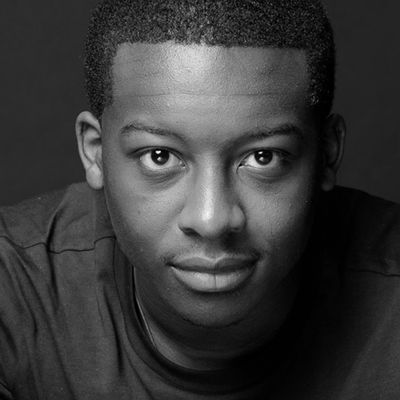
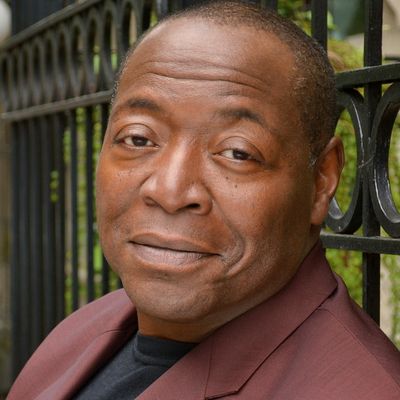
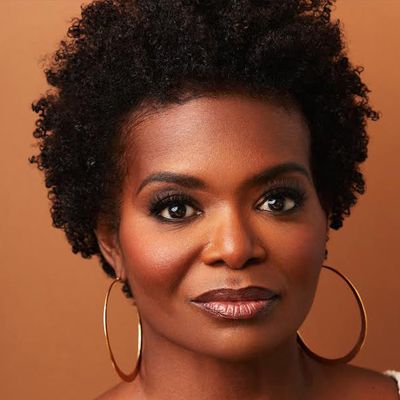
When Lightning Strikes! goes to the opening Night and Broadway premiere of Alice Childress’ play Trouble in Mind. Directed by Charles Randolph-Wright, the cast includes LaChanze, Michael Zegen, Chuck Cooper, Danielle Campbell, Jessica Frances Dukes, Brandon Micheal Hall, Simon Jones, Alex Mickiewicz and Don Stephenson... Read More
From the show: When Lightning Strikes!
Guests
About
When Lightning Strikes! goes to the opening Night and Broadway premiere of Alice Childress’ play Trouble in Mind. Directed by Charles Randolph-Wright, the cast includes LaChanze, Michael Zegen, Chuck Cooper, Danielle Campbell, Jessica Frances Dukes, Brandon Micheal Hall, Simon Jones, Alex Mickiewicz and Don Stephenson.
Transcript
This transcript was automatically generated and might contain errors.
[0:00] ♪ Musical number: "When Lightning Strikes" — performed by the cast ♪
[0:26] Jeryl Brunner: Hi, this is Jeryl Brunner, and you're listening to When Lightning Strikes.
[0:32] Jeryl Brunner: In 1955, Alice Childress's play Trouble in Mind debuted off Broadway at the Greenwich Muse Theater. The groundbreaking play centered around racism, class, gender, and what it means to be a black theater artist in America. A prolific playwright, actress, and novelist, Childress was devoted to writing multi-layered stories about black women claiming their power and voicing the realities of what they faced. She once said, "I concentrate on portraying Half Lots and Half Society." In Trouble in Mind, Willetta Mayer and the mostly black cast are in rehearsal for a new Broadway show written and directed by all white men. Ferociously passionate about her art, Willetta has played too many stereotypical characters in her career.
She aches to present authenticity on stage. So Willetta stands up to her director, inspires the other actors to question the text, and makes her voice heard. After Trouble in Mind opened, producers optioned the rights to take the movie and funny play to Broadway. However, they wanted Childress to tone down the ending, make it more happy, more commercial, but Childress refused. She would not sacrifice her artistic vision. So Childress, who passed away in 1994, never saw Trouble in Mind get to Broadway. On November 18th, 2021, Trouble in Mind premiered on Broadway. The Roundabout Theatre Company production starring LaChanze is now playing at the American Airlines Theater through January. Director Charles Randolph Wright and LaChanze, who plays Willetta, both learned about Alice Childress when they were in college. They were devoted to getting Trouble in Mind to Broadway. At the show's opening, Charles Randolph-Wright talked about first discovering Alice Childress's work.
[3:02] Charles Randolph-Wright: It affected me, it just went through me. And I hadn't had anything do that because in theater in college, I was reading Chekhov and Ibsen and Arthur Miller and Tennessee Williams, you know, not Alice Childress. And when I read her words, they were for me. I felt them, I saw them, I understood this, and so it's been with me for decades. And then the past two decades when I've been trying to make this happen, it took us 15 years. But as of tonight, Alice Childress will be in the canon of American theater. And that was my dream. And it happened.
[3:47] Charles Randolph-Wright: Her words, her words are so important. They're necessary. And I want what she did for me, I wanted to do for others. The inspiration she gave me to keep working. And as so many, so many artists of color, we don't have equity with other artists. And what she wrote, what she writes, all of her work. It just inspired me constantly and enabled me to keep going when I wanted to give up. So how can I give up on her? After 66 years with her play finally on Broadway, the spirit of Alice Childress was very much present at the opening of Trouble in Mind. The cast and creatives offered their reflections. Here's LaChanze.
[4:40] LaChanze: Can you talk about first discovering Alice Childress's work when you were in college?
[4:45] LaChanze: Yes. What how did it speak to you? You know, it's so fascinating that you asked that question. I went to an HBCU, I went to Morgan State University, I started there, and the work that we were studying, the works that we were studying were pieces written predominantly by African-American playwrights. So she is loved, beloved so much by so many of us that have worked on her work. And I was actually quite surprised when I got to New York to start actually start my career that people did not know of her. It was quite shocking to me that people didn't know of the brilliance of Alice Childress. And so it's taken this many years to actually have someone committed, as brilliant as our director is, Charles Randolph-Wright, to carry the charge to make sure that we get this done.
[5:35] LaChanze: And he was tenacious. He didn't stop. He was insisting that it get done, and thanks to him, we're here.
[5:42] Jeryl Brunner: He told me you're his muse. What kept you intrepid? Because you were part of the journey getting this done. What kept you going?
[5:53] LaChanze: There are very few roles in our canon that I not only love and love playing, but have always wanted to do. I've always wanted to be able to play a character like Willetta on Broadway. There was a time when my dream was Evita, and they would never cast me as Evita. So this is Willetta. Willetta to me is the moment in my heart and my soul that I wanted as a younger actor, wanting to have that much power and that much to say on a stage. Willetta is saying all the things that I wanted to be able to say. And Alice Childress gave me the voice.
[6:38] LaChanze: Anything I could say to Alice Childress tonight, it would be thank you. It would be congratulations, and it would be this is just the beginning, and thank you, mama. I think I feel like I'm one of her children.
[6:51] Jeryl Brunner: What do you love about Willetta?
[6:53] LaChanze: I love her courage.
[6:54] Jeryl Brunner: Can you talk about that?
[6:55] LaChanze: Willetta is a courageous woman. She does not, she has so much faith and truth that she doesn't hold anything back. She can't help herself. Because she loves the arts so much that she really wants it to be the absolute best that it can be. And she forgets her audience when she speaks her truth. But that's what I love about her authenticity. And I'm really, really grateful that Alice Childress stuck to her guns because look at us. Perfect timing. Thank you.
[7:29] Charles Randolph-Wright: shared why LaChanze had to play Willetta. She and I have been friends for a long time. We've done all kinds of work together in workshops, never in a show. And as LaChanze has said, I'm her first black director on Broadway, which is insane. Insane when you think about her canon of work. 35 years, and so that tells you everything. That tells you what that is. Our work together, she is my muse. And what we did together on this piece, I've never done. I mean, it's astounding, and how we both discovered, and Alice is speaking through her in a way that I've never experienced.
[8:13] Charles Randolph-Wright: Is there something you'd like to say to Alice? We actually started rehearsals on her birthday in the theater, and I wanted Alice more than anything. I wish I could hear her laugh, and I want to say thank you to Alice. Thank you. Because people now see you.
[8:33] Jeryl Brunner: I spoke with Jessica Frances Dukes.
[8:36] Jessica Frances Dukes: When I first heard about this play, I was actually, it was actually a while ago. And then when Charles called to say, "This is what we're gonna do, you know, are you in?" And I just fell out because it's the perfect time, it's a perfect place, it's the perfect type of people, it's the great group, you know, it just was a dream come true.
[8:53] Jeryl Brunner: What were the circumstances when you heard, when you first learned about this play, about Alice Childress's work?
[9:00] Jessica Frances Dukes: Well, I studied her in school, which was great. You know, we studied The Wedding Band, we studied so many other of her pieces. So when it came time to read this, I think I was too young to understand it right away. But now being in the business for the amount of time that I've been in the business, going through the experiences that I've gone through, I understand it in ways that I think that are perfect for the time. And it's so contemporary in the set that it still resonates.
[9:31] Jessica Frances Dukes: All these what do you love about your character? You know, I love somebody who has full-on guts to be who she is, but also at the same time, I love the mixture of wanting to be who she wants to be, not necessarily who the world wants her to be, you know, and I think she learns a lot in this piece. She sacrifices a lot to be who she wants to be. But at the end of the day, when it's time to sacrifice the job, she's not ready to do that. And I love speaking voice for those people that can't quite speak up because they can't lose that job, but also hopefully it gives them the courage to say, you know what, maybe the job isn't so important.
[10:13] Jeryl Brunner: And is there something you wish you could say to Alice?
[10:16] Jessica Frances Dukes: I mean, I have so many questions for her, you know, being able to write this in 1955, you know, and it being so resonant today, my questions would be why, you know, how, and oh my god, thank you.
[10:29] Jeryl Brunner: What is your take of her giving up Broadway?
[10:33] Jessica Frances Dukes: Because she, from what I understand, she didn't want to change the ending, right?
[10:37] Jessica Frances Dukes: Correct. Well, they wanted a happy ending. They wanted a bow tied on it. They wanted it to not feel like, you know, Broadway doesn't support their artists. But at the time, you know, they weren't trying to support her. They wanted her to change a part of the play that actually mirrored exactly what they were asking her to do, you know, which is say something different than reality.
[10:58] Chuck Cooper: So when you what went through your mind when you heard about this beautiful play?
[11:05] Chuck Cooper: Well, when I read it, you know, first of all, I was, you know, guffawing out loud at how funny it is, and being, you know, just punched in the chest by how rich it is, how it exculpates the things that we need to be talking about that we don't talk about enough. And how the play meets the moment, this so-called woke moment that we're in. So it was just a revelation of I have to do this.
[11:41] Jeryl Brunner: Is there something you wish you could tell Alice?
[11:44] Chuck Cooper: Hopefully, oh my god. I'd like to start on one page one of the script and go through it with her.
[11:51] Jeryl Brunner: Tell me why.
[11:53] Chuck Cooper: Because I so desperately want to know what she wants. Because that’s what the actor is about, is delivering what the playwright wants and or trying to. And I would be all over her. There's a bunch of lines that I'm guessing at, but I would love to ask her, what is it what did you mean when you wrote this?
[12:19] Jeryl Brunner: And it feels so contemporary, the play.
[12:24] Chuck Cooper: It's universal.
[12:26] Jeryl Brunner: Talk about it.
[12:29] Chuck Cooper: She's picking themes that, you know, the little blurb they have about this play is perfect because it says it's a play about Broadway and a story about America. And that's very much what it is. In the context of the play within the play, we look at America, we look at how America looks at black people, how America looks at women, black women, how America is how America perhaps should be. And that tension is very much present in the play.
[13:09] Don Stephenson: shared his thoughts. Somebody asked me the other day, they said, how do you feel about saying these things in the show? And I said, you know, I'm Alice. We're all Alice. We're all Alice. I mean, Alice wrote the show, and she's all of these characters came from her, and so when I say what I say, I feel like I'm speaking for her as we all do.
[13:32] Don Stephenson: Now, obviously, Willetta is the one that's the most her, but she's each of the characters. Well, I read it and I just thought it was amazing, and I instantly loved it, and I instantly thought that it was important. And the amazing thing to me was the theater history behind it all. You know, I felt like theater history was being made by doing it, and that it was just, you know, a crime that it had never made it to Broadway because it seemed like it was one of the greats, you know, like Streetcar and like Death of a Salesman and all of those other plays, you know, from generally that time period.
[14:09] Chuck Cooper: And for it to be written by a woman and a woman of color is truly an amazing thing. And you know, the bittersweet thing is for her to not have it be done on Broadway and to not be here to see it is a bittersweet thing, you know. I think about her a lot, and I think about how, you know, it's like, you know, great artists after the fact they go, "Oh my God, this is worth millions of dollars," you know, and when they were alive they couldn't sell a painting or things like that, you know. This seems a little exactly, this seems a little like that to me, and I'm so happy because I know now that the show will be done all over, and theaters, regional theaters are already starting to pick it up and do it. And isn't that a wonderful thing? Because everybody should see it. It's funny, and it's, and it until it isn't, and it has pathos and it has all the things that great drama has, and I'm so happy to be a part of it.
[15:05] Chuck Cooper: Is there something you wish you could tell her? I would tell her that we did it. Look, look, we did it. Look at it. We did it, it's there. You did it. You did it. Your show is up there. Look at that. And people, you know, people are laughing. I mean, the true way to be immortal is to do something like this because when we're up there doing it, she's alive. She's alive, and it's her. And you see that when people write music or they write plays or they do a painting or they do something like that. That way you sort of live forever. And when we're up there, we do the show, she's alive.
[15:46] Chuck Cooper: Here's Lola Hendricks, who wrote original music for Trouble in Mind. What went through your mind when you learned about this project? You know? I was actually excited because, you know, I knew the play, and I knew that what had happened to it, and that now it was going to possibly have this moment on Broadway, and you know, have a larger exposure and have people understand and have it talked about as to what, you know, Alice Childress and her work and that people would get to know more about Alice Childress.
[16:29] Lola Hendricks: What would you like people to know about Alice Childress? I mean, she was what a spectacular human being. I wish she was here, of course, to experience this play. And what would you like to say to her if you could say anything or ask her? I would like to say thank you. Thank you for writing the truth and writing it in a way that, you know, that in a sense is real life because there's a humor, which is really important, that's a part of the human experience, and then there's the pain and the sadness and the pathos of it that she was able to write as well, and to really cover the gamut of the human emotion in a play. So that's what I would say is thank you. Thank you, Alice Childress, that you were that you put this, wrote this and that it has sustained and now it is where you wanted it to be.
[17:32] Lola Hendricks: And in the hands of someone like Charles Randolph-Wright, who appreciated your work, that it was not, it was, he did not change a word. Right? He wanted to be true to your script. And then I wrote music to support that truth. Yes. And the music, can you talk about writing the music? Because it's such an integral part of the play. You know, but not it doesn't say, you know, there's a lot of music. No, it's not a musical. It's not the beautiful music. Well, it's a thread, and the thread is to when the actors are not speaking the words, that this thread is also reiterating the words, you know, Trouble in Mind, ain't I a woman, ain't I a man? The famous statement. And then, you know, walk a mile in my shoes, for Willetta is saying, would you send your son out there? Would you want to be, you know, so that's why I wrote that, you know, walk a mile in my shoes. If you want to know how I feel, if you really, really want to know.
[18:47] Alex Mickiewicz: When I read the play, the first thing I thought was, how did I never, how has this never crossed my path before? I was honestly a little embarrassed that I hadn't read it before. But I was blown away by it. And I immediately knew I want to be a part of this.
[19:00] Chuck Cooper: Why were you embarrassed? I was embarrassed because I feel like it's on everyone to seek out important voices in the theater and voices that are saying something of importance and to not know the history of it, to not know how close this was to being the first play by a black female playwright on Broadway is amazing. And to not know that I feel like I haven't done my due diligence in my research and the, you know, the history of theater, and I feel sorry. I feel that like I feel like I maybe not embarrassment for me but embarrassment in my training and my schooling of not being shown this having done been in the theater since I was like seven years old, having never crossed paths with it. I wondered why.
[19:27] Alex Mickiewicz: What would you if you could just ask Ms. Childress anything or say something to her, what would you say or ask? I don't know what I would. I think something I would say is not to get too heavy about it but like just I'm sorry. I mean she, it takes a lot. I mean we all, anyone that's worked in this industry, like the big goal, the big dream in mine is to make it to Broadway and she had it in her hands and to be to say no and to give up on that dream to stay true to her word and stay true to the product that she was creating, the play that she wrote, took a lot of guts and it took a lot of sacrifice. I mean the words of Willetta are, I feel really strongly are the words of Alice Childress. She really wanted to do something grand in the theater and she wasn't able to on the big stage.
It was something she always dreamed of, you can hear that, and she never got to do it and that's, and she never got to live to see it happen, and I, you know, my heart breaks thinking about that and I just hope that we are doing her justice and making her proud in the production we've created.
[21:09] Brandon Micheal Hall: I mean, why should you not? Everyone should see this play. I don't care if you love theater, I don't care if you don't love theater, if you've never been in the theater before, this play speaks to the current moment, even though it was written in 1955. It speaks to the conversations that have been started during the civil rights movement and in the resurgence of civil rights movements and during the age of the pandemic. It talks about representation and not only in the theater world but in the world as a whole, and it covers so much ground. And I, you know, the controversy behind the play is important as well. What was it that we were so afraid to hear in 1957 when it was going to be on Broadway? And why are we still afraid to hear it in 2021? Are we ready to hear it? I hope that audiences are, and I feel given their reactions that they are, but we have a lot of work to do.
[22:12] Brandon Micheal Hall: I would, if I something I would say to Alice or something I would ask her. Is it okay if we put on your other plays as well? Like can we, can we put in your other plays on Broadway? How was it like growing up in South Carolina for you? Because I'm from South Carolina as well. Charles is from South Carolina. My God, like how was it creating these plays and hearing the word no, and then coming back years later and saying, you know what, I'm going to stick to this. How were you able to transcend all of this negative energy and also have this passion behind it? I have so many things I would ask her. I think the ultimate question would just be: you know, what do you want the play to be? Like if Alice was here tonight, before we had gone on stage, I would have definitely asked, like, what was your vision for this play?
And are we doing that? And to get her approval. It's beautiful because right before we did it, though, and Charles will say that Alice was in the room, and I would definitely say the same thing. We had a prayer of hands, you know, and we brought her into the space. And I think that's why the show was even more powerful tonight because Alice was truly there. She was there watching us, watching her Broadway debut.
[23:19] Brandon Micheal Hall: Can you talk about how the play was off-Broadway and then Alice stuck to her guns? So take me to, so the play was off-Broadway. The play was off-Broadway at the Episcopal Church down on the lower West Side, which you can actually still find the church. I went there three weeks ago for the anniversary. And basically, I mean, the truth be told, Alice, at the very end of the play, there is a conversation between Willetta and Mr. Manners, and it is about race, is about someone being honest about their feelings and having a true conversation about those feelings and about race. And I think, not even thinking, it's truth of the matter for that time, people were not ready to hear that, especially white audiences in white America.
And that's what Manners says. It's like we know that we cannot give the funding to tell the true story. So maybe it's a lie, what he says at the end of the play. But Alice knew that she was telling the truth, and Alice stuck to her guns. And even though Lorraine Hansberry was able to put Raisin in the Sun on Broadway after Alice was not able to put this play on Broadway, Alice said, you know what, I'm still sticking to my guns. And then years, years, years, years later, in 2021, she makes her Broadway debut at the Roundabout Theater. So that's the truth of it. No matter, and she's not here with us today, but no matter what you believe in, no matter what your passion is, no matter what your truth is, you stick to it.
Because there may be generations after you that understand your truth. And those are the ones that are going to bring it to the forefront. And that's what she's taught me. That no matter what it is, you stick to it. And you're going to, you're going to, what's the word? Ignite someone's fire years to come.
[25:03] Michael Zegen: What went through your mind when you learned about this part? Well, yeah, I was sort of ashamed that I'd never heard of Alice Childress or this play before. When I got sent the play and read it, it's hard to fathom that this was written in 1955 because it's, I mean, the events that it addresses are so current and, but you know, it's the kind of play that you read it or see it and it just resonates and you think about it for days afterwards, and I really can't think of anything better as a theater goer or as an actor.
[25:40] Michael Zegen: Is there something you wish you could say or ask Alice Childress? I would love to say thank you for writing this amazing character, you know, that I get to play every night. But also there are a few times where I'm like, why does he say this? And I would really love for the playwright to be there to answer those questions, but unfortunately, you know, it wasn't meant to be.
[26:13] Michael Zegen: The fact that he is complicated is what I love about him. I don't think anyone wants to play a part that's just, you know, kind of easy. I love the fact that there's so many layers to him that he's obviously flawed. He could be a jerk, but you know, he's a human being. Those are the characters that I'm usually drawn to. Yeah, I mean, he's this Hollywood director, and he's never directed a play before and kind of has no idea what he's doing, and I love that about him.
[26:37] Michael Zegen: What was the rehearsal process like? It was fun. It was a, it was, you know, we have a great group of actors, and we just had a lot of fun. We were able to play, and Charles is really good like that. You know, there's, it kind of like my character says in the play, he says, you know, we're not going to read the play from the beginning to end, we're not going to delve into character backgrounds, and that's kind of what we did in our rehearsal space. We just kind of got on our feet from day one and played. And I appreciate that because you kind of break it down as you go along. You learn things about the character as you rehearse it.
[27:17] Danielle Campbell: Tell me when you first learned about this play. What went through your mind? What were the circumstances? Oh, I had so many moments with this play. When I first read the play, I was shocked I'd never heard of Alice before. I think she's one of the most prolific writers of not just my generation, but of generations prior to her. I mean, she has such a voice, she has a way of acknowledging people as people, but also showing their faults without making them the villain. I mean, it's go, she's just so incredible in the way that she speaks. It still happens every day when lightning strikes, it's the moment you know.
[28:02] ♪ Musical number: "When Lightning Strikes" — performed by Tom McGovern ♪
[28:05] Jeryl Brunner: This episode was edited by Kyle Moore.
[28:08] Jeryl Brunner: And the talent was booked by Anna Strout.
[28:11] Jeryl Brunner: Lightning strikes.
© Broadway Podcast Network, All Rights Reserved