

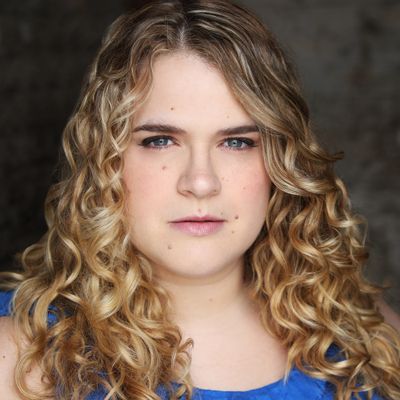
Bonnie Milligan stars in the hit musical Kimberly Akimbo at the Booth Theater on Broadway. The show began at the Atlantic Theater Company with Milligan winning the Lucille Lortel Award and getting nominated for a Drama Desk, Outer Critics Circle and Drama League award for her enthralling and utterly brilliant performance as Aunt Debra... Read More
From the show: When Lightning Strikes!
Guests
Featured Shows
About
Bonnie Milligan stars in the hit musical Kimberly Akimbo at the Booth Theater on Broadway. The show began at the Atlantic Theater Company with Milligan winning the Lucille Lortel Award and getting nominated for a Drama Desk, Outer Critics Circle and Drama League award for her enthralling and utterly brilliant performance as Aunt Debra. Bonnie's other credits include Head Over Heels, Kinky Boots and Search Party. Just this month the gorgeous "Kimberly Akimbo: Original Broadway Cast Recording" debuts on Ghostlight Records.
Transcript
This transcript was automatically generated and might contain errors.
[0:00] ♪ Musical number ♪
[0:25] Jeryl Brunner: Hi, this is Jeryl Brunner, and you're listening to When Lightning Strikes, where we talk about the tingly mic drop moments that led you to becoming an artist.
[0:38] Bonnie Milligan: Bali Milligan stars in the hit Broadway musical Kimberly Akimbo at the Booth Theater. The show began at the Atlantic Theatre Company with Bali winning the Lucille Lortel Award and getting nominated for a Drama Desk, Outer Critics Circle, and Drama League Award for her utterly brilliant performance as Aunt Debra. Bali's other credits include Head Over Heels, Kinky Boots, and Search Party. Just this month, the gorgeous Kimberly Akimbo original Broadway cast recording debuts on Ghostlight Records.
[1:23] Jeryl Brunner: Thank you so much, Bonnie, for coming on the show. It's a joy to have you.
[1:34] Bonnie Milligan: And especially Aunt Debra. I mean, I love all the characters, and they're all so lovable in their own complicated way.
[1:48] Jeryl Brunner: But can you take me to when you found out about Kimberly Akimbo? What went through your mind?
[1:58] Bonnie Milligan: When I found out I booked it, or when I found out they wanted to when you found out they wanted an audition?
[2:04] Jeryl Brunner: When you first heard.
[2:06] Bonnie Milligan: So when I first heard about it was the beginning of March of 2020. And it was one of those emails from my agent to say, um, just putting a feeler, would you want to audition for this? Um, we don't have dates yet or audition material. And I, you know, and they had attached the play for me to read. I had read it years ago before, but I thought, yeah, let me reread this. And it just made me laugh so much. And also it was very deep. So I thought, oh my gosh, I would love to be a part of this production.
[2:43] Jeryl Brunner: So for people who might not know about Kimberly Akimbo and what it's about, because it's such a unique show, can you talk about what the show is about and your amazing character Aunt Debra?
[2:58] Bonnie Milligan: Yeah. So Kimberly Akimbo tells the tale of Kimberly Lovaco, is actually her last name, um, who is a New Jersey teenager played by Tony Award winner Victoria Clark, who has a fictional aging disease that essentially ages her body four and a half times faster than normal. So she's a girl who's about to turn 16 who looks like she's in her 60s, and um the median life expectancy of this disease is 16. So putting that birthday upon us and a dysfunctional family and her own sense of mortality and what she has to do on this earth with what she has left, um, kind of gives this beautiful, hilarious, um insane new musical by David Lindsay-Abaire and Jeanine Tesori. Um, and I get to play her, you know, fun-loving con artist aunt who comes back into her life, um, who has a big scam she wants help with. And that sort of sets everything in a different motion than normal for Kimmy.
[4:12] Bonnie Milligan: Um, we have Steven Boyer, who's a Tony nominee, you know, playing her alcoholic father Buddy. We have the brilliant Ali Mauzey playing her, uh, narcissistic and you know, um, hypochondriac mother Patty, um, and a slew of new young talent playing all of her fellow teenagers in school, including amazing newcomer Justin Cooley, um, as her soon-to-be very good friend Seth. Every character is so rich, and even the ones who have, you know, questionable motives who are really messed up, you know there's so much love inside of them. I can tell even as flawed as dear Aunt Debra is, she loves Kimberly so much.
[5:04] Jeryl Brunner: Deeply, yeah.
[5:06] Bonnie Milligan: I said early on, I you know, and I kept asking David Lindsay-Abaire, I said, I see love here, right? Like, am I off track? Like, I think I deeply love her, and I would love to take that angle where she's not just some, you know, criminal, bad guy or whatever, that it's a survivor, it's someone who's been through some stuff, and no spoiler alerts, but something big really just recently happened, and she's gotta get out of town.
[5:35] Bonnie Milligan: And so the stakes are high, and um, I just need one quick scam to get me the money to leave. And um, and in this complication, I think I deeply love Kimberly. I said early on, I imagine how I play it is she's my favorite person in the world. She's probably the one person who doesn't just tolerate me but likes being around me, and um, and so it's and I have found amazing, amazing connection and friendship in Vicky Clark. So it's fun to get to play with her.
[6:12] Bonnie Milligan: And she's so convincing as a 15-year-old going on 16, which is so extraordinary, you know, when you think about that, and I think it's even as much as you were talking about you're talking about an illness, and there's that brilliant song, My Disease, and it's the most life-affirming show. It's about hope, it's about living your life, it's about joy, and I'm convinced at the end of the day, Aunt Debra in her way, tell tell me if you think this is right that she really thinks she's saving Kimberly in some way.
[7:01] Jeryl Brunner: Yeah, and I think I think in my own way, I'd said, like, you know, this is my version of parenting. This is my version of love, is to tell you you have to go out.
[7:13] Bonnie Milligan: I have this amazing number called Better. Um, when I first come out. And it's sure it's to try to get her to come in on my scam, but essentially it is a life lesson that you hear her repeat later, you know. Um, not just me, but Kimmy, that it really gets through that it's like if you want something, you need to go do it yourself because no one else is gonna do it for you. And I think that has been Aunt Debra's life experience.
[7:41] Bonnie Milligan: I come at her from a place of yeah, loneliness and pain that um I haven't had anybody really come through for me. And I think there's an important key in that of um victimhood, you know. Um, I've known some complicated people in my life and um who would never see themselves as a villain, or they're not like malicious, they just who have really hurt people because they are um hurting themselves and they're just trying to survive.
[8:11] Bonnie Milligan: And so that was always the goal is to just be human and we're flawed, and um we're doing what we can. And so I think at this point when we meet Aunt Debra, she's you know, got her back up against the wall and she's uh fighting to get out. Um, but in that first number to Kimmy, it is an act of love to say, babe, let's just, you know, it might be hard and weird, but it's gonna be liberating if you just don't wait for your train wreck of a set of parents to do anything for you.
[8:44] Bonnie Milligan: Um, go do it for yourself. I did. It's okay. And there's a lyric in Better. Oh my god, I could listen to that 20 times a day, and it wouldn't be enough. It's the best song. And I'm excited. Everybody's gonna get to hear it because it's uh the album, the uh original Broadway cast recording debuts this month on Ghostlight Records.
[9:08] Bonnie Milligan: You could hear it lots of you belting those incredible notes, the oh, the pathos, the pain, the joy, the humor. There's this one lyric that just I mean, there's so many lyrics in that song that just like that I have this guttural laugh that I can't no matter how many times I hear it, but even the lyric let me underscore that they were beautiful.
[9:32] Jeryl Brunner: Yeah.
[9:34] Bonnie Milligan: You're talking about rings that you kind of scammed your way to getting. That even that tells me so much about Aunt Debra to say the word underscore.
[9:46] Jeryl Brunner: Yeah.
[9:46] Bonnie Milligan: Am I reading into this too much?
[9:49] Jeryl Brunner: No, no, you're not.
[9:52] Bonnie Milligan: So I'd love to hear about your lightning strikes moment when you knew you had to be an artist. I know you tell me you grew up in the Midwest, right?
[10:02] Bonnie Milligan: In Ohio and Illinois, and sang as a child, and see you in church.
[10:09] Bonnie Milligan: Yeah, the singing, the singing was definitely always um that was a very early thing for me when I guess the lightning strike moment of like, oh, I meant to do this. Um, I remember I was very, very little. I was probably like, well, I I don't know. One of my very first memories, I think that it's very concrete about it. I was five years old, and the family was doing a group number at church, you know, and my mom and dad, my brother, and I.
[10:39] Bonnie Milligan: And I got to sing the verse. Uh well, they were gonna have my brother and I each sing a verse, and my brother didn't want to. And I said, I'll do it. I was five. And they're like, okay. And so I sang both of the verses. And you know, my mom and dad only came in on the chorus, and so did my brother. And I remember being like, Yes, me, I would like that. And you know, my brother was 10, and he just was like, ew no, and I said, Absolutely.
[11:10] Bonnie Milligan: And from being a very young age, having people come up to me and being emotionally moved by what I had done, and I thought I was just singing, you know, that I thought, oh, I I remember that sticking with me. I don't know that it was as lightning strikes as um the I get the verses. Um, but it was always something that you know was um it was always something that people around me really affirmed that there's a gift here and there's a calling here, and there's something special that you should pursue with it.
[11:46] Bonnie Milligan: And then when I was in fifth grade, I got the lead in the Christmas play at school. And what we used to do, it was a very small school. Um, it small towns together. So it was about 25, I mean, maybe 30 kids in a grade. And so we could fit the entire elementary school in the gymnasium, and on the bleachers, K through four would sit and do all the singing, and they would put, you know, folding chairs on the court, and that's where the parents and family sat.
[12:24] Bonnie Milligan: And then there was up, there's a stage at the end of the gymnasium, and so the fifth graders got to be the actors in the play. And then the whole school would sing. And so it was, you know, you sat in the bleachers until fifth grade singing the songs. And in fifth grade, I got the lead. I got to be one of their two elves who saved Christmas.
[12:44] Bonnie Milligan: And I was Georgina. And I just remember being like, oh, okay. This, yep, okay, yeah, that's it. And being so excited. And there was comedy with it, you know, and making people laugh and thinking, oh, wait, this is what I'm gonna do.
[13:01] Bonnie Milligan: I'm gonna be an actress. And I'm gonna, you know, we'll always sing and stuff like that. So those were kind of my childhood like lightning moments for sure. Do you remember what it was? And was this a play that they wrote? This Christmas play where you got to be the elves. I mean, I think it was, I'm not even sure the name of the show, but it was I feel like there's probably, you know, some titles that people have written for of shows to like give to elementary schools, you know, around the country that aren't like actual like big, big titles. I feel like it was one of those. I don't know if it was any of our people that wrote it. Um, but it was definitely an original piece with lots of choral numbers for the rest of the school to sing, and then um, us to get to act, and um yeah, so I'm not even sure the title of the show, but I just remember being so excited, and the joy of getting to be on the stage acting was my first time doing that. I'd sung a bunch, but I'd never like done a character, you know, I'd never not been myself. And I remember just falling into that and falling in love with the make believe of it all.
[14:25] Jeryl Brunner: And then I read that you from there ultimately got to Ohio State where you got to study theater. And that's really and how did you go from and then at Ohio State that that's where you really found your scene or that's where you got your training? Is that right?
[14:45] Bonnie Milligan: Yeah. So um I grew up for the first part of my life in central Illinois, and then I moved to Ohio when I was 16. Um my parents had divorced, my mom uh was remarried, and that's where her husband sells uh my stepdad sells farm equipment. So it was an area where he could open up his own um shop, store, business, you know. And my dad had been from Detroit, so my dad went back to Detroit and we went to Northwest Ohio. And so when it came time for school, Ohio State, you know, I I got the most money offers from them. I was a very good student, and I kind of begrudgingly went. I thought, oh, I wanted to go to conservatory and we didn't have much money, so that you know, didn't feel as viable. But um I ended up loving it because it was really an amazing, it was just an acting program.
It wasn't musical theater. I feel like I developed a lot as an actor. It was also a big emphasis on new work. So I developed as a writer also, and I just think that critical thinking and the dramaturgy of it all has made me a better actor also. Um to think deeply about how things are working or you know, what motivations, et cetera, are behind things.
[16:07] Bonnie Milligan: And so it was there. I I'd taken, I was in a couple choirs while I was there. Um I did a gospel choir, did a concert choir. Um, I took voice lessons for one uh quarter or semester from a TA. And but it was through the Kristen Linklater voice technique class that we were all trained in as actors uh for speaking, that I was learning about my resonators that I was learning. Oh, wait, when I warm this up, this kind of sounds like belting. And so I developed as my singing voice, even separately uh there in a non, you know, singing training program. Um, that I branched out as an artist during college, um, finding my own way of like my own sound. And um, yeah.
[17:01] Jeryl Brunner: I love that. Is it hard to describe or put into words how singing makes you feel? I mean, I know how I feel when I hear you say, you know, it it's it's like it goes through you. It's like it's exciting. It's but how does it make you feel?
[17:18] Bonnie Milligan: Um for me, you know, because it's something I've done since I was so little, and I'm not the most super trained of singers, um, that I'm very instinctual. And, you know, I've taken things I I know clearly how parts of my voice work, the different trainings I've had over the years, um, that it feels very freeing. It is very um I've I always said I feel like music was one of the first languages I spoke. And so it feels the best way to possibly express I myself. When I was when I first moved to the city, I I did some temping, but then I also waitressed for like six years. And I wait waited tables at landmark at the time Warner Center in Columbus Circle, and I would leave a shift, and sometimes it would either it could be a great shift and you're like in a good mood, it could be a horrible shift, and you are so sad that you're not that you're doing this and not what you're so desperately wanting to do.
That there was a karaoke room place on around the corner on 53rd Street in 8th that I would go to, and I would so I would sometimes usually if it was a good mood, I would ask, I had a couple co-workers. One of them right now has made his own Broadway debut splash, Kennedy Kanagawa, who was Milky White in the Into the Woods revival. He and I were yeah, we're waiting tables, and our dear friend um Jefferson, the three of us would go and rent a room at Private Karaoke and just sing. And sometimes it was a celebration thing, and sometimes if I was having a horrible day, I would go and rent the room by myself and I would just sit there and sing as catharsis, as I I just need to get this out. And it and it was just it was for no one.
It was for me sitting alone in a room singing some karaoke. And again, if it was a good time, or even oh, there was many days they were like, I'm having a horrible day. Do you want to go karaoke? Yes. And that's where Kennedy and I and our friend Jeff would go and get a room and uh do some duets and do so, and then you like, you know, you either turn the day around or you let it out or you celebrate.
[19:48] Bonnie Milligan: I remember when I booked Head Over Heels when I found out it was going to Broadway going, and you know, them putting in the go-go's and being like, oh my gosh, I'm gonna do this on Broadway. Like it would spin everything. So that is singing for me. Um, that it is getting the deepest parts of myself out, you know, vocally, and um, when it's the character and when I get to do it in show, it's amazing. It's always an extension of where the character's coming from because that is what singing is for me, is an extension of my emotional being. And that is also what musicals are, right? They always say if you can't speak it anymore, you have to sing. And that that is what's amazing about this piece is it's beautifully written.
So I it's just not a stretch to find out why I'm singing something. It is your next move would be to sing. And that's why also I think it sounds as complex and varied as it is, is because that's the journey of um this character and uh the brilliant Jeanine Tesori, that it's not all belting, it is lots of it's sly, it's like getting somebody in on something, and that you know, um that it's amazing to work with her on that.
[21:09] Bonnie Milligan: I I think about the song "Take the Turn," you know, when you're at the inevitable turn, yes, yes, and uh, and how subtle it is, and it's yeah, it's quiet, and it's so it's so real and human, and how you're all having it's it's you think how can you express a song where everybody, all the characters have an inner life, and Lily Creswell, you know, and yeah, forgive me, I said the wrong title. Yeah. Oh, you're fine, "Inevitable Turn" is what it's called, but you got it. Inevitable it's yeah, it's essentially like I mean, in a complicated family when you're like, this is going great, but it's gonna turn, and when's it gonna turn? It's gonna it's gonna, it's gonna have to. It's inevitable. Um, that it is sly.
I remember early on, you know, we got a note from our music director, like even lighter, lighter, like to us singing it. He's like, it should just feel conversational. It should feel like don't sing it. Don't try to be like, because I remember there was an instinct to me to be like, um, never do to like be a little bit more biting, not like super loud, but even biting in my approach. And he's like, but it hasn't turned yet, so don't. And I'm like, okay. Like it's so it's brilliantly thought out um by everyone. Um, and Chris Fenwick, who is our music director, works so closely with Jeanine Tesori all the time that like he is such a storyteller, and the way he plays the piano and conducts the show, you know, like that. Um, all right, we've got this story to tell. Like it hasn't erupted yet, so pull it back, pull it back. Okay, okay.
[22:57] Jeryl Brunner: It's such a distinctly unique show. I mean, every song is a gem, is is a masterclass, you know, between Janine, your music director and David Lindsay-Abaire, you know, this uh this and then your voices and it's extraordinary. And I I um have read that you grew up seeing Whitney and Mariah and Reba and Celine and learned the lyrics to "Fancy" when you were a kid and that you also discovered that you were singing "Fancy" as a child.
[23:37] Bonnie Milligan: I love that song. Um and that you discovered show tunes early on. Um what or or Broadway cast albums? What cast albums did you discover?
[23:50] Bonnie Milligan: Um I mean, there were there were so many, you know, it it was always fun to like go to Barnes and Noble when uh an album would be released that you get to like go and kind of like hear and read a read the booklet to see what it was about, you know, um, back in the day before streaming. Um, but you know, I fell so in love with Ragtime and The Last Five Years, Songs for a New World, um, The Wild Party, both of them. Um I remember hearing uh "Take One Step" from Lippa's Wild Party that had Brian d'Arcy James. It was just some of the best acting I've ever heard on an album, you know, without ever having seen the show, I knew exactly what his emotional life was, being so inspired. Um Thoroughly Modern Millie, my mom brought me to the city to see as a teenager, you know, for my birthday.
And now here I am working with Jeanine Tesori, you know, like that's that's amazing. And when I when I first moved to the city, we were driving, and I had my mom and stepdad were driving me in, and I played uh "Not for the Life of Me" from Thoroughly Modern Millie as we were like coming into the city. And I just thought, you know, like this girl leaving a one-light town where the light is always red. It's felt so real. You know, we had very few stoplights in the town I was coming from, and going to the big city. And so I played that as we drove into New York for me to move here. And now I'm on Broadway doing an original Jeanine Tesori show. It's incredible and full circle and um yeah, very much.
I love that full circleness of it. And what was it like to record the cast album? I mean, here you are. I love that you originated the role in Head Over Heels and now originated you know, Aunt Debra in Kimberly Akimbo. But what was that like to be on the cast album?
[26:03] Bonnie Milligan: I mean, it is such a special dream come true kind of thing. I think when we did the Head Over Heels album, it was over the course of two days. I was so busy and I was so exhausted, and I took a video of myself, like I sent it to a friend, but I had just got out. I took a cab home that night and I got out and I was recording myself and I said, I'm so tired, but I'm really proud of myself. I can't believe that happened. And I was crying. And that's so much of it. And this, they split us up over two days. Um, we've recorded part of it in October. We were in previews, or we were maybe we were in tech. We hadn't even started previews. And then the other part in December, in case things changed in previews, etc. And it's just a magical, beautiful thing.
And to get to do the show with so many Broadway debuts and um even people who've never been on an original Broadway cast album before, who have been on Broadway, you know, and it's just like the specialness, the dream come true-iness of it all is not lost on me. And I just remember, you know, telling the younger people, especially who were these Broadway loving kids, take this in, like you're on an original Broadway cast album. Like that's what's happening right now. And to sit in a room and across the room in a booth is Victoria Clark and seeing uh, you know, a piece of paper, we all had our names around our things, and it just, even though we're very good friends now, to see a piece of paper that says Victoria Clark, and there she is in a recording booth, and then to realize I'm recording an original Broadway cast album with Victoria Clark is like overwhelming and beautiful.
I mean, there were times off Broadway that I would just sit there, it was just her and I on stage in a moment at the end of Act One, and I would think sometimes I would snap into myself, you know, and think, I'm on a stage with Victoria Clark right now. Wow. And then I'd have to, you know, go back to like a Deborah World. But um it's magical. And again, I I said to I've I pulled, you know, Janine aside. I've I've told her the story of playing Thorley Modern Millie like through tears, as I'm like, this is just really amazing. Like I'm a theater loving girl at heart who is getting to do it. Like I hope I never, I hope it's never run of the mill and normal. I hope it's always magical and pinch me.
[28:51] Jeryl Brunner: I ask you, what so what kept you other than doing karaoke, which I love, what can when you were a struggling actress, the performer, you know, going on auditions, waiting tables. What kept you going? And and what was the one of the first professional gigs that you got?
[29:13] Bonnie Milligan: I think I have always had a very supportive family, to tell you the truth. They never once were like, maybe you should do something else. I was a very, very good student, um, straight A's. And here I went into this business that uh, you know, is not the most stable. And it's like, you could have been a doctor. What's wrong with you? No, at this point, I'm like, absolutely not. Um, but they always really affirmed this, like there is a calling on your life, and this is something that um you're meant to do. You're just meant to do it. And so, you know, a lot of teary conversations with my mom if I didn't get something, or you know, there were things that happened even during the pandemic. Uh I that I I had been a part of developing um some things like for television, or that I thought was gonna go my way.
And then pandemic, there were different rules that happened, so I couldn't travel, I couldn't go do it, and the disappointment of even just something that was going to happen that couldn't anymore. Or she helped me with a bunch of self-tapes during that time, and she was like, How did that not happen? How did you not get that? I'm like, because that happens, Ma. And she's like, but you were great. I'm like, yeah, you know, it's okay. And to kind of re-see it through my mother's eyes was so interesting in my 30s, you know, to sit there and have someone experience that you just have to, it's not about you, which is a long lesson to learn. And that was part of learning it through all the disappointment is to try to tell yourself it's not personal, it is something else.
Um, and to go karaoke and then to talk it out with my friends and call home and you know, the support system is the only way I could have gotten through everything. Um, and people who love me for beyond what I can do on a stage, but know that that isn't who can remind me that that is not my entire worth as a human being is what I can do. Um and so it it's it's a lot of that, you know, there was some therapy there for years as well, um, just to help me figure out all of that. Um, and then you asked one other question.
[31:38] Jeryl Brunner: So your first professional job when you got to New York.
[31:41] Bonnie Milligan: Yeah. Um, I did some community, it's a community theater that is really sweet called the Village Light Opera Group down in Tribeca. And that was the first show I did in New York. Um, and then I my off Broadway debut was in a show called Cuff Me, the Fifty Shades of Gray Parody Musical. And it was just four of us. It was um non-equity, but it was officially off Broadway. I just remember it was the first thing on like the first show I had done that was listed on Playbill, you know, that I was like, oh, it's not off off, it's off. Um, and then I guess the the next step up was officially uh an equity production, but they could use some non-equity members, which is me and there was Jasper in Deadland, which is where I met Matt Doyle. Uh it was a Ryan Scott Oliver musical we did with Prospect Theater. Um, and then I got my equity card doing the first national tour of kinky boots, and so that was kind of um the steps along the way. Yeah.
[32:50] Jeryl Brunner: And can you just take me to when you got Head Over Heels? Because that was your Broadway debut and what went through your mind. That was the take me to that point where you heard yes.
[33:01] Bonnie Milligan: I was a member of um the flea theater down in Tribeca, and a guest director was named Ed Um Sylvanas Discandar, and he would do these epics. And so it was through those I made a bunch of connections. And um, Jeff Whitty, who originally conceived and wrote the book of uh Head Over Heels, the first part of it, he saw me there and was inspired. And so he and Ed were putting together a reading and um asked if I would be in it. And I was non-equity, I had no agent, and um I was like, okay, sure, this new musical, great. And that was in I think May of 2014, April or May. It was right before I left to go on tour. And um, so we did we'd done the reading, it went great, and then I was on tour, and they were setting uh a world premiere at the Oregon Shakespeare Festival in 2015.
And I got the call that they would like to keep me with it. So I um did the tour for about eight months, then I left to go do Head Over Heels, the Oregon Shakespeare Festival. And then, you know, many things happened where it seemed like okay, I think that's it. That's the journey with the show, it's done, and it was beautiful, and I'm I had an amazing time and I'm sad, but that's probably not gonna happen. Okay. And I came back to the city. Um, I did an off-Broadway show, and I found out in early 2016 that they were going to bring the show back. And this time it was uh with all new people except for me, which was a crazy thing. Um, and Michael Mayer was on board to direct, and um so in the summer of 2016, we went up to Vassar to work on it.
Anyway, that's like these were the long steps of the journey. And now I'm equity finally, you know, I have an agent, all this stuff, and um we did a lab, which means four weeks of work on something in January of 2017. And it was not till the end of 17, it was, I think it was October of 2017, I got the call. We're going to Broadway. And I thought, oh my gosh, you know, all these years from the first reading in 2014 to now, and it's actually gonna happen, and you think it's gonna happen and it's not, and it's just a big roller coaster. And they announced that we were going to go that summer, I think it was January of 2018. They made the announcement, and then we were on Broadway, we were went to the current in San Francisco first, and then we went to Broadway uh that summer.
And it was many things, right? It it was a culmination of years of work on this thing, and that I had really gotten to develop and create and uh work with, and there was a lot of hardship attached to that and a lot of joy attached to that. And most importantly, I was gonna get to be on Broadway, which is something I had been longing for for so many years, and to get to do it in a role that I had really, you know, created from the ground up with everyone was just a cherry on top. And so that it was a multitude of emotions when I found out it was actually happening. Like a part of me kept waiting for the rug to be pulled out from under me. I was like, it's not gonna happen. Because I thought this for years, it's not, it's not.
And so when I was with my best friend, when they announced it to like a crowd, the go-go's were playing a show, and they announced it to the crowd, and we we got to go on stage and be with them for a number. And I came and I saw my friend, and we looked at each other, and he's like, Bonnie, it's actually happening. And we both burst into tears because I just for so long was like, sure, okay, I'll believe it when I see it. And it just was one of those culminations of, oh my gosh, you've been putting in the work and the hope for years and years, and um, it's actually gonna happen. And so it was many, many feelings.
[37:20] Jeryl Brunner: Oh gosh. Yes, for it to finally happen after all that, those years. People don't realize it takes it can take seven years or longer for a show to get a musical, especially to get to Broadway. And is there a role that you're aching to play? Or has it is it yet to be written?
[37:39] Bonnie Milligan: I mean, there's plenty of things I've always said that are like later in life kind of roles um that are very, you know, the song time of it all. I would love to do some song time, anything. Uh throw me a bone. I'm I'm ready. Um, but I would I'd love to be Mama Rose one day, and I would love to do a Mrs. Love It. I would love to do um yeah, many things that I'm like I'll I'll age into that later. But um, and then just a new show. That's that's been such a joy to have two times I get to originate it. So it's more about working with exciting artists for me. Um, at this point, yeah.
[38:24] Jeryl Brunner: Bonnie, it's such a joy to see you in Kimberly Akimbo and to have you on the show. Thank you so much for coming.
[38:32] Bonnie Milligan: Thank you for having me. This has been so lovely. It's so lovely. Have a wonderful day.
[38:39] Jeryl Brunner: Thank you, you too.
[38:41] ♪ Musical number: "We're Lightning Strong" — performed by Tom McGovern ♪
[38:49] Jeryl Brunner: This episode was edited by Kyle Moore.
[38:52] Jeryl Brunner: This episode was produced by Anna Strout.
© Broadway Podcast Network, All Rights Reserved