

Joel Thurm is known as one of Hollywood's most accomplished casting directors. He played a key role casting some of the most important shows and films including Cheers, Hill Street Blues, Taxi, Grease, Airplane!, and The Rocky Horror Picture Show... Read More
From the show: When Lightning Strikes!
Featured Shows
About
Joel Thurm is known as one of Hollywood's most accomplished casting directors. He played a key role casting some of the most important shows and films including Cheers, Hill Street Blues, Taxi, Grease, Airplane!, and The Rocky Horror Picture Show. He has worked with celebrities ranging from Judy Garland, Pearl Bailey, and Ethel Merman to Ted Danson and John Travolta. His new book is Sex, Drugs And Pilot Season: Confessions Of A Casting Director.
Transcript
This transcript was automatically generated and might contain errors.
[0:00] Joel Thurm: From Shakespeare to Schwartz, from Fawcy to Alvin Elley. From San Tom to Burelis, from McNally to Faye. It happened to the greats, it still happens every day. When lightning strikes is the moment you know when lightning strikes, where your mentor goes, you can stand in Chalureka. Do whatever you like. You'll never forget the moments when lightning strikes.
[0:25] Jeryl Brunner: Hi, this is Jeryl Brunner, and you're listening to When Lightning Strikes, where we talk about the tingly mic drop moments that led you to becoming an artist.
[0:38] Jeryl Brunner: Joel Thurm is one of Hollywood's most accomplished casting directors. He got his start in theater with the legendary producer David Merrick. He went on to play a key role casting some of the most important shows and films. Just a few of them include Cheers, Hill Street Blues, Taxi, Grease, Airplane, and The Rocky Horror Picture Show. Joel has worked with countless celebrities, including Judy Garland, Pearl Bailey, Ethel Merman, Ted Danson, and John Travolta. His book, Sex, Drugs, and Pilot Season: Confessions of a Casting Director, was just released. Welcome, Joel.
[1:33] Joel Thurm: Well, thank you. Thank you for having me here. It is a joy to have you. I think about, I mean, you had me at David Merrick, and then your career just goes on and on, and on. And then it's told in your beautiful blue book. Congratulations on that. I'd love to start with how your lightning strikes moment when you knew you had to enter this crazy field.
[2:05] Joel Thurm: I think about that when I knew that, you know, this is what I wanted to do. But the word this I'm using very amorphously. I didn't know exactly what or how or what area. And it was when I was going to college, my first year of college. I, as a classic underachiever, was sent to one of the city schools with a so-called program for classic underachievers, which all it meant that you'd only had to take 12 credits instead of 16. They wouldn't let you tell the full schedule. But I joined the theater group at Hunter College uptown, this is in the Bronx, an hour and 45-minute commute from my family's house in Brooklyn, because I couldn't get into Brooklyn College, which is 20 minutes away.
[2:58] Joel Thurm: So, but I was told that if you want to make friends, the easiest way to make friends is join the theater group. And so I did. And I found out a couple of things. I found out I was a terrible actor because all I cared about on stage is what I looked like and how I came across. I had nothing about technique or acting, you know, none of that stuff. I just was worried about how I looked. But I think it all comes down to one night, and I don't know what play we were doing, but we were, because in addition to acting in the plays, we built the sets, we did the lights, we did everything. And it had gotten so late that I just crashed on a pile of red velvet curtains backstage. Very comfortable bed, by the way.
And I realized I really like what I'm doing. I like building sets, I like playing with the lights, I like not so much acting on stage, but I like this area. And this is the area that I'm gonna work in. What part of it, I don't know. But I didn't give up my ambition to be a star, but I figured I could be a star backstage on the other side.
[4:08] Jeryl Brunner: And what were some of those early productions you were in?
[4:13] Joel Thurm: You mean the college? Yeah, okay. Well, God, Death of a Salesman. Every school does that. Wait a minute. There's this one. Who'd you play? Oh no, Death. Oh, who knows? I don't even think I think yes, I know what I did. I was a spotlight. Okay. Death of a Salesman. I had to zero in on the poor wife at the end of the show. Dark of the Moon was my final where I had to sing down in the valley while strumming a guitar. But my, I think the moment on stage that changed everything, which also is a good answer to your previous question. We were doing a Juno and the Paycock play. Juno and the Paycock play takes place during the Irish Troubles. And my character came on in the second act. He was IRA Man number two.
I wasn't even number one, I was number two. So all I had to do basically was like we were like policemen or vigilantes, come on stage, grab the hero, drag him off stage, and say a line or two. This is 1930s, and like I said, didn't come on until the end of the second act. So I had the entire first half hour before the show begins to prepare, and the entire first act, and the entire second act to fiddle with makeup, with costume, you know, and so all the things I learned about stage makeup, where you put a dot here and a dot there, and you color this and you colored that. And the costume was a 1930s trench coat with the collar, excuse me, with the collar up, and you know, the fedora that goes down over one eye.
And I had all this time, and for some reason I just kept squeezing the belt. So IRA Man 1 and 2 go out on the stage, and my big line was, "You're coming with us." So grab the guy, the two of us, "You're coming with us," and drag him off stage. At the end of it, the director, Dr. Marvin Siger, gets the whole cast together and gives notes. And when he got to the end of the second act, my note was, "And Joel, you're supposed to be an IRA man, not Lauren Bacall." Now, think of the trench coat, the hat, and all of that. He wasn't far off, but I was effing devastated for a moment. I was so embarrassed. And, but that was the moment I knew that I was not going to be an actor, but I still loved everything about the theater.
[6:55] Jeryl Brunner: I see. And I love your trajectory. So that, I mean, because it was kind of how you fell into all these places at the right time, and you kept saying yes. And do you want to fast forward to Italy? How you ended up in Italy, which led you back to New York, which led you ultimately to David Merrick. But you tell me where in that timeline.
[7:22] Joel Thurm: Well, I mean, college went along until I accidentally flunked out of college. When I say accidentally, I was spending so much time with the theater group, I asked to be excused from a chemistry class. Now, mind you, in high school, I got A pluses in chemistry in all the sciences. But I got to college, I just really didn't care that much. And so I withdrew from a class and I thought I was gonna get a withdrawal without any prejudice. Instead, I got a withdrawal failure. Nobody withdraws if they know they're gonna get a failure because you take the final and if you get a D, you pass. And which went along perfectly with my average, which hovered around C anyway. So I failed, I flunked out. And I didn't have, I didn't know what to do.
School had always been my anchor up to this point. And this is right after the first semester of my sophomore year. I was very, very interested in mythology. I read every mythology book I could find. And so I said, "All right, well, fine, look, I'm gonna go to Europe. I'll either go to Italy or Greece." And I, because of the mythology thing, and I figured I could learn Italian easier than learning to speak Greek, because I was already a pretty good French student. And so that's what I did. I went to Italy, called myself an actor looking for work. All my college theater acting became what do you call it, credits that I had. And just through circumstance, I met this guy named Guidorino Guidi, who was Fellini's assistant, and he was also a casting director in his own right.
And basically he gave me three jobs, you know, but they were glorified extra jobs, but they were work. But I loved Italy and I had many adventures in Italy. You know, I had a, what do you call it? Did you know the movie Call Me by Your Name? Which I never understood the title. Well, I was a 19-year-old kid in a very similar situation and started a relationship with an architectural student, an expat. And when he left Rome to go to the Università Pistanieri, I trailed him into his classes, and then, you know, time was running out, but we remained great friends. So this is, I'm getting way off topic and should come back. But eventually I ran out of money and I made a deal with my parents that they'll send me a plane ticket back if I go back to school and get my teacher's license because a teacher's never out of work if you're, you know, have depression mentality.
So I did come back, got my, moved into Manhattan after a while because I was able to cobble together a few jobs and, you know, share an apartment with someone, so I didn't even have to stay at my parents for most of that time.
[10:29] Joel Thurm: And anyway, that summer, and I probably being long-winded here, let me go back a bit. The first summer of before I flunked out, all the kids in the theater group were looking at backstage and variety and other newspapers to try to find acting jobs. I didn't care about an acting job, I just wanted a job. And I got the job as box office treasurer of the Tappensee Playhouse in Nyack, New York. And it was a part of these star package houses that ran up and down the East Coast. Do you know what a star package house is?
[11:07] Jeryl Brunner: Or explain it.
[11:08] Joel Thurm: Explain it? A group of theaters get together and produce one play, usually or a musical, something that recently closed on Broadway. So, like say eight theaters chip in to do the production, and the show travels from theater to theater to theater. Each theater builds its own sets and lighting. The only thing that travels are costumes and certain props that you could never find, and the actors. So it's in every place is new. And I was the box office treasurer. And one of the things that helped me for later life was all the phone calls for the entire place came through the box office. So I would talk to agents or agents' assistants, not wanting to talk to me, but wanting to talk to my boss upstairs. So during the, "Can you hold for Mr. So and So?" me and the other assistant would be chatting. Later on, many of these assistants became big agents themselves in New York. So when I moved up the ladder a little bit, I knew who all these people were.
[12:15] Joel Thurm: So now I find myself in Summer stock. And also when I came back, I also found, oh, so I come back from Rome, and this time I finagle it so that I don't go to Hunter College uptown in the Bronx, but I go to Hunter College on Park Avenue and 68th Street, which at that time was an all-girl school. And so I like to say there were 8,000 girls, 46 boys, and myself. And what was great about that place is they paid me to build sets. So I had like a scholarship. Girls did not build sets in the mid-60s. They didn't do things like that. So that's what I did. And I think Hunter College did it something else by it was a mistake. Instead of having the women portray men's roles in classic plays, they hired professional actors, off-Broadway actors or off-off-Broadway actors.
And that's how I met Neil Flanagan, Lanford Wilson, Lance Wilson, and Michael Powell. And I started hanging out at the Cafe Chino, which is the beginning of the off-off-Broadway movement. And you know, it's like you get work by meeting people. And so through people at the Chino, I met Dick Barr, who produced all of Edward Albee's plays, and through him his general manager. But his general manager, Michael Castan said, "Music fairs is looking for someone to be assistant manager of Westbury Music Fair. Are you interested?" I said, "Yeah, why not? What about, you know, I've nothing, why not?" So I did it. But at Westbury Music Fair, I got to work with, like you mentioned, Judy Garland, Nina Simone, Bill Cosby, and we also did some plays there in addition to concert things.
[14:14] Joel Thurm: So how did you get to David? Because I love the story of how you got to David Merrick, working for the general manager for David Merrick, and that you saw Brenda Vaccaro and would talk here.
[14:26] Joel Thurm: Well, no, the same way that I got the job at music fairs was from this man Michael Caston, who was Richard Barr's general manager. And he called up and said, Jack Schlissel, who he said there's an opening in the Merrick office for the assistant to the general manager, a business position, not a creative position. I went up and I interviewed and I got it. I mean, it was great, but it was a business job. And the guy I worked for was a real hard ass. And he expected me to be a real hard ass as well, which I'm not. I mean, he would threaten and follow through on a threat. You know, it's just not me to do that. But what happened was because the office was only two short subway stops from my house, I always got there early.
And there were no coffee machines at that time in offices. So I would bring up coffee and bagels and Jack, his name was Jack Schlissel, Jack and I would talk and I'd tell him what I'd seen the night before, be it a movie, a play, or like if one of our understudies was going on, and this particular understudy, she was understudying Brenda Vaccaro, who was in Cactus Flower. So Brenda's understudy went on. And I watched, and she was very good. So the next day I came in to Jack. I said, you know, so and so went on for Brenda, and Brenda's gonna leave in another couple of months. I said, this woman was very, very good. She got all the laughs. And I'm sure she'll be a lot cheaper than Brenda. And I think he heard the word cheaper more than anything else. So indeed later on, the woman did get the understudy was moved up.
[16:10] Joel Thurm: But you know, out of the blue, a few weeks later, Jack calls me into his office with a get in here. I got in. And he said, Look, I can't stand working with you anymore. So you got a choice. You can go work with Biff Liff in our production department, and that's the area I really wanted to work in. You can reopen our casting department, become our casting director with a $50 a week raise, or you're fired. You're out the door. And I said, Jack, I don't know anything about casting. And he said, Yes, you do. You just don't know you do. And that's how I became the casting director for the most important producer in New York at that time, without any—he was right. I did know all those years of watching television as a kid, going to Saturday morning kiddie shows at the Biltmore Theater, you know, in East New York, and then being allowed to stay for the adult shows, you know, and being an unathletic kid in Brooklyn.
I wasn't a sissy, but I just if something involves a hand, a ball, and an eye, I can't deal with it. I just have no coordination that way. So I would go to the library, I'd listen to musical comedy records. So I had immersed myself. I actually set myself to school all those years up until this point. So I did have a filing cabinet up here filled with actors.
[17:41] Joel Thurm: And for people who might not know who David Merrick is, can you say—I mean he was one of the most important producers of his day. Just name a few.
[17:50] Joel Thurm: Well, no, I wouldn't say one of them. I would go a step further. In the mid-60s till mid-70s or early 60s into the early 70s, he was the most prolific and important Broadway producer. When I started work, there were a total of 12 shows. That's counting shows that were doing national tours, but 12 Broadway shows, some on Broadway and some on tour. And you may have heard of some, you know, Gypsy, Dolly, Rosencrantz and Guildenstern Are Dead. I mean, it was a combination of really good plays and musicals. So here you were. So I became the pinnacle, and you were in, you know, so I became company manager of Hello Dolly, which was then starring Pearl Bailey in the role. She was the fifth Dolly. And part of my job was really to keep Pearl happy.
And because she was in the city alone, her family was back in California, and we just hit it off. She adopted me as her son two to three nights a week. We would go to Sardi's, she'd take me to dinner or a late-night supper. And I just liked her. There was something, you know, but a bond was, you know, come on. Watch star of all right. All right, here's a story, a Pearl story. I'm sick. I had amoebic dysentery actually, and I wasn't at work. And there's a knock at my door in my village apartment, and there's Pearl completely dressed up, holding several packages along with her assistant, Dodie. And they brought all the materials needed to make chicken soup and all the cleaning materials needed to clean my apartment.
And I went and I went back on the chair that I was sitting in, fell asleep. And a few hours later there was warm chicken soup on the stove, and my apartment was clean. I mean, this is not diva behavior. Pearl Bailey. So and then such a talent. And then, you know, and yeah, and so then later on, so this was in the beginning, and then I became casting director. So I no longer had to be at the show every night like I used to, but instead I started doing all the replacement casting for all the existing Merrick shows and a few new ones. So that was that. And then Pearl asked me if I wanted to come to California to work on her TV show, and I said, Great, what job would I be? I said I'd like to learn television production.
And so I just knew well, I can—it's easy to sublet my apartment. I knew where I could stay in California. My best friend moved there two years before, and I knew he had a very large house, I could have the whole downstairs. So all I'd have to do is rent a car and bring some clothes. So I said, sure, I'll do it. And that's then began phase two, California.
[21:00] Joel Thurm: So I mean, I don't know where do we begin? What can you talk about some of the early shows that you were casting for TV?
[21:10] Joel Thurm: Well, it worked. At first when I got to California, I was doing Pearl's show, yes, which is an old-fashioned variety show. Very old-fashioned variety show that was dead on arrival because it was so old-fashioned. And Laffin had just aired, who had started to air a year before, and the whole concept of how to do a variety show changed. So we were over in 15 episodes. But don't ask how or why, but I made a silly but wonderful and smart move was while I was working for Pearl, I bought a house. Because I was told, well, people buy and sell houses in California. I mean, you don't have to be a family, you know, it's like you want to go back to New York, you'll sell the house. You know, it was that easy.
Except I had started fixing up the house and had torn it apart. So I couldn't sell a house as a kit. Here are the pieces, here's how you put it back together. So I was stuck, and I went around, I said, okay, well, here I'm David Merrick's casting director. I'll get a casting job. No one would hire me. No one. I couldn't get arrested. Until I met a woman by the name of Ethel Wynant, who was head of casting for CBS, a very, very, very smart woman. And she hired me. I mean, I met her through other friends, and she was very impressed that I was Merrick's casting director. She knew what that meant. And so I started working for her. I joined her, and this is a time when it doesn't work this way now, but CBS had a casting department consisting of five people.
We actually cast shows for other companies that were not CBS companies, and they would pay CBS for our services. The best example was the Mary Tyler Moore Company, MTM Company. So Ethel herself single-handedly cast Mary Tyler Moore. Brilliant woman. And at a time when none of the men at CBS at that time wanted to do that show and in fact hated it. And Ethel, there's someone we should write a book about what she did. Single-handedly she cast that show. And then I got to cast Bob Newhart. So I started with Bob Newhart. But my deal was because I was getting paid so little money that I was allowed to do outside work as long as it didn't interfere with CBS. Because I was the low man on the totem pole.
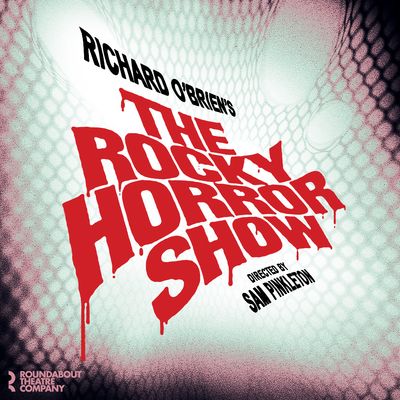
And a friend from New York who had also moved out was a general manager. And one day he hands me a record. We're going to do a production of Tommy. You want to cast it? I said, Well, yeah. But he hands me the record, and I said, Well, it's a record. How do you cast from a record? And he said, Well, you figure it out. So we did a local production of Tommy that managed to run for like six months, which is very unusual. And the star of it was Teddy Neely, who later went on to do Jesus Christ Superstar, the movie. And this is now we're now at around 1974, and I've given the job, or another Brian is managing this company. He says, there's a show called The Rocky Horror Show. And I'd heard about the Rocky Horror Show from friends who had seen it in England.
And a man named Lou Adler bought all the rights. And did I want to cast the Rocky Horror Show, the first US production at the Roxy Theater in LA? And I did. And out of that came Meatloaf, who was in New York. We found him in New York. And Tim Curry was the only one allowed to come over because he's irreplaceable in that role. But the rest were all American actors. And then immediately after the play, Lou Adler was gonna do a film. And again, I was asked to cast it, just the Americans. So the Americans now would have included Meatloaf, who had already done this production. But when it came to Brad and Janet, I had to cast them.
[25:38] Joel Thurm: Was Meatloaf a star when you cast him? No, Meatloaf is a complete unknown singer who walked into an audition in New York. And you know, regular, nothing spectacular. He had an agent, and the agent sent him in, and whoa, the first the physicality and then the voice. So that's how he was cast. And then he was so good that he was gonna be part. In other words, the movie was gonna be all Brits, original Brits who did the original show, except for Meatloaf and then Brad and Janet.
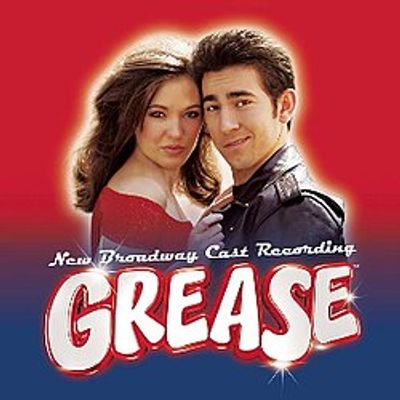
[26:14] Joel Thurm: I wanted to talk about Grease.
[26:17] Jeryl Brunner: Please.
[26:18] Joel Thurm: Because there's a great—and I love that Olivia Newton-John insisted, insisted, a star insisted on a screen test.
[26:29] Joel Thurm: Well, you gotta remember she was a pop star. Yes. She wasn't an acting star. And she was terribly worried because she had done one movie where she thought she was terrible and was embarrassed. And she didn't need to be embarrassed again because her stardom was even more at this point than it was when she did that movie. So she also was a few years older than Travolta. And there's several things. So I mean it's the only time in my whole career that I'd ever heard of an actor asking for a screen test. And I thought that was a very wise move. But that screen test led to something else. So we're doing a full-scale screen. I mean, not a little cheapy in front of a little, you know, handheld video camera.
This is a full studio production on film, and we're doing the scene at the drive-in with the car, and we're using the movie script. And the first take, no laughter. Second take, no laughter. And when the crew isn't laughing at something that you know is funny or supposed to be funny, you've got a real problem. And I pulled out a copy of the musical play script that I always carried with me. And I looked at the same scene, and oh, here's why it's not working. The dialogue is totally different. So I gave the musical play dialogue to John and Olivia. They studied it, and the next take, the crew is laughing. And the second take, they're laughing. And what had happened was Alan Carr, who put the project together, who produced the piece, he and his co-writer completely rewrote all the dialogue throughout the piece wherever there was a parallel scene.
[28:21] Joel Thurm: Unfortunately, the dialogue from the play script was much better than the dialogue from the movie script. So anyway, but what happened is after the screen test, both John and Olivia got their cassette sent to them. They loved it. Olivia said, I'm in, a deal is made. And the Paramount executives are gonna see the screen test like the next day at a screening room. And but they're very happy because they know Olivia's set and they know that they have a movie. And Alan Carr was there, and afterwards he just threw me so much shade. I mean, he just glared at me and he said, Did I see the fine hand of Joel Thurm in that test? And he said, Yeah, wasn't it great? Like I did something, like I saved your friggin' movie.
You know, if Olivia didn't get a laugh in that scene, she wasn't gonna do it. And he just glared at me because I didn't know that I didn't really think that I was changing his dialogue. Oh boy that he wrote. But also every single idea that he had for casting was one was worse than the next. I mean, he paid porn star Harry Reims $5,000 to do the Sid Caesar part in the movie. He really that's so insane he was about you get Sid Caesar. Oh well, it was very no, what happened was the way casting works. In this in this case, is I read the script and I make a list of all, you know, here's the role, here's the people I think should play it. So under the principle, I wrote one name, Eve Arden. And he had already promised that role to one of his friends by the name of Fanny Flagg.
Perfectly lovely woman. But um I but Paramount agreed with all of my choices, not his. But no, I mean, how could you turn down Eve Arden, who is known for like how many, 30 years as a teacher on her television show and radio. And um, so and I said, and he said, What do I do about Fanny Flagg? I said, Well, she becomes a school nurse. Give her two lines as a school nurse. But I did something else, which a casting director doesn't do. When talking about Eve Arden, I said, but you know, but Eve needs something somebody to play off. So we need give give her an assistant principal, someone like Dodie Goodman. Dodie Goodman had no role, she had no lines, but that's how Dodie Goodman got there. And she was perfect at that.
You know, and then you know, and then the other thing that happened was then, you know, Stockard Channing getting that role that everybody thought was a horrible idea, turned out to be a sensational idea. You know, it's a case where a person on the surface is totally wrong in every way for that part. Stockard is a well-born, wealthy uh woman from the Upper East Side of New York, who I think never even walked near a school like Rydell. But her performance and her audition was kind of wonderful. And when you see her singing, There are worse things I could do. She's acting the hell out of that song. You know, and we also did something which is we didn't know we were doing at the time. But every single person in the script in the movie was older than they should have been.
Everybody, almost everybody hovered around 30. They were clearly were not teenagers. And at first at first there was criticism about that, but I think ultimately that works for the movie better than real kids, because it really becomes a fairy tale. Greece is not a documentary. And if you try to make it too real, it doesn't work. So having these older, experienced actors, I think really made made the difference. So let's go to Taxi. What a casting feat that is as well. Do you want to talk about your time with Taxi?
[32:40] Joel Thurm: Well, Taxi was interesting because it the casting process went over months and months, which I find is a detriment because you begin second guessing yourself. Well, should we go with person A? Because there might be someone who's a little better that we don't know about. So that was an overall problem. But uh, but I will uh just give you two stories. One is the Danny DeVito story. Uh I met Danny DeVito when he did a star skin hutch that I cast a couple of years before. So, but my instructions from my instructions from the producers were, because you of course, you talk to everybody and you you learn you you learn what they're looking for, and that's how m so your mind can give them what they want.
And I was specifically told by more than one of the producers, don't spend too much time on on the role of Louie. They said, All we need is a funny looking character. He's never gonna have more than one or two lines an episode. So the first day of casting, I bring in two people. I bring in a you know, you always bring in two people, never just bring in one person. You always need to bring in two. And the first guy read and he read well. Then Danny walks in, and literally Danny was down to his last dime. I don't think he could have had bus fare from the from the studio if he needed it. Uh he has a script in his hand and he throws it on the desk and says, Who wrote this shit? And he walked in, and after the line, who wrote this shit?
The guys behind the desk break up in laughter because that's what Louie would do. And they anything that Danny said for the rest of the 10 minutes, they roared at. You know, and because he became Louie right in front of their eyes. So he was the first person cast, you know. So that was the uh easy one. Uh uh, what do you call it? Mary Lou Henner, however, was I mean, everybody fell into place differently. But Mary Lou Henner, her character was had changed so many times. The original person for that part was gonna be Nell Carter. And Nell Carter decided to tank Ain't misbehaving in New York instead and wasn't available for it. But we read a lot of people for Mary Lou's role. And finally, Mary Lou to me had she was beautiful, she was sexy, but she could also give it back to the guys when they were giving it to her.
And so she could be one of the guys yet be also sexy and beautiful and a good actress. So um, but the guys couldn't make up their mind. And I finally said, look, I lied. I said, uh, Mary Lou has another offer that she's gonna take unless we set her today. This is what I meant about stalling and stalling. And so that's how Mary Lou got into it. You know, um, foreign man, who else but Andy Kaufman, because he already had that character to play Lopka. Uh uh, you know, one by one, the the the last one was Judd Hirsch. Everyone turned that down, including Judd had turned it down twice. He just he he was he was he had just gotten married, had a new kid, and he didn't think taxi was gonna last. So he didn't want to uproot his family for something that was gonna last for six months and then disappear.
So after turning it down like twice, they finally made him an offer that he could not refuse, which is approximately if add a zero to what everybody else was making. That's what Joe Judd was making. But that's how it that's you know, that's how that cast came together.
[36:24] Joel Thurm: How do you know when you've got the right person? I mean, I think about the multitudes of people you see, and how you have to narrow it down to that one right person. How do you I mean, is it that je ne sais quoi? How do you know when somebody's trillion?
[36:44] Joel Thurm: Well, first of all, you uh uh presumably you've been you've been seeing it read by different people. And what and someone comes in and hits all the checks all the boxes, you know, it works. I mean, I can't I it's you can't really explain it. You know, it's it's this question of how do you know someone as a star? Well, when the first time I met John Travolta in my office when he was 17, there was something incredibly special about it. I can't tell you what it was. It's every it's the whole it's like the circumstances there. How did you end up meeting John Travolta?
[37:20] Joel Thurm: Well, and my j part of your job as a casting director, you just meet actors. It's called a general meeting. And his his manager sent him to me. He was 17, he just moved to New York, and he started working right away about the. No, no, no. Yes, of course, you know, of course it was pre-pre-Cotter. Because he did, he did, he did, uh he went on the road with a company of Greece playing uh a role of duty, and then he went into uh a Broadway show called Over Here, which starred the two remaining Andrew sisters. So he was working on stage and then Cotter happened. Cotter, of course, changed everything, and Cotter led to The Boy in the Plastic Bubble, which I which I produced. Um I I'll uh if you're I'll try to make it short, but he had 17 days.
He had a bit, you know, he had about less maybe a month between end of Cotter one season, beginning Cotter next season. And his picture was on every single magazine cover for teens in the world. Everybody wanted him for something. He wasn't able to do a feature film he wanted to do because they wouldn't give him a stop date. It was a movie called Days of Heaven. Richard Gere got that part. As did Richard Gere get Richard Gere's career, always his career to Travolta, because Gears's first three roles were tri things that Travolta turned down or pulled out of. So um, but uh so anyway, I I'm reading the script and uh and I realize that this this could be what Travolta was looking for, and I get it.
I'm skipping, trying to make it fast. And I give the script to his manager, and his manager was pulling what's left of his hair out because Travolta was he had to find a way to let people know that he wasn't Vinnie Barberino, even though he's from Jersey and his name ends in a vowel. He was not that kind of a guy. And so Boy in the Plastic Bubble was it. And we filmed it and got rid of Travolta in 17 days, and it became the most viewed, watched the most viewed movie of that season. And then it was an easy transition for all of us to go to work on Greece. Same director, same star, and same whatever I was. You know, so uh but there was a their relationships were established, so that's what made it work.
[39:44] Joel Thurm: So can you talk about your book, Sex Drugs and Pilot Season? What inspired that? Uh when I went to NBC, um, my first secretary was a woman named Arlene Phoenix, who had a brood of kids that uh she brought to California to get them into show business. And I got all these kids, they were River Phoenix, Joaquin Phoenix, Rain Phoenix, the whole family. So I got them started. I got them their first agent, and they started working right away, especially River, and then a little later on, Leaf, who's became Joaquin. Um, but anyway, so we now jump, I don't know, 10 years, 15. So the Joaquin was about eight years old when his mother was working for me. And the kids came to the office a lot, you know, because Arlen stayed late, and NBC would feed them, and the kids would play in the executive rooms and gobble candy and watch television, things they couldn't do at home.
So, but they loved coming to the to the mother's office. Um the first agent, um we're having uh the the the kid's first agent dies. Her name is Ira Spurton, it was a memorial service for her. And after the service, I went back to Joaquin's house with he and his mother. And you know, a little wine or a lot of wine, and Arlen and I start exchanging war stories, funny stories that during our time together at NBC. And Joaquin is listening to all of this, and remember he was eight years old when these things were going on. And he's laughing, and we're all laughing. And he said, Man, you've got to write this stuff down. And since he lives only five minutes from me, I literally went back to my house that night and started writing the first chapter.
He was the one who suggested writing it. I mean, I never thought of it before, but then I realized I do have all of these stories. So I started that night. That's how it, that's how the books. And it was great therapy for me.
[41:52] Jeryl Brunner: Go going through it. You know, Joel, I could talk to you forever and ever and ever. You were plethora of stories, and uh it's just a joy to have you on the show.
[42:05] Joel Thurm: Well, thank you very much. It happened to the greats, it still happens every day. When lightning strikes the moment you know. The theme song was written by Tom McGovern. This episode was edited by Kyle Moore. This episode was produced by Alice Rand. When lightning strikes.
© Broadway Podcast Network, All Rights Reserved