

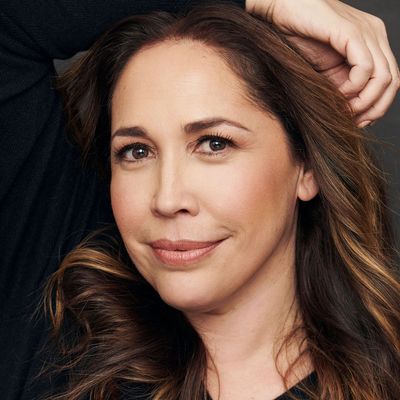
Andréa Burns is a beloved Broadway star whose many credits include In the Heights, The Notebook, On Your Feet!, Dear World, The Light in the Piazza, Songs for a New World, West Side Story, and more. She is currently starring as Diane in Come from Away at Paper Mill Playhouse... Read More
From the show: When Lightning Strikes!
Guests
Featured Shows
About
Andréa Burns is a beloved Broadway star whose many credits include In the Heights, The Notebook, On Your Feet!, Dear World, The Light in the Piazza, Songs for a New World, West Side Story, and more. She is currently starring as Diane in Come from Away at Paper Mill Playhouse.
This episode was recorded February 20, 2026.
Transcript
This transcript was automatically generated and might contain errors.
[0:00] Jeryl Brunner: From Shakespeare to Schwartz, from Fossey to Alvin Ailey, from Santham to Burelis, from McNally to Faye. It happened to the greats, it still happens every day. When lightning strikes is the moment you know when lightning strikes, where you're meant to go. You can stand in Chalureka. Do whatever you like. You'll never forget the moment when lightning strikes. This is Jeryl Brunner, and you're listening to When Lightning Strikes, where we talk about the tingly mic drop moments that led you to becoming an artist.
[0:28] Jeryl Brunner: Andréa Burns is a beloved Broadway star whose credits include In the Heights, The Notebook, On Your Feet!, Dear World, The Light in the Piazza, Songs for a New World, West Side Story, and on and on and on. She currently plays Diane in Come From Away at the Paper Mill Playhouse. Well, welcome.
[1:06] Andréa Burns: Thank you so much for having me, Jeryl. It's so lovely to be here.
[1:09] Jeryl Brunner: It's such a joy to have you.
[1:12] Andréa Burns: Thank you. I just adore all your work and how you inhabit every role in such a passionate way, how you become that person.
[1:24] Andréa Burns: Thank you. Thanks so much, Jeryl. I appreciate it.
[1:26] Jeryl Brunner: You're welcome. Well, tell me about the joy of being in Come From Away. What do you love about this show?
[1:34] Andréa Burns: The extraordinary sense of community. Right now in this climate, you know, it's a very divided time, and it is leave it to the artists to sort of gather in a room and figure out, you know, the best ways to collaborate and share and communicate and connect. This kind of style of show is one of my personal favorites. One of my favorite shows in the world is Once on This Island. Yeah. Where, you know, it's a bunch of storytellers who are there sort of taking the audience through this journey and dipping in and out of different roles as they communicate the story. This is such a fun, beautiful reimagined version of it. Richard J. Hines, who is our director, he was involved with the original one.
He has now sort of this is kind of a maximized production. The original Broadway production was like 12 actors and 12 chairs, which was so gorgeous. I loved that production. And we've got a full set, a lot of moving pieces to it, a lot of costumes, a lot of ins and outs. Everyone in the cast is playing instruments at different points in the show, which gives it like a real kind of again, like the community feel, not only being on stage together, but we get to accompany one another is really like almost like a new level of intimacy in collaboration that has been particularly exciting to me because I'm not an instrumentalist traditionally, but I do play the djembe drum, the glockenspiel, and a little tambourine in this.
[3:15] Jeryl Brunner: I know I love that element to it, that additional piece and see you all come out and play an instrument or instruments for people who might let load. Do you mind sharing the story of Come From Away? Because it's such a beautiful story, and like you said, we I feel like we need it now more than ever about kindness, about generosity, about generosity of spirit.
[3:41] Andréa Burns: That's right. Yeah. And just that I think at the heart of us as humans, we really are generous, loving, helpful people. This story takes place during 9/11 when everything, you know, the tragic events happened. People who were flying in the airspace, the US airspace became closed and they had to divert all the other planes in the air to Gander, Newfoundland, which has one of the largest airports. There were 38 planes that were sent there on September 11th. Although people were trapped in the planes for a while, not quite knowing what was going on, soon they were hosted by the people of Gander, this community that was only about 7,000 people, had about 7,000 new strangers visiting them. Basically overnight, they provided housing and food and clothes and everything they possibly could to these strangers that they called the plane people, which were basically visitors from all over the world.
The thing that's so powerful about it is obviously this is a story that I think took some time to come to light because we were all so bereft about what actually happened on 9/11 and our losses and the horror of that day. However, for about 7,000 people in Canada, they were treated with such hospitality, care, and goodness during their time there. We've been lucky enough as this is basically the story of the people we all play people who lived in Gander who received the strangers. We play people who were on the plane, and it's just a beautiful lens, you know, a little spotlight on the best of humanity.
[5:44] Jeryl Brunner: Yeah, I was so uplifted when I saw it on Broadway, and it just seems to lift everybody's heart, make everybody feel lighter, and actually I think kind of recognize the generosity within themselves. They're capable of it.
[5:58] Andréa Burns: Yes, and I love how it really transformed people forever. Yes, you know, and how it's people from all walks of life, all cultures, all around the world, all different languages coming together and protecting each other in the midst of this horrific occurrence.
[6:24] Jeryl Brunner: That's right. And I love your character, Diane. Can you talk about your character?
[6:40] Andréa Burns: I do play about four different characters in the show, but my main character is Diane, who is a Texan divorcee who is traveling alone and having visited her son in England and is now heading home to Dallas, and beautifully originated by the wonderful Sharon Wheatley, who I know has been on here and is so talented. She and the writers and Chris Ashley built this beautiful character. What is so moving to me is that the story that we get with her and meeting another passenger from England, Nick, this sort of late-in-life blooming romance that happens between Diane, who is a very outspoken knows who she is woman, and a very sort of introverted, very particular British gentleman. They start out kind of sitting next to each other on the plane and end up being each other's sort of safe space, safe buddy during their time in Gander.
A love story blossoms between the two of them, which is so beautiful and true. Approaching the 25-year anniversary of 9/11, they were subsequently married, and they've been married for 25 years. It's just a beautiful thing, a beautiful story of how opposites attract, and also how it's never too late for love to walk into your life. It's a delight to be able to play the show every night.
[8:16] Jeryl Brunner: That's so great. And what about Paper Mill Playhouse? If somebody were to ask, what do you love about Paper Mill Playhouse? What would you say?
[8:24] Andréa Burns: It's such a wonderful gem. First of all, I think it has a huge community. It's a gem of the community. So many people in the surrounding area have been flocking to this theater to see shows and also bringing maybe their children to the theater for the first time if they don't want to go into the city and see Broadway. Because of its proximity to Broadway, it often has a lot of Broadway stars coming to do shows there, and also development of new shows that possibly will then move on to a Broadway run. Everyone I speak to who is from the Jersey area pretty much holds their heart when I tell them I'm working at Paper Mill Playhouse. I love Paper Mill. You know, I loved going to shows growing up, or a lot of kids have been part of their art programs through the years. They have a wonderful, wonderful subscription audience, and it's an incredible place to work. Just what nice people. What a perfect fit of Come From Away and Paper Mill Playhouse.
[9:29] Jeryl Brunner: So great, because you're right, they have this great legacy of nurturing shows. And I'd love to know about your lightbulb strikes moment when you knew you had to be an artist. From what I've researched, you grew up in Miami, and then at 18 you got into West Side Story, but I'll let you tell it. Was there a moment or moments that you can remember where you knew you had to be an artist, like even leading up, you know, before you got to West Side Story?
[10:04] Andréa Burns: I think, you know, I've always loved my parents are not artists, but they are art enthusiasts. My mom is Venezuelan, and I was always exposed to beautiful Latin music. My father, who was born in Brooklyn but then later moved up to the Catskills, his father was a master of ceremonies and dance teacher at an old school dirty dancing like Borscht Belt Resort. He was, you know, he introduced all of these incredible showbiz acts through the years, particularly in the 50s and 60s, and my father grew up around these amazing talents. Just watching all of that incredible showmanship. At a young age, I knew that I could sing, and I loved it, but my father loved movie musicals, and so he would expose me to a lot.
We would watch movies all the time, West Side Story, Oklahoma, Brigadoon, and whatever was on film. I was very taken with the idea that you can tell stories while singing. I would say, I mean, I saw West Side Story probably, I was probably too young to see it when I saw it for the first time, but I was so deeply affected by the movie and the fact that you could not only tell stories, but you could tell a very dramatic story using your voice as an instrument of feeling. I think that is what always propelled me to become a singing actor as opposed to a classical musician or a pop musician, because certainly the first thing that we recognized about me was that I could sing, and how were we gonna develop my vocal gifts or whatever?
[11:58] Andréa Burns: And uh I always I think I always felt um the storytelling, I always felt like an actor, and then um also as a young person, again, because my parents love to see things, um, Ben Vereen came to town uh to Fort Lauderdale or something when I was growing up, and you know, we got tickets to go see him uh just do his act. And I mean, besides the incredible talent of that man who have I I've always admired, the showmanship has also been something that that struck me on a very deep level. I love um I just the love the ease and generosity with which he connected with an audience and that's always been something that to me is very important. I love being in stories that are fully in context on stage but I also really love when I get to sort of engage with the audience as well.
And uh Come From Away gives us a little bit of both of that some of both of those things but um I would say those were the things that sort of sparked the interest like wow you can you can sing to actually tell a compelling dramatic story and also these like this glitter that surrounds you know when we're talking like old time greats and their showmanship and how they just completely step on stage and you know you are well taken care of and uh that's something that all that that had spoke to me and has has been my inspiration always.
[13:32] Jeryl Brunner: Oh that's so beautiful. I'm really curious you said early on you knew you could sing. How did you know? I mean you have this beautiful, you can belt, you have a head, you know, you have all the layers, you know, of a beautiful singer because I love hearing those high notes and your belts and all the layers in between but how did you and what were some of the first songs you sang?
[13:56] Andréa Burns: Oh well I'm definitely you know of a certain age and we all what we refer to as the red album, Annie. Annie was a big big deal. So many um I think Amy Poehler just said on her podcast there has to be like a whole, like a documentary done about women of a certain age and Annie and how it affected our lives. And of course, Andrea McArdle. Also the fact that we, you know, we had the same name pronounced differently. It was like, wow, you know, like this is something, this is something I could do. Um I sang, my mother actually has a beautiful voice, but it was never ever anything that she would consider doing anything with. So I think she was really the first one to recognize that I could sing and that I had a vibrato in my voice, and she would say, try this and try that.
You know, she was just sort of um, you know, having me explore my voice. But um, I was blessed to go to an elementary school that had one of those magical choral teachers who just made music so uh accessible, fun, and uh, and challenged kids to learn. Uh, and so that choral program in my elementary school was like the one to be in. You know, like everybody wanted whether they sang or not, everybody wanted to be in it because it was just a great extracurricular activity to be a part of. And and that teacher, his name was Dan Felkowski, Mr. Polkowski, uh, also was very um would hand me solos a lot and say, you should do this, you can do this. And um, yeah, and I loved it. I really loved it.
[15:42] Andréa Burns: And then I read that you were in the high school, a performing arts high school, and you were the teacher who would actually do the choreography.
[15:51] Andréa Burns: Yes, this is an incredible story. So I I was very lucky. So at a young age, I pretty much knew I wanted to explore this, so I went to a performing arts camp, uh French Woods in upstate New York, which I loved. And then um, luckily for me, because there really wasn't much of a theater scene in Miami. Now there's a really exciting one, but at the time, uh the focus was really either on music or dance. And uh a performing arts school opened in Miami for the first time. It was called New World School of the Arts. And um uh they were mostly, they did not really have like a fully realized musical theater program. It was basically acting, and then those of us who sang had some sort of extracurricular activity in the uh in the shows where we would get to work on some musical stuff.
But um they hired while I was there, they hired a young dancer who had uh been a part of American Dance Machine, which is this legacy group that you know keeps records of all the original choreography of things. So he came and he taught us the original choreography to America from West Side Story, and um and I uh learned that I played Anita in that and I learned all of it. And then later, when I was in New York, I mean like two years later, I was in school and I auditioned for a professional production, and you know, the dancers around me were all older, seasoned, but I knew that choreography. And and it's what ended up getting me uh my first job. I was uh Maria understudy, and then moved up to play Maria in an international tour of West Side Story.
[17:35] Jeryl Brunner: Yeah, that was a really important tour, right?
[17:38] Andréa Burns: That's huge. Nicole Fosse was a good thing.
[17:41] Jeryl Brunner: That's right, that's right.
[17:42] Andréa Burns: Yes. Which was amazing for me. Of course. I was like, I'd, you know, obviously worship Bob Fosse and Gwen Verdon. And that Thanksgiving was my first Thanksgiving away from home. And Gwen Verdon came and she made us Thanksgiving dinner because we were all in Germany at the time. What do you remember about that dinner?
[18:02] Andréa Burns: I can't even imagine. I mean, I just remember like waking up on the day and having a lump in my throat thinking that I was going to be away from my parents. And this was before the internet and cell phones. It was in, you know, what was formerly East Berlin, Germany. I felt so far away. And um, and uh, but yes, you know, Nicole had invited us, and it just didn't really seem real until we were all together for dinner and and Gwen hosted us and was telling us stories about when she was there in Berlin when when Bob Fosse was working on Cabaret, and it was just tremendously exciting and warm and wonderful. That's also when I first learned that legends are real people too. Ah you know, she was she may have been Gwen Verdon, but she was also there to be with her daughter and celebrate Thanksgiving, and that was a beautiful thing.
[18:52] Jeryl Brunner: It's beautiful. Is it possible to put into words how performing makes you feel, how singing makes you feel when you're up on that stage?
[19:04] Andréa Burns: I think it's so funny, right? A West Side Story lyric comes to mind, right? Say it soft and it's almost like praying. I feel like I feel like very lucky to have a way of clearing myself out, of opening up enough to sort of let something else come through. Somebody else's story, somebody else's writing, their music, the feelings. I mean, it's such an incredible alchemy that happens, right? You think like you see one person singing out there, but it's like it's it's a team. It's the person who wrote the music who wrote the lyrics, whose story is being told, the feelings, the blood and guts of the actor, you know, whatever I'm experiencing, it's coming through me. So whatever that is, but it feels um, yeah, I would say it's probably as pure and as focused, like in the moment as I can ever get, especially now, the age of cell phones and being so easily distracted. But when you were in the zone on stage, it is a it's a glorious kind of meditative matrix to fix my metaphors.
[20:25] Jeryl Brunner: I love that. What do you hope people come away from after seeing Come From Away? Or if somebody were to ask, why should I see Come From Away? What might you say?
[20:36] Andréa Burns: I think just to be in the presence of a lot of strangers showing each other kindness, and it's very meta in this production. There was a couple of people that I knew in the show before going into it, but most of the cast was new to me. And this has it, this is um unfolded in the same way. We meet as strangers, um, you know, on day one, and I am so dependent on all of them, the other 11 actors every night, and I it's very important to me that they know they can count on me to be there for them. Um and uh yeah, I find that like little things. There was one one thing that happened that went wrong the other night, and I had a costume piece that was I'm supposed to walk out on it, uh walk out with.
And um, you know, we do change characters on a dime in a matter of seconds. So I had I'm I'm supposed to have it in my hand so that three lines later I can put on another coat and become another person. And I don't know, somehow the the jacket wasn't offstage where it needed to be. And so I went and continued to do this thing, feeling kind of uncomfortable that I wasn't in my little costume, and and another actor just showed up and quietly put it in my hand on his way somewhere else, you know. And that just really sums up the the feeling of this show. It's like wow, I I was and he was behind me, so he didn't even need credit for, you know, he didn't even need me to know it was him. He just wanted to make sure I had what I needed to continue.
And um I was very moved by that. And it's very much the culture of our show and our company. It's very uplifting, and also please don't be confused by the idea that this is a musical about September 11th. It's really about a gem of a story that you just didn't know, something that you didn't know that changed a lot of people's lives. Yeah. It will lift you up. The music is wonderful.
[22:40] Jeryl Brunner: Oh, it's wonderful. Well, and so are you. So thank you so much for coming on. So it's I'm so happy to meet you, and thanks for your wonderful podcast and for great conversations. It's it's a delight.
[22:55] Andréa Burns: It's a delight. Thank you. Take care of you.
[22:58] Jeryl Brunner: Okay, bye.
[23:00] Jeryl Brunner: It happened to the greats, it still happens every day. When lightning strikes is the moment you know, the theme song was written by Tom McGovern. This episode was edited by Sarah Goodman and produced by Anna Strout. Lightning strikes.
© Broadway Podcast Network, All Rights Reserved