

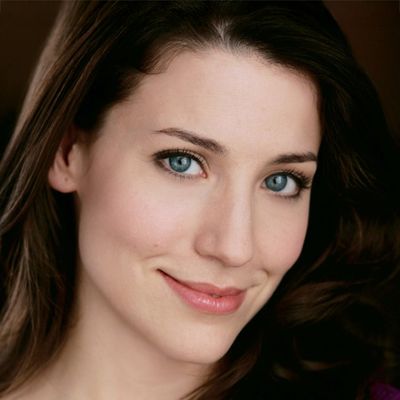
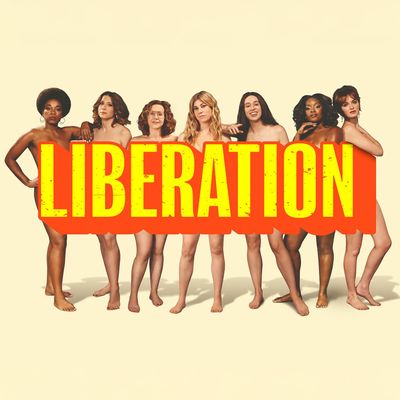
Irene Sofía Lucio recently starred on Broadway in Bess Wohl's play Liberation, directed by Whitney White. After a successful run Off-Broadway, Lucio reprised her acclaimed role as Isadora—an Italian immigrant navigating identity, love, and citizenship—with fire and vulnerability... Read More
From the show: When Lightning Strikes!
Guests
Featured Shows
About
Irene Sofía Lucio recently starred on Broadway in Bess Wohl's play Liberation, directed by Whitney White. After a successful run Off-Broadway, Lucio reprised her acclaimed role as Isadora—an Italian immigrant navigating identity, love, and citizenship—with fire and vulnerability. Lucio is also known for her work in Slave Play and is the creator of the award-winning Spanish-language children’s series SúperEllas. Born and raised in Puerto Rico, Lucio trained at Princeton and Yale, and is committed to telling stories that expand representation in the arts.
This episode was recorded on April 17, 2026.
Transcript
This transcript was automatically generated and might contain errors.
[0:00] Jeryl Brunner: From Shakespeare to Schwartz, from Fossey to Alvin Ailey, from San Time to the Burrellis, from McNally to Faye. It happened to the greats, it still happens every day. When lightning strikes is the moment you know when lightning strikes, where you're meant to go. You can stand in Chalureka. Do whatever you like. You'll never forget the moment when lightning strikes. This is Jeryl Brunner. And you're listening to When Lightning Strikes.
[0:29] Jeryl Brunner: Irene Sofía Lucio recently starred on Broadway in Liberation. We're prizing her acclaimed role as Isadora, an Italian immigrant navigating identity, love, and citizenship with fire and vulnerability. She's also known for her work in Slave Play and a thousand other theater and TV projects. Born and raised in Puerto Rico, she trained at Princeton and Yale and is committed to telling stories that expand representation in the arts. Well, welcome.
[1:17] Irene Sofía Lucio: Thank you.
[1:18] Jeryl Brunner: What a beautiful bio.
[1:20] Irene Sofía Lucio: Thank you for saying that. That's very kind. It's all true.
[1:23] Jeryl Brunner: Well, it's such a joy to have you. And let's start with Liberation and this incredible play. When did Liberation come into your life?
[1:35] Irene Sofía Lucio: Um, I auditioned for it, but it's, uh, I think it's a funny story. Um, I was in London doing Slave Play at the West End, and I put myself on tape with my, you know, scene partner/slash work wife, Shale Latour, in our dressing rooms. Um, and you know, I sent the tape, they asked for a callback, which was so thrilling for me. But because of the time difference, I had to do the callback on Zoom at 10 p.m. after the show closed at the West End. So I just stayed later, and I assumed that the theater was just gonna stay open, you know, while they put everything away, that I was gonna have plenty of time. So I didn't tell anybody. And I stayed in the Zoom and then over the overhead speaker, they were like, "Irene Lucio, please exit the building, please exit."
Like through the callback. It was mortifying. I had to like tell Bess and Whitney, Bess Wohl's and Whitney White, like, "Can you hold on one second?" and then run downstairs to Nerea, who was the Spanish door person, and being like, "Nerea, please, I have a callback, please stop talking over the loudspeaker. I promise I'll be out of here soon." And then I like came back up and I was like, for sure I didn't get this part. For sure. There was just way too many technical difficulties. It was a mess. And through some miracle, I made it through. So thank God. Through all of that, they saw something, and I was able to play Isadora. And what a firecracker she is.
[3:15] Jeryl Brunner: It's such a moving play. How do you describe Liberation?
[3:20] Irene Sofía Lucio: Liberation is in a conversation between a daughter living in present day and her mother, who was part of the second wave feminists of the 70s. And I think she's trying to travel back in time and plays her mother in this CR group, which were called consciousness raising groups that were prevalent throughout the country. And it was part of this second wave of feminism, this idea that if women got together and talked about their personal lives, they would realize that the personal was political and it would raise their consciousness to the political systems that are responsible for some of their obstacles and, um, yeah, their obstacles towards liberation, their oppression even. Um, and I think the play is sort of has this main character that is constantly going back in time into the 70s and trying to explore what was gained and what's been lost since the 70s, what has stayed the same. And I think overall it's that, it's this conversation between these two generations of women, um, in this fight towards equality, towards liberation, towards self-realization. Um, yeah.
[5:00] Jeryl Brunner: It's a beautiful way to put it. And I also think of the context of the time, you know, women, I mean, it was a struggle to, even though women were on the credit card, it was hard to get a divorce. I remember my own mother going to her weekly CR group, and all the different women who she encountered, and what's so beautiful about Liberation are that you're all very, very different and on very different journeys and trajectories. And you have the woman who has been married for her whole life, and it's of a previous generation than the majority of the women in the group. So that also has an additional, I think, relevance of like she was raised to think about her role in a certain way in society. And then these women that are like, you know, a considerable amount of years younger have been afforded this other way of thinking about their lives because of her generation.
[6:10] Irene Sofía Lucio: Yes, yes. And then I think about Isadora, yeah, who you play. What do you love about her?
[6:18] Irene Sofía Lucio: There's so much to love about Isadora. Um, I think Isadora is a survivor. I think she's been through an overwhelming amount of traumatic experiences growing up. Uh, she grew up in a very impoverished Sicily, um, was an immigrant at age 12, and then experienced, you know, another level of poverty in the United States as a new immigrant, and then, um, due to that poverty, she was given up to an orphanage. Um, and then, um, she has found her way and her voice through activism and is now in a green card marriage. Uh, but I guess, sorry, the reason I bring all of this up is that even in this super unhappy marriage, um, where it's established that there's a lot of nonconsensual sex happening, she refuses to cave under these circumstances, right?
Like any person with that amount of trauma could have gone into addiction, uh, could have suffered from major, you know, mental illness and caved under it. And this person is, uh, refuses to surrender and refuses to give up her joy. So there's this like very vibrant, uh, hysterical. I think her humor is a huge piece of her armor and like reason that she survived. Um, she's just this massive survivor that is like larger than life and boisterous. Like her joy is part of her rebellion almost and refuses to cave and to be reduced by all of the things that she's experienced. So I just, I'm very inspired by her and inspired by her humor and her joy. Um, I think she's, I love how brash she is, um, how unapologetic she is.
Uh, I love that she's Italian. I mean, I, I am, I'm born and raised in Puerto Rico, and like getting to play an Italian was in some ways like, uh, enabling all of this like Latino family members that I have were able to come with me, and I was able to sort of put them into Isadora. Um, because there's a lot of cultural things, um, about the Italians and Latinos that they share in common. So I felt really, I had a lot of fun with that as well.
[8:58] Jeryl Brunner: I mean, the accent is so beautifully spot on, and so yeah, and so convincing. And I really wondered. I remember looking up to see, oh, are you? I know you're, you grew up in Puerto Rico, but I wondered if you were, uh, a late of, uh, an Italian native because it's so exacting, you know, your inflections, I mean, every part of your being, you know, you come, it's like out of the canon, you're there, and it's like, and it's also such a beautiful ensemble. Oh my god. Can you talk about that? And also working with, you know, all these incredible women with Bess Wohl's, who I know was, uh, an actor herself who went to, I think went to Yale, right? Whitney White, you know, so you have all this beautiful energy, but what was that room like when you go?
[9:57] Irene Sofía Lucio: Oh my god. It makes me want to cry because I miss it. I miss that room. Um, it was a room of a bunch of, uh, incredible artists and people, they were all wonderful people, as well as, uh, you know, genius artists. Um, and it was mostly women, and that in and of itself felt revolutionary and exhilarating. Um, I mean, Bess is incredibly brilliant and also super humble and super funny. Whitney has the ability to have this like highbrow, lowbrow, like manic genie-like energy where it can go, she she's not above anything, she's not below anything.
[10:46] Irene Sofía Lucio: She can just go where the story needs to go and is hilarious throughout. Um, and then honestly, this company of actors, I think is the reason the play, I think reached where it did in part. Obviously, the words are incredible, the direction is gorgeous, and also the actors pushed each other, but we pushed each other to be at our best every single day. Um, and it's because of that rigor that that company had that um that I think the play did as well as it did. And I'm very proud of this ensemble. I feel like I learned from every single one of the performers. Um Charlie is also part of the play. I didn't share any scenes with him, but the play is not all women, it is also with Charlie, who's an incredible mensch and performer.
Um, but for the most part, you know, the scenes are are of of the women, and they're all completely different from each other, and still they all learn from each other, and I think they save each other's lives, you know. Um I on another level was also very inspired because there's a lot of mothers in this company, and I have a two-year-old son. So it was very um encouraging to because this is not this is not the most conventional lifestyle for motherhood. Um, and it can be very challenging to even find peers, you know, to consult about this path. And I felt like I had so many people I could talk to. Um, Whitney has a three-year-old, Bess has three kids, Susanna had a three-year-old, Adina has a five-year-old.
Uh Betsy went through it in another generation as a working single mother, and I was just so thrilled to be surrounded by moms um that got it. They understood, they understood the tug of like loving your job and also really loving your kid. That's incredible. Cause I was really let, weren't you during slave play on the West End that you were a brand Lim?
[13:00] Irene Sofía Lucio: Yeah, yeah. Had a four-month-old baby. It was nice. Yeah. Yeah. It was nuts. But I will say that um it was more doable than people might expect because I had done the play multiple times before. There there is an element there of yes, it was grueling, you're not really sleeping, you're, you know, nursing. It's it's it's hard. I mean, I had thankfully also an incredibly supportive family structure. You know, my husband went and delayed his paternity leave in order to help when I was there, you know, full-time in London. Like there, I I have very, very supportive family members that are the true like people holding me up as I do these jobs. My mom went over for three weeks to help me. I mean, so it was doable, but it did take a village.
And it was also thanks to somebody like Robert O'Hara who kept hiring me in that track and let me come in and out. You know, when I was done rehearsing Act Two, I could go back home. You know, little things like that made a whole world of difference.
[14:10] Jeryl Brunner: That's wonderful. Well, I'd love to know about your lightning strikes moment. Well, you knew or the moments you knew you had to be an artist.
[14:19] Irene Sofía Lucio: Um, happy to. I was listening to Andrea Burns' uh interview. Oh yes. And it was really funny because she brought up how Annie was a seminal character for so many actresses of a certain age. And Annie was also a seminal character in my journey because I got to play Annie at a age 11 in Puerto Rico. I went to this uh American high school, didn't have it wasn't a performing arts high school in any way, shape, or form, but we had this brilliant teacher named Hetz Valdez. And she, I was I was a very shy kid, but she let me be in a you know background dancer and singer in a Greece the musical, and then saw something in me and told me later that she was considering doing Annie the musical, um, that I should prep to see, you know, that she would like to audition me and that I should prep.
And I really I took it very seriously, and I I did get that part. And that moment of playing Annie in like the full school musical for me was like a a um I couldn't, there was no going back from that. Um something just uh fully like clicked into place. I was euphoric, but also incredibly centered. Um, I have a very uh ADHD brain, and when I'm on stage, there's something that happens with like complete clarity. Um, and it's very hard, it's very undeniable. Um so I I kind of I was kind of ruined for life when I played Annie in the best way. I and I remember I remember I had a quick change. I was 11 and I had a quick change, and I just like wanted to go back on stage, and they kept being like, You're naked, you're naked, you can't go on stage yet.
And I just was like, I have to go, I have to go. Like, I just was like, get me back in there, get me back in there. So there's this like energy that that just came out of this, like super before very shy child that was like unleashed um in the theater. And I I can't explain that beyond that's like it's it's otherworldly and it feels undeniable.
[16:37] Irene Sofía Lucio: Um then I grew, you know, because I was born and raised in Puerto Rico, that wasn't a very uh normal career track. So it was always, I think I had a very encouraging family, very supportive, but there was always this like notion of educate yourself well in case this doesn't work out. Like this isn't this shouldn't be plant A, B, C. You should have a plan A and you should have a plan B, and should have you should have a plan C and you should do at the very least a double major. Like that was sort of like the the idea. Um, and I and I was very fearful of um becoming an actor despite all of that energy. I I knew it was a very unstable track. Um, so I was very game with that plan of like educate yourself well.
I got into Princeton and then Princeton didn't have a theater major, but in my head, I was like, I can study this, you know, literature or something, you know, that I that can keep things open for me in case I want to go into law or advertising or something. And I can like live in the theater department. I can get this theater certificate and make make the program work for me, which I did. Princeton did do that for me. Um, but it also was an incredibly academically rigorous and severe school with certain things. And I had that sort of in in school, in college, is was when I really realized I had ADHD, I had elements of anxiety and depression. That's also the age when those things start to kick in.
And I overextended myself, my the beginning of my sophomore year. I was like the lead in a play with Erica Schmidt, and I was taking on way too much course load, and I kept procrastinating with my academic workload. And I it I there was one night that I had to submit like 25 pages that I hadn't even started writing. And towards the end, when I had to submit this like five page paper that I thought was nothing because I had already written 20, I had a panic attack. Um, because I wasn't ready to like I just knew that I was I was gonna fail it. And I had some kind of panic attack, and I just like wrote something down, printed it, tear like tears in my eyes. I submitted it and I was like, I'm gonna fail this class, but not I didn't really fail the class.
I super I was suspended from school because I had improperly cited uh my quotations. And in Princeton, that is a suspendable offense because it's considered it's considered very serious plagiarism is taken very seriously, regardless of what your intention is. And I was suspended for a year. And that I bring this up because that year I had to learn about my brain. I had to learn about, you know, I started going into therapy. I started, you know, I did some like courses at NYU over one semester, but then the second semester, I applied to Lambda for a semester long program in London. And when I went, I got in when I went, uh, my sleep got back on track, my workload just started. I I automatically stopped procrastinating.
I was excited about all of it. So again, that alignment that I had felt on stage, I felt in my life where things just started to click into place. And a lot of these um symptoms of my brain of like not doing what I really wanted to do, like depression, I was very depressed. I it a lot of it went away because I was aligned with my values and what I wanted to do. Um so I finished Princeton. I like after that I finished Princeton. Um and I knew that I wanted to apply to grad school and I got into Yale after that. But it was because I essentially got sick and had to really address what was what was my, you know, what was ailing me. And a lot of it was that I wasn't living my values and living my truth, which I wanted to be an actor.
Um yeah, that's that's been my journey ever since. So it's it is lightning, but it's not it's not the kind that is just positive. It's also like when you deny it, when you deny the lightning, what happens to you? Yes. Um, and you can get sick if it's something that you really, really, really love. And I love the learning of that year.
[21:20] Irene Sofía Lucio: I owe a lot to that year. I do. I owe getting into grad school right after college because of that year, because of that clarity. Um, because then I approached the remainder of my college years very differently. My priorities became clearer. I chose a major that made sense with theater, and I just made it all with a lot more mindfulness around what I wanted to do. I was able to succeed that way as well, instead of taking econ because I thought it was important. I was taking courses that made sense given what was coming next, which was grad school, you know. So that sort of worked out in my favor.
[22:00] Jeryl Brunner: Do you remember when it was Yale Drama, right? The drama program that incredibly competitive program. Do you remember when you got word that you were accepted?
[22:10] Irene Sofía Lucio: These are crazy stories, Jeryl. These are crazy stories. So I auditioned, I did the callback, and so for Yale School of Drama at the time, you would get a call from Ron Van Luby, like this super, still super important acting teacher. And at that point, the people who are in the callbacks text each other, you know, we had to exchange some numbers. So we were like, has anyone heard? You know, have you? And I remember so Daveine Joy Randolph, who's now an Academy Award-winning actress and was my roommate first year of drama school. She texted me and said, I got in. And I was like, okay, I haven't gotten the phone call. It's not gonna happen. So, and I had a gynecologist appointment later that day.
And in the waiting room, I called my mom and I was like, listen, you know, it's like 4 p.m. I think I didn't get in. And you know, we I cried a little bit with her, and I was like, oh, the doctor's calling me in, I'll call you back. And on the doctor's chair in the stirrups, I see a 203 number, which is the New Haven area code, and I spoke to Roger, like, during my gynecologist appointment because I had to take a call. There I was on my back and take the call. Oh wow. So I told the lady, like, excuse me, I really have to take this. And I heard Ron Van Luby like, we would like to offer you a place at the Yale School of Drama. Would you like to accept it? I said, yes, yes, absolutely. A thousand times went, yes, I have to go.
I hung up. I started crying. And then the doctor was like, Are you okay? And I was like, I just got into the school of my dreams. Like crying with this lady in the stirrups. I haven't told that story in I don't know how long. It's crazy. It's so funny to remember that. You can't make that up. You can't make that up.
[24:10] Jeryl Brunner: How did it transform you going to Yale Drama and having an experience? Like, I know different people have all kinds of different experiences with graduate school.
[24:24] Irene Sofía Lucio: I had a super positive experience. I think in general, I was very grateful that I got to focus on theater for the first time in my life, even though I had denied it from myself for so long. It was like finally I was there and I could focus on it. So I just was so hungry for everything they were offering. I just was a sponge. I just wanted to be there all the time. It was hard at first to be one thing. I noticed that in order to survive grad school, you kind of have to just be an actor. And it was the first time that I was just an actor, which was both liberating and limiting at the same time. Um, at first it was hard. I had some growing pains about like, no, I'm also smart and I also do these other things.
And you know, but there's no time for that. You have 14 hour days, you know. So there's just no. But then once you learn to put the blinders on and just be that for a limited period of time, I had a great experience. It was really difficult. It's a grueling program. But um, I think I really enjoyed that rigor. The teachers were incredible. I loved taking clown class. I love there's so much stuff that I just was craving to have because it gives you tools to be consistent. You can have talent, but you don't know how to be consistent without tools. So that's what the program was for me. It was just like giving me a huge tool shed with all kinds of tools that I can play with, put away when I don't need them. I like new permutations of tools. Like it's just um, yeah, I stay in touch with my teacher. So I loved, I loved, I loved the school. I loved the program.
[26:15] Jeryl Brunner: What was one of your first professional jobs?
[26:19] Irene Sofía Lucio: Oh, okay. I was an understudy on WIT on Broadway with Cynthia Nixon at MTC. I was understudying all of the young students and nurses, except for the main nurse. I don't think I didn't understudy her, but I understudied all of like the ensemble, the youth ensemble. And it was incredibly difficult, like following five people around and figuring it out. But it was very also inspiring to see Cynthia Nixon like doing this. It's practically um, you know, a one-person show with a few scenes interspersed. She was brilliant in it. And then after that, I did a play with the Women's Project that had it was this crazy Frankenstein experiment of like 10 playwrights and three directors making one play together.
And we created a crazy play that had people walking out every night because it wasn't good. And it was very character building seeing people leave the stage, leave the audience every night, and you staying on. So I like I thank those two experiences of that first year for creating a lot of rigor and also just like staying power.
[27:41] Jeryl Brunner: Ups and downs of the industry.
[27:45] Irene Sofía Lucio: Yeah. And how did being part of Liberation change you?
[27:51] Oh my god. Um, I mean, I think in general being a mother has like brought a new appreciation for my own mother. Yeah. But being in Liberation um has opened up a channel of discussions with my mom about her as a woman before me. And I think sometimes, you know, as children, like we just think of our moms as our moms, and we don't really like take the time sometimes to think about who they were as people before. And I feel like I've gotten to know my mom uh better. And I will always thank this play for the conversations we've been having. I dedicated my part to my mom because my Isidora has a lot of uh analogous, like they're just very they're similar people. They didn't have the same trauma, but they have the same way of coping, which is this like very beautiful, humorous, um, lively way of being in the world.
Um, so I've really appreciated like who my mom is as a survivor, um, and as a joyful being in the world um that refuses to quit, you know. So I just I have this newfound appreciation for my mom and also their generation, like what they've done for us, and it's also sort of a challenge now because we if they did that, what are we going to do for the next generation for my child's generation? So it's also sort of ignited a bit of activism in me of you do actually have to go out and protest. You do actually have to stand up for your community, you do actually have to be a citizen, um, an active citizen in the world. Um, so that sort of duty, like sort of sparked up in me in a way that I don't think it had been and it hadn't been fully awoken yet.
[29:53] Jeryl Brunner: Well, I'm so thrilled to talk to you and Oh my God, same.
[29:58] Irene Sofía Lucio: Thank you. This was so thrilling.
[30:00] Jeryl Brunner: Oh, it's thrilling for me.
[30:02] Irene Sofía Lucio: And Isidora.
[30:03] Jeryl Brunner: Oh, and I'm excited to see all the things you're doing next. You know, is there a dream role that you're...
[30:08] Irene Sofía Lucio: I would love to play Hedda Gabler. I would love to play Hedda Gabler. I love her. She's really tough, but I really love her. I would love to do some Lorca because I feel like there could be more Lorca in New York City. Um yeah, I think so. But I'm about to do a play called Titans at Cleptham, which is about ice raids. Um, and it is to me is a continuation of the activism that was now ignited um through Liberation. Like I while I was doing Liberation, I wrote an article about how the play was asking me to go out into the street and protest, and it's made me understand people in the 70s protesting the Vietnam War and the actual stakes of it. Yeah, how brave it actually is to go out and necessary. And so, in the same way, when this play hit my lap, I was like, I have to do it. This is the intersection of arts and activism that I want to be living through. So um, so it just felt necessary. So I'm excited. We start rehearsals on Monday.
[31:21] Jeryl Brunner: Oh, I can't wait to see that.
[31:23] Irene Sofía Lucio: This summer.
[31:24] Jeryl Brunner: Yeah, it's part of the summer works of Cleptham. They're so wonderful. Well, thank you so much again.
[31:29] Irene Sofía Lucio: Thank you. Thank you. I have the best time.
[31:31] Jeryl Brunner: Thank you for having me. Next time.
[31:33] Irene Sofía Lucio: Have a great day.
[31:34] Jeryl Brunner: You too.
[31:36] Jeryl Brunner: It happened to the greats, it still happens every day. When lightning strikes is the moment you know, the theme song was written by Tom McGovern. This episode was produced by Anna Strout. Lightning strikes.
© Broadway Podcast Network, All Rights Reserved