

Every Broadway season, one of the most heated discussions about the Tony Awards centers the snubs—those notable shows that didn’t get any nominations. This year they include musicals like The Wiz, Harmony, and The Heart of Rock and Roll... Read More
From the show: Why I‘ll Never Make It
Guests

Featured Shows
About
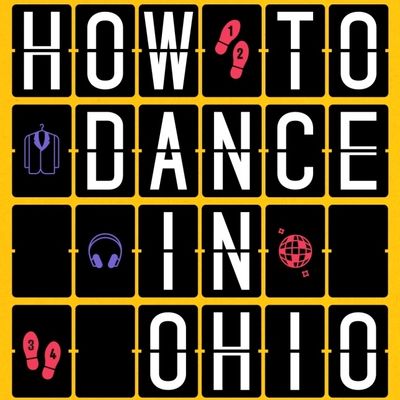
Every Broadway season, one of the most heated discussions about the Tony Awards centers the snubs—those notable shows that didn’t get any nominations. This year they include musicals like The Wiz, Harmony, and The Heart of Rock and Roll. Another one of those shows that was left out made history as being the first Broadway musical to cast autistic actors in autistic roles, and it was called How to Dance in Ohio, based on a Peabody Award-winning documentary of the same name. And today's guest is one of the stars of the musical, Conor Tague.
The musical dates back to early 2018 when the legendary Harold Prince announced he was working on a musical adaptation of the film. But after Prince died the following year, it was Sammi Cannold, a former guest of this podcast, who took over as the show’s director.
How to Dance is the real-life story of a group of young autistic adults and their families as they prepare for their first-ever formal dance. They face challenges and changes to their routines, and they experience all the things you go through when it comes to formal dances and asking someone out on a date—the love and stress and excitement of it all. The musical began previews on November of 2023, officially opening the following month, and played through February of this year.
Though completely shut out of the Tony Awards, How to Dance did receive Drama Desk nominations for Outstanding Book of a Musical (Rebekah Greer Melocik) and Outstanding Lead Performance (Liam Pearce). Conor and I talk about his experience with the show, but we also dig into his background and how his autism may be a unique and important part of him, but it’s also just one facet of who he is as person and performer.
----------
- Subscribe to get early and ad-free access to the full conversation with each guest, which includes the auditions stories that are only available to subscribers.
- You can also donate to WINMI and help further podcast production with a one-time or ongoing contribution.
- If you'd like to support WINMI but have limited funds to do so, then contact me directly for reduced-price or even free access to the bonus content.
Follow WINMI: Website | Instagram | Twitter | YouTube
Why I’ll Never Make It is an award-winning, Top Theater Podcast with actor and singer Patrick Oliver Jones and is a production of WINMI Media. Background music is by John Bartmann and Blue Dot Sessions and is used under a Creative Commons Attribution-NonCommercial 4.0 International License.
Transcript
This transcript was automatically generated and might contain errors.
[0:00] Patrick Oliver Jones: Every Broadway season, one of the most heated discussions about the Tony Awards centers on the snubs, those notable shows that didn't get any nominations.
[0:11] Patrick Oliver Jones: This year they include musicals like The Wiz, Harmony, and The Heart of Rock and Roll.
[0:17] Patrick Oliver Jones: Another one of those shows that was left out made history as being the first Broadway musical to cast autistic actors in autistic roles, and it was called How to Dance in Ohio, based on a Peabody Award-winning documentary of the same name.
[0:33] Patrick Oliver Jones: The musical actually dates back to early 2018 when the legendary Harold Prince announced he was working on a musical adaptation of the film.
[0:42] Patrick Oliver Jones: But after Prince died that following year, it was Sammi Cannold, a former guest of this podcast, who took over as the show's director.
[0:51] Patrick Oliver Jones: How to Dance is the real-life story of a group of young autistic adults and their families as they prepare for their first-ever formal dance.
[1:00] Patrick Oliver Jones: They face challenges and changes to their routines, and they experience all the things you go through when it comes to formal dances and asking someone out on a date.
[1:10] Patrick Oliver Jones: Love and stress and excitement of it all.
[1:13] Patrick Oliver Jones: The musical began previews in November 2023, officially opening the following month, and played on through February of this year.
[1:21] Patrick Oliver Jones: And I'm talking with one of the stars of that Broadway musical in this episode.
[1:26] Conor Tague: Hi there. My name is Conor Tague. I was born and raised here in New York. I'm still living in New York. I reside from Queens, and I'm an actor, singer, and a puppeteer as well.
[1:39] Conor Tague: And I just recently originated the role of Tommy in How to Dance in Ohio.
[1:44] Patrick Oliver Jones: Though they may have been shut out of the Tony Awards, How to Dance did receive Drama Desk nominations for Outstanding Book of a Musical and Outstanding Lead Performance.
[1:54] Patrick Oliver Jones: Conor and I will be talking about his experience with the show, but we also dig into his background and how his autism may be a unique and important part of him, but it's also just one facet of who he is as a person and a performer, even though some people throughout his life haven't looked at it that way.
[2:15] Conor Tague: It was hard, especially when there were students who knew about who I was, and they would say or do certain things that would rather really annoy me or just make me angry.
[2:26] Conor Tague: But you know, that all that stuff is like it's in the past, thank goodness.
[2:34] Patrick Oliver Jones: Welcome to another episode of Why I'll Never Make It, an award-winning theater podcast. I'm Patrick Oliver Jones, a New York actor and singer, and each week I talk with fellow artists about personal setbacks and professional hardships with lessons we can all learn from.
[2:52] Patrick Oliver Jones: The website is whyillnevermakeit.com, where you can donate, subscribe, and find past episodes. Again, that's whyillnevermakeit.com.
[3:11] Patrick Oliver Jones: Well, welcome, Conor. It is such a pleasure to meet you, and I'm so excited to have you on the podcast today.
[3:17] Conor Tague: Yeah, thanks. Uh, thanks for having me, Patrick.
[3:20] Patrick Oliver Jones: Now, recently I was actually in London, and while I was there, I got to see a lot of shows, and one of those shows was MJ the musical. And I understand that Michael Jackson is one of your favorite performers.
[3:31] Conor Tague: Yes. It's also my big inspiration, the reason I became a performer.
[3:36] Patrick Oliver Jones: And what was it about him? I mean, obviously, he's an amazing talent, but what was it about him specifically that inspired you?
[3:42] Conor Tague: It was just basically the way he presents himself through like his music, through like his music videos, you know, his short films, and all the concerts he does. Everything about him has always been, I guess, in a way, very theatrical and just a lot of magic.
[4:02] Conor Tague: And I was like really taken in by how Michael did it. And also the fact that he does a lot of charity work. He was, you know, like Heal the World and all that. That's also what really struck me that he does that.
[4:17] Conor Tague: He has a really unique way of showing his kindness, but also through like his performances and all that, through his songs, I really connected with him. And I'm like, this is something that I could also go through, but you know, my own different experiences. And with Michael, I just I thank him every day for getting me to where I am.
[4:46] Patrick Oliver Jones: Yeah, because yes, he can certainly write a love song and a dance song, but he's really telling stories.
[4:52] Conor Tague: He's telling stories.
[4:54] Patrick Oliver Jones: Right. That each of us, as you said, that each of us relate to in our own way for our own lives.
[4:59] Conor Tague: Yeah, and you know, there's a thing I always say about the lyrics that he sings. They're like, they're to me, they're always the truth. And it's something that you could like really believe. Like I have all his solo albums, and you know, I just listen to him constantly.
[5:14] Conor Tague: But no, I did get to see MJ twice, actually, here. The first time I saw it was in previews when Miles Frost was still playing Michael and won the Tony for it.
[5:26] Patrick Oliver Jones: Right.
[5:26] Conor Tague: And um, the second time I went to see it with my family. Part of my family was from Ireland. And we got to see that, and it was just as fun.
[5:37] Patrick Oliver Jones: And so you saw it in the West End, and did you see Miles?
[5:43] Conor Tague: Yeah, yeah, yeah. Miles was actually in the cast, so I got to see his performance, and he was outstanding. I know there's a reason he won the Tony for sure. Because you know, when I saw him as Michael, I was like, I didn't see an actor playing Michael, I saw Michael.
[5:59] Conor Tague: Like he came back when we needed him the most. And you know, there's actually I actually had a dream after How to Dance in Ohio opened. I had a dream that I was like in the city, but it was completely empty, but Michael was there.
[6:14] Conor Tague: And he just he was just telling me that he was proud of how far I've come, and he really hopes for the best. And we just had a nice little conversation in the city.
[6:26] Patrick Oliver Jones: I love that. I love that.
[6:28] Patrick Oliver Jones: Yeah, I mean, certainly there was a time in 2020 and 21 when there was no one in the city. So yeah, there was certainly a time when that was very true. And for you, you found a particular love of musical theater through Avenue Q. What was it about this show that got you excited about musical theater?
[6:45] Conor Tague: Well, you mean I've always admired musical theater in the past, you know, like when I was younger, we mostly a lot of Disney musicals, whether it was the movies or the ones on Broadway. But the thing about Avenue Q was basically how Broadway was at the time, and I guess also I mentioned how I'm a puppeteer earlier.
[7:09] Conor Tague: It also it's also what got me into puppetry. And Avenue Q was basically one of those shows where you could do all that at once, be a musical theater person and a puppeteer as well. And I love the original cast from 2003, especially John Tartaglia, who's another one of my big inspirations.
[7:32] Conor Tague: But you know, he was my inspiration for both musical theater and puppetry. I knew him from Johnny and the Sprites, which was like a show he did for Disney. And I used to watch that so many times as a kid. And when I found out he did Avenue Q, I was like, oh my god, that's Johnny.
[7:51] Conor Tague: And then he then I found that he also did Shrek and among other things. He's currently in Fraggle Rock right now. But yeah, you know, Avenue Q is very special to me. And looking at it now, Avenue Q, I really want to do the show.
[8:09] Conor Tague: And the reason I will want to play Princeton and Rod is because I relate to those characters the most. With Princeton, it's like you just finish something, like you're not sure where to go next. You're trying to find your next purpose, I guess. And now Rod, Rod's storyline is a little different. He's a closeted gay individual, but he's scared of like really really putting himself out there because of what others might think.
[8:42] Conor Tague: For me, as a person on the outside of the other spectrum, I was open about it, but I wasn't sure how people would think of me. Because you know how what certain people thought of other people on the spectrum. But then once I opened myself to it, they were like, oh, okay, yeah, that's cool. And apparently we the people I open up to become really good friends, and it's mainly all about acceptance.
[9:15] Conor Tague: Whether you're looking for something or you're trying to open up, looking at Avenue Q now, that's where I find that connection. And when it comes to your autism, I think it's important, you know, for myself for those of us without autism to recognize that autism isn't just one thing, it's many different things to different people so many different things, it's not just one thing.
[9:35] Conor Tague: Exactly. And so for you, how does autism affect you?
[9:39] Conor Tague: Well, I mean, with my autism, it's basically there are okay, so there are some good things about it that I can like I can pick up things really quick as far as like cues and memorization, but sometimes there's like a certain thing I gotta do in order to achieve that.
[10:00] Conor Tague: Like read something many times. I mean, that's that's normal. But if I'm learning a song, like a new song that's like entirely new that I've never heard before, I would just listen to the lyrics as well as the music while reading the sheet music, and that has helped me a few times, but also I might not understand a lot of things, so I might need like another clearer explanation, you know, clarity.
[10:30] Conor Tague: And me and my girlfriend, we have that sort of exchange. She's also on the spectrum, and uh, but you know, clarity is mainly the key, and because the more you understand certain things, the better. There is a little bit of a balance. Sometimes there are things where it's literal or figurative, or you just I don't know.
[10:58] Conor Tague: It's um it's sort of a complicated process, but uh, you know, there are certain things where I'm like, hey, I need you to do this, and I'm like, I do it, but either I don't hear that person or I just thought they meant something else. It can be one of those situations, but um, usually things work out in the end.
[11:22] Patrick Oliver Jones: Yeah. Well, as we get into the three stories, we'll be touching on that just a little bit. And so I appreciate you sharing with us your own personal experience being on the autism spectrum.
[11:31] Conor Tague: Yeah.
[11:32] Patrick Oliver Jones: And so getting into story number one, this is as you were learning to audition. And you say that it was a lot harder than you realized at the time. What was it that made it more difficult than you thought it would be?
[11:43] Conor Tague: What made it more challenging, I would say, was basically knowing your material and what's best for the show you're auditioning for. So I have like an audition book that I have with me right now, and there's like a selection of songs that I have, and there's certain genres, like there's classical, pop rock, contemporary, ballad, or you know, up tempo, some those, those kind of categories.
[12:14] Conor Tague: And the other challenging part is making your cut. It can be easy or it can be hard. It depends, it depends on what the people in the room require. Like, for example, I just had I had an audition not too long ago to be in the ensemble for Titanic.
[12:36] Conor Tague: There's like a New York City Center production of it going right now. I didn't get in, but I still went to the audition because you know I need to be seen. And they were asking for an eight-bar cut.
[12:48] Conor Tague: Which is so tough.
[12:49] Conor Tague: Oh, it's so tough. It was, but you know, thankfully for me, the song that I had, I was able to make an eight-bar cut out of it. And I originally had a 32-bar cut, but I was able to find an area where I can start that way it can be an eight-bar cut.
[13:07] Conor Tague: So as long as you have a song where you can like work something out, it should be fine. Otherwise, uh, what are you gonna do?
[13:18] Patrick Oliver Jones: Yeah, but because the thing is like, as we were talking about with Michael Jackson's music, musical theater is all about telling a story. And with 32 bars, you can kind of get a verse and chorus. You can kind of tell a story with eight bars. It's really hard to tell a story.
[13:30] Conor Tague: You're basically just singing the end of the song. It's like, here's my high note, thank you.
[13:35] Conor Tague: And well, you know, the people in the room, they were looking for course people to sing, so they wanted us to show off our voices. I mean, I did I did show off my voice, but also did a bit of storytelling because you know that it's what I do. It's what I do as an actor.
[13:56] Conor Tague: And thankfully, once I was finished, one of the casting people, they saw my resume and saw my Broadway credit, and they said, Hey, congratulations on your Broadway run. And that made me feel great.
[14:10] Patrick Oliver Jones: Now, you know, obviously there's all the preparation that goes into the audition. But then once you're in the room, there's that nervousness of, am I singing it right? Do I have a good voice? Am I making the right choices? You know, all these kind of questions that we tell ourselves, how do you deal with that nervousness in the room?
[14:26] Conor Tague: You know, it for me, for me, it's actually different because the nervousness actually happens before I enter the room. Because you like you never know who's going to be there, and you never know what to expect. But once you once you enter the room, sometimes the nerves just okay.
[14:45] Conor Tague: No, the nerves go away once you start singing. Because when I entered the room for that audition, I entered the room, I said hi, then I went to the accompanist first and I told them where it starts, what how the tempo should be.
[15:01] Conor Tague: And I was like, okay, I'm nervous, but I'm being professional and I'm not showing my nerves at all. Because, you know, I was taught this stuff in college. And apparently, once I started singing, I was like, okay, the nerves are gone. I mean, this is basically for everyone. The nerves usually start before you enter the room. But once you enter the room, it's like they slowly start to fade away because you're here for a reason. And then you finish, and then if they don't need you for anything else, you can just go and you feel like you accomplished something. Now, I've certainly had those auditions where I know I did not do very well. And those can be really tough because it's like, oh, I let myself down. Why did I do that or not do that? How do you handle whenever auditions don't go exactly the way you want?
[15:57] Patrick Oliver Jones: Yeah, you know, I don't remember if I've had any auditions that were not great.
[16:04] Conor Tague: Well, that is good for you. But I have been told, I have been told to, hey, don't beat yourself up. There's always like the next thing, and then the next thing after that, and the one after that. It just goes on. Just always look forward to the next thing, whatever it is.
[16:25] Patrick Oliver Jones: In general, is that easy for you to kind of let go of frustrations like that?
[16:29] Conor Tague: Yeah, it helps me be aware of what I need to do as a performer, whether I'm auditioning or doing rehearsals for another show. It's always good to know your past mistakes so you can improve however you do it.
[17:02] Patrick Oliver Jones: And this is when for story number two, this is when you say that you were always struggling to fit in, especially because the other students weren't behaving properly. They would say or do things that would trigger your anxiety or annoyance. Now, was this made all the more difficult because of the autism or were they just behaving badly, period?
[17:21] Conor Tague: It's kind of both. I mean, most of the time I kind of struggle, I struggle with a lot of academics as well, you know, like math, um, ELA and social studies. I'm mostly a theater guy. But, you know, with the community in the music school, as far as students go, most of them were just not great, and you know, their disruption for most of the classes was hard for me to focus, and for a few others that it was hard for them to focus as well. And it was like we're here to learn. What is wrong with you? And it was hard, especially when there were students who knew about who I was, and they would say or do certain things that would really annoy me or just make me angry. But you know, that all that stuff is like it's in the past, and I don't really hear from those guys anymore, and thank goodness.
[18:34] Patrick Oliver Jones: Right, right. But high school was different. It was actually mixed. There were some students who were not as great, but there were also students who were the complete opposite because the high school I went to was a performing arts high school, and there were a majority of the students who were theater lovers, like I was, and we did shows together, and so I felt more accepted into the community once I entered high school. Then the same thing with college, but with college, there were like no disruptions at all. People were serious about their work, everyone got along just fine, and did more shows.
[19:21] Conor Tague: And it sounds like that from middle school to high school, then to college, you basically kept narrowing your field of friends around you, and you kind of let go of the quote unquote friends or people you knew that weren't helpful to you. And then you slowly focused on those that were really, as you say, a part of your community.
[19:38] Conor Tague: Yes. And you know, there was a saying that I just found recently. There are people that you knew and you grow up with and your friends for a long time. And then there are also the other people that you weren't too close with, you grow, but you also grow apart. And who knows, maybe one of them could reach out to you years later, and maybe you let just check in just to see how you are. But I actually had a high school reunion, and there were two students who came back, and at first they like when we were students, they were a bit rough, but seeing them again at the reunion, they really matured, and it was really great seeing them again. And it was like, wow, a lot has changed over the years, and that's a good thing.
[20:36] Patrick Oliver Jones: Yes, yes. It's great whenever we as people, no matter who we are, as we were talking about earlier, we learn from our past mistakes, we learn from the things we used to do, and hopefully we continue to evolve and progress as people.
[20:50] Conor Tague: Yeah, exactly. As the years go on, you change as a person from who you once were to like something completely different, you know, for the better. And it sounds like as you were talking about the auditioning, but then also as you were talking about finding theater in college, yeah, it seems like it was a matter of honing in on what it is that made Conor Conor. This love of storytelling, love of music, love of performing and taking on these characters. And so it seems like once you found out, you know, who you wanted to be, then you were more able to find the people to surround yourself with.
[21:26] Conor Tague: Yes, I felt like I was at home. I felt like I was at home with the same people who shared the same passion, whether they were also on the spectrum or not. And believe it or not, I was not the only one on the spectrum that went to the college I went to. So the college I went to was New York Film Academy. And apparently there was one other person before me and another that shared the same class with me, and then a few more students that came after I graduated, and I got to see them perform in other shows, and they were just phenomenal, like amazing. And I feel like I guess I can say I feel like a proud parent or something. But no, it's always good to visit my high school and my college for whatever show the guys are doing.
[22:21] Patrick Oliver Jones: And when it came to college, especially as you started to work and perform with other people on the autistic spectrum, were there certain accommodations, I guess is the best way to say it, that the college had to do, or that within the classes themselves, but also rehearsals, were there things that had to adjust and change depending on who was there?
[22:41] Conor Tague: Well, no, not really. I mean, like I said, the college was pretty strict on plenty of things. Like there's a certain assignment you had to like get done and turn in by this day. And there is a thing about showing up late. You could still show up late, but you have to let the instructor know ahead of time. But if you're showing up to a certain class late more than once, you're like out of there, like gone. History. But thankfully that was never me in that case. And, you know, there were some times where I would have talks with like some of the staff or like the people running the department, and you know, just like check in to see how I'm doing and what I can do better as far as completing an assignment or just being a better person.
And you know, the people who work there and one who still works there, they really helped me out with managing a lot of life stuff and you know, becoming a more responsible and, you know, good person overall. And I really owe that a lot to the people who taught me.
[24:09] Patrick Oliver Jones: Yeah, I found the same with my college experience. I had grown up in, you know, middle school, I'm kind of learning who I am, high school, I'm becoming a bit more secure in that. But college is really when I saw people from other states, even other countries. I'm seeing more people, learning about more things. And college is the same thing with my college. We had international students as well. We've had some students from Germany, London, Australia, Scotland, Japan. It just goes on. And so college for me, and it sounds like for you, was really a chance to come into your own, figuring out, oh, this is the adult that I'm going to be.
[24:45] Conor Tague: Yes.
[24:46] Conor Tague: Yeah, it really gave me that experience about, you know, living in an adult life. But look, I haven't really fully embraced it at the time. Until just recently when I found my eventual partner, and yes, they basically helped me embrace the adult life fully, you know, like staying out and seeing shows and just hanging, you know, just peeling alive, you know.
[25:17] Patrick Oliver Jones: Yeah. And part of the community that you've certainly found here in the city is with Epic Players, and they are a specific theater organization for neurodiversity. And so, how did you find them and what has that community meant to you?
[25:30] Conor Tague: Yeah, so I found through Epic Players actually like years prior. So one of my best friends, okay, so each of us went one by one, but one of our best friends at the time joined Epic, like in its first year. And he did shows with them, which I got to see. And once we heard more about it, a few of us were joining one by one. So another friend of mine joined, and then another, and then another, and then another, and eventually me. And you know, okay, so going back to my friends, we've been best friends since the years of Action Play, which is basically similar to Epic, but also not. What Action Play does is that they create shows based on ideas. We don't do shows that already existed, but Epic is so much more. We do shows that already exist. Like actually this week, their newest production of Spring Awakening is opening pretty soon.
[26:37] Patrick Oliver Jones: Right.
[26:38] Conor Tague: Yeah, so there's shows like that, but we also do cabarets, you know, mostly a lot of fundraisers and stuff. And Epic is pretty close to Broadway. So we actually have a Broadway actress on one of the board member teams, Stephanie Torrents, who was in Wicked and Waitress, and basically she helps bring in some of the Broadway guests for the cabarets.
[27:03] Patrick Oliver Jones: That's wonderful.
[27:04] Conor Tague: It is, yeah. And as far as Epic, has that been a specific place that has helped you grow as a performer?
[27:10] Conor Tague: Yeah, and you know, after I graduated college, I was like ready to like put myself out there with auditions and you know, all a lot of that stuff, but then the pandemic hit and a lot of stuff was closing, but Epic was still running virtually. I joined in the summer of 2020, and I did some classes with them. The Epic also does classes, but the best part is you do not have to pay for them, you don't have to pay for the classes at all. How to join is to like, it's also an audition. You join, you write to them, say, hey, I'm a performer who's neurodiverse or whatever, and I would like to be part of Epic. Then you have a phone call with one of the board members, it's basically like an interview, and then they set up an audition for you.
So that's exactly what my audition was like. And I did plenty of shows with Epic. I did plenty of cabarets with them. And I was in one mainstage show with them, and that was the 25th annual Putnam County Spelling Bee. And I was William Barfay.
[28:26] Patrick Oliver Jones: Such a fun role.
[28:28] Conor Tague: I bet. I bet. That's a wonderful show. I had Lisa Howard on the show, who was in the original cast, and she was wonderful.
[28:36] Conor Tague: Well, that also reminds me. One of our classes also includes master classes, and we actually had Lisa Howard as one of our guests.
[28:48] Patrick Oliver Jones: Oh, wonderful.
[28:48] Conor Tague: She's just great, isn't she?
[28:50] Patrick Oliver Jones: She really is.
[28:52] Conor Tague: I love her so much. And I got to perform Magic Foot for her as a character, and she gave me some really good advice. She said to basically talk to your Magic Foot as if it was like your best friend, like something you can really count on, and I really acknowledge that, and I'm like, yeah, this is something that Barfay would definitely acknowledge because it's like its most trusted companion. And you know, yeah, thank you, Lisa Howard. We love you.
[29:30] Patrick Oliver Jones: The three stories shared in this episode are only part of the conversation.
[29:35] Patrick Oliver Jones: Subscribers get early access to the full interviews with guests, not only including these stories, but audition stories as well.
[29:43] Patrick Oliver Jones: Join Why I'll Never Make It and help support this podcast, as well as learn more about the guests and the lessons they've learned.
[29:51] Patrick Oliver Jones: Go to why I'll never make it.com and click subscribe or find the link in the show notes.
[29:58] Patrick Oliver Jones: And another benefit of being a subscriber, you won't have to listen to any ads either.
[30:10] Patrick Oliver Jones: Well, getting into story number three.
[30:12] Patrick Oliver Jones: All right, let's talk about How to Dance in Ohio.
[30:15] Patrick Oliver Jones: I'm devastated I did not get to see this show. It was on my list to see, but I was in and out of town. Anyway, I'm so sad that I didn't get to see this because I know Sammi Cannold, who directed it. Oh, and so I love Sammy. What made this musical so special to you personally?
[30:33] Conor Tague: I think a lot of people can share the same answer that it's basically it's the representation of autistic individuals, especially the main seven leads, you know, all of that all seven of us, you know, me, Liam, Des, Ashley, Amelia, Imani, and Madison. Yeah, the fact that the team casted seven openly autistic actors to play these autistic characters. That is like that's something that has never been done before. Like in the history of casting characters on the spectrum. And not only did we have actors on the spectrum, but we also had like team members on the spectrum, like there's one person that I know, Nicole D'Angelo, who's like the music and script consultant for our show. And she basically helped out with like character parts and what the correct way is and what the incorrect thing is.
But we also had Catherine Quinn, who's another part of the writing team, and she's great, and Jeremy Wing, who is a co-producer of the show. So not only did we have autistic actors, but we also had autistic team members in the producing team. So that really helped, and the fact that we also had a lot of trust in everyone, and everyone felt really safe, and we had the freedom to like really express our thoughts and concerns about certain things, and you know, the team would definitely listen. And I love the Ohio family so much that all everyone in the cast and the team and the writers, Rebecca and Jacob and just Sammy, and literally everyone, and you know I miss doing the show like so much, and thankfully we filmed it for the Lincoln Center Archives at New York Public Library.
Good, so I can at least see that. Good. Yeah, I don't know, I don't know when it's gonna be finished, but yeah, I'm told it takes a year to edit. But also we have our concert, our reunion concert coming up, so that's another thing to get excited about.
[33:04] Patrick Oliver Jones: Now I didn't get to see the musical, but I did see the documentary that it was based upon that. Obviously, those are real people, specific people with their own, you know, how autism presents in themselves. Yes. Did they try to match that with you guys on stage, or did you bring your own autism into it? How did you blend the two?
[33:26] Conor Tague: It was actually kind of it kind of goes both ways because this show was it was obviously based on a true story and I saw the documentary before we went to Syracuse for our world premiere and okay so basically we we read the characters but as the progression of the show's development moved forward it's like we basically became other counterparts of ourselves as well so there are parts incorporated not only into the characters we played but also ourselves like for example I am like a huge huge Marvel fan and Tommy the character I play has a Captain America t-shirt as like a piece so that's really fun and in one of our earlier scripts he mentions that he loves the Avengers and I'm an Avengers fan but so there is there's that there just as an example and we also have two of our leads, Remy and Mel played by Desmond Lewis Edwards and Imani Russell Mel and Remy are openly non-binary as well we have canonically non-binary autistic characters played by non-binary autistic actors so there was also that and we like incorporated that into like our show because there's there's also like a lot of individuals who are also autistic and also non-binary all at once. And you know, it's also important in the LGBTQ plus community to have that representation as well.
[35:20] Patrick Oliver Jones: And getting specifically, you talked about the team and Sammi Cannold, as I mentioned, was the director of the show and also a former guest on this podcast. What was it like working with her?
[35:31] Conor Tague: Sammy is amazing. I love Sammy, and you know, she really understood not only the characters, but also us as individuals. So what we did, you know, in preparation for rehearsals, we would have like a circle up and like a sit-down, and it would be us seven, Sammy, and also the amigos, because you know, this story also evolves around Dr. Emilio Migo, played by Cesar Samayola, and so us seven, Sammy, Cedar, and Christina, who played Ashley Amigo, we would like sit in a circle to like discuss our characters' backstories and certain elements that happened before this scene, and either we said stuff about it as our characters or like as ourselves. It really helped Sammy understand who the characters are and what their goal is, and it also helped us as actors to like really dive deeper into our characters, and it's like we love our characters so much, and I will always love Tommy.
We also received a lot of fan art from our fans, like at Stage Door and also. I have like fan art pictures on my wall right now. I have I have a posted on I also have a post on Instagram somewhere, so you can check that out later. But basically understanding our characters, especially it really helped Sammy. It also helped us as actors to like really dive deeper into like the lore of it all.
[37:27] Patrick Oliver Jones: And so did the script and music change based upon you, like did they fashion the script, the lines, the songs to Tommy to you playing Tommy?
[37:37] Conor Tague: Yeah, pretty much. I mean, the script does change, the script did change over time. Like in the very first reading of the show, in like in 2021, my character was a bit bland, like there wasn't that much to do. But I made some funny choices and in Chevy Silverado, and in that in that number, and Rebecca was like, Okay, maybe I can add a little something in there. And so basically the script as far as the characters changed because of us, and you know, we thought what was best for our characters, and there was a lot of agreements everywhere, and like it was good to know who your character really likes and what he doesn't like, and also what you like and what you don't like, and that's the beauty of doing an original musical, especially if you're originating characters, especially for something that's completely new.
[38:54] Patrick Oliver Jones: Okay, so they did all the writing, but there's also collaboration with the actors as far as who likes what and who does what?
[39:03] Conor Tague: Yeah, it's a nice little it's a nice team up.
[39:06] Patrick Oliver Jones: Yeah, it sounds like it. Now, of course, the show unfortunately closed a lot sooner than expected. That must have been tough for you and the guys to hear.
[39:15] Conor Tague: Yeah, it was so the producers at P3, they asked us to meet on the stage after a show, and then they told us some news then. And you know, there was a lot of there was a lot of tears being shed and a lot of uncertainty for why, but you know, it I mean the there was a lot of a lot of ticket sales were not going pretty well at the time, but you know, we had a laugh about it afterwards at a little Irish tavern right across the street, and you know, we just shared good memories from like the rehearsals to our world premiere to like where we were, and for the remaining shows we had, we gave it all that we got.
[40:03] Patrick Oliver Jones: Because how far before the end were you told about it?
[40:08] Conor Tague: Like, I think it was like the second week of January, I believe. That's where we were told, and we had like a few more shows, and more more and more people came, and the not only were we heartbroken that it was closing, but also our fans were also heartbroken. Because you know, we've had a lot of audience members that were also in the spectrum, and this show really made them feel seen and heard, and that's something that not a lot of Broadway shows have done as far as storytelling. And you know, we've gotten so many love letters and fan art, and just to hear and feel their love for our show, it really makes me personally feel like I've really accomplished something, and something I can never forget.
[41:15] Patrick Oliver Jones: Well, I think it's also been fortunately society, the medical advancement throughout the to just understand more and more about autism and not push it aside or dismiss it, but to actually understand it and and realize that that people are people, and yes, yeah, people are people, and you know, we're not people on a spectrum, we are not some one-dimensional thing. There's there's so much more than you realize. And it's like telling these people to like learn better, do better, and not look up a certain thing. Like, actually, if you want to learn about autism, learn from us, talk to us, and we will give you all the answers you need.
[42:04] Patrick Oliver Jones: What do you think will be the lasting legacy of How to Dance?
[42:09] Conor Tague: The lasting legacy. Oh my gosh. I think the lasting legacy is to like cast more people on the spectrum to play characters on the spectrum. And you know, we we did that, we've accomplished that. And you know, there was another actress on the spectrum that played two characters on the spectrum just recently. Kayla Cromer. She played Matilda in Everything's Gonna Be Okay, a character on the spectrum played by an actress on the spectrum. And she just joined The Good Doctor season seven as Charlie, another character on the spectrum. And I haven't watched the show, and I don't really plan to, but I've watched clips with her character, and she's a Swifty, so that's one good thing to know about it that certain people have amazing fandoms.
[43:14] Patrick Oliver Jones: And as far as you, what did you take away from your time with How to Dance in Ohio? What will you remember most?
[43:21] Conor Tague: Just I just remembering that I was in a great community of people that I love dearly, and the fact that I made my Broadway debut through this show, and just getting all the love and appreciation for all that we've done. And How to Dance in Ohio is an experience I'm never gonna forget. I mean, believe me, I have a photo album capturing everything.
[43:51] Patrick Oliver Jones: Thank you so much for joining Why I'll Never Make It. And don't forget, you can become a subscriber and get bonus conversations by going to why I'll Never Make It dot com and click subscribe or just look for the link in the show notes.
[44:08] Patrick Oliver Jones: Well, that about does it for me. I'm your host, Patrick Oliver Jones, in charge of writing, editing, and producing this podcast. Background music in this episode is by Blue Dot Sessions and John Bartmann. Be sure to join me next time as we talk more about Why I'll Never Make It.
© Broadway Podcast Network, All Rights Reserved