

In this longer episode than normal, I am honored and grateful to have this enormously gifted artist on the show. Cris Eli Blak may only be a senior in college, but he has wisdom far beyond his years to share with all of us... Read More
From the show: Why I‘ll Never Make It
Featured Shows
About
In this longer episode than normal, I am honored and grateful to have this enormously gifted artist on the show. Cris Eli Blak may only be a senior in college, but he has wisdom far beyond his years to share with all of us.
From thoughts on the current racial tensions gripping this country to how theater can be a voice in the midst of it, Cris shares from the heart and from his art. He opens up about his own challenges and struggles as a writer, how growing up without a father affected him, and the type of writing and storytelling he wants to give the world.
This is a touching and moving episode that will leave you with a better understanding of where we are and a brighter hope for where we can ultimately go.
Topics covered in this episode:
- Do The Right Thing 30 Years Later
- The Brother's Survivor short film
- The World Changes Through Art
- Our Duty to Confront Racism in Theater Industry
- "Like Father, Like Son" on the Logue Lounge
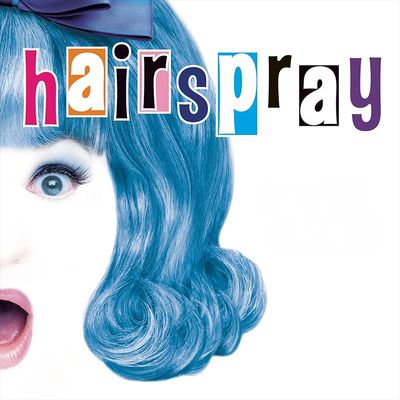
- All-White Production Of HAIRSPRAY In Texas Raises Eyebrows
- Should There Be All-White Productions of HAIRSPRAY?
Follow Cris: Instagram / YouTube / Medium
Follow WINMI: Instagram / Twitter / Website / Medium
WINMI is a Top 20 Podcast thanks to you! https://blog.feedspot.com/theatre_podcasts/
Reach out with any questions or comments: contact.winmipodcast.com The time and expense needed to bring these guests and conversations to you each week is sometimes challenging but always rewarding. Please consider buying me a coffee to support this work that goes into each episode.Transcript
This transcript was automatically generated and might contain errors.
[0:00] Patrick Oliver Jones: Today on the podcast is the very definition of a multi-hyphenate. Cris Eli Blak is an actor, writer, poet, producer, and he shares not only his journey as an artist, but how theater can be a cause for change.
[0:35] Patrick Oliver Jones: I'm your host, Patrick Oliver Jones, and welcome to another episode of Why I'll Never Make It, featuring conversations with fellow artists on the realities of a career in the entertainment industry.
[0:48] Patrick Oliver Jones: That website, Why I'll Never Make It dot com.
[0:52] Patrick Oliver Jones: In recent weeks, one of those realities of theater has been the issue of race and how that shows up in casting, producing, writing, and the overall creation of theater pieces.
[1:06] Patrick Oliver Jones: And today's episode actually came about in a rather unusual way. For the most part, I reach out to artists that I know, maybe ones that I know through friends of mine. But in this case, Cris actually reached out to me. He discovered the podcast, liked what he heard, and he wanted to come on the podcast as an African American writer talking about the specific challenges that he faces in getting his work out there.
[1:31] Patrick Oliver Jones: Cris may only be 21 years old, but he has a wisdom well beyond his years. In the fall, he'll begin his senior year at the University of Southern Mississippi.
[1:46] Patrick Oliver Jones: But one thing that Cris is certainly not indecisive about is how he wants his career to take off. In this year alone, he's either published or produced five plays, two monologues, and one performance piece.
[2:00] Patrick Oliver Jones: Last year he did his first short film, The Brother's Survivor, as both screenwriter and producer. But as I mentioned, Cris is also a poet, and since 2016, he's taken part in four poetry slams and has won two of them.
[2:15] Patrick Oliver Jones: So Cris is certainly not sitting back and waiting for his career to find him. But while achieving all of this success, it has certainly not been easy sailing for him.
[2:28] Patrick Oliver Jones: Cris has gone through his own share of ups and downs. In fact, he and I were texting a couple of days ago, and he opened up to me about how one year ago today, his life had hit its lowest point. He found himself confused about everything, his purpose, his goals, his life.
[2:46] Patrick Oliver Jones: He was lost to say the least. And he was very thankful for this chance to have a conversation, share his journey. And he ended that text by saying, What change a year can make.
[3:02] Patrick Oliver Jones: But just as time can change us and hopefully improve us, sometimes we keep coming back to the same issues over and over again. Our country is facing that right now with regards to race and the many aspects that it affects our daily lives.
[3:19] Patrick Oliver Jones: Theater in particular is trying to confront this when it comes to the different voices that are represented not only on stage but behind the scenes. And that is just one of the subjects that we talk on today.
[3:32] Patrick Oliver Jones: But we start off appropriately at the beginning, and what it was that drew Cris into performing and the art of storytelling.
[5:29] Patrick Oliver Jones: Did she ever tell you what sparked that intuition in her?
[7:00] Cris Eli Blak: Oh, I like this. Because before then, had you ever been on stage or done any type of performing of any kind?
[9:32] Cris Eli Blak: Right.
[9:36] Patrick Oliver Jones: When you started to write as well as act, were you writing mostly for yourself or for your friends, or were you writing with kind of a bigger thought in mind?
[10:52] Cris Eli Blak: Right.
[11:18] Patrick Oliver Jones: Yeah, with issues of race being so prominent right now, do you see yourself as a voice to address these kind of issues?
[12:13] Cris Eli Blak: He even received an Oscar nomination for Best Original Screenplay. The story explores a Brooklyn neighborhood simmering racial tension, and the film culminates in violent unrest and a death, a story that is all too familiar even now, 30 years later.
[12:30] Patrick Oliver Jones: In 2014, Spike Lee gave an interview with the Huffington Post about the film's impact and its longstanding legacy.
[14:04] Patrick Oliver Jones: Right.
[15:04] Cris Eli Blak: Whether in movies, theater, or music, the arts have a special knack for creating empathy. And I think it's one of the strongest ways to make society see injustices and consequently to make change. It brings people together from various backgrounds and political ideologies, financial statuses, religious beliefs, and it is in this coming together that there are opportunities for learning, awareness, persuasion, communing, and mobilizing for change. Whether it's a documentary film like Blackfish on animal cruelty, or Philadelphia talking about the AIDS crisis. Visual storytelling always has an impact. And it was a seventeen-year-old on her phone that caught the horrific footage of George Floyd's killing. That footage has stirred a nation and created an uprising. We're all watching the news. What's the latest? What's going to happen? So how can the arts be a part of that conversation? How can they be a cause for change?
[17:29] Cris Eli Blak: Yeah. Getting back to something that you said, and I've heard this from others, that it's so important to see whether it's your own race, your sexuality, your gender. When you see yourself on stage or on screen, it really is impactful to think, oh, I can be like that. I can do that. That is something that is within my future and possibility. And you had mentioned that high school was just a few years ago. You're still a young man, just kind of starting out in your journey of acting and writing, and you're still in college right now, right? Have you been able to narrow your classes to structure it toward creative writing?
[20:20] Cris Eli Blak: Yeah, I think that's so important. Whether you're on stage, whether you're behind the scenes, us as creative people, we have to be more than just our own insular selves. We have to see the world, we have to see others as you talk about here and know those other stories, to see what’s kind of come before us and where we are in the moment and where we want to go.
[22:07] Cris Eli Blak: Yeah, I yeah, some of my most favorite movies, especially independent movies, are ones where it's like two or three people. They're there, they're talking. They're one of my favorites, uh, Before Sunrise. It's two people walking around a European city, and they're just kind of meandering from one subject to the next, but in that they're learning about each other, they're kind of coming together, and an attraction forms, and it's just a very simple but elegant story about conversation. They just kept going. So simplicity is sometimes much better than, you know, these huge films that we get.
[22:51] Cris Eli Blak: You've been able to get into different festivals and have your work start to get out there and have that sense of okay, it's been on stage, it's been in front of people. What is that process like getting it from the written word to the spoken word, getting it produced?
[25:39] Cris Eli Blak: Yeah. Right. That's the writer's equivalent of actors pounding the pavement, you know, going to auditions. You're constantly looking for ways to submit your work.
[26:21] Cris Eli Blak: I like that. And then there have been other times where I would assume that you disagreed with that interpretation. How have you balanced both of those?
[27:33] Cris Eli Blak: Brilliant.
[28:27] Cris Eli Blak: Yeah. I, as an actor, fellow actor, I am just sinking with you. My spirit aches for you in being in those kind of situations. And it wasn't just like you're up on stage and no one's really paying attention. No, this is something you wrote and you're alone.
[28:53] Cris Eli Blak: Right, right. It's just awkward, it's uncomfortable, and you just want to crawl into a hole.
[28:58] Cris Eli Blak: Yeah. Oh.
[29:00] Cris Eli Blak: Now, in addition to the plays, as you've mentioned, you've also gotten to do short films. That's kind of where you got started in your writing career. And so, how do you find the difference writing for film and stage?
[31:05] Cris Eli Blak: And then there's also the cost of you have to actually make the film in order to submit it, whereas for a play festival, you just have a script and you're done.
[32:03] Patrick Oliver Jones: Right, just do it.
[32:04] Cris Eli Blak: Just use it.
[32:17] Patrick Oliver Jones: Yeah, the financial aspect of it may not have cost a lot, but certainly the time, the energy, the phone calls, the going to these different locations, the asking people permission, it sounded like a lot of uh a lot went on behind the scenes, which I can see why you'd be proud of the end result.
[33:39] Patrick Oliver Jones: With your own family life and your upbringing, do you find that you infuse a lot of your personal life into your writings?
[35:21] Cris Eli Blak: Yeah.
[36:23] Patrick Oliver Jones: Yeah, I think you speak to something that's very important because a lot of times we can get caught up in the labels of who a person is, you know, whether they're their skin color, their sexuality, their financial status, these kind of things can label us. Yet deep down, as you said, we're we're all looking for acceptance. We're all looking to find our purpose in life. We're all looking for these greater goals that that kind of exists throughout humanity, not just in one particular culture or subculture.
[38:35] Patrick Oliver Jones: As I was going through the various writings of Cris, one really stuck out to me, and it is something that he and I share in common. Neither of us grew up with a father in the home.
[38:47] Patrick Oliver Jones: And he wrote a monologue called Like Father, Like Son, that specifically dealt with that paternal absence.
[39:00] Patrick Oliver Jones: That's short for a monologue lounge. A link to Malachi's performance of the monologue can be found in the show notes. Needless to say, this is a very personal piece for Cris and caused him to go out of his normal comfort zone when it came to writing.
[40:36] Patrick Oliver Jones: As you were writing it, was it just for that moment, that monologue, or did you see it being able to expand upon it and grow into a larger piece?
[43:11] Cris Eli Blak: Yeah.
[43:33] Patrick Oliver Jones: Yeah, I'm curious as you tell that story because I I had a single mother as well who who did a lot and I never really knew everything that she did. I had everything I wanted. I was I grew up, you know, very, very happy with where we lived, you know, not knowing that she was, you know, trying to just make make the rent and make sure that the rent stayed low so that we could stay where we were, so we weren't having to move. And you know, she was able to go from apartment into the house we had because she knew she talked to the landlord and different things like that that she did to make our lives better.
[44:17] Patrick Oliver Jones: I I wanted this family, but I I never really felt like I missed out on something. And it wasn't until I got older that that lack of father started to show itself.
[49:25] Cris Eli Blak: Yeah, my grandparents on my mother's side were the same. I was my grandmother's little angel, and I knew it. I felt loved. I felt, you know, it, and I would go there every other weekend so that my mother could work on the weekends because she was fortunate to just have one job my whole time growing up. So at least she had that, but just sent me to school to do all the things, and we would go on vacations to Florida. You know, she wanted me to have the best childhood life that I could have. And I know that she sacrificed a lot of her own wants and needs so that I could have that. You know, those weekend times with my grandparents were always great. They really took a large role in that parenting as well as my mom.
And speaking to that deflection, as you called it, but it really is a balance of knowing that yes, you know, having that quote-unquote nuclear family, mother, father, the children, the home life, that settled kind of wonderful ideal family is certainly something to look toward and be like, well, what could have been? But at the same time, the struggles, the highs, the lows, everything that came from our life is who we are. And so, as you say, we would be different people had those men been in our lives, for good or bad, and it could have gone either way. And so I think that was something I was around, I was around the age of thirty or so. I was in Orlando, I'd just gone through a divorce, and I was watching, I don't know if you saw the movie Road to Perdition with Tom Hanks.
And so that was very much about that father-son relationship too. And I can't remember the scene exactly, but I remember my reaction. And I was able to find even a bit more gratitude for what my mother did.
[54:02] Cris Eli Blak: Chris's writings have not only been in the dramatic setting of theater or films, he's also written essays that deal specifically with issues of race. One in particular surrounds the controversy of some theaters choosing to produce Hairspray with all-white casts. One specific example happened in 2012 in Plano, Texas. The Plano Children's Theater did an all-white production of Hairspray because, according to the president of the theater's board of directors, Daryl Rodenbau, no Black actors auditioned, and they weren't about to bow to political correctness and deny the actors a chance to do such a fun show. He also added that he wouldn't personally object to all-white versions of The Wiz or To Kill a Mockingbird.
Now, if you're as shocked by this as I am, we are certainly not alone. The On Stage blog back in 2017 addressed Hairspray specifically when it came to all-white casting. Chris Peterson, the founder and editor-in-chief of the Onstage blog, brought up the point that this type of casting was actually all right with the creators of the show. And here is a letter that they crafted specifically for those productions that used actors whose race was different from the characters they were portraying. Here's how it reads: "Which is a chapter in the story of race in America that our show is obviously against. Yet we also realize to deny an actor the chance to play a role due to the color of his or her skin would be its own form of racism, albeit a politically correct one.
And so if the production of Hairspray you're about to see tonight features folks whose skin color doesn't match the characters, not unlike how Edna has been traditionally played by a man, we ask that you use the timeless theatrical concept of suspension of disbelief and allow yourself to witness the story and not the racial background or gender of the actors. Our show is, after all, about not judging books by their covers. If the direction and the actors are good—and they had better be—you will still get the message loud and clear, and hopefully have a great time receiving it."
[57:49] Cris Eli Blak: I mean, it's, yeah, like Hairspray is in itself. And I'm like, okay, I kind of see what the creatives are talking about, but The Wiz just makes no sense. It's like there is literally a white version and a Black version of this.
[58:03] Patrick Oliver Jones: Right.
[58:06] Cris Eli Blak: Yeah.
[58:11] Patrick Oliver Jones: Yeah, yeah.
[58:53] Cris Eli Blak: Yes.
[59:03] Patrick Oliver Jones: Yeah.
[59:04] Cris Eli Blak: Because the same is true for Hairspray. I think you couldn't do an all-Black cast either. It needs that diversity.
[59:16] Patrick Oliver Jones: Yeah.
[1:00:07] Cris Eli Blak: Yeah, and what's interesting is that once I read your article, your blog post, then I started kind of researching more because, as you mentioned, Poor Game Best and all these other productions have happened with all-white casts, and then I happened to come upon the fact that those creatives just in the last couple of weeks have reversed that decision and they're saying, "Okay, no, you cannot do an all-white cast. It needs to be a segregated cast in order to tell this story." I mean, the timing of it's certainly very interesting because race is very prominent right now.
[1:01:43] Cris Eli Blak: Mm-hmm.
[1:02:58] Cris Eli Blak: Because I think it is so important that we put ourselves, our society, up to a mirror and showcase what's right, what's wrong, what's not working, what needs to be fixed, and fix those things. I think, of course, that's important. It begins to be something that is just how we operate. That we don't see it as, "Well, we can just flow and do whatever." It's like, no, these issues of race matter whether it's in the moment or whether we've gone through ten years and there's been no incident. It still needs to be, this is just how we operate. And I think, and I hope that that's where theater can get to, that it becomes more of their default of realizing, yes, these voices need to be heard, and we don't need someone telling us to do it.
[1:05:57] Cris Eli Blak: Yeah.
[1:06:41] Patrick Oliver Jones: In your own personal writing, then what does success look like and what right now holds you back from that success?
[1:12:35] Patrick Oliver Jones: Well, I certainly have no doubt that Cris's future is bright and he has a long road ahead of him as a writer, as a playwright, screenwriter, whatever he puts his mind to. But I was struck by one of his answers when I asked what's holding him back. And the first thing he said was, "I'm a twenty-one-year-old black man." And my hope is that as his career continues to flourish and grow, that that will no longer be something that holds him back. And I am sure that the writings and the messages, the stories that Cris will be telling, will be a strong voice for those who have been unheard and unseen so far. To watch, read, and learn more about Cris's writings, you can look for links in the show notes or go to the website, why I'll never make it.com for that information.
Also, while you're there, you can donate to the podcast and further my efforts in bringing more stories like Cris's to the forefront. Thank you so much for joining me and Cris today. This was an important conversation, an honest conversation, and if it spoke to you at all, I would love to hear about it. Share that story with me on the website through the contact form, as well as share this episode with anyone who you think could benefit from Cris's story. And until then, I'm your host, Patrick Oliver Jones, reminding you that the reasons for not making it may be arbitrary and frustrating, but the reasons to keep going are even more numerous and rewarding. Join me again next time as we talk more about why I'll never make it.
© Broadway Podcast Network, All Rights Reserved