

After our conversation on the previous episode, Brian answers the Final Five, talking about software engineering and his dream to fix CHESS as well as lessons learned from Elizabeth Gilbert. Do you have other ideas for Final Five questions?.. Read More
From the show: Why I‘ll Never Make It
Featured Shows

About
After our conversation on the previous episode, Brian answers the Final Five, talking about software engineering and his dream to fix CHESS as well as lessons learned from Elizabeth Gilbert.
Do you have other ideas for Final Five questions? Let me know at contact.winmipodcast.com.
The time and expense needed to bring these guests and conversations to you each week is sometimes challenging but always rewarding. Please consider buying me a coffee to support this work that goes into each episode.
- For further insights on the topics covered in this episode: twitter.com/winmipodcast/
- Quotes and unreleased audio clips: instagram.com/winmipodcast/
Transcript
This transcript was automatically generated and might contain errors.
[0:00] Patrick Oliver Jones: Well, thanks for coming back and joining me and Brian Lowdermilk for this bonus conversation as we go through software engineering, chess, the musical, and Elizabeth Gilbert.
[0:11] Patrick Oliver Jones: All that and more on the final five.
[0:23] Patrick Oliver Jones: All right, Brian, here we are back with the final five questions.
[0:26] Brian Lowdermilk: Number one, uh, if you could have any other job outside of the arts, what would that be?
[0:31] Brian Lowdermilk: It would probably be as a software engineer, and I think the world is better for me not doing that.
[0:37] Patrick Oliver Jones: Is that uh tapping into your propensity toward math?
[0:41] Brian Lowdermilk: Oh, sure. I make every musical I work on into a spreadsheet or a database.
[0:47] Patrick Oliver Jones: Really?
[0:47] Brian Lowdermilk: Yeah, for we did an immersive house party musical that required me working with a computer scientist to build like a full program to allow us to map the different like nine different rooms and the 80 songs in different ways so that we could get down not just to the second, but to the frame, so that we could know where every actor was at every frame.
[1:07] Patrick Oliver Jones: Wow.
[1:08] Brian Lowdermilk: It was awesome.
[1:09] Patrick Oliver Jones: Well, I certainly know for me. I had two semesters of music theory, and I went into it being told, oh, well, well, you you're good at math because I was in honors math throughout high school and such.
[1:19] Patrick Oliver Jones: So I I enjoy math and I'm good at it, but music theory seemed like another language to me.
[1:24] Patrick Oliver Jones: Uh all right, number two, what is a bucket list role or show or maybe someone that you want to work with one day?
[1:32] Brian Lowdermilk: Chess.
[1:33] Brian Lowdermilk: Chess, chess, chess.
[1:35] Brian Lowdermilk: I want to be part of the team that fixes chess the musical. It's the best musical ever. It like doesn't work, and I just want to be part of the group of people who figures out how to make chess the amazing show that it almost is.
[1:49] Patrick Oliver Jones: So, what would be like your first recommendation for fixing it?
[1:53] Brian Lowdermilk: Um, make it really, really long. Put all of the best songs in.
[2:00] Brian Lowdermilk: So make it like a six-hour experience.
[2:03] Brian Lowdermilk: And cast Audra McDonald as Florence. I think that fixes most any musical, right?
[2:08] Patrick Oliver Jones: That's true.
[2:09] Patrick Oliver Jones: All right. Uh number three, who is it that uh that you look up to as either a mentor or someone that inspires you?
[2:16] Brian Lowdermilk: These days, Liz Gilbert.
[2:18] Brian Lowdermilk: Uh, if if people are familiar are familiar with her work, I mean, she's most known for having written Eat Pray Love, but she wrote a book called Big Magic that is just a mind-opening book on creative processes.
[2:31] Brian Lowdermilk: She has this gorgeous idea about how creative genius is something that can be external to you and not something that as an artist you have to take responsibility for, that your job can just be to show up every day to your craft, but there's no expectation that anything will come of it.
[2:48] Brian Lowdermilk: The truth is is that there's never a promise for any of us that theater is going to be sustainable, that there's gonna be a prize at the end, or even a steady paycheck, or even healthcare.
[2:57] Brian Lowdermilk: Like the only promise is that you can make your own work, and the only promise is that you can serve your creative spirit.
[3:04] Brian Lowdermilk: And I feel like that's something that Liz Gilbert has taught me through her writing on creativity.
[3:10] Brian Lowdermilk: And so yeah, she's been kind of a beacon in that regard.
[3:14] Patrick Oliver Jones: Yeah, I would say that mirror is something that I learned even in improv class. Two of the best things that I got from that were to just show up as as you were saying, listen and not expect anything, and secondly, don't try to be funny, just let it come out.
[3:30] Patrick Oliver Jones: And so I think that a lot of our artistry can come when we kind of unshackle ourselves from any expectations.
[3:37] Brian Lowdermilk: Agreed.
[3:38] Patrick Oliver Jones: Number four, name a lesson or trait that took you a while to learn, or one that you're still working on today.
[3:45] Brian Lowdermilk: Well, this is sort of like that, but the thing that immediately comes to mind is something uh someone said to me um a few years ago, which is uh we are not newborns or vampires.
[3:57] Brian Lowdermilk: We do not heal overnight.
[3:59] Brian Lowdermilk: And I like that.
[4:01] Brian Lowdermilk: I think that it's easy to forget, especially in times like this, that you know, we're we expect our bodies and our brains to react in one certain way, and we expect to be really resilient, and um we just don't heal that way.
[4:17] Brian Lowdermilk: Like for anyone out there who's struggling with grief right now, whether over the loss of a human or a job or anything, um, I think that it's important to remember that we don't heal as quickly as we think we do, and that's okay.
[4:33] Patrick Oliver Jones: Yeah, have you felt pressure on your own self to be more productive or do more?
[4:38] Brian Lowdermilk: Oh, always, always.
[4:40] Brian Lowdermilk: Um, and I think that it can be really hard when you're uh when you're a creative and you don't have people to report to or some like you can you can spiral.
[4:50] Brian Lowdermilk: Um I've been really lucky, but I think one of the reasons I've been lucky is because I've struggled with I struggled with anxiety for a lot of my 20s in theater, and so I have a lot of tools.
[4:59] Brian Lowdermilk: So um for anyone out there who is struggling with some of these things for the first time, um, there are a lot of people who can help you and a lot of ways to reach out.
[5:09] Brian Lowdermilk: Um, a lot of what I've been doing with the musical theater graduates, it's like half mindfulness and half musical theater.
[5:15] Brian Lowdermilk: Because I do think that um again, musical theater is not an essential service.
[5:21] Brian Lowdermilk: If we're showing up here to make theater.
[5:24] Brian Lowdermilk: I I do think that that seeing it through a self-care lens and trying to create rehearsal rooms and environments and shows that serve our entire souls and and spirits to create situations where everyone feels valid and good and safe is going to be really, really hard.
[5:42] Brian Lowdermilk: But we have the opportunity right now to reimagine what some of our existing structures in theater look like.
[5:48] Brian Lowdermilk: And I bet that there'd be a lot less incidents of mental illness in theater if people weren't always scared of whether or not they were going to make their health care weeks.
[5:59] Brian Lowdermilk: I mean, that's really the basis behind the title of my podcast about this idea of making it, not just as, you know, am I going to make a job? Am I going to have money?
[6:07] Brian Lowdermilk: But the making it creatively, the making it financially, the making it and having the resources to just be a human as well as a creative.
[6:16] Brian Lowdermilk: It's a myth.
[6:17] Brian Lowdermilk: There is no making it.
[6:18] Brian Lowdermilk: This is it.
[6:19] Brian Lowdermilk: You're in it.
[6:20] Brian Lowdermilk: We're in it.
[6:21] Patrick Oliver Jones: Yeah, there's no making it, there's just doing it.
[6:23] Brian Lowdermilk: Yeah.
[6:23] Brian Lowdermilk: And so these days, um, the people who I the people who I look up to most are not necessarily the people who've written the most impressive scores or written the most perfect books, or the folks who I look up to right now are people who have some hard won lessons about what it means to like wake up every day and forgive yourself and to be able to safely move through the world in your most authentic self.
[6:52] Patrick Oliver Jones: Exactly.
[6:53] Patrick Oliver Jones: And that leads me to the to the last question.
[6:56] Patrick Oliver Jones: What is the best advice that you've received?
[6:59] Brian Lowdermilk: It was something that my yoga teacher who made me fall in yoga gave me.
[7:03] Brian Lowdermilk: Um, she used to always say, What's next is happening now.
[7:08] Brian Lowdermilk: And so I like that a lot.
[7:09] Brian Lowdermilk: And that's a nice thing to remind yourself, especially in moments like what we're in right now, whether you're looking at your tree outside your window like I am right now, or you're looking at your cat.
[7:20] Brian Lowdermilk: Just what's next is happening now.
[7:23] Patrick Oliver Jones: How has that um affected you even your own writing as far as the the type of things that you write about?
[7:29] Brian Lowdermilk: I try and just allow myself to be in the song sometimes, and then I allow myself to leave the song, and that's good.
[7:35] Patrick Oliver Jones: Yeah, yeah.
[7:36] Patrick Oliver Jones: I I will say, certainly as a singer, some there are just those songs that sometimes you just get caught up in the melody or even the lyrics, and it it can be very refreshing and feel like a little a little home.
[7:47] Brian Lowdermilk: Yeah.
[7:48] Patrick Oliver Jones: All right.
[7:48] Patrick Oliver Jones: Well, thank you so much, Brian.
[7:50] Brian Lowdermilk: Yeah, of course.
[7:51] Patrick Oliver Jones: Well, the this podcast is fantastic, and I think it has such a beautiful message.
[7:55] Brian Lowdermilk: Thank you.
[7:55] Brian Lowdermilk: Thank you so much.
[7:56] Patrick Oliver Jones: I really appreciate that.
[8:01] Patrick Oliver Jones: Well, that was very kind of Brian.
[8:03] Patrick Oliver Jones: And if you have nice things to say about the podcast, I would love to hear them on this season's podcast survey.
[8:10] Patrick Oliver Jones: Go to why I'll never make it.com to share your insights and feedback.
[8:15] Patrick Oliver Jones: Well, that does it for me and Brian.
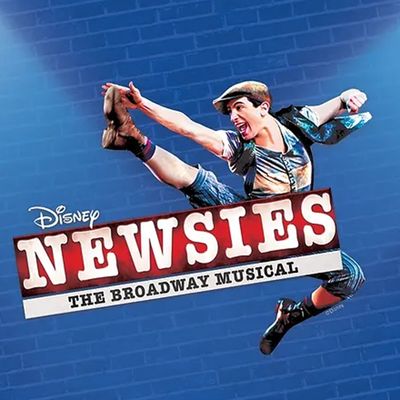
[8:17] Patrick Oliver Jones: Join me next week with Chaz Woolcott from Newsies, as he and I sit down together and talk more about why I'll never make it.
[8:35] Patrick Oliver Jones: Most enterprises use disparate systems to manage spend.
[8:38] Patrick Oliver Jones: The result, a reactive manual approach.
[8:41] Patrick Oliver Jones: CFOs and controllers, you deserve better.
[8:44] Patrick Oliver Jones: You deserve a unified spend platform from Brex.
[8:47] Patrick Oliver Jones: Brex makes it easy to proactively control spend with cards, spend management, travel, and bill pay in one place.
[8:53] Patrick Oliver Jones: You can create budgets with controls built in, track and adjust in real time to keep teams accountable, and automate compliance to close the books faster.
[9:01] Patrick Oliver Jones: Ready to control your spend with one unified platform?
[9:04] Patrick Oliver Jones: Visit BREX.com.
© Broadway Podcast Network, All Rights Reserved