

When it comes to the guests on this podcast most of them are fairly well established. This allows me to the Google them, find pictures and stories about them, and get to know their body of work. But for Tadeo Martinez, there wasn’t much to go on... Read More
From the show: Why I‘ll Never Make It
Featured Shows
About
When it comes to the guests on this podcast most of them are fairly well established. This allows me to the Google them, find pictures and stories about them, and get to know their body of work. But for Tadeo Martinez, there wasn’t much to go on. I found a couple of show reviews and his website.
Now, this is no slight on Tadeo. I didn’t have much either coming out of college. But what I did find certainly gave me enough cause to bring him on the podcast, especially when I read of his desire to bring more Latino and Hispanic representation to theater. So in today’s episode you and I are going to get to know this extraordinarily talented young man, who graduated from college just one year ago.
Just like last week's guest Bianca Marroquín, Tadeo grew up in Monterrey, Mexico learning both English and Spanish. So while he did have an smoother transition then some coming to America to go to college, that didn’t mean language and communication was easy for him. And it was once he found the secret to address this barrier that his performances and opportunities really opened up.
Follow Tadeo: Website / Instagram /
Follow WINMI: Instagram / Twitter / Website
- Donate to the podcast, either one time or on a monthly basis: https://ko-fi.com/winmipodcast
- Don't forget to check out all the helpful offers available to you through WINMI guests and partners: resources.winmipodcast.com
- WINMI is a Top 20 Theater Podcast thanks to you! https://blog.feedspot.com/theatre_podcasts/
Music used in this episode by Blue Dot Sessions and Podington Bear and licensed under a Attribution-NonCommercial License.
Transcript
This transcript was automatically generated and might contain errors.
[0:16] Patrick Oliver Jones: In my fourth and final full interview for Hispanic Heritage Month, I'm taking a look forward at the next generation of Hispanic artists.
[0:24] Tadeo Martinez: Just graduated from college last year with a BFA in theater. But even at a young age, I've learned important truths when it comes to performing and auditioning.
[0:39] Tadeo Martinez: But I found that it wasn't until I brought all of me into the room, and that meant like choosing a piece in Spanish and standing by it, bringing my full identity into the callback room. That's when I started to see results.
[1:10] Patrick Oliver Jones: I'm your host, Patrick Oliver Jones, and if you'd like to support the work of this podcast, there's now a way to give monthly donations. And as my thank you, that monthly support will come with early access to interviews like these before they're ever released to the public. Just go to donate.winmepodcast.com to find out how you can support Why I'll Never Make It.
[1:36] Patrick Oliver Jones: When it comes to the guests on this podcast, most of them are fairly well established. This allows me to Google them, find pictures and stories about them, and get to know their body of work before I interview them. But for Tadeo Martinez, there wasn't much to go on. I found a couple of show reviews and his website. Now, this is no slight on Tadeo. I mean, I didn't have much either coming out of college. But what I did find certainly gave me enough cause to bring him on the podcast, especially when I read of his desire to bring more Latino and Hispanic representation to theater. So in today's episode, you and I are going to get to know this extraordinarily talented young man. As I mentioned, he graduated college just a year ago. I went to Southern Methodist University in Dallas.
[2:27] Tadeo Martinez: But like many of us back in high school, I had several colleges in mind that I wanted to go to. Originally, I had like 12 to 15 on my list. And then I got into SMU in like October, like September, October.
[2:44] Tadeo Martinez: Of my senior year.
[2:45] Patrick Oliver Jones: Of your senior year, like it happened really fast. So then I auditioned for like four others.
[2:51] Tadeo Martinez: Just in case.
[2:52] Patrick Oliver Jones: Yes, because I had the insane privilege of being accepted to college that early.
[2:59] Tadeo Martinez: Yeah, that is really now. So was SMU still your top choice, or did you audition with those others thinking if I get this, I'm gonna go here instead?
[3:07] Tadeo Martinez: It was a little of both. I kind of just wanted the option to go farther away from home.
[3:11] Patrick Oliver Jones: Okay. Because how far away is Monterrey to Dallas?
[3:14] Tadeo Martinez: It's like 15 hours driving, 10 to 15 hours driving, like an hour flight. So it's pretty close. And of course, like dreaming of doing theater in New York, I wanted to go up there and I wanted to go to New York or Pennsylvania or Boston.
[3:32] Patrick Oliver Jones: Now, I don't know about you, but when it comes to traveling, one of the first things I associate with a particular state or city is its food. Like the places Tadeo just mentioned, they each have their own distinctive cuisine. And so today, when I got to talking about different restaurants and food choices, he mentioned a favorite taco place near the college campus. But our talk of food led us down an interesting path.
[4:00] Tadeo Martinez: That's good. Yeah. And I mean, like an authentic taco. It's like a quesadilla is authentic.
[4:04] Tadeo Martinez: It's pretty authentic.
[4:06] Patrick Oliver Jones: Oh, I love a quesadilla.
[4:07] Tadeo Martinez: Yeah. You can throw some meat on there, make it a gringa.
[4:10] Tadeo Martinez: That's what we call them.
[4:11] Patrick Oliver Jones: Oh, oh, if you add meat to a quesadilla, it's a gringa.
[4:11] Tadeo Martinez: It's a gringa.
[4:16] Patrick Oliver Jones: I don't know why, but what does gringa mean?
[4:18] Tadeo Martinez: It's like what we call Americans.
[4:21] Patrick Oliver Jones: Well, right, right. So I was thinking, so like a foreign female?
[4:24] Tadeo Martinez: I mean, gringa is not all foreign, though. It's particularly to America.
[4:30] Patrick Oliver Jones: Okay, right. And I'm a gringo for sure, yes.
[4:32] Tadeo Martinez: Yes, but during the war or something, the war in Texas, this may be a hundred percent a lie. Making up history, here we go.
[4:40] Patrick Oliver Jones: I would love to have that show, making up history with Theo.
[4:43] Tadeo Martinez: But someone told me that it originated during the war in Texas because they'd see the armies coming and they'd go, "Green, go."
[4:54] Patrick Oliver Jones: No, no, no. I want it to be true though, Patrick.
[4:58] Tadeo Martinez: No, that's like I don't know if it's true, but I love it.
[5:01] Patrick Oliver Jones: No, no, no, like it's so comical that it might be true, but it's also so ridiculous that I find it hard to believe.
[5:09] Tadeo Martinez: Because it's the best. In the last three episodes for Hispanic Heritage Month, I've highlighted some interesting and relevant pieces of history. But Tadeo gave me the idea to research the actual origin of gringo.
[5:28] Patrick Oliver Jones: Now, first off, his story about US soldiers and the Mexican American War being told "gringo home" is not correct. But it is not the only somewhat comical origin story for the word gringo. In 1883, the Los Angeles Times and the Arizona Weekly Citizen both published an article explaining where this word came from. They said a lot of sailors belonging to an English man of war at Mazatlan went ashore and got rip-roaring drunk. While parading the streets, one of them was singing "Green Grow the Rushes." The Mexicans only caught the first two words and called them gringos, and it's stuck ever since.
[6:12] Patrick Oliver Jones: However, a century before that Mexican American War, the word gringo had already been circulating in Spanish language dictionaries. In the 1787 El Diccionario Castellano, it says, "Foreigners in Malaga are called gringos, who have particular kinds of accents that deprived them from easy and natural Castilian speech." And in Madrid, the name is given especially to the Irish for the same reason. Now, Irish soldiers had been joining the Spanish army from the 16th through the 18th century, so Spaniards would have been familiar with their quote unquote gibberish. And that's because you see, gringo is actually just a variation of the Spanish word for Greek, which is griego. The use of Greek as the stand-in for unintelligible foreigner talk is somewhat familiar to English speakers as well, as in the expression, "it's all Greek to me."
[7:11] Patrick Oliver Jones: So, in all actuality, the word gringo was not invented by Mexican popular folklore. It came centuries ago from Spain, and it was basically applied to those who spoke an incomprehensible language. So when the United States invaded Mexico in the mid-19th century, the word sprang from popular memory, and the invaders who spoke a strange language were once again called gringos.
[7:40] Patrick Oliver Jones: But I can't really fault Tadeo for the funny story he heard. We've all grown up with our parents and family telling us made-up or inaccurate stories from history. I mean, when you think about it, that's what us actors do, right? We improv, play make-believe, and pretend for a living.
[8:01] Tadeo Martinez: I grew up playing pretend, like that's all that's just what I did. So then when I started getting into theater at school and kind of was starting to think about doing it professionally, acting as a career.
[8:17] Tadeo Martinez: My parents were like a little surprised but not shocked, because did they have their own idea of what you should be doing or who you should be?
[8:27] Tadeo Martinez: Oh, yes, yes, yes, yes. It's not that it's becoming more common, but it's not that common to say, "Hey, I want to be an actor in Monterrey, Mexico" to your parents. We have a lot of actors and singers and artists here, just not everyone does it fully, fully professionally. But it's growing, which is really really exciting because there's a lot of talent here.
[8:56] Patrick Oliver Jones: In fact, though it wasn't on purpose at all, Monterrey has been somewhat of a focus here on the podcast for Hispanic Heritage Month. Jaime Lozano and Bianca Marroquin are both from there. And several weeks ago, Monterrey native Roberto Araujo was also on the podcast. So Tadeo is now the fourth person from there to appear on the podcast.
[9:19] Tadeo Martinez: First of all, that makes me so happy and so proud. And second, I'm telling you, there's so much talent in Monterrey.
[9:28] Patrick Oliver Jones: Now, as an aside, I have to tell you, I love the way he says Monterrey. I took three and a half years of Spanish and could never master the skill of rolling the Rs like that.
[9:44] Tadeo Martinez: You know, I could not do it either, so I had to go to speech therapy, because like every other word in Spanish is double R.
[9:50] Patrick Oliver Jones: And I don't know wait, so as a Mexican, you had to go to speech class to learn to speak more Mexican.
[9:59] Tadeo Martinez: Yes, so that I could go, I could do the double R, yes, 100%.
[10:05] Patrick Oliver Jones: And that is so interesting. I do not remember how this happened. I just remember this woman, this older woman putting cajeta, which is like a dulce de leche type candy, so good. She put it on a spoon and she shoved it down my throat. And she was like, "R's, R's," and I was like, "Oh, I don't," and that's how I learned.
[10:24] Tadeo Martinez: That sounds like torture though.
[10:26] Patrick Oliver Jones: No, it kind of, well, yes, I'm sure it was, but now I just think of it fondly because of the cajeta.
[10:33] Tadeo Martinez: Well, yeah, because it probably was very tasty.
[10:35] Patrick Oliver Jones: Yes, exactly. But yes.
[10:39] Tadeo Martinez: But even though I had lessons in learning and perfecting the rolling of my Rs, I didn't have as much experience or practice being on stage. That took me a little while longer to learn.
[10:53] Tadeo Martinez: I mean, growing up in Monterrey, like I didn't really know anything. I remember going into auditions, like having to figure out what a monologue even was. I had never even auditioned before outside of high school. I wouldn't even go up for like community theater things here in Monterrey because I was so shy and afraid of it.
[11:20] Patrick Oliver Jones: And are there a lot of local productions that happen, or is it mostly touring or traveling productions that come into the city?
[11:28] Tadeo Martinez: Now it's both. When I was growing up, there were like one or two regional productions a year, kind of like community theater. Now they've built this theater and now touring shows come through and the arts culture in Monterrey, it's growing, but it used to be that not at all.
[11:48] Patrick Oliver Jones: So then with that limited exposure to it, what made you think, "Oh, well, then I want to pursue that even though I don't really see it around me"?
[11:58] Tadeo Martinez: Well, my mom was a dancer, so I was around kind of like art growing up. My mom danced for 14 years. A gorgeous, gorgeous dancer.
[12:07] Patrick Oliver Jones: And what about your father?
[12:08] Tadeo Martinez: Well, first of all, my dad is like 10 years older than my mom. He had a previous marriage, like he had a life, he had a life. He's 10 years older. They met in a bar. But my dad is like, first of all, he's a trooper because he liked his kid, like his young son to play a rehearsal, and then like drive him to go look at cars with him. And I would literally make up words for different parts of the car because I did not know what they were.
[12:38] Tadeo Martinez: It's weird. And then like my sister is very into, my sister, it's like a psych, she's younger than me, but she's going into psychology, so she's very interested in like little kids. I have three half-brothers who like I see sometimes. Like it's Patrick, it's weird. It's very Mexican. And then like my mom's side of the family, it's just her and her younger brother, and I and it's like four cousins in general. And then my dad's family, he's the youngest of five, and all of them have at least five kids. So it's gotten to the point where like I don't know who's my cousin and who or who's my niece or who's my aunt. Like those family reunions, they make me sweat.
[13:23] Patrick Oliver Jones: So my family's all over, all over the place.
[13:27] Tadeo Martinez: So then your mother being a dancer, did she dance professionally, or was this something that she did on the side?
[13:27] Tadeo Martinez: She was a dance teacher, and then she also danced. Like, I don't think she danced professionally, but she did a lot of contests through like the place she taught at. But growing up, I have memories of, well, first of all, she gave, I think she was a dance teacher while she was pregnant with me, which may have, like maybe psychologists listening to this will explain to us how that affected me.
[13:57] Patrick Oliver Jones: But are you a dancer?
[13:59] Tadeo Martinez: I mean, not really, but like I'm Latino, so I can move my hips.
[14:03] Tadeo Martinez: But like, not really. So yeah, but I have memories as a kid, like going to watch her teach dance class and like sitting on the side and stuff.
[14:13] Patrick Oliver Jones: Yeah, yeah.
[14:13] Tadeo Martinez: So you were around artistic people.
[14:16] Tadeo Martinez: Yes. Like my aunts on my dad's side love to sing and dance. One of my aunts loves theater. So like I my like there's so much family, Patrick, that like someone had to be artistic because there's so many people. Um, so yeah.
[14:34] Tadeo Martinez: But you've never felt like the black sheep or the Oh, 100%, yes.
[14:38] Patrick Oliver Jones: Oh, okay.
[14:39] Tadeo Martinez: 100%. Um, because I'm the first one to to actually do it for a living. I'm the first one to be like, I'm going to go abroad and be a working actor. Um, and they're all like, what? You can do that. It's like, don't you want to fix cars? Yeah, like, are you sure are you sure you don't want to like sell something?
[15:00] Tadeo Martinez: I certainly know for myself. I tried those nine to five jobs when I was living in Orlando, Florida. In fact, I even sold cars for a couple of months. But whether it was sales or retail or office jobs, none of them really seemed to fit. I think most actors from a young age have that creative spark and energy that isn't easily contained. And usually we can point it all back to a particular show or a moment when we caught the acting bug.
[15:29] Tadeo Martinez: This is weird, but I was obsessed with that so raven on Disney Channel. I was just obsessed with Raven Simone. Um, and when I learned that I could do something like that or do a version of that in theater, um, because my version of doing that was high school productions and stuff. Um I was all for it. I was like, yes, I want to be like Raven. Um, so that's that's so today. That's so yeah. So that's literally how it started. Um, and then I found theater, and then I just started researching musical theater Broadway shows, and then later on, you know, started to read a couple of more plays, and I just became fully, fully, fully obsessed with it.
[16:19] Tadeo Martinez: Um I was not that popular as a kid, so it was I also had a lot of time to obsess over it.
[16:26] Patrick Oliver Jones: Yes.
[16:27] Tadeo Martinez: Yes.
[16:29] Tadeo Martinez: Yeah, yeah. Believe me, I was I was at home a lot doing a lot of pretending and and watching TV shows and singing along to to albums or what yeah.
[16:37] Patrick Oliver Jones: So I think what was your go-to album? Like what would what would you sing along to?
[16:41] Tadeo Martinez: Okay, well, see, I was back whenever I was a kid, I think it had come out years before I was born, but but it was something that my mother had. And so when I was like seven, eight, nine, ten, I was listening to an actual LP record of The Hobbit. There was an animated feature that had been done, and they had basically put the whole movie onto the LP. So it was all the dialogue, all the different songs and music that would come in out, and I would listen to it obsessively. I would imitate the voices, I would sing along with the songs, everything.
[17:12] Patrick Oliver Jones: That is incredible.
[17:13] Tadeo Martinez: That was one thing that I absolutely loved.
[17:16] Patrick Oliver Jones: So for you, like what did you listen to?
[17:18] Tadeo Martinez: For me, it was wicked, like a hundred percent. But I not because I necessarily seen it. I had a cuz I had a cousin who'd seen it. Um, and she was like, There's this show, it's about the wicked witch of the West. So I found the album and I would just lit, I would just listen to it, and I became I would make my friends watch YouTube videos of Adina Menzel singing Define Gravity, Kristen Shannon was like they I'm shocked they're still my friends to this day because they just don't care. They were not interested, but they would sit through the entire thing.
[17:57] Patrick Oliver Jones: And this is a good friend. Especially if they're not in the arts at all.
[18:01] Tadeo Martinez: A hundred percent. Yeah. The fact that they know Define Gravity is I I'm very proud of because it's I I it's my doing.
[18:08] Patrick Oliver Jones: Well, well, yeah, I think Wicked was the Hamilton of its time. It was kind of everyone knew what Wicked was, even if they didn't know Broadway or theater per se, you know, and Hamilton is kind of that way too. Many people know the album or the music, but they've never seen the show.
[18:23] Tadeo Martinez: It's very true. And so was it when did you finally get to see Wicked?
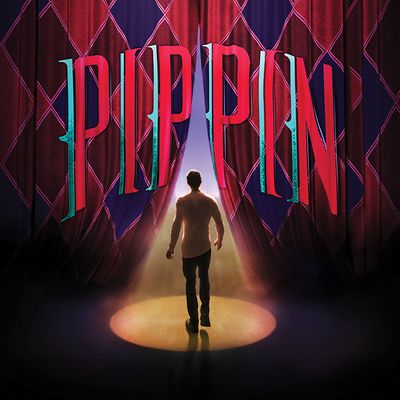
[18:27] Tadeo Martinez: Oh my God. I saw it when I was, I think, in the sixth grade. Um, and that's also a big moment where I was like, I if I can do anything like that, I want to do it. Um, it was a it was big. It was a big moment for Thaddeo. Um so yeah, so I decided to to pursue it professionally, and right about the same time, um, a professor from SMU, Bernard Cummings, who I owe many, many, many things to, um, came to visit my high school because he was visiting a a friend who taught there. Um, and we were doing like a production of Pippin, and he saw me in rehearsal and invited me to audition for the program. And and it so everything kind of just like unraveled um in a in a way that I didn't A intend to or B expected to.
[19:25] Patrick Oliver Jones: So then this pretending, this listening to Wicked, all laid down the groundwork for this professor from SMU to finally see you. So what was that audition process like? Because I assume you hadn't done a lot of auditioning up to that point.
[19:39] Tadeo Martinez: I had it. No, but it actually was on the spot, Patrick. So like after a rehearsal, he was like, Do you want to audition? And I was like, uh yes, sure. Um, and then the day that we were set to do it, I remember it to this day. The sky fell in Monterrey. Like it has never rained that hard in Monterey. So I I called my drama teacher, and I was like, hey, uh please apologize to this man profusely because I am I'm just I cannot leave my house. And he was like, it's fine. So we we we rescheduled for another day. I went in with a monologue I found online. I typed in monologues on the Google. I found one. It had a lot of words, it had a lot of words, and you memorized them.
[20:30] Tadeo Martinez: I did, and I went in and I I did I did the best that I could. Um, and he was very kind. And then he was like, Do you have anything else? And I didn't. So I was like, I can I can give you my longest line from Pippin, and I can make it very dramatic. And he was like, Okay. And then he was like, Do you have a song? Can you can you sing a song? And I was like, I can sing a song from Pippin. Um, and I did. And then two weeks later he emailed me shockingly and was like, Hey, we'd lumped out where he was fought.
[21:10] Patrick Oliver Jones: That must have been surprising. Because you're like, Yes. Like, what did I do to earn this?
[21:16] Tadeo Martinez: I had I legitimately could not believe it. I was like, I don't, they like, are they, do they need divers? Like, I my my mind went to like, do they need diversity points? Like why I get it. Yeah.
[21:27] Patrick Oliver Jones: And so when you got to SMU, did it make more sense? Did you feel like, oh, okay, this was the right place, or or did you feel behind any way?
[21:39] Tadeo Martinez: I felt I totally felt behind. Um, but everyone there was uh at when I got there, everyone there was really kind and and patient. And it was also like because I grew up in Monterey, like really close to the border. I kind of grew up between both cultures. Like I grew up being Mexican, but like a lot of the people that were around me are either dual citizens or Americans or Canadians. Um, so I kind of I kind of didn't expect it to feel different. I only expected it to feel different in terms of oh, everyone's been doing theater their entire lives except for me. Um but when I got there, that what also was not the case at all.
[22:28] Tadeo Martinez: So there are other newbies there.
[22:29] Tadeo Martinez: Yes, there were other newbies. It wasn't like culture shock, it was more like a culture burn. I like to say it because a lot of things were are very were very similar, but then a lot of things I would be like, oh, that's different. Oh, sense of humor is different. And it was, it was very strange.
[22:49] Patrick Oliver Jones: Yeah, yeah, it's interesting. The previous guest, Bianca Monarchine, she she mentioned the same thing about born and raised in Mexico, but then crossing the border to go to school. And so she kind of got both cultures and started to feel at home in both.
[23:02] Tadeo Martinez: Yeah.
[23:02] Patrick Oliver Jones: As you say, that it wasn't so much the culture shock, it was just the being in a new environment of learning something that you were still basically at the beginning stages of.
[23:12] Tadeo Martinez: Yeah, yeah, yeah. And it also kind of it kind of felt like I grew up in this bubble, which I basically did. Um, because everyone around me, everyone I knew was either Mexican, American or Canadian. It was very sheltered and then I I'm living in like I'm living with other artists, and I'm living in Dallas, and I'm living in Texas, which is a whole other experience.
[23:34] Tadeo Martinez: So yeah, it was just really it was a very uncomfortable time, but I think it was there was beauty in the uncomfortableness of it.
[23:43] Patrick Oliver Jones: And in what ways was it uncomfortable to you?
[23:47] Tadeo Martinez: Just dealing with with topics that I had never dealt with personally, just like academically, dealing with um talking about racism, talking about being vulnerable in front of other people, like having conversations about stuff that's real and in the real world, but had never been kind of that that present in my day-to-day life. Like, does that make sense? Um so kind of like oh having my eyes opened in a very real way, um, and going through things that kind of like not only made me understand my privilege, but also understand um race in America and race in in the world, um, immigration in America, and just having my eyes be open to all of these things in a very personal way was a little jarring.
[24:49] Patrick Oliver Jones: Because in coming to Dallas, did you feel that sense of otherness that you didn't feel being in Mexico?
[24:58] Tadeo Martinez: I mean, I I I feel like I've kind of felt otherness all the time just because I'm Mexican, but I'm I'm I'm white in complexion, I'm very, very white passing. Um, so there was there, so there's always the issue of of either what is he, is he Mexican enough? So that was not new to me. Um, but then moving to Dallas, moving to the United States, um, and be and then being the only one no, at the time I was the only Mexican, or only international Mexican in the program, then that created a whole other sense of otherness.
[25:42] Tadeo Martinez: I did some digging and found that Tadeo was only one of a handful of Mexican students at SMU. In the year of his graduation, the 2018-19 school year, the international enrollment was 1,596 students, which comprised 14% of total enrollment there at Southern Methodist University. But from Mexico specifically, there were only 50 students.
[26:16] Patrick Oliver Jones: So while he did have a smoother transition than some coming to America and going to college, that didn't mean that language and communication was easy for him. So in your classes and what you were learning, what was the biggest hurdle or challenges for you to start to pick up so that you didn't feel as behind or you know, to kind of catch yourself up to where you thought you should be?
[26:41] Tadeo Martinez: I s well, I started kind of working a little harder than I had to, in the sense that whenever I would kind of like struggle or or feel behind, I would kind of just translate it into Spanish, whatever the situation was. Um whether that was like a scene or like a personal dilemma, uh, and just kind of like translating it into Spanish, because a professor said it best when she said, you know, academically you're comfortable speaking English and and Spanish, but like personally, vulnerably, you've only ever had to speak in Spanish. So kind of being able to be made a be aware of that and use that in a way to help me I f I found was a very was kind of like the was kind of like the golden ticket.
[27:36] Patrick Oliver Jones: In what way does the the Spanish language give you a way to I guess to be more open or vulnerable and that the English language doesn't?
[27:45] Tadeo Martinez: I think because whenever it just in my personal life, um whenever I have a problem, whenever I feel a certain type of way, I go about it in Spanish. Um so I either discuss it in Spanish, I think about it in Spanish, I write it, I write about it in Spanish.
[28:04] Tadeo Martinez: Um, and English was always kind of like my academic language. I was very fortunate and went to a school that was kind of like 80% in English, 20% in Spanish. So I would speak in English all day. So in class I'd be like, the answer is four, and then I turned to my friend and be like, I'm just so personally, I was always speaking Spanish. So I think I think it was mostly that the fact that I I wasn't used to speaking about personal things in English and wasn't used to it. So it's almost like there was this line between the two.
[28:39] Patrick Oliver Jones: Yes, exactly.
[28:39] Tadeo Martinez: Like even now, I feel like I'm I'm blabbering in English because I'm like, what are the words? But even in personal situations as well, like having because you know, in an acting class, you'll go up and then you'll talk, and then the professor will often ask you something very, very vulnerable about yourself. And just having to articulate it in English, I don't know why it became like the hardest thing.
[29:04] Patrick Oliver Jones: Is is that something that uh is English taught a lot in Monterey specifically?
[29:10] Tadeo Martinez: Um, I I mean I I was very privileged to go to to go to the school where I learned it at school. Um, so a lot some schools offer it, not all schools offer it. Um, but then also I I also had the the benefit of going to theater school and having an entire class dedicated to like accents and dialects. So I'm also like I I kind of like I feel like I cheated a little bit.
[29:36] Patrick Oliver Jones: Well, well, well, no, it's the same way. I I grew up in the south, and that's a very distinctive accent. And my mother, I don't sound anything like her, or most of my my relatives, you know. My my accent is like not even there. There's like a few words where it pops out, but yeah, do you find that you can like tap back into it easily?
[29:55] Tadeo Martinez: Yes, I know that I can, but it's interesting. There there was one audition where you know they needed some from Alabama. I was like, you know, raise my hand.
[30:03] Patrick Oliver Jones: Yeah.
[30:04] Tadeo Martinez: And it's like, yeah, that yeah, yeah, that doesn't sound right. Like, well, this is this is what it is. I mean, I mean, I mean, I think they they wanted something stereotypical. And speaking of of stereotypes, is that something that you then found? It's like, oh, well, you need to be this kind of Mexican, or you need to speak Spanish or English in this way.
[30:25] Tadeo Martinez: Yes, a hundred percent. And it's it again, because I don't look like the stereotypical Mexican that we are we have often seen portrayed on television or film or whatever. Um a lot of times people had trouble kind of like placing me. So then it became a whole existential crisis because I was like, am I like, am I Mexican enough to be thought of as Mexican in the industry? Do I have to like the chance to play these parts? Um there was there was actually one audition that I did in college, and the the director was young and and she is learning too. Um, but I was going up for this um Latino part, and she and she asked me, she came up to me and she was like, Can you do an accent? And I was like, Yes, but can we can we talk about this?
Because there's many like a Mexican accent, a Puerto Rican accent, like there's many different accents and dialects, and even within Mexico, yeah, right. So it's like, do you want a Rikio accent? Do you want to see a Mexico accent? Um, and she was just like, just give me anything. Um, and that was a whole other kind of like conversation to make myself comfortable in.
[31:46] Patrick Oliver Jones: Because you you don't want to kind of, a, you don't want to be disrespectful. But B, you also want to make it, they're putting on a show. So they're gonna put they're gonna put this on stage for other people to see. So you also want to be of assistance to the piece and the character. In your journey through college, then did you find there was a lot of these kind of teaching moments where you were in a position to then be this voice of, hey, this is something you need to think about?
[32:17] Tadeo Martinez: Yes. And you know, and and sometimes I took it and sometimes I didn't. Um oftentimes it was out of fear or and or shyness or feeling out of place. Um it goes back to kind of like understanding the stories that are that we should tell or that we should kind of like like let someone else tell. Um so yeah, I had a I had a lot of meetings with a lot of different professors to talk about issues that I had. Um, and I found out that a lot of it was also easier to talk about than actually do because we're also working for a system. Um, and you know, when professors or when a company is casting a show, they also have different things they need to consider, whether or not it's a company, whether or not um someone like in in a student situation, whether or not someone needs to be cast first.
Like you have this certain amount of seniors, and um, so kind of like understanding that as well was really big for me. Understanding that it's it's way easier said than done, but also having the conversations at least allowed the door to open up a little bit more and invite a little bit of change in, which is all we can hope for.
[33:40] Patrick Oliver Jones: Yeah, I've I've always found that that's one interesting thing when it comes to colleges and that that kind of hierarchy of well these are seniors so we need to they've been in the program four years. We need to give them some priority you're a freshman so you just need to be in the ensemble or whatever. And so there is that and and certainly it depends on the size of the school but it's one of those things where I I understand why colleges are doing it, but I also disagree with the fact that if you really really want to prepare someone for this job for this business, you can't be giving a role to a senior just because they're a senior you need to be giving it to if look if that 18 year old knocks the pants off the 20 year old who's coming in you know then they need to get it.
[34:28] Tadeo Martinez: I mean I agree with that too and it it goes back to whatever the university policy is um but also you can't like if if you if you're also gonna have that rule you at least got to stick to it not stick to it sometimes and then when it's convenient for you like kind of like shuffle the cards a little bit because then you're gonna because then you're gonna have issues.
[34:51] Patrick Oliver Jones: Yeah a crappy rule can be a crappy rule as long as everybody has to abide by it.
[34:56] Tadeo Martinez: Yes. Yes.
[34:56] Patrick Oliver Jones: That's how it is.
[34:57] Tadeo Martinez: But once crappy rules are subjective then that's no good for anyone. It's it bec it becomes a little hard. Did you find yourself? Because you've mentioned as far as being lighter skinned, but yet being fully Mexican, of course. Did you feel like, oh, that just opens me up to more roles? Or did that complicate any of the roles you would go out for?
[35:19] Tadeo Martinez: I think it complicated it a little bit. Because um, I didn't even feel pigeonholed. I just felt like I felt like they didn't know what box to put me in. Um but I here's the thing. I would I also cannot complain because I was always I always had the privilege um of being of being cast. I was I always had quote unquote work in college. So I was always kind of like taken care of. I was I always felt supported. Um but when it came to like taking that next step, going from the crappy role onto the okay, I think I'm ready for like a little more dialogue now. That's when things became a little bit tricky. Because I'd see my friends who were getting cast with me, kind of like take the next step and get and getting better and better roles, and I would still kind of like stay in the back. Um I was like, I just don't like I'm I'm trying really hard. I don't, I don't know what's and again, that's just also the business.
[36:22] Tadeo Martinez: Like you you try really hard and it just does not always go your way. But in your case, did that feel like, oh, maybe I'm not as as good as I need to be. Maybe I need to train more, work harder, or did it feel like, oh, I'm just in this kind of racial ambiguity that they don't know what to do with?
[36:43] Tadeo Martinez: It was a little bit of both, but I put I I kind of like put the blame on myself because I I also didn't want to be the guy who is like, I am not cast. And it is because of this. I want I kind of wanted to take responsibility for it. Um, so for me that meant like I think I just need to work, I think I just need to suck less. I just I need to be better. But it I found that it wasn't until I brought all of me into the room, and that meant um like choosing a piece in Spanish and standing by it, um bringing my full identity into the callback room, that's when I started to see results.
[37:21] Patrick Oliver Jones: And for you, what did that mean to bring your full self in? What was the the noticeable change from before and after that?
[37:28] Tadeo Martinez: I felt like I was trying to put on this persona of what I would either see my classmates do or see my professors do. Because that's also that was also part of the beauty of college. I would like have a lesson from a pro from a professor and then like be able to go and see him or her uh in a production like in the Dallas community, um, and seeing them like practice what they preach, that was also a really big gift. But then like trying to copy that or trying to or like seeing one of my classmates be praised and saying like that's good acting, I I need to do that exactly like that. Um, and figuring out that I don't need to do that and I can just be myself. Um, because that's where the best work lies um for each and every actor.
Um, and when I mean bring all of me into the room, I mean like, for example, when a director says celebrate instead of going yippee kaye, I I go and pedal. So like actually celebrating how I would celebrate. Um and that's and that's when I started not only growing the most as an actor, but had like actually loving the work as much as I thought I would, if that makes sense.
[38:46] Patrick Oliver Jones: Yeah.
[38:46] Tadeo Martinez: Yeah.
[38:47] Patrick Oliver Jones: Because it sounds like you were able to to be fully present for it rather than having to hide behind something and like here's here's the facade, here's the mask, here here's here's what I'm gonna show you.
[38:59] Tadeo Martinez: And that mask is only a portion of it.
[39:01] Patrick Oliver Jones: A portion of it.
[39:02] Tadeo Martinez: Yes, yes, yes. And so the rest of you was hidden back.
[39:05] Patrick Oliver Jones: Yeah I I think that I mean I know that for myself that's something excuse me that I've had to battle because I so often walk into the audition room and I want to give them what they want rather than give them what I have you know.
[39:20] Tadeo Martinez: Yes.
[39:21] Patrick Oliver Jones: Yes yes yes and also I think giving yourself permission to to do that is is so hard. Because of course you of course you want to get the job everyone wants to get the job. But so it's really I think it's really hard to believe that the the character is already inside of you you kind of always feel like you have to put something on when that is I find that that's not really often the case and even like going into professional work um I found myself having to wait until someone else gave me permission in order to bring all of me into the room. So it's a huge it's it's a lesson I'm still learning to this day.
[40:07] Patrick Oliver Jones: You you will continue to learn just letting you know just letting you know while Tadeo may have still been learning to bring his full self into auditions and on stage, he was having a much easier time devoting himself to the betterment of his college experience. And one clear example of this is when he was given the Avela Win Hey Award, which is based on scholarship, character, and contribution to the SMU community.
[40:37] Tadeo Martinez: Yeah, it's a whole thing, but a bunch of my friends at Southern Methodist University, um, we we went in at an interesting time because we went in freshman year, sophomore year was the election.
[40:51] Patrick Oliver Jones: He's referring, of course, to the 2016 battle between Donald Trump and Hillary Clinton.
[40:57] Tadeo Martinez: And we found ourselves having really interesting and vulnerable and hard conversations surrounding race, gender, what stories are ours to tell, what stories are not ours to tell. Um, and a but and a bunch of us being people of color kind of started speaking out more. And because I think a bunch of my class, a bunch of my friends, a couple other people in the SMU theater community started having these conversations. Um, the school, the the actual theater department at SMU was able to kind of take a step back and actually think about their season, what kind of shows they did, what kind of parts were available to students, how they handled those shows, because that's also incredibly important. Um yeah, so so that so that was more because the the Avala Hey, or I don't really Avala Win Hey. That one was was for kind of helping do that in fighting for the Latinx and Hispanic community at the SMU Theater program.
[42:12] Tadeo Martinez: As I mentioned at the beginning of this episode, that desire to increase Latino and Hispanic representation in theater is a driving force of my mission and purpose as an actor.
[42:24] Tadeo Martinez: One of the most shocking things for me was that article that came out, I think either last year about the reports of Latinx or Hispanic actors in film in the US, and it listed how many characters in these movies had been Latinx, had speaking parts, and it had like shocking things.
[42:48] Tadeo Martinez: Like in all of the movies, only two movies had a female Latina over 50.
[42:55] Tadeo Martinez: And in both movies, that female Latina was Jennifer Lopez.
[42:59] Tadeo Martinez: The study I'm referring to was conducted by the University of Southern California in Annenberg in coordination with the National Association of Latino Independent Producers and Wise Entertainment.
[43:11] Tadeo Martinez: The full study was called Latinos in Film, Erasure on Screen and Behind the Camera across 1200 popular movies.
[43:20] Tadeo Martinez: It's a fairly dense study with a lot of statistics, covering the top 100 movies each year from 2007 to 2018.
[43:31] Tadeo Martinez: But one of the stats that stuck out to me is that the Latino community comprises 23% of the movie tickets sold.
[43:39] Tadeo Martinez: Yet only 3% of these movies featured a Latino lead or co-lead.
[43:46] Tadeo Martinez: It was analyzing the way that Latinos were being portrayed, and it was this whole study that also wanted to see the correlation between that and how the community saw themselves.
[43:59] Tadeo Martinez: And so how it's been proven that if a community sees itself represented as rapists and drug lords and gardeners and all those stereotypes, that's what they think of themselves as.
[45:30] Tadeo Martinez: And you're telling those particular stories and those were coming to the forefront? Or is it that, oh, these are just people going about their business and they happen to be Hispanic? Is there one that is kind of pushed more than the other?
[45:44] Tadeo Martinez: I mean, I personally want to see more of both. Um, because I think that the fight is a lot of like, let us tell our stories, but then I think there's also power in like having a little Mexican human be able to like watch a Marvel movie and have one of the superheroes be Latinx and speak in Spanish.
[46:09] Tadeo Martinez: You know, because and speaking to that, you know, like Chadwick Boseman.
[46:12] Tadeo Martinez: Yes, exactly. And then he, rest in peace. It was so interesting to hear, because I saw the, you know, people talking about his movies, and this is, you know, interviews back when he was alive, but they were just talking about how amazing it was.
[46:27] Tadeo Martinez: And I mean, the movie did well anyway. It was a great movie, yeah. But it also gave such representation of a black person being a superhero, someone to look up to.
[46:37] Tadeo Martinez: And then he's like one of many superheroes.
[46:41] Tadeo Martinez: Exactly. And this is something that, and I'll just speak for white people of my own experience, but I think we don't often think of seeing yourself on stage or on screen and it reflecting or being something that means something to you because it's like, oh, well, yeah, I would love to audition for that, or oh yeah, I could play that role.
[47:01] Tadeo Martinez: But for someone where they don't see themselves on stage or on screen, to finally see that face or that voice, it's like, oh, oh, I can do that, I can be that.
[47:01] Tadeo Martinez: Exactly. A hundred percent exactly. And I also like I want to celebrate and honor Chadwick Boseman, but also that it was just one superhero. Like, how many Marvel superheroes have there been? How many of them have been black too?
[47:31] Tadeo Martinez: So, like the, I think so I, yes. So my frustration is for Latinx work and it's also for black work because we need more of both of them and more Asian work and more Middle Eastern work.
[47:47] Tadeo Martinez: And I think we just need more diversity all around so that those communities, specifically in America, but also the world, because a lot of us get like even in Mexico, we see a lot of American film. Um, that's kind of what we get. We have gorgeous, incredible Mexican cinema, but we also get all the American movies and all the US movies that premiere over there.
[48:12] Tadeo Martinez: Um, so just seeing more of ourselves in that is huge. Because those movies get like translated into many, many different languages and many people see them. Um, so there's a lot of power in that.
[48:29] Tadeo Martinez: Does it give you yourself hope that you can do the types of roles you want to do? Or do you think that they still have yet to be written for you?
[48:39] Tadeo Martinez: Oh, Patrick, ooh, you know, first of all, it depends on the day. Um, because I see characters on screen that I'm like, you know, not even I could have done, like one of my Latinx community members could have done that too, and it could have been incredible.
[49:02] Tadeo Martinez: Um, but then also, you know, the dream would be like to have a show about Mexicans, and they're all different. They all look different, they all sound different because that's what it is.
[49:16] Tadeo Martinez: And I think that when we get to that, I think that's when we can fully celebrate and say, hey, we've done it. You know, you know what I mean? Um, because I think that it's all like right in right now, it feels like it's all kind of like baby steps.
[49:32] Tadeo Martinez: Um, and we're kind of like trying to get there, but it still feels like baby steps.
[49:37] Tadeo Martinez: Because is race itself, skin color an issue within Mexico?
[49:43] Tadeo Martinez: Oh, yes. Yes, a hundred percent. Um, you can even see the way, like when the beautiful Yalitza was nominated for the Oscar for Roma, um, people like bullied her online for the color of her skin, like Mexicans did. You know, that says a lot.
[50:05] Tadeo Martinez: And you know, I think it's part of the eye-opening time we're in right now where we're able to say, like, oh no, racism is a thing everywhere. Um, and there's many different kinds of racism as well. Um, but for sure it happens in Mexico.
[50:24] Tadeo Martinez: When are those times? And then we can even apply it to theater and film and that when are those times when race absolutely matters and you need to be cognizant of that and you need to honor that? And when are those times when it shouldn't matter at all?
[50:42] Tadeo Martinez: It needs to be the broad spectrum, and race shouldn't play a factor.
[50:48] Patrick Oliver Jones: Badrick, I don't. That's such a good question. I just don't know if I'm the person to ask it to. Because I am white passing and I benefit from white privilege, both in the US and in Mexico. Um, I would love to have that conversation as well, but I would I would love to have it with someone who actually experiences racism or has experienced racism on a day-to-day basis.
[51:20] Patrick Oliver Jones: And come next week, that's actually what I'll be doing. Over the course of two episodes, I'm bringing back former guests of the podcast, Hispanic actors and singers and writers who share their own stories and experiences in this industry, the good, the bad, and the ugly.
[51:39] Patrick Oliver Jones: The first episode will feature those who felt most comfortable telling their stories in English, and will address issues like the one Tadeo brought up about being Hispanic but passing for white.
[51:51] Patrick Oliver Jones: The second episode will feature Hispanic artists telling their own stories in Spanish.
[51:57] Patrick Oliver Jones: Now, in both episodes, there will be no back and forth, no Q&A. It'll be just them sharing from the heart.
[52:05] Patrick Oliver Jones: So please join me for that two-part series with former WINMI guests. As we finish up today's episode, I wanted to go back to that idea of honoring your heritage, embracing where you came from.
[52:19] Patrick Oliver Jones: I read a story of one well-known actor this summer who came to terms with his own heritage. Now, the name James David Rodriguez may not ring a bell to you, but if I said James Roday, then you'd recognize him as one of the co-stars in the hit TV show Psych.
[52:37] Patrick Oliver Jones: His name change came early in his career based upon two auditions. The first was for the lead role in a major film. He had a great audition, but the casting director told him that he didn't think he could call him back because his last name was Rodriguez.
[52:55] Patrick Oliver Jones: Instead, the casting director brought him back for the small part of a gangster. But after reading for that role, he was told he didn't look Latino enough. That movie was Primal Fear, and that lead role was eventually filled by Edward Norton.
[53:12] Patrick Oliver Jones: And it is essentially what launched his career. That second audition for James was for a role in a TV pilot produced by DreamWorks. The casting directors and producers were concerned because the role wasn't written for a Hispanic or Mexican.
[53:30] Patrick Oliver Jones: And they were also worried that the casting of a white guy with a Mexican name could be interpreted as their version of diverse casting, and that there would be a reaction to that.
[53:54] Patrick Oliver Jones: And this role is not Latino. And then I built a career playing white guys with a made-up white name. But in light of recent events, he felt he couldn't hide behind his made-up white name anymore.
[54:27] Patrick Oliver Jones: Once again, we as a society were forced to stare at ourselves in the mirror. I'm gonna be out there speaking on behalf of people of color. I wanted, I didn't want to be disingenuous. I didn't want to be a facsimile of a person with a Mexican last name.
[54:49] Patrick Oliver Jones: And this goes back to that idea Tadeo mentioned of being fully yourself and bringing all of you into the audition room and into your performance. And that is a lesson we can all learn, regardless of our heritage.
[55:04] Patrick Oliver Jones: A big thank you again to Tadeo Martinez for being on the podcast today. And I greatly appreciate you joining us as well for this important conversation.
[55:14] Patrick Oliver Jones: As I mentioned, next week is the English and Spanish episodes with former Hispanic guests of the podcast. But stay tuned up next for the Final Five with Tadeo, where he'll also talk about one of his favorite performances in the hilarious farce, Noises Off.
[55:34] Patrick Oliver Jones: Until then, I'm Patrick Oliver Jones reminding you that the reasons for not making it may be frustrating and arbitrary. But the reasons to keep going are even more numerous and rewarding. Join me next time as we talk more about why I'll never make it.
© Broadway Podcast Network, All Rights Reserved