

Bienvenidos y gracias por acompañarnos en esta edición especial de Why I’ll Never Make It! En esta segunda parte de mi serie sobre historias hispanas, escucharán a mis invitados anteriores compartir sus propias historias y experiencias en español... Read More
From the show: Why I‘ll Never Make It
Guests
Featured Shows

About
Bienvenidos y gracias por acompañarnos en esta edición especial de Why I’ll Never Make It!
En esta segunda parte de mi serie sobre historias hispanas, escucharán a mis invitados anteriores compartir sus propias historias y experiencias en español.
- Roberto Araujo - 1:06
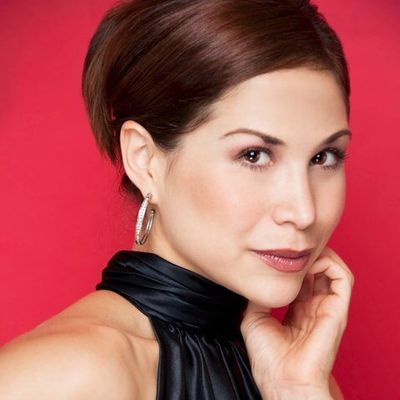
- Bianca Marroquín - 5:57
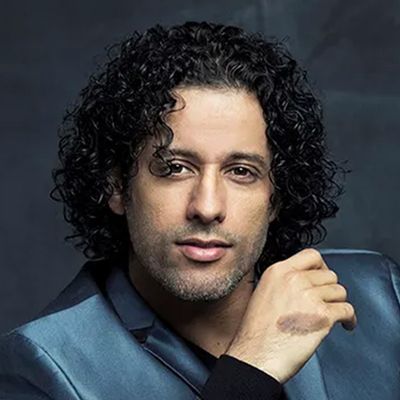
- Luis Salgado - 11:50
- Jaime Lozano - 16:59
- Alina Alcántara - 24:43
- Tadeo Martinez - 28:39
- Cecy Trevino - 30:52
Sin embargo, hay una mujer en este episodio que no ha aparecido anteriormente, Cecy Treviño. De hecho, la conocerás más adelante en esta temporada, pero quería aprovechar esta oportunidad para presentarla.
En este episodio no habrán entrevistas, sólo historias hispanas vividas y contadas por los propios protagonistas.
Sitio Web - whyillnevermakeit.com
Apoya este podcast - ko-fi.com/winmipodcast
Musica: "Being Together" y "Road Trip" por el artista Borrtex. Licencia bajo Attribution-NonCommercial License.
Transcript
This transcript was automatically generated and might contain errors.
[0:00] Patrick Oliver Jones: Hola and Why I'll Never Make It.
[0:19] Patrick Oliver Jones: And despite three and a half years of studying Spanish, that's about all I know. So in this second part of my series on Hispanic stories, you're going to be hearing from previous guests of this podcast in Español. Roberto Araujo, Bianca Marroquín, Jaime Lozano, Luis Salgado, Alina Alcántara, Tadeo Martinez, and Cecy Treviño. There is one woman in this episode, however, you've not heard from before, Cecy Treviño. You'll actually meet her later this season, but I wanted to take this opportunity to introduce her to you now. Okay.
[1:47] Roberto Araujo: When I terminated my temporary on Disney, I saw a doubly in Español for the José el Rey of the Sue. You're the voice canton in Español of the person of José. And after this, I'm a Nueva York to the musical in States. And the difference the different that I think the when they are doing your life.
[3:38] Roberto Araujo: If I say that Latin would be that Mexico or Puerto Rico or Cuba. There are different nationalities and different accents that not the same, which categorizes in one when they have the vision and not know how the different accents of Latin America, the Hispanic America. And more time in States, more of a racism that I have in the industry. In the shows that I did, I was the only Latin.
[5:01] Roberto Araujo: What we're doing in the year as a society, the group that we are. The community theatrical in States will come and it's difficult for the people. It's difficult for alone who is to do a paper, it's difficult to say, oh no, you don't want to do this because I'm Latin. But this is the moment in the campaign and in reality represent what we have in the world reality and in the scenario.
[6:04] Roberto Araujo: I was very important to see what I'm saying. What is what I do when I was a bailarina professional. I was other disciplines like flamenco, jazz, tap, folkloric. These opportunities, festivals of the cancer, concierge ensemble, dance, compositor, piano. I had much opportunities. And when I was in the quintessential, the bello and the bestia to Mexico to have a production in Spanish and auditioned in Monterrey and Guadalajara.
[7:10] Roberto Araujo: I'm at the audition in Monterrey. And I was at the Mexico. This was in 1997. And in this experience in the musical, what I did for seven or eight functions at the seminary, resistance, discipline, compromises. And I appreciate much. My second in Mexico was Rent, and in Rent, is appropriate to a person in a production. But I think I was fantastic.
[8:09] Roberto Araujo: I appreciated in Rent, an experience, Fantasma and the Opera, and I was swing of the baile of the bailer of Vega, and McGV. In a moment I was in the swing. I was capital of dance, and I did what had been emergencies, and I was the swing, and I put a botarga and an opening number of Phantasm of the Opera as anything. I did much responsibility of the choreographer of Nueva York, Jenny Berry, and the director.
[9:20] Roberto Araujo: In the most Chicago. From my personal principal from Roxy, an history, the audition. But I was at Chicago at the six months, I received the invitation to cruise from Mexico to Broadway with the protagonist of Roxy, and I appreciate English. I think the responsibility. I think that you were a embajador from Mexican, Latina, in Broadway. And I was the same and the Broadway, and Mexican, I try to have all the people who are this, who have this Broadway.
[11:22] Luis Salgado: And this has been a great part of the mission that I have in this world is to record the people, inspiring and motivate the people who are listening to my windows, because it's with it, with much dedication, with much sacrification and much work, much respect to me and what I defend the scenario and your art, clear that it can be and my life. My name is Luis Salgado, I'm from Puerto Rico, with much of Boric and I'm an artist.
[12:10] Luis Salgado: I think I'm very fortunate to do what I am after the nine years and compartment with the world in different ways, also like director, choreographer, but maestro. But I think it has been a retool and conviction and be exit in an industry so in a particular time necessarily so receptive to the experience lately.
[12:55] Luis Salgado: And I'm part of a generation who community Latina in masses from the tablets of Broadway. Musicals like In the Heights, where we had a number of artists Latin, people like Tony Girode, Nina Lafarga, Mandy Gonzalez, Immanuel Miranda, Olga Meredith, musicals like On Your Feet, where I compartments with an Eliseo Roman, an Andrea Burns, an Anna Villafaña, and for me there was a great idea in this coming and this people like Sergio Trujillo, choreographer and director have a community, that people like Manuel Miranda, Alex Lacamore have a community to build. For me, it was faster, because obviously in my career from Puerto Rico to Nueva York was not an English perfect, having accents for a person, with this natural that you have, etc. I heard the other day that I auditioned for Lion King.
And in this audition, I was what it was a music shit. And they said you have your music. And you said music check, we need you to sing your A bars. So these types of things definitively are things that are grass in the world of our life artistic, but also are important, because I am and sure and those errors that I had to generate for sure the same. For me, Latin is patria. For me to be Latin is the mar, palms, and know that it's part of my essence. Every time you hear a can in a musical, this is me, nothing. Every time you have anything, not what you are doing, when you enter the scenario, these Puerto Rican with me, nothing like in each part of the baile that you do, be salsa, hip hop, the funk, the jazz, the lyric.
My friends are with me, my people are with me. And I'm extremely honorable of the time in which I'm a life of invitation to be more than opportunities of what we had. I consider a stories that in a moment were muttered. And I hope that in the future exists this button of the mute in one of our history. I hope that the kid, Angela Hicari Salgado and Bird has the liberty to explain with preocupation that it is, and that it is more or more for the life that I was, for the idioma in which he is, or for the cultural that.
[16:55] Jaime Lozano: Hello, my name is Jaime Lozano, I'm originally of Monterrey, Mexico, in the north of Mexico. I practically in Monterrey and my family after I had the opportunity to go to study a maestro in composition and musical in the world. My totally. I applicated this maestry since nothing of English. I don't know in English in this moment. This was one of the most grands. It is one of the most grand, because I appreciate English. But in that moment I understand more than a 15-20% of what the people were all the days in Language with it. It was one of the rets that I was the idioma. Start struggling. And then I had a moment that I appreciate a little bit of English. But I think the English, I'm going to say my Spanish.
In which you don't have any English nor in Spanyol, no sabes calling communicate. You empieces to Spanglish in Spanyol, and the Spanish no tears, and you can say in English because it's the first that you're vice versa, when you're talking in English, no sabes how do you know the sight of the Spanish because no man, and so the Spanish has been like a part of what I'm a part of my culture, to be in this place like immigrant, and it has been one of the retos more grand that I had immigrant, the idioma, the idioma to not have absolutely English in that. I don't belong to any of both sides, so in the middle, just in the middle, it's very complicated. But at the same time, the pace is St. United, the city is Nueva York.
But it also has a culture, that no one privacy of this culture American, this culture anglo that they have. Respect of the same manner and amarlo in the same manner, and say that it is 50% mexican and 50%. And those rettos and historians are part of what I'm human and artist.
[22:45] Alina Alcántara: Hello, my name is Alina Alcántara. I'm an actress, I'm localized in the hermoso of Orlando, Florida. It's a pleasure to be here being entrevista with my colleague and my Patrick, or Patricio.
[22:45] Luis Salgado: Venezuela, immigrants in a pain, in a pace that we are, a sense we acceptable, and other ways not discriminate, we can each other patent from the pace, and necessary, and the year we can start battling with the idioma, education in this pay, how extraordinary to pay the origin, your family, how extraordinary what I was, the commodity, because definitively much commodity in our pace of origin and other pain business, a lot more for one and a bit more for the gentleman who is at me, in this case my hair, my hair, it's very difficult.
[24:30] Luis Salgado: Some important place, because we have common that is immigrants and immigrants in this place.
[25:04] Tadeo Martinez: I connected in 2017, a production local in Orlando. It was another, and we have been amongst. In English as in Spanish. It has been a pleasure to learn classic, because I have many colleagues in the theatre, not the dominant idioma spagnology. For example, in the case, I think, but I've done Spanish in my cubana that I can say that was my cubana that I in my English, okay, in the privilege of design completely bilingual, to learn, idiomas. But my amigos of my generation not allowed this privilege, I'm going to say anything of Garcia Lorca, nothing. I would be in English, classical and contemporary in Spanish. It's a great possibly sensibility to all of the historians that I interpret. What I think it's a regalo, it's a regalo to this identity so unique that is my Latinity, my his vanity, my Dominicana, my Afro-Latina, because I'm afro-Latina orgosely.
[28:41] Tadeo Martinez: My name is Tadeo Martinez, so I'm Monterrey, Mexico. Being an actor for me, a reality, and this is the representative, not only to me, but for representing my pain and my community, a voice and part of the lucha that luchard and continue luchar. An impulse, but I had a mission for lucky for my life and trying to be part of projects that are not really to me, but put the number of my life in my community in life. It's incredibly necessary, and I feel clear about your importance and the privilege that be an artist during this time insegnant. And in reality, I'm very motivated and emotional for continuing, continue lucky, and creating in the industry and put the number of my place in a host.
[31:33] Tadeo Martinez: Basically, the group has cantantes professional, people who are in theatre or who have the professional, or questions of other things have the experience of theatre. And we should have this opportunity to have a platform virtual. A little bit of Broadway Mania. And the part of something, and for one question or other, I had the opportunity to do it. I think I'm the work, but I had the opportunity to do that. And when I had this opportunity to Broadway Mania, which was an app that was SMUL, and the group, we are another group of 10 people who are this group. But in other occasions when no puedes hacer teachers physically, I think it's a great opportunidad porque desarrollando andar con tu passion, que es lo que más gusta.
[33:44] Tadeo Martinez: Nunca no hay limites fora. In serio, nunca te pongo limites because yo aquí estoy dirigendo a personas professionales cuando dirigir musicalmente origen a las personas in el ámbito de la interpretación anda. Entonces, Broadway Mania, and I'm going to do the opportunity to serve and desarroll those abilities. But especially to Alina. Spanish is not my first language, and she was such a big help as I was putting these episodes together. It's artists like these who can inspire us alleno, Patricio, muchísimas gracias por esta entrevista for the idea tan hermosa de anime that we present the much voices dentro of our culture latina or Latinex.
[35:21] Tadeo Martinez: Creo que it's very important, especially in these times tan turbulent in which we are living socially, politically, culturally. Agradezco, that we have your platform, your microphone, for darkness to express nuestra history, dental of the culture, dental of the arte, dental of the nation, dental global in the which we personally agree for orgullosaurina, orgullosa Dominicana American, for comparing part of my history, compared to orgular. It's algo que atesoro.
[36:47] Tadeo Martinez: Bendicions for our own people of this program, and gracias for starting with us house.
[37:05] Unknown speaker: Most enterprises use disparate systems to manage spend. The result? A reactive manual approach. CFOs and controllers, you deserve better. You deserve a unified spend platform from BREX. Brex makes it easy to proactively control spend with cards, spend management, travel, and bill pay in one place. You can create budgets with controls built in, track and adjust in real time to keep teams accountable, and automate compliance to close the books faster. Ready to control your spend with one unified platform? Visit BREX.com.
© Broadway Podcast Network, All Rights Reserved