

Here on Why I’ll Never Make It, we focus on the challenges and setbacks that artists face, but there is one podcast out there focusing on the Spectacular Failures of companies and organizations... Read More
From the show: Why I‘ll Never Make It
Featured Shows

About
Here on Why I’ll Never Make It, we focus on the challenges and setbacks that artists face, but there is one podcast out there focusing on the Spectacular Failures of companies and organizations. Lauren Ober is the host and producer of that podcast and is also a journalist, a noted speaker, and voice coach. In part one of our conversation She and I discuss some of the parallels between being onstage and behind a mic, but we focus mainly on the rise and fall the big Broadway production company Livent.
Listen to "The Curtain Falls on a Big Broadway Company" on Spectacular Failures.
Thank you for joining me for part one of my conversation with Lauren Ober. Come back for part two in just a couple of days.
Follow Lauren: Website / Instagram / Twitter
Join WINMI: Website / Memberships / Instagram / Twitter
Why I’ll Never Make It is a Top 20 Theater Podcast on Feedspot
—————Season 5 brings with it a new ways connect with me and the guests and new opportunities to learn and grow as an artist:
- Members-Only Episodes and videos
- Coachings and Consultations
- Ask questions to upcoming guests
- Monthly WINMI Newsletter
- Artist Resources and Offers
All this and more can be found at the newly updated website: whyillnevermakeit.com
Music used in the episode by Blue Dot Sessions and Borrtex is licensed under a Creative Commons Attribution-NonCommercial 4.0 International License.
Transcript
This transcript was automatically generated and might contain errors.
[0:00] Patrick Oliver Jones: Here on this podcast, we focus on the challenges and setbacks that artists face.
[0:06] Patrick Oliver Jones: But there is one podcast out there focusing on the spectacular failures of companies and organizations.
[0:13] Patrick Oliver Jones: Lauren Ober is the host and producer of that podcast, and is also a journalist, a noted speaker, and a voice coach.
[0:23] Patrick Oliver Jones: In part one of our conversation, she and I discuss some of the parallels between being on stage and being behind a mic.
[0:30] Patrick Oliver Jones: But we focus mainly on the rise and fall of the big Broadway production company, Livent.
[0:40] Patrick Oliver Jones: Garth Drabinsky's whole thing was we have two sets of accounting books, one for the investors and one that are the real ones.
[0:47] Patrick Oliver Jones: And the ones for the investors showed a really rosy picture, and the real ones were like they've lost hundreds of millions of dollars.
[1:01] Patrick Oliver Jones: Here you'll learn how artists and creatives handle the setbacks and challenges in their career.
[1:07] Patrick Oliver Jones: I'm your host, Patrick Oliver Jones, a professional actor and singer for almost 30 years and a backstage expert who knows firsthand the ups and downs we all face.
[1:18] Patrick Oliver Jones: For more insights and to take a deeper dive into the WINMI community, go to whyillnevermakeit.com.
[1:26] Patrick Oliver Jones: By joining this podcast as a monthly member, you can get access to exclusive episodes, video content, as well as coachings and consultations with me.
[1:47] Patrick Oliver Jones: As you could guess, the name itself intrigued me.
[1:50] Patrick Oliver Jones: But it is her personality and presentation that really make the podcast rise above just another news feature presentation.
[1:59] Patrick Oliver Jones: I've wanted to bring Lauren onto the podcast for quite some time, and although she's not a performer herself, the work that she does in audio holds a lot of lessons for us in theater as well.
[2:12] Patrick Oliver Jones: But the thing is, I didn't know Lauren.
[2:14] Patrick Oliver Jones: And so it was a random, cold email to her, introducing myself and the podcast, and then asking her to come on as a guest.
[2:23] Patrick Oliver Jones: Now, for her podcast, she does this all the time, arranging interviews with those involved in the spectacular failures.
[2:31] Patrick Oliver Jones: You know, normally people say yes to me because they know what's good for them.
[2:35] Patrick Oliver Jones: No, I'm just kidding.
[2:36] Patrick Oliver Jones: They uh no, no, no, because they wrote a book on this subject, or this is their area of expertise, or you know, it generally isn't that hard.
[2:43] Patrick Oliver Jones: I mean, it's harder to book guests when you say, you know, hey, uh, you were this, you know, the head of a failed business.
[2:50] Patrick Oliver Jones: Do you want to talk to us about what you screwed up?
[2:52] Patrick Oliver Jones: And most people are like, no, thank you, pass.
[2:55] Patrick Oliver Jones: Right.
[2:55] Patrick Oliver Jones: We've had a couple of CEOs or former CEOs who will come on and, you know, um, and talk about, you know, what happened, or sort of defend themselves, or we've had family of people come on who are not who are telling the story of like their father or whatever.
[3:11] Patrick Oliver Jones: And you know, I mean, but it's hard to hide.
[3:13] Patrick Oliver Jones: Like our show's called Spectacular Failures, so you kind of know what you're getting.
[3:19] Patrick Oliver Jones: And my favorite episode on her podcast, which is actually what inspired me to reach out to her and ask her to come on the show, was a feature that she did on Live Entertainment Corporation of Canada, better known as Livent.
[3:34] Patrick Oliver Jones: It was a theater production company based in Toronto and founded in 1989.
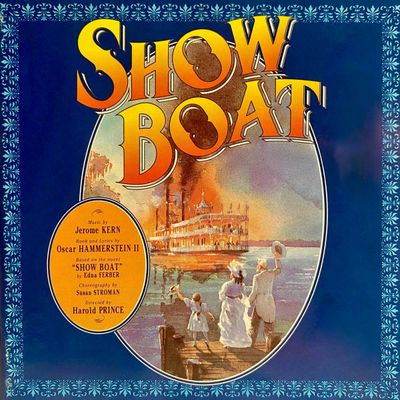
[3:39] Patrick Oliver Jones: In the early 90s, they branched out beyond Toronto and brought Kiss of the Spider Woman to Broadway, as well as Showboat and Ragtime.
[3:48] Patrick Oliver Jones: Now, last season I had Eric Jordan Young on the podcast, who was in the original company of that 1998 Livent production of Ragtime.
[3:57] Patrick Oliver Jones: He talked about how lavish the production was, which was a hallmark of all Livent productions and was one of many reasons the company was bleeding money by the late 90s.
[4:09] Patrick Oliver Jones: But ultimately there was one man responsible for their spectacular failure.
[4:15] Patrick Oliver Jones: Livent was a company started by um fellow named Garth Drabinsky, who had previously been kind of the founder of the Cineplex.
[4:27] Patrick Oliver Jones: Like before he came along, there weren't these gigantic movie theaters where you would have like 20 screens.
[4:35] Patrick Oliver Jones: Um he was a lawyer in Canada who always was interested in film and theater and was very cultured and you know wanted to get into that business.
[4:49] Patrick Oliver Jones: And so he sort of cut his teeth in the film exposition business, and then he actually produced a movie, like a horror movie.
[4:57] Patrick Oliver Jones: So he got on the creative side of things, and then he's shifted his interest into live theater.
[5:07] Patrick Oliver Jones: The thing that made his company Livent different than others was that it was going to be a publicly traded company.
[5:15] Patrick Oliver Jones: So as anyone who has worked in theater knows, raising capital to mount a show is the hardest thing.
[5:23] Patrick Oliver Jones: Right.
[5:24] Patrick Oliver Jones: And that the returns are generally dismal.
[5:27] Patrick Oliver Jones: I mean, there are very, very few shows that even break even for their investors.
[5:31] Patrick Oliver Jones: And oftentimes the shows are a not a vanity project for investors, but they're a fun thing.
[5:39] Patrick Oliver Jones: It's not like you're investing in the market and you expect 2x return or 10x return or whatever.
[5:45] Patrick Oliver Jones: You're doing it for fun and because you enjoy the theater and because, you know, it's sexy, right?
[5:52] Patrick Oliver Jones: And so I think Garth Drabinsky was sort of um like he wanted to upend that system and have a constant stream of money to mount these very ambitious shows that he was interested in doing.
[6:05] Patrick Oliver Jones: And, you know, for me, I heard about this story from a fellow named Marty Bell who's in our story, and he had been the senior VP of Creative Affairs at Livent.
[6:17] Patrick Oliver Jones: And I was at a dinner party with him.
[6:18] Patrick Oliver Jones: He happens to live here in Washington, DC now, and he doesn't work in theater anymore.
[6:22] Patrick Oliver Jones: But you know, he was a big New York producer name for a while.
[6:27] Patrick Oliver Jones: And he told me about it.
[6:29] Patrick Oliver Jones: I mean, I love, I love a grift, I love a fraud, you know, I love because I am not smart enough to pull any of those things off, you know.
[6:38] Patrick Oliver Jones: Like I'm I I'm more of like uh I could I could beat you up person, but I couldn't like steal your wallet.
[6:45] Patrick Oliver Jones: Uh I wouldn't be a clever criminal.
[6:47] Patrick Oliver Jones: So, you know, there was all kinds of accounting skullduggery that was happening with Livent.
[6:54] Patrick Oliver Jones: Garth Drabinsky's whole thing was we have two sets of accounting books, one for the investors and one that are the real ones.
[7:01] Patrick Oliver Jones: And the ones for the investors showed a really rosy picture.
[7:04] Patrick Oliver Jones: And the real ones were like, yeah, they've lost hundreds of millions of dollars.
[7:09] Patrick Oliver Jones: I think it's like a great theater story, but more than that, I think it's an interesting business story about how you try to make this, you know, this business with razor thin margins or the enormous risk involved.
[7:09] Patrick Oliver Jones: Um, how you try to make it profitable.
[7:30] Patrick Oliver Jones: I had no idea how hard it was to because I've I've had friends who were, you know, Broadway actors were in national tours of things.
[7:38] Patrick Oliver Jones: And I was like, y'all making some good money, you know.
[7:41] Patrick Oliver Jones: Like, yeah, when you're in the show, as far as like, you know, if you're in the like the tech union or the actors union, you know, that those rates have been negotiated very well.
[7:51] Patrick Oliver Jones: So you are taken care of, but that doesn't mean that will your show last two months or two years, or you just never know.
[7:59] Patrick Oliver Jones: Right, right.
[8:00] Patrick Oliver Jones: And so, yeah, and these productions that Garth Drabinsky and Livent put on, while they were beautiful and lavish and multi-award-winning operations, they were so top heavy, they did not recoup their investments, not even in the slightest.
[8:21] Patrick Oliver Jones: I mean, I think Showboat, when they did the revival of Showboat, but it was the most expensive musical ever produced, you know.
[8:29] Patrick Oliver Jones: Um it's Showboat, right?
[8:32] Patrick Oliver Jones: It's not like it's some you know technical extravaganza.
[8:35] Patrick Oliver Jones: It's an old musical that doesn't really need a lot of digits and gizmos to tell that story.
[8:42] Patrick Oliver Jones: Right.
[8:42] Patrick Oliver Jones: But I think the petticoats, I think petticoats are really expensive.
[8:46] Patrick Oliver Jones: I think those costumes, you know.
[8:48] Patrick Oliver Jones: Yeah, yeah.
[8:49] Patrick Oliver Jones: No, but it was like, it was like, you know, it's like a stagecoach and like a full saloon.
[8:49] Patrick Oliver Jones: Like it was like just a whole like here's like an enormous boat, you know, like it's it was like all these things that they built.
[9:02] Patrick Oliver Jones: And one other thing is that Garth didn't use union shops, you know.
[9:06] Patrick Oliver Jones: He he was like, you know, I'll set my own rate, and those rates were often higher than unions.
[9:13] Patrick Oliver Jones: So people were like, sweet, I get a really good salary out of this, but but but then there's actually like no money.
[9:19] Patrick Oliver Jones: So it was a pretty it was really, really fun.
[9:21] Patrick Oliver Jones: I think that that was my most favorite story that we've done because it combined um, you know, things that I love, like fraud and the theater, and getting to talk to theater people is like the most fun thing ever.
[9:37] Patrick Oliver Jones: I mean, we talked to Katie Huffman, who was the original ULA in the Producers on Broadway, and she was just so fun and delightful.
[9:47] Patrick Oliver Jones: It killed me though, because it was right before the lockdown, and all I was thinking about was all these folks that we talked to for this story were out of work immediately, and then you know, all of their friends and all of the tech crews, and like everybody who who ever had anything to do with getting a show up and running now didn't have a job anymore, and it just broke my heart.
[10:07] Patrick Oliver Jones: You know, I mean, we we love all of these people, you know, right?
[10:11] Patrick Oliver Jones: Theater's great.
[10:13] Patrick Oliver Jones: And we want to see them perform again and in not in a zoom screen.
[10:18] Patrick Oliver Jones: Well, it's just so interesting that that story, as well as this pandemic, it highlights the fact that we forget how tenuous theater and the arts can be.
[10:29] Patrick Oliver Jones: You can either make wild money like Wicked, or you can make no money, like Livent goes bankrupt.
[10:35] Patrick Oliver Jones: So it can really go either way.
[10:37] Patrick Oliver Jones: You can go big and go home.
[10:39] Patrick Oliver Jones: Right.
[10:40] Patrick Oliver Jones: You know, right?
[10:40] Patrick Oliver Jones: You you can you can do both, right?
[10:42] Patrick Oliver Jones: Right, right.
[10:42] Patrick Oliver Jones: Yeah.
[10:43] Patrick Oliver Jones: And also just thinking about all of the people that are involved in.
[10:49] Patrick Oliver Jones: I mean, we have very few people to get our podcasts up and running, you know.
[10:53] Patrick Oliver Jones: But when you think of um you know, even just a even just like a basic musical, I mean, it's in the cast alone, and then all of the people it's just so many people, and the theater industry employs so many folks.
[11:10] Patrick Oliver Jones: I mean, it's like when um the auto industry tanked, and it's like it isn't just these large car companies, it's every tiny widget maker who are working with auto workers.
[11:24] Patrick Oliver Jones: I mean, it's just like the knock-on effect is huge, and yeah, and you see like it only takes a little thing or a big thing, you know, the pandemic is a big thing, but it's like but it's like a virus to like just totally decimate an entire industry.
[11:42] Patrick Oliver Jones: I mean, the performing arts is a difficult profession in normal years, but COVID has certainly added new frustrations to finding work.
[11:51] Patrick Oliver Jones: In the third quarter of 2020, the National Endowment for the Arts compiled unemployment rates for artists.
[11:58] Patrick Oliver Jones: While the overall job market had an unemployment rate of 8.5%, musicians and singers faced a rate of more than 27%.
[12:08] Patrick Oliver Jones: Actors were almost twice that at 52%, with dancers and choreographers leading the way at almost 55% unemployment.
[12:17] Patrick Oliver Jones: So for many in the performing arts, myself included, making it has almost seemed impossible during the pandemic.
[12:25] Patrick Oliver Jones: And the title of this podcast has taken on new meaning.
[12:31] Patrick Oliver Jones: Well, I guess it depends on what "make it" means.
[12:35] Patrick Oliver Jones: That is what has become the meaning of my title.
[12:39] Patrick Oliver Jones: At first, it, you know, I was with a co-host, and we would just kind of talk about the various things that we mess up and our own weaknesses, and this is why we're not making it.
[12:47] Patrick Oliver Jones: But over time, why I'll never make it and why none of us make it is because that making it constantly changes that definition.
[12:56] Patrick Oliver Jones: And it's going to mean something different for every person.
[12:58] Patrick Oliver Jones: So that's why it's a very nebulous thing, and making it is so hard.
[13:02] Patrick Oliver Jones: Right.
[13:02] Patrick Oliver Jones: Like I'm never going to make it as an influencer, you know.
[13:05] Patrick Oliver Jones: Like if that becomes like a shift, you know, if all people in media have to then be influencers.
[13:10] Patrick Oliver Jones: So I'm like, well, I can influence somebody to like pick up their litter.
[13:15] Patrick Oliver Jones: You know, I like I'm not, I can't get you to buy anything.
[13:18] Patrick Oliver Jones: You know, I I can't, like, no one's like trying to jack my style on the on Instagram.
[13:23] Patrick Oliver Jones: So if if if making it includes that, you know, but yeah, it's it's it's what's the definition?
[13:28] Patrick Oliver Jones: I mean, you could, you know, I'm I'm assuming in theater, like your version of making it could be like I'm in the original Broadway cast of the biggest Tony winning musical, or like I'm teaching high school musical theater and I absolutely love it, and I do community theater and it's super fun, and yeah, like it feeds my soul and it like allows me to share my gifts.
[13:54] Patrick Oliver Jones: But like who has the stomach for constantly getting beaten down, like all the time?
[13:59] Patrick Oliver Jones: I mean, it's hard.
[14:00] Patrick Oliver Jones: I was, you know.
[14:01] Patrick Oliver Jones: Um, I was reading a piece today, uh, New York Times media critic Ben Smith, and he was writing about Maggie Haberman, who is a prolific reporter who has covered Donald Trump, you know, she's just drilled him every single day since you know before he became president.
[14:19] Patrick Oliver Jones: And the hate that she has gotten online, I mean it's I mean, it's dangerous.
[14:24] Patrick Oliver Jones: It's truly dangerous, and yet she keeps going.
[14:27] Patrick Oliver Jones: And um, and I mean, I don't experience anything like that, but I do think there's something, you know, that people in media are like you have to have a rhino skin or be a little bit like you you you either have to sort of be wearing blinders to all of that, or you just have to be like, yep, it's hard.
[14:46] Patrick Oliver Jones: Like people are cruel, things suck.
[14:49] Patrick Oliver Jones: Keep going.
[14:50] Patrick Oliver Jones: And that's really hard.
[14:51] Patrick Oliver Jones: It's really I I wouldn't begrudge anybody who's like the New York Times, not for me.
[14:57] Patrick Oliver Jones: Like, I'm good working at my community paper.
[15:00] Patrick Oliver Jones: I think most every job is going to have the small time, community, regional, and then the big time.
[15:06] Patrick Oliver Jones: And everyone will find their success in that ladder at a different point and be good.
[15:11] Patrick Oliver Jones: Right, or they won't be, and they'll get fired.
[15:19] Patrick Oliver Jones: Now, I'm wondering if you found this to be true as well, especially if you've auditioned for or pursued any voiceover work.
[15:26] Patrick Oliver Jones: That is one tough nut to crack.
[15:30] Patrick Oliver Jones: For years, I have gone to voiceover auditions, made a voiceover demo, and spent thousands of dollars on classes and training.
[15:37] Patrick Oliver Jones: Yet I have only booked one voiceover job in my entire career.
[15:44] Patrick Oliver Jones: On stage, I have the luxury, so to speak, of utilizing my entire person, not just my voice, but also facial expression, movement and dance, body language, and physical interaction with other actors.
[15:57] Patrick Oliver Jones: Yet behind the mic, the voice has to do the job of all of that.
[16:04] Patrick Oliver Jones: You learn over time if your voice is your is a tool that you are using, how to modify the tool so that it doesn't sound terrible.
[16:14] Patrick Oliver Jones: I mean, luckily, you know, my producers are great and they can hear all of these things.
[16:19] Patrick Oliver Jones: Like I think I have a lot of energy in a read.
[16:21] Patrick Oliver Jones: And then they're like, um, could you be any more low energy right now?
[16:25] Patrick Oliver Jones: And I'm like, what?
[16:26] Patrick Oliver Jones: I feel like I'm so amped and pumped.
[16:28] Patrick Oliver Jones: And they're like, get out of here.
[16:29] Patrick Oliver Jones: The same thing happens to me in voiceover.
[16:32] Patrick Oliver Jones: I remember I was doing a self-tape for a voiceover.
[16:35] Patrick Oliver Jones: So generally I will see the copy and maybe this particular section.
[16:39] Patrick Oliver Jones: I'll just record it three to five times, you know, and then move on to the next section, and then I'll go back and edit it all together.
[16:45] Patrick Oliver Jones: So, you know, I do my three to five takes and I'm doing the, you know, and I am feeling different, I'm energizing differently.
[16:53] Patrick Oliver Jones: This, and then I go back and listen to it, literally the same inflection.
[16:57] Patrick Oliver Jones: Yeah.
[16:57] Patrick Oliver Jones: I say the same sentence the same way.
[17:00] Patrick Oliver Jones: And even though I thought five times I did it differently, I say the same sentence the same way.
[17:04] Patrick Oliver Jones: Like, how did I do that?
[17:07] Patrick Oliver Jones: Right, right.
[17:08] Patrick Oliver Jones: Our brains get in these little patterns.
[17:10] Patrick Oliver Jones: Um, but you know, it's all it's I I find, you know that as a person who really likes to talk, I find it very interesting the ways in which we can use our voice to, you know, achieve a goal to influence people.
[17:25] Patrick Oliver Jones: And and so thinking about not in a navel gazy way about how you sound, but in the ways that you're conveying information, um, and the ways that you could convey information differently and have more impact.
[17:39] Patrick Oliver Jones: I think it's very interesting to me.
[17:41] Patrick Oliver Jones: You know, and I have a very particular voice.
[17:43] Patrick Oliver Jones: Like I don't sound like lots of other people, and my dynamic range when I do these reads is like all over the place.
[17:51] Patrick Oliver Jones: It's like, you know, I don't, I can't do the Ira Glass read, no matter how hard I try or how hard I've ever tried to do that very particular, you know, sort of flat intonation.
[18:05] Patrick Oliver Jones: I can't do it.
[18:06] Patrick Oliver Jones: I just my vocal cords don't work that way.
[18:08] Patrick Oliver Jones: And I think that's fun.
[18:09] Patrick Oliver Jones: I think it's fun to like experiment and explore and all that.
[18:13] Patrick Oliver Jones: And it might not make a difference for anybody else, but you know, well, you know, so they say that what you think is what's going to come out of your mouth, you know, especially for like voiceover and stuff like that, where all you have is the audio.
[18:24] Patrick Oliver Jones: So how we think about it should influence that.
[18:27] Patrick Oliver Jones: That's the hope.
[18:28] Patrick Oliver Jones: You know, I've certainly gotten this plenty of times in audition where I think that I am doing this character in this particular way.
[18:35] Patrick Oliver Jones: I'm I'm emoting, I'm doing this.
[18:37] Patrick Oliver Jones: I finish.
[18:38] Patrick Oliver Jones: The director gives me a direction and said, Could you please emote this way?
[18:42] Patrick Oliver Jones: And I was like, that's all I was doing for the last five minutes.
[18:45] Patrick Oliver Jones: Like what yeah, and and I'm like, well, obviously that did not come across.
[18:49] Patrick Oliver Jones: So right, right, totally.
[18:51] Patrick Oliver Jones: I I really I love like podcasts is performance, and so it feeds that desire of mine to perform, but where I don't have to do it in front of a live audience.
[19:04] Patrick Oliver Jones: Now, even though Lauren doesn't perform herself in front of an audience, she has written work for others to perform.
[19:12] Patrick Oliver Jones: And one such place where her words were brought to life, or at least that was the intention, was at Vermont Stage, a not-for-profit theater company founded in 1994.
[19:26] Patrick Oliver Jones: They have uh, and I don't know if they still have it, but they used to have um a an annual Christmas essay thing.
[19:35] Patrick Oliver Jones: And then those essays or monologues or whatever you want to call them would then be read by, you know, actors and or sort of performed by other people, you know.
[19:47] Patrick Oliver Jones: So I did a thing for them years ago.
[19:49] Patrick Oliver Jones: I mean, I I think it was after I had moved out of Vermont and they asked if I would write something.
[19:54] Patrick Oliver Jones: And um I did my like I I work in an in an oral medium.
[20:00] Patrick Oliver Jones: I used to work in print and writing for print in your eyeballs is different than writing for the ear.
[20:07] Patrick Oliver Jones: And I've honed that skill, but I i I had a like a leg up because I'm a more sort of literal writer and I I write as I talk uh often.
[20:19] Patrick Oliver Jones: So, you know, so I had already written this piece, which was meant to be delivered.
[20:24] Patrick Oliver Jones: Like poetry is meant to be delivered.
[20:26] Patrick Oliver Jones: It's not just meant to be like read in your head, you know.
[20:30] Patrick Oliver Jones: And so she read this and I was like, Was it delivered like off book as a monologue kind of thing, or or was it literally read?
[20:38] Patrick Oliver Jones: No, she was reading it.
[20:39] Patrick Oliver Jones: It wasn't performed in any kind of way.
[20:42] Patrick Oliver Jones: Um, I mean, it's fine.
[20:44] Patrick Oliver Jones: It was, you know, I've never, I mean, I think you know, when I was a kid, like when I was in elementary school, my mom sent me to like musical theater camp in the summer, just like not sleep away camp, but like day camp, you know, uh, to get me out of the house, but I was also a theatrical kid.
[21:03] Patrick Oliver Jones: And I continued, you know, I took chorus and all of that in in middle school, and I was just really, really rubbish at singing and probably crap at acting too.
[21:16] Patrick Oliver Jones: But I was the narrator in our town in eighth grade.
[21:21] Patrick Oliver Jones: So that was pretty pretty excellent.
[21:24] Patrick Oliver Jones: When I moved into high school, sadly, I stopped doing all that because I was an athlete and it was like there's like I was a pretty serious athlete.
[21:33] Patrick Oliver Jones: And um so I What were your sport I played lacrosse and I I played pretty seriously in high school and then in college I played in division one.
[21:43] Patrick Oliver Jones: And so I, you know, you just kind of specialize and I wasn't gonna be, you know, in this school musical.
[21:49] Patrick Oliver Jones: Also, I mean I just really have a terrible singing voice.
[21:53] Patrick Oliver Jones: And over the years my range has closed up to like I mean I couldn't even like go up one octave or even half an octave or anything.
[22:02] Patrick Oliver Jones: So I realized there are things that we can be appreciators about.
[22:05] Patrick Oliver Jones: And I am in a a great theater appreciator and a I love the arts and I'm creative in my own way in my work but I am not you know I'm I'm not bound for the stage sadly in a next life in the in another life I will be which is so interesting because like just listening to spectacular failures you definitely want to tell a story and you would and you definitely come across as someone I mean like narrating our town that seems like a perfect fit because you are the one kind of guiding stories now.
[22:37] Patrick Oliver Jones: So it seemed like that you're still doing even what you did in eighth grade.
[22:41] Lauren Ober: Yeah I'm in like a conduit I think you know it's funny because I always joke with people, like my dream job is being a tour guide.
[22:51] Lauren Ober: Um, like I don't even care where, like, I just want to be the tour guide because like I have the information, and then I am the conduit for you, like learning a thing.
[23:00] Lauren Ober: But we're also walking, maybe at the same time or something, you know, like we're outdoors, I'm carrying an umbrella, like I don't know.
[23:07] Lauren Ober: Um, but if I ever retire, I want to retire to be a tour guide in some way.
[23:12] Lauren Ober: But I feel like that's what I'm doing is like tour guiding people through various stories.
[23:17] Lauren Ober: And I I think it's really fun.
[23:19] Lauren Ober: And it, I mean, we do an enormous amount of reporting.
[23:22] Lauren Ober: You know, these stories often are set in the past.
[23:24] Lauren Ober: And so it is an original reporting.
[23:28] Lauren Ober: Um, and that's totally fine.
[23:30] Lauren Ober: I mean, I did that for a very long time in my life, and I'm very happy to make use of all of the great reporting that is out there and sort of bring it all together in a cohesive package and then share that with people uh in it in an entertaining way.
[23:48] Lauren Ober: So yeah, I I think it's a little, you know, I'm your, I'm the guide.
[23:59] Patrick Oliver Jones: At the core, I think podcasts and artists, whether on stage or in front of a camera, it really comes down to the storytelling. And it comes down to presenting characters on a stage or presenting the stories like you do of real people. So what do you think are those ingredients? What makes for a great story?
[24:21] Lauren Ober: Oh, you know, you have to have the basic elements. You have to have a narrative arc that's sort of just baseline. But then from there, I think it's the sort of, you know, for us, it's the presentation, it's the package, it's the people that we talk to, it's the sort of angles that we approach it at. I mean, you know, if you wanted to know about Livent, you could go read the Wikipedia entry. I mean, all of these, like I'm not, yeah, these aren't stories that aren't out there in the ether. But if you want, you know, if you want richness and complexity and perhaps a new take on something or a different framing, then I think all of those things are important to think about. You know, I mean, what I do is a little different than a very strict sort of narrative, like I'm telling you a story in a, you know, five-part series or something.
And so there, you probably need characters to sort of drive the narrative. It can't just be like expert-y people talking. Which is probably why you like that Livent one so much because you were actually able to bring on, there were characters, actors, there were people who knew about the drama that was going on with Livent.
[25:35] Patrick Oliver Jones: Yeah, I mean, we always try to get as close to the sort of failure. We always say close to the failure as possible by getting people who worked at the company who, you know, had some business with the operation, so that it doesn't feel like I'm just telling you something that has no connection to real people, right? I mean, that has no idea. I mean, all of these stories impact real people. You know, the Livent one, there were people who lost their jobs when their fraud was found out. There were people who Garth Trubinsky had contracted with who then were out hundreds of thousands of dollars on contracts that were never, they were not made whole. So there are real consequences, and I think, you know, we try to spotlight those, but who knows what the secret sauce is for anything to be successful?
I mean, there are so many, I'm sure there's plenty of evidence in theater where people were like, I had no idea people would like that. You know, I had no idea that that would be a hit. I had no idea, you know, that that would draw big crowds.
[26:43] Lauren Ober: And then, you know, something like, I think of like Alison Bechdel's Fun Home, you know, that seems like hugely risky.
[26:51] Patrick Oliver Jones: Yeah, it really was.
[26:52] Lauren Ober: And I mean, you're taking a graphic novel, a graphic memoir and turning it into something for the stage that is sung, you know, and it's about like a girl basically discovering her sexuality, but it's not a, you could tell somebody that story and they'd be like, that would never be something for the stage and people would never like it. And then lo and behold, it was a hit and award-winning. And I think a big part of it is that while the story, it's interesting, but I wouldn't say it's like some groundbreaking story of someone coming to terms with their sexuality. But how they told the story then became what was groundbreaking, I think, you know, presenting the three different versions of herself and the different ways that they incorporated the staging. So again, it's just as much the presentation as it is the content.
[27:46] Patrick Oliver Jones: Mm-hmm.
[27:47] Lauren Ober: I think the packaging of things, you know, and how you tell it is really important. I mean, we spend a lot of time working on our scripts and trying to make them fun and interesting for people. And I love writing.
[28:02] Lauren Ober: So I, no, I hate writing. I love having written, as the saying goes, writing itself sucks. Right. I like it once it's done, and then I'm just, you know, reciting it or, you know, recording it. But yeah, the process of writing is very laborious.
[28:18] Patrick Oliver Jones: Oh, it's gross.
[28:20] Lauren Ober: I hate it. I tallied it up, and season two, in terms of word count, was in 10 episodes the same length as a book, you know, that's insane.
[28:34] Patrick Oliver Jones: So does that mean the Lauren Ober book is on its way?
[28:39] Lauren Ober: No. No, because I have a real job, you know. I think people are less interested in me than the stories that we're telling. So I think we'll stick to that material.
[28:56] Patrick Oliver Jones: So since you have a show called Spectacular Failures, I was wondering of your own spectacular failure. Is there one that kind of stands out, is memorable?
[29:11] Lauren Ober: I have no shortage of stories about that. Um, okay, so I'll give you like the way that I see my life is like a sort of, I see it in my head as a sort of pre-radio and sort of post-radio training. And so when I went to that bougie radio camp, um, in the middle of that, and that was about 2012, my longtime partner and I, you know, broke up in the middle of that, and then I had no place to live. I mean, it was very amicable, but I still had to find a place to live. And then I didn't have a job because I had left a very bad job in order to go and do this radio training. And surprise, surprise, when you just have like two months of training, people aren't like, oh my God, yes, work for us. We'll pay you so much money.
You're so good already. Um, so I had no job, no partner, no place to live. I had to live on a friend's farm for a little bit, like so that I could, you know, I house sat. I was like, I was without a home. I had a P.O. box. And so that is not something many people can say that I'm living on a farm and have a P.O. box.
[30:27] Patrick Oliver Jones: Yeah.
[30:27] Lauren Ober: That was your life.
[30:28] Lauren Ober: That was my life. I would just like go and hang out with them when they were like taking care of the horses, and I would just record a bunch of stuff. Somehow I packaged something up into a story and managed to sell it. And I remember driving in my car and then hearing that story on NPR and being like, oh my God, all isn't lost. So then I finally, I ended up getting a job in Washington, DC. And it was not in radio, it was still in print. I promptly, nine months later, got fired from that job. I got fired by somebody though, who right after she fired me, went on mental health leave and never came back after six months. So I'm like, broke her. I don't know that I broke her. I think that she was unwell.
But it actually, you know, it's a failure in so much as, you know, I didn't have a job and, you know, I was paying big city rent and was very worried about my financial future. But it allowed me then to really focus on audio and really hustle. I always said I couldn't be a freelancer, and nothing proves you wrong like, you know, having to do it, like being forced into it. You know, like I don't have any fallback skills. I'm terrible at waiting tables. I'm just, I get flustered and angry.
[31:47] Patrick Oliver Jones: Yeah, I think I would be too irritated with people.
[31:49] Lauren Ober: Yeah, yeah. And I would forget things. I did it one time and I just was like, it was not my thing. So I just had to hustle and I sold a bunch of stories and did a bunch of recordings for other people. And I just hustled. I managed to sort of pull myself out of that and get a regular job at the NPR station here in Washington. But it was definitely not easy. That was a big, I would say, failure. I mean, getting fired always sucks. And it's happened to me a few times, you know, and it's terrible, it's terrible. Or losing a job of any kind is awful. And I, everybody who lost their jobs because of coronavirus, I'm like, I feel you. I feel for everybody who is involved in theater because it's just, it's a thing that I miss so much. I miss it. I was like, like we, my friends and I always talk about like, what's the first thing like you, what's the thing that you want to do most? And I'm like, two things, go to the movies and go see live theater.
[32:46] Patrick Oliver Jones: Um, because I see a lot of it here in DC and I'm really bummed. And I have plenty of friends who are involved in the theater, and it just, my heart breaks for them. So, you know, yeah. I mean, there's not just Kennedy Center, but there's like great regional theaters there in DC.
[33:00] Lauren Ober: Well, I mean, people in New York call it regional theater, but it actually, there are many, many shows that debut here. There are many musicals that are tested here before they move up to New York. And so, you know, I mean, Dear Evan Hansen, I got to see the original cast when it was at the Arena Stage here, and they, Arena is great. They preview a lot of shows, you know. Also, also Come From Away was also previewed here at Ford's Theater before making it up to Broadway. So yeah, we get a lot of stuff here, and it's a great theater town, and my fingers are crossed that we get back to it.
[33:39] Patrick Oliver Jones: Well, all of us certainly have our fingers and toes crossed, hoping that theater will come back this year. I'm pretty much looking forward to this summer as when theater will begin at least regionally, and Broadway says it will start in the fall. So we shall just wait and see and continue to hope. But until that time, and even going on beyond that, I have this podcast, and maybe you've thought about starting a podcast as well. It has certainly been the thing to do during the pandemic. And so in part two of my conversation with Lauren, we'll get into some of the nitty-gritty of podcasting, the process of producing episodes they use at Spectacular Failures, what the future of podcasting holds, and Lauren gives some podcast recommendations. Hint, they're all podcast musicals.
[34:35] Patrick Oliver Jones: To learn more about this podcast, go to whyillnevermakeit.com. There you can sign up for the monthly newsletter, join a WINMI membership, or check out other artist resources. The latest five-star review comes from C Surfer on Apple Podcasts. Quote, Patrick is an excellent and thoughtful host. Providing this view into the world of acting is really interesting and insightful. There's great attention to detail, excellent conversation, and high production value that goes into each of these episodes. Plus, they're fun to listen to.
[35:14] Patrick Oliver Jones: Well, thank you so much for those kind words, and I am honored and humbled by such a great review of this podcast. Well, I'm your host, Patrick Oliver Jones, thanking you for listening to this podcast. Dylan Adams is the booking producer. Music in this episode provided by Blue Dot Sessions and Borrtex. Join Lauren and me next time as we talk more about why I'll never make it.
© Broadway Podcast Network, All Rights Reserved