

MAESTRA MUSIC was founded by composer/lyricist and music director Georgia Stitt to give support, visibility, and community to the women who make the music in the musical theater industry... Read More
From the show: Why I‘ll Never Make It
Guests

Featured Shows
About
MAESTRA MUSIC was founded by composer/lyricist and music director Georgia Stitt to give support, visibility, and community to the women who make the music in the musical theater industry. Their membership is made up of female-identifying, non-binary, and gender non-conforming composers, music directors, orchestrators, arrangers, copyists, rehearsal pianists and other musicians who are an underrepresented minority in musical theater.
For Women's History Month, Georgia continues our conversation from the previous episode, talking about her efforts to foster and celebrate more women in musical theater.
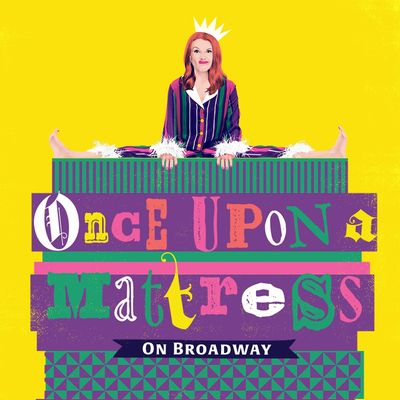
Also, in this episode is a feature on Mary Rodgers, daughter of famed composer Richard Rodgers and a composer in her own right of the rollicking musical comedy Once Upon A Mattress.
The episode ends with the Final Five questions posed to Georgia...all about bucket lists and the best advice she's received.
The time and expense needed to bring these guests and conversations to you each week is both sometimes challenging but always rewarding. Please consider buying me a coffee to support this work that goes into each episode. Do you have questions or stories of your own? Share them with the WINMI Community: contact.winmipodcast.comTranscript
This transcript was automatically generated and might contain errors.
[0:00] Patrick Oliver Jones: Hello and welcome back to Why I'll Never Make It for the second part of my conversation with composer and lyricist Georgia Stitt.
[0:12] Georgia Stitt: If everyone out there could see what I see, then I would never hear, like, where are the female music directors? We don't know any. Where are the female composers? Why aren't they? And I was like, they're here, they're right here.
[0:24] Patrick Oliver Jones: I'm your host, Patrick Oliver Jones, and in today's episode, we're talking about Maestra Music, Broadway pioneer Mary Rodgers, and Final Five Questions with Georgia. But before we get to that interview, I want to take just a second and talk about a very important milestone in the life of this podcast.
[0:44] Patrick Oliver Jones: Today marks the 100th episode of Why I'll Never Make It. That's right. I added up all the regular and bonus episodes, and this is the 100th time I'm coming to you with a conversation with a fellow creative or sharing my own thoughts about this business.
[1:06] Patrick Oliver Jones: But now let me take you back a year before this podcast even started. Georgia Stitt was presenting an original choral piece at a New Year's Eve concert at the Cathedral of St. John the Divine in New York City. 2016 was heading into 2017. And after that concert, she got to talking with a young female composer who told her that she couldn't think of any other female composers that were modeling the type of career she wanted to have.
[1:36] Patrick Oliver Jones: And then a few days later, out of coincidence or serendipity, Georgia received an email from another young female composer. She told Georgia that her grad school musical theater curriculum had no female composers in it. And when she asked why these female writers weren't included, she was told, well, suggest some that you would like to have added to the syllabus. But this young grad student couldn't think of any, and so that's why she reached out to Georgia for recommendations.
[2:06] Patrick Oliver Jones: After bringing these two women together for lunch, Georgia came to realize that women composers and musicians felt lonely and without access to a community or support system that allows composers to move forward in their careers. In an essay she wrote for the online magazine Stage and Candor months before meeting these two young composers, Georgia talked about some of the issues women musicians face and was even honest about her own assessments and struggles.
[2:39] Georgia Stitt: The first composer to hire me for professional work once commented to me, I like the way you play piano. You play like a man. And at the time, I was thrilled and flattered by the comment. It meant that I was strong and attacked the keys with passion and energy. But this concept of playing like a man, being better than playing like a woman, lived on in my psyche.
[3:06] Georgia Stitt: And I explained how this has affected me. Quote, I am constantly fighting against the bias that men are better musicians than women. I fight it prominently out in the world, I fight it quietly among my peers, and I even fight it secretly in myself.
[3:25] Patrick Oliver Jones: And so as Georgia and I started talking about Maestra, I wondered if that composer's comments and this internal fight that she mentioned in the essay played a role in her eventually wanting to create a community to advocate for women musicians.
[3:41] Georgia Stitt: Well, I haven't thought about that before. Um, probably, probably. Um, I mean, I think in the article I go on to explain that if there is a um up and coming composer that I don't know, and it's a guy, and I think I've maybe gotten past this now, but at the time that I was writing this, I thought, oh, who is he? Why don't I know him? And if it was a woman, I thought, oh, who's that? You know, with the judgment of my voice, like if she was good, I would have heard of her, you know, that I had as dismissive tendencies as other people.
[4:14] Georgia Stitt: And I think I was, you know, would when you've been raised in a system that values uh not just values, but like I had only ever had male bosses and male conductors. I had never worked with a female conductor or composer, really. I did work with Janine very early in my career, and I think that was pivotal for me, even though we haven't talked about it. She and I haven't talked about that, but I do think it was pivotal in her very famous phrase, you have to see it to be it.
[4:43] Georgia Stitt: Um, I think knowing that she was doing that was part of why I thought, oh, maybe I could do this too. So I don't think it's the fight in myself that led me to starting Maestra. It was the recognition that because of who I was, I was seeing all of these really fantastic female composers and female music directors and female orchestrators and female music copyists, but they weren't working at the A level.
[5:08] Georgia Stitt: And um, and I thought if everyone out there could see what I see, then I would never hear, like, where are the female music directors? We don't know any. Where are the female composers? Why aren't they? And I was like, they're here. They're right here.
[5:20] Georgia Stitt: And so the first thing that I did um was I gathered all the composers, all the female composers that I knew, and we had a party, like a cocktail party. And I was like, I just thought we should know each other because we're aware of each other, but we feel a little bit competitive. Um, like, oh, why did she get that thing instead of me?
[5:39] Georgia Stitt: Um, so it was a very insular competition. It wasn't that you were competing against men, but you were almost kind of missing each other as well. Two or three years ago when this all started, I very much believed if there were gonna be a list of five composers competing for this opportunity, there's gonna be one woman on it. They're not gonna have two women on it.
[5:57] Georgia Stitt: Like people don't know that there are two women. So, you know, it just in the beginning of the conversations of diversifying, it's like, well, we'll get this guy and this guy, and this guy, and this guy, and oh, well, we have to have a woman. Okay, great. We'll put a woman on the list.
[6:10] Georgia Stitt: So we're competing for that one spot, I think. We were aware that we were competing for that one spot. Um, but also there weren't I wasn't aware of many of that first that I came home and made a list of uh all the female composers that I knew that were actively working and writing scores and that you know that would be uh benefit that would benefit from knowing each other.
[6:31] Georgia Stitt: And I think that first list had about 22 people on it. And even that I remember saying to people and they're like, Wow, 22 women composers. I don't know. I'm not sure I could name 22 women composers. And I was like, right, but now we're getting to know each other. And now two years later, the New York City group has 135 women in it of women, not just people who are like aspiring to write musicals, but people who are actively out there working as composers.
[6:54] Georgia Stitt: They're doing the job, and not the lyricists and not the book writers and not the producers and not the directors, just the composers. And then we have a um we have a Facebook group that has it's from music directors, and I think there are between five and six hundred women in that now. It's mostly American, although we just had an offshoot for a UK group that has started and there is now interest in starting one in Australia, you know, these communities.
[7:23] Georgia Stitt: And they are turning out to be the lifeblood of this organization, these music directors, because they are, you know, shows go out on tour, and um somebody will say, I'm the assistant conductor of blah blah show and we're coming through this town, and then somebody else will say, Oh, I live in that, I'm a music director in that town, I'll take you to lunch, or can I come sit in your pit and watch you conduct?
[7:43] Georgia Stitt: Or you know, and so there's networking happening that didn't happen before, and I think there's real value in these women knowing that they're not the only one, they don't have to reinvent the wheel. They're not the only one trying to do this for a living. And national tours are a great way to do that because in New York it's kind of uh staying in the bubble, but once you go out into the rest of the country and especially if it's international tours, then you can really start to see these people that maybe they never saw a female music director or conductor.
[8:10] Georgia Stitt: Right. And we've and so now the Maestra website also has a directory, um and we've been just encouraging women who do this for a living in any of those categories to submit a profile, it's free. You can create your own profile page and click on certain categories that apply to your work, like I'm a member of the union or I'm not a member of the union, I live in this city, or I um I'm a conductor and a pianist.
[8:31] Georgia Stitt: I'm a conductor but not a pianist. I'm an orchestrator. You click the categories and what uh the goal is that it's searchable. So if you are not one of us, if you're a producer or a director or a writer and you're like, I really would like to hire a music director for this production I'm doing in Boston and I need a non-union, blah, blah, blah, that you can search for it and find the woman who's qualified to do it.
[8:51] Georgia Stitt: And we're I'm starting to get feedback that that's working, that more and more people are. I just don't want anyone ever to be able to say, Well, we tried to hire a woman, but we couldn't find her. Like we, you know, I knew three women and they weren't available. Like there's more than three.
[9:03] Patrick Oliver Jones: Right, yes.
[9:04] Patrick Oliver Jones: So is Maestra seen more as a community or an advocacy group or both?
[9:10] Georgia Stitt: It's a community. Um, the it's providing visibility, uh, opportunity. I know we'll have to look at my mission statement, which I wrote and can't quote you right now. But visibility to me was the first thing, you know, certainly for the first year goal. It was just sort of saying this is who the women are. There are pictures of them, that's why the Instagram account and um the Twitter account just sort of like so.
[9:33] Georgia Stitt: If you're a person who's paying attention, you just see all these women, and especially for the women who are uh maybe not at the center of the scene to see the other women. I've gotten lots of feedback from people that say it just fills me with joy to see all these women doing what I do. I didn't know they were out there, you know, and so it's building this community and connecting them and empowering them to like in so many communities and so many colleges.
[9:56] Georgia Stitt: Women say, I'm the only woman in the pit. I'm the only woman on I'm the only musician at my faculty at my school, or I'm the only woman, and the issues that come up for them, like giving them a space to talk about that. Yeah, so community is the first thing, but then um in March of this year, we became a not-for-profit officially, and part of what we've been doing over the summer is starting to identify okay, now what do we do with that not-for-profit?
[10:17] Georgia Stitt: Like, what does that mean? Because we were kind of just a club, and so we are starting a mentorship program, and we I mean, we have already started we were at the end of the first year of a mentorship program, and we um for composers for high school age composers working with women who are professional composers in our group, and we have we're must be a thrill for those high school students.
[10:37] Georgia Stitt: I think so. I mean, I haven't done a whole lot of follow-up with them yet, but I certainly think so. And things like they get invited to watch rehearsals and they get invited to sit in the pit, or they get, you know, if the composer has tickets, they'll invite her to come along, or you know, so those sorts of things.
[10:51] Georgia Stitt: And we um we have a music director's training program because I think one of the things that we are observing happening is that uh there is a demand for female music directors. People are paying attention to the like well, we can't have a show that has all male everything. We can't have an all-male creative team. Like that's bad. So we could hire a female what? Like female director seems scary.
[11:16] Georgia Stitt: So what if we hire a female conductor? How bad that could that be? So the women that I say are the um the women that are sort of already working at the Broadway level are staying busy. And um, and so it's creating these openings for the next level of women who are being promoted more quickly than they would have been before.
[11:34] Georgia Stitt: And sometimes the thing that's missing is the few years of being someone's assistant that are so valuable. I think the years that I was an assistant are really where I learned everything about music directing, because you watch someone else do it and you're not in charge of it. And then when you finally are asked to do it, you're like, oh, just do it the way that person did it, and you've learned the trick.
[11:52] Georgia Stitt: So if you skip that step of being an assistant, um, then sometimes you don't have the skills to I'm sure you have the skills to play the piano or to conduct the musical skills, but the management skills and the how the room work skills, and so um Mary Mitchell Campbell and I have started a music director's training program where we're training especially women uh music directors to be ready for those jobs when they come.
[12:14] Georgia Stitt: Um yeah, yeah, she and I worked together in uh Adams Family.
[12:16] Patrick Oliver Jones: Oh, yeah.
[12:17] Georgia Stitt: The national tour.
[12:18] Patrick Oliver Jones: Yeah. I was thinking back as you were talking about the composers, musical directors, and while composers, yes, I would say that certain certainly the the songs that I sing are mostly written by men. I think that's just uh how how it's been and the music that I found.
[12:32] Patrick Oliver Jones: But when it comes to the actual performance being on stage, I would say that, except for directors, those are still usually men, but music directors, stage management, a lot of the other top positions are starting to be filled by women, and I see them more than I see men in those positions.
[12:50] Georgia Stitt: Oh, that's interesting.
[12:51] Patrick Oliver Jones: So it certainly seems like in my experience, I'm seeing a female presence that maybe wasn't there 15, 20 years ago.
[12:59] Georgia Stitt: That's good. Uh the Maestra is looking at statistics, and I hope that before too long, I won't give a day because I'm not sure what the date is, but before too long, we'll be able to like announce some statistics. But we've got um certainly the statistics from the musicians union are headed our way, I think, that are about like who is actually working in each instrument pit.
[13:18] Georgia Stitt: And you probably won't be surprised to hear that the instruments are the players are gendered by instruments.
[13:33] Georgia Stitt: Right, yeah, brass, percussion, uhce are predominantly male.
[13:37] Patrick Oliver Jones: And when I say that, you smile and nod knowingly.
[13:39] Georgia Stitt: Yes, of course, that's true. And um, there's a woman on our advisory board who's also uh on the leadership at 802, who's a professional flute player, and she said when she was in the fifth or sixth grade, when it was time to choose instruments, she said to her band director, I presume, I want to play the drums.
[13:57] Patrick Oliver Jones: And the band director said, No, no, no, boys play the drums. Why don't you play the flute?
[14:01] Georgia Stitt: Wow. And that sentence was the only conversation there ever was about that. Changed her. She took on the flute. And she is a professional flute player and she loves her flute. She's had a career in everything. But when I spoke to her about it, she said, I always wonder if I would have been a good drummer. Like, because that is what is somebody told me that my impulse was wrong and it shaped who I was. And so I think our work is not just about getting the women into the pits, but like looking at sort of the societal reasons why instruments are gendered. You know, I read an essay from the classical world that said, We in life historically have not wanted our women to be loud. You don't want loud women.
And so when you look at the instruments that are played, they are the softer instruments. Right. And the more feminine instruments, traditionally, I've got that in air quotes. Um, you know, one of the statistics that I can tell you is uh I I won't quote the actual statistic because we're still double on triple checking it, but I'll say that there are um the guitar players are predominantly male, especially in the Broadway pits, and that the number of women guitar players hired is is I'll say this way, shaped by whether they're in required to be hired because it's an all-female band, or whether they're visible on stage. And so if you take away those two elements, the number of female guitar players that are hired is very, very, very, very low. So if they're more visible, then it's a a likelier chance of having a woman.
[15:25] Patrick Oliver Jones: Yeah, we want you know, a hot woman guitar player on stage.
[15:28] Georgia Stitt: Yeah, because that's hot playing having a woman thrash a guitar. Exactly. Um, and then that increases the likelihood of her being hired. But it if you're just looking for a guitar player to play in the pit, and it's a person who's not going to be visible and you're not required to hire an all female band, you're probably gonna hire a guy. Um, which then, like, what does that say to the women who are trying to be professional guitar players? So we're looking at all of that. There's just a lot that's under the umbrella, and I think there's when you asked if we're an advocacy group or a club, I mean, the the the group started as a club and a community, but because we now are a community, we're we're taking in from our members like what are the issues that concern you and what are the the ways in you think that you think we as a collective can affect change in this industry, and that's where they're coming up.
[16:13] Patrick Oliver Jones: And I would assume that it's a that it's a joint effort, women putting themselves out there going for this, going for that. But then what is the responsibility for men do you see in this work of Maestra and the promotion that you're trying to do for women?
[16:28] Georgia Stitt: That's great. There's a fantastic model. Let me see if I can think that anytime you have a job opening in the recording industry, they're trying to say, make sure that there are at least two women on the list of candidates. You know, that if you're interviewing people, make sure you interview at least two women. And um, and I think that's fantastic that if you're like, we want to hire a music director, make sure there are at least two women. And I think we have to apply the similar, if not the same parameters to people of color. Like, make sure that not everyone on your list is white, or you are part of the problem of like, why don't these people have access? Why aren't there more people of color who are working in this field?
Well, because they don't they don't see a way, there is no model for them. You know, we are not providing access. And so I think that's one thing is when you are the person who can do the hiring, ask yourself if you are looking hard enough, if you are looking hard enough. And that's another reason why I think the maestro directory is so important is if I'm saying to you, make sure there are two women on the list, then I want you to be able to find those two women. Use your search parameters and find at least two people who would be viable candidates that are worthy of being interviewed. Um I mean, I really think that's the key thing. And uh I had a a friend of mine asked a music director, the music director was trying to hire an assistant, and um on all the the potential candidates were men.
And my friend said to the music director, uh, why are there no women on your list of potential candidates? And the music director said, I just want to work with someone I've worked with before. This is too too important a job for me to work some with someone that I I don't know. It's not the job for me to break in someone that I don't know. And my friend said, How come you've never worked with any women? Like, why are there no women on your list among the people you worked with before? And you know, a lot of deep self-reflecting and that sort of thing. Um, but ultimately asking the question of like, are we just hiring the people we've worked with before because it's easier and because it makes us look better and because it's safer and we have too much else to worry about anyway.
If that is true, fair. I know what it's like to be in a high stakes situation and you need your people around you. But what are the situations that are not high stakes? What are the like one night only events or the um like I'm gonna put together a band for this person's cabaret, which is certainly less stakes than a Broadway show, or maybe it's not the recording session, but maybe it's the you know the jam session, or where the places that I can try out people that I've never worked with before, so that when the high stakes job comes along, I have a roster of diverse candidates that I could consider. And I'm asked, you know, I've gotten more and more texts and emails from music directors saying, okay, I hear you, I'm gonna I want to hire a female for this job.
Who do you recommend? And I'm like, I'm not an agent. I mean, I don't, you know, I th this could be your new job as you as you go forward. That's another reason why the Meister Directory is there is that you have to do your due diligence. You have to, you know, I can give you a bunch of names, but I don't want you to hire someone based on my recommendation and then not like her. But they still have to fit the challenge. Yeah, but you have to like it's harder. It's harder to find the person who wasn't just handed to you on a silver platter. You know, it's harder to find the person who isn't the one that's been doing this work across the board. But how great is it when you discover that person, give that person an opportunity and that person rises to the occasion and then can go forward and um and be successful.
Because so much of this industry is networking. And so it it sounds like you're talking about make sure you're always expanding your network, you know, take an inventory of who you know and who you've worked with and try to expand that. So that so it's not the same people.
[20:02] Georgia Stitt: That's right over and over. I mean, I think we think that about actors, right? Otherwise we would just use the same actors in every other production. But that's why we have auditions to meet new people and see new people and let agents submit, you know, people that they have found and but the idea that we we don't audition in the music department, we don't that's not standard in how our work happens. So it is how do I continue to make sure that I'm meeting new people and that I'm not just meeting the people who remind me of me and went to my college and trained with the same teacher I trained with, you know, but that that are people who might bring diversity and interesting new perspectives and the whole musical experience.
[20:37] Patrick Oliver Jones: Do you do that with singers as well? Because you mentioned that you have written for Kelly O'Hara, Kate Baldwin, those types. Do you also look to to newer singers and to bring them into the type of music you write?
[20:47] Georgia Stitt: I do. Well, I'm not um I'm not usually the one auditioning them, or it's certainly if I'm if I'm behind the table at an audition process, I'm always watching people thinking with half a mind to casting the show and the other half to like what do I need for my own purposes? And I have been known like when somebody's like, Well, this person's not right for our I'm like, Well, can I have that resume? I'm gonna just put that in my backpack because I think I could use that person. Um and and it's certainly now it's more about, you know, people's online presence and and you can hear people sing and discover people in other ways. But like I'm working on I'm making an album this fall, and I've just started a brainstorming list of singers I would like to work with, singers uh whose voices I would like to have on the album.
And as that list grows, I'm like, all right, who would be right for what song and who would be right? And um, and may for me it's like maybe I can have that person come learn a song for a concert, and if that goes well, then that person becomes the person on the album. But it is it is nurturing relationships, you know, building um relationships with people so that you you trust them and you give them your little babies, your songs.
[21:51] Patrick Oliver Jones: And what has been the the hardest part of writing a song and then it's now in the hands of a singer or a director or something? Is is that is that hard to kind of let go of that baby and so to speak?
[22:02] Georgia Stitt: Well, so far in my experience, um for the first incarnation of a song, I'm usually in the room, you know, whether it's the recording or the world premiere or the the concert, the cabaret venue, or you know, the the first time someone's singing it in public, it's usually with my guidance and and oftentimes I'm the one the piano like shaping it and sometimes still rewriting it as it goes while we're figuring it out. And then there does come a point where you put it down on paper and you send it out into the world. And I I usually think in that point, if I have already made the what I consider the definitive version of it, the either the recording or the the world premiere of the show, then it's yours to interpret, so long as you don't mess with it, like so long as you don't veer from what's on for auditions are fine.
Right, right. I saw your eyes get wired. Like trying to piece together 16 bars. Um but I mean, uh like I I a year ago I did the Snow Child at um Arena Stage, and there are moments where you've written something and the director has an idea and says, just let me try it, and the director tries something, and you're like, ah, that's not what I meant. But I would say um one of the the big things I learned through that process and continue to learn is that uh is that just letting someone try it. If you have an open mind about letting them try it, you may find that there's there's they're right and that there's great wealth in having let them try it, as opposed to letting them try it and stewing about it and then being like, No, that doesn't work, and I see here's why.
[23:29] Patrick Oliver Jones: Yeah.
[23:35] Georgia Stitt: Yeah, that that's that collaboration you were referring to earlier.
[23:38] Patrick Oliver Jones: Yes. About about hearing all voices and being open to those changes. What has the organization or is there a story that you can think of of someone that's really been impacted by Maestra and how it's helped them or furthered them or increased their network?
[23:54] Georgia Stitt: I can definitely think of uh several musicians who have been um lifted, like promoted in a faster way because somebody was paying attention. Uh and what I specifically mean is that the women in Maestra who are more established are starting to look to the younger women and hiring from within those ranks because they are starting to get to know each other. It's really just the community of it is like uh a more established woman saying, I need to get to know a pianist and she meets a pianist, and then suddenly the pianist is the associate conductor, and it's like you know, that sort of elevation, or someone taking someone under their wing and and and pushing them along. Uh I probably could give you a more coherent answer to this, but I do think it's it's something that we're gonna write, we're gonna start to write up it for our own purposes, and I probably will wait and let them do that.
[24:43] Patrick Oliver Jones: Right, right, right, right. For for you, what has Maestra meant to you and how has it impacted your uh not only your life personally but professionally?
[24:52] Georgia Stitt: Well I think I'm benefiting from the community too. You know, I being a composer is a very isolating experience. I spent a lot of time in this room that we're in at this piano right behind me writing things and then when they're done I email them or print them out and hand them to somebody. And so it's very rare that you're in the room with another composer and certainly another female composer, my husband excluded and and so that community of of the people who are doing the same thing has been valuable to me. I think the online groups are great the uh group called Maestra Moms that are just about the uh the women who are trying to be parents and musicians at the same time and the unique challenges of that um which you know being a parent and trying to do anything at the same time is hard but there are certain things specific to people who are trying to write shows or um I told a story on Facebook that there was a day where I was working in my studio and my husband's working in his studio in the same house and my daughter came in and knocked on my door and and was trying to get my attention I said honey I I I can't deal with that right now.
Can you go ask your dad? And she said I can't he's working but we were doing the same thing and just the unique you know okay I I understand that that's a cultural truth that's fine but there's something about that that it's nice to have a a group to share that with. Honestly, I think um when more people are talking about who the women composers are, I'm probably on the list more. So I think it the if it's self-serving in any way, it's that. It's just that there's uh there's a profile, everyone's profile is highlighted because of this work, and mine's among them, so that's fine with me.
[26:38] Patrick Oliver Jones: That's good.
[26:39] Georgia Stitt: Yeah, yeah, it's all about being known and as you say, having that community around you supporting you.
[26:45] Patrick Oliver Jones: Well, thank you so much, Georgia. This has been a joy about you and Maestra.
[26:50] Georgia Stitt: I'm glad. Thanks for featuring our group.
[26:55] Patrick Oliver Jones: As Georgia mentioned in the previous episode, the Maestra timeline of female Broadway composers shows a gap during the golden age of musicals.
[27:05] Patrick Oliver Jones: During a span of about 30 years, only two women composed musicals for Broadway. The first was Anna Russell in 1953, and the second, six years later, was Mary Rodgers. In fact, Mary was born in 1931, right at the beginning of that 30-year gap. Her father, however, the famed and legendary composer Richard Rodgers, produced some of his best and most well-known music during that time. So from a very young age, Mary was surrounded by music. Mary and her sister Linda had routine piano lessons and were drilled in music by their father, who improvised tests. For example, striking chords on a piano for the girls to identify. Growing up, the Rodgers family would often spend time with the Hammersteins, of course.
And on one particular weekend, Mary met their next door neighbor for the first time, Stephen Sondheim. The next time they saw each other was at the opening night of Carousel in 1945. But it was a few years later when they were both apprentices at the Westport Country Playhouse that they became lifelong friends. Both played a vital role in each other's lives and careers. For example, in 1949, it was Rodgers who introduced Sondheim to his future collaborator Hal Prince at the opening of South Pacific. And then in 1957, at the opening of West Side Story, Sondheim introduced her to Leonard Bernstein, who hired her to produce and write for his television concert series. But just two years later, she was making her own Broadway debut with Once Upon a Mattress.
The musical had a Broadway revival in 1996 and has also been presented on television. One such production in 2005 for Disney ABC TV featured Georgia Stitt as production music coordinator. Now, in the creation of Once Upon a Mattress, Mary played some of the songs from the show for her father, particularly Yesterday I Loved You, to which he asked, "Why did you do that tempo change in the bridge? I wouldn't have done that." Of that exchange, Mary says, quote, "I told myself I must never ask his opinion again, because I'll never know who wrote the music, and neither will anybody else." Rogers went on to write music for another Broadway show in 1963 called Hotspot and a popular off-Broadway review, The Mad Show, in 1966, which was a collection of skits adapted from Mad magazine.
And in one of their only musical collaborations, Rogers and Sondheim created a parody song of the jazz standard The Girl from Ipanema, sung by Linda Lavin on the original cast recording. But throughout her many compositions for the stage and television, including writing the lyrics for the Captain Kangaroo theme song, she would never again match the success of Once Upon a Mattress. Though she did find success writing books, most notably Freaky Friday, which was turned into a movie starring Jodie Foster and later a remake starring Lindsay Lohan and Jamie Lee Curtis. In a 1997 article for the New York Times, Rogers commented on the decline of her songwriting fortunes. She said, "I'm not as single-minded about composing music as my father was or my son is."
That son is Adam Guettel, the Tony Award-winning composer of Light in the Piazza and Floyd Collins. In fact, years earlier, Mary had suggested the idea of Light in the Piazza to her father, who decided against it. But then decades later, she passed the idea on to her son. When asked why she didn't adapt the work herself, she said, "I had a pleasant talent, but not an incredible talent. I was not my father or my son, and you have to abandon all kinds of things." For Rogers, she found certain obstacles to being a female songwriter, saying that composing was not something girls were expected to do. Quote, "The country must be full of talented women composers, I know it. The trouble is, they don't know it."
And so for many years, she helped a new generation of artists know their talent. As the chair of the Juilliard School from 1994 to 2001, she was involved in many aspects of the school and considered the students her kids. When she passed away in 2014, the president of Juilliard praised his longtime friend and colleague. "Mary was an amazingly vibrant and unique human being. She was truly a life force whose presence illuminated any room she entered." Mary Rodgers, composer, author, and patron to the arts. To learn more about Mary Rodgers, you can follow the podcast on Twitter at winmipodcast. There I'll be tweeting pictures and articles from The New Yorker, Deseret News, and the New York Times, which provided the details for today's biography.
Now, normally the final five questions is its own bonus episode. But with this being the one hundredth episode, I thought I'd fill it with as many goodies as possible. So here's Georgia Stitt again with the same final five questions I've posed to every guest this season.
[33:01] Georgia Stitt: If you could have any other job outside of the arts, what would it be? I was thinking about this as I was anticipating this interview, and my first answer was going to be a novelist that I would write novels, and then I thought that's sort of still lyricist just without music. That's the cheaty answer. So then I think I would be a travel agent. That's my new one. So I could travel around the world and help other people travel in the world and stay in a nice hotel.
[33:27] Patrick Oliver Jones: That would be your top place that you would want to send people. What's your favorite?
[33:30] Georgia Stitt: Italy.
[33:31] Patrick Oliver Jones: Yes.
[33:31] Georgia Stitt: 100%.
[33:32] Patrick Oliver Jones: Absolutely.
[33:32] Georgia Stitt: Yep. And where in Italy specifically?
[33:34] Georgia Stitt: Well, I have lived in Umbria in Spoleto. So I would send people there. It's halfway between Rome and Florence.
[33:41] Patrick Oliver Jones: Okay, okay.
[33:41] Georgia Stitt: It's a little small town in the mountains, and I would stay there. But I also think Southern Italy is vacation heaven.
[33:49] Patrick Oliver Jones: Very much so.
[33:50] Georgia Stitt: Yeah, that's where I had my honeymoon.
[33:52] Patrick Oliver Jones: So lucky you.
[33:53] Georgia Stitt: Yeah, it was really wonderful.
[33:55] Patrick Oliver Jones: Yeah.
[33:55] Georgia Stitt: Number two, what is a bucket list show that you want to work on or a particular artist that you want to work with?
[34:04] Georgia Stitt: I would like to conduct Sweeney Todd someday. I'll just put that out there. I was both West Side Story and Sweeney Todd are things that crossed my desk when I was younger. I had the possibility to conduct them, and I consciously thought I'm not ready. I don't think I'm a strong enough conductor to do that yet. But I am now.
[34:24] Patrick Oliver Jones: But now you're ready.
[34:25] Georgia Stitt: Number three, who do you look up to as either a mentor or someone who inspires you?
[34:31] Georgia Stitt: My answer is Mary Mitchell Campbell. And I at first thought I was gonna talk about composer, writer, and mentors, but I actually think Mary Mitchell Campbell is a Broadway music director. She's currently conducting Mean Girls, music supervisor of many things. And she also started a not-for-profit called Artists Striving to End Poverty. It's a step. And they just had their 10-year anniversary, and watching her navigate her social activism and her music career, and continuing to be a person of grace and kindness and really intelligent expertise in this field is I think she's my hero.
[35:14] Patrick Oliver Jones: Yeah, yeah.
[35:14] Georgia Stitt: She's I'm working with her in Adams Family. I mean, she was she was tenacious and she was on top of us, and she knew exactly what she wanted out of us in the ensemble, and she got it.
[35:23] Patrick Oliver Jones: Yeah, she's a pro.
[35:24] Georgia Stitt: I mean, no question. Musically, she's a pro, and that she can do that and still have this whole other life where she's like speaking at the UN about poverty, is astounding to me.
[35:35] Patrick Oliver Jones: Yeah.
[35:37] Georgia Stitt: Now, I don't normally interject in the final five, but I wanted to second everything that Georgia said about Mary Mitchell Campbell, who serves on the steering committee of Maestra. She is such a talented and passionate artist, not only professionally, but in her personal work with ASTEP. Shortly after that address at the UN, Mary Mitchell was on Fox Five New York talking about her message. We were discussing the paradox of income and happiness and how we in the Western world seem to believe that to be successful and to be happy, you have to make a lot of money and have a lot of things. And that's not a good idea. And that that's actually been proven in research to be untrue. The happiness does exist very heavily in some of the poorest countries.
To learn more about artists striving to end poverty, you can listen to my spotlight episode at the end of season three with Samantha Menfredi. And you can go to their website, ASTEP.org. All right, now back to the final five.
[36:37] Georgia Stitt: Number four, name a lesson or trait that took you a while to learn, or one that you're still working on yourself.
[36:45] Georgia Stitt: I think I alluded it to it in the podcast interview, but there's something about listening and acknowledging that the other person's instead of listening defensively, like listening for the moment where you can make your point, but listening for the possibility that the other person might be right is is a lifelong lesson for me that I think I am growing out of being a person who listens defensively into a person who just listens openly. And it's something I continue to work on that's so important.
[37:15] Patrick Oliver Jones: Yeah, that's so true. I kind of have my own motto of instead of trying to be right, I would rather do the right thing. And whether that's in my own life or whether it's composing or artistically, I'd rather the product or my life be heading in the right direction rather than I'm right, you know, listen to me.
[37:33] Georgia Stitt: Right. There's at the end of that, I'm right and I won is not I have a friend the other day who said she was going into couples counseling, and she said, I have to fight the urge to like want to win therapy. Like and I thought I know exactly what that is in any relationship, whether it's therapy or anything, that you go in like I'm gonna win this. They're gonna, I'm gonna be the smartest one in the room. I'm gonna get it, like I'm gonna get what I want out of this. The therapist is gonna agree with me.
[37:55] Patrick Oliver Jones: Yeah, or and it's that way in collaboration, like I'm gonna prove to you why the way I want to write it is right. You'll eventually see my way.
[38:02] Georgia Stitt: Exactly.
[38:03] Patrick Oliver Jones: As opposed to like, let me listen to what you're saying and open my mind to the possibility that you're seeing it differently and that you're right.
[38:09] Georgia Stitt: Yeah, it's so interesting how that thought alone creates a journey rather than a dead end.
[38:14] Patrick Oliver Jones: Yep, that is collaboration.
[38:16] Georgia Stitt: Number five, what is the best advice you have received?
[38:21] Georgia Stitt: Okay, this one is so good. At the Lily Awards a few years ago, one of the award winners was Danai Gurira, and she's a playwright, and she gave an advice to young playwrights, things that she wished people had told her or things that she wished she had known. And the one that just implanted itself in my brain was go where you are loved. Stop trying to beat down the doors of the people who are not interested in buying what you're selling. And stop trying to convince everyone else that that you are worthy of love or attention, but go where you feel that love and attention because that's where your success is, is how I interpreted that. And I think about that all the time. That the people who have championed my work or commissioned my work, that that's my home, that that's where you belong.
So continue to make work there. That's where your success is. Instead of being mad that like this one theater won't give you the time of day, or this award keeps rejecting you, or this whatever. Not that you shouldn't keep applying or keep trying, but that your identity is not caught up in that failure when you have this bastion of love over here that is trying to help you be successful. Just continue to go where you are loved.
[39:30] Georgia Stitt: Yeah, that's so important as artists because I think we need that freedom and support that love can bring us rather than trying to fight and beat our heads against the wall.
[39:40] Patrick Oliver Jones: Exactly. Thank you for joining me and being a part of the WINMI community. I am so grateful that you listen, and especially to those of you who have reached out to me personally with your questions and donations. It's been quite a journey so far with some wonderful episodes and guests. I am excited for the next 100 episodes and will do everything I can to keep you listening and coming back each and every week. Up next is Charlotte Cohn, an actress, director, and former Israeli tank commander. So you don't want to miss that one. I'm your host, Patrick Oliver Jones, and I'll see you next time on Why I'll Never Make It.
© Broadway Podcast Network, All Rights Reserved