

In this episode, we delve into the captivating world of the New York Youth Symphony's Musical Theater Composition program under the direction of the talented Anna Jacobs. As an accomplished composer and lyricist, she has an impressive portfolio that includes musicals such as POP!.. Read More
From the show: Why I‘ll Never Make It
Guests
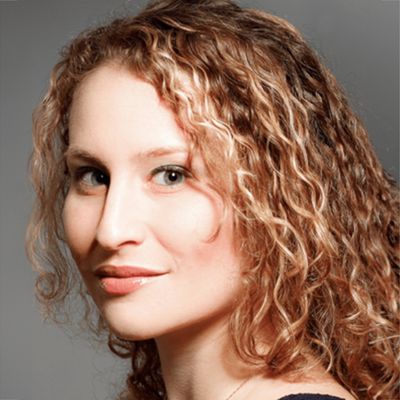
About
In this episode, we delve into the captivating world of the New York Youth Symphony's Musical Theater Composition program under the direction of the talented Anna Jacobs. As an accomplished composer and lyricist, she has an impressive portfolio that includes musicals such as POP! with book and lyrics by Maggie-Kate Coleman, ANYTOWN with a book by Jim Jack, TEETH with co-book and lyrics by Michael R. Jackson, and collaborations on CAGE MATCH and MAGIC 8 BALL with Prospect Theatre Company alongside Sam Salmond and Michael R. Jackson. Her upcoming project, KAYA: TASTE OF PARADISE, a movie musical commissioned by the New York Film Academy, features Okieriete Onaodowan, with a screenplay by Jerome Parker and direction by Paul Warner.
Anna's contributions to the world of musical theater have earned her recognition, including the prestigious Billie Burke Ziegfeld Award. A former Sundance Fellow and Dramatists Guild Fellow, Anna has also served as an Artist in Residence at esteemed institutions such as Ars Nova, New Dramatists, Musical Theatre Factory, Goodspeed, and Barrington Stage Company. Holding an M.F.A. in Musical Theatre Writing from NYU-Tisch, Anna now imparts her expertise as a faculty member at The New School. Join us as we explore the journey and achievements of this remarkable musical talent.
Also featured in this episode are two students in the MT Composition program, Sydney Altbacker and Tate Robinson, along with their new piece "Song for Marilyn" which was written for the class.
Watch the full interview with Sydney, Tate, and two other students on the WINMI YouTube Channel.
Learn more about the New York Youth Symphony, founded in 1963 as an orchestra to showcase the metropolitan area's most gifted young musicians.
Intro music and interludes: "Reverie (small theme)" by _ghost. Licensed under Creative Commons Attribution (3.0)
Transcript
This transcript was automatically generated and might contain errors.
[0:04] Patrick Oliver Jones: The Wild Never Make It Podcast presents the Spotlight Series, an in-depth look at those making a difference in the arts and beyond.
[0:16] Patrick Oliver Jones: Thank you for joining me. This week on the podcast, we'll be focusing on musical theater writing. Later this week, I'll be talking with two writers who have a new work being featured at the Soho Playhouse here in New York City. But today's episode focuses on Anna Jacobs, who is the director of the Musical Theater Composition Program at the New York Youth Symphony. Anna and her students have class at the Harlem School of Arts and sat down with me and talked about the process of writing a musical and also what they're learning in the class. She talks about her philosophy of teaching what she's learned in her own compositions and imparting that to students of the next generation of musical theater writers. And I'll even be showcasing one of the brand new works that they're working on in class. Here now is Anna Jacobs with the Musical Theater Composition Program of the New York Youth Symphony.
[1:13] Patrick Oliver Jones: Well, thank you so much, Anna, for joining me here.
[1:16] Anna Jacobs: Well, well, I'm actually joining you in your home today. Welcome.
[1:20] Patrick Oliver Jones: Thank you.
[1:21] Anna Jacobs: Thank you.
[1:21] Patrick Oliver Jones: So, how long have you been with the New York Youth Symphony?
[1:25] Anna Jacobs: I have only been with them since about July. So I was brought on to begin their brand new musical theater composition program. Then when I was hired, we had a long discussion about what the curriculum would look like, and I've been fortunate myself in that I've had some terrific training. I got an MFA in musical theater writing at NYU. I've done programs at the New Dramatists. I was pulling on a lot of my own experiences as a learner as I was learning the craft of musical theater songwriting and using that to construct a brand new course that was appropriate for students who are obviously younger than I was when I was studying it.
[2:07] Patrick Oliver Jones: Right. And NYU Tisch is actually a commonality that we have. I have been on the other side of performing the works that you writers do. So how was that training, because it's a two-year program, and how did that training propel you into your own writing as well as now this program?
[2:25] Anna Jacobs: Oh, it like changed my life. So when I moved to New York, I identified as just a classical composer, and I'd moved to Indiana and I was at Indiana University studying classical music and working with a lot of the opera performers there and writing weird hybrid music that kind of sat on the boundary between classical music and musical theater, and a lot of them could tell that I was passionate about musical theater, and one of them actually pointed me in the direction of the program. And when I started, I realized that I was doing the thing that I was always meant to be doing. I love people, I love characters, I love storytelling, I love writing lyrics, I'm a lyricist as well. So it kind of combined all of my passions.
And in terms of launching my career, it was instrumental because at the end of the two years you write a full-length musical that's your thesis. I was very fortunate in that the thesis that I wrote with my collaborator was produced the next year at Yale Repertory Theater and then went on to have a life around the country.
[3:28] Patrick Oliver Jones: That's really wonderful.
[3:28] Anna Jacobs: Yeah, I've been a part of a couple of pieces that have gone on beyond just those Tisch readings that they have at the end of the year. So it's really exciting whenever a piece can have a life just beyond that program.
[3:40] Patrick Oliver Jones: Right. And it also gave me all of my collaborators, and I've been really lucky because a lot of the people I met through NYU or through connections through NYU and now guest artists in the program that I've designed for the Youth Symphony.
[3:54] Patrick Oliver Jones: In designing this program for the Youth Symphony, what was going to be your main thrust or main component that you wanted to involve the students in?
[4:02] Anna Jacobs: A few things. I wanted to teach them songwriting craft because it's very specific. You have to learn how to write an AABA song and a verse chorus song, and what song progression is and what a hook is. They have to learn how to collaborate not only with one another but also with performers because I feel like that's such a vital component of being a good musical theater writer.
[4:25] Patrick Oliver Jones: As a performer, I absolutely agree because you can, especially being at Tisch, you can tell those who are musically gifted but may not understand how it translates to the voice.
[4:35] Anna Jacobs: Right. And I also say to them, when you are writing a song, the music has to leave some space for the lyrics, the lyrics have to leave some space for the music, but then also the song itself has to leave some space for the performer to bring some meaning as well. And so there's no way for them to learn that aspect without collaborating with performers. And we're so lucky because we're partnering with Harlem School of the Arts where the classes take place, and we actually have eight very gifted students in their musical theater performance program who are the people who will be performing the student songs throughout the year and then in their big end of year concert at Joe's Pub.
[5:14] Patrick Oliver Jones: Oh, that's wonderful.
[5:15] Anna Jacobs: And such a great venue to end with.
[5:17] Patrick Oliver Jones: I know, and I actually just took them to a concert there. They went and saw a showcase by Max Vernon, and their eyes were just glowing. They were so excited to think that their own work was gonna be there. Now, for those of you who don't know, Joe's Pub is part of the Public Theater. And so the Public Theater is one of the best off-Broadway houses in New York. And so to be in that little offshoot is such a thrill, especially for young students like that. And they're also learning some pretty solid music theory in this course as well.
[5:47] Anna Jacobs: They're they have to know how to notate. Even if they come in as a lyricist who doesn't write much music, by the end of the year, they will have learned how to compose their own melodies and how to notate them, how to use music publishing software, how to make band arrangements. We have a Broadway pit band playing in their concert at the end of the year.
[6:09] Patrick Oliver Jones: That's cool.
[6:10] Anna Jacobs: So I'm really just taking all of these authentic processes that happen when you are writing either songs for a cabaret or songs for a musical and showcasing them, and I'm leading them through a process that breaks that down for them.
[6:24] Patrick Oliver Jones: And you had mentioned that you came from the opera world. So what was it that or what was that shift that said no musical theater is actually where you were more meant to be?
[6:33] Anna Jacobs: Um, oh that's a great question. You know, there wasn't a shift, it was ignorance. I grew up in Sydney, Australia, where musical theater isn't an indigenous art form, and they do do musicals there, but especially when I was growing up, less so now, there just wasn't a new musical theater scene or incubator. And so I was a singer and I had a wonderful voice teacher who would bring in Sondheim and Bernstein and Barber and Copland and Adam Gettel and Ricky Ian Gordon and Michael John LaChiusa, Jeanine Tesori, and so a large part of my repertoire was singing musical theater, but I kind of assumed that people were like Leonard Bernstein. And so you would write your symphonies and your masses, and then like maybe you would write a musical as well. I didn't understand that there was an industry that did this.
[7:33] Patrick Oliver Jones: Yeah, because a lot of those composers that you named had a very classical background or classical sound to their musical theater writing.
[7:40] Anna Jacobs: Right. And then I went to Indiana and found out about the program through the people I was collaborating with. And I think that during my year at Indiana, I had this awakening where I realized that I wasn't interested in institutional music. I wasn't interested in getting a doctorate and just writing academic music or music that appealed to a small portion of the population. I've always been a real populist. I read People magazine, I watch Keeping Up with the Kardashians.
[8:10] Patrick Oliver Jones: In saying that, do you mean just something that's more popular and accessible as opposed to something that shows I know how to write music?
[8:17] Anna Jacobs: I mean, I don't think the people who write that kind of music think of it that way. I think it's what they love and what makes them excited. But yes, I am a communicator, I'm very extroverted, and the more people I can communicate with through the art that I'm making the better. And I just felt like musical theater was a better vehicle for that, and I could also see models of writers ahead of me who were writing complex music but framing it in a form that spoke to more people. It just ended up being the place that I knew I needed to be.
[8:54] Patrick Oliver Jones: Yeah, because definitely composers like Jason Robert Brown or Stephen Sondheim, they're known for their complex writing. And at the same time, when you see it performed, it doesn't sound that complex, but those of us who know the music know what goes into the writing as well as the singing of it.
[9:09] Anna Jacobs: Right. And also something that I'm learning is that the music itself doesn't have to be complex. How you use it in the context of what you're doing can be complex.
[9:15] Patrick Oliver Jones: Absolutely. Fun Home, I think, is a great example. You had mentioned Jeanine Tesori. And the melodies are fairly simple, but the subject matter, the story itself and how the music is utilized in it makes it a very lush and rich composition.
[9:32] Anna Jacobs: So with regards to the children in the program, you combine both lyricists, music writers, and those who do both.
[9:39] Anna Jacobs: Yeah, so we have people of a variety of artistic backgrounds. We have some people who their experience has primarily been musical theater performance. They come in as singer-actors who have had very limited experience writing but want to develop that aspect of their artistry. We have singer-songwriters who perhaps aren't that engaged with musical theater but are interested in crossing over into the form. And because it's attached to the Youth Symphony, we also have a lot of classical composers, many of whom have actually participated in the classical composition program that the Youth Symphony offers and are interested in writing for voice or writing with text.
[10:25] Patrick Oliver Jones: So you have a lot of different eyes and different ears coming into musical theater composition.
[10:31] Anna Jacobs: Right, which is the thing that I think makes it great because they all respect one another very deeply. And so they are learning how to be more versatile as writers through exposure to one another.
[10:44] Patrick Oliver Jones: And so, what is that application process like for a student to come into the musical theater composition program?
[10:51] Anna Jacobs: They submit a work sample, and it can be a lyric if they identify more as a lyricist, or it can be a piece of music if they identify more as a composer. The composers have to submit a recording and have the option of sending in a score or two. The lyricists have to submit a lyric sheet, but have the option of submitting a recording if they want. And really, all I'm looking for is students who have an interesting voice and some experience with the creative process in whatever field I think can parlay into musical theater writing.
[11:28] Patrick Oliver Jones: And for you as a teacher, coming from, as you said, performing and to now teaching it, what is that process like?
[11:35] Anna Jacobs: Ah, that's a good question. Composition, musical theater composition, but composition in general can have a very mystical quality to it, and to a lot of people can seem inaccessible because there's this sense that you are born very talented, and if you are a composer, it's something that just sort of happens. And I strongly disagree with that. Just as I believe that everybody has the ability to be a singer, and that having a great voice is not something that you're gifted with, I also believe that being able to compose any kind of music or write any kind of great piece of drama is something that you can learn. Having something to say is the thing that may or may not elude you.
[12:24] Anna Jacobs: And so I'm kind of trying to do two things pedagogically while I'm running this course. On the one hand, I'm trying to break down the craft into the nuts and bolts so that it's really accessible to everybody. But I'm also trying to help students figure out what is it that they want to write about and what is the unique way in which they write. How do they take all the sources of inspiration that they have, but not write like any one particular person they admire? And that's something that they'll develop over time.
[12:56] Patrick Oliver Jones: As a singer, it's certainly interesting to me because you talk about the nuts and bolts of composition. What do you see as those basic ingredients that you feel can be taught that you don't have to be born with?
[13:06] Anna Jacobs: Well, for example, you can be taught how to think critically about your work. Through the process of learning how to take feedback and knowing what to do with that feedback, you can actually learn how to rewrite. You can be taught the kinds of dramaturgical questions you should be asking yourself after you've written a first draft of something to determine whether or not it's actually gonna work on stage, and you can be taught how to see a watch a performer performing a draft of your work and how to make improvements in the room. Like all of that stuff can be taught, and sometimes I think it's through modeling, and then sometimes I think it's through breaking things down and scaffolding experiences in a way that makes them digestible.
[13:59] Anna Jacobs: I think the interesting thing with musical theater, because it comes from a popular sort of world, is that a lot of us have had to learn these skills by just sort of being thrown into the deep end, and we make these mistakes and then we learn from them. Sometimes it's really humiliating. And like if I can save some people from that by helping them inch their way into the process, then great.
[14:24] Patrick Oliver Jones: Yeah, I mean it's certainly the same for us performers. We fall down a lot, whether it's in auditions or sometimes even on stage. And so that growth process of the two steps forward, three steps back, kind of journey.
[14:36] Anna Jacobs: Yeah, it's a good idea. And learning that there's value in risking and failing is also something that I'm trying to impart to them, especially in the setting that you have, because it should be, and I'm sure that it is a safe space for them to try something that may exceed their wildest expectations, or something that no, this is not going to work, and try something else.
[14:54] Anna Jacobs: Right, yeah. I think that something I've learned myself through my own process is that writing is a muscle, and you have to write a lot to really get comfortable doing it and be able to generate your best writing. And so I'm just trying to get them to write a lot, and we did this hilarious activity on it was just the second class, so they barely knew each other and I.
[15:58] Anna Jacobs: That's exactly what I was thinking of as you said it because I've taken some improv classes and it's all about just kind of yes and you receive something and just respond to it, or you take an idea or a prompt and just start somewhere. You never you don't know where you're gonna go. Right. And you're also separating yourself from the editing process when you're creating. Like you just sort of make the thing and then you can step back and look at the thing and then decide whether you like it or not or how to fix it. And I think there's something very freeing in that, and I learned a lot myself from doing a class at the Magnet, and I was the worst improviser, but it helped my writing so much. You know, I just wanted to show them that you can make something and it can be terrible, but like it can take you somewhere great. And you've gotta make something first. That's what you have to start somewhere.
[16:46] Anna Jacobs: And so speaking of starting from somewhere, what exactly was it that brought you from Sydney to New York? I graduated from with a Bachelor of Music and with honors at the University of Sydney as a composer, and I spent a few years teaching and I had a voice studio and I was writing for choirs. Back then I identified primarily as a choral composer and I was conducting and making arrangements of string quartets for pop artists' albums, but there I couldn't figure out how to sort of where to go from there. And a number of my mentors strongly encouraged me to come over to the States and study here. So when I came over originally I was only planning to do some further study and then move back to Sydney, but I think when I moved to New York City and started writing musicals, something really clicked for me, and because I'd never grown up in musical theater in Australia, that whole landscape is really, really foreign to me. So now it would be a very big gesture to move back and try and find my feet professionally over there.
[18:00] Anna Jacobs: I have thought about it. I don't know how I would do it, but what I do know is that I love starting things and I love educating and I love community building. So there's probably a great opportunity there, but there's also the danger that it could happen in isolation because there's it's not I mean, even in regional areas of the United States, I feel like there's still, I don't know, more organizations working in tandem with one another to keep the motor going. And I just don't know whether that's in Australia, but it's not to say that it isn't, I just don't know.
[18:43] Anna Jacobs: Right, because you're in another world, you were in the more classical world. It's like if I said to you move to Iceland and be a performer, like I would have no idea where to start. I'm just starting the biggest city in hope, right?
[19:03] Anna Jacobs: So now getting back to the youth symphony, how has your writing or teaching changed or broadened as you've started this program with them? Something that I discovered. So I have 14 student composers in my group, and they're like 14 of the best people I've ever met, and they really get along with each other so well. And sometimes I pair people based on some being in similar age brackets, but there are also some collaborations where I have a middle schooler and a college student working together. The commonality that they share is that they're like very passionate about not even about musical theater, but about being creative souls, and so they have been able to guide the program to a certain extent.
We have a lot of opportunities towards the ends of class to sort of put a pin in what we're doing and chat about what the next assignment's gonna be, or how we should pair people up next time, or how we could be working together as a community better, and they have lots of suggestions, and so then my job becomes less about directing and more about just facilitating, and that's the best kind of teaching, I think, where you're empowering people to an extent that they are in full control of their learning experience.
[20:29] Patrick Oliver Jones: Well, especially with this being a new program, I assume the students are some of the best eyes and ears of what's working, what's not working, what direction to take the program.
[20:39] Anna Jacobs: Right. As you said, you're just beginning, but what is your sense of this musical theater program as it relates to the youth symphony as an organization? How do you think it's fitting in so far? You know, the division between musical theater and more classical art forms is pretty arbitrary and has a lot to do with marketing. I mean, this is the thing that I say to all of my students. I say that musical theater is a form and not an aesthetic. You can your voice can be whatever it is, and writing a musical is really about understanding dramaturgy and how songs can push action forward.
[21:14] Anna Jacobs: Yeah. I get really frustrated when people say, Oh, does it sound musical theater enough? I'm like, what is that supposed to sound like? Well, especially nowadays, I mean if it was the 30s and 40s, yes, musical theater had kind of one sound, but nowadays it really can be anything. And in the 30s and 40s, that one sound was the popular music of the day. Right. Like Tin Pan Alley music was generating the songs that people played and on the radio.
[21:40] Anna Jacobs: Yeah. And I am a big fan of the form keeping up with that. And it's very telling when people think that those throwback songs are like what it should sound like. So yeah, so I think that any kind of voice can find a place in musical theater. And so there's a lot of opportunity for students who are interested in the avant-garde or the downtown or the classical to write in that form. And I'm finding that there is some lovely cross-pollination between the programs in that sense. Also, I think there may be opportunities in the future for some of the students in the classical composition program or even the orchestral program to be able to come and sit in when we have an orchestration class with Lynn Shankle, and or when we're doing our sits probe, maybe they can come and learn from the music director. So we're still figuring out those partnerships, but I think it's a good idea.
[22:48] Patrick Oliver Jones: Yeah, because it seems like the programs because the orchestral, the musical theater composition, the jazz can all kind of come together and just like you're using those Harlem students as your performers, you can use performers and other people within the program to kind of showcase these pieces that are being written.
[23:07] Anna Jacobs: Exactly. And I mean that's the thing, those people might end up being their artistic community that they sort of grow up with and continue to write with. And that's the thing that I learnt from being at NYU is that you should hold your collaborators close because they're gonna continue to be your collaborators.
[23:24] Patrick Oliver Jones: Right, right, because you still stay in touch with those that you went through the program with.
[23:28] Anna Jacobs: Right, and performers I met doing like you, who I meant doing my thesis reading, I still work with today.
[23:33] Patrick Oliver Jones: Right.
[23:34] Anna Jacobs: Yeah, yeah. I've kept in touch with a few of the writers as well, and they bring me back if their piece has another life in a reading or this music festival or whatever. Going forward, what is your goal for this first year? What like how do you hope that it progresses and then when it comes to the end of the year, what's your goal for it?
[23:53] Anna Jacobs: So by the end of the year, I want them to feel like they can confidently introduce themselves as composer lyricists to people. I'm trying to immerse them in the industry as much as possible by going to concerts and obviously meeting people from the industry, but also a couple of other little initiatives, like for example, I felt that for the students in the group who are female or gender non-conforming, that it would be nice for them to have mentors because that group is underrepresented historically.
[24:36] Patrick Oliver Jones: Right.
[24:36] Anna Jacobs: And so we now have a mentorship program with Maestro, which is a group that was started by George Astitt for female identifying composers. And so six students in the group now have mentors who they're forming partnerships with.
[24:53] Patrick Oliver Jones: How does that mentorship program work?
[24:54] Anna Jacobs: Just more like feedback or kind of guiding them through the process? It's kind of up to the pairs how they want to navigate it. In sort of the smaller sense, it could just be chatting by phone or over coffee, so that the mentee gets a better sense of how somebody carves out a career for themselves in the field. But there are also situations where mentors are now inviting their mentees to come to readings of their work or observe them in rehearsal or even assist them. So it changes from partnership to partnership based on what everybody's comfortable with. But I know that it took me a long time to find female role models who do what I do, and as soon as I found them, I kind of like latched on. And having them has made a huge difference for me, even just watching them navigate things like parenthood or situations where they're a minority on a production and seeing how they sort of conduct themselves has been very impactful for me.
[26:06] Patrick Oliver Jones: And in your experience, what have you found is what have you seen that they bring to something like musical theater that maybe wasn't there before?
[26:16] Anna Jacobs: It's really important to have a diversity of point of view, and that musical theater gets stale when it's only one point of view that's being represented. I think that every piece demands a different type of creative team based on what the content of that piece is. But I think that engaging with a musical is all about learning about a group of people you didn't know before, or disappearing into a world you've never been able to disappear into before, or becoming acquainted with a type of music you didn't know before. Like it's the most exciting when it's new to you. And so why wouldn't you want to cultivate voices that can show you something that you haven't exactly seen before?
[27:00] Patrick Oliver Jones: Absolutely.
[27:00] Anna Jacobs: Yeah, I've had a guest recently, John McGuinty, who's deaf, and he talked about he can always tell when a piece is written by someone who's deaf or someone who's hearing.
[27:07] Patrick Oliver Jones: Yeah.
[27:07] Anna Jacobs: Just because the language itself is different. And so just those little nuances, how I think a lot of theater is seeing yourself on the stage or identifying with the character or feeling, hearing something that speaks to you as a person, not just it's beautiful music, it's nice to see, but something that really speaks to you individually.
[27:27] Patrick Oliver Jones: Right. And so do you see that a lot in what your students are now writing and kind of the direction that you're helping them get to?
[27:34] Anna Jacobs: Yeah, I mean, they're very early in the process, so I haven't seen a lot of that yet. However, I've been really careful about bringing in guests who I feel like can really speak to that, who have really clear voices, who are able to articulate how they develop their voices and how their own personal experiences have shaped their voices, and who represents something that I consider to be really fresh and unique. And so right now I think they're just sort of getting immersed in all of that, and then once they've had a chance to process that and synthesize that with what they'll they're doing, they'll be asking themselves those same sorts of questions.
[28:14] Patrick Oliver Jones: Absolutely.
[28:22] Anna Jacobs: When I spoke to Mike Repper who is in charge of the orchestra, he mentioned that there's some people in this program who yes, they're gifted musicians, but they want to do something else, they want to go into engineering, psychology, whatever it is. Have you found some of your students that are just kind of using this as another vehicle, another I guess avenue for them to express themselves but really have other thoughts in mind?
[28:44] Anna Jacobs: Yeah, I definitely have those kinds of students, and I think that I really admire those kinds of people because I'm not I've never been like that. And it must take, I don't know, a great deal of maturity to choose to spend your time educating yourself, not because you're gonna need that education to like get a paycheck or forge a career path, but because you know that it's going to enrich you as a person. I don't think I have had that level of maturity. But there, yeah, I have student I have one student who, speaking of engineering, is in engineering school and even thinking of flipping over to law school, and he's one of the most engaged students in the class.
[29:31] Anna Jacobs: And um I know he has a million papers he's supposed to be writing every Tuesday night when he's with us, but the fact that he chooses to spend his time that way because he wants to learn how to listen and learn how to take risks and learn how to be a creative person is amazing to me.
[29:48] Anna Jacobs: Then on the other end of the spectrum, you know, I have one student who has already starred on Broadway. Um and uh and is very um exposed to musical theatre, um, but ha also hasn't had the chance to do that with a bunch of people her own age, and just seeing the joy that she gets from being around people um who are the same age as her and who who also dig the kind of stuff that she digs is really cool.
[30:16] Patrick Oliver Jones: Yeah, that was actually something I was gonna ask about what is the general exposure to musical theater among your students.
[30:22] Patrick Oliver Jones: As you said, a lot of them come from different backgrounds, but do they grow up with musical theater or is this something new to them?
[30:29] Anna Jacobs: They've grown up with musical theater because they've grown up with YouTube.
[30:33] Patrick Oliver Jones: Right.
[30:33] Anna Jacobs: So they've seen some bits of it somewhere. And actually a couple of uh weeks ago, I brought in George Salazar as the special guest. I don't know if you know George, but he became like a internet phenomenon because of um his role in this show called Be More Chill, playing and singing this song called Michael in the Bathroom. And like I think he has like more Instagram followers than any like musical theater personality known to man, and uh and like there was not a a student in the room who wasn't like shaking with excitement and delight when he came in.
[31:05] Patrick Oliver Jones: I'm sure.
[31:06] Anna Jacobs: Um so yeah, yeah, they're the YouTube generation. Um so they have a lot of access to a lot of stuff. But I I mean the thing that has surprised me and delighted me is that a lot of them have uh seeking stuff that's like new and challenging. There were they're also jazzed that we have people coming from the production of Natasha Pierre and the Great Comet of 1812 to talk to them. And I'm not sure that I you know, I know a lot of students outside of this program who would most want, you know, people from Dear Evan Hansen to come and talk to them.
[31:40] Patrick Oliver Jones: Right.
[31:40] Anna Jacobs: Um, but this group I think are particularly because of the classical influence of the youth symphony um they yeah they're looking for things that that they consider to be challenging and they're embracing that which is cool.
[31:53] Patrick Oliver Jones: Whenever you bring in a guest you've mentioned a couple of them what is your hope from bringing in guests?
[31:58] Anna Jacobs: Well usually they start off by talking about themselves their life and how they became professional artists and what it is they do now. Um and then um they'll usually do something creative with the students. A lot of the time it's students sharing work with them and getting their professional feedback on what they're doing. We haven't had this class yet but one that I'm really really looking forward to is this incredibly well known big wig Broadway producer Beth Williams is coming in. It would tell you what Beth has produced but like there's no need because she's produced everything.
[32:39] Patrick Oliver Jones: Yeah the the list is a mile long.
[32:40] Anna Jacobs: Yeah for that class they're gonna pitch a musical to her and she's gonna talk about like what she looks for when people pitch musicals to her and um where the idea of the musical that they're pitching to her might um best find its audience be it a specific theater or specific demographic um I just had uh Max Vernon come in last night after they'd seen his show the week before so they had a lot of questions for him having heard his work on its feet and then um they performed some AABA songs that they'd written for him and he conducted a masterclass with them.
[33:18] Anna Jacobs: So it differs. Um, you know, uh, what are we doing next week? Next week, Ryan Driscoll, who's a music copyist for a lot of Broadway shows, is coming in to teach them about notation and the different types of ways you can um notate your your songs, whether it's like a lead sheet or piano vocal or piano conductor score or band parts, and then they're gonna get some tutorials and how to do that. So it differs based on the the area of expertise of the the guest, but there's always an opportunity for them to chat with the guest, and then there's always an opportunity for them to make something with or for the guest.
[33:55] Patrick Oliver Jones: When it comes to this upcoming generation that you're now teaching, what are you seeing as a direction that musicals are going in?
[34:04] Anna Jacobs: I hate saying this because um I feel bad like placing so much emphasis on any one musical because the world needs lots of musicals.
[34:13] Patrick Oliver Jones: Right.
[34:13] Anna Jacobs: But Hamilton like did something, I think, to this.
[34:17] Patrick Oliver Jones: Yeah, it I think it was a shift in musical theater as as an art form.
[34:21] Anna Jacobs: Yeah, for sure. Yeah, and also I know that when I saw it, even though I would never ever dare to write a rap song, that as I was watching it, I was like, I identify with this as a writer. This speaks to the way that I write in some way. And I know that a lot of people in the community that I'm a part of felt that way too. So, and I think that maybe the reason for that was that it was so connected to all the other types of art that we're consuming right now, like people of my age and and younger and older. It's it it was so tapped into the cultural zeitgeist. Um, and so I think that's where musical theater is going. I think that it is having this lovely renaissance right now where people are realizing that it is um it is not an archaic art form, it's very relevant.
You can write about things that are important right now socially or politically. You can write using musical vocabularies that appeal to what people are listening to right now. Um you can cast in a way that is more thoughtful and representing more different types of people on stage, and that that that potential is there.
[35:37] Patrick Oliver Jones: Absolutely.
[35:37] Anna Jacobs: And that's what's really exciting about it for me.
[35:40] Patrick Oliver Jones: As you facilitate these young composers, how much of it do you just kind of leave a wide berth and let them just explore? And how much do you try to steer where it is that they're going?
[35:51] Anna Jacobs: I don't try to steer their voices. Their voices are their voices.
[35:52] Patrick Oliver Jones: Right, absolutely.
[35:55] Anna Jacobs: Um, but you know, if they're using an imperfect rhyme, I will tell them that.
[36:01] Patrick Oliver Jones: Right, right.
[36:02] Anna Jacobs: So um yeah, I like to separate um form from content, I guess. It's difficult because I think that sometimes you know when a song is working and you know when a song is not working, and to be able to be really articulate about why can be challenging.
[36:19] Patrick Oliver Jones: Right, because you want to appreciate the work, but still give give a critique of maybe a different direction for that work.
[36:28] Anna Jacobs: Well, it's also really complicated. There could be any any number of reasons why. And the way that writing works is you shift this like a domino effect. You change one thing and then all these other things start to change around it. Um, and so the best way that I can teach is through um asking questions and inquiry. And I think that's why I'm a good teacher, and I think that's something I've learned through consistently teaching now for like I don't know, 15 years. How old am I? Maybe fit almost 20 years. Um, is that uh really great teaching is not about giving the right information, it's about asking the right questions and giving space for the writer writer or the the artist or the creator to go away and figure out the solution that works for them.
[37:17] Patrick Oliver Jones: Right, right.
[37:18] Anna Jacobs: Because as you said, you're trying to focus on on their voice and not change that. So ask the right questions so that that voice has a better conduit to express itself. And I also just personally hate prescriptive feedback. I don't like it when people are like, he should jump off a building at the end of that section. Like I just know, but if somebody asks a question like, why does he end the song so elated after X, Y, and Z have happened right before the song, and then and then I'm like, yeah, I don't know. And then I think of a a solution that makes sense for the way that I can execute it. And so it I guess it's just my my own experiences that I've had with feedback and the type of feedback that I found useful have informed the way that I teach as well.
[38:02] Patrick Oliver Jones: And how has teaching informed your own writing?
[38:05] Anna Jacobs: I mean, I think I'm a really excellent communicator with other members of creative teams because I had to learn to be so articulate um talking about art with students and their art. And I think that when you have to explain what you're doing, you have to understand it.
[38:24] Patrick Oliver Jones: True, true.
[38:25] Anna Jacobs: Yeah. It's made me very reflective. Um I do take a lot of time to think about what I'm making outside of the time when I'm just sitting at a piano or at a laptop making it. And then and the reasons why you're making it.
[38:38] Patrick Oliver Jones: Yeah, or like if something, you know, isn't working and I'm feeling stuck. Maybe in the past I might have tried to keep forging ahead regardless. But I think teaching has given me a lot of tools to look at something from multiple angles and and find a way to fix it or reapproach it.
[38:57] Patrick Oliver Jones: Which sounds like exactly what you're trying to do with your students is kind of give them that that third eye that can look outside their work.
[39:04] Anna Jacobs: Right. Exactly.
[39:15] Anna Jacobs: Two of her students, Sydney Altbacker and Tate Robinson, talked with me about how they found out about the class and even showcased a song that they've written in the class called A Song for Marilyn.
[39:34] Sydney Altbacker: My name is Sydney Altbacker. I actually found out about this program through a friend. I have um a few friends that are um involved in various parts of New York Youth Symphony, and um I'm very involved in the theater in my school, and I'm very passionate about musical theater in general. Um and a few friends reached out to me saying, Look, New York Youth Symphony has a new program and it's right up your alley. You should definitely check it out. So I've had a blast so far, so yeah.
[39:57] Tate Robinson: My name is Tate Robinson, and uh I found out about the program through my theater teacher. He's helping me. I'm doing an independent study with him just to learn about the different aspects of theater because I I hadn't been too involved until very recently, and he told me all about this program and how he'd actually gone to school with Mrs. Jacobs. Uh, and so he connected me with the program, and now that I'm in it, it's just it's amazing for me.
[40:23] Sydney Altbacker: This piece um was part of an assignment where we learned about the AABA song format. Um, so we had a lecture and we learned about um the different components of an AABA song, um, different examples of AABA songs and a lot of things of that nature, and we were given an assignment um based on a cartoon, we had to come up with our own AABA song, and um that's where Tate, who is who wrote the lyrics of the song, came in with uh a lot of the ideas for what our pieces.
[40:50] Tate Robinson: So if you want to Yeah, so um our prompt was a cartoon of a man who puts his burrito into a microwave and it's actually a time machine. Uh so I took that very loosely uh having something perfect, but you don't actually want it. So that was uh sort of my inspiration for the first iteration of the lyrics, and then when I was showing it to people, um a consistent piece of advice that I got was make it more specific or maybe make it about someone in particular that everyone knows. My idea of the context would be that JFK has just gotten he's in the midst of everything that's going on with with Russia and the Cold War and the things that are going on, and that's putting a huge stress on his his family life, and just the little small things in his life are being so heavily affected by these big things, and that's sort of tearing him apart when it comes to his relationship with Jackie.
Obviously, we're never gonna be able to find out exactly what went on, uh, but in my mind that is what I think had a large part to do with it, and so that's what really drives him in this song to be with Marilyn and and be with someone who's just so different and exotic compared to all the things that he has going on with him at the moment.
[42:02] Sydney Altbacker: It's like a microanalysis of a moment that he might have had that we wanted to explore.
[42:08] Tate Robinson: Yeah.
[42:09] Sydney Altbacker: He said I had what I was supposed to.
[42:15] Tate Robinson: A fancy roof above my head, a girl to keep me warm in bed.
[42:25] Sydney Altbacker: He said I had what I was supposed to.
[42:30] Tate Robinson: But the power goes straight to the head.
[42:33] Sydney Altbacker: A god of men of nations led.
[42:37] Tate Robinson: And I know the world sees our every moment.
[42:44] Sydney Altbacker: And I know that she's regal, kind and wise.
[42:49] Tate Robinson: Her powered boys, the perfect brides.
[42:53] Sydney Altbacker: She'll simply kill you with her eyes.
[42:56] Tate Robinson: But there's no time to waste on these things tonight.
[43:08] Patrick Oliver Jones: You can watch the full interview with Sydney and Tate as well as two other students from the Musical Theater Composition program on YouTube. Just search for Why I'll Never Make It podcast and go to our YouTube channel there.
[43:21] Patrick Oliver Jones: Or you can go to the website, why I'll never make it.com and see the full interview on the website. As I mentioned later this week, I'll be sitting down with Glasgow Lyman and Jeff Rossick, who wrote a new musical called We Need This Musical to Keep Us From Killing Ourselves. The musical. A name like that, you certainly don't want to miss my conversation with them about writing this musical and exactly what this musical is about. Until then, take care, and I'll see you next time.
© Broadway Podcast Network, All Rights Reserved