

Today’s episode is part two of my conversation with the final guest of Season 4. Sammi Cannold is a remarkable artist and director. She was even named to the 2019 Forbes List of 30 under 30 in entertainment for her innovative and unique approach to directing for the stage... Read More
From the show: Why I‘ll Never Make It
Guests

Featured Shows

About
Today’s episode is part two of my conversation with the final guest of Season 4.
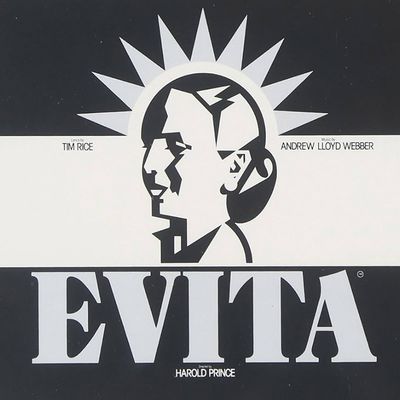
Sammi Cannold is a remarkable artist and director. She was even named to the 2019 Forbes List of 30 under 30 in entertainment for her innovative and unique approach to directing for the stage. And today’s conversation is going to be focusing on a few of those productions: her remarkable staging of the musical Violet on an actual bus AND her 2019 New York City Center Gala production of Evita.
I have my own personal connection to Evita having done the national tour of the latest Broadway revival. Even our music supervisor Kristen Blodgette worked with Sammi in her production. In fact, It was that revival production that inspired Sammi to become a director in the first place.
Follow Sammi: Website / Instagram / Twitter
Subscribe to WINMI
Producing this podcast is a rewarding experience, but it's also costly and time-consuming as I’m essentially a one-man operation. By subscribing you’ll be supporting these podcasting efforts, and have access to extended conversations and other bonus content. Whether you subscribe or donate, your financial support of this podcast is greatly appreciated!
- Subscribe to get access to bonus episodes and extra content
- Make a one-time Donation to support transcripts and podcast production
- If you'd like to support WINMI but have limited funds to do so, then contact me directly for reduced-price or even free access to the bonus content.
Follow WINMI: Website | Instagram | Twitter | YouTube
----------
Why I’ll Never Make It is an award-winning, Top Theater Podcast with actor and singer Patrick Oliver Jones and is a production of WINMI Media. Background music is by John Bartmann and Blue Dot Sessions is used under a Creative Commons Attribution-NonCommercial 4.0 International License.
Transcript
This transcript was automatically generated and might contain errors.
[0:00] Patrick Oliver Jones: Today's episode is part two of my conversation with the final guest of Season 4, Sammi Cannold. We explore her directorial efforts with Evita at City Center and Violet on a Moving Bus, as well as some of the obstacles that have stood in her way.
[0:19] Patrick Oliver Jones: Sometimes, especially for female directors, there's a bit of a flattening of who we are as individual directors with different sets of skills. It's not one size fits all. Welcome to the second part of the season finale episode of Why I'll Never Make It. This whole season, I have brought you insightful conversations about the reality of life in the arts. I am your ever faithful and grateful host, Patrick Oliver Jones. And if you would like to support the ongoing work of this podcast, become a WINMI producer today by going to donate.winmipodcast.com. There you can contribute to the upcoming fifth season of this podcast, and you'll also get access to members-only bonus episodes as well. That's donate.winmipodcast.com.
[1:14] Patrick Oliver Jones: Sammi Cannold is a remarkable artist and director. She was even named to the 2019 Forbes List of 30 under 30 in entertainment for her innovative and unique approach to directing for the stage. And today's conversation is going to be focusing on a few of those productions, like her remarkable staging of the musical Violet on an actual bus, which she produced at the American Repertory Theater in Cambridge, Massachusetts back in 2017. But we start off with her 2019 New York City Center gala production of Evita. If you've listened to the podcast before, you know that I have my own personal connection to this show, having done the national tour of the latest Broadway revival. Even our music supervisor, Kristen Blodgette, worked with Sammi in her production. In fact, it was that revival production that inspired Sammi to become a director in the first place.
[3:03] Sammi Cannold: I would say Evita, because I just was so excited about this musical and this history. So, you know, I walked into a meeting with Jack Viertel at Encores and he said, "What do you want to direct for Encores?" And I said, "Evita." And, you know, we went through a six-month process of looking at titles, and at the end, we ended up circling right back to Evita. And what an honor to get to do my dream show in the heart of New York, you know, in the way that I wanted, and the thing is to get to say the things that I wanted to say about it, and to have the support of the writers. And, you know, it's just like it was such a, you know, perfect combo of everything for me. I miss it.
[3:45] Patrick Oliver Jones: In all your research, then what do you think you brought to the production that was different even from that revival or other productions you've seen?
[3:53] Sammi Cannold: You know, our team used to joke about this because we were sort of inadvertently all in the rehearsal room. The creative team was all female, but not necessarily by design, just by, you know, the right people for the job. But we used to say, you know, there's never been a first-class production of Evita directed or choreographed by a woman or by an Argentinian. And in our production, both were true. It was really important to me to bring that perspective to this story, not because it's necessarily been a fault of prior productions that that's not been, you know, the starting point. Anybody can, you know, Hal Prince's production is my, you know, North Star in life, you know, I have such deep reverence for that work.
But looking at, you know, seeing that revival as a 16-year-old or however old I was, actually, when they say there was nowhere she'd been at the age of 15, as a young woman, I can put myself, you know, in that position of that character. And then it brings up a whole host of questions for me about her life and about her legacy.
[4:58] Sammi Cannold: And so, you know, in particular, the thing that was different about our production was that we had a younger actor playing Eva for the first portion of the show, and then she transitioned into an older actress. And that was to illustrate what it looks like if you have a 15-year-old, you know, because we know that if, you know, if Eva was indeed intimate with Magaldi, as depicted in the musical, she would have been 15 and he would have been 36. And if we look at that through a modern context, particularly in the last few years, it brings up a whole host of new questions. And those are questions that, you know, and in a way, I've been so fortunate to like be able to have this conversation with Tim Rice, but like my feeling personally is that he and Andrew and Hal were so ahead of their time in actually putting lyrics in the show about how unacceptable it was that this 15-year-old was taken advantage of by this 36-year-old man, you know, so that's always been in the show. I just wanted to highlight it. And, you know, their permission to cast it the way we did gave me the opportunity to do so.
[6:08] Patrick Oliver Jones: Now, Evita is written by Andrew Lloyd Webber and Tim Rice, as you said, and Andrew Lloyd Webber, Phantom of the Opera, Cats, these other productions that you've been involved with. Does it seem like a theme now in your young career that Andrew Lloyd Webber will be a part of?
[6:22] Sammi Cannold: I've been so lucky, you know, and I think that it's because of Evita, you know, I started a bit of a relationship with him, and I mean his work is the foundation of my life. You know what I mean? Like that sounds crazy to say, but it is, you know, because my life is directing, and I am a director because I saw Evita, and because the first show I ever directed was Joseph. So, you know, it's all related to me. And so to now get to know him has been an honor and a gift.
[6:59] Patrick Oliver Jones: Back in 2018, The New Yorker reviewed Lloyd Webber's memoir called Unmasked. And in that review, Adam Gopnik asked a central question. Did Andrew Lloyd Webber ruin the musical or rescue it? This yin and yang of criticism and praise has followed his career since the 1970s. Yet in 1978 and '79, Lloyd Webber won his first Olivier Awards for Best Musical with larger-than-life productions of Evita, which made Patti LuPone a star on Broadway.
[7:35] Sammi Cannold: In a 2012 CBC interview, Andrew Lloyd Webber reveals that the musical rendition of Eva Perón was actually inspired by another larger-than-life star, Judy Garland. I saw what I think was the last performance she ever did at a place called The Talk of the Town in London. And she was late. People were sort of throwing things on the stage, and this broken woman came on and she tried to do "Over the Rainbow" and couldn't do it. And, you know, that do you know that's what gave me the idea of how to do Evita? Because I was always very worried about the idea of I couldn't get my head around the story of Eva Perón at all when Tim Rice suggested it. And then I suddenly thought, what if I gave her an anthem, which became "Don't Cry for Me, Argentina," that then turned on her like Garland did that the rainbow had for Garland.
And so we could, the final I had it then, because the final broadcast was she's dying of cancer and everything. I remember that moment with Garland, and I did exactly that sort of that she couldn't get through it and was trying. And, you know, dramatically, that's what kicked it off, just that one remembering seeing that one thing.
[8:44] Sammi Cannold: Yeah, to anybody who remembers Garland at her peak, you know. I mean, just to see this coming shattered. I mean, absolutely drug-ridden woman, and just not able to, and the song, the song literally bitter. I think Lloyd Webber in his era was one of just a handful, you know, Stephen Sondheim and those types that really changed the musical theater form and brought it into audiences that wouldn't have seen it before. And Phantom of the Opera was the very first musical I ever bought the cast recording of that just engaged me in a way that other musicals, I had done other musicals, but it engaged me in a way that others hadn't. So Andrew Lloyd Webber, I think really changed the musical theater art form and propelled it in a way that others had not up to that point. I'm a massive admirer and so grateful for him and, you know, his kindness.
[9:36] Patrick Oliver Jones: Certainly there are regional productions that happen that he's not involved with, but any of these productions like Encores and certainly Broadway, West End, I mean, the ones in Korea, is he personally involved in these bigger productions in that way?
[9:49] Sammi Cannold: Yes and no, his company is majorly involved. So I worked with Tim Rice and Sharon Cassiff, who are at his company, Really Useful Group, to sort of hone, you know, how to make sure that the production upholds the integrity of the original material, and also, you know, presents something new. And they're amazing as a licensing company in terms of giving permission for new interpretations of work. You know, there are so many out there that are new ideas, and it's funny because, you know, I saw like Jamie Lloyd's Evita the same year that we did ours, and I was like, wow, that's the other end of the spectrum of what you can do with Evita, but, you know, his company is so amazing that they allow both. They're like so game for the property to be interpreted in different ways.
[10:36] Sammi Cannold: You know, in terms of Andrew himself, we've had conversations about it, and I've also Tim Rice was very helpful in the lead-up in answering my questions and sort of always being available on email to field things. But they were just sort of like you do you and check in with our folks at Really Useful and, you know, make sure you're not cutting any lines and, you know, doing anything you shouldn't, and, you know, which of course, and you know, the other part of that is that, and you probably know her from your time on Evita, but Kristen Blodgette was our musical supervisor.
[11:10] Patrick Oliver Jones: Yeah.
[11:10] Sammi Cannold: Absolutely love her. She's worked on a lot of Andrew Lloyd Webber musicals, and she really knows him personally. One thing that I remember she said in rehearsals when we were the ensemble was getting together, learning all the music. She said that this Evita is her favorite score. She loves it and she loves him, and she has such a passion for theater, and she's one of my closest friends, and I'm so, you know, fortunate. But I think one of the amazing things of like having her in that rehearsal process is that she, having worked for Andrew for 34 years, comes into it with his brain. So she is able to say, "Nope, you know, measure 32, you can't do that. Sorry, nope, like Andrew wouldn't like that. Nope, don't do, you know." So it's incredible. It's like, you know, having Andrew in the room, even though he's not in the room. So we were really blessed in that way.
[12:08] Sammi Cannold: Now, speaking of taking shows in a new direction, that is something that that you also seem to like to do, whether it's uh putting Ragtime on Ellis Island, you did a concert version of that. You put the musical Violet in a moving bus. What what about being site-specific is so important to you? Not just being in the theater and creating that world on stage, but you want to create that world for the audience to be in as well.
[12:34] Sammi Cannold: Yeah, I mean, I think there's something so exciting about the marriage of a story and a site, you know, where a site can add meaning or add dimensions to a story, and a story can add meaning or add dimensions to a site. You know, it's that that sort of like symbiotic relationship between a story and a site where that you don't really, you know, get that in a theater. You don't like go to a theater and say, wow, this show is so enhanced by it being in the Broadhurst. I mean, maybe, maybe you do, but not not often. Um, whereas when you see Violet on a bus, it adds a new dimension to that musical. And the musical adds a new dimension to the experience of being on a bus. So, you know, it goes both ways. And I I just I love that kind of work and I hope to get to do more of it.
[13:21] Sammi Cannold: Because it's not just let's dig into the character, the story, let's make sure that this is coming out and and blocking, because it's on a bus, people are getting off and on. You had to go to different stops. You have you have a driver that has to have a certain so it's it's a whole other technical side that most directors don't have to deal with.
[13:40] Sammi Cannold: Yeah, it's um I love logistics as a director, you know, like I just love them. Um, I love making spreadsheets, I love organizing things, you know. You know, people are like, oh, you know, being a director is so artistic. I'm like, yeah, it's so artistic, but it's also like a ton of logistics when you direct large musicals or you direct musicals that you know happen in weird locations. Both Violet and Ragtime, as you mentioned, were logistical behemoths, because I I would say 30% of what I did was what we think of as directing. The other 70% was like, uh, we have to figure out, you know, if if the bus is stopping before or after the crosswalk, uh, we have to figure out, oh, this audience member has motion sickness. Oh my God. Like, it's just like a lot of a lot of complications, but I love it.
[14:25] Sammi Cannold: You know, you just get to be a constant figure. Because then there's just the traffic. Like, say it takes you five minutes longer to get to your next location. So your actors what have to just kind of stall for time or just or I'm sure a lot of those contingency plans were put into place.
[14:40] Sammi Cannold: Yeah, we we had a lot of contingency plans and also this was like my favorite day of being a director of all time, where we did a run when we did the ART production, like shortly before we opened, where we did a run of the show where we called it a troll run. And I said to my staff, I need you to make impossible circumstances for the actors so the actors can practice what they're going to do if really wacky things happen. Because in some way you're relying on your actors and trusting your actors to figure it out.
[15:14] Sammi Cannold: So we, I mean, this run was incredible. Like, because you know, we would do like my assistant director was like playing the front door. You know, she would stand with her arms spanned out as if she was the front door, and she would be like, the door is jammed, it's not opening, and you have to make an exit. What do you do? And these poor actors were like, I didn't get into this to like have to solve these problems. I just want to act. And we were like, sorry, like oh my goodness.
[15:43] Patrick Oliver Jones: Yeah, yeah, because it's it's not just you, as you say that that 70% that has nothing to do with the acting, it's just all the business and technical side of it.
[15:50] Sammi Cannold: Exactly. But yeah, now you're now you're forcing these actors to be like, Yes, now that you've said your lines correctly and brought emotional depth to this character, I now need you to figure out what to do with the broken door.
[16:01] Sammi Cannold: Exactly. Because it's not like you can have like a stage manager fix things because we're all in the same environment. We're all, you know, everything's supposed to feel authentic.
[16:14] Sammi Cannold: As reported in Playbill, the staging of Violet, a musical by Janine Tesori, first came to life at Stanford University, which is where Sammy got her bachelor's in drama and history. Years later, after working with director Diane Paulus on Broadway in Finding Neverland, she was given the opportunity to direct at American Repertory Theater. And for her production, a 36-seat bus was used. It certainly seems like Sammy has no shortage of ideas and creativity when it comes to directing.
[16:50] Patrick Oliver Jones: So when it comes to you watching other shows, do you tend to critique and direct it in your mind as well? Because I because I know as us actors, you know, we we certainly do that. We see someone who does a part that's amazing, like, oh, I would love to do that, or oh, that wasn't so good. Maybe I would have done it. You know, do you do that same thing as a director?
[17:10] Sammi Cannold: Um, I think it depends on the show. I mean, there's some shows where I sit there and I'm like, damn, that's brilliant. And I wish I knew how to do that. And then I don't, I don't try to direct it in my head because I mean, it's I sort of think of it like because I direct a lot of quote unquote revivals, a lot of people will ask you, like, do you want to direct a revival of Pippin? And I'll be like, no, because Diane Paulus's Pippin was, I mean, maybe one day, but like her Pippin was so so fundamental for me that like I don't I don't know what I would do differently because I so resonate with her approach to that musical.
[17:49] Sammi Cannold: But then other shows I'll see them and think, oh, wouldn't it have been cool if this happened? You know, without without judging the choices of that that director because to each their own. But you know, of course, we're we're all different. And I think I think, you know, in a way, a lot of people forget that directors are have a nuanced set of skills that they bring to the table. And different different directors have different areas of expertise and have different things that they gravitate towards and different things that they love. And I think that sometimes, especially for female directors, that there's a bit of a flattening of who we are as individual directors with different sets of skills. It's not one size fits all.
[18:34] Patrick Oliver Jones: Definitely, definitely. You know, like Ragtime, I saw it in eighth grade or something like that, not ninth grade. Um, and I wasn't immediately, I mean, I didn't even think of myself as a director then because I was in ninth grade. Um, I so I didn't immediately think like, oh, I would do it this way. Um, I just was sort of like love that musical, banking, you know, banging that and would think about it from time to time, you know, and then you'll find, you know, like five years later, you'll be like, aha. Because I think also there's a gestation period, right? Because like most revivals that I'm seeing, like, would I love to direct a revival of Spring Awakening? Absolutely, but like I just saw one, so so that I'm not I'm not gonna go do that. Um, you know, so it it's about it's about timing and lots of different factors, I think.
[19:24] Patrick Oliver Jones: And one of your other favorite shows or dream shows is Man of La Mancha, which is a personal favorite of mine. I've done the show four times, and so my gosh. If there's one show that I could kind of live out my days, that would be it. It's just what is it about that show that appeals to you?
[19:40] Sammi Cannold: I've always like adored the score. Um, and it wasn't until recently that I sort of got into the book because I think I saw it as a eight-year-old probably, you know, so I had exposure to the musical, but I but at eight years old, you're not thinking about it.
[19:59] Sammi Cannold: Yeah, most of that's gonna go right over.
[20:01] Sammi Cannold: Yeah, exactly. And and and then, you know, I was asked to pitch a number of shows for something, and I was like, gosh, I've always loved that score. I should you know get to know the book better. And I and I started reading and was like, wow, this is amazing. Um, and and I have so many ideas for you know what I what I'd like to do, and yeah, I adore it. I just love the way that it tells a story, and through that you're getting to know people and their motivations and the morals, and it gives lessons.
[20:33] Patrick Oliver Jones: Yeah, yeah, from time to time he'll say something to kind of beat it over Al Danza's head or or you know, he's trying to make a point. But overall, it's like you see what these people are doing, and that's the lesson.
[20:43] Sammi Cannold: Yeah, you you see how the Duke reacts, you see how the maid, you know, all these different characters from big to small, and that's what I love about it, because each of them have their own their own story. And I think the message is so beautiful and um, you know, it's it's time for another revival. So I think personally.
[21:01] Patrick Oliver Jones: I agree. It's it's been my goal to put myself in this as good a position as possible that when that revival comes, I can be the first at the door to be like, I'm gonna audition. Get it. Hello, hello. Right. Respect.
[21:16] Patrick Oliver Jones: In fact, it was back in my college days at the tender age of 19 that I began setting my sights on doing the role of Don Quixote in Man of La Mancha. And ever since it has remained a favorite work of mine, whether hearing it or seeing it or performing in it. In many ways, it is a foundational piece that instilled a love of the arts and in musical theater in particular.
[21:43] Sammi Cannold: So, how did Sammy get started? What lit that creative spark for her?
[21:48] Sammi Cannold: You know, I'm lucky in that I grew up in a theater household. So, you know, I knew what a director was, I knew what a director did in a way that I feel like most kids don't have the privilege of knowing that at a young age. You just see actors on stage and you think that's what theater is. Um, so the the sort of like formative, two formative moments, but the first one was, you know, when I was in uh middle school, I was in a summer arts program in my town, and the you know, um, we were doing a production of Joseph, and the uh head of the program was like had to be in too many places at the same time. And so he would leave the room and he would say, uh, Sammy's the oldest, she's in charge, and I was 13.
And, you know, and and he credited me as the director of the show because I guess I was the one who told everybody where to go. I mean, I I don't really remember much about it, but I do remember like every day he would just leave me by myself in the room and I would tell the other kids where to go.
[22:52] Sammi Cannold: And I've recently found like my um charts for like where I wanted people to go and um their maiden crayon, which really is like all beautiful, you know, metaphor for the whole thing. But uh I suppose in quotations you could say that's like the first show I quote unquote directed. I really don't know if it resembled anything like directing and I do know it was horrible. But um but that's okay. But you know I got into my head at 13 that young girls can direct, you know, which I think is something that we're not really fed a lot of of info to believe.
[23:32] Sammi Cannold: And then when I went to college, I'd sort of just like recently gone through a period of revolt against my parents where I was like I'm not gonna go into theater. I don't want to do what you do. So I went to college for education policy and like three weeks in was like incorrect. This is not what we're supposed to be doing. Wrong wrong revolt. Wrong. So then I I went back to theater and have not looked back since.
[24:10] Sammi Cannold: They opposed it for you but for you is the opposite.
[24:14] Patrick Oliver Jones: So did they push or promote that or were they really like whatever you want to do, Sammi, is fine?
[24:28] Sammi Cannold: I think she was really thrilled. My dad and I had like a few moments where he was like, "Are you sure? Like this isn't really an easy lifestyle?" And I was like, "Yeah." Um, but there was no moment where my mom discouraged me. Um, it was sort of assumed. It was like family business, you know. And the great thing about that is that I'm so fortunate that all of like my mom's friends who I grew up with, I now either work with or work for, or you know, have relationships with, or you know, so it's undoubtedly a leg up. And I take that knowingly and delicately and have felt like, you know, as a result, I have to work harder to prove myself so that it's not something that I got access to because I'm my mother's daughter.
[25:18] Patrick Oliver Jones: What have those moments been like when maybe you felt like you didn't prove yourself where you didn't meet whatever standard you had for yourself or for others?
[25:27] Sammi Cannold: Oh gosh, all the time. Um, I mean, I feel like as artists, we're always sort of second guessing, at least I am, you know, uh, did I do well enough in that meeting? Did I, was that staged well? You know, we're always sort of iterating and um, so there have been many moments, and I think part of, you know, one of the things that I find to be sort of alarming about um, my personal journey, uh, is that like I've been so fortunate to get to do so much so early, which I'm very grateful for. And at the same time, it's a bit um, scary because you know, I sort of envisioned that I would get to make things that 20 people would see, you know, my first few years out of college, and it would be relatively speaking, low stakes, you know, and instead, you know, I was standing there watching, you know, 2700 people watch a show we made in 10 days at City Center.
And I was like, "Oh my God, I'm going to explode." You know what I mean? Because it's just the pressure of that and the stress of that is real. And you know, it's something that like could be, you know, like taboo to talk about, but I do think it's important to acknowledge that as artists, we put ourselves in vulnerable situations where, you know, we're saying like here's my heart on a stage now New York Times tell me if you like it or not. So it's hard, you know. Because I certainly know for myself as an actor, I know that I have a certain level and I can do this well. I can do this. And then when it comes to dancing, okay, that's not really my skill but then I can do this. And then within acting even there's like certain emotional moments that I may have a harder time getting into, whereas this I can just roll out of bed and do that one. Are there things when it comes to directing that you get to those certain moments in a show and you're like, "Okay, this isn't my wheelhouse" and you kind of have to make it up each time you do it?
[27:35] Sammi Cannold: Yeah. You know, I'm like a bit of a prep monster as a director. So my hope is like I never come into a room without a plan. If even if I end up discarding that plan or an actor has a better plan or you know something like that, it always makes me feel great to have a foundation. And it allows me to catch a lot of things that I would otherwise feel icky about before you know encountering them in the rehearsal room. But I think that for me, you know, I know Shakespeare's not my wheelhouse. I know that like one two-hander plays aren't my wheelhouse. And I mean I know that I'm much more physical than I am text-based in the sense that like part of the reason I love doing musicals is that I love the movement of people in space to tell a story.
And when I direct a two-person play, there are only so many ways to sort of use your toolbox on that in terms of physicality. I mean there are amazing directors who are like text wizards who can work with actors you know for a month at the table and get brilliant things out of that production. I'm not that director and I think I feel good about knowing strengths and weaknesses so that I know what kind of work I should try to direct and what kind of work I should not try to direct.
[29:00] Patrick Oliver Jones: And in picking actors for your production, do you want them to align with your kind of process or vision or do you seek out ones or find those that are really different and you want to kind of balance that?
[29:13] Sammi Cannold: It depends and it's part of why the audition process is so exciting because like you know I could have a very clear vision of who a character is and then someone could come in and totally surprise me with something completely different that I never would have thought of but is actually fits into the larger conception of what this production is. I think it's important that before going into auditions I have a clear idea of what I want the production to say or what I want the production to be about or what I how I want the production to look how I want the production to feel along with you know my designers or if the writers are in the room, you know. And so when I talk about an actor coming in and surprising you, that's mostly in the sense of doing something that fits within the larger umbrella of the idea of what this production is, not so far outside the bounds of that, you know what I mean?
[30:04] Patrick Oliver Jones: Sure.
[30:04] Sammi Cannold: Yeah, yeah, yeah. Like, um, I directed a play called Endlings, and we had done multiple workshops of this play with actors playing one role, and all the actors who had played this one role sort of fit a similar, like quote unquote type. I hate that word, but to illustrate the concept. Um, and then someone came into auditions that was a completely different type of actor, but she served the same thesis statement in a gorgeous, gorgeous way. And we were like, "That's it." So you it that's exciting for me.
[30:42] Patrick Oliver Jones: As you said, you're just kind of starting out, you're still at the beginning stages. And looking at that 30, 40 years down the road, what is it that you hope to have? I know, believe me, I do the same with myself. I'm like, "Okay, I'm gonna be 70 eventually. What is my career going to look like?" So have you thought about what you want that 30, 40 year journey to look like?
[31:12] Sammi Cannold: Um, well, I mean, I hope to have told stories that um impact people in some way, you know. Um, uh, first and foremost. I mean, in terms of like concrete goals, my ultimate dream project is the Olympic opening ceremonies. I would really like to direct that one day in the far, far future. Um and you know, I guess part of what this year has changed for me is that I've started doing a lot of work in TV and film, and I didn't think I would sort of add that on for a while, but because of everything that's happening this year, it's sort of in a way was a good time to do that. The only option alone. And I never wanted to leave theater as a result of it. But I think what I'm finding is that it's sort of like feeding back into theater in a way that's like really exciting.
And so now a lot of my projects feel interdisciplinary in a way that's like exciting because you can draw on skill for both both skill sets, you know, depending on the project. You know, I was just before this on a call about a concert that we're televising or streaming. And I was like, "Gosh, actually, having a skill set and being able to direct the concert live, but then also understanding the language of how to film it and how to distribute it is something that I really want to be able to do.
[32:38] Patrick Oliver Jones: Yeah, it's all about being multifaceted. And as you said, that 30% of directing where you get to get into the text and the characters of the story, and then the rest of it is all that behind the scenes work that it really has nothing to do with the art form per se. It's all about the business side of it, the technical aspects.
[32:56] Sammi Cannold: And I love that stuff. And most people are like, "Oh, I have to send so many emails." And I'm like, "Give me more emails."
[33:05] Patrick Oliver Jones: So you're that director that's going to love that part. And so producers and you know, theater venues, they're gonna love you for that.
[33:15] Sammi Cannold: Yeah, but you know, it's like if I were given a one-man play, I think I would be a nightmare for the theater company because I would like try to make it way more complicated than it is. Right. It's a guy standing with the box. It doesn't need to be there. It doesn't need and I'd be like, "What if this happened and this happened and this happened?" This is why I like, you know, I don't want to muck it up, you know, but uh it's why give me a 40 person musical. I'm jamming.
[33:35] Patrick Oliver Jones: So well, Sammi may be young in her career, but she has certainly found a path for herself to both explore and expound upon in the years to come. And I can't wait to see what comes next for her.
[33:57] Patrick Oliver Jones: And speaking of coming up next, season number five of this podcast will begin January 13th, 2021. So then what's gonna be happening between now and then? Well, there may be a bonus episode or two, replays of great episodes from this past season. But most importantly, there will be a look back episode as I do every year on December 28th, which is Why I'll Never Make It's anniversary. Until then, I'm your host, Patrick Oliver Jones, writer, editor, and producer of this podcast. Dylan Adams is the booking producer. Music is provided by Poddington Bear and Chad Crouch. WINMI Podcast is a member of the Helium Radio Network and Broadway Makers Alliance. Join me next time and next year as we talk more about why I'll never make it.
[35:01] Patrick Oliver Jones: One thing that I really love about it is that it provides me a chance to meet people like you, people that I wouldn't know any other way, and start to make connections with more people outside of my normal sphere. I've greatly appreciated that because I've met people that I don't think I ever would have had a chance to meet or talk to.
[35:18] Sammi Cannold: That's such a cool component of it. And thanks for asking me.
[35:23] Patrick Oliver Jones: Yeah, it's very interesting because fortunately you had a website, so I could email you, but I've contacted people on social media that have come on. And then I've contacted people who never responded back. And so I've always wondered how it's received getting this strange email.
[35:38] Sammi Cannold: Great. I was like, "Sure."
[35:40] Patrick Oliver Jones: Yeah. I mean, you were very receptive to my email, so I appreciated that.
[35:45] Sammi Cannold: Oh my gosh, of course. Thank you. Um, and I look forward to listening to others now.
[35:50] Patrick Oliver Jones: So all right. Thank you.
[35:52] Sammi Cannold: Thank you so much, Sammi. It was so nice to meet you. Thank you for your time.
[35:55] Sammi Cannold: Likewise, thank you for yours.
[35:58] Sammi Cannold: Bye-bye.
[35:59] Patrick Oliver Jones: Bye-bye.
© Broadway Podcast Network, All Rights Reserved