

In an enjoyable BroadwayCon encounter this past summer, I found myself in the heart of all things Broadway, rubbing shoulders with the stars and hosting live interviews for the Broadway Podcast Network... Read More
From the show: Why I‘ll Never Make It
Guests
Featured Shows

About
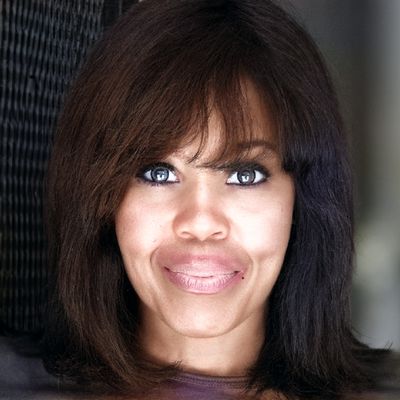
In an enjoyable BroadwayCon encounter this past summer, I found myself in the heart of all things Broadway, rubbing shoulders with the stars and hosting live interviews for the Broadway Podcast Network. While my conversation with Jelani Alladin about Frozen and Hercules was already shared in a previous episode, today we delve into my interview with the talented Broadway actress Sharon Catherine Brown.
I had the pleasure of working with her on a new musical last year, and we dive into some of the other shows on her resume, with a primary focus on her role in Jekyll & Hyde. We'll also explore her contributions to iconic musicals like Dreamgirls and Caroline, Or Change, gaining valuable advice for aspiring performers along the way. Join me in this special episode recorded live at BroadwayCon 2023 for an insightful and entertaining conversation with the remarkable Sharon Catherine Brown.
- INTRO - What she looks for when auditioning for roles and shows
- STORY #1 - Tackling the demanding role of Lucy in Jekyll & Hyde
- STORY #2 - Playing such iconic characters as Dorothy in The Wiz and Effie in Dreamgirls
- STORY #3 - Why she never gives advice to others on how to make it to Broadway
- EXTRA - What it was like working with Andre Deshields
Subscribe or Donate to WINMI
Producing this podcast is a rewarding experience, but it's also costly and time-consuming as I’m essentially a one-man operation. By subscribing you’ll be supporting these podcasting efforts, and have access to extended conversations and other bonus content. Whether you subscribe or donate, your financial support of this podcast is greatly appreciated!
- Subscribe to get early access to full episodes and bonus content
- Make a one-time Donation to support transcripts and podcast production
- If you'd like to support WINMI but have limited funds to do so, then contact me directly for reduced-price or even free access to the bonus content.
Follow WINMI: Website | Instagram | Twitter | YouTube
----------
Why I’ll Never Make It is an award-winning, Top Theater Podcast with actor and singer Patrick Oliver Jones and is a production of WINMI Media. Background music is by John Bartmann and Blue Dot Sessions is used under a Creative Commons Attribution-NonCommercial 4.0 International License.
Transcript
This transcript was automatically generated and might contain errors.
[0:00] Patrick Oliver Jones: This past summer, I attended my very first Broadway Con, which is an annual conference here in New York City focused on all things Broadway and theater.
[0:10] Patrick Oliver Jones: And while I was there, I got to be a part of events hosted by the Broadway Podcast Network.
[0:15] Patrick Oliver Jones: I conducted two live interviews for my podcasts Why I'll Never Make It and Closing Night.
[0:22] Patrick Oliver Jones: And joining me were two actors that I've had the pleasure of working with before, Jelani Laddin and Sharon Catherine Brown.
[0:30] Patrick Oliver Jones: Jelani talked about being in Frozen and Hercules, and his interview was presented several weeks ago on Why I'll Never Make It.
[0:38] Patrick Oliver Jones: But today we'll feature Sharon Catherine Brown as we mainly discussed Jekyll and Hyde.
[0:44] Sharon Catherine Brown: Like there, Lucy had a great death scene, and I thought if I could approach it from a real place rather than the musical theater death scene, it would be very effective.
[0:55] Sharon Catherine Brown: And it was because we weren't allowed to use blood in the show because the costume people were like, uh, no, thank you.
[1:02] Patrick Oliver Jones: We also talk about other seminal musicals she starred in, like Dreamgirls and Caroline, or Change.
[1:09] Patrick Oliver Jones: She also offers her advice to other aspiring performers.
[1:13] Patrick Oliver Jones: That's just some of the little treats you'll be getting in this special episode live from Broadway Con 2023.
[1:25] Patrick Oliver Jones: Please welcome Sharon Catherine Brown.
[1:30] Sharon Catherine Brown: Thank you so much.
[1:32] Patrick Oliver Jones: She and I actually just met a year ago.
[1:35] Sharon Catherine Brown: It was a year ago that you and I met.
[1:37] Sharon Catherine Brown: It was last summer at this time.
[1:39] Sharon Catherine Brown: We did Anna of Green Gables, a new musical version of this classic story that was you and I, Anna Green Gables up.
[1:46] Sharon Catherine Brown: Marilla Cuthbert.
[1:47] Patrick Oliver Jones: That's right.
[1:47] Sharon Catherine Brown: You were Marilla Cuthbert, the hard-nosed, yet ultimately loving.
[1:51] Sharon Catherine Brown: Yes.
[1:52] Patrick Oliver Jones: Guardian and caretaker of Anne.
[1:54] Patrick Oliver Jones: Now, uh, for you, what is it that interests you in a role or a show that even leads you to audition for it?
[2:02] Sharon Catherine Brown: I'm always looking for a character that isn't necessarily black or white.
[2:24] Sharon Catherine Brown: And we're always, as people of color, supposed to be like so happy about that.
[2:31] Sharon Catherine Brown: And it was in the beginning, but after a while, you know, in its modern times, you're like, why are we still the first to do something?
[2:39] Sharon Catherine Brown: You know, and it gets um exhausting.
[2:42] Sharon Catherine Brown: And so I look for, I am a drama queen.
[2:47] Sharon Catherine Brown: I've been doing this since I was three and a half.
[2:49] Sharon Catherine Brown: So when something is, you know, extra, I tend to be drawn to that.
[2:58] Sharon Catherine Brown: Uh, you know, if it's like drama drama drama, and I get to have more snot than Viola Davis, I will be drawn to that.
[3:06] Sharon Catherine Brown: And um, I mean, I will.
[3:11] Sharon Catherine Brown: I know if you yes, more snot, you more snot is good, you know, a good death scene, you know, like there.
[3:18] Sharon Catherine Brown: Lucy had a great death scene, and I thought if I could approach it from a real place rather than the musical theater death scene, it would be very effective.
[3:32] Sharon Catherine Brown: And it was because we weren't allowed to use blood in the show, because the costume people were like, uh, no, thank you.
[3:40] Sharon Catherine Brown: And so as an actress, it meant that I had to create a the gruesome scene of Lucy's murder.
[3:50] Sharon Catherine Brown: And if you haven't seen the show, I'm sorry.
[3:52] Sharon Catherine Brown: Maybe I should have told her spoiler alert.
[3:56] Sharon Catherine Brown: But uh, yeah, she dies at the end, and I wanted it to be very, very gruesome without you seeing any blood, and everybody said that it was very difficult to watch.
[4:07] Sharon Catherine Brown: So that made me feel so great.
[4:09] Sharon Catherine Brown: So when I feel like I can do that with a role, um, originating a role, Jelani is right.
[4:16] Sharon Catherine Brown: There is nothing like originating a role.
[4:18] Sharon Catherine Brown: So I've done that a couple of times.
[4:20] Sharon Catherine Brown: But when you have to recreate a role, you literally have to make the audience forget about their programmed responses, which sometimes happens with a popular show.
[4:35] Sharon Catherine Brown: I played Effie on Broadway in Dreamgirls, and I had to make the audience go on the journey with me instead of going, this is where we applaud.
[4:45] Sharon Catherine Brown: Um, that's it's difficult, but I love that, I love that challenge.
[4:50] Sharon Catherine Brown: Um, but that's what I look for in a role, just something, just something that people are not expecting you to play because sometimes maybe you don't get the opportunity.
[5:05] Sharon Catherine Brown: It is, you know, it's interesting for me.
[5:10] Sharon Catherine Brown: There are a lot more people of color, and I'm not just talking about African Americans, I mean Asian Americans and Hispanic Americans on Broadway, but it's not necessarily a level playing field, because for me, a level playing field means you should also cast me as Mrs. Lovett, because I would tear that role to shreds.
[5:35] Sharon Catherine Brown: And you should you should cast me in certain things.
[5:38] Sharon Catherine Brown: And I know several of my friends that they also are not white or black, and they're Asian Americans, and they would be the best Mrs. Lovett you had ever seen.
[5:51] Sharon Catherine Brown: And I'm not just saying that, like they're just so amazing.
[5:54] Sharon Catherine Brown: So in that respect, it is not a level playing field yet.
[5:58] Sharon Catherine Brown: And I think we're really craving that.
[6:01] Patrick Oliver Jones: Well, I mean, and that's something that you've gotten to do because yes, you've been a part of these all-black casts like Dreamgirls, The Wiz, but then you've gone on to do a role like Lucy, which was first done by Linda Etter on Broadway.
[6:13] Patrick Oliver Jones: So did you feel like you were breaking the mold, so to speak?
[6:17] Sharon Catherine Brown: Uh yes.
[6:18] Sharon Catherine Brown: I mean, Frank Wildhorn said you're making history.
[6:21] Sharon Catherine Brown: Like I knew it, but they also was a very big deal to them and still is to this day, because I am also working with Frank on his new show, uh Song of Bernadette currently.
[6:34] Sharon Catherine Brown: And he always says that to people.
[6:37] Sharon Catherine Brown: You know, where I remember I first worked with Sharon all these years ago, and she's a groundbreaker.
[6:41] Sharon Catherine Brown: And I was like, you know, I was very fortunate um to do that.
[6:46] Sharon Catherine Brown: That show, when I did Lucy, I felt like it was my first grown-up role, and here's why.
[6:55] Sharon Catherine Brown: Because I was the narrator on Broadway and in uh Joseph in the Technicolor Dreamcoat, and I was the first black female to do that.
[7:03] Sharon Catherine Brown: Like I had a lot of those things, but because I started at three and a half, I was still kind of seen as the kid, you know, you like the kid.
[7:14] Sharon Catherine Brown: I'm still.
[7:15] Sharon Catherine Brown: And Lucy was this super sexy prostitute.
[7:21] Sharon Catherine Brown: And in order, in order for me to get the role, I had to go to the audition in a way that I just never thought I'd have the guts.
[7:32] Sharon Catherine Brown: Like my puppies were sitting high.
[7:34] Sharon Catherine Brown: I'm sorry.
[7:35] Sharon Catherine Brown: This is I can't believe I'm sorry.
[7:43] Sharon Catherine Brown: My breastcles were you like I that's not.
[7:50] Sharon Catherine Brown: You didn't think that was coming out, did you?
[7:52] Patrick Oliver Jones: No.
[7:52] Sharon Catherine Brown: I didn't even know that was coming out.
[7:55] Sharon Catherine Brown: This is why this is, but I I was like, I have to, I have to go a different way.
[8:02] Sharon Catherine Brown: And I have to come out of my comfort zone and um feature something that I wasn't yet comfortable with.
[8:12] Sharon Catherine Brown: I saw myself as an actress and mostly a character actress.
[8:18] Sharon Catherine Brown: I never saw myself as a beautiful actress or a glamorous actress.
[8:22] Sharon Catherine Brown: And I was like, but I but that's what I have to channel that right now.
[8:27] Sharon Catherine Brown: And so that was on top of the fact that there, I think what there was eight songs to the it was, it was a dog fight, and I love that in an audition.
[8:38] Sharon Catherine Brown: And uh there were I was up against so many talented women, and I knew that I had to just do the most I ever did in order in order to get it.
[8:54] Sharon Catherine Brown: And so when I did get it, I felt so so incredibly happy.
[9:00] Sharon Catherine Brown: And I was like, really glad that all that money I spent on that lace bra was I spent so much money on this thing.
[9:10] Sharon Catherine Brown: I was like, I really hope it like does its job.
[9:14] Sharon Catherine Brown: And so I did my job and it did its job, and together we got the role of Lucy.
[9:19] Sharon Catherine Brown: But it was it was a little a little bit like I, you know, when when they want you, you really it really is a different thing because um the tour of Jekyll and Hyde, the creatives are some of the biggest people on Broadway now, but not back then.
[9:42] Sharon Catherine Brown: But it's amazing.
[9:43] Sharon Catherine Brown: Ken Davenport, who is one of the biggest producers on Broadway, was our company manager.
[9:49] Sharon Catherine Brown: Um Jerry Mitchell was our choreographer, just the choreographer, just telling us on breaks that one day he wanted to be like Michael Bennett.
[9:58] Sharon Catherine Brown: You know, before there was hashtag full out, we were doing full out because that's all we knew to do.
[10:04] Sharon Catherine Brown: That's there was no option for it full out was just our lifestyle.
[10:09] Sharon Catherine Brown: And um, uh David Warren was our director, and he directed all of the desperate housewives and gossip girl.
[10:16] Sharon Catherine Brown: And so it was incredible to have this group of people as your creatives, and then to see what um and the ensemble was Kelly.
[10:28] Sharon Catherine Brown: I have all my questions.
[10:28] Sharon Catherine Brown: I have like questions.
[10:30] Sharon Catherine Brown: I know because I know you so well, and I'm like, yeah, I got this, I got this. As a matter of fact, you just sit sit and let me handle it. So anyway. But don't you know that's what always happens? I'm such a typical girl. So literally, if you ask me one question, I'll answer the next 40 for you on one breath. On one breath. I haven't actually taken a breath. All right. All right. Well, I'm I'm gonna ask you a question though, and then I'll let you go. Please. So for this touring production, I understand that one of the Lucy songs cut from the Broadway version, Bring On the Men, was then added into the touring version. Were there a lot of these kind of changes that happened for the tour?
[11:14] Sharon Catherine Brown: I think that that was the main one because I think Frank actually liked that better. I remember everyone was happier, including the Jekkies. The Jekkies were they were so happy that Bring on the Men was put in. The Broadway version had a song called Good and Evil. People reacted to Bring on the Men better, and it was filled with sexual innuendo, and I think it just worked better for what we were doing. And all of the ladies on the ensemble, including Kelly O'Hara, who then later became my Emma. Kelly, who I just finished working with was my Emma for a long time. And um, they were all dressed as guys in top hats, and they had long sticks and like a million jokes about those long sticks. You know what I mean?
Like, I think it just worked better for the bodiness of the piece. And I loved it. I loved it. I had this long red train. Oh my lord, it was so beautiful, and not much else, but this long, beautiful. No, seriously, like I really had to get up my girly nerves because I this was my first like grown woman role, and I had to really put on the whole grown woman and go just get over it. You're in a corset and not much else, and you're gonna be fine. And I'm everybody treated me in such a wonderful way. I'm just so grateful I got that role.
[12:46] Sharon Catherine Brown: I got to work with the late Paul Huntley. We just lost him in 2021. But Paul Huntley was the I mean, Elizabeth Taylor, Betty Davis, like you you can't name a major legend that he didn't do their wigs. And so when I was sitting in his chair aware of what came before me, and he just went out of his way to go, you are going to be the most beautiful woman on stage. He just, the curls and the what he designed, and and Woody Shelp, the most famous milliner ever on Broadway, um, who did the top hats for chorus lines who created my um someone like you hat, the most beautiful hat I ever wore on stage. It was like a fairy tale, and we were working very hard because the corsets were not theater corsets, they were very authentic. So, and I remember Linda Edder telling me it's gonna take a minute to get used to, but your body will eventually adjust to it.
[14:01] Sharon Catherine Brown: The whole tech. First of all, it's the longest tech of my life. I think we tech the show for like a year. That's what it seemed like. It was it is the reason why I never complained about tech. Jekyll and Hyde was so difficult that anything else to me is like people are like, okay, we're gonna start tech. And I was like, it's great. You know, I'm always like, we only work for 12 hours. What are you talking about? You know, because Jekyll and Hyde was my shoes were built from the outside and the inside because my Jekyll was like six foot, oh my god. It was like he was like six foot seven, and I am not. So DiFabrizio built the shoe from from the from inside the shoe and from the outside of the shoe.
So I was I was on these platforms, so doing tech because lighting is so important. I couldn't just do tech in my slippers. And the these authentic corsets and smoke. So the first like week of tech, all of us had bruises on our hips because it's just it was it was really difficult. And you were like, I couldn't, you like you had to I couldn't sit down. I had to sit at a slant when I wasn't on it was talking to people like this, going, I think we're all gonna die, you know, and then having to sing these big knock them out of the park park songs, but you do get used to it. And when I left Jekyll and Hyde, I had an 18 inch waist. I know that's not healthy because you probably shouldn't like re you know, recapitulate your bones.
Is that a word? Did I make something? Yeah, but did it did it? Yeah, things things had to re rearrange. Reform, you reform, reform your your bones, is what is what happens, you know. You know, like they, you know, it's more than shape wear when you wear an authentic corset. But all of it was really great because I knew and I've met several people that said that they got into musical theater that were people of color, that said that when I played Lucy, it was very important to them, and they got into musical theater, and I was aware of that. So that was incredible for me. It will always be incredible. I will always be very, very grateful that I was chosen for that.
[16:25] Sharon Catherine Brown: And within this cast, you you mentioned Kelly O'Hara, but there was also Felicia Finley. Yes, Tiny Blick and stuff. I mean, these were these were ensemble members. Yes. They weren't the leading ladies. Judine, yeah, Judine Somerville. I mean, all of these people were just like the most incredible ensemble you could have. Was it a close company? Did you guys all hang out together and do something?
[16:47] Sharon Catherine Brown: I never hang out, but it has nothing to do with my when I'm when I'm playing a role like that, eight shows a week. Because if you come to see me at a matinee, you're going to see an evening show. I don't know how to do it any other way. I've I've had to sing, I am telling you at eight in the morning on a on a on uh good morning America, and you're and it's like you see an evening show. It's it's with my training, because both of my parents are Broadway performers, former Broadway performers, and it's it's my training. So eight shows a week, full out, that's all, that's all I know how to do. And that and that's you know, I don't even remember what you asked me now because I was so I got in my own spin. What did you ask me?
[17:35] Sharon Catherine Brown: I think you answered I have to out myself because sometimes I take myself on a on a trip, and uh and then you're like, oh, when you come back, will you now you were telling me that you you left the tour early? I think a couple of I think just a couple of weeks because it was something else that I got, and now I'm trying to remember. Because I went from rent to Abyssinia to I did eight years of theater back without a break. Wow. Of yeah, I mean, without without any break. And um, and then I when I took the break, it was it was really cool to to be able to hang out. That's what I now I remember your question. I get it back eventually. The hanging out thing doesn't have anything to do with my mean being antisocial. It's just that I have to go right to bed. I have to go right home, and I don't, you know, get to to do stuff just because I I don't want to suck on stage. That's really what it is. I just want to be absolutely unless it was backstage.
[18:38] Sharon Catherine Brown: I never saw you during Anna Green Gable. Yeah, yeah. And then and then and then we were we were doing crazy things back stage. We were literally so nutty, and our roles were the two uptight roles, and we were the two goofiest people in the cast. We were playing all the, you know, the and we're not that at all. Stick around after the break for more of my conversation with Sharon Catherine Brown.
[19:10] Sharon Catherine Brown: By the time you were doing Jekyll and Hyde, though, you were really no stranger to touring. You had been touring for uh quite a while. You you did The Wiz.
[19:16] Sharon Catherine Brown: I did The Wiz you were the understudy for Dorothy. And then I took over. Yeah. Yeah. And that was at 14 years old, right?
[19:24] Sharon Catherine Brown: Yeah, and and for a while, Andre de Shields was my whiz. Wow. How about that, right?
[19:29] Sharon Catherine Brown: Yes, I love him so much. And he he scared everybody. Everybody was so intimidated by him. And I would just like knock on his door, and people would be like, Oh, you'd hear the gasp. He loved me so much. He loved me and treated me like gold. And I just because when I did The Wiz, I was 13. I was the youngest person ever to do the role. And so I really was living in Oz. It really was that for me, you know.
[19:54] Patrick Oliver Jones: Yeah, I love that. But that must have been a lot for such a young kid. I mean, even though you had been performing for 10 years by that moment.
[20:01] Sharon Catherine Brown: My mom was my mom is so ahead of her time. My dad just passed away, but my my mom, she was on the road with me because you have to have a parent or guardian when you're underage. But she taught me how to be self-sufficient and be on the road by myself. So that when I became of legal age to do so and became an adult, a young adult, I knew how to pay my bills. I knew how to, I know how to cook. I know how to go shopping and and uh banking and all of that stuff. So and when I first started in show business, I was too young to read. So my memory is really, really good because she had to feed my lines to me. So I'm used to certain things. She's I'm, you know, obviously my mom was with me, but I was also learning how to to be independent and touring, I loved touring because it did I I love staying in hotels because you don't have to make up your bed all the time.
[21:06] Sharon Catherine Brown: I love that. I love that. I don't like there, you then you need a break, but I love, I love so much touring and traveling. Oh my gosh, the fact that our careers take us different places. I've been all over the world, not having to make up my bed. I mean I love that so much. Uh, you know, so it's it's not something that felt difficult. It felt incredible. It felt incredible. It always feels incredible uh getting to to be on stage. It just always does, and it I and it always will. Whether I'm doing a musical or whether I'm doing a a straight play, it always feels incredible to me. I still can't get over the fact that that I get to do this. And I it's just it's just really something I'm grateful for.
[21:58] Patrick Oliver Jones: Well, I mean, your resume is so long with all the shows that you've gotten to do. And it was just 10 years after The Wiz that you went into Dreamgirls.
[22:08] Sharon Catherine Brown: Yes.
[22:09] Patrick Oliver Jones: And so Dreamgirls was hard.
[22:11] Sharon Catherine Brown: Oh, I bet, because you did the tour and then you eventually went on to do Broadway.
[22:15] Sharon Catherine Brown: Yes, it's it's an incredibly hard show. It's incredible, it's it uh, you know, Effie is one of the hardest female roles ever ever written. But the the hard part came beforehand because if you know my personality, and if you hang out with me, there are certain roles you would never see me as. And and that was something that uh Michael Peters, the late Michael Peters, was my godfather, and he was he was the choreographer that shared the Tony with Michael Bennett. They both choreographed it. And he knew me, but none of the other people saw me as Effie, and they were like, they'll eat her alive. She will never have enough grit to do this role. But I'm an actress first. I'm an actress way before I'm a singer.
And when I auditioned, I think they were trying to break me. Not I think they were. They were trying to break me. If you can, you can have me sing 23 songs in a row, you will not break me if if it's something I want. I auditioned singing everything except the Curtis songs. I'm not joking. I was like, I'm getting something in this. And so I had to prove to myself. Um, Tommy and Henry Krieger, they were like, she'll never make it, she'll never make it, and then came back to me and said, We were wrong. Michael Bennett, we we opened the tour in um uh Providence, Rhode Island. They gave him the key to the city. He gave it to me. He uh so any and it was it was I had to prove myself off stage before I ever got on stage because they kept going, she's too young, too thin, to this, to this, to this.
And now the thing that is so amazing to me is when they talk about Effies, I'm in there. And there are people that saw me and that I'm one of their favorites, and and and when they talk about the tough ones, I'm the one they mention because I never missed a performance, and I'm the only Effie that has that record in all of those years. So I so I'm so grateful for that. And it made me, it made me have a different reputation. If I didn't get that show, I mean, I don't I don't know what would have happened, but my reputation, so much of it was built on that. So I am so grateful for for for Dreamgirls because I know I'm I'm not Effie off stage. And you would look at me and go, like in my family, I'm known as the tune, short for cartoon. My mom says, you are a real live tune. So that's not that's not that didn't fit that mold, but I I got it anyway, and I'm just really happy about that.
[25:04] Patrick Oliver Jones: How much of these roles, kind of like what Jelani was saying, how much of these roles were you able to bring, Shaikette, as I like to call it? How much were you able to bring her to it?
[25:06] Sharon Catherine Brown: Um I feel like every role I had to bring bring myself to it and bring so much of the what I am now known for as a performer, because every pair of shoes I had to step into, these women set the bar so freaking high. You know, I'm stepping into, even though I didn't step right into Jennifer Holliday's shoes because she opened years before I ever played it. But that's those are the shoes you think of. When you think of Lucy, it's Linda Etter. I'm the same way. I'm not just um an actress, I'm a fan of these people. And so when you're stepping into shoes of legends, you if you don't have to, you can't just knock it out of the park. You have to build a park and then knock it out of that park. You have to rebuild it so that people are like, oh, I yeah, I never thought I'd say I had to do the same thing with Caroline.
More than any role I've ever done, I think Caroline from Caroline, Or Change is my biggest dream role ever. And the fact that I got to do that, I I mean, I could cry right now thinking about it. I was so obsessed with that role. And to finally get to do it. But I had to rebuild the park. And then knock it out of that park so that the audience is like, oh, oh, I okay, you took you took us somewhere we hadn't been before. That's your job, by the way, too. It's all of our jobs.
[26:40] Patrick Oliver Jones: Well, for the last question I have, what advice do you give those who are trying to make that leap from regional or off-Broadway to get to their Broadway debut?
[26:51] Sharon Catherine Brown: I've never given that advice. No, I've never, I've I've never given that advice. I don't, I don't give a lot of advice. I take a lot of advice. And I've never, I've never given somebody that I don't know how to do it. I don't, I don't know how to do it. I started so young that I don't know how to tell you how to do it. I don't know anything else, and I know that doesn't help anybody. I'm sure that the only thing I am sure of is there's a million ways to do it. That's what that's what I know. There's a million ways to do it. You're always gonna hear something, somebody's story, and go, wow, that's a success story. That's the way I get and and and think that's that's the road. But then you'll hear something else and go, what?
Like, like Bridgerton. Okay, Bridgerton is. Do you guys know that the reason why Bridgerton is on the streaming service that shall not be mentioned because we're on strike right now? Do you know that that's because Shonda Rhimes went on vacation and needed a book to read? The book was already famous, but it wasn't a series. Like that's in you know you're like, oh my gosh, that's a crazy way to success for that author and all of those actors. So I don't know how you do it, but I will answer one of your other questions before you ask me. My mom, who, like I said, she was a former Broadway performer and also, so I'm a double Broadway legacy baby. Um, she was an acting teacher. And my mom said, remember, because she never wanted me to be big headed.
And she said, remember, you give a performance, you don't take a performance. You give one. I never forgot it. There's never a time that I'm on stage where I don't hear it. Because sometimes, you know, sometimes when you're an actress, you're feeling yourself. You know, like sometimes you just have those days where you're like, Yeah, I'm a working actress. And I never let myself go on stage with that. And my mom, I constantly hear her in in in my in my head, no matter what I'm doing. And she also told me, and I'm still really trying to learn this because I'm always like, okay, what next? What next? She said, Live in the moment. She goes, You're gonna miss everything because you're constantly constantly thinking about what's your next move, what's your next job, what's your next, and I struggle with that, even as I'm telling you now what she told me.
I'm getting better at it because now I remember things, and I'm like, yo, yes, because I was in the moment. I wasn't thinking about what was coming next. So I want to thank my mom, June Brown, because those are two of the most important things that that she's uh taught me, and that always go. I don't, and you know, and I guess it seems like you know, you asked me that question what advice you give. But you gave plenty.
[30:03] Patrick Oliver Jones: No, I loved it. I loved it. I'm really like, I sometimes I just say, don't listen to anybody. Sometimes I feel like you're, you know, when you're not lying to yourself, you know it. And when you're lying to yourself, you know it too. So just be true and authentic to yourself. I think that that is probably always the right thing to do. Unless you're a serial killer. Then that's never gonna be right.
[30:31] Sharon Catherine Brown: Thank you so much, Sharon Catherine Brown.
[30:34] Sharon Catherine Brown: Thank you so much.
[30:38] Patrick Oliver Jones: Thank you.
[31:00] Patrick Oliver Jones: Look for subscribe and donate links in the show notes. Well, that just about does it for me. This has been a production of the award winning WINMI Media. Background music used in this episode is by Blue Dot Sessions and John Bartmann. Until next time, I'm your host, Patrick Oliver Jones. Thanks for listening.
© Broadway Podcast Network, All Rights Reserved