

For the fourth Bonus Episode of our Tony Award series, Patrick catches up with Nicholas Belton, who understudies the lead role of Billy Bigelow in the current Broadway revival of CAROUSEL, which received 11 nominations... Read More
From the show: Why I‘ll Never Make It
Featured Shows
About
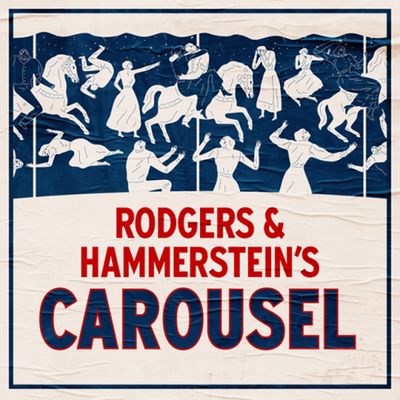
For the fourth Bonus Episode of our Tony Award series, Patrick catches up with Nicholas Belton, who understudies the lead role of Billy Bigelow in the current Broadway revival of CAROUSEL, which received 11 nominations. Nick talks about the joy of working with his nominated director and fellow actors as well as what's it's like to be back in the Imperial Theatre again after last season's THE GREAT COMET.
Follow Nick on Twitter!
The time and expense needed to bring these guests and conversations to you each week is both sometimes challenging but always rewarding. Please consider buying me a coffee to support this work that goes into each episode. Join the WINMI community by following on Instagram or Twitter as well as reaching out to Patrick with any questions or comments: contact.winmipodcast.com"Hot Swing" by Kevin MacLeod (incompetech.com)
Licensed under Creative Commons: By Attribution 3.0
http://creativecommons.org/licenses/by/3.0/
Transcript
This transcript was automatically generated and might contain errors.
[0:08] Patrick Oliver Jones: Hello again and welcome to another bonus episode of Why I'll Never Make It.
[0:14] Patrick Oliver Jones: I am your host for these episodes, Patrick Oliver Jones. And today we're going to be talking to Nicholas Belton from the musical Carousel, which has been nominated for 11 Tony Awards.
[0:27] Patrick Oliver Jones: It's one of the top nominated shows this year. And as we always do, let's go through those list of nominations. First of all, Best Revival of a Musical. And it's actually been nominated in all of the acting categories. So let's go through that list. Joshua Henry for Leading Actor. Jesse Mueller for Leading Actress. Alexander Gemini for Featured Role of an Actor, Renee Fleming for Featured Actress, and Lindsay Mendez also for Featured Actress.
[0:56] Patrick Oliver Jones: Then we get into Best Costume Design, Ann Roth, Best Lighting Design, Brian McDevitt, Best Sound Design, Scott Lair, Best Choreography, Justin Peck, and Best Orchestrations, Jonathan Tunick. Now, to let you know a little bit about Carousel, it's set in a small New England factory town, and it describes the tragic romance between a troubled carnival barker and the young woman who gives up everything for him.
[1:22] Patrick Oliver Jones: I sat down and talked with Nicholas Belton, who understudies the lead role, Billy Bigelow, and he's also in the ensemble in the show. I joined him at the Imperial Theater in Midtown, New York.
[1:43] Patrick Oliver Jones: I'm here with Nicholas Belton, and we are actually in the audience right now of the Imperial Theater. There's a tinkling piano in the background. There's people working up in the tech booth. Nick, thank you for joining me in the house here.
[1:58] Nicholas Belton: It's a pleasure.
[1:59] Patrick Oliver Jones: You're not often looking at the stage from this angle, are you?
[2:02] Nicholas Belton: No, except when I come here to work out sometimes, and it's a nice space to be alone because it's not a lot of backstage space as you saw when you came in.
[2:10] Patrick Oliver Jones: Yeah, you led me through backstage before we got here, and I was like ducking under this and making sure not to hit my head and crawling through spaces. So yeah, they did not make these theaters for us tall people.
[2:21] Nicholas Belton: No, they just you weren't around. There were very much of you back in this is like right around like the turn of the century, I think.
[2:29] Patrick Oliver Jones: Oh, oh yeah, I'm sure this theater is at least a hundred years old.
[2:32] Nicholas Belton: Yeah.
[2:33] Nicholas Belton: And speaking of age, Carousel itself has been around for more than seventy years.
[2:37] Patrick Oliver Jones: That's right.
[2:38] Nicholas Belton: And so yeah.
[2:39] Patrick Oliver Jones: Yeah, and so how is it approaching a show that has such age to it, but also so iconic?
[2:45] Nicholas Belton: I mean it's a gift to be able to do something like this, a show like this that is such like classic Rogers and Hammerstein Americana musical, and especially you know, with the message with you know, its themes. I feel like it's more I know everybody, it's kind of a taboo thing, but I feel like every you know people say it, but I feel like it's the themes are just as relevant, if not more, you know, today than they were back in nineteen forty-five. I think that's when this was written.
[3:19] Patrick Oliver Jones: Yeah, yeah, 1945. Good job.
[3:20] Nicholas Belton: Yeah. You know your trivia. But yeah, it's oh my god, it's amazing to be able to sing this music and to be able sitting standing right next to Renee Fleming singing you know, you'll never walk alone and just getting it.
[3:34] Patrick Oliver Jones: Yeah, yeah, the voices on stage.
[3:36] Nicholas Belton: Oh my god yeah to do this kind of music is amazing.
[3:39] Patrick Oliver Jones: Yes, and the orchestra, I mean, this 30 piece orchestra with you know, and with no piano and no synthesizer. Well speaking of being a show you were in the same theater with GREAT COMET right that was also in the Imperial so what is it like I guess coming back home?
[3:39] Nicholas Belton: Yeah, I asked the electrician and the carpenter if I could just leave my stuff here if I had to actually move it out and he said that would probably be a good idea.
[4:05] Patrick Oliver Jones: Yeah.
[4:05] Nicholas Belton: So but oh my god it feels great it feels like it was kind of a bittersweet ending of Comet more bitter because I feel like it closed so fast and they had basically rebuilt this theater. I mean they built oh they transformed it with the different stairs and the different platforms that they had up here.
[4:24] Nicholas Belton: Yeah I mean they put two balconies on each side. Because I remember I was sitting actually close to where we are now up here on the balcony and so I got to see the full platform and how they built it out and so it I mean they literally just took over this space.
[4:38] Patrick Oliver Jones: Oh yes and so I feel like I'm in a you know kind of a strange serendipitous way like carrying on that spirit you know that that was in here that I'm like I'm so happy that I get to do this. There are a few other people like Drea who's the assistant costumes who is here and of course like the whole house crew is here but it's it's really special to come back.
[5:01] Nicholas Belton: And then and now looking at it now that it's it's still got that kind of circus free spirited oh yeah yeah it much more much more bare bones it feels like it feels like it was so opulent in here now it's just back to square one, you know, with just enough of a set. And it's amazing what that right there, what you're looking at just turns what it turns into when the music comes and the lights turn on.
[5:28] Nicholas Belton: It's like it's amazing. The dancers really provide like most of that atmosphere.
[5:34] Patrick Oliver Jones: Oh, I do yeah, yeah, I would imagine because one of the big things about this production, there is actually no carousel.
[5:39] Nicholas Belton: Oh my god.
[5:40] Nicholas Belton: It's done with those dancers. So they really are integral in creating the ambiance and the setting of where we are.
[5:47] Nicholas Belton: Yeah, they're kind of half of the carousel, if I can say that. I don't want to, I'm not I wanna really but but they're they're definitely a big part of it.
[5:54] Patrick Oliver Jones: Yeah, yeah. So talk about what it is that you do in the show and how you're integrated into all that.
[6:00] Nicholas Belton: So I'm I play just a few, you know, I'm I move scenery and I sing.
[6:09] Nicholas Belton: Yeah, yeah, which is an important part of the street. This is a cast of all the primarily ABT and New York City ballet like dancers.
[6:17] Patrick Oliver Jones: Right.
[6:17] Nicholas Belton: Miami City ballet, like incredible dancers. And so they cast singers who would, you know, be the understudies to basically be in the background and sing, and it's actually a great job because it's like I feel like I can put a lot of my attention on I understudy Billy, so I can put most of my attention in that department. And in the second act I have a little feature, like the heavenly friend.
[6:42] Patrick Oliver Jones: Right, right.
[6:43] Nicholas Belton: So I have this beautiful sequined shirt on at who doesn't want to wear a sequined shirt. Oh my god, when the wind blows, it blows right up my beautiful, beautiful. Just get you all tingly. And they I have these little Jerusalem sandals on. And Ann Roth was she must have had a great dream the night before she designed that cast. But yes, I love this job, and I love the cast. Like it's such a great group of people to work with.
[7:11] Patrick Oliver Jones: Tell us what it's like, because you had mentioned Renee Fleming before she comes from the opera world. And but she's she's been getting slowly into the Broadway world, so she's not she's not a newcomer by any means. So what is it like to have that type of voice, that type of experience coming to a Broadway stage?
[7:29] Nicholas Belton: It's incredible. And I asked her one time, I was like, what is it like? Like how I was like, how often do you do you would you do a like a run of a of an opera? And she was like, two weeks, you know, max. And they only do like two or three. And so I think this is kind of a maybe humbling and also just like very different experience than the opera than that of the opera world, and she's so great to work with. I just passed her on the way back to the theater when I went to get some lunch. She's she always rides her bike in between shows.
[8:02] Nicholas Belton: She has this little foldable bike. Nice as she rides around. And then she's got her little headpiece in to talk to her friend. But anyway, she's she's just great, and her voice is so beautiful, and so yeah, you have that, you know, that opera world, and then you have like the ballet world, all these these people from the ballet world who've never done a musical before. And it's kind of a cool like experiment.
[8:26] Patrick Oliver Jones: Yeah, you know. And how are they taking to the Broadway environment versus ballet?
[8:31] Nicholas Belton: It's surprisingly not that different of a world when I talk to them. The culture, like backstage, you know, you know, sometimes like musical theater people can be a little bit. We're we're extra.
[8:44] Patrick Oliver Jones: Yeah, we're a little energetic.
[8:46] Nicholas Belton: Yes.
[8:47] Nicholas Belton: But in the best way of the world. But you know, I feel like it's not um when I talk to the some of the ballet guys, they're like, yeah, it's it's pretty, it's pretty similar. But the schedules are different. They don't do eight shows a week. And um, so what they're doing, like the choreography that you come to to watch every night when that curtain goes up, it's amazing. And I feel guilty being in the background, like moving scenery while magic is waving for my mom in the second row while these dancers are flying in the air, and Justin's Peck's Justin Peck's choreography is just athletic and just like it's so high intensity.
[9:30] Patrick Oliver Jones: Yeah, yeah, that yeah, well, I mean, of of its eleven nominations, Justin Peck is is one of those.
[9:34] Nicholas Belton: Yeah, and so obviously his choreography demands a lot of the ballet. And how is it because obviously ballet dancers they're used to a certain type of structure or a certain type of dance?
[9:45] Nicholas Belton: Yeah. Um how is that incorporating you guys into what they do?
[9:49] Nicholas Belton: You know, it's kind of like it reminds me of an old fashioned musical where like the dancers are dancing, yeah, and and and singing, and the singers in the back are singing, and it's kind of nice. And we're uh I was kind of worried that that was gonna be, you know, a problem, or that like reviewers gonna be like, hey, you know, why is it everyone? You know, but actually it works out.
[10:15] Nicholas Belton: It actually well, I mean that these older musicals were structured like that. They were structural. They were structured to have, you know, not that I mean, certainly nowadays most people kind of do everything, a triple quadruple threat, but it's nice whenever people can really just focus on what it is that they do best. And that's wonderful to see on stage.
[10:32] Patrick Oliver Jones: Absolutely, yeah. You don't necessarily have to have that integration. And um, once people started responding to it, like, oh, okay, it this works. This is good.
[10:44] Nicholas Belton: Yeah.
[10:45] Patrick Oliver Jones: So you mentioned that you also understudy Billy Bigelow. And with this casting, they've decided to go interracial with it. And how has that played into just presenting this piece, which is as we said, 70 years old and bringing into 2018?
[11:01] Nicholas Belton: You're talking about a lot of things in the show that are that it's a very touchy subject, especially now with the Me Too movement and with the you know um equality of you know with with Trump in office and it's we live in a very crazy time, and so there's a very high um like alert for like sensitivity, sensitivity and being politically correct, as there should be. And so you cast, you know, a um a black guy, Joshua Henry, incredibly talented, and he's such such a great guy. If you ever get the chance to work with him, he's he's such he's a class act.
[11:46] Nicholas Belton: Um but you cast him in a role like this, who is you know, he's he uh there's domestic rough some domestic violence in the show and um and it's it's tricky and so but I think the way that um but I don't think that when they cast him Scott Rudin and uh Jack O'Brien, I don't think they were looking at color. I really truly think that they were like, This is the best man for this job. And you know, we'll let people you know have their own conclusion, but when you come see it, that's really what's going on.
[12:18] Nicholas Belton: And I think the issue, certain certain parts about um, you know, the line like um he he slapped me but I didn't I didn't feel it, can you feel it? And you know, she says yes. So there's that there's like, well, are i are they saying it's okay? Like what what is so they cut that line and they and they did a little trimming and smoothing over of other lines that could have been controversial and you sort of don't was that specifically because of the interracial relationship or just because of the just nowadays?
[12:49] Nicholas Belton: Yeah. And that I think Josh and and Jesse just play it in such a great way that you you invest in in their in their relationship and their story. But because ultimately that is the that's the central element. You know, race doesn't matter how you cast it. It's it's that human element of of this man and this woman coming together or not coming together and how how they kind of butt heads right and and interact with each other.
[13:20] Patrick Oliver Jones: That's right. Yeah. And uh it's a great part for him.
[13:24] Nicholas Belton: Yeah, and it's just a great role. I mean, the role is it's like probably it's got it's gotta be like the meatiest role in musical theater.
[13:30] Patrick Oliver Jones: Well, I mean his soliloquy is one of the all-time great solos for for a man in all of musical theater.
[13:35] Nicholas Belton: Yeah.
[13:36] Nicholas Belton: And so I mean, obviously he gets to do it every night, and you as the understudy have rehearsed it and you have your own rehearsals. What is it like to to attack such a a huge number as the soliloquy?
[13:47] Nicholas Belton: Oh it it's so it's so special. It's like it's such a it's such a very cool thing to tap into, you know. He's basically just talking about, you know, fantasizing about what his kid is going to be, you know, and w what his kid is going to be into, and you know, he's maybe he's not gonna end up like him 'cause, you know, Billy's sort of flawed and he's not happy so much with the way things turned out with him, but he's not gonna let that happen to his son. Much like probably a lot of guys, you know. I think a lot of dads want that. They want their son to be better.
[14:20] Nicholas Belton: Yeah, or to have a you know, a better experience than they than they did growing up, right? And it's a very human theme and and very relatable. But the more I listen to it every night and the more I I'm I connect, I'm I'm I think wow, this this is every single word and ellipses was put there for a reason and the the way that things are phrased, and it's like to to be able to pick it apart like that, um even now, like two three months in, it's it's a testament to like how special, how great this show is.
[14:56] Nicholas Belton: Yeah, I mean Rogers and Hammerstein, they're like the fathers of what we consider the modern musical and how they kind of changed how it's structured and how we do musical theater and Broadway now. You know, after Oklahoma, which was their first big hit, they were like, well, what's gonna what are you gonna do after that? Like how can you top like the number one album? And they did. And it almost reached that, you know, even more than Oklahoma, like went into more of the operetti, like ballet world with the score and with Agnes de Mille than into even like musical theater. Like some people even compare it to like sort of like semi-operatic in certain, yeah, well, I mean, it definitely requires big voices and legit voices to carry off these characters as well as sing the songs. Yeah, singing the songs. It's just special. I love coming here every day.
[15:45] Patrick Oliver Jones: I bet, I bet. And well, it's been twenty years since the show was revived. And so now bringing it back, what do you think is connecting with the audience now that it didn't twenty years ago or even seventy years ago? What is it about this show that is still current and still present?
[16:03] Nicholas Belton: The first day of rehearsal, Jack O'Brien was talking to us and he was like, he was talking about with Scott Rudin, the producer. He was like, Scott told him, he was like, you know, don't look back. He was like, give me a carousel for the 21st century. And you know, take that as you will. And I think Justin Peck was a big part of that in sort of his modern style with that, you know, classical ballet, New York City ballet background was kind of like the gimmick, I guess. It was like, okay, that's gonna be, we're gonna start with that, and then we'll branch out from there and we'll see where it goes. And it was kind of like this experiment in rehearsal. Even though Jack knew what he wanted to do, things were definitely evolving and it just kind of had to find, like most shows when you start from the ground up and you're like, okay, we don't want to oversimplify, we don't want to overthink it, but we don't want to just tell this story. Right. You don't want to do what's been done before. Right. And it seems to be people seem to really resonate with it.
[17:17] Patrick Oliver Jones: And so from the beginning, did people have an idea, yeah. I think this one's gonna resonate, this one's gonna be something special, and it's gonna be nominated for 11 Tony?
[17:28] Nicholas Belton: Do people get a sense of where it was going? You know, you always want to jump to the end in the beginning of rehearsal and be like, how is this gonna be? How is this gonna work? And you're always scratching your head and being a little skeptical? And that kind of energy can spread around. And so I think people were a little skeptical at first and didn't, you know, thought, oh, you know, the reviews are gonna be like this, and they're like, well, how can you really know? Yeah, yeah. Who knows where reviewers are gonna go? This thing is a whole lot bigger than what you're trying to imagine it happened, because you can't, because the truth is you don't know. And because it's a much bigger thing at play here. And we were wrong about a lot of things that we thought that it was gonna turn out to be or how people were gonna perceive it.
[18:26] Patrick Oliver Jones: Oh really? And what would you say was one of the one or two things that you thought, well, this is how it's gonna be received, but then come to find out well.
[18:36] Nicholas Belton: Well, one thing is we thought that the separation of the singing and the dancing wasn't gonna be perceived well, and I don't think people thought, I think it works out great, like we just said. Another thing is like not having a real carousel. Right. Even though you see it for a few minutes in the beginning of the show, maybe two minutes, and then it disappears forever. Right. So it's like why then why have this thing that's kicking up dust in the back, you know, right the whole show. So yeah, those are two of the big ones.
[19:09] Patrick Oliver Jones: And so was it a collaborative environment in rehearsal, or did they kind of already have in mind we're gonna go in this direction, this is what we're gonna do, or was it more open to what you guys in the rehearsal room brought as well as what the directors and choreographers wanted?
[19:24] Nicholas Belton: A lot of it's kind of spawned out of Jack's head. Jack O'Brien is like this Irish poet who has lived many lives, and the man will sit down and tell you a story, and by the end, after 15 or 20 minutes, your jaw is on the ground and like you're listening to a really good podcast or something like that. Right, right, right. And you're just like much like this one. I knew you were gonna come in. And you're just thinking about what he said, and all I can think of is I'm gonna go home and tell Alicia, my fiancée, like I'm just telling what he said, because it's so, it's just love when people speak so well and they use their words so well, every single word. It's like he grew up in a different generation, you know, and so he puts the stories out there, and we kind of are like sponges, and let it soak up, let us kind of like simmer on it for a second.
Get up after we do the table read and do the work of what he just talked about, and every day he would say he would just talk for the beginning of rehearsal, and it's just, you know, people like that, yeah, yeah.
[20:39] Patrick Oliver Jones: And it's not that they're just talking out of their ass, they're actually have something to say, and you're just riveted to what they have to say.
[20:47] Nicholas Belton: Yeah, you just, and like you said, a sponge, you take it in and you let that inform, oh, this is the work I want to do today. This is how I'm gonna take that and use it in the show. Yeah, and I think it's very effective, and I think that's how he kind of approaches, I feel like a lot of his work after talking with other people that worked with him. Like, I'm like, does he always do this? Like, yeah, yeah. Yeah, yeah. He's, that's his style. So I appreciate it. Because it definitely resonated with me. Yeah. And I was like, oh, this is what you want? Oh, this, okay, sure.
[21:22] Patrick Oliver Jones: And have you gotten to work with him specifically through the understudy process?
[21:27] Nicholas Belton: Oh yeah, yeah, yeah. He's great. And his assistant, his assistant Ben Klein is fantastic and he takes his ideas and he just knows exactly what Jack, he's like basically a second Jack. Yeah. And but the moments that I've had with Jack, I've really like savored. I'm like, yes, this is great. He's like the captain of a ship, the director. And so whenever you have those moments, either one on one or in a small group, and you get to be with the captain of the ship, you relish that. Right. You take it, your eyes are open, ears are open, and you just wait for what's coming. Right. Yeah, right. It's always a special time.
[22:04] Nicholas Belton: Yeah, yeah. It's almost like this therapy in a way. You know, right? Yeah. Musical therapy. Yeah, yeah. Well, I mean, that's what shows do, you know. I mean, especially these musicals like this, these classic musicals, I think they have a way because it was such a different time and a different style of writing, a different way of communicating that they tap into us in a different way that we're not going to hear on the radio today. Is it w our ears and our minds take in things differently?
[22:31] Patrick Oliver Jones: That's right.
[22:32] Nicholas Belton: So these classic musicals like this, I think just touch a different part of us. I think a lot of times we either we don't know it's there or it's something that's so buried in us we forget that it's there. Right. So it's always special to see these old musicals come back in a new way.
[22:49] Patrick Oliver Jones: Absolutely. And I think a lot of people know the music, but they don't necessarily know what the show, the story is about a lot of times. And just to hear that the orchestra and see the dancers and the lighting, it's like it's hitting on so many cylinders, you know, and you're as an audience member and it's just a really I got to sit out and swing out once to watch Billy and just to see what we had done. And I was like, wow, this is what it looks like. This is amazing. And then what was it like being amongst the audience as they're taking it all in for the first time?
[23:25] Nicholas Belton: Oh my God. It was so special. And I was supposed to be taking notes but I just ended up watching it because I was so like in awe and how beautiful it was. And I think that for any show I feel like this is, I feel like this should be mandatory where every single person should be swung out. Yes, maybe every two or three months at least just to see what they're doing. Just to remind, like almost in a way that Jack tells you a story and then you soak it up and then you get on stage and do it. It's like, you know, you can't really do it a hundred percent unless you see what you're doing. You know, and not on tape, you know, but like really looking at it live. Yeah, because you and I, we know each other from the Evita national tour and I got to do that one time.
I think we were in LA I think, but I was swung out and I got to just sit up in the balcony and just watch the show. I wasn't really there to take notes, it was more just to, it was really just to see what it is that we've been doing for these months on end. And yeah, it is a special thing. I mean, because you know everyone on stage, so that makes it a little more special and intimate to watch people that you know do it. But then to look at the whole piece and see people interacting with it and as an audience for the first time, it's really wonderful.
[24:47] Nicholas Belton: Yeah. Absolutely. And you do connect with the piece differently, kind of stepping back, watching the whole big picture that you don't get just being in the center of the stage or doing your part. Right, right. And you couldn't, you know, because you're not standing back from that vantage point.
[25:06] Patrick Oliver Jones: Yeah. So how is it for you going from GREAT COMET with that kind of rock, not only rock atmosphere, but just rock in its energy and its intensity and it's like in your faceness to something that is a bit easier, a bit more like sanguine, shall we say?
[25:27] Nicholas Belton: It's like you couldn't get, you know, like more 180. It's crazy. Yeah, because I mean you, I was like literally singing next to people. I was like touching people and like kissing a woman at one point. Oh as the old man. It's like and here you have that separation. So yeah, the fourth wall is back up. Right, right. And it's just cool that that can exist. It was something very new. I hope that that style can, you know, this will always be the way that you see theater. Right. But I hope that that can usher in new, you know, new musical styles and new ways to experience a musical.
[26:09] Patrick Oliver Jones: Right. And you've mentioned that they tried as they were saying, you know, leave everything you know about carousel behind, we're gonna do it for today. Do you think that they've succeeded in bringing it and making it more 2018?
[26:22] Nicholas Belton: Absolutely. It's like you look at, you know, the Nicholas Hytner's version, you know, at Lincoln Center 20 years ago, and you're like, wow, that the picture of it. Right. And that, you know, beautiful like hill. I always like, it's like what a great idea. It's just, and you're like, how can you get better than that? But you can't, it's like there's always room for not interpretations, but for just a new way of telling a story. Right. Yeah, you should never limit yourself, you know, when you have something this great. Yeah, yeah, because the show is the best foundation you can have. Carousel is, I mean, you don't need to change anything, it's just a matter of presenting it now in this new way, presenting it in an honest way, right? Right, with those relationships and letting the audience come with you on that story.
[27:12] Nicholas Belton: Exactly. Like the bench scene, for instance, is like this really, I mean, it's such a chunk of the first act. And it's just these two people at this bench talking, you just kind of slowly figuring, you know, coming from two different worlds, slowly coming together, and it's gripping. And it's the simplest material. It's like you don't have to overthink it, it's all there. Which is one thing that I love. I love it when there's simplicity, when it's two people truly connecting, especially when they're like from different worlds, when they're from different sides and they're really figuring out each other because what that helps that the audience do is also figure them out. And then we start to care about these people on stage.
[27:55] Patrick Oliver Jones: That's right.
[27:56] Nicholas Belton: Yeah.
[27:58] Patrick Oliver Jones: All right, Nick. Well, thank you so much for joining us and for talking about Carousel.
[28:03] Nicholas Belton: Thanks, Patrick. It's been really great to just be here actually in the theater. And you know, you haven't been able to see listening to it, but he's been referencing the stage and he's been talking about this and showing this. So it's obviously something that's inside of you now, and you feel it being a part of the show.
[28:19] Nicholas Belton: Uh-huh. And I had my put in for Billy, and I feel like now I can just sort of not relax, but just sort of feel like I have more of a purpose here than when we walk out into the theater. And that's a good feeling.
[28:34] Patrick Oliver Jones: That's great. That's great. All right, Nick. Well, thanks a lot.
[28:36] Nicholas Belton: Thanks, Patrick.
[28:42] Patrick Oliver Jones: You've been listening to Nicholas Belton, who understudies the lead role of Billy Bigelow in the current Broadway revival of Carousel. Join me next time when we go inside the Tony Awards with Ryan McPhee, the managing news director for Playbill. We'll talk about all the nominees and who we think should win the coveted prize. You do not want to miss that. Why I'll Never Make It is a bi-weekly theater podcast hosted by Dewey Cadell and Patrick Oliver Jones. Connect with us on Facebook and Instagram at Why I'll Never Make It. These Tony Award bonus episodes are produced by Dylan Adams with intro music by Kevin MacLeod and incidental music created by yours truly on Garage Band. I'm Patrick Oliver Jones, and we'll see you next time on Why I'll Never Make It.
© Broadway Podcast Network, All Rights Reserved