

Mid-March of this year was a uniquely devastating time for theater and the arts industry as a whole. Broadway and Off-Broadway here in New York as well as theaters all around the country began to close for what they thought would be a possible one-month shut down... Read More
From the show: Why I‘ll Never Make It
Featured Shows

About
Mid-March of this year was a uniquely devastating time for theater and the arts industry as a whole. Broadway and Off-Broadway here in New York as well as theaters all around the country began to close for what they thought would be a possible one-month shut down.
At the time playwright Lynn Nottage tweeted: “Emotionally and financially preparing for theaters across the country to be shut down. Mourning the beautiful work that will be lost. Alas, protecting our practitioners and our audiences is essential.”
But as you and I know, it’s lasted much longer than anyone anticipated. And while the loss of jobs and the lack of theater options for audiences were immediately felt, there has been a further impact in communities and states around the country. From regional and local theaters to touring companies, stage work has a financial impact beyond just the box office.
For example, the 2016-17 touring season in cities like Charlotte, NC generated more than $38.2 million in economic impact. In Tempe, AZ their Broadway Season brought in $100 million. And more recently, in Denver the seven-week pre-Broadway run of frozen added about $30 million to the local economy. Theater and the arts are a driving economic indicator in cities and regions around the country, which is why it is vital that we save this industry and do what we can to become an arts hero.
Be An Arts Hero is an intersectional grassroots movement emphasizes arts and cultures $877 billion value added contribution to the nation's economy, highlighting the human and financial toll of letting the contribution collapse. Carson Elrod and Brooke Ishibashi, two of the organization's founders, join the podcast today to share their goal of keeping all 5.1 million Americans who work in the arts 1) alive 2) in their homes and 3) with jobs to return to when the crisis subsides.
Join their efforts: https://beanartshero.com/get-involved
Follow WINMI: Instagram / Twitter / Website
- Donate to the podcast: https://ko-fi.com/winmipodcast
- Don't forget to check out all the helpful offers available to you through WINMI guests and partners: resources.winmipodcast.com
- WINMI is a Top 20 Theater Podcast thanks to you! https://blog.feedspot.com/theatre_podcasts/
"Appreciation" by Chad Crouch is licensed under a Attribution-NonCommercial 3.0 International License.
Transcript
This transcript was automatically generated and might contain errors.
[0:00] Patrick Oliver Jones: Hey y'all, Darius Rucker here.
[0:02] Patrick Oliver Jones: You know, a lot of people ask me, what inspires your music? And one of the big things is a strong sense of place. That's why I love my home state of South Carolina and want to share the awesome things it has to offer. From the beautiful mountains down to the sunny coast, it's got it all. Not to mention two of my personal favorites: great golf and amazing food. Come see why I love this place. Visit Discover South Carolina.com.
[0:30] Patrick Oliver Jones: When it comes to the title of this podcast, Why I'll Never Make It, for the last six months, COVID-19 has pretty much been the answer to that question. But one organization is doing everything they can to lessen the devastating impact this pandemic has had on the arts community.
[0:53] Patrick Oliver Jones: You know, we are there as a gadfly saying arts and culture, arts and culture, creative economy, creative economy. So we are hopeful that we can do something. Well, thank you for coming back and joining me on the podcast. I'm your host, Patrick Oliver Jones, and here I talk to fellow artists about the realities of a career in the performing arts. And the past six months have been a reality that none of us could ever have anticipated.
[1:27] Patrick Oliver Jones: As we all remember, mid-March of this year was a uniquely devastating time for theater and the arts industry as a whole. Broadway, Off-Broadway, here in New York, as well as theaters all around the country began to close for what they thought would be a possible one-month shutdown. At the time, playwright Lynn Nottage tweeted, quote, emotionally and financially preparing for theaters across the country to be shut down, mourning the beautiful work that will be lost. Alas, protecting our practitioners and our audiences is essential. But as you and I know, it has lasted much longer than that initial one-month shutdown.
[2:12] Patrick Oliver Jones: Well, as we told her at the top of the show, Broadway theaters today extended their shutdown. Shows will now remain dark through at least January 3rd, but the group that represents Broadway says it may be even longer before some shows open again.
[2:41] Patrick Oliver Jones: From regional and local theaters to touring companies, stage work has a financial impact beyond just the box office. Some of them stay in hotels, and it's an enormous economic impact in the community, of course, that's absent right now. That's Albert Nochiolino, presenter and co-producer of the Broadway series at Shays Performing Arts Center in Buffalo, New York. In his interview with WKBW this past June, he estimates that each full week of shows has a two and a half to three and a half million dollar impact on the area, like the Bijou Grill right across the street from Shays. Most of our profit comes from that period of time. Things like Hamilton, you couldn't get a seat in the restaurant for two weeks.
[3:36] Patrick Oliver Jones: And Buffalo isn't alone. For the 2016-17 touring season, cities like Charlotte, North Carolina generated more than $38.2 million in economic impact. In Tempe, Arizona, their Broadway season brought in $100 million. And more recently, in Denver, the seven-week pre-Broadway run of Frozen brought in about $30 million to the local economy.
[4:05] Patrick Oliver Jones: Now, these totals are based on studies conducted by the Broadway League that found when a Broadway show visits a city, it contributes an economic impact of roughly 3.6 times the gross ticket sales to the metropolitan area's local economy. Now, this formula takes into account travel, hotels, restaurants, parking, and other businesses patronized by both the theatergoers and the production's cast and crew.
[4:33] Patrick Oliver Jones: When it came time for Frozen to leave Denver, that city was not ready to let it go. But one of the fascinating things about this economic impact the theaters bring is that it's not just the jobs and revenue for businesses, it's also the rate of growth of that financial impact. For example, last year here in New York City, the mayor's office of media and entertainment put together a study to quantify the economic contributions of off and off-off Broadway theaters in the city as a whole.
[5:17] Patrick Oliver Jones: But what's really interesting is that this theater sector has outpaced the city's baseline economic growth by 20%, and job and wage growth by 100%. The city itself contributes roughly 46 million in government funding each year. And what does the city get for that hefty investment? An even heftier 1.3 billion in economic output from a collection of 748 small theaters and ensembles here in New York City. And 96% of them are nonprofits.
[5:56] Patrick Oliver Jones: So, yes, everyone knows that theater is big in New York. But as you can see, theater and the arts are driving economic indicators in cities and regions around the country, which is why it is vital that we save this industry and do what we can to become an arts hero. And so I am very grateful to have two of the founders of a very special arts advocacy group that started a couple of months ago. Be an Arts Hero is an intersectional grassroots movement emphasizing the arts and culture's $877 billion value added contribution to the nation's economy, highlighting the human and financial toll of letting that contribution collapse.
[7:00] Patrick Oliver Jones: And they have certainly got their hands full as they are lobbying Washington, D.C. on our behalf. Carson Elrod from Brooklyn and Brooke Ishibashi in Los Angeles took time away from their busy schedules to join me on Zoom and talk about the important work they're doing. Well, I am so grateful for you guys taking time out because you guys have been kind of on a tear, especially the last couple of weeks in getting your message out there. What exactly has been happening this week? Carson, you take that.
[7:32] Carson Elrod: Yesterday we had this big day of action. And so about a month ago, we had a group meeting, and we have meetings on Zoom all the time. And so our core group, we were sitting there and we were talking to each other, and we're like, um, well, one, we were horrified that Congress left DC without extending F PUC. And um we were really in just a horrified state of shock about that because 40 million people are relying on that to stay in their homes and not be evicted or become homeless. And so to watch the entire Senate leave DC before there was an extension of the unemployment assistance, we were shocked. And then we said, okay, well, what do we need to do? Well, what we need to do is we need to organize something for the day before they come back so that as they return to Washington, D.C., we can try to do what it is that be an arts hero is all about, which is just changing the American conversation about the creative economy.
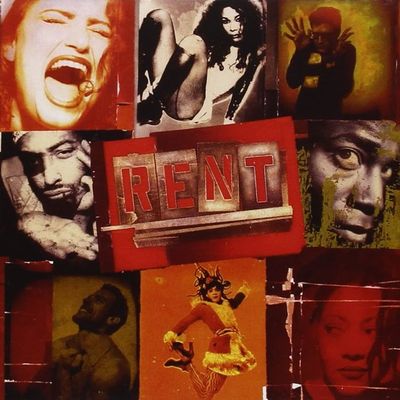
[8:35] Carson Elrod: And right now, 4.5% of GDP, $877 billion in value added. That's bigger than transportation, that's bigger than tourism, that's bigger than agriculture, construction. It's been ignored and left out of the relief conversation. And uh that is a tragedy, and it's a tragedy that's having real world consequences for our artists and our arts organizations. And so what we did is we planned a day of action, and so we spent like all day, every day, 14 to 16 hours a day for the last three weeks organizing a huge event in Times Square yesterday, lining up a whole day of Instagram lives with people with bigger platforms than our own. We got the original cast of Rent. We got so many original casts of Rent to do a kind of reunion video of the song Will I that we released and is already going viral all over the internet.
But uh the intent of the event, the whole point of the day and all the work that led up to it is to try to be a signal to cut through the noise, to get the attention of the United States Senate, um, so that as they draft this next relief package, that the creative economy is not left out of it. So that's the long way of uh, or I guess that's the short version of what we've been doing 16 hours a day for the last month.
[9:59] Carson Elrod: Jenny will say 19 hours a day because she's oftentimes working 19 plus hours a day.
[10:04] Patrick Oliver Jones: Yeah, yeah, yeah. You guys have been have been nonstop. And did you have any idea when you started being arts hero that it would become this massive push and reach?
[10:15] Carson Elrod: You know, yes and no, Patrick. I feel as though we found a pocket, right? We found that there was a need for a nationwide unified front, right? That no one was really doing that. And so, in essence, when we started, no, we didn't know what we were doing because it was a kitchen table movement. It was Carson Elrod, Jenny Grace Macholm, and myself, and we looked at ourselves and realized no one was coming to save us, no one was coming to our rescue. So we had to take it on ourselves to advocate for ourselves. So in that respect, no, we were just trying to figure out a way to make a lot of noise to get Congress to pay attention so that we could receive the relief that our industry so desperately needed.
[10:53] Carson Elrod: But in the other respect, Patrick, I think the reason why this has flown in the last two, two months or so since we've been alive, is that we're speaking to a desperate need. The idea that there needed to be a mobilizing effort, unifying boots on the ground, rank and file working class folks, arts workers, alongside the major institutional power in the States, alongside celebrities, alongside all the coalitions, et cetera, et cetera. So, you know, we were looking for that arts Avengers assemble moment, and nobody was coming to the rescue. So we figured, well, let's just organize it ourselves. So I think the answer to your question is yes and no. I think we started this being like, let's just see what we can do, if we can just make a ton of noise, because we're artist organizers, we can do this.
Uh but I think it's heartening, but also somewhat sobering to see the response because it speaks to how urgent the need. It speaks to the urgency of the need, but it also speaks to how bad the situation is.
[11:57] Patrick Oliver Jones: Yeah, yeah, absolutely. Now, now your main message is one of economic impact of the arts and and how, as you were saying, Carson, how big these uh the arts industry is compared to other industries as a whole, that you know, in our society or specific communities and what the arts can mean.
[12:13] Carson Elrod: Now, why is it that you lean into those financial aspects rather than the artistic and creative outlets that the arts provide? Well, I think the problem is people don't know how to talk about the arts and culture economy. People don't know how to talk about it. And when people do talk about it, they talk of it in terms of it being a luxury, an add-on, like something people do for fun. And so, you know, in DC right now, there is a secretary of transportation, there is a secretary of agriculture. There is no secretary of the arts and culture economy. There is no secretary of the creative economy, despite the fact that we add 265 billion dollars more to the economy every year than all of transportation combined.
And yet there is a Secretary of Transportation. There is not a Secretary of Arts and Culture. So what we're doing is we're trying to have a conversation using a language that we think that lawmakers will understand. Because I do think that, you know, one of the stories that I like to tell is we reached out to Senator Murkowski's office. And the first response we got was from the arts portfolio manager who said, you know, there's not a lot going on up here. You probably don't want to talk to us. And so we wrote back and we talked about the tens of thousands of Alaskans that work in arts and culture, the billions with a B that it brings into the state. And it was her head of economic policy that got back to us and said, I really want to take a meeting with you.
And we got into a room with her and we had a really robust and exciting conversation. So whether we're speaking to a Republican office or a Democratic office, when you speak in those terms and you say, Hey, you know, right there in Anchorage, you have this, you know, right there in Des Moines, you have this, right there in Kansas City, you have this. And we talk about these amazing arts organizations, the artists that are there, what it does for the economy. And that's a message that anybody in Washington, DC can understand and get behind.
[14:22] Brooke Ishibashi: Yeah, because I think us as artists, we certainly know the emotional aspect, the creative, the way the arts can make us feel and how it can help our lives in those somewhat abstract terms. But when you get down to people's wallets, then it's a more concrete way to show what the arts really do for us.
[14:42] Carson Elrod: Exactly. I think piggybacking on what Carson was saying, it's the idea the words literally came out of some of this last meeting Carson's referring to. They said that it is a non-partisan issue. And maybe it was my own naivete, but I had a conception that we would go into these meetings, and if we had meetings with offices who are across the aisle from us, I was a little bit fearful that they would be that they would not be as responsive and warm and welcoming. But the thing is, we're going in and we're just talking numbers, and you can't argue with numbers. And so the idea that from a Republican senator's office who didn't want to take the meeting with us, the idea that they articulated that this was a nonpartisan issue, that is incredible.
That actually speaks says to me that we stand a fighting chance at getting this relief because it truly is about saving local jobs and saving local economies. And when it gets when we get right down to it, they need their constituents to stay alive and healthy so they can vote for them.
[15:44] Carson Elrod: Now, what exactly led Be An Arts Hero to be a national campaign rather than to go state by state? Carson, do you want to speak to that?
[15:52] Carson Elrod: Yeah, I mean, I think what happened is we just thought we thought about cares and looking at the Heroes Act, and we were just seeing what was being allocated for arts and culture. And traditionally, the arts and culture economy is ignored, undervalued, and underfunded in this country. So, in a time of crisis like this, it is the entire arts and culture sector. It is the entire creative economy that's at stake. And, you know, Brooke lives in Los Angeles. I live in New York. My sister was working in Portland, Oregon at the time. The arts and culture are big business, big business in all 50 states. There's not one state in the union that doesn't employ tens of thousands of Americans, where arts and culture don't bring billions with a B to that state's economy, whether it's Kansas, West Virginia, California, New York.
So we understood right at the outset from our origin that this was a national issue, and COVID-19 is a national crisis and it requires a national response. But I also want to say this COVID-19 has devastated state economies, and most states have a balanced budget amendment which precludes them from deficit spending. So there really is only one entity that can address the problem, and that is the United States Congress.
[17:19] Carson Elrod: And according to American for the Arts, which is as you call it one of your kindred campaigns, they estimate that corporations give about 500 million each year to the arts. And obviously that was pre-COVID, and so a lot of that has changed. But in years past, it was about 500 million. Is there a plan to tap those resources as well for support?
[17:40] Brooke Ishibashi: You know, I was speaking with Steline, and I'm not gonna murder her last name, but she's the editor of Town and Country yesterday, and they do a lot of philanthropic work. And because there is so little public investment in the arts and culture sector, the sector is heavily reliant on corporate philanthropy. So if you think about what's going on right now, 63% of arts workers across the country surveyed report being completely unemployed, that could be up to 3.1 million people. Of surveyed arts organizations say that they will not survive without direct relief. That's 12,000 institutions. There simply is not a level of corporate philanthropy that's going to put a floor under our sector. You know, 500 million won't do it.
I mean, even if we asked all of our corporate philanthropists to triple what they're giving, which is a band-aid on a gunshot wound. I mean, COVID-19 has utterly devastated the creative economy, and it is a big part of the United States economy, so it needs a floor put underneath it the same way that 10 airlines were able to get 50 billion dollars, the same way that there were 500 billion dollars in the CARES Act that you know, when it was passed were to undisclosed recipients. It took months and months and months before anybody even knew where that 500 billion dollars went. So what we're saying is like, okay, so as you create new relief to stabilize the economy, it is a non-partisan issue that the economy needs to be stabilized. Arts and culture is part of the economy, therefore, arts and culture needs stabilization, just like any other sector. That's our big message.
[19:35] Brooke Ishibashi: And is there a push? Brooke, I'm curious, is there a look on the other side of this of what the arts can be both in this time of COVID and what it can mean and how the arts can continue to further once they get money?
[19:47] Brooke Ishibashi: Yes, you know, we were just working on a panel where we call we're calling it the Ghost Light panel, and it's launching this evening, including arts leaders from across all sectors, right? And this came up. We talked about reform, we talked about the future for the arts economy that we envision coming through and coming out of this crisis, what that looks like. So that question is weighing very heavily on our minds, you know. If there is a change in administration, what does that look like for us? As Carson alluded to, can we have a secretary of the arts position instituted? Can we, you know, we're even talking about what is an arts new deal look like? You know, are we gonna have, you know, federal theater project and works progress administration 2.0?
But these are all things that we as an arts economy we have to grapple with. All of the leaders across all sectors need to come together and figure out what that future is going to look like, and in a time of systemic upheaval and systemic change and reckoning, we do have to grapple with the ideas that it cannot be the same as we emerge through this crisis, the landscape is going to be incredibly different. It must be different because there's no going back to before.
[21:00] Brooke Ishibashi: I was just watching a town hall through Black Theater United, and they remarked on what it is to change the narrative, right? Or what it is, what did it when we think about artists and the power of artists, it's because we control the narrative all throughout history, we've always controlled or influenced the narrative, right? And so I think in this respect, we have to think about how we're constantly, we're constantly, I think, contributing to, we are, we are we're influencing or we're changing narratives, right? And so to answer your question, I think we have a lot of ideas for what we would like to see happen in possibly a new administration. We have friends who are on Biden's arts council.
And in my belief, whatever landscape we're creating, it needs to be radically different, and that needs to include robust funding for the arts and culture sector that is one of the largest economic drivers in the nation. It's just at this point, you know, they can't survive without us, and so many industries are so reliant on us. So there's a lot thrown in there, but I have hope that in the reform, those hope for a more robust recovery.
[22:13] Brooke Ishibashi: And one of the things that we like to talk about is the arts and culture economy has an outsized growth rate than the national economy as a whole. So arts and culture has an annual growth rate that's generally around 4.16%, which is almost double the rest of the economy at 2.2%. So if you were an intrepid senator of any political persuasion and you were looking how best to get a robust and fast American economic recovery, we're gonna be the best place to come. And on a state to state basis, it's even different. So we were just talking to Purdue, and I believe that's Georgia, and what we were telling them, like because of Atlanta, because of Tyler Perry, because of everything that's happening in Georgia, Georgia's arts and culture growth rate is 7.6%.
That is enormous. So if you're a senator from Georgia and you're thinking, okay, how do I stabilize the economy of Georgia and really have a robust recovery, disproportionate investment in the arts. So relief now, investment later. It's a one-two punch. One to preserve the creative economy and save it. And then in a couple months down the line, some real investment in it is going to be the fastest way to recover the American economy writ large. We over here, we will give you an outsized return on your investment. Come to us, we will do it. We will make you happy, we will make you laugh, and we will make you money.
[23:46] Brooke Ishibashi: And speaking to disproportionate investment, this came up also in the panel. The idea that if we're thinking about rebuilding our arts economy, and we're also thinking about how we can correct the imbalance of racial and inequalities in America as we move forward, that idea of disproportionately investing in communities in our sector, you need to apply the same principle to disproportionately investing in the most marginalized, oppressed and disadvantaged communities. So they actually go hand in hand. So as we philosophically think about moving forward, as we're appealing to Congress to invest in us so that we can thrive and help rebuild America's economy, we're also thinking about disproportionately investing in the communities who need it most.
[24:29] Carson Elrod: And I think together that if those two efforts go hand in hand, then we actually stand a chance at having a very promising future in every respect.
[24:41] Patrick Oliver Jones: And so in these last couple of months that you've been existing and pushing, what progress have you seen?
[24:48] Carson Elrod: I mean obviously there's miles to go before we sleep, as the poem goes, but what have you seen so far that gives you hope that progress is being made? I mean I think the most exciting thing is that senators' offices are taking our phone calls and that we're having these meetings and we're even having, you know, second dates with senators' offices. You know, so at this point I think we've got maybe 50 or more and there's so many more on the books. We did like three or four today. We've got more tomorrow and so they are back in session and they are hustling to try to put a relief package together and as they are, we are literally in their ears via these meetings, via their chiefs of staff, via their advisors and economic policy people. You know, we are there as a gadfly saying arts and culture, arts and culture, creative economy, creative economy. So we are hopeful that we can do something.
[25:40] Carson Elrod: And we are garnering bipartisan, bicameral support at this moment that just makes my heart swell and gives me real hope that we actually stand a fighting chance at getting this bill passed. So we have our colleague Matthew Lee Urlbach has penned the Dawn Act, the Defend Arts Workers Now Act, and within that we are asking for Congress to allocate 43.85 billion dollars to the arts and culture sector in proportionate direct relief to arts workers and arts institutions. And I know we have a long way to go, but the idea that we are garnering so much support is incredibly gratifying because we have a real chance at getting this done.
[26:27] Patrick Oliver Jones: Is the goal to get that act in on its own or have it be incorporated into whatever stimulus package there is?
[26:33] Carson Elrod: Yeah, I think that, you know, this is very interesting too, depending on what Senate office you're talking to, they have a very different idea about what's about to happen in the next couple of weeks. And obviously, nobody can predict the future. There's some people that are like, nothing is gonna happen before the election, so just forget about it. And then there's other people that are like, something massive is gonna happen in the next three days, so get ready. So there's a lot of different points of view. But our best hope of immediate relief is a major omnibus piece of legislation that has a ton of stuff in it. And so our hope is that in the next week, literally in the next week, because we're dedicated to having this conversation about the arts and culture creative economy, but we cannot forget that the number one thing that BNRTRO wants more than anything else in the world is an instant expansion of the federal pandemic unemployment compensation program until this crisis is over.
40 million Americans could be evicted on January 1st without that program being extended. So we are hopeful that they are going to get into the room where it happens this week, and that that is going to be part of it. And we hope that Dawn is part of a large, massive relief bill that acknowledges the state of crisis that the entire United States economy is in right now.
[28:00] Carson Elrod: And at the end of the day, our thesis statement coined by Jenny Grace MacLean is we seek to keep all 5.1 million arts workers alive in their homes, not getting evicted, and with jobs to return to when the crisis subsides. So with that, as we go to all of these offices, that's on our agenda. That's what we advocate for, and that's what we're all about.
[28:27] Brooke Ishibashi: I know for me, you know, I'm one of those who is completely out of work. I'm going off of what little unemployment there is, savings, that kind of thing. And for me, one of my biggest frustrations has been actors equity union. And I know that they want to help, but they seem to stand in the way of some theaters opening up and starting to give us work again. Has there been any thoughts of that, of in the meantime getting people back to work?
[28:54] Carson Elrod: I think we stand in solidarity with any union whose top priority is protecting the health and safety of their members. Like that's the two things that a union does is it is there to negotiate contracts and try to get fair wages and try to keep people safe in their workplaces. And unfortunately, we are just not at a place in this crisis where it's safe to go back to work. And that's why we need relief, is because the safest thing for everyone is for us to get the virus under control, and then we can all go back to work safely. But to get the virus, but the longer that the feds do not get the virus under control, the more that we need relief packages like what we're asking for, because without doing what's necessary, and if we just did what's necessary, we could have this under control in six weeks, and we could probably start to be talking about going back to work in the theaters in eight weeks if we just did what Fauci wants us to do.
But we're not doing that, and as long as we aren't doing that, then the safest thing is the best thing. There's already 200,000 Americans that are dead. We don't want, we don't need a bunch of deceased ballet dancers and symphony workers and our audiences, and we want everyone to come back when it is safe. And in the meantime, we need relief and support, just like anybody else.
[30:22] Patrick Oliver Jones: And so basically, you, Brooke, Carson, and everyone else on this, this is a volunteer effort. And but at the same time, you guys have a PR team, you have graphic designers, video production, you even have a casting office involved. And so how hard was it to galvanize this many people together and give of their time and resources?
[30:44] Brooke Ishibashi: Oh my gosh, Patrick, not at all. We just we're so gosh darn lucky, they just rained down on us. So, you know, as I said before, it was just Carson, Jenny, and myself in the beginning, and we were like, let's just see what magic we can make happen. And it was really through appealing to friends and friends of friends, and people just started knocking on our door saying, "Hey, do you need help? We'll work for you pro bono." And so the, you know, we're a workers' movement. What we want more than anything is to get to the point, which we're close to, where we can accept donations so that we can pay the people who are working for us, so that we can retain this amazing group of volunteers who have made all of this magic happen.
Because, you know, as we always say, like this sector is nothing without all of the arts workers, the laborers on whose backs the entire sector relies. That's what it's about, the working class folks, right? So we got to recognize that within our own organization. And so we are volunteers, none of us are getting paid. And we are working towards a point where we can get donations so that the people who are working for us, so that we can keep them. But you know, to speak to more to your question, we just got, we just feel very lucky because people found us and they said, "Hey, I want to get behind what you're doing because it's saving me, it's saving my friends, my colleagues." So it only behooves us to support a movement like this and help it grow and evolve, because we're trying to help all 5.1 million arts workers in America. So the more people who help us, the more likely we are to actually get shit done.
[32:18] Carson Elrod: And it certainly seems like that Be An Arts Hero, but beyond whatever stimulus package may come, beyond COVID going away, it sounds like this organization could be here to stay to further those conversations.
[32:31] Brooke Ishibashi: We are in serious discussions with ourselves each and every day about incorporating as an arts advocacy organization, because what we're really realizing is as far as we can tell, a unified sector-wide arts advocacy organization doesn't exist. I think the idea that we seek to fill the gap for that sector-wide coalition, as I said before, where is our arts Avengers Assemble moment? I think it's us. You know, I think we're the ones who are gonna bring everyone together, including, you know, real life Avengers from the Marvel Universe. If, you know, if they want to join our congressional hearing when we testify in front of Congress, you know, we'll take them. So I think that there's a future and a promise for a group, a movement like this, because it's so desperately needed.
Even if, best case scenario, we get the 43.85 billion dollars. Well, then what are the next steps? You know, so the effort can't just stop there. So we did realize that we needed to continue to pivot beyond August 1st, which was our initial target date of when FPUC was going to be elapsing, and we knew that if we didn't get the funding by August 1st, millions of people were going to be screwed. Once that timetable, you know, got turned on its head because FPUC didn't get extended, we realized we needed to continue to pivot based on what was happening or what was not happening on the Hill. So at this point, we're just evolving as we go, as evolving as we get more information and evolving as we gain more traction.
I do think that there is a lot of promise, though, for what this movement can do and how we can reshape the landscape as we create a new terrain for the entire arts economy coming out of this crisis. It gives me, it makes me excited to think that we could really rebuild and make something really new that would service everyone to an extent that we've never been able to provide before.
[34:36] Patrick Oliver Jones: That's wonderful. That's wonderful. Well, thank you so much, Brooke and Carson, for joining me. This has been a joy to talk to you both.
[34:37] Brooke Ishibashi: Thank you so much for having us.
[34:43] Carson Elrod: I'm so thrilled that you asked us and we were able to all make this work.
[34:51] Patrick Oliver Jones: Whether it's the federal pandemic unemployment compensation or FPUC, as Brooke was calling it, or some other version of financial assistance for the theater community, as you can see, there is a long, long way to go before we get there. And an even more uncertain road as to what it's going to look like beyond any financial assistance or the end of this pandemic. So if you would like to get involved and help further the efforts, go to the website BeAnArtsHero.com for ways that you can get involved as they bring all arts workers together to unite not only for ourselves and our jobs, but for the economic security of this country as a whole.
[35:37] Patrick Oliver Jones: Coming up next is a month-long series of episodes celebrating National Hispanic Heritage Month. I'm going to be speaking to some wonderful arts heroes for sure, talking about their own experiences and challenges and the wonderful opportunities they've created for themselves, especially when other opportunities were either limited or were unavailable altogether. And at the end of that month-long celebration, there will be a first for this podcast, an episode in Spanish. So stay tuned for that and join me all month long for National Hispanic Heritage Month here on the podcast as we talk more about why I'll never make it.
© Broadway Podcast Network, All Rights Reserved