

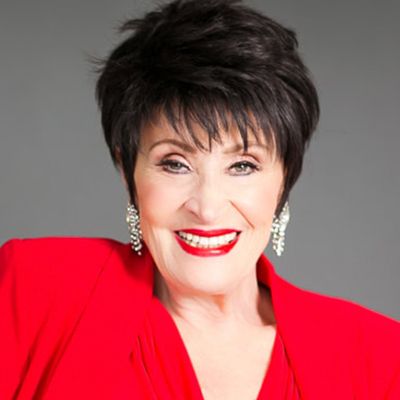
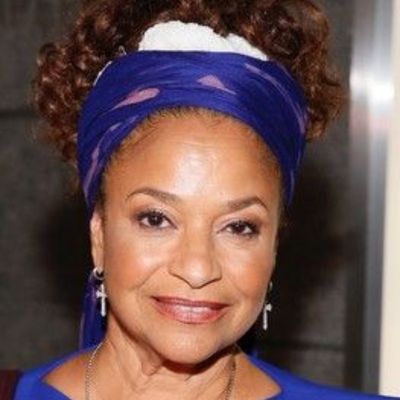
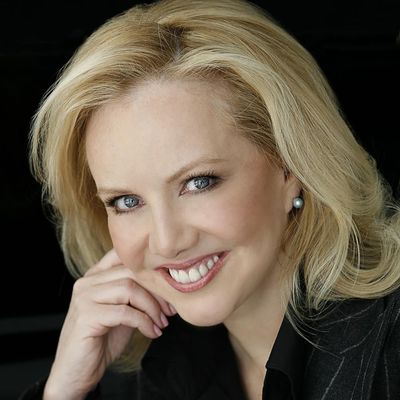
Andy Blankenbuehler, Susan Stroman, Chita Rivera, Debbie Allen, Graciela Daniele and more in Khadifa Wong's directorial debut tracing Jazz dance from Africa to America today. Learn more about UPROOTED at uprootedfilm.com... Read More
From the show: You Can't Say That!
Guests
About
Andy Blankenbuehler, Susan Stroman, Chita Rivera, Debbie Allen, Graciela Daniele and more in Khadifa Wong's directorial debut tracing Jazz dance from Africa to America today.
Learn more about UPROOTED at uprootedfilm.com.
Connect with Tonya via her community phone number at +1 917-724-8998!
Produced by Dori Berinstein and Alan Seales, edited by Catherine Devine, music by Cat Dail.
A proud member of the Broadway Podcast Network.
Transcript
This transcript was automatically generated and might contain errors.
[0:01] Tonya Pinkins: Hi, this is Tonya Pinkins, and you're listening to You Can't SAY THAT on the Broadway Podcast Network.
[0:27] Tonya Pinkins: It's been a very, very long time. I think my last podcast was in June of 2021. And I really hadn't planned to do any more ever. But when these two ladies came across as a potential interview, I just couldn't pass it up. Um, they are filmmakers, artists. I first saw their film Uprooted, the history of Jazz Dance at the Pan African Film Festival last year, where my film Red Pill was premiering, and I fell madly in love with it. I had a friend who knew them, and I said, please, please, would you ask them if I could have a link to see it again? I want to share it with some people. I tried to get people I knew to watch it and distributors, but happy they've gotten a great distribution deal with HBO Max.
So I want to get into conversation with them. Uh, please welcome Khadifa Wong's and Lisa Dunmal Reeve, the director and producers of Uprooted: The History of Jazz Dance, which I've seen about four times, and I say everybody should see it. So tell us, where is everybody gonna see it?
[1:39] Khadifa Wong's's: At the moment it's on HBO Max in the US only at the moment, and then we're still um working on deals for the rest of the world. So um, watch this space kind of thing throughout the rest of the year.
[1:51] Tonya Pinkins: Okay, so this movie has everybody in it. Like every living person who dances, choreographs, and not only that, you go all the way back tracing jazz to the continent of Africa. It's beautifully shot. The dancing's amazing, the history's amazing. When did this start? How did this happen?
[2:13] Khadifa Wong's's: Yeah, you color story. The whole thing sort of was birthed. What I love most is it was birthed in a theatre itself. So Zach Nemrin, our sort of originator, wanted to do something about jazz dance, and he basically pitched it to me during a quick change of a show that we were working on. I was his dresser, and he was in the ensemble of Joey Run Scoundrels. And he knew I was sort of working on film and working on short films and creating stuff, and said, let's do something together. So we spent about we spent a few months researching, going around, looking at different places, and then when we got to New York to sort of do some contextual research, um, which for us it felt like a place to go for jazz dance and do some classes and stuff.
He put me in contact with Lisa and the three of us got chatting, and it was then that Lisa said, Look, you're thinking too narrow. Look at the whole history of jazz dance, and naively so we thought that would be easy. And as we sort of found out it's 400 years of history, and I wasn't expecting to go back that far. But when you start seeing the conversations that were being had and the voices that were lost, it suddenly kind of made sense, and we knew that this was uh this was something that was way more than just a dance documentary.
[3:30] Lisa Dunmal Reeve: So, Khadifa, like how what did they say to you? And how did you know that they needed to go further?
[3:36] Lisa Dunmal Reeve: Originally, the yeah, Zach's, um, I've known Zach uh from we taught at the same college in uh London when I used to live in London, and um his original idea was much more on the what kind of our training, the codified like mathematics, Luigi, they they were dying and he wanted to make sure they were documented. Also, he is very passionate, as we all are about the fact that there's no jazz dance companies. There's ballet companies, there's contemporary companies or modern dance companies, but there's no jazz companies, and he kind of wanted to expose that. For me as a producer, I was like, yeah, but I don't think you're gonna get much of an audience, it's too narrow. I think if we had the whole history, like whole, you know, tell the whole story, it's uh it's broader, you'll attract more people, and it'll be more interesting as a film and documentary.
I was very um I knew that I didn't want it to be a formulaic kind of documentary because we all come from dance. Um if I watch a dance documentary, I generally don't get through it if it is formulaic. Um just because I I don't know, I I have to be hooked, and so that was quite important for me. Um, and which was why Matt was key, who's our cinematographer? Um I'd worked with him on another short film at the time, and actually now I've worked with him on several films, and he was originally a dancer, so and then he trained up as a cinematographer, so he knows how to get into the studio and into the dances and shoot as we experience it, and that's kind of um was very, very important to us. And um, I think that's what kind of stands us apart a little bit.
[5:25] Tonya Pinkins: So when how long was the process from you all getting this idea? You said you were a dresser and now you're a documentary film director. Okay. So tell me the time frame from start to Pan African Film Festival.
[5:41] Khadifa Wong's's: I think it was a good what five, four or five years from the original kind of inception of of um Zach and I sort of connecting again it took us a good few months because we we made videos and experimented with the visuals for his uh degree piece and for you know doing our research and stuff so we would go to the streets of Paris and just film Zach dancing there's footage of Zach just dancing on lampposts in Paris and there's footage of his students where we sort of tried stuff out and originally I thought I was going to be the one to film this on my Canon 60D and then you suddenly go no no no we need someone and so as Lisa said Matt was intrinsic to that because what I you know you're not always able to verbalize what you want but then you see it and I think it was one still that Matt had done like one frame and I was like that's that is the guy Lisa's writing and so it was really really exciting and that whole journey up until Pan African was a good sort of four or five years um from start to finish.
[6:38] Tonya Pinkins: So you know jazz we think of jazz as an American art form Brits jazz and how do you how'd you fund it?
[6:49] Khadifa Wong's's: Well uh how did we fund it? There's some very um we were very lucky with some investors um that were kind of either friends or friends of friends so um they trusted in us um because uh you have to also take into the you know the fact that I hadn't made a documentary before neither had Katifa you know I'd done short films before that I was in theatre so we knew the subject matter we uh well we thought we knew the subject matter we knew about this very small amount of subject matter um as it turned out uh but yeah it's we were just lucky we put our own money in we had um some investors we didn't get any grants there was no other kind of public funding some but then we had people that donated because we did do kind of a you know fund like that we had um the Duca shoes put some money in and DJD flew us out there to film them and so they funded us in that way in Calgary which was amazing um because by then we knew we wanted to capture them and we had no money I was like I'd love to make this happen I just can't give a shout out to Block as well oh and Block gave us the clothes block in uh Block in London actually uh gave us kind of um in kind uh money so yeah you just yeah I mean Tonya you know what it's like you just um you begged be steal and borrow and credit cards as well.
[6:52] Tonya Pinkins: So one of the things that I walked away from looking at this film and I don't know if this was uh how wait let me ask this question first how much footage did you shoot and where did you get it down to um how many hours did we get so I mean if you think we did over 83 was it 90 into 96 interviews so if they're all an hour that's at least 96 hours, and then every dance class. So I uh the time in the edit, I think we were close to about 150, 160 hours of footage.
[8:54] Khadifa Wong's's: So you got a whole series that you could do.
[8:57] Lisa Dunmal Reeve: Like we could have the the history of Jazz Dance, the series, I want to see it.
[9:02] Khadifa Wong's's: Yeah, yeah, yeah. That's actually what we want to do. We really want to do that. Because as we were cutting, well, as Khadifa and Joan are um amazing editor in London, um, was editing, it was evident that this was either going to be four hours long or 90 minutes and then a series or something because we just had so much, and we also had stuff that we hadn't been able to capture, like either the person wasn't available or we didn't have the money to go there, or so you kind of with all that together and all the footage that we haven't even touched. We know that um that's kind of what where we'd like to go next once it's been released worldwide.
[9:40] Tonya Pinkins: I mean, you've got Chita Rivera is in it, and Graciela Daniele is in it, and Al Blankenbuehler. I mean, you've got everybody. Uh that's like you know, there's probably a hundred people, Debbie Allen, Joshua Burgay. I mean, it's like everybody that you want that's alive that you want to talk to about dance is in this movie. So my huge takeaway, and this is what I love so much about the film, is you talk so much about the people who whose names are not known, and their names are they they we say you say their names, and what I got out of it was that these people were so busy doing it that they didn't have time to write it down. They were living the dance, and then other people came around who really couldn't even do what those people could do, but they got this much, they could take away this, and so then you got all these schools of dance that was like it reminded me of the the blind men who look at the elephant, and each one has a different version of what it is because they're blind.
And so we got all these systems of dance that were what those individual artists could take from these originators who were living in no time to codify. That was a big takeaway for me and really powerful. Tell me about your choice to was that a predecision. Did you know that beforehand before you started shooting, or did you find that out as you were making this?
[11:12] Khadifa Wong's's: Yeah, it started when Lisa suggested looking at the whole history of jazz dance and kind of expanding our scope. And there was a book that had been released, um, history of jazz dance from roots to branches that was edited by Wendy Oliver and Lindsay Guerino. And in that book, they were having that conversation that jazz dance had been whitewashed, that it had been appropriated, and that there were a lot of things that hadn't been said. And so, as a woman of color, reading that in 2016 after Brexit and the election of Trump, you suddenly go, here's my chance to have a say and fight back against the kind of racism that is rearing its head in the world. And that was, you know, I found comfort in being able to address what was you know, effectively felt like being silenced because you know you'd say to people Trump's racist, and people would tell you, No, you're not.
No, no, no, no, no, no, no. And you say Brexit is being based is a racist campaign that's being waged, and the UK's falling for it. No, no, no, no, no, you're wrong. You don't know what you're talking about. So the only way you could kind of fight back against that was to find a way to have your voice. And so that was the first hook. And as we kind of delved and developed and looked further, you could just kind of see how you could trace this and lay it over African American history, black American history, black diasporic history as well in the UK and everywhere. Um, and so it became this came more than just a dance documentary in that way. But yeah, that initial conversation was already being had in the jazz community, and what we what was most important to us was to make sure we could lift as many voices up as possible. And we didn't get everybody, you know, even with as many people as we did. But I think we, you know, I'm really proud that we managed to just have an open door policy with that.
[12:51] Khadifa Wong's's: And I think that is something I'm really proud of, and I know the rest of the team is proud as well that we try to kind of operate as open door policy as we could to allow anyone to speak.
[13:01] Tonya Pinkins: Was there any pushback to this narrative? I mean, we are in the age of uh let's not talk about CRT. I mean, you can see chatter on it on social media, can't we can see little bits?
[13:12] Khadifa Wong's's: Um, but we've been I think we've been quite lucky that um people haven't pushed back on that. People are pushing back more on the kind of direction that we should have gone, and and some people didn't feel like we hit strong enough in certain areas.
[13:29] Khadifa Wong's's: Um, so I think people just wanted more from us. We we I want more. Yeah, there's also, you know, everyone's got their own personal journey with jazz dance sometimes, and so if we haven't included or talked about someone that was important to them, they feel like we've omitted that, and that's not like something that we did on purpose. We either did couldn't get them or the people that we did interview didn't talk about them, so we can't you can't shoehorn something in, and it's not like they're not important, there's a lot of important people, and we're certainly not claiming we're not that arrogant to say this is it. Um, we did the best that we could in 90 minutes with the money that we could raise, and uh, I think we did a great job.
But um, what is interesting, and I'm going to talk about this because we've had two of which I think uh two people respond at the moment, is that it's an Alvin Ailey debate. Why why isn't why isn't Alvin Ailey in there? And um, we did. I mean, this was a big conversation with us while we were in production and the edit. Um, but I'm gonna get Khadifa to say this so we could just get this on the podcast so we don't have to keep replying. Um, of why we didn't. Yeah, to you know, a you're led by your contributors. So when we would ask about iconic names, no one mentioned Ailey in the jazz dance sense. Um secondly, he when we did sort of look at speaking to Ailey and people from that, they would tell us no, no, no, he's modern dance, but he does do some hints of jazz, but he's not that's not his lineage.
And the thirdly, which I find most interesting, is just because his dance was based on an Africanist aesthetic doesn't make him jazz, but people feel like he is, so we kind of you know, like with everybody, we weighed up how much do we have on this? Who's talking about it? What's the what's the best? Does it make good film? And did we capture the debate? But we didn't capture that debate on camera, so it just felt like there was no way to as Lisa said to shoehorn it in. Um I was stressing over that as a as a director because you know, we started off with this mission to make sure that no one was excluded or admitted from the history, but you kind of realize that there are some things that you can't win on, and there are some things that you're never gonna satisfy everybody on, so don't worry about it. Allow the conversation to happen and allow that to happen outside of the film.
[15:59] Tonya Pinkins: So tell me about your journey to HBO. Well, uh Khadifa this time last year, actually, Khadifa. So Khadifa's part of Film Fatales, which um is a great uh group of women um that support female filmmakers, and they uh were at the uh Berlin Film Festival and Market Film Market and were asking if who if there was anyone who wanted to pitch their film and they were gonna pick five films, and so you have to like just throw your name in the hat, and we were like, sure, why not? Didn't think in a million years that we would get picked. Um so we did. We all uh Khadifa was one of five um filmmakers, and there was a panel, it was all on Zoom, of course. Um, and so we pitched, and one of the panel members was um the head of acquisitions for HBO Max, so we kind of kept in touch with her.
We actually had a conversation in the summer or early summer, um, because I think they actually were interested and they knew um that Project 150, who's basically an arm of Warner Media, so we're with them, and they really like um so pro artists and uh just very inclusive and a really great place, great home for the film. Um so that's where she thought we would fit. They were really excited about the film, and then we kind of always had in our head that we'd love to um do our premiere uh if if they wanted us in Black History Month, so February 1st. So that's why then we had to wait a bit longer for them to know what their Q1 for 22 was gonna be, and then um yeah, so it's uh it was actually a really long time when you think about it, it's like a year from when Khadifa did the uh uh pitch to us premiering, and then there's a lot of stuff that you have to do on the way.
Uh but yeah, it was it's been a journey, it's certainly not easy, but we were so lucky. I mean, people are like, How did you do that? We're like, I don't know. Well, the film is extraordinary. The film's extraordinary. So I, you know, everybody who really the people that listen to BPN, they're all artists, and and it's so important that artists have to create their own their own projects now.
[18:14] Khadifa Wong's's: Can you give us a little taste of what's a pitch? No, do you know it all happened in my bedroom? It was the most unglamorous thing, you know. When you watch, I spent my time watching Entourage and thinking I'm gonna get on HBO is gonna be exactly like this, and thinking that this was what I was gonna happen. I was sat in my bedroom with my tracksuit on, pitching to all of these execs, so completely very unglamorous. And it was the same with the phone call when we finally got the news that it was happening. I was sat on my bed. You you hear this. What do you tell people it is? I mean, you said you went from dresser to now you're a director of an HBO premiering uh documentary film. Uh this is this is huge.
This is not pitch, pitch for me, pitch it to me. So we we literally uh I think I just drew on the social aspects of it and you want me to actually pitch oh gosh, okay. Go ahead. So Uprooted the Journey of Jazz Dance is a social political dance documentary that chronicles the history of jazz dance from the moment the first slip ship carrying enslaved Africans landed on uh American uh shores, and how we trace that journey into the dance you know and love today. It's a story of appropriation, it's a story of codification, it's a story of the American social landscape. And I think I ended it with um because you can't have the rhythm without the blues, and that's about all I remember from that pitch because I um, you know, because you can't have this wonderful art form without that struggle, but people don't acknowledge that struggle.
Um it's like we pretend it didn't happen and we can just tap dance and be happy, and it's not that at all. Um so yeah, this is what I remember. Excellent, excellent. Did you have any visual? Were you using pieces of footage or just talking? We had the we had the trailer, and that was it, which was wonderfully cut by our editor, so she knows how to uh whack some great stuff together. So I felt very very lucky that I had um around me. Lisa was on the call, and we had a great trailer, and so yeah, I had the infrastructure that was needed.
[20:24] Tonya Pinkins: Well, I mean, have we been pitching HBO for the series? Yeah, not yet, but we're that's kind of yeah, our plan. We just they're they're going through some changes, so we just want to make sure everything's right. You don't want to be pitched and get picked up by the people that get fired. You got it, or people that move on, or you know, you just gotta we're being we're being led by our associate um producer well, Kimberly. So um, yeah, we just so what would it take to do the series? How much wow, how pretty do you want it to look? I mean, how much more shooting would you do? Would you just work on the other thing? We would I mean we would we do have a lot of footage, but we also there's a lot that we want to expand on.
Um, so you know, we want we'd love to go to West Africa, one. Um maybe maybe even India, see that side of the um the art form. Um definitely New Orleans, Korea, because of the um whole K-pop phenomena. Because that they're continuing on. If you look at the movement that they're doing, um, it is literally reminds me of the old school days of 90s R&B, and you hear those sounds, they've taken it to a different level. Um, but they're you know, it's essential that we connect it and see that our art has spread across the world and how it is influenced because what I like about Korea is they are attributing it to where it's come from. It's not straight up appropriation like we've seen, and so it's good to show how you can kind of do both, you know, you can see both sides of the of the coin when you do appropriate something, and what we do in the West a lot of the times is don't pay homage, don't respect, don't call back, don't thank.
But in other cultures they are and they're firmly ensconced in in this is where it's come from. So it's important to kind of see that we're still doing those movements um today. And then India, how would India in jazz? Well, that that you know, you've got the whole Jack Cole. Um, that's where he had a lot of his influence, and as did Matt Lattos from Jack. So I'd love to just kind of at least explore more like further into that. There, you know, we'd we wanted to expand on the also the jazz music side because that's so important. We wanted to interview Quincy and we wanted to interview Winton Marcellus, so I'd love to get them together. Um yeah, I mean, yeah. I mean, the list goes on, but um, so yeah, we do need a big chunk of money.
[23:08] Khadifa Wong's's: There were so many people I'd never heard of, and it was lovely to see the images of them and to hear people talk about them. Are there more people who you didn't get to mention who are the unknowns of jazz as well? Oh, for sure. Um, which is why, you know, which is why we would make sure I see this we would be go even deeper as deep as we could. It's this thing, it's this uh like Melanie. When we were talking one time to Melanie George, who is one just a brilliant um dance educator historian choreographer, um, about we were renaming the film and we were like, what do you think? She said it's complicated, and actually that for me always now just sticks in my head. This the whole dance art form and history of it is is complicated, which is why I would never I don't think we'd ever get ever, I don't think we'll ever make everyone happy.
[24:16] Tonya Pinkins: I when I think of looking at those old um video, you have some of it in there of the people jitterbugging and the abandon and the freedom. It's like I can't even really imagine dancers dancing with that abandonment because they'd be like, oh no, I might get hurt, I might get injured. What do you think is that the difference in that? I mean, there's a wild abandon to that 20s 30s movement that we have a precision now, but we don't have you know, I might die when you flip me over here right now. What is that?
[24:47] Khadifa Wong's's: I think it's just been taken out of us as a culture. We we we just don't let loose anymore. Um, and it it is a shame, and we do see it in places like if you go to Nottingham Carnival, you will see people dancing with abandon. We take take to the streets for two days a year in London and in the Caribbean, and I just think in the West, it's been kind of trained out of us. I know that my improv and my kind of free dance, and Lisa, we talk about this often that we we just had that trained out of us, the ability to let loose. And if anyone was to get on the dance floor now, I would panic and just wouldn't be able to let loose. I just can't do it. So I think we just need to kind of encourage that freedom from an earlier age, and I'm just not sure we do that at the moment.
[25:32] Tonya Pinkins: It's interesting that you say that from a dance point of view. I'm not, I mean, I I studied dance a little when I was younger, but I don't, I'm not gifted at all. But I find that for actors, particularly for actors of color, that the training program seems to train the life out of them. They become very, you know, they become a TV personality, and you know what they are, and uh they become this sort of standardized thing, and that which makes them a one-of-a-kind human being that'll never be made again is gone. Um, is that what you're saying happens with dance as well?
[26:10] Khadifa Wong's's: Absolutely, and you know, we we we all educate as well in in dance, and I did one exercise where the students were trying to move their hips, and Sach was sort of trying to get them to move their hips with with you know conviction and stuff, but they all felt really self-conscious moving their hips, so we got them to turn and face the wall, and the moment they couldn't see themselves in the mirror, the moment all their hips loosened, and it's because they're so self-conscious and they're so kind of worried about moving it, and they've been taught that their hips are sexualized. And if you move your pelvis in your hips, that somehow it has to the only connotation is sexual, and they all just go prude, and you're you'll you're like, well, where's this come from?
[26:48] Khadifa Wong's's: Why can't you just move your hips without attaching any judgment to it? Just move. Okay, so here's a question. I'm one of those people who can't move their hips. I was in the swimming pool the other day, and I could move my hips in the swimming pool. I thought, is it gravity that keeps me from moving my hips? But when I watch some of the West African dancers, the Caribbean dancers, I mean from childhood, the number of muscles that they can move in their hips and the things that they can make butts and hips do. I'm like, is that genetic? What is that? And can you teach it?
[27:22] Lisa Dunmal Reeve: It's I think it's cultural. You learn it, you see it everywhere. So if you look in the Caribbean, that kind of dance and in West Africa, and it's done all the time, it's done daily, and it's accepted, it's not frowned upon. Like when you're at carnival and you're dancing and you see people looking at the way people are dancing, they treat it as a spectacle or they treat it as something that is not kind of right or high art. We're not taught to value it in the same way. There's almost like a stigma of some kind of shame attached to it. So it restricts you. The moment you feel anything other than the joy, you're restricted. And I think that's just something that we have learned in Western culture to do to feel kind of self-conscious of.
[28:09] Khadifa Wong's's: It's interesting. One of my Jagnas, which is a massive teacher, his name is Dr. Greg Carr, he's out of Howard University, and he talks about the ritual of that dance and certain coming of age ceremonies and certain traditions in Africa, and that you know, for a young boy when he's making his transition, they often would bring the females in to do this kind of dance, and they're looking to see if the young men are able to watch it without a sexualization to it, and that you know, if a young man actually succumbs to sexualizing it, it is a sign that oh, you aren't ready to make that transition because this dance is so much more than that. I don't know a lot more of that than other than that story that my teacher had shared. It's a beautiful, beautiful example.
[28:58] Lisa Dunmal Reeve: Yeah, I also think, yeah, I mean, I don't know much about that. Well, I'm gonna just say is Karen Hubbard, who you know trained with Pepsi Passow, who's an original Savoy Lindy Hopper, had his own company, the authentic jazz dance company. She said, you know, you've got the swing dancers, the social dancers who understood the vernacular movement, and then you had this kind of ballet world, pulled the jazz into the studio and made it what they wanted it to be, and then so there's a generation, certainly my generation, because of where I grew up, that's what I taught, and so you're just okay. That's what I'm being told, and it is so you get this whole all this information that this is what you should be doing, and this is the technique, and I have to say that's relevant because it does serve you in certain ways, but what's a shame is I used to as a child improv.
I used to hear music and dance quite freely but the older I got and the more I was okay this is how it has to be to be the best that I have to get, you know, because I love musical theatre, I then kind of feared improv which is where it all came from. That's the root of my joy and I find that quite sad that I didn't. If someone said improv to me as a 15 year old 16 year old I would be like oh I can't do that whereas that's the free bit, that's the fun bit and yet if I went to a club I'd be fine. That's what you were doing was improving really just moved you didn't you just made up so I get that's that's my personal experience and I always kind of connect with Karen on that because of her history and who she worked from and how she saw it.
[30:55] Khadifa Wong's's: I thought that was quite you know telling. It's interesting like my daughter is a great improvisational dancer and then she went to a school I'm not gonna name it because it's one of your people in your movie but you know she can't really count but she can dance. So if she had to count the steps and nanodance she's not gonna be able to do that but if someone just taught her the dance she could dance. You know, I think some people can't count though there are some people that are brilliant dancers that aren't necessarily gifted in that way. But that's fine too, because we all have strengths, weaknesses. I think there's such a pressure now to be so good at everything, and you know that you're just you're always scared to basically be slightly weaker in something.
[31:47] Lisa Dunmal Reeve: Yeah, I think training, yeah. It's true. Training can just take into account those things, and we can, I think we can adapt training so that it becomes, you know, it can embrace, as you say, techniques and the formula stuff that does work, but add in that little bit of freedom and try and encourage students to not worry so much about counting because we never used to. It's only a recent trend, you know. Some of the greatest dancers that I've seen were just move with the music and not worry about the counts. And that was in the 80s, so it's not long lost. So it's something we can get back quite easily, I think.
[32:22] Khadifa Wong's's: And I know when I did Jelly Slash Jam with Savion Glover and Gregory Hines, their solo numbers were improvised every night. Yeah, yeah. Which is incredible. I just love it. And if you see, you know, Jason Samuel Smith in the movie. I mean, that would have been improvised. There was no music like you just said, can you bring your tap shoes? Yeah, sure. I mean, I wasn't there that day because I had to be in like we were two days simultaneously, and when I saw that footage, I was just like my jaw was on the floor, I was so gutted I'd have been there. I was just like the sound, it was watching it's one thing, but feeling that sound in your heart was just like those taps just go through you, and it's spiritual, it really was just incredible.
Your movie is very spiritual, and I tell everyone about it because I it's just the most incredible film that I've ever ever seen about dance. It has so much joy, so much history, so much love, so much education. I think everybody should see this movie. I think it should be in schools.
[33:35] Lisa Dunmal Reeve: Well, we've got this whole plan. Well, we've got an educational, some educational packages and teaching guides online now on the website that you can go to, and also we're kind of expanding on that to do like bigger live events, so you know, really immersive community classes and panel discussions, and yeah, we've got we like to conquer the world educationally because everyone should see this. I'm like we're very passionate, just really the kids need to see this. So everyone needs to see it, everyone needs to see it and be reminded that they can just get up and move and dance.
[34:15] Tonya Pinkins: Yes. All right. Well, did is there anything that I didn't ask you that you want people to know about Uprooted: The History of Jazz Dance?
[34:24] Khadifa Wong's's: Well that we had an amazing crew. We couldn't have done it without Matt Simpkins, who's our cinematographer, because he did way more than just a cinematographer. So a big shout out to Matt and to all our investors, to Joan Gil Amarin, who was an amazing editor. She was just incredible, as was the assembly rooms who supported us. That was the post house that we edited in. Zach Nemaren without his seed of the idea, and obviously he was with us the whole way. He also choreographed everything. That was you kind of our B-roll. He's the choreographer because that's you know, that's what he does, and he's also an amazing educator in London. To Kimberly Browning, who's been our consultant, associate producer along the way.
She's been key. Who am I forgetting? Kaditra, I don't want to forget anyone. No, I think you've got everybody. I think you got everybody. So and to everyone that you know that contributed, you know, even if they didn't make this cut, they'll be in the series.
[35:33] Tonya Pinkins: Did it was it more expensive? Did you spend more money getting the footage or more money in the edit? Where was the bulk of the expense?
[35:42] Khadifa Wong's's: Well, I think I'd say we spent, yeah, it's about half and half. Though what we spent on production, I would say we spent more edit and then licensing. Licensing probably was the most and archive, yeah. That was probably the most cost. That was the biggest cost, yeah. Licensing music, all the archival footage.
[36:13] Lisa Dunmal Reeve: Yeah, I use that stuff too, and it is very expensive.
[36:16] Tonya Pinkins: How big was the crew you were traveling around with?
[36:19] Khadifa Wong's's: Very small.
[36:21] Lisa Dunmal Reeve: The lighting is so beautiful. I mean, did you have makeup people?
[36:24] Khadifa Wong's's: That's all Matt. That's all that we did. That was all Matt. So we had Matt Phoenix, who was the first AC, then we had generally Alejandro was RPA. Brian was our sound, we had still photographer, which was either Daryl or V Becker, and then Hair and Makeup. And then yeah, one, and then Zach would be the grip and the kind of person that would help Matt with the lights and move them around, and then you know, it'd be us two. And then you had two days where you had to you had you were shooting in double places. So what who shot on the double days?
[37:05] Khadifa Wong's's: Oh that was me kind of doing a um educational thing, educational potion, telling everyone about film and pitching. Oh and it was on this specific day, and it was the same day that they were shooting in New York. So I was more of a pitch money raising thing. Producing, being the producer actually, the great producer that she is.
[37:27] Tonya Pinkins: All right. Well, as we wrap up so Khadifa can get back to rehearsal. What are you working on right now, Khadifa?
[37:32] Khadifa Wong's's: So I am part of the Joe Wood foundation. They give you a year as an assistant director at a theatre called The Young Vic. And so at the moment there is a show called The Collaboration, which is about Andy Warhol and Jean-Michel Basquiat and their collaboration, and it's starring Paul Betany. It's great. I'm getting to sit in on tech just so I'm learning from a great director, Kwame Kweyama. And I assisted him in the summer, so I'm just at the moment soaking up some knowledge from a visionary director, and just trying to make myself better by just being in this building and soaking you all.
[38:08] Tonya Pinkins: Well, please tell Kwame that Tonya Pinkins says hello.
[38:12] Khadifa Wong's's: I will.
[38:13] Tonya Pinkins: Do you know him?
[38:14] Khadifa Wong's's: I do indeed.
[38:15] Tonya Pinkins: Oh, I love that. Oh, it's gonna be full. And what else is next for you two ladies? You have another collaboration besides the Uprooted series. What's next for you, Lisa?
[38:23] Lisa Dunmal Reeve: I think for Kadifa and I, it's just the series right now. And then I've got about five or six projects, all at different kinds of stages. Like one's just gone in to post, that's another doc. And then I've got two narrative features that we're trying to raise the money for so to shoot this year, and then two shorts. And then another one in being written.
[38:51] Tonya Pinkins: Wow. Well, I'm impressed with both of you ladies. I mean, I know women can do anything. So I thank you for talking to me about this extraordinary film, Uprooted: The History of Jazz Dance, which is on HBO Max right now. And Khadifa, get something to eat, get back to work. Lisa, thank you so much for your time. Go and watch Uprooted: The History of Jazz Dance on HBO Max.
[39:16] Tonya Pinkins: Thank you. I'm Tonya Pinkins, and you can't say that as part of the Broadway Podcast Network, produced by Dori Berinstein and Alan Seales, with music by Cat Dail. If you like what you hear, don't forget to subscribe and rate this podcast highly wherever you stream. Follow me on Instagram, Twitter, and Facebook at TinyPe. And to learn more, visit me dot F and forward slash Y Cring.
© Broadway Podcast Network, All Rights Reserved