

This Week: Celebrating the last work of Stephen Sondheim & the most popular songwriting team of the 1970s! Every week director Robert W Schneider and actor Kevin David Thomas pull back the curtain on neglected, forgotten, and under appreciated musicals, as well as bizarre performances, endearing television appearances, and all things show business... Read More
From the show: BEHIND THE CURTAIN: BROADWAY'S LIVING LEGENDS » Podcast
Featured Shows

About
This Week: Celebrating the last work of Stephen Sondheim & the most popular songwriting team of the 1970s! Every week director Robert W Schneider and actor Kevin David Thomas pull back the curtain on neglected, forgotten, and under appreciated musicals, as well as bizarre performances, endearing television appearances, and all things show business. Become a sponsor of Behind The Curtain and get early access to interviews, private playlists, and advance knowledge of future guests so you can ask the legends your own questions. Go to: http://bit.ly/2i7nWC4
Transcript
This transcript was automatically generated and might contain errors.
[0:00] ♪ Musical number: "My Favorite Things" — performed by Unknown performer ♪
[0:18] Kevin David Thomas: Greetings, theater friends. It is Throwback Thursday. It is I, Kevin David Thomas. Greetings, Groffitz. The great world begins. We hope that you're having a lovely summer. I'm sure you have lots of summer reading going on or summer YouTube watching.
[0:33] Kevin David Thomas: Name the music, already. Summer, summer. I was like the summer. Wandering where to go. Name a musical.
[0:40] Robert W Schneider: Uh, Donna Summer musical?
[0:42] Kevin David Thomas: No, this is a Tony Award-winning musical.
[0:44] Robert W Schneider: Oh, how I'm ashamed right now.
[0:48] Kevin David Thomas: Two Gentlemen.
[0:50] Robert W Schneider: Oh, oh boy, that's the one that I feel like I skip over.
[0:55] Kevin David Thomas: I always summer, summer, I was like the summer, wondering where to go. Beat out Follies.
[1:01] Robert W Schneider: There it is. And that's why. That's it. I knew that there's always a couple musicals that won Best Musical, and you always forget one Best Musical.
[1:11] Kevin David Thomas: Like, first of all, you kind of forget they were a musical period. That's the one. There's that one. That's what I always forget. I think, oh my goodness. Wow.
[1:19] Robert W Schneider: Oh, Follies. Guys, come on. Isn't that interesting? That's why awards mean nothing in the grand scheme of things.
[1:30] Kevin David Thomas: I think. No, the awards are, I well, I think they are fun to follow. I'm just like anyone else. I love watching the Tony Awards. I think it's great that they preserve so many things on screen that we can go back and watch those awards from 1971 as well. But you have to take it with all the grains of salt. It's all politics, it's all the producers, but within that, you can still have some fun. But it doesn't mean anything. I mean, look at Les Misérables, lasted years and years and years, and that didn't win. No, that was, you know, roasted by critics. And that's the gateway drug for a lot of people into musical theater.
[2:05] Robert W Schneider: So can I ask you, what do you think is the most egregious, to quote Julie Andrews, win? A musical that you were like, how did that win over blank? Like, how did Two Gentlemen win over Funny?
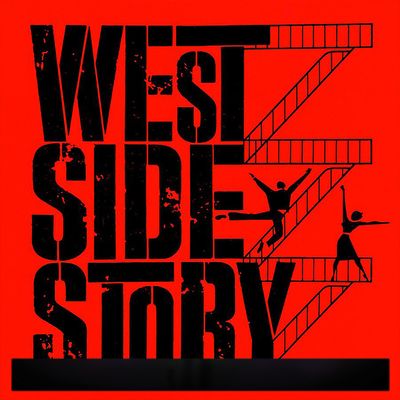
[2:23] Kevin David Thomas: Well, I mean, that's way up there. I would take it actually farther back, and I'm sure this is a point of contention for some people, but 1957, Music Man over West Side Story. I think what, it's unbelievable to me that West Side Story was like Music Man. It's great. Music Man was of its era, but with what West Side Story was doing and how it was just so out there and avant-garde and Bernstein and all that, that one since I was a kid, always thought, really? Really?
[2:52] Robert W Schneider: Yeah, it's a bizarre one.
[2:53] Kevin David Thomas: That is a bizarre. It makes sense. I get it. Music Man's a really well, it's a great show. We're gonna see it with Hugh Jackman in a little bit, but what about you? What do you have?
[3:01] Robert W Schneider: Well, I mean, that's a big one for me. There's a recent one recently. I don't want to say because I don't want to offend anybody, but there have been a couple in the past couple of years that have won that I'm like, how did that win?
[3:13] Kevin David Thomas: No, no, no shows will be mentioned because I have friends with it.
[3:16] Robert W Schneider: Okay, I was gonna say, does it rhyme with, but I won't even do that.
[3:16] Kevin David Thomas: Well, I'm gonna say handsome is all you're gonna say.
[3:24] Robert W Schneider: No, I listen, Dear Evan Hansen and Come From Away were both amazing shows. I was hoping Come From Away was going to win. I really like Come From Away. That's all.
[3:34] Kevin David Thomas: I was gonna say there's a schmum from a shway should have won, but yes, right. But like we said, it's running, it's doing very, very good business. The sales are still up, you know. So hey. In a world where both of these shows can exist, there is nothing better. And what at the end of the day, the awards mean absolutely nothing. Remember Wicked and Avenue Q?
[3:52] Robert W Schneider: That was a big coup.
[3:53] Kevin David Thomas: Yeah, Avenue Q won. I thought, yeah. That was a big coup. That was, and yeah, that was a big one. Or look at the shows from like the '91 that like it was like Will Rogers Follies won. But it was all, oh God, help me.
[4:10] Robert W Schneider: No, that was 1990. That was like, but like whatever, I can't remember. Help me out, folks. Whatever Will Rogers beat, like those shows are still like around all the time.
[4:19] Kevin David Thomas: And Once on This Island, maybe no. Maybe Once on This Island.
[4:22] Robert W Schneider: Okay, wait, you start talking about your favorite thing, because I've got to be a little bit more.
[4:25] Kevin David Thomas: Okay, and you look up and then you'll let me end the story in today. That's fine. I used to be able to like rattle this off like and put it. I wanna say it was Follies and like, um, uh, God, what the hell was the other one? Uh, Once on This Island, and maybe not Miss Saigon. I wanted to show it on, but I could be wrong. I could be wrong. You keep talking. You tell me about your favorite thing.
[4:46] Kevin David Thomas: Because I watched, I watched, well, ha, well, my favorite thing actually, I could open up my favorite thing, which is a book, and turn to this chapter in the book and be able to tell you probably faster than you're gonna be able to look it up. My favorite thing today is, and I had to, this is another example, Rob, of having to hopefully I haven't done this one before.
[5:07] Robert W Schneider: Oh, what is it?
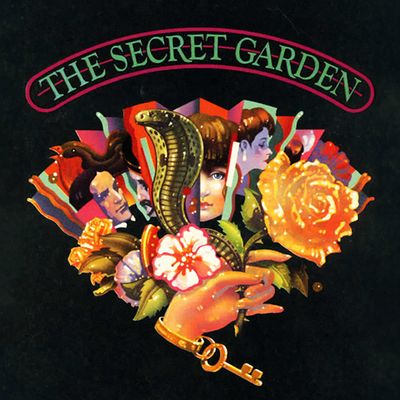
[5:08] Kevin David Thomas: So this, this is what Will Rogers Follies beat out, ready? Miss Saigon, Once on This Island, yeah, we're right, and The Secret Garden.
[5:16] Robert W Schneider: Oh.
[5:17] Kevin David Thomas: Two of those shows have already had revivals. Secret Garden's about to have a revival. No revival of Will Rogers Follies, folks.
[5:24] Robert W Schneider: No, no one's gonna hear that Cyclone score, which I listen, I love Cyclone very much, but I must say it is not my favorite Cy Coleman score.
[5:33] Kevin David Thomas: I'm never like that. Never married a man. I'm being it like, it seems sacrilegious, but I just, I like The Life. I'll listen to that every day of the week.
[5:41] Robert W Schneider: Oh, I love The Life. Trivia, who was the original choice to play Will Rogers in the Will Rogers Follies?
[5:48] Kevin David Thomas: It ended up being Keith Carradine, but I yes, I did just read this recently.
[5:52] Robert W Schneider: Oh boy.
[5:53] Kevin David Thomas: I can't remember.
[5:54] Robert W Schneider: John Denver.
[5:56] Kevin David Thomas: That's right.
[5:57] Robert W Schneider: Wow.
[5:58] Kevin David Thomas: Yeah.
[5:59] Robert W Schneider: Fun fact.
[6:01] Kevin David Thomas: Fun fact, folks. That's why it's so popular. Go ahead.
[6:04] Robert W Schneider: I'm sorry. So I'm about to go like this is nerd alert time because this is a favorite thing. I sometimes our favorite things are like a YouTube clip that everyone's gonna love. You're gonna just type it in, you're gonna go there. I don't know if everyone's gonna want to buy this book. This is what you might call a periodical type book. And so, and I looked up on our podcast if we had done this before, because I honestly I can't believe we haven't because it is so, I don't know about you, well, I'll tell you in a minute, but it's so important to my collection. My books that help me, you know, do research on musical theater and understand it.
[6:39] Kevin David Thomas: It's by the great Gerald Boardman, and it's called American Musical Theater: A Chronicle. I'm gonna hold it up. Look how big this is. It's huge.
[6:47] Robert W Schneider: Oh, I used to own that book.
[6:49] Kevin David Thomas: This thing is such an exhaustively researched history of American musical theater. It is so scholarly and so smartly done. It belongs on every bookshelf of any musical theater historian. But I think even if you're just a fan, it's so much to dig into and look at. Basically, what this man did from the very early, early, early beginnings of musical theater. It starts with, oh, Act One, he separates the chapters of this big huge book into sections, Act One, Act Two, Intermission, all that. And it's all in chronological order.
[7:22] Kevin David Thomas: Act One is 1866. So he starts with The Black Crook, which is some say is the first time that you had music, dance, and acting all integrated into one musical because there was the out of the ballet troupe was out of work, and so they went over to the other, you know, the opera and they put it all together, the yada yada. That's a podcast of its own. But so he starts there, and in this book, there's been three different editions of it. I have the third and final edition. It goes up to the close of the century. So it ends with the season of 1999-2000. I think the last entry is The Green Bird, the Julie Taymor play/musical that she did after Lion King.
[7:57] Kevin David Thomas: But what he does is he talks about every single piece of theater with music. So it could be a review, it could be a full-length musical, revivals, every single thing that graced the Broadway stage from the mid-1800s all the way to 2000. And it's not just, oh, this happened, blah blah blah. He gives you, well, I'll open it up and I'll give an example. He'll give, you know, the date of the opening, the theater that it played, and he just gives you some fun facts. It's all narrative, so it talks about, you know, how it's, he'll compare it to No Strings. Four Nights After No Strings arrived. It was the music by Charles Strouse and Lee Adams whose work, blah blah blah. He doesn't give you as much opinion as someone like say Ethan Mordden does in his sort of history book.
[8:43] Robert W Schneider: Yeah, right, exactly.
[8:44] Kevin David Thomas: I hated it, I hate everyone who likes it, it's done. But he's more factual, but he gives you a good couple paragraphs on every single thing. He'll give you little boxes of like famous people that you should know about and important indelible changes they made on Broadway. But it really is a history lesson of where American musical theater came from, where it was going over the years, and I just have to finish with this paragraph that he, the last paragraph of the book. He died, unfortunately, I think in the 2000s, I want to say. I thought I wrote it down, but I didn't. Gerald Boardman was, had a family business that sold, of all things, mothballs.
[9:23] Robert W Schneider: Uh, and then uh later in his life he sold the family business, and that's when he began to write these history books. He also wrote books on Trump Kern, he wrote a book on American operetta on Vincent Yeoman's on American musical comedy. Um, and his, his he does exhaustive research for these books. I cannot imagine him researching every single show that ever played in New York City. It's just, it's absolutely incredible. Um, and I, I just have to read the ending of this because it just shows what kind of how he felt about musical theater. It says eight months after the last century in this book, which was 2000, uh, an old and uh, uh an old century will come to an end. What will the new century bring for the musical?
Who in 1901 could have foreseen the musical theater of 1999-2000? So there is little point in speculating. Let us simply hope that in two in 2099, a theatrical historian will find them that musical theater still productive and interesting enough to put together a say 11th edition of American Musical Theater Chronicle. Uh, and I think, I think that's true. We're looking, we're already one fifth of the way through this next century, um, nineteen years after the fact that he wrote that, and look at all that we've seen since then. It is, uh, it is with positivity. You, everyone always says, Oh, musical theater's dying, blah, blah, blah. Garbage. It is always evolving and always getting better, and it does go in ebbs and flows, of which this book certainly shows us.
Um, and uh, I think it's really important. So, uh, check out, uh, even if you go to the library, uh, check out American Musical Theater, theater spelled T-H-E-A-T-R-E. Uh, the by Gerald Boardman. It's a huge book. I think you can buy it online for a little cheaper than what it originally went for. I think it was like a $75 or something like that. Um, but it's a really special book, and I think that, um, it's definitely worth perusing. And it's one of those books that you don't read cover from cover, but you can just pick a season and just read about it, and uh, you learn a lot. And it's a great, uh, reference book as well.
[11:14] Kevin David Thomas: I like that. I like a good reference book. In fact, I think I'm gonna give you my reference book too.
[11:20] Robert W Schneider: Ooh.
[11:21] Kevin David Thomas: Because I, yeah, okay, we're gonna do a reference book as well. So, uh, mine is, okay, maybe you remember this. Do you remember those books that used to come out? It was called The Best Plays Theater Year Book.
[11:34] Robert W Schneider: Of course, right?
[11:35] Kevin David Thomas: They don't do that anymore, they're no longer, I don't think they're around anymore. I have looked like crazy. I, the last one I was able to find was like 2004-2005. So, anyway, folks, if you don't know what this is, they were like, I think they were on every single library reference shelf.
[11:50] Robert W Schneider: Yeah.
[11:50] Kevin David Thomas: But they, and they went back a long, long time, like even in the early part of the 20th century. Um, there were 86 editions of it in 2005, so I don't know.
[12:00] Robert W Schneider: Yeah, that would be like the early part of the 20th century.
[12:02] Kevin David Thomas: My god.
[12:02] Robert W Schneider: Yeah.
[12:03] Kevin David Thomas: And what they would do is they would take like 10 plays that they thought were really good in that season, either Broadway off Broadway or regional theater, and they would like to give you a synopsis and they would show you like except or dialogue from it. Um, all of like the Hirschfeld drawings from the season were included. Um, they gave you like all like the touring casts. It was really marvelous. It was, I think, one of the best reference guides for theater lovers. Anyway, the way that each of the books started, though, was um a thing that was like written by the editor that told you all about that Broadway season. So, for example, it was broken into like five different parts. One was like the season, and it told you everything that was going on not only in the country but in New York at the time.
Then every single show that ran on Broadway with the casts, with like what the shows were about, then they also did the same for Off Broadway, and then they did the same for Revivals, and then they did a section called Offstage, which was like all the Broadway gossip that was going on, how ticket prices were fluctuating, problems with the unions, notable deaths, etc. So anyway, um, somebody, Otis Guernsey Jr., who used to be the editor of these books, he put together a book called Curtain Times. Once again, the book is called Curtain Times, the New York Theater from 1965 to 1987. And what he did was he took those five sections for each Broadway season from 1965 to 1987 and put it together in an anthology.
Um, it is so resourceful because how many times have you like flipped through like a theater world and you're looking at a play and it's like there's a girl in my ostrich? And you're like, what is this?
[13:42] Robert W Schneider: Right.
[13:45] Kevin David Thomas: Like, what the fuck would this play even be about? When you open up the Curtain Times book and you go to that season, he tells you what that play was about. So you're like, oh, okay, now I see what it is. And I don't think there is such a play as There's a Girl in My Ostrich.
[13:58] Robert W Schneider: Well, that was a good one, though. I think that's a good thing. It's Russ Thacker and Anita Gillette, and it was at the antitheater for two performances. On the study was Don Scaldino. Um, anyway, so you can buy this book for two dollars and seventy cents on Amazon. Once again, it's called Curtain Times, the New York Theater, 1965 to 1987. It's from the Best Plays Theater Yearbook series. Um, if you don't have those books, get those two, because those are available on Amazon now for like I'm looking at one, the Best Plays Theater Yearbook, 2004, 2005, uh, 25 cents.
[14:35] Robert W Schneider: Oh my goodness.
[14:36] Kevin David Thomas: Wait, I'm looking to see what those plays were.
[14:38] Robert W Schneider: That's a steal.
[14:39] Kevin David Thomas: Wait, did you see any of these? Are you ready for this? I actually don't have any of those books, and I should. I should, uh, maybe go. But everyone now, everyone's gonna buy them and I won't get them in time. I haven't even heard of some of these books, these plays. After Ashley, Democracy, or no Democracy, Gem of the Ocean. I know.
[14:56] Robert W Schneider: Oh.
[14:57] Kevin David Thomas: So help me if you say there's an ostrich in my office.
[15:00] Robert W Schneider: Or no, there's a, what'd you say?
[15:00] Kevin David Thomas: That was this the out of town title. Until Elliot Norton was like, you know, that's not a good title. It's giving everything away. Call it There's a Girl in my Ostrich, or there's an ostrich in my girl. I can't remember. Um, but anyway, if you, they're really fabulous references, and I think everybody should have one. I really think everybody should have one.
[15:20] Robert W Schneider: Fantastic.
[15:22] Kevin David Thomas: Oh, and you know what? I just thought of something really quickly going back to your Sherlock Holmes thing really quickly.
[15:27] Robert W Schneider: Um, from a couple of episodes ago.
[15:30] Kevin David Thomas: Yes. Sorry. I just realized. You know who the first one is. Or half an hour ago, because we recorded the keys one after the other. Do you know if you go to the Sherlock Holmes Museum, there is no reference of the musical?
[15:45] Robert W Schneider: Really?
[15:45] Kevin David Thomas: Yeah, Peter Felicia told me that. That seems like a blaring omission. I wonder if they were not because they, they had the permission of the estate. In fact, the estate is listed as one of the producers along with Leonard Cohen, uh, as uh, uh for producing it. That's this with special permission from the estate of Sherlock Holmes.
[16:02] Robert W Schneider: Interesting.
[16:03] Kevin David Thomas: Hey, what year were you born? I want to do something really quickly. What year were you?
[16:05] Robert W Schneider: Nineteen eighty.
[16:07] Kevin David Thomas: Nineteen eighty? Uh, what when in nineteen eighty?
[16:11] Robert W Schneider: Well, June twenty-eighth, nineteen eighty.
[16:13] Kevin David Thomas: Oh, so you're part of the second part of the season then. I want to see something. I want to see what the plays were for you.
[16:20] Robert W Schneider: If I can find them.
[16:22] Kevin David Thomas: What were your play?
[16:23] Robert W Schneider: I can't find that.
[16:24] Kevin David Thomas: I want to see what plays were the winners when you were around.
[16:28] Robert W Schneider: Oh, I, I can't even find that. That's okay. That's okay.
[16:30] Kevin David Thomas: Oh, there's a girl in my ostrich. There's an ostrich in my girl. And all American. There it is. So it's, it's, it's all there. It's all perfect.
[16:42] Robert W Schneider: Okay, cool. So, uh, yeah, I, so I think these are two fabulous reference books. I used to have that American musical theater book and look devour it. It's, it's, it is like an encyclopedia, but it is just a fantastic encyclopedia and well worth it.
[16:56] Kevin David Thomas: Yeah, and then I sold all my books to the strand, and then we started this podcast. Can you believe it?
[17:01] Robert W Schneider: I used to-
[17:03] Kevin David Thomas: Oh, you had to go buy them all back.
[17:03] Robert W Schneider: Yeah, I used, oh my god, Kev, I used to have like I think maybe two thousand books that were all on theater crowding my apartment. And I was like, and we haven't done the podcast yet. I'm like, I don't need any of this stuff. I'm like, I can find whatever I'm looking for on YouTube. Literally sold it, and I think six months later we started the podcast, and there's so many times where I'm like, Where's that Frank Lesser book? I'm like sitting at the strand. That's where that book is.
[17:29] Kevin David Thomas: Oh man.
[17:31] Robert W Schneider: Being devoured by some guy from Colombia who's now like I'm ready, Dr. O'Thesis on Frank Lessers.
[17:38] Kevin David Thomas: But at least you can rediscover them all again. I mean you've probably, you maybe forgot you had some of these, and now hey, yeah, it's a nice little like reminder.
[17:44] Robert W Schneider: It's, it's, you know, comes full circle. We're just trying to look on the bright side.
[17:48] Kevin David Thomas: Thanks for that. Thanks for that. So if you go to the strand and you look at the theater book and you see my name stamped in it. Yes, you're welcome.
[17:54] Robert W Schneider: You're welcome, folks, for your free reading.
[17:57] Kevin David Thomas: Alright, so mine is Curtain Times, the New York Theater from 1965 to 1987.
[18:03] Robert W Schneider: And mine is American Musical Theater, a Chronicle by Gerald Boardman.
[18:08] Kevin David Thomas: Good summer reading. Till next time. Bye everyone.
© Broadway Podcast Network, All Rights Reserved