

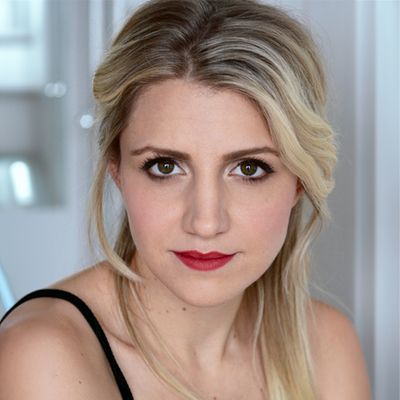
It was an absolute delight to speak with Annaleigh Ashford today on how she constructs a character, her advice for auditioning, and her favorite memories of performing in Legally Blonde. Annaleigh Ashford is a Tony Award-winning actress for theatre, film, and television... Read More
From the show: Broadway Biz with Hal Luftig
Guests
Featured Shows
About
It was an absolute delight to speak with Annaleigh Ashford today on how she constructs a character, her advice for auditioning, and her favorite memories of performing in Legally Blonde.
Annaleigh Ashford is a Tony Award-winning actress for theatre, film, and television. Her Broadway credits include: Sunday in the Park With George, You Can’t Take It With You (Tony Award, Drama Desk Award, and Outer Critics Circle Award), Sylvia, Kinky Boots (Clarence Derwent Award, Tony, Drama Desk, Outer Critics Circle nominations), Wicked, Hair, Legally Blonde the Musical. Off Broadway: Sunday in the Park with George (Encores!), Midsummer Night’s Dream (The Public Theatre’s Shakespeare in the Park), Rent (New World Stages), Dogfight (Second Stage). Betty on Showtime’s critically acclaimed Masters of Sex. Other TV/Film: Bad Education, Unbelievable, Younger, Late Night, Annaleigh Ashford Live from Lincoln Center, American Crime Story: Versace, Second Act, The Rocky Horror Picture Show, Law & Order SVU, Smash, Unicorn Store, Sex and the City, Better Off Single, Top Five, Rachel Getting Married, Frozen. Upcoming for Annaleigh: B Positive (CBS); American Crime Story: Impeached.
To catch Annaleigh in her latest role, follow her on Instagram @AnnaleighAshford.
Transcript
This transcript was automatically generated and might contain errors.
[0:00] Annaleigh Ashford: It's the little details that make them unique. You know, you can play a girl who grew up in Missouri and got a job at 18 and now she's working at a pie counter. Um, and that's all you know about her, but you can take it a step further. And why is her accent the way she is? What was her grandma like? Why is she wearing that brooch? Where'd she get it from? Why does she like cherry pie the most? These are all things that the audience doesn't need to know, but if you, the actor know them and you create another dimension to this person, you just make them more human.
[0:39] Hal Luftig: Hi everyone. This is Hal Luftig with my Broadway Podcast Network show, Broadway Biz, where every episode I will chat with my friends, some of the top theater professionals in the business about the business of Broadway. I'll join the Broadway Biz. You'll be a Broadway wiz. You'll learn to raise cash to open your smash. You'll be all the rage from the patron stage. In no time you'll know the business of show, the greatest job there is. So join our squad as we unplug our things Broadway. Let's get busy with the Broadway Biz.
[1:32] Hal Luftig: My guest today is singer, dancer, and actress Annaleigh Ashford, who, in my opinion, is one of the brightest stars in show business today. Annaleigh first blew me away in her Broadway debut as Margot in Legally Blonde. She also originated the role of Lauren in Kinky Boots. Annaleigh is as delightful as she is talented. I can't wait to share memories of Blonde and Kinky with her on this episode of Broadway Biz. Hi, Annaleigh. How are you this morning?
[2:03] Annaleigh Ashford: I'm good, Hal. How are you?
[2:07] Hal Luftig: I'm really good. I'm really good. Hey, how's the family? Everybody good?
[2:11] Annaleigh Ashford: Yeah, everybody's great. We're oh, can you hear that? It's a child screaming in the background. I don't know if you can hear that. I've got an almost four-year-old who um he's really well, I wonder what's happening now. Probably he didn't get a toy that he wants, you know. We're just when you're under the age of five, you just express everything loudly. Uh he's he's really doing out loud what we're all feeling inside. That's what's happening. But yeah, we're safe. We're safe and healthy.
[2:45] Hal Luftig: That's good. And that's what you gotta love about kids. You know, they're as when they're not adults yet or even young adults, you know, they have no filter. You know, they just say what they think, and um, you gotta love that. You gotta admire it, and you gotta think like when did we, or what point did we lose that ability? You know, not that it's always a good thing, but they just say what they think, and it's so honest and true and you know, candid.
[3:11] Annaleigh Ashford: Yes, there's also there's like an element of uh magical bipolar that happens with children that's really inside of all. You know, like it's just like right before I came in to do this. He was like hugging me and giving me like really sweet kisses and telling me he loved me, and then uh he he was not just now outside. I don't know what's happening. There's a major timeout happening. But anyways, yeah, we're great. How are you, Hal?
[3:37] Hal Luftig: I'm good, I'm good. We're all okay. You know, we um knock on wood, we're healthy, we're safe, um, just like everybody else, want this to end so we can go back home to Broadway. Just, you know, miss it. I mean, miss it. And I think everyone's kind of feeling that. I miss going to the theater every night. I miss going backstage and seeing the company. I miss, you know, just walking in the front of the house the way a theater smells, you know, kind of thing. I just miss everything about it. So but you know, we're gonna get through it and we will be back. I know that. And um, you know, everyone's just you know, I'm as good as everyone else. So, but thank you for asking.
[4:17] Hal Luftig: You know, I just wanted to say one other thing about your son before we move on. I remember when I found out that you were pregnant, and I I remember thinking that kid is the luckiest kid in the world. He doesn't know it yet, because he has this great mom. You know, this this smart, funny, almost irreverent, you know, woman who's who's gonna be, you know, the mom. And I just thought, what a lucky kid.
[4:43] Annaleigh Ashford: Oh, Hal, that means so much to me. That's so sweet. I'm gonna carry that with me today when I'm going, Why are you screaming? Why are you screaming at me? Send him to me, I'll tell him. I'll tell him.
[4:55] Hal Luftig: Um You know, Annaleigh, when I was thinking about this interview, I I started thinking about when, you know, when I first saw you, when I first noticed you, and I remembered it was the Legally Blonde audition. You came in and it was you know, uh you were what I tried to describe to people when they ask what how should they audition. And I always say, you know, be yourself. Totally be yourself, don't try to be something different. But if you can, do a little something that that pops out. So, you know, we see a lot of people when we're auditioning. So, you know, if you could do something like that without going, you know, crazy or distracting, it it's fun. And I remember you came in with the funniest best pair of shoes I had ever seen.
And so like you popped out and then you auditioned, and it was one of those moments where we all just looked to each other and said, That's it. We don't we don't have to go in, that's it. You know, and there you were. And that was when I first came into the orbit of Annaleigh Ashford.
[5:59] Annaleigh Ashford: Oh Hal. You know that that audition too. I thought that I bombed. I'd like I've I'm like famous for not knowing how it went in the room. You know, like when I teach and stuff, people will be like, How did you, you know, when we talk about auditions, I say, some of us know how it went in the room and some of us don't. I'm one of those people who doesn't know how it went in the room, especially when it's musical theater auditions, when it's like this TV film for somebody when I'm just acting, not having to also sing, I have like a better gauge on what happened. But oh my goodness, I walked in, I had these like shoes that were sort of like really elevated jelly shoes. So if anybody lived through the 80s, they know what a jelly shoe is, but um they were like clear jelly shoes, but they had a heel on them and they had a big pink bow.
They were just the weirdest shoes. I found them when I was on the road with Wicked. I did the first national tour of Wicked, and I used to like scour every TJ Maxx in the country, and I think I found them at like some TJ Maxx in Ohio, and I was like, these are the weirdest shoes, I have to own them. Um, and I thought they were perfect for Legally Blonde because Marg would have worn like weird plastic shoes like that because she would have been like, I love Barbie, and I think these look like Barbie shoes.
[7:15] Hal Luftig: Well, it you know, let me give you a little hint about how it worked in the room. It you really did well.
[7:22] Annaleigh Ashford: Thank you. I remember leaving, and I uh it was at the new 42nd Street Studios, and it was the first time I'd auditioned there or been in the building, and it was like, oh, Broadway, because it's such a fancy building. And at that time it was like 2007, so it was very fancy. And I went outside and I cried on the steps of the new victory, like just sat there and wet wept, you know, those little steps that are right next to the theater. Oh, yes, yes, yes. Sat and cried, and then I called my manager and said I I blew it. It it's not gonna go any further. And she was like, Oh, okay. And then the next day she called me to tell me I got the job, and I remember being like, What? No, this is not a funny joke. Why are you doing this to me right now? And she was like, I'm not kidding you, Annaleigh.
[8:07] Hal Luftig: So there you go. If I remember correctly, we we discussed amongst ourselves running out and catching you and saying that, but I think Bernie Telsey, who was our casting director, said, No, no, no, no, no. Even though you know she's the one, there are other women coming in, and you don't want to just sort of deflate them before they walk in the room, or you know, you're kind of saying, Why bother? So we did, you know, we we did finish, but we it was a it was a foregone conclusion. So hey Annaleigh, when did you first realize you loved performing?
[8:40] Annaleigh Ashford: You know, it's such a great question, and I get asked it a lot, and I always end up like having a moment where I like I really asked myself that question, and the answer is always the same. And I'm really careful about answering sometimes with young people because young people are still really finding their way, and some people didn't come to it until a little later. I can't remember not wanting to perform. I just, it's such a part of my marrow to want to tell stories. And I see to my little guy right now, you know, he's constantly wanting to put on costumes and recreate what stories he loves. And I think it's such an inherent part of us as humans. And also I think right now during this really interesting time, we're really uh aware of how much storytelling helps us process and pastime and experience traumatic events and all those things.
So storytelling is integral. So for me personally, I don't remember not wanting to be a storyteller. And also I remember getting kind of my first like laugh as a little guy. I used to do this is so weird. I used to do SNL impressions when I was a little girl at like my parties, like for adults. I used to like get four-year-old, four years old too, like Linda Richmond from Coffee Talk. It's so weird. Such a creepy little old soul. But anyways, um, I loved the not just like the way that it made me feel to get a laugh as a little person, but it was more about like how it made other people feel and the community of it. And so I begged my mom to let me take dance class. She was a she's an elementary school art teacher, so she put me in a bunch of sports, and then we finally, when I was in first grade, we found a dance studio that was really close to our house, and it ended up being like so kismet and such a god thing.
I ended up uh I talk about it in my club act, I end up working with this amazing voice teacher, dance teacher, extraordinaire named Kit Andre, A N D R E E with an accent, and she was just so flamboyant and fabulous and magical and loved Broadway. And I really got my start with her, and then I did a lot of theater in Denver. The local Denver theater scene in the 90s was fantastic. And the first show that I ever did was at the Gay Theater of Denver, which was called the Theater on Broadway. Um and it's on this street called Broadway. I did Ruthless the Musical there, which Laura Bell Bundy created originated the role of Tina Denmark, which is always sort of fun. And my grandmother was played by a drag queen.
So I started things off right. I started things off the right way. Everybody was so into it. Everybody was like, you know, they felt cultured. They were like, not that they weren't cultured, but you know, they felt not only were they a part of like the broader cultural scene because they come from a sports background. Um, but then they also got to be a part of like a really fabulous, magical gay culture. And in the nineties, there was still such a need for um AIDS advocacy. And I always felt like as a young person, I was really lucky to be a part of that conversation and movement and understand how important it was and help people in my community um who were struggling with the HIV uh epidemic, which is just another thing that's so applicable to the experience that we're, you know, kind of navigating now. The gay community is like, yeah, we know what this is, we know how to deal with this. It's very true. Sad but true.
[12:04] Hal Luftig: So you moved to New York from Denver at a very early age, correct?
[12:09] Annaleigh Ashford: Yeah. I actually came to New York for college. I moved, I graduated from my husband always makes fun of me when I always say this, but it's part of my story. I'm not bragging. I graduated from high school a year early just because I was I figured out how to do it online. It was before people were doing things like that online, and I figured out how I could make it work. And I got my equity card at a local theater and I uh went to Marymount Manhattan College right after I turned 17. So yeah, I it was New York has been my home longer than Denver now, which is crazy.
[12:40] Hal Luftig: Well, we love having you. We love having you. So what was your first couple of years in New York like? Did you ever have one of those I you know, I mean a mistake moment, so what the heck am I doing here moments? What was it like?
[12:52] Annaleigh Ashford: Oh Hal, I mean, the world of Broadway actors, uh there's quite a few who I'm not putting this down, this is a great thing, but if they came from a really um top-tier university, then they had a pretty good showcase coming out of school. And I always tell kids like, go for that, because the showcase and getting out of school and into the business is kind of the hardest part. It's this bridge. And I came to New York as a college student and I had an equity card. So I went to course calls and EPAs, and I went to everything for three years. The only callback that I ever got was from an open call for Hairspray, and it was because Jerry Mitchell ran the call and it was a dance call. So I got a callback from the dance portion of an open call for a Hairspray call and by Jerry.
Isn't that amazing? It's like Jerry's the only one who ever called me back. And it was so important for me because it came at a time where I was like, should I be thinking of doing something different? Nothing is going, you know, I'm not getting one callback. I would go to four calls a week sometimes. And I know people who like got an agent right out of school and they just never went to an EPA or a course call. And I just think it's really important, even if you have an agent that you go experience one someday, um, if you have it, because they're really challenging for the spirit.
[14:09] Annaleigh Ashford: I feel like that time in my life was really integral for building sort of the foundation of my strength as an actor because you're gonna encounter times of quiet in this business throughout your career. No matter how successful you get, no matter how many words you have, you're still gonna have a moment. There's some really famous, fancy people that I know that they still lose jobs to other fancy, famous people. You know, at every level, you're gonna lose a job because of this or that. And this sense of rejection can be overwhelming. So you have to learn how to navigate it. So those three years really prepared me for that. What I was not good at was having appropriate material in my book, which I didn't realize until later.
I was singing like all the wrong songs, and it just wasn't my time. It wasn't Beshared yet, you know, it wasn't meant to be. So it didn't really happen for me until a couple years later. And actually from our showcase, a great choreographer named Larry Fuller was doing an Evita revival, and he was friends with one of the professors at my college, and so he came to the showcase. I did not get one callback from an agent or manager, but Larry Fuller called me in to come in for Evita, and from there I met a casting director who then brought me in for a couple other things and brought me in for what was then called Feeling Electric at the Nymph and is now called Next to Normal. So I played Natalie in Next to Normal at the Nymph, and that was really like a big break for me.
So yeah, that was kind of my start. But yes, Hal, I'm glad you asked. It was a painful three years. But you know, I'm hearing it, and I just think you know, the brilliance of what you just said of the need to experience things to learn about the process, which is important, but learn about yourself, your strengths, your weaknesses, you know, learning how to toughen up a little bit.
[16:09] Hal Luftig: And I have to give you a ton of credit because I have been on the other side of many an EPA. I gotta tell our listeners who don't know what an EPA is, it's an open call for anyone who's in equity, correct?
[16:26] Annaleigh Ashford: Yes. And it's EPA's equity principal auditions, and then there's an equity chorus call, and then an open call is non-equity and equity.
[16:38] Hal Luftig: Yeah, and hundreds, literally, I'm not exaggerating, show up for these, and everyone's given a number and they go in order. They get a number by the time of their arrival. And I have been, I've seen people who are there at 4 a.m. so they can get in the top, you know, 50, and you get a very limited amount of time. You get to sing like what, 16 bars of something? And that's pretty much all you get. So I've seen how tough that is for the actor or actress, and how it could get really deflating really fast, especially when I heard you did like three or four of those a week. I'm like, oh wow. I think that's great. I didn't know that.
[17:22] Annaleigh Ashford: I think that's great. So moving along with your career, I'm proud to say your Broadway debut was Margot in Legally Blonde. I've always wanted to know what was it like for you to step into a role in such a famous film and even into a character that was very pronounced in the film? What was that like?
[17:46] Annaleigh Ashford: You know, it's such a great question because it's sort of like something that's followed me throughout my career. I have had to play quite a few famous characters that I've revived or replaced in, or brought from film to the stage. So I always sort of try to stick with the basics when I'm first creating, and what does the character want? How are they gonna get it? What's the obstacle? What are the relationships, you know, to the other people? And then also just sort of who this person is, and really not just all of that, but the physicality has always been so important to me. And there are certain things when you are taking from a film that's iconic or a role that's iconic, or you're doing something like reviving Sunday in the Park with George, and you've got the beautiful shadow of Bernadette Peters.
And I don't hesitate to use the word shadow because I mean it in a positive way. It's like a beautiful magic shadow, like oh, I want to live in that shadow forever. I felt that it was important in both scenarios and also some other roles that I did. You have to take just a piece here and there from what they gave you, and that can be physical, that can be a vocal quality, just a hint of it to kind of pay homage to the work that they did and the creation that they made. Because really what they're giving you is a blueprint for the role. So I sort of just like take that blueprint, and then I'm the one that has to build the house. So I'm gonna pick out the shingles and I'm gonna pick out the wallpaper and I'm gonna design it, but they gave me the blueprint.
So that's sort of, and I also say that when I've replaced, it's a little much trickier because you're actually like putting on a pair of shoes that were handcrafted for somebody else's feet and they don't fit quite right when you first put them on. And it takes a couple weeks for them to kind of mold to your feet. That's always kind of the way that I feel about replacing. But yeah, that's sort of how I tackle it. Stick to the foundations of the craft of the acting, and you'll find your way, but then also just pick a couple little details to kind of pay homage to.
[20:07] Hal Luftig: Brilliantly said, brilliantly said. Annaleigh, just stay with Blonde for a second. They always, you know that expression never work with animals or children on stage.
[20:16] Annaleigh Ashford: Oh, yeah.
[20:17] Hal Luftig: You had to create this wonderfully defined, funny character, which could have very easily fallen into caricature, you know, just by the nature of who Margot is, and you kept it very real, and even the scenes with Bruiser, the Chihuahua. And I wanted to ask you about that. What was it like for you to have to learn, you know, to do that? I mean, it can't be just like normal everyday learn your lines and stuff, right?
[20:51] Annaleigh Ashford: No, you know, yeah, the other thing with everything that I did with Bruiser, which sweet Chico, Chico passed just over a year, like just almost a year ago. And he was such a magical dog, and he was one of the most amazing things about Bill Berloni, our dog trainer, is that he finds these incredible rescues and rehabilitates them and then they're show dogs. It's unbelievable. They have amazing lives. And they're so loved. One of the things about Chico was he was a trickier dog. And for some reason, thank God, he came to me right when I met him. And I remember Bill said, pick him up, pick him up right as he was coming to me. I hadn't, I actually did a play a few years back called Sylvia, where I played a dog.
So I did extensive dog work where I did dog training and I took my dog to do sheep herding because she's an Australian shepherd, and I read like 12 books about dog behavior. But even back then, I just somehow had the impulse to do all the right things with Chico. We just connected and we loved each other so much, and it was really important that me being the person that created the role and set that back, you know, connection up with Chico so that he could do it with other people when I left the show, or if another study was on, or whatever was happening that he had flexibility because when we first started working with Chico, he didn't have very much flexibility. So he really was just with me and Laura Bell most of the time.
And he did great and he was so incredible. And I knew on the first night, Bill really prepped me properly. Like the first night, I really think that he's gonna have a harder time with the energy of the audience. It's gonna take him a couple shows to get used to it. And sure enough, he came out and he didn't bark. So I remember I just had the impulse. I was like, we gotta improv. So I just picked him up and I pretended that he was talking in my ear. Do you remember that?
[22:40] Hal Luftig: Yes.
[22:41] Annaleigh Ashford: I thought that was brilliant. That was great. And the audience went along with it too.
[22:46] Hal Luftig: Oh, yeah, they didn't know. They're like, okay.
[22:48] Annaleigh Ashford: He had no idea. And then he got great at his trick, but we practiced it every day right before the show, every show. And that dog and I will be connected in spirit and love forever. But the other thing in terms of the acting element, I knew when I was creating sort of prepping for the audition that Margot, much like another character that I played later on, Essie, in You Can’t Take It With You, Essie was a terrible dancer but didn't know she was terrible. Same thing with Margot. Margot is not very intelligent in many of the ways that we see intelligence and like listening to people and understanding what they're saying. Yeah, like she just is not really quite getting everything that's happening around her.
But she does not know that, and she thinks that she's smart. And the other thing about Margot is she is a genius in other ways. Like she actually can talk to dogs. And I always imagine that she probably could talk to spirits from another dimension, you know. Like she had other gifts.
[23:48] Hal Luftig: I agree, I agree.
[23:49] Annaleigh Ashford: I always, that's what I meant earlier when I said it could have very easily fallen into caricature. You gave it some real heft that you, it wasn't just a dumb person, you know, there were, she had other gifts with, and she had a gift with people, the way you and the sorority, you know, the sorority sisters, you know, all interacted. It was very clear that Margot wasn't all she appeared to be. And I think that's a big tribute to you because, you know, that necessarily wasn't in the writing, but you just found it in the character.
[24:25] Annaleigh Ashford: Thank you. I always enjoyed watching how you grew with that role.
[24:31] Hal Luftig: But now we're gonna talk about another role, and that's, you know, you've done TV, you've done movies, you were on a series which was one of my favorites, Masters of Sex. And you created what started as a very small role and grew and grew and grew, you know, as the series went on, which again I have to just attribute that the writers and director realized at some point, this girl has gifts. Let's do more with what she can do. Can you talk a little bit about the difference between creating a role for Broadway and creating a role for television? What were some of the things, different muscles you had to use for that?
[25:11] Annaleigh Ashford: That's such a great question because they actually, they all come from sort of the same foundation for me. The technique of how I create a role, how I approach a scene, it's the same for TV and film. And I've always, you know, sort of believed that the magic is in the details with everything in life, but especially in the craft of acting. You know, you can do a broad stroke and it'll be great and it'll be smart and funny and all the things, but what we love to watch is detail. What makes us interesting to watch as humans in life. Like if you go sit on a park bench with your mask on and watch people walk by, you know it's the little details that make them unique. You know, you can play a girl who grew up in Missouri and got a job at 18 and now she's working at a pie counter, and that's all you know about her, but you can take it a step further.
And why is her accent the way she is? What was her grandma like? Why is she wearing that brooch? Where'd she get it from? Why does she like cherry pie the most? These are all things that the audience doesn't need to know, but if you, the actor, know them and you create another dimension to this person, you just make them more human. So I think in every character that I work on, I try to take that extra step, make the extra details. And I think in the case of Betty, you know, I only had a couple scenes in that first pilot, but I connected with her so deeply. She's really different from who I am as a person in life, which was the case kind of of quite a few of the characters I play. And I just really fleshed her out and made her as real as I possibly could.
And then I also was really lucky on the page she was fantastic. When I read the pilot, I actually went in for a different role, but I kept reading the role of Betty and being like, this is the part that I would love to play. This is an incredibly fascinating woman. This is like a woman who is a lesbian in a time before she could be out as a lesbian, but she was also a prostitute, so she was treated terribly by men. But she was standing up for herself with this man who was so many levels above her in cast, you know, in terms of status and privilege, and she was standing up to him and asking for what she wanted and needed. And how do you become that woman? So anyways, I think that I got really lucky and got to play a really interesting character.
She was so fascinating on the page, and then I just took it that step further and made her even more detailed, and that I think is a reason that there was a need for her to come back. You know, she was really only supposed to be in the pilot. And then when they called and said we're gonna continue the character on, we'd like her to recur, I was like, oh, what a miracle. And I was just so grateful that the writers, creator Michelle Ashford thought that she was as interesting as I thought she was.
[28:08] Annaleigh Ashford: She was just the character that I couldn't keep my hands off of. I thought she was so fantastic. So that was just like an overwhelming blessing. And then the fact that they kept bringing me back was like a miracle. And Betty got to have this incredible storyline. It was just such a gift. It was a great series, and you had a great role and you were, you know, fantastic in it. I just wanted to ask, you mentioned something about when you think about the development of a character like what her grandmother was, or would she wear this brooch or you know, this set and the other thing. In when you were in Masters of Sex, were you able to ask for certain things that you thought Betty would have? Were you able to ask like for a brooch or you know, a bracelet or a different kind of costume?
[28:56] Annaleigh Ashford: Yeah, absolutely. You know, one of the great things about the collaboration between actors and specifically wardrobe and props. Those are like the two areas where the showrunner, they were always so kind and like open to anything I wanted. When we were working on the wardrobe, there were times I always felt so simpatico with wardrobe on that show. There was just we'd come in and just play the whole time. We had a blast. The costume designer was just fantastic and did beautiful work and always had such an interesting point of view about Betty. Betty was a woman who she probably would have looked really different in 2020. That woman would have looked extremely different, but in the 1950s and 60s, she was having to hide her sexuality, so she was having to put on quite a bit.
And also women, ladies of the night in that era were really specifically trying to copy certain things that were happening in pop culture and like movie magazines. So we drew a lot from that. And then when I became a secretary on the show, the props department, I created this backstory that nobody ever saw. But I really thought that Betty was a big baseball fan. And my husband is a St. Louis Cardinals fan, and the show took place in St. Louis. So I said I asked props, I was like, is there something St. Louis Cardinals we can get on my desk? Nobody will ever see it except for me, but I just think it's really great. So he got me a really cool pennant from the 50s, and we put it in my pen cup on my desk.
And you can probably spot it if you looked real hard for it. But little details like that, that again, you may not even hear or see, but you're gonna feel them as an audience. It's just the magic's in the details.
[30:43] Hal Luftig: I love being able, you know, to hear that and know that an actress, you know, can do that because we're gonna jump to Kinky Boots in a second, but I think that is just so important, uh, what you said, you know, about having things around you, almost like a blanket of things that help you develop, you know, that character. I'm gonna remember that. See, I learned things on this show too. So let's talk about Kinky Boots. I have to say, you know, that for me it was, you know, a pure joy working on that show from the very beginning, and you were a big part of it. What was that experience like for you? Now creating something that actually in the film was a lesser role, and you were being asked now to expand on it in a much bigger and broader way.
[31:32] Annaleigh Ashford: Yeah, you know, I remember watching the film, I mean, way before I auditioned for the first reading that I auditioned for, and at the time, I was like, okay, this character, I remember being like her function in the story is so important. She helps get the wheels rolling. She's the one who challenges him and helps him think outside the box and also connects him to Lola. So I knew there was something there, and I also felt like there was an opportunity for her to, as a character for us to take another step with her. And I always, I am not a bold, I am bold in my work, but as a person, I would have a harder time telling my boss. I would have a very hard time telling my boss, like what you're doing is stupid.
You need to like innovate and do something better. Like you need to get with the program. You need to like look into a niche market. Like I would never be able to tell my boss that. But Lauren did. So what is that kind of person? And where does she come from? And that's how we kind of started down our path with Lauren and how she grew and how she became sort of this tough cookie. I always believe that she came from sort of an extremely blue-collar, maybe rough household. And that's why I really wanted her to, I really looked, I tried to really do my research about the people of Northampton and also what it feels like to be in a factory town that's dying, which is super relevant to so many places in Middle America.
And so, what does that culture feel like and look like? What does somebody who doesn't have much opportunity, but is so smart, so able and willing? What does this person look like? So that's how I kind of came up with Lauren. And then also I had that, you know, genius of Jerry Mitchell and Harvey Fierstein and Cyndi Lauper to continue to create and build. And I remember Harvey just, especially when we got to that final workshop that we did before we went to Chicago, Lauren really blossomed. Everybody sort of just like without talking about it, I think took the next step with Lauren and she became the spitfire that she is in the show now. I mean, would you agree with that? I feel like that's kind of when she blossomed. We figured out who she was.
[33:51] Hal Luftig: Yeah, that's true.
[33:56] Annaleigh Ashford: But it's one of the amazing things about Kinky Boots for me too, especially was I had done like six different pre-Broadway workshops, readings slash workshops, and I did not continue on with those projects. When they went to Broadway, they would recast the role that I had helped develop. And sometimes that happens because I'm not a match. Sometimes that happens because, you know, when you're helping develop, you help figure out what the role is, and they wanted to go a different direction once they helped, you know, I helped them figure out what it was or whatever. And that is part of creation, and that is part of collaboration, and I'm really proud of that. And I have no sour grapes or hard feelings about that.
But I will say it is a challenge of being an actor to be passed on when it goes on to Broadway. It was, you know, just a challenge that I had sort of experienced like six times right before that. So to have Kinky Boots be the one show that I continued on with was just the best because Lauren is like part of my soul, you know, just part of my marrow. And the show is part of my soul and part of my marrow. It's like one of the best things that ever happened to me in my life, you know. You know, it's like in the top 10 of like having a child and getting married, doing Kinky Boots, you know. It's truly, it was truly a gift, and it was something I was so proud of. I remember the first time we did the show in front of an audience in Chicago, and even when we did it just for a room of investors who were possibly thinking about, you know, joining in to make the show happen, the heartbeat of the show hit the back room.
You know, and I remember looking back there seeing you and Daryl and Jerry and Harvey and Cyndi and you guys just having like tears run down your face at the end of our first read-through in front of investors because we all knew it didn't matter if they wanted to invest it. We were invested in it. We thought the show was beautiful and it meant something and it was powerful and it was impactful. And who knew that it's even more impactful now?
[35:57] Hal Luftig: Yeah, right. I mean, that show really grew with the times.
[36:02] Annaleigh Ashford: Yeah, it really did. Annaleigh, you spoke earlier in our conversation about when you were young and you know you wanted to, you know, perform because the feedback you got from the audience just felt so good. I have to point out to anyone who might be listening who hadn't seen Kinky Boots that your character of Lauren every single night stopped the show with "History of Wrong Guys." Every single without fail.
[36:27] Annaleigh Ashford: Without fail. And I wonder, you know, when you think about fulfilling, you know, needing this to fulfill kind of, you know, who you are as an actress. What was your, what was going through your mind when like I remember a couple of performances, people stood up when singing it.
[36:44] Annaleigh Ashford: Yeah. It like resonated with like not only every woman in the theater, but you know, some men too.
[36:52] Annaleigh Ashford: It's so crazy. I know honestly how I like was afraid that we were gonna have to cut the song, like for real. When we were out of town, I was like, Oh, we may end up cutting the song. I was just like prepared for it because we had so many, we had so much story to tell. I didn't know if we needed my story also. So that's always, that's another like example of me not knowing what's happening. But when I remember when we did it in front of my eyes for the first time and I went, uh-oh, and I got a laugh right away. I was like, okay, people are connecting with this girl's story because first of all, everybody knows what it feels to sort of be like the underdog because I think Lauren is truly an underdog in the show, and then because she's not the one that Charlie's with at the beginning, you know.
She's the blue-collar girl. She's everything that Nicola isn't. You can't be a human in the world and not have had a crush on somebody. So I think everybody relates to her feeling those first feelings of a crush, where you're like, oh my gosh, am I gonna throw up or am I gonna put my pants or am I in love? Like, what's happening? So it's just sort of that beat, that first moment. And then when it comes to like the connection between the audience and the performer, and I'm so lucky that the song afforded me this. It was truly a moment that you get to have that's very singular, where it's like, okay, I'm telling you my story, so I'm one piece, you're the audience, you're another piece, and then there's this thing happening between us that's a third piece, and we all feel it together and it's collective.
And bun dun dun dun really set me up for having that time with the audience for the four and a half minutes that I got to have it with them, where we all got to explore the pains of having a crush on somebody. So I really, to be honest with you, I yeah we'd have a good house and I'd be like, oh we connected but I never if you asked me if you saying that it stopped the show I'm like what? No it didn't. That's like so crazy to me. No, it just it was a moment where we all, me and the audience got to commune over having a crush together. But so that's overwhelming to me. But what I will say is I was constantly for the year that I did that show year plus we did out of town I was always trying to make sure I was grounded being honest connecting with the audience listening to the audience listening to myself surprising myself trying to stay in the moment because that's what keeps it funny.
[39:28] Hal Luftig: I couldn't agree with you more and you know for that first year year and a half as you say, I saw most performances, you know, at some point or other and I have to agree with you you kept it so honest you you never did that thing like the term is called phoning it in. You know, you could always tell that you were right there. You were present. You were reacting to the audience reacting you were reacting to whoever was playing Charlie at the moment. And it became very real especially when you told the story about what a person leaves behind isn't what's in their pockets. I know for a fact that people walked out of the theater very very moved by that and partly because of your honesty your vulnerability or truthfulness in telling that every single night without it becoming you know routine for you. It was like you were doing it, you know, for the first time.
[40:22] Annaleigh Ashford: I'm always amazed that actors such as yourself, you know, can do that. Because it has to come a point, right? Where you're just like, you know, how do I dredge this up, you know, the freshness of this after you know doing it for a year and a half.
[40:38] Annaleigh Ashford: Absolutely. Yeah, and there's that's always when I when I teach, and you know, we've been doing so many Zoom masterclasses recently, which is fantastic. It's like all these young people are getting so many people to come and share their, you know, their craft. I always say that I come to the stage with a huge bag of tools, you know, like this may work one day, and then the next day I have to connect to this story in a different way. Coming with that bag of tools has just been immensely helpful, and that's why I continue to work on my craft, and I'm always trying to learn. When I worked with James Earl Jones, he was continu, I mean, the last day of the show, we had a two-show day on a Sunday.
He was he came up and told me and Christine Nelson that he wanted to try something new. And we were like, okay. He was that much of a student, and I'll never forget that. And I always try to strive for that. I'm always trying to continually be present and keep the journey going, and that takes tools and that takes craft. And the same thing holds true for when you're doing TV and film, you just have to do it so much faster. And I always say, like, the one great thing about theater is that if it doesn't go well tonight, I have tomorrow night. I get to try again tomorrow night. And sometimes I'll figure out a line and a scene three months into a run.
[42:05] Hal Luftig: Oh, this is what this means. But on camera, it's like you got the few hours that you have to film your coverage, and that's it. Um, and then it's that forever, it's just captured forever. Both are challenging in different ways, but yes, it is absolutely um a technique to do a show eight times a week for long periods of time. You gotta stay connected and meant and you gotta use a lot of different tools to do that. You know, not being a performer. I never, you know, really thought about it much, except I always notice as a producer, I always notice when an actor or an actress is on stage, and you can tell they are removed from the moment. You know, they're they're saying the right things and they're moving the right way, but they're somewhere else spiritually, I guess, if if you will. Yeah. And the difference and it always, you know, amazed me. You know, eight times a week, you were it was like you were doing saying it for the first time. That's the best compliment ever.
[43:08] Hal Luftig: Annalie, I could not have an interview and not talk about for a few minutes Sunday in the Park with George. Um, it is one of my favorite shows. I weep every time I hear "Move On," because I think it's so much about what we do, the creation of art, you know, and that lyric, you know, don't worry if your vision is new, let others make that decision. They usually do. You know, it just resonates with me because there's so many judgmental people, you know, out there um criticizing or poking what we do, and you know, not knowing how we do it. So I I I I just wanted to talk to you a little bit about creating that role, as you said so sweetly before. Uh, you used the word shadow burner, Bernadette Peters. I was actually going to say, uh, you know, I'm interested in how you took that role. And again, you made Dot your own. Your character, Dot was very much you, and not Bernadette's take on it. Talk a little bit about how you stepped out of her shadow, if you will.
[44:15] Annaleigh Ashford: Yeah, I mean, I approached the role with so much fear. And when I first found out I was gonna do it, I was so pregnant. I got the call, and they were like, um, do you want to do this concert at Encores of Sunday in the Park with Jake Gyllenhaal? You're I mean, the baby's gonna be like six weeks old. Do you think you can do it? And I was like, Yeah, he'll be like six weeks old. They just sleep and eat a lot at the beginning, it's easier. I didn't know. I'm so stupid. So when I was working on the role, I was actually pregnant, which is actually fabulous because she's pregnant for the entire first act, basically. There's something kind of magic about that that I I don't know how to explain to you, but I just it added like a dimension to the preparation for me that uh I couldn't have expected.
So I worked on the role like I do everything else. The one thing I did differently about this is I did sit down and watch the PBS uh recording, and then I I watched it like two or three times, and then I took like four days and didn't listen to the music, didn't open the script, did nothing. I just let it leave my brain. And then I sat down and started working on it from scratch. I literally took it page by page. What does she want? How is she gonna get it? Where'd she come from? And um a lot of the things that were true for the character of Betty were very true for Dot. This is a woman who comes from she's extremely smart. She's so smart, but nobody'd ever taught her how to read. She came from nothing, but because she's so charming and smart and funny and charming, she's able to work her way up the class system through prostitution.
I always thought that Dot was like a pseudo-prostitute, but she was she she probably went from artist to artist and they took care of her. And when she found George, you know, they they're soulmates. And I found that Bernadette's blueprint that she left me was beautiful and immaculate. And then you layer on top of that the lyric and the beautiful scene work by James Lapine and Stephen Sondheim's lyrics are you know the combination, and then you add on top of that the music. Um it's just like next level. It's like one of the best pieces of all time.
[46:39] Annaleigh Ashford: And then Marie was really important for me, like many of the roles that we've talked about. I did she can't, she couldn't be a caricature. Lauren could have been a caricature really easily. Margot really could have been a caricature really easily. When I played Sylvia, she could have been a character caricature. And so I I I remember uh James Lapine telling me, Don't make her too cute when he was talking about Marie. And so I did a lot of physical research about what it would feel like to be in a wheelchair and not walk and what it feels like to be that old. And I decided what was wrong in Marie's body and what was happening and why she was sitting that way. I did a lot of dialect work, I did a lot of work with Joan later, trying to figure out how to make my voice sound old in a healthy way.
So I spent a lot of time on Marie making sure she was real, and my goal was that five minutes into me playing Marie, you'd forget that I was Marie. Um, and so that that's sort of, you know, we all had to sort of acknowledge that I was playing a 96-year-old woman right when I came out. And then hopefully that fades away. And by the time I leave, you know, after "Children and Art," you're like, oh, I forgot that that was a 35-year-old woman, you know. So, anyways, that's how I approached the role. And then I dropped in a couple little homages to Bernadette here and there, just vocal things here and there, and a couple physical things that I just felt were so inherent to the character. And I also felt like we're just important when you do a piece like this. You just have to sort of pay a subtle homage to them. But man, if I thought about it, it was overwhelming. So the other thing is I just tried not to think about it.
[48:13] Hal Luftig: Well, don't tell me what those homages are because uh, you know, I I fell in love with your portrayal when on Broadway, and uh when the world comes back to some sense of normalcy, you guys are gonna do it in London, correct?
[48:28] Annaleigh Ashford: Yeah, we're supposed to do it in the West End.
[48:30] Hal Luftig: Yeah, yeah. Well, I will be the first online when you know they start sales, and you will see me there, I promise. So don't tell me what they are because I look forward to coming backstage and and trying to figure it out myself.
[48:44] Annaleigh Ashford: I can ask you, where were they? I have to I have to figure them out again too. It's been so long. I'm gonna be like, I literally have to start all over. It's amazing.
[48:53] Hal Luftig: Yeah, yeah. I think a lot of shows are gonna have to do that. They're gonna have to figure out and start all over, re-rehearse, you know, get that muscle memory back. Annalie, what if you had a name two roles that you would love to play?
[49:09] Annaleigh Ashford: I would love to play um Mrs. Lovett in uh Sweeney Todd. And I think Martha in Who's Afraid of Virginia Woolf.
[49:22] Hal Luftig: Really?
[49:23] Annaleigh Ashford: Yeah. I think it would be super challenging for me because uh she's so she's so much more rough than I am. But I remember reading um the way that Uta Hagen talks about playing that role. I just feel like uh even if I play it by myself in my living room with my husband, that's I should I need to do it at some point. And also people say that about um The Glass Menagerie too, Laura in The Glass Menagerie, you know. Like, oh I mean Amanda. I don't know. Sometimes I'm like, I think I maybe want oh, I want to play Dolly. That is a part that I want. I know I'm not saying roles that are I I can play anytime soon. Uh these are all roles that I can't play for another 15 years. But yeah, I'd love to play Dolly someday.
When I saw Dolly, I was like, oh, I want to play Dolly. That's like one of the best parts ever. And I also now I think the time is closing, but I feel I really wanted to do Charity. I I just want to do one more dance show before like my hips can't do it. And I want to do a Fosse show because that's what I grew up. The dance studio I grew up. We did just so much Fosse. I've never done a Fosse show. So, you know, obviously, like maybe I'll or maybe I can do Damn Yankees. I don't know. There's a part of me that's like, what are we gonna do when we come back? We have to be very, very particular in what we choose to do because it's you know the constructs of theater are gonna be so much more challenging when we come back.
[50:48] Hal Luftig: That is true. But you've named some really like roles, and as a producer, I'm sitting here thinking, hmm, maybe we should make that happen. Annalie, like most good things, you know, this has to come to an end. But before it does, I have what I call the rapid fire section. So I'm gonna ask you three questions, and all I ask is that you don't overthink it. You know, when I ask it, say the first thing that that pops into your head, okay?
[51:15] Annaleigh Ashford: Okay.
[51:16] Hal Luftig: So here's the first one. What is your favorite musical?
[51:20] Annaleigh Ashford: Gypsy.
[51:21] Hal Luftig: Wow. Good.
[51:23] Hal Luftig: Okay, and number two is what is the wackiest moment you've ever experienced in the theater? And by wacky, it could be odd, funny, weird, you know, just wacky.
[51:35] Annaleigh Ashford: Um, somebody answered a phone in the last scene of Sylvia. Full out answered the phone and had a conversation in the audience. And we and Matthew Browder had to stop the show because the audience was screaming at her. We didn't stop until the audience was literally screaming at her.
[51:52] Hal Luftig: Wow.
[51:52] Annaleigh Ashford: It was crazy.
[51:53] Hal Luftig: Yeah.
[51:54] Annaleigh Ashford: Wow. Good for them.
[51:56] Hal Luftig: I know.
[51:57] Annaleigh Ashford: And then we stopped, and then Matthew did like a weird mind thing where he like looked at the audience and gestured and made them laugh. And then I had to be like, uh, we're gonna take it back a few pages. And then in front of the audience, I looked at Matthew and I said, Where do you want to go back from? He was like, um, I don't know. We both picked a line and then we reset and just did it. Yeah, live theater.
[52:22] Hal Luftig: Good for you guys, good for that audience. Because I usually see that happen and you know, everyone in the audience is like sort of annoyed, but no one says anything, and you know, right?
[52:31] Annaleigh Ashford: And it's it's always that person who takes 15 minutes to find the phone.
[52:35] Hal Luftig: That's right.
[52:36] Annaleigh Ashford: Oh, yes. I know. I always tell young people if you are in an uh if you go to the theater, there's a likely chance that there are people who are uh your grandparents' age around you or older. And I encourage you to just be bold and say, if anybody needs help turning off their cell phone, I'd love to help you because young people know how to turn off their phones.
[52:56] Hal Luftig: Yeah, that's true.
[52:57] Annaleigh Ashford: Wow, that's it. You know what? That's a great public service announcement. I think I'm gonna like insert that in my next show.
[53:02] Hal Luftig: Honestly, Hal, I think the ushers should go through and it should they should say if you have if you are uh need help turning off your phone, because a lot of older people, I think they think that they know how to turn it off and they or they just don't even know how.
[53:15] Hal Luftig: You know, that's that's genius because I've never thought about that, but it's probably very true.
[53:20] Annaleigh Ashford: You said that the wackiest thing was someone answered their phone. So the lesson you learn from that moment was have grace when people's phone go off. Like I know that sounds crazy. I wish that I was Patti LuPone in every way. I wish that I could be Patti LuPone, but I'm not. I wish that I was her all the time. Sometimes I pretend to be Patti LuPone on stage. Sometimes I'm on stage performing and I need a little confidence, and I'll be like, pretend you're Patti LuPone. What would Patti LuPone do? So when I say grace, I mean everybody handles that differently. But when I'm in the audience myself, oftentimes what I just said, usually it's somebody who doesn't know how to turn off their phone.
So it on that point, I have seen people who I've been next to in the theater having a hard time figuring out their phone, and they go, I don't know. It's fine. And I literally will say, Ma'am, do you need help turning off your phone? I'd love to help you. Like I said, that is a million dollar idea, and I think I'm gonna uh insert that into my next show.
[54:18] Hal Luftig: Absolutely. We should actually that should become a new kind of etiquette in the theater that everybody helps each other turn off their phone. And I know that we're in a hopefully by the time we're all in a theater, you won't have to hand sanitize your hands before you touch somebody else's phone.
[54:32] Annaleigh Ashford: I love that that's the first thing I think of.
[54:34] Hal Luftig: Well, we'd have to all wear gloves, you know.
[54:37] Annaleigh Ashford: Anyways. Well, Annalie, thank you so much for joining us today. I I hope anyone who listens to this can just sense, you know, your enthusiasm, your brilliance, your sincerity, uh, the way I do. And it's been such a joy just speaking with you, as it always is, but now we get to do it in public. So I thank you. The theaters will come back, so please stay healthy, stay safe, because one of the first things I want to do when we do is see you on stage.
[55:07] Annaleigh Ashford: So Hal, thank you.
[55:09] Hal Luftig: Oh, I love you.
[55:11] Annaleigh Ashford: And right back at you. You know that's true.
[55:13] Hal Luftig: Thanks again, Annaleigh Ashford.
[55:16] Annaleigh Ashford: Thank you.
[55:17] Annaleigh Ashford: Bye guys.
[55:23] Hal Luftig: Thank you for listening to today's episode. Broadway Biz is part of the Broadway Podcast Network, is produced by Dylan Marie Parent and Kevin Connor, and is edited by Derek Gunther. Our theme music is by Nell Benjamin and Larry O'Keefe. Be sure to subscribe to Broadway Biz and follow us on Instagram at Broadway Biz Podcast.
© Broadway Podcast Network, All Rights Reserved