

This is the second part of my discussion with Tony Award-winning Costume Designer Ann Hould-Ward in which we trace the legacy chain of Broadway costume design expertise that was handed down directly over a 100-year period from Aileen Bernstein to Irene Shariff to Patricia Zipprodt to Ann Hould-Ward, herself... Read More
From the show: BROADWAY NATION
Guests
Featured Shows



About
This is the second part of my discussion with Tony Award-winning Costume Designer Ann Hould-Ward in which we trace the legacy chain of Broadway costume design expertise that was handed down directly over a 100-year period from Aileen Bernstein to Irene Shariff to Patricia Zipprodt to Ann Hould-Ward, herself. If you missed the previous episode you may want to listen to that first.
During our discussion was also touch on the careers of the legendary designers Florence Klotz, Ann Roth, Willa Kim, and Theaoni Aldredge. All in all, these amazing women designed more than 500 Broadway plays and musicals!
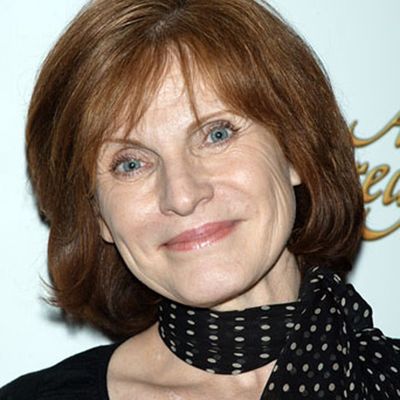
Ann Hould-Ward is the Tony Award-winning costume designer whose work includes the original Broadway productions of Beauty And The Beast, Into The Woods, Sunday In The Park With George, Falsettos, and the revival of The Color Purple.
Transcript
This transcript was automatically generated and might contain errors.
[0:00] David Armstrong: Welcome to another episode of Broadway Nation, the podcast that tells the extraordinary story of how immigrants, Jews, queers, African-Americans, and other outcasts invented the Broadway musical and how they changed America in the process. I'm David Armstrong, and I call this episode Patricia Zipprodt and the Women That Invented Broadway. This is the second part of my discussion with Tony Award-winning costume designer Ann Hould-Ward, in which we trace the legacy chain of Broadway costume design expertise that was handed down directly over a 100-year period from Aileen Bernstein to Irene Sheriff to Patricia Zipprodt to Ann Hould-Ward herself. If you missed the previous episode, you may want to listen to that first.
And as I did then, along the way, I'll chime in with some footnotes in order to fill in some of the details. Prior to our discussion of Ann's direct mentor, Patricia Zipprodt, I asked her about her memories and impressions of Florence Klotz and Ann Roth, the two other legendary designers that assisted and were mentored by the great Irene Sheriff.
[1:16] Ann Hould-Ward: Florence Klotz, known to her friends and colleagues as Flossie, was the six-time Tony Award-winning costume designer of over 40 Broadway plays and musicals. She was born in Brooklyn, New York, in 1920, and after graduating from the Parsons School of Design, she assisted Irene Sheriff on five Broadway musicals, including the original productions of The King and I and The Flower Drum Song. And she also worked as an assistant to legendary costume designers Alvin Colt, Miles White, and Lucinda Ballard. She made her solo costume design debut on Broadway in 1961 with a flop play that ran only 12 performances, but had the good fortune of being produced by Harold Prince, for whom she would go on to design 11 productions, including all six of the musicals for which she received the Tony Award for Outstanding Costume Design.
They were Follies, A Little Night Music, Pacific Overtures, Grind, Kiss of the Spider Woman, and Showboat. Her life partner was Ruth Mitchell, the legendary Broadway stage manager, associate director, and associate producer of 43 Broadway shows, including many of the biggest hits in Broadway history. Together, they were a Broadway power couple. Her career spanned more than 40 years, and she died at the age of 86 in 2006. Anne, tell us about Florence Klotz.
[2:37] Ann Hould-Ward: Florence Flossie Klotz was a very dear friend. I love Florence very much. Florence was about five foot, maybe five one at the max, and she loved a good drink. I will never forget Little Foxes that she did with Elizabeth Taylor at Lincoln Center. And I remember one day, Elizabeth Taylor was coming for a fitting late in the day, like five o'clock in the evening. And Florence's assistant rushes in, and she's got a sack, and he's got a whiskey bottle in it, right? There's that whiskey bottle in the middle of the table in the fitting room, which I did notice when they left many hours later, there was very little left in the bottle. And she often loved a martini during dress rehearsals. That was the story.
One of my favorite Florence Klotz stories was actually the day of Barbara Matera's funeral, which was during the week of 9-11. Barbara passed that week. She had a brain aneurysm. And so for the entire costume industry, it was extraordinarily dark time between what was happening in our city and what was happening right within our world. And Florence was quite ill by that time. And so I got a limo and went and picked up Florence and brought her to the funeral. And then after the funeral, we were going down to the shop to have a little bit of a wait. And my sweet, sweet young assistant was in the front seat of the car. And this has got to be, well, it's 2001, right? And Florence and I are sitting in the back seat, the limo driver's in the front there.
And Florence had at that time, a beautiful long black cane with almost the size of a doorknob looking like a huge diamond on the end of it. And she's so short, she was almost laid out in the seat with the cane. And she said something about when she assisted on Oklahoma. And the assistant, just not understanding, thought she meant the recent version of Oklahoma. And she said, Oh, do you mean the one we've just had? And Florence is sitting there with their big cane there in the backseat. And I look over, I'm like, how is she going to handle this? You know? And to my young assistant, she says, Darling, I only ever assisted on originals. And of course, she was an assistant on the original Oklahoma.
She was an extraordinary artist. She was one tough gal. She had to be. She had a great sense of humor. And she was a dear, dear person who, I mean, think of all the things she did with Hal Prince. So many things that she was a comrade in arms so many very different times. And her sketches, when I was young in the shops, one of the sets of sketches I love to just devour was her sketches. How she drew was remarkable. I then asked Anne about Anne Roth, who was born in Pennsylvania in 1931. And after graduating from Carnegie Mellon, she began her career as a scenic painter. But then she met Irene Sheriff at the Bucks County Playhouse. And Sheriff invited her to Hollywood to assist her on the costumes for the film of Brigadoon.
Then in 1957, she assisted Sheriff on a Broadway play. The following year, she made her own Broadway costume design debut and has since gone on to design the costumes for more than 90 Broadway plays and musicals, including Pearly, The Best Little Whorehouse in Texas, They're Playing Our Song, The Recent Carousel, The Prom, and The Book of Mormon. And she shows no signs of stopping. We're still lucky enough to, and I have the honor of sharing a costume shop still with Anne Roth. And not long ago, we did a new company of Beauty and the Beast for Shanghai. And I had redesigned from scratch the yellow dress that Belle wears. And one day in the shop, Anne Roth was like, that's the most beautiful dress I've ever seen.
She came into the fitting room and I'm telling you, I'm old, but that was the best compliment I ever got. Yeah, it was pretty thrilling. She is an icon, as are all these women, but we're lucky enough. And I think actually in the costume industry, we really do value these people. I mean, I think she knows we think she walks on water. I hope she knows that because we do. And we're lucky enough to still share the planet with her and watch her exquisite work, which she does so much of it. It's amazing the amount of work she is able to produce and the beauty of it, the absolute beauty and the humor in her work.
[7:22] Ann Hould-Ward: That brought our conversation to Patricia Zipprodt. She was born in Chicago in 1925. She had studied psychology and sociology at Wellesley College, but after moving to New York following her graduation, she attended a performance of the New York City Ballet and was so taken with it that she decided to pursue costume design. She began studying at FIT, the Fashion Institute of Technology. Her first exposure to Broadway was in 1956 when she assisted Irene Sheriff on the musical Happy Hunting, starring Ethel Merman. The next year, she made her own costume design debut with a play called The Potting Shed, and this was followed by more than 50 Broadway plays and musicals, including She Loves Me, Fiddler on the Roof, Cabaret, 1776, and She Loves Me Not, Pippin and the original Chicago, garnering her three Tony Awards in the process.
In 1992, Zipprodt was inducted into the Theatre Hall of Fame, and in 1997, she received the Theatre Development Fund's Irene Sheriff Award for Lifetime Achievement in Costume Design. She died two years later at the age of 74. Anne, in 1983, you co-designed Sunday in the Park with George with Patricia Zipprodt. Please tell us how you first came into Patricia Zipprodt's world.
[8:46] Ann Hould-Ward: May I just go back to the Happy Hunting for just a minute, David, because this is a story that I think very few people actually know this story, but it was one of my favorite stories when I could get Pat to tell the story, which was that she and I think Pat had a huge dynamic and ability to go straightforward, but it was involved in a lot of circular thinking around it sometimes. And I think that Irene Sheriff was a much more direct person, so she only ever assisted Sheriff one time, the show you're talking about, Happy Hunting. And she was at lunch one day with Miss Sheriff, and they'd been working on the show for quite a while, and she thought, well, I'm going to ask her now, Miss Sheriff, would it be okay if I called you Irene?
And she said, no, you may call me Miss Sheriff. So that tells you a little bit about what must have been at the base of the relationship. I think Pat was surprised at that reaction. But as she told the story, I believe they did the Out of Town in Philadelphia. It might have been Pittsburgh, but I think it was Philly that they were in. And St. Subert was the producer or one of the producers on it. Abe Burroughs directed it, I believe. And it was one of Ethel Merman's last shows, I believe. And there was a little picket fence that she jumped over during certain sections of the show. Well, for some reason, it became very heated about the picket fence in the theater during dress rehearsals. Now, that went from heated between Abe Burroughs and St. Subert about the fence to when she arrives in a costume that they can't agree on the color on.
And so they are, as Pat told it, on different sides of the theater yelling at each other, like from, you know, one side of the theater to another. And Irene Sheriff is just sitting in the middle in the seats in between these two men like screaming at the top of their lungs about what color the dress should be. But Miss Sheriff doesn't make any response to what's going on. She just sits there. So then it's the next morning, time to prepare for dress rehearsal again, starting at noon. And Pat goes to the theater and she does her work around their assistant work, you know, and goes up to the theater. She can't find Miss Sheriff anywhere. And then it's time for dress rehearsal to start. And the wardrobe person comes running out and says, we can't find the dress that's this dress, the jumping over the fence dress.
Can't find the dress anywhere. Don't know where it is. Don't know what's going on. By which time everybody has arrived in the theater. They've taken their spaces, director on one side, producer on the other side of the theater. And they are running from pillar to post in the theater. They can't find Irene Sheriff. They can't find the dress. So finally, Pat does find the dress in the basement, down in the very basement of the theater, along with down below the dress are several cans of black spray paint. And the dress has been spray-painted black. And Miss Sheriff has left town. For good? Not to be seen again until New York when they made a new dress. It's a great story, right? And Pat, I used to love Pat telling that story because then, you know, it's such a great assistant story.
She had to go up with this black spray-painted dress, you know, left holding the bag. But, you know, I think sometimes when children don't behave, the best way is just to let them know you're upset, right? I loved Pat telling that story. I would try to get her to tell that story. Oftentimes, I think I made her tell that story when she was when she was dying, when she was in bed, you know, and I was just, you got to tell me, you got to tell me because it would make me laugh till tears over. I couldn't imagine what it would have been like to take that dress upstairs. So that was one time that Patricia assisted Miss Sheriff, who I was called Miss Sheriff also. And then how did you come into her world?
[13:05] Ann Hould-Ward: So when I was finishing graduate school at the University of Virginia, I decided I would write to three Broadway designers who I thought their work was quite wonderful. And I wrote to PZ, to Pat, and I wrote to Theoni Aldridge, and I wrote to Tony Walton. And Pat was the only one who was silly enough to actually write me back. And she wrote me back a very short, but lovely card that said, she didn't really have anything now, but let her think about it maybe in the future. And so then David, I went off to France because my husband had a job in France and I got to France and I was really not able to pursue what I wanted to be able to do. So I came back to the States and brought my
[13:37] Ann Hould-Ward: So then I called the backstage phone about 40 times and they'd always be, I mean, I was so stupid, David. Uh, I'd be like, oh, is that so broad there? And they'd be like, well, no, she's not here. And one time I called and they go, here she is. And they handed the phone to her and I'm like, well, hi, it's Ann Hould-Ward. I still really like to come to New York and work for you. And she's like, where are you? And I told her I was in Montana. Well, it turned out her best friend from when she was a little girl in Chicago lived in Montana. So we have this connection and she couldn't believe I'd gotten the number. How did you get this number? And anyway, so she said, let me think about it. So I got off the phone.
I went downtown in this little tiny town in Montana and bought a cowboy hat. And I got a piece of rawhide and I wrote this letter on the piece of rawhide. And it said, dear Ms. Please, please, please let me come to New York and be your intern. I will do anything. I will sweep your floors. I will do anything. Just let me come. Thank you, Annie. And I took an arrow and I stabbed it through the hat and I put that in a box and I put it in the mail to New York City and they got stuck with King of Hearts up in Boston and they didn't come home for like another month. And she came home and there was this note from the post office saying that there was a box and in that was the last day it was there, it would be sent back.
And she sent somebody to go get the box and it was that hat. And so came in the mail and Conrad, Montana in the mailbox came a letter that said, dear Annie. All right. All right. All right. You can come to New York. And so that's how it began, David. And then I came and I was going to intern with her on a show that she was going to do at the Met. And then it was canceled by the time I got here. So I was kind of working around her studio. She got a call from Ben Benson saying he needed an assistant at City Ballet where I don't want to need is Nia's and Le Bourgeois Gentium, which Ruben Territonian was designing. And so I go and I spend the next 18 months as Ben's assistant, really learning like what the heck I needed to know to be of any value to anybody in New York City who's making clothes.
So that was the beginning of the story. And then of course I assisted her on for, I think a year and a half or so before I finally was like, I got to start trying to do some design work myself. But we remained the greatest of friends. She gave me my life, my artistic life. She is my mother. There is no doubt.
[17:06] David Armstrong: So then how did it come about that you co-designed Sunday in the Park with George and then you designed Into the Woods based on her original design?
[17:13] Ann Hould-Ward: Well, nowadays we think of these workshop productions. We do them all the time, David. And we do things like you and I've done where we, you know, take a show and take it around all these places and stuff. We're very used to that now, but when we did Sunday, it was like the first of those workshops Lane had been done, you know, and now we're going to develop a way of doing this. So it was to be at Playwrights Horizons. And I think here was this woman with this magnificent career. And she really wasn't interested in having to be in the basement at Playwrights Horizons all the time. And she was kind enough to say, hey, let's do this together. Now, I still to this moment am amazed at the graciousness of her doing that.
It was hard, David. It was hard because I was a young designer and I thought I should be designing and of course I was in a position where this cherished, honored person of our community was with me. I probably could have handled it better. That went fine. Um, Into the Woods was a more difficult, and I learned a tremendous amount from Sunday, but really it was hard, David. I think those positions are very hard.
[18:26] David Armstrong: Well, especially it sounds like she needed you and she was, I hate to say this word, but using you a little bit to, uh, help her do something she didn't really want to do. And I think, um, we do find an interesting thing with Patricia and I think with artists, it's different. You know, some people, as they get older, the mechanism to want to draw becomes you want to draw more and some people you want to draw less. And she really was at a point where I think she was trying to think about what the career was and what it had led to in her life. I was too young to understand that now I do, David, now I get it, but I didn't understand it. At the time I was too young, I was too naive and I didn't know how to have those conversations with her though.
She was my dear and beloved friend on Into the Woods. We're asked to go ahead and, and we do the out of town of that yet the old globe, and it's a tricky, hard situation. It's very difficult to do it out there. And then it becomes the time of negotiating the Broadway contracts. And there were some problems with what she felt and what producers felt. And it just became a situation where it was untenable for the producers and Patricia to reach a conclusion. And I was allowed to step in and design it. Now, I think the remarkable thing to know in all of this, David, I am not sure that I am a big enough person to then say, hey, you know what? We're still wonderful friends. And she did. And I was at her bed when she died and I would be there every day because that's who she was.
[20:08] Ann Hould-Ward: When that sort of speaks to this whole chain of women in a way, even though I'm sure many of these women were prickly personalities and were not necessarily easy to get along with every moment of the day, but I feel like there's this great generosity of handing this art form down from one to the other. You know, David, I think that it is utterly remarkable. And then the humor. I mean, I remember the night of the Tony's for Into the Woods, she calls and leaves a message on my answering machine, singing a wonderful message about have a wonderful time at the Tony's tonight. You're not going to win. Maria Bjornson's going to win, but I love you anyway, David, but these are people who just like we are battle-hardened people who know enough to love the person shows come and go, right? Shows come and go. We got to love the art and love the people. And I'm lucky enough to experience that.
[21:07] Ann Hould-Ward: I have another remarkable story about Theoni who became a very dear friend. And of course, extraordinary designer in her own right. And she was doing one of her last shows. And I think she was very disheartened by how the industry had changed when I was doing Beauty and the Beast at Barbara Matera's shop again, and we would sit and talk oftentimes and she was, uh, I can't remember what she was doing, David. It was a revival of some Sondheim show for the Roundabout. It's one of her very last things she does. And anyway, we were friends and I love to talk with Theoni, although Theoni and Pat were not friends at all because they'd fought over who got which show really. And anyway, Theoni kept saying, she'd be, oh darling, you're going to win the Tony for this.
You're going to win the Tony. And I'd be like, oh, Theoni, I don't know. This is so hard. This is blah, blah, blah. So anyway, Tony night, I got dressed and stayed in a hotel downtown so I could get my makeup done and stuff. Cause I, you know, I lived a bit out of the city. So I, uh, win the Tony, go to the Tony party and everything, come back to this hotel room in the middle of nowhere in, you know, in the middle of New York City. No one knows who I am. And the phone rang at 9 AM. I'm like, the phone's ringing. Oh my God. Something must be wrong at home, you know? And I pick up the phone. I'm like, hello. And on the end of that phone at 9 AM was a voice that said, darling, I told you so. She found me in a hotel at 9 AM. That's who those women were, David. I think that's who those women were, despite the differences we might have over a show, over this, over that.
[23:07] David Armstrong: Well, I'm so glad you touched on Theoni cause she's the other really legendary costume designer of this period. The three-time Tony Award-winning costume designer Theoni Aldridge was born in Greece in 1922, where she received her training at the American School in Athens. She emigrated to America in 1949 and attended the Goodman School of Drama. Her first Broadway show was Tennessee Williams' The Sweet Bird of Youth in 1959, and she would go on to design more than 100 Broadway plays and musicals, including A Chorus Line, Annie, La Cage aux Folles, 42nd Street, and Dreamgirls. She died at the age of 88 in 2011. Interestingly enough, Theoni is the one who really does kind of invent herself because she comes from Greece.
She goes to Chicago where she meets Tom Aldridge and really, you know, she's working in Chicago, in the Loop, all those small theaters, and then they decide to come to New York and she makes the association with Joe Papp and the Shakespeare Festival. So she is the one, because Willa Kim, who's I think the last of those really great women, I pray I'm not forgetting anybody, but Willa, of course, assisted Karinska. So all of them, except for Theoni, you can see those lines through. And then of course, Theoni made her own lines with people like Marty Pakladinas, who came out of her studio, who were great, great designers, brilliant minds. The Korean American costume designer Willa Kim was born in 1917 in Orange County, California, and attended what is now the California Institute of the Arts.
She began as an assistant to the famed designer Raoul Pendebois on the original productions of Wonderful Town, The Music Man, and Gypsy, and she would go on to design 20 Broadway shows, including Bob Fosse's Dancin', Sophisticated Ladies, and the Will Rogers Follies, and she would receive two Tony Awards. She died at the age of 99 on Vashon Island, Washington in 2016. The amazing women that I've profiled over these past two episodes in total have created the costumes for more than 500 Broadway plays and musicals, and in the process have created unforgettable images that have lingered in the minds of theatergoers for generations. And most importantly, they have passed down their artistry and knowledge to a new generation of talented costume designers.
[25:44] David Armstrong: Broadway Nation is written and produced by me, David Armstrong. Special thanks to the wonderful Ann Hould-Ward, who most recently designed the costumes for the London production of The Prince of Egypt, and I can't wait until the pandemic is over so that we can see them. And of course, I need to thank KVSH 101.9, the voice of beautiful Vashon Island, Washington, and especially everyone at the Broadway Podcast Network.
© Broadway Podcast Network, All Rights Reserved