

To celebrate Women's History Month he is the first of two episodes recorded during the pandemic about the history of Broadway Costume design with special guest Ann Hould-Ward. Irene Sharraff is the legendary Broadway costume designer whose incredible 56-year career spanned from 1933 to 1989... Read More
From the show: BROADWAY NATION
Guests
Featured Shows





About
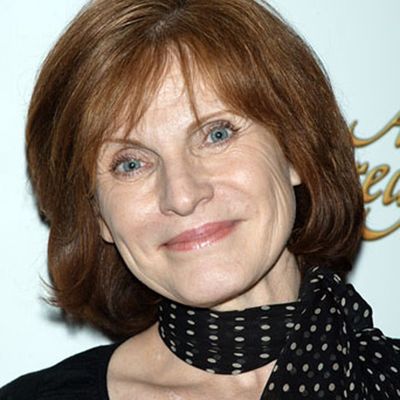
To celebrate Women's History Month he is the first of two episodes recorded during the pandemic about the history of Broadway Costume design with special guest Ann Hould-Ward.
Irene Sharraff is the legendary Broadway costume designer whose incredible 56-year career spanned from 1933 to 1989. She designed the costumes for more than 52 Broadway musicals including As Thousands Cheer, Jubilee, On Your Toes, The Boys From Syracuse, Lady In The Dark, The King And I, West Side Story, Flower Drum Song, Funny Girl, Sweet Charity, and Jerome Robbins Broadway. She was nominated for six Tony Awards and won the Tony for The King And I, and she received five Academy Awards for her designs for the now classic films An American In Paris, The King And I, West Side Story, Cleopatra, and Who’s Afraid Of Virginia Woolf.
One of the main threads of this podcast is how the arts and crafts of the Broadway Musical have been handed down directly from one practitioner to the next, generation to generation.
Irene Sharaff is at the center of a succession of dynamic women that goes back more than 100 years to the earliest days of the Broadway Musical and continues right up to today. All of these women were mentored by one or more of the great female designers that came before them, all of them became Tony Award-winning star designers in their own right, and all of them have passed on the art and craft of theatrical costume design to the next generation.
In this episode, I trace the legacy chain of Broadway costume design that was handed down from Aileen Bernstein to Irene Sharaff to Patricia Zipprodt to Ann Hould-Ward. I recently had the pleasure of discussing all this with Ann Hould-Ward herself.
Ann Hould-Ward is the Tony Award-winning costume designer whose work includes the original Broadway productions of Beauty And The Beast, Into The Woods, Sunday In The Park With George, Falsettos, and the revival of The Color Purple.
Transcript
This transcript was automatically generated and might contain errors.
[0:15] David Armstrong: Welcome to another episode of Broadway Nation, the podcast and radio show that tells the extraordinary story of how immigrants, Jews, queers, African Americans, and other outcasts invented the Broadway musical and how they changed America in the process.
[0:30] David Armstrong: I'm David Armstrong, and I call this episode Irene Sharaff and the women that invented Broadway.
[0:39] David Armstrong: Irene Sharaff was the legendary Broadway costume designer whose incredible 56-year career spanned from 1933 to 1989.
[0:49] David Armstrong: She designed the costumes for more than 52 Broadway musicals, including As Thousands Cheer, Jubilee, On Your Toes, The Boys from Syracuse, Lady in the Dark, The King and I, West Side Story, Flower Drum Song, Funny Girl, Sweet Charity, and Jerome Robbins Broadway.
[1:07] David Armstrong: She was nominated for six Tony Awards and won the Tony Award for The King and I, and she received five Academy Awards for her designs for the now classic films Who's Afraid of Virginia Woolf, Cleopatra, and An American in Paris, and for expanding on her Broadway designs for The King and I and West Side Story.
[1:27] David Armstrong: One of the main threads of this podcast is how the arts and crafts of the Broadway musical have been handed down directly from one practitioner to the next, generation to generation.
[1:38] David Armstrong: And Irene Sharaff is at the center of a succession of dynamic women that goes back more than 100 years to the earliest days of the Broadway musical and continues right up to today.
[1:50] David Armstrong: All of these women were mentored by one or more of the great female designers that came before them.
[1:55] David Armstrong: All of them became Tony Award-winning star designers in their own right, and all of them have passed on the art and craft of theatrical costume design to the next generation.
[2:05] David Armstrong: In this episode, we will trace the legacy chain of Broadway costume design that was handed down from Aileen Bernstein to Irene Sharaff to Patricia Zipprodt to Ann Hould-Ward.
[2:17] David Armstrong: And I'm thrilled to have Ann Hould-Ward herself as my special guest today.
[2:25] David Armstrong: Ann Hould-Ward is the Tony Award-winning costume designer whose work includes the original Broadway productions of Beauty and the Beast, Into the Woods, Sunday in the Park with George, Falsettos, and the recent revival of The Color Purple.
[2:39] David Armstrong: Her designs have also been seen in countless off-Broadway shows and at leading theater, dance, and opera companies across America and around the world.
[2:47] David Armstrong: She was the very first recipient of the Fashion Institute of Technology's Patricia Zipprodt Award, which honors innovative costume design.
[2:55] David Armstrong: And I've had the honor of working with Ann on several productions that I've either produced or directed.
[3:00] David Armstrong: Our discussion is filled with names and references, so I will add some footnotes along the way to fill in any needed information.
[3:07] David Armstrong: Here we go. Ann, I am so thrilled to talk to you today about not only your amazing career, but also the amazing careers of these women that you are connected to, this amazing direct lineage that stretches back from you to Patricia Zipprodt to Irene Sharaff and all the way to Aileen Bernstein, whose first Broadway show was in 1916, which in this anniversary year it must be noted was four years before women even had the right to vote.
[3:34] Ann Hould-Ward: You know, David, oftentimes I say our world is an ancient dinosaur because we are a craft. And if you're lucky enough and can be attentive enough, it is handed down to you.
[3:47] Ann Hould-Ward: Not only the artistry, but the ability to watch it and the great headiness, the struggles that there are oftentimes when we're trying to produce a work of art.
[4:01] Ann Hould-Ward: And if you're lucky enough to watch in the background why some of that happens, it's very helpful to you.
[4:09] Ann Hould-Ward: I know it was to me when I was in my own positions to try to figure out what to do, the situations. That experience, the pressurized situation of creating a Broadway show is not something that you can just suddenly figure out how to do, or it would be very hard, I would think, to go into it for the first time without some mentorship in that regard, some experience of seeing other people grapple with it.
[4:33] Ann Hould-Ward: Well, I mean, certainly we do have wonderful designers or wonderful pieces of art that have been done by people who did not assist. However, in my own feeling is that sustained careers are easier to remain in that heated kettle if you've been able to watch somebody else who you loved and adored in that heated kettle themselves.
[4:56] Ann Hould-Ward: I mean, I kind of think it would be akin to what happens in the military in a battle. I mean, for lack of a better analogy, of just being able to watch the superiors and how they figure something out.
[5:10] Ann Hould-Ward: And then oftentimes, because you do so many projects together or know each other over an extended time, have the ability to talk through it. And I, you know, David, I'd even say in our careers, that's a great thing about what we do as collaborative artists.
[5:27] Ann Hould-Ward: I mean, most certainly you've seen me in some pretty heated situations. And we were then able to later go back through it and talk about it. And um that's a a kind of exquisite part of what we do that I don't know a lot of people do have that in what they determined to do for their life work.
[5:47] David Armstrong: Well and as we know almost nothing is as collaborative as the theater as as a as putting on a play. It is truly a collaboration that has to end up seeming like one person's vision.
[5:58] David Armstrong: And that is something you learn you have to see that in action to sort of figure out how to keep that going in your own career.
[6:06] Ann Hould-Ward: And I think learn to love the people, David, especially in those heated situations when maybe somebody wants you to really change it and you've worked so hard, but because you care so much about that group of people for the greater good, you're able to go, hey, wait, okay, this needs to happen.
[6:21] Ann Hould-Ward: And I always think the reason I do shows I think the reason most people in theater shows is because they want to work with those people. It's the people that get you to do it that make the keep you going and that make you want to go through these experiences.
[6:34] Ann Hould-Ward: And that rehearsal room I think for me I mean I dearly love doing the drawings. I dearly love the collaboration with people like you your vision but then to actually get to the honor of being in the room with you when you're there creating with those artists is I mean there's just no no greater honor I can think of for a designer.
[6:56] David Armstrong: Well that is certainly the best part is to I love being in the room with a designer with the with the team and figuring something out and and it you it takes you somewhere you never expected to go, and that you wouldn't have gone if you weren't in that collaboration.
[7:09] Ann Hould-Ward: Yeah, exactly. I would love to throw out these names to you and get your impression of them. We mentioned Aileen Bernstein. What do you know about her? What came what's come down to you for PR?
[7:21] Ann Hould-Ward: Well, interestingly enough, she really became one of my superheroes. I think the summer that I got into the union, which would be 1979, 1980.
[7:34] Ann Hould-Ward: And at that time, a biography came out for the first time about her. And I got a hold of it and devoured it. And of course, it's my first real knowledge of how Sharaff's career really came out of Aileen Bernstein.
[7:50] Ann Hould-Ward: And frankly, here I've just gotten into this union that actually she is the one of the primary reasons we have a United Scenic Artists.
[8:00] Ann Hould-Ward: Aileen Bernstein is probably not a name that's familiar to many people outside the design world, but she was one of the most important costume designers of the first half of the 20th century.
[8:11] Ann Hould-Ward: She was born in New York in 1880. Her father was an actor, and his parents had been German Jewish immigrants.
[8:18] Ann Hould-Ward: She grew up in a theatrical boarding house that was run by her aunt, and there she was surrounded by the high-spirit struggles and creativity of actors and artists of all kinds.
[8:29] Ann Hould-Ward: After graduating from the School of Applied Design, she began to study with the artist and teacher Robert Henri, who was a leading figure in the Ashcan School of American realism.
[8:40] Ann Hould-Ward: Through him, she was again surrounded by artists and ideas, and met people like Emma Goldman, the artist Man Ray, and a young stockbroker named Theodore Bernstein, whom she married in 1902.
[8:53] Ann Hould-Ward: She then began volunteering at the Henry Street Settlement House, which was dedicated to improving the health, education, and lives of the immigrants that were crowded into the squalid tenements of New York's Lower East Side.
[9:05] Ann Hould-Ward: There she soon became involved with the formation of a theater company that eventually became the famed neighborhood playhouse.
[9:13] Ann Hould-Ward: This was part of the little theater movement that sprung up across America beginning in 1910, and these theaters were the forerunners of the nonprofit theaters of today.
[9:22] Ann Hould-Ward: Bernstein continued to work there even after she began to design for the commercial theater.
[9:27] Ann Hould-Ward: Around this time, Bernstein gave birth to two children. Her marriage was a happy one, and she found great satisfaction both in being a wife and mother and in her increasingly successful and demanding career.
[10:07] Ann Hould-Ward: Today Bernstein may be best known for her passionate love affair with the writer Thomas Wolfe. They met in 1925 on an ocean liner when she was returning from doing design research in Europe.
[10:18] Ann Hould-Ward: Bernstein was 44 and Wolfe was 25. And although she remained married to her husband, for the next four years, she provided Wolfe with emotional and financial support while he wrote his first novel, Look Homeward Angel, which he dedicated to her.
[10:34] Ann Hould-Ward: Wolfe later immortalized Bernstein as the character Esther Jack, who appears in four of his novels.
[10:40] Ann Hould-Ward: In 1926, Bernstein won a two-year fight to become the first female member of the United Scenic Artist of America Union, but she still had to be sworn in as Brother Bernstein.
[10:52] Ann Hould-Ward: She was later instrumental in bringing costume designers into the union. In addition to her long and distinguished design career, Aileen Bernstein helped to establish the Museum of Costume Art, which later became the Costume Institute of the Metropolitan Museum of Art, and she served as president of that institution from 1944 until her death in 1955.
[11:14] Ann Hould-Ward: This is what the Met Gala raises money for every year. So when you see stars like Lady Gaga or Billy Porter parading their fabulousness down the red carpet at this event, none of this would be happening without Aileen Bernstein.
[11:28] David Armstrong: Broadway Nation will be back right after this short break.
[11:32] Ann Hould-Ward: And I find this period very interesting because all of the theatrical unions were either forming or gaining strength during this period. And Bernstein seems to have been instrumental in bringing the designers together.
[11:44] Ann Hould-Ward: Well, yeah, she because she really understood the situation the designers were in. And of course, the really then I started to investigate and find out as much as I could, because I mean, come on, here we have this costume designer who actually is an older woman, and she has a relationship, a longstanding relationship with Thomas Wolfe, right?
[12:07] Ann Hould-Ward: This great writer. I mean, it's kind of a thrilling read for a designer. And frankly, the fact that, you know, it didn't turn out so good. And she went through a lot of stuff from this guy through the years, you know.
[12:20] Ann Hould-Ward: Um, it's a it's a real thriller. And of course, intertwined in there is the arrival of a young designer to be her associate, who oftentimes was very angry that she was left downstairs to be doing drafting while uh Aileen Bernstein was off with her young lover, Thomas Wolfe.
[12:41] Ann Hould-Ward: And if anybody is interested, about two years ago, I did a lot of research, had a lovely young intern who was very helpful in a lot of research for a class I teach for the MFA students out at Rutgers.
[12:56] Ann Hould-Ward: And we did a deep dive into the Billie Rose library and what they have of Aileen Bernstein's papers. And of course, included in there are some personal notes, handwritten notes.
[13:10] Ann Hould-Ward: Just in the bottoms of boxes, we found handwritten notes between Thomas Wolfe and Aileen Bernstein. And also there are some of her remarkable sketches and her written notations, which there are multitudes of written notations about her work and what she was divesting and learning about the process of design because she really just picked up and decided she was gonna do this.
[13:35] Ann Hould-Ward: And they're extraordinary, they're extraordinary pieces of the history of design that are just right there for the taking, if anybody's interested in looking at it.
[13:45] Ann Hould-Ward: It was pretty thrilling when my young intern, you know, texted me at my studio and said, I found these notes from Thomas Wolfe to her, you know.
[13:54] Ann Hould-Ward: And really to think about Irene Sharaff downstairs, mad, right? She's been left to do like the dirty work, but she learned a lot in the process.
[14:03] Ann Hould-Ward: So that disgruntled young woman was Irene Sharaff. And according to the IBDB, her first job assisting Aileen Bernstein was on Hedda Gabler in 1928. And then kind of amazingly, just a few years later in 1933, she did the scenic design for Eva Le Gallienne's Alice in Wonderland, that famous production of Alice in Wonderland.
[14:23] Ann Hould-Ward: And of course, then, David, during the late 80s or the very early 90s, they do a reproduction of that on Broadway. And um, and Patricia does the reverb redo of the costumes, and John Lee does the scenic work. I think Pat really loved doing that project. You know, it it's fun when we get to dive into the history of the other people we know and cared about. And just one year after that, Alice in Wonderland, Irene Sharaff is engaged to design the costumes for the Irving Berlin Moss Hart review As Thousands Cheer, which included what critics described as the spectacular Easter parade rodo gravure section that ended the first act with the entire cast decked out in CP-atoned 1890s wardrobe, which is of course just the start of an amazing career that includes both the stage and film versions of West Side Story and The King and I. And what were your experiences with Irene Sharaff?
[15:22] Ann Hould-Ward: Well, I did not know Miss Sharaff well. She did a revival of The King and I when I was in at Barbara Matera's shop doing the original costumes for Into the Woods. So 1986, 1987, around that she did. One of my favorite uh Sharaff stories actually entails my dear friend Barbara Matera, who of course, Barbara and Arthur Matera took care of Miss Sharaff as she was dying. They were very, very dear friends. And of course, she was instrumental in Barbara's career and the success of Barbara Matera Limited. Just for our listeners, tell us who Barbara Matera was.
[16:12] Ann Hould-Ward: Well, Barbara Matera was an extraordinary costume maker who almost all, you know, David, in the way you talk about how where we come from, you can almost take the entire costume industry in New York and divide it up into segments that either come out of Ray Diffin coming with Tanya Masovich to start the shop for the beginning of the festival in Stratford, Ontario. And into that cant where they had the first couple seasons, came several young women who were British. They came over from London to work as Stitchers, and one of them was Barbara Matera. Another one of them was Jane Greenwood. And then Ray Diffin, uh, he comes to New York and starts his own costume shop, which was right across from Lincoln Center.
And then through the years, Barbara worked for him, and then Barbara went out. And actually, Sally Ann Parsons also worked there and went out to become one of still our major, major shops that we have. So much of the our world stems from that. And in fact, as uh Dr. Guthrie goes and starts things at the Guthrie Theater in Minnesota. Uh, Tonya goes and does the first couple seasons with him there. Ray is there actually right before he comes to New York to start his shop. And Annette Garceau, who was the principal draper and divine angel of the Guthrie shop, came with Ray Diffin. So a tremendous number of the people that still in our world are active, splinter off and make our own splinters now from that part of the world. The other part of really the big costume dynamic then is Karinska.
[18:03] Ann Hould-Ward: Karinska coming from Russia to Paris and then coming to New York City to start her shop. And of course, the major Russian immigration that came through her shop, including Tussia, who was her right hand when I start working at Karinska for Ben Benson. Karinska was already, she'd had a very bad stroke and she was in the rest home, but Tussia was there still as the person who knew where every thread, every ribbon, every lace that went on any costume for the last 30 years was. And Tussia, her young cousin, had come from Russia, and Karinska had introduced him to Balanchine, and that is Ruben Teratunian, who then, as a very young Russian man, did the nutcracker as one of his very first things in New York.
And still to this day, we're lucky enough to see the explosive color work and the dramatic mind that was Ruben Teratunian. There were a lot of names in that section. So here are some quick footnotes on just who Ann was speaking about. Tyrone Guthrie was the British producer and director who established both the Stratford Festival of Canada in 1952 and the Guthrie Theater in Minneapolis in 1963, which to a large degree set in motion America's regional theater movement. Barbara Matera Limited, Ray Diffin's Stage Clothes, and Karinska Stage and Art Incorporated were the leading forces in the construction of Broadway costumes for decades. And pretty much every costume you've ever seen was made by one of those shops.
Ruben Teratunian was the Russian-born set and costume designer of more than 20 Broadway plays and musicals, and he received the Tony Award for outstanding design for his sets and costumes for the musical Redhead.
[19:50] Ann Hould-Ward: I actually think, David, Ruben never got his due. I think Ruben, in coming into our world, almost like you know, Boris Aronson in the same way, coming out of that Russian world. Ruben is such a talent and such an influence that I don't think we've ever really acknowledged what he did do for the costumer. But if you asked me to decide for where our world comes from today, I would say it's that Stratford world and that Karinska world.
[20:20] David Armstrong: Interesting. I had no idea that the beginnings of the regional theater movement had that much impact on Broadway costume design.
[20:26] Ann Hould-Ward: It's amazing, isn't it? And you know, honestly, David, one of the things it's it's not written down, you see. I mean, it's like you said, you only know these stories because you knew the person, you knew the this, you were in the room when different things happened. So speaking of extraordinary uses of color, one story I've heard is that in the original production of West Side Story, where it would seem that the entire gang of Jets were all just wearing blue jeans, every single pair of blue jeans was dyed a slightly different color. And that Irene Sharaff did this in order to turn what might be mundane streetwear into dynamic costumes. And I've also heard that in a later production or tour, the producers decided to save money by buying jeans off the rack, but it was immediately clear that some of the show's excitement had been lost.
And I think if you look at the hierarchy, the lineage that we're talking about, one of the things that Miss Sharaff really brought to this world was indeed an exquisite use of color. And because don't forget, she was a master painter. I mean, her sketches for anybody, and I believe most of her sketches are at Yale now. But for anyone who really takes the time to either look online at what is available or go up to their archives and see her work, the dynamic with which she drew the human body on paper, the explosive dynamic that she was able to convey that you see in those dancers in West Side Story is remarkable. She was really all the time talking with Robbins about what the movement would be.
And then she had an exquisite ability. If you look at her drawings, they're painted quite rapidly, they're drawn quite rapidly, which to me is extraordinary. I love the gift that she had that way. And then I think her eye, because she was such an exquisite painter, she then was able to transpose that into the world of costumes and the use of exactly the kind of thing her brain worked that way, of the use of color tones over color tones. That's just how she thought. And then I think you can actually watch that go a step further with Pat's work when then you look at Fiddler on the Roof and the overdying and re-dying of what you know was a bunch of black coats. But because she chose to have all of these textures underneath and all of the dyeing and overdying, and then painting back in and then taking color out again, you got this exquisite energy that I think makes our eye look longer in the theater, David.
[23:03] Ann Hould-Ward: I guess my next generation of that theory is that kind of color work is what makes us look longer at things. And in fact, I would have to say, in in the work we've done together, when I've done white for you, I'm always putting layers underneath it and things to change the color to apply that energy for the eye to keep looking. Because if the eye doesn't exactly understand it, it's gonna stay longer and look at it.
[23:32] David Armstrong: Well, it's fascinating to think about the challenge of a world that is monochromatic, the way the black coats of Fiddler or the jeans of West Side Story or an all-white scene that as a designer, then you figure out a way to make it not monochromatic, in at least in a way that we may not even understand as an audience, but we're engaged by.
[24:30] Ann Hould-Ward: Think it makes you look longer. Whereas if I can just look at it and I go, Oh, it's a white dress, then my eye goes on for the next moment. And I think it's one of the reasons for deep gratitude for having a wonderful lighting designer because they're able to help you as a costume designer in that area. I don't know if you heard it, but in an earlier episode, episode eight, I talk about how women basically invented Broadway lighting design.
[24:54] David Armstrong: Yeah.
[24:55] Ann Hould-Ward: And the legacy chain that connects Jean Rosenthal to Theron Musser. You know, I had the great honor of assisting Pat on the Neil Simon show Fools, which Theron did. That's my initiation of meeting Theron Musser for the first time and watching her work. You know, talking about the hierarchy of those things, really watching that was one of John Lee's John Lee Beatty's first Broadway shows. It was Pat, you know, very far into her career. There and very near, you know, getting nearer the end of her career. And we had a heck of a time. I think we went through two or three directors on that show, and we were up in Boston forever with that show, you know, them changing it, redoing somebody new coming in.
And that was a, you know, a real example of being able to see what was that process, that out-of-town process where things are changing within an artwork in a very different way than when a painter paints a painting. It gets to be all of what they want in the painting. Whereas the theater is a continuing changing, evolving emotional ball.
[26:09] David Armstrong: We will hear much more about that emotional ball of theater on the next episode of Broadway Nation as I continue my discussion with Ann Hould-Ward, and we delve into the career of her mentor, the three-time Tony Award-winning costume designer of more than 50 Broadway musicals, including Fiddler on the Roof, Cabaret, Pippin, and Chicago, Patricia Zipprodt.
[26:31] David Armstrong: Join us, leave your beautiful flower. Join us, leave your cheese to sour. Join us, come and waste an hour. Broadway Nation is written and produced by me, David Armstrong. If you are enjoying this podcast, please rate and review us on Apple Podcast or wherever you listen. And you can follow Broadway Nation on our Facebook page, on Twitter, and on Instagram.
[27:00] David Armstrong: Finally, I want to offer special thanks to KVSH 101.9 FM, the voice of beautiful Vashon Island, Washington, and to the Broadway Podcast Network.
[27:09] David Armstrong: We got magic to do you. We got miracle place to play.
© Broadway Podcast Network, All Rights Reserved