

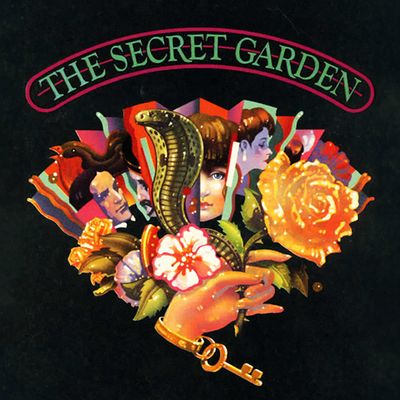
THE SECRET GARDEN is one of the most beloved musicals of all time. Go deep behind-the-curtain on the making of the show with Grammy-winning composer Lucy Simon, Pulitzer Prize-winning playwright, screenwriter and novelist Marsha Norman and host, acclaimed director and choreographer Warren Carlyle... Read More
From the show: Celebrating Lucy Simon
Guests


Featured Shows
Videos
About
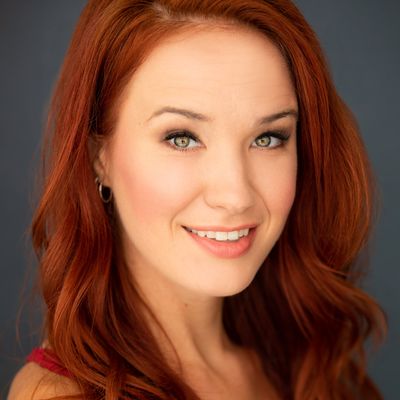
THE SECRET GARDEN is one of the most beloved musicals of all time. Go deep behind-the-curtain on the making of the show with Grammy-winning composer Lucy Simon, Pulitzer Prize-winning playwright, screenwriter and novelist Marsha Norman and host, acclaimed director and choreographer Warren Carlyle. This special episode includes a performance by Sierra Boggess, singing “Come To My Garden”.
Featured Song:
COME TO MY GARDEN / LIFT ME UP from THE SECRET GARDEN
Music by Lucy Simon, Lyrics by Marsha Norman
Performed by Sierra Boggess
Transcript
This transcript was automatically generated and might contain errors.
[0:04] Warren Carlyle: Welcome back to our very special Lucy Simon celebration. This is episode two, The Making of The Secret GARDEN Part One. We are thrilled to welcome back Grammy-winning composer Lucy Simon, along with Pulitzer Prize-winning playwright, screenwriter, and novelist Marsha Norman, and our host, acclaimed director and choreographer Warren Carlyle, will also be joined by the extraordinary Sierra Boggess, currently starring in Warren Carlyle's upcoming reimagined production of The Secret GARDEN, set to open at the Amundsen Theater in February 2023. Let's begin.
[0:40] Warren Carlyle: Hi, welcome to The Secret GARDEN. This is our crazy streaming event. I'm glad you're all here. I'm Warren Carlyle, director and choreographer. I'm so happy to be here. I'm here with amazing Marsha Norman and Lucy Simon, the creators of The Secret GARDEN. And you guys, I can't wait to ask you questions. All the questions I never asked during rehearsal, all the questions I never asked during casting, all the questions we never had time for because we were busily in 21 days kind of making this crazy workshop. So I wrote some stuff down, so here we go.
[1:16] Marsha Norman: Oh, for sure. Can we ask you some questions too?
[1:19] Warren Carlyle: Yes, yes, sure.
[1:22] Marsha Norman: Sure.
[1:23] Warren Carlyle: It's a two-way street. It's a completely open collaboration. Anything you ever wanted to know, you got it.
[1:27] Marsha Norman: You got it.
[1:31] Warren Carlyle: For me, I actually wanted to start at the beginning. I wanted to ask you both how did your journey with The Secret GARDEN begin? You know, first time with the original production, and then we'll jump forward to this production. Like, how did you come together? How did that start?
[1:49] Marsha Norman: I think I started it, right? Well, Heidi Ettinger, who was the first producer of The Secret GARDEN, and I had just had our children, some of hers and one of mine, and we were on the phone and we decided that even though we lived a block apart, we weren't going to see each other unless we were working on a project. So she had done Saturday Night Mother, and we were great pals. So she said, "Well, I've been thinking about doing a musical of The Secret GARDEN. Do you know The Secret GARDEN?" And I went like, "No." And she said, and I said, "But I'll do it. Whatever, I'll do The Secret GARDEN." And then I began, then of course, I read The Secret GARDEN, and then we talked, and then we discovered that there was a world of people who loved The Secret GARDEN and swore whenever you said it, they would go like that was the SECRET GARDEN pledge.
That was my favorite book from my childhood. And so then we went looking for a composer, and of course, we asked Lucy, we asked several other people, and Lucy just took the cake. She wrote a song to a lyric that I had done, and it just knocked us out, and we said, "Please, Lucy, join us." And from then on, we began to work for a year or so till we got to the first workshop, which was up at Saratoga. And from then on, that's been kind of the process: work, workshop, musical, work, workshop, musical work, workshop, you know, and then we arrived on Broadway and we were very happy.
[3:29] Warren Carlyle: And Lucy, what's your memory of joining the team?
[3:34] Lucy Simon: Well, I knew The Secret GARDEN. I loved it. I read it when I was a child, I read it to my kids. It's just an absolute dream of a book. So I hopped in eagerly and I read Marsha's script, which is wonderful, and I decided to try my musical skill with one of her lyrics. And it was "I Heard Someone Crying." And I felt I could do that because it felt very Yorkshire. It felt it came out of the earth. And that's what most of the Yorkshire music did. So it was just very easy to write it. And Marsha's lyrics, as I look at it, you know, from afar, from having written so many lyrics and songs since then, are so honest, so emotionally deep, that it's just so easy to write with her. And it's a blessing. Thank you, Marsha.
[4:27] Marsha Norman: Oh Lucy. Is that how you do it? Is it because chicken and egg is always such an interesting question for writers, you know? Does Marsha write the lyric first, and then Lucy, you found the melody for it? Was that how The Secret GARDEN happened?
[4:43] Lucy Simon: Sometimes, sometimes. What our general rule was was that if it was a basically emotional song, Lucy would first divine what the melody or the essence of the music was. But if it was a song where someone was trying to make a big point, hold on, or one of those kind of songs, then I would write the lyric first. And I wouldn't write it all the way; I would write just the first third, and then Lucy would get to work and find the B section and the C section, etc. The topic of The Secret GARDEN, of the conflict of the indoors and the outdoors and the search for home, these are all things that are intricate to the way that Lucy and I live as humans, you know. I mean, I'm always teaching, if it's not a search for home, it's not a musical. And that's really what The Garden is for almost everyone in it. Everybody's looking for home.
[5:41] Marsha Norman: So us creating it too, right? I mean, us creating it. We talked about it when we were in the workshop, and so often I said, "This rehearsal room is my home. This is where I'm happiest, this is where I'm most comfortable, this is where I'm truly the closest to my real self." And it's really interesting that I don't think the three of us have spoken about that as a theme, but it's just naturally present in what you've created. So now jump ahead, jump ahead and now talk about this production, this particular production that the three of us are doing with Jerry Goring. So, how did that come about?
[6:19] Marsha Norman: Well, Lucy, do you mind if I go first? We were aware that across the country the piece was perceived to be 20 minutes too long. And so a lot of people, a lot of people against our wishes, but without asking us, were doing things to the score that we didn't like. And so we decided rather than have them all arrested, that we would find a way to cut the show to 20 minutes shorter. And we were looking at different ways of doing that, and we finally found you, Warren Carlyle, who found the genius way of doing it, which was to eliminate all the musical transitions, all the scenery, all the things that the audience has to sit and wait for. Let's wait while the music plays and the sofa comes in. I mean, duh, who needs to do that? And I had seen the production that had done in where it had elevators and so things could come up from down below, and that was better, but still not 20 minutes. And so we needed you to help us make a beautiful lyrical non-stop show.
[7:43] Warren Carlyle: Yeah, I mean, I agree. It's funny, I didn't do anything that was not on the page. There was nothing extra. That was my mission with this was to really focus it, really focus it on story and really tell it from Mary's point of view, to really look up at the show. That if I had a camera, the POV would be absolutely from Mary's POV. My journey is I just hounded Jerry. I knew Jerry had it, and I kept calling and calling and calling until finally he just had to give in and hire me. I knew I loved it, I knew I wanted to do it, I was desperate to do it, I was desperate to be in the room with you, Marsha, and desperate to be with you, Lucy. I'd been a fan of the show forever and ever and ever, and I knew how to tell the story. I knew I could do it. And Jerry finally gave in.
[8:40] Marsha Norman: I think the thing that you did that was so brilliant, Warren, is that you made it flow. It flows musically, flows with scenery, even though we hadn't even seen it. But just it feels like it's of a piece. It feels like it dances, it just doesn't stop. It's great. And it's just been such a thrill to work with you. Now, Warren, I want to ask you a question. Why did you love the musical? Why did you want to do it?
[9:10] Warren Carlyle: Oh, because I had a scalpel and I had something airborne, because I had real intelligence and real emotion. And there were so few pieces that have both of those elements. And I'm such an emotional creator that I knew I could deliver that. I knew I could match the emotion of the music with the movement or the way it sweeps. And I noticed that you've done that.
[9:38] Marsha Norman: Oh, and I was really eager as a director to live up to what Marsha has written. So I have this kind of like, I'm gonna be a great director, and I'm gonna focus on the story, and I'm gonna make sure this family is understood. I'm gonna make sure this little girl finds her home. And I'm also gonna open my heart and allow myself to feel the emotion of "Come Spirit, Come Charm," or any of those kind of wonderful things that we all managed to just we managed to get airborne by some miracle.
[10:08] Marsha Norman: Well, it isn't quite a miracle. It's you. The day that Lucy and I first saw "Come Spirit, Come Charm," we were holding on to each other not to faint at the beauty of it, and the true magical spirit of deep healing, which is, you know, this is a real miracle what we see. And it was waiting to have someone call it forth, and that was you. And so the book asks for a miracle. What we had, what other people had tried to do was like a magical thing, but it's not magical, it's spiritual.
[10:47] Marsha Norman: It's like it's like that moment in Heidi. Do you know where Heidi asks her, do you know the movie Heidi? You can come to this later. The movie Heidi is based on a spiritual healing, where by taking care of this young girl, she's finally able to stand up. And I wonder, I mean, in that same vein, then when you think about when you think about The Secret GARDEN, what is it about the material that makes it perfect to adapt into a musical? You know, was it just was it just those elements, the element of hope, the element of family, the element of magic. You could it sang easily, it speaks easily, the characters are strong and well defined. Did it just did it just easily happen? It's it's also beautifully the conflict of two worlds, which is that's what Jerry Lawrence told me.
All musicals have to be about the conflict of two worlds. So it's it's both the conflict of the inside indoors and the outdoors, and it's the conflict between the people of the moor and the people of the house. So that Mary coming into this split world, you know, there's living and the dead, there's the you know, it's just this series of worlds in conflict. And um, I'm so happy that you were able to make the spirit world be another aspect of the actual world, not a separate place. And it and so they didn't have to all hang together. They they could they could do the miraculous things that you did with dance with airborne nest. You know, you connected it to OIC. Well, spirits can fly. Spirits can do spirits can do whatever they want.
And that made it them a more um acceptable and beautiful element rather than stage, you know, stayed people, dead people in Indian costumes. I mean, do you know what I mean? Which is what a lot of production is. There's a moment, there's that moment where they're actually the wind on the moor, right? There's that beautiful, it gives me goosebumps, and I have them in a diagonal line, and they're just literally the wind. It's just the sound of the wind. And I liked the theatricality of that too, and the freedom they could just appear and disappear and appear and disappear. And I think that's a reason to adapt it into a musical, is there's actually it improves the telling, the theatricality of what you've written improves upon the original material.
[13:19] Lucy Simon: Oh, well, the other thing that I have to say, and and if ever I'm looking for something to adapt, it has to sing. I have to be able to find the voices of the characters, and that is such a pleasure to find. And if I can't find them, then I know I'm in trouble. Yeah. But every single one of those characters sings. I mean, that's that's interesting too. When you were when you were creating it, were there were the things that happened really easily and were the things that were very difficult to create, and it took you a lot of goes, or it took a lot of figuring out. I'd be curious about what were the easiest things and what were the most difficult things. I know that the most difficult was the robin.
The dang robin. The robin. Do you know, the robin that guards the garden. Robin, oh god, that was hard, right. Robin, this is like it's not a spirit or human, it's a bird. And and um it I think in film, I haven't seen any of the SECRET GARDEN films, but I imagine that they do a better job with the robin, but I don't know. Oh I found the character most difficult to find the voice of was was Craven. That's interesting. And did you have a couple of goes at certain things? Was the you know the one song that you did eight versions of, or was the one moment that you just struggled with finding the right voice for? Well, I think we wrote four or five songs for him. And we we came back to the original one we wrote was if he should disappear, it'd start again.
Yeah. Yeah. Yeah. That's so interesting. It's so interesting. I'm always so curious about what what's easy and what's difficult about things. Because of course, every single thing you write has a different answer, right? Every production is gonna have a different answer to that.
[15:08] Warren Carlyle: Um, this is a this is a silly question, but how many because SECRET GARDEN is such a beloved property and a beloved show. Have you both seen thousands of productions? How how many have you seen? I can't count how many I've seen. I just no high school kids call me up and say, Will you come? Of course I'll come and talk to them. So I just I divided our partnership in that way. And I I don't. Wow. All right. Lucy is so loved, you know, those those people come up to her all the time and say, I learned to sing on etc. Song of Lucy's. And and so it um they don't need to see me, they need to see Lucy because the magic of the piece is in the music. Sierra Boggess describes her first impressions of Lucy Simon.
Nobody writes music like Lucy Simon. I feel like she writes completely from the heart. And when I've talked to her about music, she does. She talks about, she doesn't read it. She writes from feeling from so the way that she writes is the way that I love to sing. Um SECRET Garden was one of the first cast recordings that I ever owned. I wore out the well, the cassette tape first, and then I wore out the CD to start escaping. So when we met, it was just it was for me meeting a goddess to meet Lucy and to work with her. And when you work with Lucy, you you know that you're working with somebody who understands music on a visceral level. And she and I connected immediately. Um, especially with Lily.
She is Lily, she is this ethereal goddess, incredible human that um makes you want to be better, just being around her. You want to be better and you want to sing better and you want to make music better and love and she's just she's just pure love. She's pure love. So it's like heaven being around her and to work with her and to sing her her music. I feel I feel such gratitude that we've been able to give the world this piece. I mean, it's just Marsha, it's you and me that did it. And it's just it makes me so happy that we were able to do it. I on opening night, you know, and who who knew anything was my first venture up into the theater world. And I said to Marsha, you know, this has been such a gift for us to work on this. And now we're giving gift out to the world. And I felt that way.
[18:04] Marsha Norman: One of the things, one of the things that I always ask myself when I sign on is just that dreaded red carpet question of like a microphone and hey Warren, why The Secret GARDEN? Why now? And then, you know, the why now is a really interesting question. So I'm curious to jump to the red carpet and ask you both that question, you know, why are we doing The Secret GARDEN and why now? Or why would we want to do The Secret GARDEN on Broadway and why now? Why is now a good time for this particular story in this particular production? One of the things that I when I read The Secret GARDEN initially, and I thought, why are all these people saluting The Secret GARDEN? And what it is it in the piece that has kept it alive this long, mother to daughter to mother to daughter to mother to daughter.
And I I finally realized that SECRET GARDEN was the promise that, or it was a demonstration of the promise that even if you are abandoned, lost, um uh and find yourself completely alone, as Mary does in the story, you can find a home, you can be loved, you can find new friends, a new world. You've only just begun. And I and that's the promise that that living in this COVID world, we've all been hanging on to that promise. That that even if the worst happens and we all have to live in our houses with the people who are already there, and we can't go outside, and we can't that that we will we've all been believing and praying and whatever that this we could come home again, we could find our lives again and we could live and be happy.
And that's that's exactly what happens in The Secret GARDEN. It's exactly we've been through this dark, dark year, and now I mean, you know, I'm flowers all over my yard coming up. So it's it's really uh it's a it's a it's a crucial time to reenact the promise that people make to each other that things that that health and healing and love will come again.
[20:04] Lucy Simon: Well, okay, I think specifically, no, we've just come through COVID. We've come through the worst epidemic we've ever experienced in our life. Now, in The Secret GARDEN, they come through cholera and people die, and Mary is left alone and she has to go away. And so it really is a story about healing, about coming back to life. And the garden is the metaphor for coming back to life. Um, and it's it's done so beautifully. And and I think that right now we all need to come back to life. We need rebirth so badly. And it's a great time to bring The Secret GARDEN back.
[20:50] Warren Carlyle: Yeah, I I agree, it's interesting. I I feel it about family. You know, I'm in a I'm in a country all on my own without family. And this time has been really challenging. And The Secret GARDEN for me speaks speaks to that. You know, this little girl, I A, I love that it's a little girl that's the lead of our story. She's the revival universe. I love that because it allows us to see the world through her eyes. You know, that's that's a very powerful way of looking at things. I love the message about family that she's in search for family and she's in search for home. And I love the broken nature of Archie too.
[21:28] Lucy Simon: You know, he's really lost. Both of these people, there's no way these people are ever going to be together or find each other. And by some miracle, they do. I think it has a very hopeful, I think "SECRET GARDEN" has a very, very hopeful message that if you believe in magic and you believe in the seasons and you believe things will happen, they will happen. And that garden comes through at the end. Colin, little Colin taking his steps, his first steps. So much of that for me was about faith. It was about all those spirits and that little girl believing in that little boy, and then he believed in himself, and he could. And that little girl and that little boy, that's all of us. That's so wonderful.
[22:09] Lucy Simon: Yeah. I really, I that that would be my red carpet answer of why "SECRET GARDEN," why now? I just think we need we need it. We need something to believe in. We need something with good morals and good family values, and something that's also beautiful and magical. I think it's a really good, I think it's a good time for it.
[22:29] Warren Carlyle: Um, let me jump to my next one. So then talking about this production, what is there anything that's defined this production? Is there anything about this particular telling of it that makes it different from all the others?
[22:42] Lucy Simon: It's airborne.
[22:43] Warren Carlyle: Yeah, good. Absolutely airborne.
[22:45] Lucy Simon: It is, and that's because of you, Warren. Because you because you've your your life causing people to jump and leap and fly, and those those things. We were never ever so off the ground as we are in this in this in your show. And I I think that's the whole key. And of course, it it gravity is hard to forget about. So it so it's why we didn't have you know, I'm you're just brilliant, Warren. And you and you that that come spirit come charm is the most electrifying thing I ever saw in in a in a moment of my, you know, when when I that I before I could kind of go like, well, that's the idea, but that's not the feeling of it. And what you did was put it in the friggin' air.
[23:42] Lucy Simon: But you know what was interesting is I think I had in my head what you talked about about the inside and the outside, because the inside to me feel feels very buttoned up and feels dusty and dark, and the windows are closed, and there's candlelight. And as soon as we go outside, I can actually feel the I can feel the air around me, and all of those characters that are outside, Ben and Dickin, and eventually Martha, and of course Mary likes being outside too. It's like you could feel the air in the room change. And I think that's in the writing. I think the way you constructed it from inside with pressure, and you can feel the screws turning to this suddenly this great release. I think we all, the cast included, I think we all felt that release. We all just wanted to run around like lunatics.
[24:28] Lucy Simon: So I think it was I think for example, the Dick and Winters on the Wing. Oh my god, that dick and dance is spectacular. And I'm gonna go back to to um uh come spirit cum charm, because I think the writing of it, I I felt it should be around. So it just keeps coming around, you know. It it will come back, it will come back. Come spirit come charm. And so we Marsha and I wrote it as a round, and I I think that worked very well, and I think that you you um choreographed it in such a way, well, you didn't do it as a round, but it just it just felt right.
[25:07] Warren Carlyle: Yeah, right.
[25:08] Lucy Simon: Yeah, well, you know, one of the one of the two organizations that benefits from this streaming is the Dramatist Guild Foundation. And I know that Marsha, you're really involved with that. So I'd love even just the two minutes, would you just tell us all about the Dramatist Guild Foundation and the great work that they do?
[25:26] Marsha Norman: Yes, the Dramatist Guild is so eagerly and happily. Um the um the Andrew Lippa is now uh the head of the Dramatist Guild Foundation, which is the charitable arm of the Dramatist Guild Fund, of the Dramatist Guild, sorry, the Dramatist Guild Fund is the if you want to give money to the Dramatist Guild, you give it to the fund. And Andrew has raised and given away a million and a half dollars this year um for playwrights and writers in need, and this is they did not turn down a single request.
[26:03] Lucy Simon: Lucy, it's funny. I wrote I wrote earlier some questions for you, but I I think you answered them. One of my one of my questions you answered. So my question was, what was your way into this material? But the first thing you wrote was I heard someone crying, right?
[26:17] Lucy Simon: Yeah.
[26:18] Warren Carlyle: And then so then take me through, take me through the next things you wrote and and and how, and then also did you know, did you know immediately how you wanted it to sound? Did you know immediately like the Yorkshire and then the the did you just did you just hear a soundscape and you knew exactly what to do?
[26:28] Lucy Simon: Yeah, I think I did. I think that the Yorkshire people were certainly folk um the the grown ups were were more um not operotive but more art songs more and I and I used that background um in in writing for them um and I don't know it I just it it comes from it comes from the source right but I you know I was just thinking about um another song that that Marsha wrote which was um clusters of crocus so I said that just a little bit and I got to the end and I sang come to my garden and then I wrote that melody and I gave that to Marsha and Marsha wrote that beautiful melody and then we added Colin's voice you know no we want to do that so I listened to the come to my garden melody over and over again didn't even have you know the the equipment that I have now but I just listened to it I sang a melody um to that and gave it to Marsha and Marsha wrote that beautiful lift me up so you know that's that's the way that the music grew it it was it it was an evolution.
[29:42] Lucy Simon: Thank you for listening to episode two of this special Lucy Simon celebration.
[30:54] Lucy Simon: Please stay tuned for the rest of the episodes in this five-episode series. Tremendous thanks to our guests Lucy Simon and Marsha Norman and to our episode host, Warren Carlyle. Huge gratitude to Sierra Boggess for her performance of "Come To My GARDEN." And to Joseph Falcon on piano and Summer Boggess on cello. With narration by me, Lucy Boyle. This episode is produced by Dory Berenstein, Alan Seales, and Kimberly Garris for the Broadway Podcast Network. Executive producers are Lorraine Boyle and Liz Armstrong. Associate Producer is Henny Conisburg. This series is edited by Alan Seales and Dory Berenstein. Thank you to Victoria Troub, Sean Flavon, and Concord Music for their tremendous support and partnership on this very special project. Find out more about Lucy Simon, how to support the Leukemia and Lymphoma Society, and more ways to listen to this podcast by visiting bpn.fm/lucysimon.
© Broadway Podcast Network, All Rights Reserved