

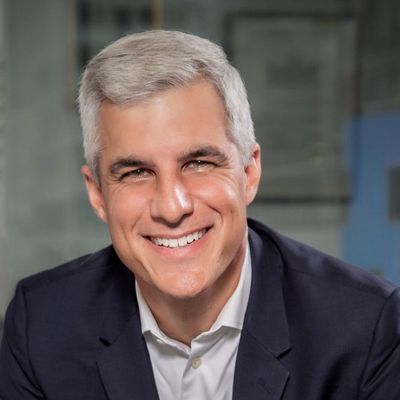
Ken Davenport is a multiple-Tony Award-winning Broadway producer whose work spans around the globe. Ken is also busy giving back as much as he can to the theatre community at large... Read More
From the show: Curtain Call Podcast
Guests
Featured Shows

About
Ken Davenport is a multiple-Tony Award-winning Broadway producer whose work spans around the globe. Ken is also busy giving back as much as he can to the theatre community at large. In that vein, he puts on a conference - The Producer’s Perspective Super Conference - every year where the world’s top theatrical talent gather for a weekend of education, inspiration and connection. We talk to Ken about The Super Conference and how he ended up as one of Broadway's hottest producers.
Transcript
This transcript was automatically generated and might contain errors.
[0:17] John Schwamp: Hi, John Schwamp here from Curtain Call.
[0:19] John Schwamp: And welcome to episode 135 of the Curtain Call Theater Podcast.
[0:23] John Schwamp: The podcast that brings you backstage as close as you possibly can be, often while the shows are actually happening, to meet the people that make that theater happen.
[0:30] John Schwamp: Just a quick reminder: you can download and subscribe to the podcast from the Apple Podcast app or from iTunes.
[0:36] John Schwamp: That way your feed will be automatically updated when we release podcasts.
[0:39] John Schwamp: But you can also listen to us on many other streaming services such as Stitcher and Google Play.
[0:44] John Schwamp: Please rate and review our podcast if you have a spare 30 seconds and help us reach more theater lovers out there around the globe.
[0:50] John Schwamp: And now for this week's episode.
[0:53] John Schwamp: We're taking a trip across the pond this week to the office of Ken Davenport, Super Producer.
[0:58] John Schwamp: Ken Davenport is a multiple Tony Award-winning Broadway producer whose work spans around the globe.
[1:04] John Schwamp: Now for those of you here in the UK, you may be familiar with a few of his productions, including Kinky Boots, which won the Olivier Award for Best New Musical 2016, and Blythe Spirit with Angela Lansbury.
[1:14] John Schwamp: That was a brilliant production.
[1:16] John Schwamp: He also took the old Vicks production of Groundhog Day and Mischief Theatre's The Play That Goes Wrong over to Broadway.
[1:22] John Schwamp: If that's not enough, Ken is also executive producer of North America for Andrew Lloyd Webber's Really Useful Group.
[1:28] John Schwamp: And if that's not enough, Ken writes a blog and hosts a podcast called The Producer's Perspective, where he talks to the biggest and brightest theater practitioners on Broadway.
[1:38] John Schwamp: And if that's not enough, Ken is also extremely busy giving back as much as he can to the theater community at large.
[1:45] John Schwamp: I mean, he's pretty much done every job you can in theater on his way to being a producer, so he's in a pretty good position to do just that.
[1:52] John Schwamp: In that vein, he puts on a conference, The Producer's Perspective Super Conference, every year, it's the third year running now, where the world's top theatrical talent gather for a weekend of education, inspiration, and connection.
[2:04] John Schwamp: Now, at the Super Conference, hundreds, hundreds of the world's smartest creators descend upon New York City to learn what's new, what's hot, what's actually working, and trending.
[2:14] John Schwamp: So I'm gonna stop talking and I'm gonna let Ken tell you all about it and how he got to be one of Broadway's hottest producers.
[2:21] John Schwamp: Have a listen.
[2:28] Ken Davenport: I'd just like to talk to you about your journey and take you back to what got you involved in the theater business and how you came to love it.
[2:38] Ken Davenport: Well, my mother first tells me I first kicked while she was watching a production of Godspell.
[2:43] Ken Davenport: So I got started very early. There was something telling me I had to get out and be a part of whatever was happening on the stage.
[2:49] Ken Davenport: And you know, I got into it in the way that most of us get into it.
[2:53] Ken Davenport: My parents dragged me to an audition when I was five years old, and I started performing in the local theater.
[2:58] Ken Davenport: When I was about twelve, I got too cool for it.
[3:01] Ken Davenport: I thought I was gonna play for the Boston Red Sox and the Boston Celtics simultaneously.
[3:06] Ken Davenport: Like I was gonna be that kid.
[3:08] Ken Davenport: And I went to a small college prep school that does nothing but churn out doctors and lawyers in central Massachusetts, and then my life changed when I saw Les Misérables.
[3:19] Ken Davenport: You know, I'm 47 years old. I consider myself part of the Les Mis generation.
[3:23] Ken Davenport: There's a whole group of us that are doing it today because of that show.
[3:26] Ken Davenport: It really was, I believe, the Show Boat of the modern era, in which it showed us what a musical could do besides just entertain in the way the musicals had done before Show Boat.
[3:38] Ken Davenport: Here came along this epic three-hour and 10-minute piece that said, "Hey, musical can be more than Anything Goes or Annie or that type of thing."
[3:48] Ken Davenport: So I quit the basketball team like that day.
[3:52] Ken Davenport: Really?
[3:53] Ken Davenport: In a very, very dramatic scene, like right out of High School Musical.
[3:58] Ken Davenport: And I auditioned for my high school musical.
[4:01] Ken Davenport: I got the show and I found my people in a way.
[4:05] Ken Davenport: Like so many of us, you know, it's to find your tribe.
[4:07] Ken Davenport: And that led to me taking my pre-law major at Johns Hopkins and trashing it and transferring to Tisch School of the Arts at NYU.
[4:18] Ken Davenport: And that led to me discovering a production assistant position on a Broadway show, which had me leave performing behind, and I stage managed, I company managed for 10 years, and I just knew I wanted to be involved in the theater.
[4:32] Ken Davenport: And you know, some of the best advice I ever got coming up was choosing and finding what you want to do is about eliminating what you don't want to do, you know.
[4:42] Ken Davenport: Rather than finding the very specific thing that you do.
[4:46] Ken Davenport: Absolutely.
[4:47] John Schwamp: I've said, and you know, I've got I'm the same age as you, Ken.
[4:51] John Schwamp: You know, I've got two boys, and I say, you know, they both love performing.
[4:54] John Schwamp: They did music and stuff.
[4:56] John Schwamp: And I said, "Well, find out what you don't want to do because it's just as important."
[4:59] John Schwamp: I think you seem to have basically done it all, including pre-legal, pre-law, which is great.
[5:07] John Schwamp: And the same thing happened to me.
[5:10] John Schwamp: I think Les Mis was one of the first shows I saw.
[5:12] John Schwamp: I'm a military brat, so I came back from Okinawa in Japan and went to high school, graduated, went down to the Amundsen Center in LA and saw the touring production of Les Mis.
[5:24] John Schwamp: And I was just like, "Yeah, this is what I gotta do."
[5:27] John Schwamp: But you know, I've stayed on the performing side and it wasn't always producing for you.
[5:33] John Schwamp: Do you think that your journey in pretty much you just mentioned almost every role as you can?
[5:41] John Schwamp: Do you think that's kind of helped you build a better understanding of how to, you know, gosh, in the most base terms, produce?
[5:49] Ken Davenport: Yeah, without a doubt, on two levels.
[5:51] Ken Davenport: One, I've been part of every aspect of the production of a show, including spending one sort of short two weeks in a costume shop at a summer stock theater, which I couldn't stand, frankly.
[6:04] Ken Davenport: But at least I learned a little bit of it.
[6:07] Ken Davenport: So I can understand what goes into it.
[6:11] Ken Davenport: I can respect it, which I think is a big deal when you're talking to artists.
[6:15] Ken Davenport: You know, I think a lot of folks are like, "Oh, costume design, what's that? That's nothing."
[6:18] Ken Davenport: Well, I happen to know it's painstaking work, not only designing it, but building those costumes.
[6:24] John Schwamp: Yeah.
[6:24] Ken Davenport: So I can not only speak the actual practical language of all the departments, casting, etc.
[6:30] Ken Davenport: I worked for an agent for a while.
[6:32] Ken Davenport: I was an actor, so I, but also just have a sympathy and an empathy for what these artists and these folks go through to create a show.
[6:43] Ken Davenport: Rather than, you know, a lot of people I think have this feeling that, "Oh, a producer is the employer, the big boss."
[6:50] Ken Davenport: I'm just one of a group of people trying to put on a show.
[6:54] John Schwamp: Yeah, I think that probably used to be.
[6:56] John Schwamp: Well, maybe that's why the fantastical idea or thought of a producer is the guy with the big bucks, it's the Mel Brooks and The Producers, you know, it's the guy who pulls all the strings.
[7:05] Ken Davenport: That's not necessarily so.
[7:07] Ken Davenport: You know, today producers are collaborators, you know.
[7:10] Ken Davenport: They are theater makers in every way, pulling a team together.
[7:14] Ken Davenport: It's not just about who's got the big bucks.
[7:18] John Schwamp: What would you say? I guess my question is, you know, what would you say makes a producer these days?
[7:23] John Schwamp: Because the role has shifted even in the last decade or so.
[7:27] Ken Davenport: Yeah, for sure.
[7:28] Ken Davenport: I mean, Hal Prince, may he rest in peace, wrote this very famous article in the 90s about how there were no more creative producers anymore.
[7:28] Ken Davenport: There were no more people that had ideas and were pulling teams together, you know, in the way that, you know, David Merrick came up with the idea for Hello, Dolly!
[7:46] Ken Davenport: Like that's what a producer really was.
[7:49] Ken Davenport: And he was concerned that producing was becoming just more about check writers.
[7:55] John Schwamp: Yeah.
[7:56] Ken Davenport: So I do believe that, you know, and I actually think in the last 10 years, we're starting to get a little bit back towards that creative producer model.
[8:03] Ken Davenport: Although we've seen a lot of corporations come into Broadway, so it's getting harder and harder for us independents to keep our shops open, frankly, when the big corporations come into town and snag up a bunch of theaters, etc.
[8:20] Ken Davenport: But yeah, it's changed a lot, and raising money is only one piece of it.
[8:24] Ken Davenport: I think producers are a composite of people that are money raisers, they can raise money, they can develop product, and they're marketers.
[8:32] Ken Davenport: And I think that's something that's changed significantly over the last 10 years.
[8:36] Ken Davenport: I think the emphasis on marketing and sales for producers has really increased.
[8:42] John Schwamp: And you have experience on both sides of the Atlantic.
[8:46] John Schwamp: You know, you've been here in the West End.
[8:49] John Schwamp: Is there anything that you see is different over here?
[8:53] John Schwamp: Just kind of get a perspective of how different it works, say on Broadway as opposed to the West End, or for an independent producer?
[9:02] Ken Davenport: Well, it's interesting.
[9:04] Ken Davenport: I have very limited experience over there, actually.
[9:07] Ken Davenport: I haven't really cracked what it takes for a show to work over there versus here.
[9:14] Ken Davenport: The only couple of things that I've gleaned already is, one, you love a jukebox musical over there.
[9:21] Ken Davenport: Which I've actually, I believe, is because, well, we probably share a similar demographic in tourists.
[9:21] Ken Davenport: Our audience here is 65% tourists, and I have a feeling yours is as well.
[9:33] Ken Davenport: It's just that our tourist audience comes from the United States, which speaks the same language.
[9:39] Ken Davenport: Your tourist audience comes from these other places where English is not the first language.
[9:45] Ken Davenport: So it makes sense that jukebox musicals, where the knowledge of the language isn't necessary.
[9:52] Ken Davenport: The other thing, the only other thing that I've been able to see is that you love shows that make fun of Americans.
[10:00] Ken Davenport: Like the authentic American experience, Rent, etc.
[10:00] Ken Davenport: That never works over there to the extent that it works here.
[10:10] Ken Davenport: But man, take Legally Blonde or even School of Rock, a chubby American like slacker boy, like anything that goes, like those guys are a bunch of shlubs, you guys love it.
[10:23] John Schwamp: So I'd like to talk to you about the extracurricular things that you do, Ken, because you just seem to have fingers in so many pies.
[10:34] John Schwamp: And as I mentioned before, like you've got a podcast and you literally talk to everyone on the Broadway scene.
[10:43] John Schwamp: First of all, why a podcast?
[10:46] John Schwamp: And second of all, like the format, it just sounds like you guys are hanging out in your office and having a chat.
[10:50] John Schwamp: Is that what happens? And what was the reasoning behind starting a podcast?
[10:54] Ken Davenport: Well, I started writing a blog about, I think it's 11 years ago now, and it's called The Producer's Perspective, and it became very popular.
[11:04] Ken Davenport: Most, and the reason why, frankly, is yeah, I think I write some good stuff every once in a while, but I was just the first producer to blog.
[11:12] Ken Davenport: And actually, I think I'm the only producer to blog still at this level, although a couple folks have tried.
[11:17] Ken Davenport: So I was writing my perspective, and then frankly, a reader said to me, you know, "Okay, we love your perspective, but we wouldn't mind hearing someone else's every once in a while."
[11:28] Ken Davenport: And podcasting was just starting to bubble up.
[11:31] Ken Davenport: And if I have a skill, any skill, it's that I believe I can recognize a trend before it becomes a trend.
[11:39] Ken Davenport: Yeah. So I saw podcasts just beginning, and I was like, oh, I'm gonna jump into this and see what happens. And the other reason I did it, frankly, is because I wanted to learn from all these people. Like too often the business goes so fast that we're in a room like in a crisis mode. How do we sell tickets for tomorrow? How do we get pre- how I had never sat down and talked to people like I don't know, Alfred Ure, the pure surprise winner, who I'd worked with on Parade years ago, but I never heard the story of Driving Miss Daisy, or Lynn Ahrens, who wrote Once on This Island that I produced, but still hadn't heard about her commercial jingle writing years. Uh or Joda P.H. or Bob Greenblatt, who became pres who was president of NBC, but also produced Broadway shows.
So I just wanted to hear their stories and very selfishly. And I just that's what they are. They are chit chats. I love that expression, by the way. They come to my office, I pop open a microphone. I will admit that we don't have fancy production values or anything because I don't want people to be too spooked. We don't go to a studio, we don't do anything, there's sirens in the background sometimes. It's just it's two Broadway folks as if they're sitting in their office chatting about the industry like we all do, and this is this time a microphone's on.
[12:54] John Schwamp: I learn stuff listening to your podcast. And David Corangy had the designer. Um, and you he you kind of said what was missing. He said communication skills. If you could just get one thing, it's communication skills. And I think that that's what you do. You and your guests sit and you commune for 45 minutes an hour, whatever it is. And you come, you talk about whatever you talk about. And I think that is that is really special when it comes to these kind of, I suppose long form podcasts or whatever you want to call them, um, when it's just a discussion. And um again, if you don't listen to the podcast, you guys, you need to listen to the podcast.
[13:31] Ken Davenport: Now, pro producer's perspective as well, um, is not just a podcast. You and your organization have something called the Super Conference. Is that correct?
[13:40] Ken Davenport: Yeah, so you know, we started with a blog, it became a podcast, it became a membership site and seminars and workshops and all sorts of stuff. Because what I found is that there were people all over this country and yeah, all over the world that were fascinated about how shows got to Broadway, and so many people had ideas themselves or scripts or shows, whatever they did, that were trying to get here that just didn't know how. So, what we've done is try to provide people with a ton of resources, myself included, that help them get their shows from a uh out of their heads to a page and then onto a stage. And basically, this is the community of people and the resources that I always dreamed about there being when I was coming up because it wasn't around.
[14:27] Ken Davenport: Yeah. So we basically just created this thing that could help people that were just like me 30 years ago. Uh and that's what we've been doing, you know, and it's been great. We've we've and our biggest our flagship event is every fall, it's November 16th and 17th this year, and there will be people from all over the world there. And we have all the Broadway A listers you could ever imagine talking about marketing, talking about raising money, talking about producing at the festival level, producing at the broad, you name it, they're talking about it, and all with the goal of helping the writers, directors, actors, and producers in the room get their shows, their projects off the ground.
[15:09] John Schwamp: Yeah, I mean and um it's like the most I I have a blast when I'm there and I learned so much. Well, I listen, I can't like you look at the speakers this year. You know, you've got Heidi Schreck, and you know, who's just coming off what the Constitution means to me, which is just going out on tour and Joe I Joe Iconist for Be More Chill and probably about a hundred, you know, yourself, but you have not just that, you've got general managers, you have casting um directors, you have press agents, you have every everyone that you are going to be needing to talk with and sit down with and and planning with to get not just to Broadway, but just a show up in you know in a major uh metropolitan city.
Anywhere. That's the thing. A show can be a success, not just if it gets to Broadway, whether it's off Broadway, off off Broadway, licensing. We have people that come that just want to have their shows licensed to high schools around the country, and there's so many takeaways you'll get from that and networking opportunities. And yes, hearing from these amazing people. And what I what I also love is we curate the material and the speakers very closely. And what you'll find is that look, this is a difficult business. It's the major leagues, Broadway especially, is the major leagues of theater, right? It's like trying to get into the uh play for the Boston Red Sox, like I did when I was a kid.
And it's hard. But what you'll get from a from a conference like this is that all of the speakers, Heidi Shreck is such an example of what I call an entrepreneur and Joe Iconis and all these people that are unbelievably positive. You are going to leave this conference not only with practical knowledge and education on how to move your show along, you are going to be inspired and motivated and given a steroid shot of inspiration to get you there. And that's what it takes because it can be challenging. And you've talked about no you know meeting your tribe and we're we're going to make our way over there. We're going to be there I I cannot wait. When you're amongst your tribe and you're telling stories and you're communing as as you do you know that I I I would imagine that your bubble's gonna grow.
You know your your tribe is going to grow for anyone that is director, producer, actor, uh stage manager, any anyone you know writer uh is gonna absolutely grow their bubble, find collaborators, find people that they're gonna make genuinely lifelong partnerships with at this at this uh super conference.
[17:27] Ken Davenport: Yeah, and I can tell you're a hundred percent right because this is the third year. It grows every year. And what you're talking about, it it that's exactly what happens. I mean, I get emails from people all the time saying I met a collaborator at your conference. Uh I just did a reading of my show, and it's because I learned how to produce a reading at your conference, or I got an idea for a new musical, and I started writing it because I was talking to someone actually like it's incredible. And I look, I believe you asked me like what a producer does and all this stuff. Very simply, I believe what a producer does is get people in a room. That's what I do. Yeah. I get passionate people in a room, a director, a writer, an actors, I get them in a rehearsal room, they create a show.
Well, this is just doing that same thing on a bigger level. Yeah. And I'm just filling that room with the most passionate group of theater makers in the world. Almost 500 of them in the will be there in these this room for these two days. Amazing. Listening to Broadway A listers talk about all this stuff. And I challenge you to go and not want to create something really thrilling and exciting and be motivated to do so.
[18:41] John Schwamp: Can't we do that every weekend?
[18:44] Ken Davenport: Yeah, no.
[18:51] John Schwamp: We go see a show and we're like, that show sucked. My idea would be so much better. Like, how many times have we done that?
[18:57] Ken Davenport: Yeah. This is a way to learn how to get that idea out of your head and to actually make it happen.
[19:02] John Schwamp: Okay, that's amazing. That is amazing. Okay, I I have to end because I know you're busy. I have to end with the same question that you and listen, you can choose to answer it or not. That you ask every one of your guests, and it's the genie in the bottle question, is the genie question. If you had one wish, and it couldn't be more wishes, um, if there was one thing that you could change, you know, and I don't necessarily mean on Broadway, but worldwide, what would it be that you would change in the theater world if you could like just click uh just to throw that question back at you, which you which you throw at your guests every week.
[19:33] Ken Davenport: You know, I I I have been asked this question before now. So um, and I change it, I change it every single time. Well, that's a good thing. Every single time, because I I I want a lot of different things, frankly. I'm I'm an only child, I'm I'm selfish, I want a lot of things. So I think uh I'm gonna go with what you just said all over the world, all over the world. And uh what I and I did this, I streamed my production of Daddy Long Legs. I live streamed it, um, and it reached uh 150,000 people in 48 hours in 135 countries around the world. So since we're talking a little globally here, yeah, I wish there was an easier mechanism to distribute Broadway content all over the world. Yes, and there are certain things like Broadway HD and you know, the ND Live like uh the National Theater Live over there, right?
NT Live, you do very well, but better than us. But there are still too many restrictions here uh to do so. And I wish that it was easier because I believe there are people in all these corners of the world that would love just to get a taste of Broadway. In fact, I know it because there are people that read my blog and listen to the podcast and like I will never get to Broadway or I can't get to Broadway, but thanks for l uh teaching me about it through your online website. And I just wish we could deliver the content to them because actually when you do that, and people fall in love with it, yeah, they will find a way to get here, or they will find a way to create theater wherever they are. And I'm just a big believer that the world is a better place if there's more theater in it.
[21:13] John Schwamp: Absolutely, the more we can deliver it all over the world, the more chance that people will create it. What a fantastic genie in the bottle wish answer. Uh, more theater for everyone. Why the hell not? Ken Davenport there, speaking from his office in Manhattan. What a fascinating, fascinating chat. Now, I'm gonna put the information on how to get tickets to the super conference in the show notes, and there might just be a little promo code for you guys to use.
[21:42] John Schwamp: Now, before I go, just a few housekeeping bits. Uh, if you're a theater professional, head on over to curtaincallonline.com and sign up for a free profile page. All you have to do is create an account with an email address, make up a cool password, and away you go. You can follow us on all the socials Twitter, Instagram, and Facebook. We've got you covered at curtaincall all one word. And you can follow me at John Schwab at J O H N S C H W A B. Now we'd love to hear from you if you have any suggestions or feedback for the podcast. Get in touch with us via any of the social media platforms I just mentioned, or write to me personally at John at curtaincallonline.com. It just leaves me to say a huge thank you to Ken Davenport, Mary Dina, Erica Fallon, and everyone at Ken's office in New York for making this episode possible.
And if you're in the theater industry, guys, you're not gonna get a better chance to network than by attending the Producer's Perspective Superconference. Increase your bubble, like grow your tribe. Go to TPP Superconference.com and get your tickets today. I'll put that link in the show notes. And don't forget to use the code CERTIN19ALLCAPS to get your discount. Book it. And make sure you find us when you're there. If you're an actor, director, producer, playwright, theater professional, get to the super conference. It is your event. Thanks for listening to the Curtain Call Theater Podcast. I will catch you all next week. Bye.
© Broadway Podcast Network, All Rights Reserved