

Guests
Featured Shows
About
In an exclusive conversation, the icon of stage and screen on her history-making casting as Madame Morrible in Wicked, why the story of The Wizard of Oz means more to her than arguably anybody else, and how she married her hero. We also discuss working with Viola Davis, the story of her father and musical Gypsy, and the importance of visibility for trans youth. Plus, why she’s forever proud to be “a mixed-race HIV-positive trans woman in a major Broadway musical”.
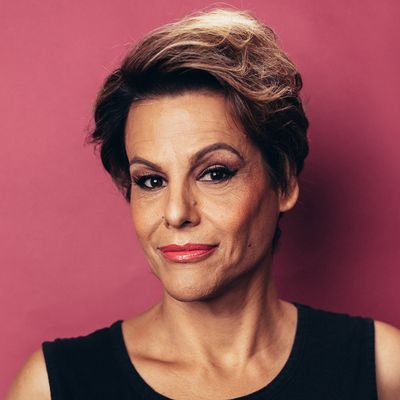
Image of Alexandra: Aaron Jay Young
Host: William J Connolly
Produced by: William J Connolly/Darren Bell
Welcome to eleven. The official theatre podcast that brings the biggest stars and creatives together in one place to discuss life in the arts. Follow eleven on social media via @elevenpodcast and via elevenpodcast.com.
Transcript
This transcript was automatically generated and might contain errors.
[0:01] Alexandra Billings: Hi, my name is Alexandra Billings, and you're listening to Eleven, the official theatre podcast.
[0:16] William J Connolly: Hello and welcome to Eleven, the official theatre podcast that brings the biggest stars and creatives together in one place to discuss life in the arts. Now she's one of the most influential and inspirational artists currently within the world of stage and screen that's bringing light and always love to everything that she touches. She's an actor, singer, activist, and most importantly to her, a teacher and student of life. Her words, not mine. Not one for sitting in the back. Audiences were spellbound when she made history in 2020 as the first openly transgender person to star in the major Broadway blockbuster, Wicked, when she took over as Madame Morrible in the production. Not her only history-making moment, she is the secondly openly transgender woman to have played a transgender character on television, which she famously did in 2005.
And she is of course known for starring as Davina in the hit Amazon TV series Transparent. Elsewhere on TV, she's credits including ER, How to Get Away with Murder, and Grey's Anatomy. Alongside all this, she also uses her time as a teacher, an LGBTQ activist, and a very, very proud wife. So here in an exclusive conversation, we discuss her history-making casting in Wicked on Broadway, why the show means more to her than arguably anybody else, the importance of visibility for queer people in leading roles in the world of theatre, her personal story of surviving the AIDS epidemic, and how she believes this has helped her most recently with the COVID-19 pandemic, the extraordinary story of her father and the musical Gypsy, working with the legendary Viola Davis in How to Get Away with Murder, which may include a brief bit of acting from yours truly.
Finding and marrying the love of her life, why she will forever live in the middle of any experience that she applies herself to. And why she's done asking for a seat at anybody else's table, she's making a world all of her own where she and other queer people can shine. So here she is. It's the extraordinary Alexandra Billings now on this, the next episode of Eleven, the official theatre podcast. To meet with current restrictions and to stop the possible spread of COVID-19, Alexandra and I connected for this conversation digitally. So please forgive any brief moments while we wait for the internet to catch up. Enjoy. She's a stage and screen actor that's blazing a trail for the world to see. So please help me welcome to this, the next episode of Eleven. It's Alexandra Billings.
[2:40] Alexandra Billings: Hello, my friend. How are you?
[2:43] William J Connolly: I'm doing really well. I'm so so happy to see you. Thank you so much for being here. I'm excited to see your face. I know that we've been planning to do this for such a long time, so this is going to be an absolute joy for me. So thank you once again. And you have such an incredible career of so many twists and turns. You've done so many historic things, which I don't know if you're aware of how many historic things you've done, but it's pretty crazy. And I'm gonna do my best over the next sort of half an hour just to tell you, basically tell you back your career and how amazing it is and how much I'm obsessed with your work. So sort of spare your blushes and get ready for me to sort of deep dive with this, okay.
[3:11] Alexandra Billings: I'm scared.
[3:12] William J Connolly: Pretty much, I think it would be, of course, we there's been lots of Zoom interactions and concerts and discussions and plays and everything you could ever possibly imagine. But the last thing that you did in an actual theatre, I do believe, was a very small off-Broadway show about somebody from the Wizard of Oz. I think it was a couple of witches, and it was an amazing thing that you, as you said to me, you simply never thought would happen.
[3:34] Alexandra Billings: It's almost it's difficult to explain, first of all, how bizarre it is, and second of all, what it means to me, because I'm 59, I just turned 59 years old. I say my age out loud, even though you're not supposed to in Hollywood because of some weird rule that I has never made any sense to me. But I say it out loud because in the 1980s I was diagnosed with AIDS. And at that time, the doctors said, Well, you have about 10 minutes left. So if I were you, I would buy a Mercedes and charge it because you're not going to be around to pay the bill. So every birthday I announce loud, like Ethel Merman. I'm 59. Like I just say it really big. And the other reason I say that I'm 59 years old is because I began my transition in 1980, right when I left high school.
The Wizard of Oz has been on television since the 1950s. And because I was born in 1962, since I was growing up, I have watched this film on TV. And this was back in the day. It's another reason I mentioned my age and my generation. When you couldn't, if you missed a show, you missed a show. That was it. You had to. That was tough luck. But they had these things called tape recorders. You're far too young to know what the hell I'm talking about. But it was a box. And you push play and record and you put it up to your TV and you have instant VCR, honey. So that's what I did. Four cassette tapes. Look it up, kids. Cassette tapes, which by the way, I still have. Oh yeah, that had the entire movie on it.
So every night for decades, I would go to sleep listening to the movie of The Wizard of Oz. So I know not only every word of that movie, I can also do it in 15 minutes. I'll do that for you sometime. Anyway, so this movie, then I began to read the books, and what I began to realize what this was every man's journey, that what this was was about the ostracized collecting chosen family as they move through their journey. That it's not about the result, it's not about perfection, it's not about being unbroken, and it's not even about healing, it's about how we navigate chaos. So for a year ago, for Wicked to say, hey, listen, we really want you to be in this. Oh, and here's how big my ego is. But I had never seen the show before because I'm like a musical of the wheels at Oz?
Piss off. I never saw it. I had no idea what the hell it was about. I mean, I knew it was about witches, the witches of Oz, but that's all I knew. And I wasn't about to see it. And they called and they said, We really want you to do this show. And my ego is so huge, I went, darling, I can't sing that high. Are you nuts? I can't even think that high. And I'm certainly not going to be singing a ballad while you're raising me up on strings. You're nuts, thinking I was one of the leads, of course. And my manager called and said, No, no, Alex, there's an old lady role in it. That's what they want. They want you for the old lady. So then I saw it, and it not only captured the heart and the soul of the books and the movie, but it expanded on it.
So yeah, I played Madame Morrible, and I remember standing backstage right before the pandemic hit. Because remember, this is my second viral pandemic. My queer generation was mostly annihilated through the first AIDS pandemic. And those of us that are still left remember viscerally what that was like. So as I'm standing watching the conductor rev up the very final bow, and knowing we were all going to take at that time, we thought maybe a couple of weeks off, at the stage door, I could hear the knock of another viral plague, literally at the stage door. As I'm getting ready to go into the center of Oz. When things like this happened to me, William went literally when things like this happen, and they happen a lot, when things like this happen to me, they are not lost on me.
I believe they are divine moments. I don't believe that they are planned necessarily, and I don't believe they're purposeful, but I believe they are blessed. So now, even though there's chaos at the back door and beauty in front of me, and I'm standing in the middle of both, I revel in it. I'm very grateful.
[7:37] William J Connolly: Do you think because of that experience and the fact that you reference this as your second pandemic to live through, it prepared you in any way as to how to be proactive in surviving it? Or is it uncharted territory?
[7:50] Alexandra Billings: You know, it's that's a such a great question. I keep saying, y'all, if you want to survive this thing, you need to get a hold of your old queer friends. Because we know how to survive. That's why all of us are still here. That's why we're still, well, not all of us. We've lost some, of course, but that's why most of us are still here, because we know what to do. We know exactly what to do. And more importantly, we know what not to do. So yeah, it did prepare me. It's larger because it's global. And remember when the AIDS pandemic happened, it happened to the queers, and nobody gave a shit because it was us. It was killing all the right people. So people were like, great, we don't gotta fantastic.
Let's go to Denny's. But now it's killing the white straight people. And when you kill white straight people, shit gets done fast. And that's why we have a vaccine in 10 minutes, because it was killing all the straight white people. But yes, we know how to survive this.
[8:53] William J Connolly: It's interesting when you were talking about your relationship with The Wizard of Oz and the four cassette tapes and it almost being sort of in your unconscious psyche, like it was it basically imprinted on your brain from then through until now. And obviously, you make reference about being able to do it in 15 minutes and stuff. But do you think that because it was a form of chosen family, which is what we as queer people call the collective around us of queer people and allies that are our unbreakable family and obviously not through blood. Do you think that that was always meant to be in your life? Because I'm just thinking, if you know about chosen family and you know about escaping the real world to reality that feels true, and then you go on your own personal journey to truth, it feels like those two things were always going to meet. It feels, am I allowed to say it feels like it was probably always going to happen?
[9:38] Alexandra Billings: I think that's true of everybody, Angel. I think that's true of everybody, whatever community you're in, that's the human experience. I hear a lot that we are spiritual beings having a human experience, which I believe is true, but I don't believe in separating your spirit from your humanity. I believe both of them are gifts and they're intertwined. So all of this this idea that we're led towards our brokenness, because in order for us to have more light shining through, we've got to keep the cracks. I believe that's true of everybody. So I think we're all on the way. We're all on the way to the unknown. We're all on the way to the next thing that's gonna fuck us up. We're all we're always on the way to the next thing that's that's gonna be the horror. Only because it's unknown, not even because it's good or bad, only because it's unknown. I think it's true of all of us.
[10:26] William J Connolly: I remember the first time I had the pleasure of talking to you about literally, I think it was a matter of days after your historic announcement had come out that you were going to be joining. And this was this was probably about three or four months, I think, maybe just a bit more than that before you actually joined the show. I remember a quote that you said to me, and I can look uh say it with even looking at my notes, is that you said you hope that the people and the young people that come and see you in the show do talk about the brown trans lady in the show because you want you're not escaping it, you want people to talk about it and acknowledge it and celebrate it. It feels like a long time since we had that conversation, but did that happen?
[10:57] Alexandra Billings: It did. Isn't that funny? Boy, that's funny. I love that you remembered that. It happened and it continues to happen, which is so weird, because they continue to they found me. I love the TikTok. I can't stay off the tick. What's the matter with me? What is the wrong with me? But I love the TikTok. So I'm on the TikTok, and you know the kids are on the TikTok and they find me through TikTok and they find me through Instagram. In fact, I got a message a couple of days ago that said that was a video of this human singing Alphabet. They were non-binary, and they said, I'm gonna be the first non-binary Alphabet. And I was like, hell yeah, you are. So they're still they're not only talking about it, they're using it there as a gift, going, Well, grandma can do it, why can't I?
[11:42] William J Connolly: There will only ever be a first for lots of things, and you are the first openly transgender person to ever star in Wicked. I know you say you play the older lady, but you are starring in that show, let me tell you that. So when you get given an opportunity like this, I guess a question of two halves. Did you know that history would be attached initially? Was that sort of put up front? And the second part is did that make you go, well, yes, of course, or did you go, oh gosh, that's quite a huge amount of responsibility. I need to take a beat.
[12:10] Alexandra Billings: That's really interesting. I guess I could make myself out to be a really sort of smart activist, but I'm not. The first thing I was so overwhelmed with gratefulness about being asked to be in Oz that just the I'm like 10, that the thought of going into Oz every night made me weep. Now the second part came, but it didn't come until I think it didn't really hit me until I was actually in rehearsal. I in fact I remember this because I was so excited and just terrified. I thought, well, I'm just gonna, I'm gonna the show's gonna close. I'm gonna close the show personally. I will personally be so awful that the show will go. So that's what was running through my head. But I remember I was in rehearsal, and you know, the understudies rehearsed because everybody's working.
So one of the understudies came on and sang Alphabet's part of Alphabet's song, and she started singing, and I start weeping uncontrollably, and I missed my entrance, and the director came up and said, Are you all right? And I said, No, because for some reason that song about flying, about being set free, something hit me, and I went, Oh, oh my lord. The kids that are gonna come. It's not just that they're people that are gonna come and see me, there's gonna be children, 10, 12, 14-year-old humans coming to see a mixed-race trans woman in a major G-rated musical. This is extraordinary. And that's actually when it hit me was when I was in rehearsal. I think Madame Morrible just is a has by far the best writing in the show.
I think when he literally gives her the that grasp of evil that you just you don't tend to see actually in musicals, they're always just sort of cliché baddies, and I think she is really evil at the core, and that's why I think imagine she's an absolute dream to play. But apart from just before Define Gravity, where you get that speech where you sort of get to cast your spell across Oz and denounce Alphabet, I love that. I do, I do love the fact that Madame Morrible is the genesis and the cause behind what I think is the worst scene in the show because it brings back Sony Marys from school for me, is just when she hands Glinda the wand, and obviously that's when every alphabet comes on and everyone laughs at her, and and it's just everybody and one person, it's them versus her, it's them versus us.
[14:37] Alexandra Billings: For you, I can imagine having been that person and been on the receiving end of that. Does it make it more personal and more difficult to be able to be the crux of the person as to why she feels like that? Because even watching it, I don't like it.
[14:52] William J Connolly: Well, that's good.
[14:54] Alexandra Billings: Uh first of all, that mainly because you're a highly intuitive, sensitive human being, but also that's good that that kind of thing that resonates within all of us calls up action. Um I would love to make myself out to be, you know, a sort of fantastic pure loving soul, but that simply isn't true. I have treated people very badly, that continues to happen. I make terrible mistakes, I can be terribly insensitive, manipulative. I'm a wonderful liar, I'm a really good liar, so I lie a lot, and I have bullied people. The difference is now when I behave that way, I stop and I go to the person and I say, here's what I've done, and I'm terribly sorry, and I'm not going to do it again. And now I'd like you to tell me what I can do in order for this to heal.
That's the difference now. That's the one thing Madame Morrible doesn't do. So I actually don't find it difficult at all. I actually don't happen to think she's evil. I don't believe in evil, just like I don't believe in pure good. I think everyone is complicated. If you look at all of the Glindas, not the nicest person, you know, I get to have the only truth in the show about Glinda. I get to actually turn to Glinda and go, listen, honey, I don't know who you think you're fooling, but it's not me. You've been wanting this since day one. You know it, and I know it. So shut up. And that's the truth of who Glinda is. So I think she's a complicated human being. She's trying to do the best she can with what she knows, which isn't an awful lot, like all of us do.
And unfortunately, she doesn't learn her lesson. That's the unfortunate part. So it's not difficult at all. There's not a lot of acting required for me to play sort of a terrible person. I sort of get it. I mean, it doesn't help that Susan put her in the biggest, grandest, longest, and campiest, which is the key part costumes ever to grace the Broadway stage. I mean, oh god almighty, those things. No, those things are like wearing Bernadette Peters. Like if I have Bernadette Peters on my back, that's how freaking heavy those things are.
[17:11] William J Connolly: Do you feel like Cruella De Vil? Because I think that's what she is. She's finding that sense of campness that Cruella has where you love to hate her.
[17:18] Alexandra Billings: It's sort of true. I actually have played Cruella De Vil live on stage in a production of 101 Dalmatians. It was a kid's show. Most fun I ever had in my life. But yeah, it's very much like that. Although Cruella didn't have as much levity as Madame Morrible does. Madame Morrible thinks she's hilarious, which is really fun to play. Because I too think I'm hilarious. So there you are.
[17:41] William J Connolly: You are quite funny, to be fair.
[17:43] Alexandra Billings: You are.
[17:43] William J Connolly: Is that true?
[17:44] Alexandra Billings: I don't know if that's true. I think I'm just an idiot.
[17:46] William J Connolly: Really?
[17:47] Alexandra Billings: I feel like that question I asked you was so many comments and laughs ago. But going back to that, when we were talking about the conversations that subsequently happened, and you referenced them in terms of social media, and I can imagine there was one or two at stage door in person as well, which I can only imagine how incredible that must have felt. When it comes down to after it happened, so whenever history happens, I always think, okay, so let's take stock of what's happened. Someone's been a first, the world hasn't ended, and the world can spin forward and more people can feel accepted. So therefore, why the fuck did it take so long to get here? Did you think that when it was 15 plus years and we hadn't seen a single trans person take on any of those roles?
[18:24] Alexandra Billings: Well, here's what we have to remember because your question is very smart in a couple of different ways. First of all, yes. The short answer is yes. And the long answer is we have seen many, many trans people play that role. Many, especially throughout the country. Hundreds of trans people have been starring not only in Wicked, in Oklahoma, in South Pacific, in The King and I, in Phantom of the Opera, hundreds and hundreds and millions and millions of us. We didn't just appear simply because I happen to be loud. So that's the other thing we have to remember. Trans people and queer people have been playing straight for generations. I'll never forget when Sean Hayes, who's a very good friend of mine, was in Promises, Promises.
One of the reviews he got was Sean is too gay. Literally, the review said he's too gay. Now, of course, if somebody were to write that today, they'd be pummeled. But back in the day, you could say something like that. Which let me just now, these are two very different containers, but let me just put this in context of how insulting and horrible and homophobic this is. Think for just a second, if Diane Carroll, when she started in Sunset Boulevard, if somebody said, she's too black. So the idea that this that I'm the first is wrong. It's not factual. What's true is I am the first out trans person to play Madame Morrible. That's the sad part. That's what's sad. And the reason it's true is because we live in a world where inclusion is a very dirty word.
It's ignitable. It feels, we get nervous, it triggers us into self-reflection, which we hate, especially as Americans. My God, but just as people in general, we don't want to do that. I'm gonna look at myself. I'd much rather look at you and tell you what's wrong with you. What we have to start doing, and what's happening right now, thank God, is that the marginalized people are going, you know what? I think I'm gonna take a break and just do something else for a while. Or I think I'm gonna create my own stuff. That's what we've been doing during the pandemic. Or if I'm coming back to your show, here's how it's gonna go now. So that my being in Wicked is no longer an anomaly. That no longer needs to happen.
We need to be done with that conversation. We're not, but we need to be done with it. We need to be done saying, oh my God, this is incredible. It shouldn't be incredible. I should be a trans actress in a role, period. Excited to be in the role, not excited because no other out trans person is able to do what I'm doing. That's what we need to celebrate.
[21:13] Alexandra Billings: Isn't it interesting that that phrase openly trans or openly transgender or openly insert identity here has become more of the norm because I guess that's how you feel like the ball is rolling forward while also technically still feeding into straight cis heteronormative society, which is that it's down to us as the marginalized person to acknowledge our identity and therefore be almost acceptable to them. Like you're almost too trans looking to be a trans person on Broadway, and you're almost so therefore you feel like you have to be cis looking to be on Broadway while still being trans on. You know, it's like, how are you supposed to win? How do you find space when you're quite literally not given it unless you fit a mold that works for them, not us? Does that make sense?
[21:57] Alexandra Billings: I yeah, it makes tons of sense. I don't, I am done trying to get a seat at their freaking table. Take your table, windex it, dress it up, have your Thanksgiving dinner. I don't give a fuck what you do at your table. I don't want a seat at your table. I don't want to get into your room. I've been in your room, I've been in your room for over 50 years. Your room is boring. I don't want to be in your room because you don't own space, you see. None of us own space. Space exists as a source of divinity. We are blessed to be swirling around this universe and not colliding. Nobody owns that. So I don't need to be in your room. I don't need to be at your table. I don't need a seat, and I don't need to claim space.
It's already mine. It belongs to me. That was given to me by a power much greater, much more powerful, much more beautiful, much more fabulous, much more fantastic than any of us could possibly imagine. So that's already mine. The space is mine. Now what I need to do is expand it. I need to take it up. You have to take up your own space. Because we live in a world, not a country, but a world where everyone is saying, you're a little too loud, you're a little too big, bring it down, bring it down, bring it down. No, if my bigness is upsetting you, leave. It's really simple. You have a choice, but this is how I navigate the world today. So my idea of assimilation is assimilation into who I am becoming. That's my idea of assimilation.
[23:44] Alexandra Billings: And I do think it's worth noting that I think the reason why the change is happening to us as a queer community is that we reach the peak in terms of how much we could fight and demand space and claim space and take ownership of ourselves. There is a sense that the allies in the world that are there and are speaking up for us are having a major impact on our lives. And I think that's what I personally, and this is just my experience, and maybe different to other people. That's why I think I'm feeling hopeful and that change is happening because it isn't now just us in a somewhat echo chamber shouting into the void, going, well, of course you agree with me because you've got the same experience as me or a similar one.
They're speaking for us now. And I certainly feel like that was happening with the marches you've seen in New York recently. We've seen that certainly in the UK with Pride marches, we've seen that with the BLM marches, is that allyship makes the world a better place. And it is, it's very much a group effort. It's not just down to us queer people to make sure that we feel safe. It's your responsibility to make sure we feel safe as well.
[24:41] William J Connolly: I think that's absolutely right and really smart. And I really hope people hear you. However, if that's not true, if we don't lift, let's just say for a minute, because again, I come from a generation where allyship was non-existent, there was no such thing. I spent time in jail because I was transgender. So because it was transgender, not because I was working the street, just because I was walking the street, literally. So this idea of allyship is fairly new to this generation, which is great, but we have to know that we rely on us, that that is our core, that is who we are, that our fight, because I don't want people walking in my own shoes, I don't need that to happen. I don't need you to like me. I don't even need you to know me. That doesn't matter to me anymore. It used to, but I don't care. What I need you to do is walk with me, not instead of me. So we need to make that very clear.
[25:35] William J Connolly: Do you think that approach comes with age? Do you think that you've that sense of ownership is because of your age?
[25:41] Alexandra Billings: I do. You know, I have a very different view of revolution than you know, the younger generation, because I'm older. I come from a different place. So I try not to be like the one, you know, back in World War II when your father and I, I try not to be that lady, but I tend to like sound like that a little bit. So I say this is the way I feel, and it's generational most likely. And now I'm gonna listen to how you guys do it and figure that out and be with you. Because the reason why I say that is because if there's one bit of knowledge I wish I could tell, you know, this sort of just fresh to going to university, sort of 18, 19-year-old William would be please, more than anything in the world, don't give a fuck about what they think because it will literally cripple you.
And it's such an I see it with some of my younger friends, I see it quite a lot with my sister who's a lot younger than me, and I just think, please, they're not even thinking about you. So don't care what they think. And it's a tough bill to swallow, but it's taken 29 and a half years to be on this planet to get here. You know, it's difficult because I still go through that. I still have moments of fraudulence where I think, oh boy, I'm gonna get found out today. They're gonna find me out today. And I because I care what other people feel and think. I'm not devoid of that ideology. I think that I think the trick is that it's okay to go, gee, I wonder if they like me, and I wonder if they don't, as long as you don't sit in it. Yeah, just don't sit, don't rely on it. Don't allow yourself to move your own physical, emotional, and spiritual well-being so that you can fit yourself in their container.
[27:21] William J Connolly: Can I talk about your singing?
[27:22] Alexandra Billings: All right.
[27:23] William J Connolly: I've never I've scared and nervous, not nervous.
[27:27] Alexandra Billings: Because I'd you don't have to be.
[27:29] William J Connolly: No, I have because there was this. Obviously, I never saw you in Wicked, so I never had the pleasure because unfortunately it was such a short-lived experience. So I was like, right, well, I'm gonna do what I always do before an interview, which is I asked a certain streaming video site, I put your name in, and certain videos came up. I think I even sent you one, and you were like, oh, thanks for this.
[27:47] Alexandra Billings: Yes, I remember that.
[27:48] William J Connolly: Yes, yes, and then I found a performance of you singing "Creed." Do you remember that?
[27:53] Alexandra Billings: Oh, I well, yes. I mean, people have told me, yes. I've, I'm not joking, I've watched it three times in a row. It is.
[28:02] William J Connolly: Right. Anyone that's listening to this, and there are lots of people, I will post the video on my social media when this goes out. Because I want you to just take a moment, take three and a half minutes and just to experience this performance because it's extraordinary, and you have this gift of a voice. So when did you first discover that firstly you could interpret a song like this, but that you have this voice because it's a gift. There really is no other word for it.
[28:22] Alexandra Billings: Well, first of all, nobody can see me, but you can. You see me twitching when you see shaking your head. Yeah. I'm like, I'm all of a sudden hepford. I'm like, I don't know what the heck you're talking about.
[28:35] William J Connolly: Like I just get really weird. I don't know how to receive any.
[28:37] Alexandra Billings: Your singing is terrible. Is that better?
[28:38] William J Connolly: I thank you. That makes me feel much better strangely.
[28:43] Alexandra Billings: I get it's so funny. I, I, I again I'm gonna sound like I'm fan. It's hard. I tend to sing with my whole body for some reason. I don't know why that's true. I have a great, great, I think one more great in there, grandmother, might be just two, I'm not sure, who was in vaudeville and was a singer and a performer and was trans, and they didn't know this until she died.
[29:10] Alexandra Billings: So she spent her entire career presenting as female, when in fact that was not true. So, uh, because no one, my mother was tone deaf. I don't even mean like a bad singer. If you don't need tone deaf people, tone deaf people aren't bad singers. Turned up people sing on one note. So my mother, and loudly, big voice, she would sing happy birthday, and she would be happy birthday to you. So when I started singing, people were like, What is going on? And I'm again, I really want to say this truthfully, I'm not a great singer. I'm not. What I think I do, I think I try to is live in the middle of the experience of the song. That's what I try to do. God, it's you can see I'm running out of words. I d it it it releases some, it feels very selfish, I have to tell you.
It's the only part of my art that doesn't feel like service work. It feels very selfish to me because it releases something, and I'm not sure what that is. The internet is a very interesting place. Sometimes good, sometimes not so good. But it did tell me something about you that I was very intrigued by. And that was, I believe, a job that you took. So I was like, let me ask her and see if this is true. Did you play Mama Rose in Gypsy?
[30:23] William J Connolly: I didn't. It almost killed me.
[30:25] Alexandra Billings: Yes, I did. But you're far too young to play Mama Rose.
[30:28] William J Connolly: I was far too young.
[30:31] Alexandra Billings: Because I have really good friends in the theater. And I begged and clawed and banged on David Zach. He, uh, David Zach was a director and a producer of in off loop theater in Chicago, who owned a company called the Bailiwick Theater Company. And I begged him for years and said, please. And he finally went, Oh, Jesus, all right, shut up. Here, put the wig on. And so I did it. I was far too young. I'm manifesting another Broadway revival where I get to try it again because I'm coming to an age now where I think I really understand who Rose is. I didn't. The interesting thing about that show is that my father, who was a musical director, now he wasn't a singer, but he was that's where I get my musicality from, is from my dad.
And my dad taught at Harbor College, and he also was the musical director of the LA Civic Light Opera House. So I've been around music my whole life, but he had never seen me perform. And he came and saw Gypsy. And you know, we had a difficult relationship because he, in his mind, he had two little sons, which wasn't true, but that's what he saw. So when I began my transition again in 1980, that whole generation, the 1950s generation, went, What the heck is going on? So for him to come and see my show was a big deal. And when he not only came and saw it, he loved it, loved it, and rained compliments on me. And you just from your father, especially someone who else is in the business, that was extraordinary.
My mother and father were divorced for many years, and then they married other people, and those people either died or they got divorced. And then many, many years later in their lives, they remet, fell back in love and decided to get remarried. And then my mother, this is an absolutely true story. And then my mother called me and said, Listen, your father and I have fallen back in love. We're gonna get remarried. I'm like, what the huh? Take it with all right. And she said, We want you to sing at the wedding. And I went, Yes! Yes, please. I will absolutely do that. They went on a pre-honeymoon, and right before they got married, my mother had a massive stroke and died. Literally died. She was here on the planet, and then she wasn't. Luckily, the last thing I said to her was, I love you.
Luckily, this is why I tell everyone, be careful how you leave every event, because you will revisit it. So then my father came to see Gypsy after my mother died. And he saw Gypsy, which was the only thing he ever saw. He loved it. We went up on my porch and we had a talk for about three hours, and we said everything to each other. Why are you doing this? Why did you divorce mother? Why are you transgender? Why are you an alcoholic? Why are you, why do you, why did you shoot heroin? Everything, everything. And two weeks later, he had a massive stroke and died. Now, when the police found him, because he was there for a little while, because he was alone. My mother wasn't with him because she had passed away already. When the police found him, he was at the kitchen table, slumped over with an open program of Gypsy and my CD being alive in his CD player. So that show has a very special place in my life.
[33:26] William J Connolly: His joy from your performance, but I can also imagine your conversation afterwards. It stuck with him.
[33:31] Alexandra Billings: I think that's right. Wow. And he passed away a week, a year later, a week to the day of my mother.
[33:39] William J Connolly: Doesn't the world do strange things? Isn't the world a funny place when you think about the correlation?
[33:46] Alexandra Billings: You know, my friend, I don't I don't think it's the world. I think it's us. I think we are extraordinary beings with extraordinary potential that is so divinely blessed and profound that even though we have this magical power, we don't believe it. And so our whole lives are spent trying to convince ourselves that what we've always had to begin with is ours. So I really think there is something in it's what Glinda says, you know, at the very end when she says, or the scarecrow says, why didn't you tell Dorothy that she could go home at any minute? And Glinda says, Well, she wouldn't have believed me. She had to figure it out for herself. She had to have those shoes take her along this journey. And Dorothy finally goes, right, I am home. I'm always home. It doesn't matter where I go, or who I meet, or how many witches cast spells, or how many trees take back apples, or how much chosen family lies to me or loves me. I am always home. I think that's what it is.
[34:56] William J Connolly: In a slightly different change in direction, I wondered if you, I mean, a lot of people will know you from Transparent. Uh, and that, I mean, just amazing. Like, literally, one of the only things I think I've ever binge watched repeatedly on Amazon, and I think Amazon's very grateful for it. But I do want to talk to you. It might be a slightly strange link, but I want to talk to you about How to Get Away with Murder because How to Get Away with Murder is my favorite television program that's ever been created because I believe that Viola Davis is a goddess sent from above. I think she is not just generationally the best, but probably ever. I think she's absolutely impeccable. And you got the opportunity to work on that show and work with her. And so I wondered if I could be very self-indulgent and ask you what was that experience like?
[35:40] Alexandra Billings: I have the greatest Viola Davis story ever on the planet.
[35:43] William J Connolly: Okay, I'm all yours.
[35:44] Alexandra Billings: You're gonna love this because you love her so much. And this is actually one of my favorite acting stories that I actually tell my students because it's so great. So Viola Davis is the star of the show. And when you're the star of a show, when you're the star of a TV show, you never stop, you never stop working. And you're on it if you're in every scene, it's five in the morning in the chair, and you go home at maybe seven or eight p.m., sometimes one or two in the morning that same day. And you do that five days a week, sometimes six. So you're tired. So I'm in the makeup chair, and Miss Davis comes in and she's lovely, she's welcoming and charming, and she says good morning to me. And we've talked a little bit about the scene, and then she kind of goes into her thing and does her whatever she needs to do, and I leave her alone.
So we're on set, and we're filming one of the things that we have to film, and she is exhausted. So we're standing, she's standing in the hallway, and I'm sitting in my chair, and I'm tired, and I've been on set for 10 minutes. She's standing in the hallway and straight up and down, but she's leaning against a wall, and her head is leaning against the wall, her eyes are shut, just like a slight snore. But she's out, standing straight up, eyes closed, and I'm like, she's resting, Alex. So just, you know, you'll learn your lines or something. So she's asleep, and now I'm gonna we're gonna do a little. Okay. So you're gonna be, you're gonna be the PA. And all I need you to do, and this is exactly what happened.
All I need you to do is just before you say your line that I'm gonna give you, count to five. Just go one, two, three, four, five, and then say your line. And the line you're gonna say is Viola. That's all you have to do, just say it once. So count five, and this is exactly what happened. I'm gonna be Viola, and you're gonna be the PA. Okay, you ready? Viola.
[37:29] Alexandra Billings: Yes, that's exactly what happened. She was asleep, and then she was not. So, and that's the way she was, man. She is so fully 100% in the thing that she is in with an intensity and a love and a grace. But then when she's in the other thing, she's in the other thing. That's it. Because she was asleep, and then she wasn't. That's Viola Davis. And I didn't want to bring it up because how do you bring that up? Like, what do you say? Uh, Viola, did you know you were asleep? She'd be like, Yeah, I know I was asleep. What's the matter with you? Go over there and say your lines, honey. There will be literally there'll be another murder on this show, and there's already enough. Like, we don't need it. So it's safe to say from that story, How to Get Away with Murder, a pleasure.
[38:17] Alexandra Billings: I loved it. I loved every minute of it. First of all, it was a really important story. I wasn't crazy about playing a murderer. They had to talk me into that, even though it was Viola Davis. And I told Viola that. And I actually said to her, Don't do this anymore. Don't do this anymore. There's no more trans murderers. And she would say, Well, but it was, and I said, I understand there was a reason for it. That's your only reason I said yes, but we're done with that. We're done with trans people murdering people. It's not that it doesn't happen. Every there people, murder is not a, but we're done seeing that. And it hasn't, she's never done it again. The show has never done it again. So she was generous and kind and funny.
And she was she's one of the good ones, man. And she was robbed this year. Robbed. Robbed. I'll say it again. She was robbed, love Frances McDormand. She does not need another Oscar. She doesn't need one, and she should have given that thing back. You think I'm kidding. She should have given that thing. She should have said, you know, guys, this is great. It's not mine to have. I have enough. I love that woman so much. So thank you for telling me that story.
[39:19] William J Connolly: Thank you very much.
[39:20] Alexandra Billings: Oh no, I love you. Absolutely. I love that story. I love telling that story. You said that you believe that you're here today because of the love of your wife. And I wondered if you could perhaps just elaborate a little bit on why you think that.
[39:30] Alexandra Billings: So I'm teaching today, right? I'm teaching class and I'm teaching on the Zoom because that's what we do now in the age of death, is we teach on the Zoom. So I'm on the Zoom and I'm talking to my students. This was this morning, and I'm they're actors, they're young actors. These are the BFAs, not the MFAs. And they and I said, So how's it redo? And they're like, oh me, what's gonna happen? And I was like, I don't know what's gonna fucking are you kidding me? She they were like, Well, we don't know how to do taxes. And I was like, Oh my god, I never thought about that. I have finances or kids, and I was like, Oh, okay, well, um, uh, and I start fumbling because you know, we have a tax person, but I make, uh, without Senator Crass, but I make money and they have no so I was like, I don't know what to do, and I'm I'm a little lost, and I uh so I start making stuff up and tap dancing as best I can and trying to answer their questions, and they're sort of falling apart.
And from over to the right of me, I'm sitting right here at this desk, just like I'm doing with you. To the right of me is my wife, and bit nobody can see me, but this is what she's doing, and she's in the say she's in see this bookcase. Did you see the bookcase? Yeah, yeah. She's in the bookcase between my books, waving slow as I'm teaching. And through my soft focus, I sort of feel her doing this with this weird joker smile, trying not to disturb, but also trying to get my attention. Finally, I stop teaching and I go, honey, what's going on? And she says, you know, we our tax person can help this be because her she does this kind of thing. She can teach a class too. And she got and she goes on this huge monologue and solves our problem literally within five minutes.
And the kids are they're elated. So I'm like, well, come over here and tell the humans what you're talking about. And she starts talking to the students, and they have a dialogue, and she solves the entire problem. That's been going on for 42 years. It will seem strange, and I'll be confused, and I won't know what to do. And I'll either start lying or I'll start making things up, or I'll get so famished and fatozed that I'll just start backing away from it, and she will appear out of nowhere. That is the epitome of our marriage. That's why I'm alive.
[41:40] William J Connolly: It sounds like you're at safe hands. I think you've got a good one, a good idea.
[41:43] Alexandra Billings: I feel no, I could jump off that balcony and I know she'd be down there to catch me, or she'd let me fall and go, Well, that was stupid. Like one of those two things would be true.
[41:55] William J Connolly: Okay, my very final question for you, because we've covered so many different things and so many different parts of your career. And I must say that there are so many things I didn't ask you, and so many amazing projects. So I'm sorry to anybody that I might have missed your question or not specifically asked about a project that Alexandra's works on because you've done and had this wonderful career. But I guess is there anything that you are aware of at the moment in terms of film, television, or theater that you would still like to do? Is there anything left on your wish list?
[42:20] Alexandra Billings: What wouldn't I like to do? I'm gonna do everything. I want to do everything. I want my main want is to instill in the younger, queer generation that they own who they are. Everything I do now, literally, that is the focus for me. I don't care what it is. That is the focus to me. For me to be as visible as I possibly can. So that, you know, when I was young and I looked through my TV and I never saw me that now the young trans youth can't get rid of me. They're like, oh, jeez, is that her again? My God, doesn't she have a life? I want them to get sick of me. I want to be around so much that the conversation in Iowa is Alexandra Billings is on TV again. Well, turn it! Well, we can because she's on the other 17 channels. So that's what I want to have happen. So that the people have to talk about it. Even if they hate it, at least they can talk about it.
[43:15] William J Connolly: You know, Ella, you said this is your favorite phrase, so I'm gonna beat you to it and say to end our conversation, Alexandra Billings, I love you. Thank you very much.
[43:22] Alexandra Billings: I love you, Angel. Thank you for asking me here.
[43:27] William J Connolly: You've been listening to Eleven, the official theater podcast. Find out more about Eleven at elevenpodcast.com or via the Broadway Podcast Network.
© Broadway Podcast Network, All Rights Reserved