

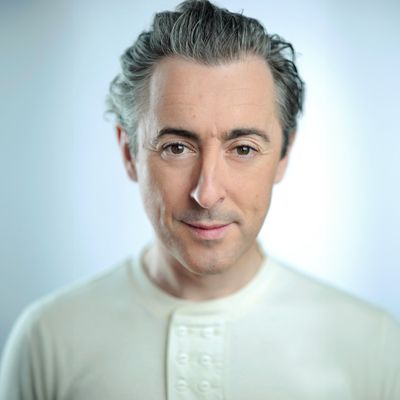
The Tony, Olivier, BAFTA and Emmy winner discusses his headline new solo tour Alan Cumming Is Not Acting His Age, tales of backstage chats with the legendary Liza Minnelli and why the Theatre Royal Drury Lane is about to learn about his sagging testicles... Read More
From the show: eleven
Guests
Featured Shows
About
The Tony, Olivier, BAFTA and Emmy winner discusses his headline new solo tour Alan Cumming Is Not Acting His Age, tales of backstage chats with the legendary Liza Minnelli and why the Theatre Royal Drury Lane is about to learn about his sagging testicles. Plus, how he’s turning his legendary The High Life into a stage musical in 2025.
Host: William J Connolly
Produced by: William J Connolly/Darren Bell
fw-live.com/alan
Welcome to eleven. The official theatre podcast that brings the biggest stars and creatives together in one place to discuss life in the arts. Follow eleven on social media via @elevenpodcast and via elevenpodcast.com.
Transcript
This transcript was automatically generated and might contain errors.
[0:01] Alan Cumming: My name is Alan Cumming, and you are listening to Eleven, the official theatre podcast.
[0:17] William J Connolly: Hello and welcome to Eleven, the official theatre podcast that brings the biggest stars and creatives together in one place to discuss life in the arts. He's the Tony, Olivier, BAFTA, and Emmy-winning superstar that's become a legend within our industry. Known for his standout acting skills and leading musical talent, he's earned a name for himself across the globe and bagged a few of those rather impressive gongs along the way. And as he fast approaches a certain milestone birthday, he's here to let you know he's not acting his age. So here in an exclusive conversation direct from his home, we dive into what exactly is acting your age and who decides. Plus, we talk about audience reactions, all things Club Cumming, and why the Theatre Royal Drury Lane is about to discuss sagging testicles.
Plus, diving into some of the now more infamous shows, both on stage and the big screen that have become key staples of his illustrious career. We find out why audiences just can't get enough of all things like Cabaret and the honour of his rather dear Scotland throwing its arms around him with some rather special awards. We also find out how he's turning his legendary show, The High Life, into a stage musical in 2025. Plus, there might also be some tales of backstage chats with the one and only Liza Minnelli. It is the legendary Alan Cumming here now on this, the next episode of Eleven, the official theatre podcast.
[1:45] William J Connolly: To ensure the safety of all involved in this episode of Eleven, Alan and I connected for this conversation digitally, so please forgive any brief moments while we wait for the internet to catch up. Enjoy.
[2:00] William J Connolly: Please help me welcome to this, the next episode of Eleven. He's the Tony and Olivier-winning icon of our industry that's doing anything but acting his age as part of a brand new live show that's set to thrill us all. This is very, very exciting. So please help me in saying a very good morning to Mr. Alan Cumming. Hi Alan, how are you?
[2:16] Alan Cumming: I'm very well. It's nice to talk to you. Acting your age, I can't imagine is something you've ever really done. And I'm obsessed with the idea of the show. So I guess let's start there. Big smile on your face. Talk to me. Where did the idea of this show come from? And I guess is this a rejection of that terrible thing we call age?
[2:31] Alan Cumming: It came from sort of me being obsessed with the idea of aging as well. Like when I do the show in London, I'll be one week away from being 59, which is insane. And I'm, you know, my next big birthday is 60. I can't even say it without laughing. And I definitely don't feel like that. And I've always been sort of told, oh, he's boyish, you know, puckish, childlike, all this stuff. Yeah, I'm clearly a middle-aged man. So I've become obsessed with the idea of what is this thing about we've got to act our age, we've got to sort of, you know, have a age appropriateness. And who gets to say, who tells us? And so I sort of started talking about that, and I realized that all these things were we’ve made aging, getting older into the worst possible thing that can happen to us.
You know, why other cultures don't do that? And we're constantly told, you know, you just see evidence of it everywhere. People trying to look younger than they actually are. And I just think it's a mental shift we've got to make. So it's a show about aging, and I sort of try and see all the positive things I think about getting older, about having wisdom, about having, you know, gained your experience, as Shakespeare said. So that when it comes around again, you've got some experience and maybe bad experiences in your past to sort of help you fuel your decision of how you're going to deal with it this time. Like I, you know, I maybe won't have this toxic relationship again, things like that.
I will choose better. So that to me is really fascinating. And I think also there are some negative things about getting older. Obviously, you know, last year I did a dance theatre piece for the National Theatre of Scotland about the life of Robert Burns. And I mean, it was partly because I thought I'm 57, I wonder if I can do this. I did the whole show with just me and it's dance heavy. How will that go? And it went fine, but it was a long, long, long recovery process, physically. And so that was obviously, I think, oh, that's because I'm older. But I just feel like all these things are sort of just limitations we have put on ourselves because of this way that society looks at getting older.
So it's all those things, those are all the things that I was fascinated by, and those are the things I discuss in the show. Along it's it makes an old-fashioned sort of cabaret. I sing songs and tell stories, have a nice band, and I just sort of muse on these things and try and sort of make some cogent points, and ultimately, I might I want people to say to question, you know, who it is that gets to decide how you act, and to actually think, don't let someone control your spirit, don't let someone dictate to you how curious you can be. Keep being curious, you know. That's the thing. That's I think what kills you. When people stop being curious, you may as well just lay down and die. So that's really what the show is about, and with some funny songs.
[5:06] William J Connolly: Isn't it interesting how we go through life where it's like the expectations the older you get, apparently that's supposed to be a negative thing, and that's what society proclaims. But yeah, actually, I feel like perhaps you've got to a point now where you're rejecting that because you're saying, No, I'm actually enjoying this period of my life. It's almost like you're battling against the system.
[5:22] Alan Cumming: Yes, definitely. I mean, I feel like that. I mean, I've always been someone who has, you know, trodden their own path and been my own man and all those sort of clichés. But it's true. I don't, I and it's kind of lonely as well. Like, I don't really know anyone who does the things I do. You know, I dip in and out of lots of different sort of circles in my work. But I feel the fact that I've always just kind of done what I want to do. And if I get bored of something, I do something else. And I think I'll have a go at that. And I've not been afraid to step out of my zone, my comfort zone, both sort of physically as well as my societally. I've not been afraid to do that, or I have been afraid, but I've done it anyway.
And I feel that that is a good sort of training for getting older because getting older means that you're much less encouraged to do any of that in any way. And I've just, yeah, I've just kept on doing it. And I just sort of think, well, what's the problem? What the what the why are you? I just it's interesting. I think I have a club in New York called Club Cumming, which I talk about in the show as well, because it's sort of an interesting part of the getting older thing. Like in it's a nice, it's nice to have a place where you always have a place to go when you want to go out, and also a place where you have a constant stream of meeting new younger people. And I think that's something as well that when people get older, you have to actively seek out situations where you get to know younger people because people just tend to sort of stay with the pack that they were with.
And so for me, it's really important. I'm really, you know, I always I have my assistant, I always love having a younger person as my assistant, and that's really great to have sort of I think it's really good to keep to keep up with what is happening, what it's like to live as a 20-something in this era. So I but the whole club thing is part of me, I think, not wanting to just sort of settle down and go that way. I think it's really exciting to also give back, you know. And what's great about Club Cumming is that it's a cabaret bar, and so it's sort of there's lots and lots of young performers that get a chance to perform there, and it's become a sort of place where people like I go to the theater sometimes and I see in the program, oh blah blah has performed at, you know, blah blah Joe's pub Lincoln Center and Club Cumming.
And I think that's absolutely hilarious. But it's really important, I think, to just stay open to things and not lie down. I mean, that I it's funny. I'm going to quote Liza Minnelli now, if I may, thank you. She when she was used when I used to go and see her backstage and she did a concert, she always used to have this thing on her wall on our mirror that was a thing that her dad had said, and it said never stop moving. And that was what obviously it's the thing as a great thing as a dancer as well. But I just think it's a thing in life, you've got to keep buzzing, you've got to keep it keeps you and not it's not just about keeping young and keeping alive, it's about keeping interested and sort of you know, not just thinking, oh, that's me done. That's the thing. I think some people think that's me done now. I'm too old to do that. And I just think, God, that's so sad you feel that way.
[8:19] William J Connolly: But also when you've had a career that's as significant as yours and you've had these wonderful experiences that yes, you can reference in the show, but you are a melting pot of all of these experiences that you can, as you explain with the age thing, you can then pass on, advise, support, and better other people's lives. And I feel like actually, with age, you become the opportunity to help others, and I feel like that's one of the things that we miss out on is actually you can help someone else, like do it, you know, speak.
[8:43] Alan Cumming: Yes, yes. I think that's an interesting thing. I talk about this a wee bit in the show. Like in other cultures, you know, mostly sort of indigenous ones around the world, because I started this show off in Australia actually, so it's kind of it was pertinent. Getting older is seen as a thing of value, and the elders are really important people in the community. They do pass down wisdom and experience and stories, and I think we have lost that. It's sort of, you know, it's as I say, it's seen as a huge negative. This idea, this thing that is inexorable, getting older is we have chosen, we have creatively visualized it as a total negative. It's so stupid, actually, just in a kind of self, you know, sabotaging way.
But yeah, I and I I really do, you know, I realize I mean it's one that's one of the times when I sort of feel like I'm, you know, I with people and I when I go on tour, like I'm in the middle of a tour right now of this both this show and in another show that I do with an American broadcaster called Ali Shapiro, and I'm, you know, talking to people who could easily be my children, and I sort of forget, and it was just nice to forget because you just feel like with two people talking, but then I sort of feel like, oh, I see. I've actually got can give them advice or can give them encouragement, or it comes from a place of having gone through what they're going through. That is a lovely thing. So that's I guess that's wisdom. You know, you've what you've seen life a bit and you've got and you've made some decisions based on your mistakes in the past.
[10:05] William J Connolly: Does being at this part in your career also allow you the privilege to be able to do things that please you as a creative that turn you on, that get say, yes, this is exactly what I want to do? Because going out on a tour on a show that is based solely around you is a very vulnerable thing to do. There is no character to hide behind, there's nobody else's lines that you're gonna deliver. This is you, and you know that the people are coming to celebrate you and spend an evening with you. So are you at the point now where is the expectation great because people know who you are and they want a specific thing, or does it bring a luxury of actually I can tell the stories I want to? I guess how do you approach stuff like this?
[10:40] Alan Cumming: Two things. I feel I've always really kind of done what I've wanted to do. I mean, it's got more eclectic as I've grown older because I've been more comfortable. But you know, even from the start of my career, you know, when I was when I just was I'd left drama school, I was working as an actor, but I was also working doing stand-up comedy with my friend Forbes Mass. And we, you know, we had this thing called Victor and Barry, and it's funny because next year we're releasing a book because it's 40 years since we made them up and first performed at the Edinburgh Festival. And then we're gonna do then we did a sitcom called The High Life about, you know, campy flight attendants, and we're doing that, making that into a musical in 2025.
We're doing that. And so I've always kind of done this sort of way that I am in terms of being, you know, eclectic and doing lots of different things that maybe don't all seem to match, has always been the case. But I feel that the older I've got, you know, the idea of doing a show on your own, that's a whole different ball game. And I was always very scared of that. I used to be really scared if I'd stand up and make a speech or something, you know, that would really, or if awards or something, awards ceremonies when you've got to go out and that would really scare me. In 2009, so like what, 14 years ago, I was asked to do one of these things at the Lincoln Center here in New York, the American Songbook.
And so basically they arranged for you to sort of have a show, you know, you do a show. And so I did that, and then I had like a musical director and a band and a show, and it's so funny because Lincoln Center, you know, it's a pretty big venue. That was where I was making my debut in concert. And whilst I was doing it, my musical director was working in with the people in Australia for the Mardi Gras Festival, and they heard about it and said, Oh, would you like to come here too?
[12:18] Alan Cumming: So, my first two venues that I performed in as a solo cabaret artist, concert artist, were Lincoln Centre in New York and the Sydney Opera House in Australia.
[12:27] William J Connolly: Wow.
[12:28] Alan Cumming: So that's one of that's one of the downsides because you can't start small. I decided, you know, I've got big balls, I decided to just embrace it and go with it. And so that was a very different thing because I um when you walk on stage as you, there's no veil of a character between you and the audience. I I'll do anything as a character. I've done the most sort of insane, vulnerable things. But when it's just you talking about stuff and talking about your own experience and your own life, it is very, very different. And it's but once I once I did it and I got the hang of it and I've got much better at it, it's so liberating because you are able to really connect with people. I mean, really, you feel the connection in the room.
Yes, they're coming to celebrate you because they know you already, but oh hopefully they're finding out more things about you, or you're leading them to new thoughts and new experiences, and and also just I've got better at singing and I've got better at telling stories, and and I really love telling stories. I've got, you know, my husband and my friends are always like kind of saying, Oh, tell the story about blah blah. And I think that's a really great thing. It's actually one of the things that we we should do more often because that's how you know cultures used to pass down orally, pass down stories about their about their experiences. So I I'm advocating for that. But it is a great thing to be able to go out on the road and when you walk out on stage and people are so excited to see you.
It's I mean, there's a pressure because you want to do your best, and you want them to you want to make sure they've made a good decision to come and see you. But it's actually really liberating, and I've really I've come to enjoy it when it's fascinating, something that terrified me, and now I really look forward to it.
[14:01] William J Connolly: Also, for you, like how do you look back through a career, perhaps find something that you want to talk about and merge that as a creative with the creative part of your life with with a set list and with songs? How do you come to create something that you know is gonna please, as you just said, the people that are coming to see you, the people that are gonna want to see the hits, the people that want something new, but also for you as the person that's got to perform it, because this is an experience for you, I imagine, as much as the audience.
[14:26] Alan Cumming: So I guess how do you find a set list that marries all of those rather wide things? Um, you know, it takes a while. I I usually have a list in my phone uh of songs that I'd like to sing. Suddenly a song will come on somewhere and I'll be like, oh, I should sing this song. But I'm not people are not coming to see my hear my mellifluest tones. You know, I think they're they're coming to hear me, sort of maybe see hear and see me act a song and uh and uh show my spirit to them. So I feel that I there are songs that I want to sing because I feel I can bring something to them that will illuminate them in a way that maybe people haven't heard them in that way before. That's where I think my value as a singer is and a cabaret artist is.
So I I have a list of songs I think, oh, that would be great. And I actually really love singing songs that people already know, especially sort of pop songs that are all very overproduced when you first hear them. There's a few that I've done, and I actually think when you actually peel all that away and just sing it in a sort of bare way, this it's revelatory to people because you think, oh, I didn't know that, you know, the climbing by Miley Cyrus was so profound and things like that. And I there's a few songs in uh that in this show as well that I he'll do the same thing. So I have this overall list and it kind of starts to take a and I know that there's like this show I wanted to talk about aging and stuff like that, and getting older.
So that was obviously the overall thing. So you just sort of they come to you and then the stories, I uh there's certain things that certain topics I want to talk about, you know, like death, sex, sort of younger people uh and also, you know, things, negative things about going to the you know, going to the dermatologist, sagging testicles, stuff like that. You kind of just find ways. I find ways to tell stories where I hopefully can sort of please people who want me to mention the things they know me for. But I don't sort of dwell on those things. I mean, it's not about my greatest hits as an actor. I do mention Cabaret a couple of times because they're relevant to the stories. I mentioned I mentioned the good wife because it was at that moment when I was offered that part that I realized, oh gosh, I'm a grown-up.
I'm going to be asked to play grown-ups, people in suits, middle-aged men in suits, things like that. So I kind of reference them tangentially that and I do sing one song from Cabaret in the show, but um I I feel as an there's a way to do it to just tell your story and hopefully not to, you know, it's it's like when you go to a concert and they don't play the hits that you like. I sort of try and drop the hits in so that people will, you know, I mentioned things in passing that hopefully will do it that way. But it's very much a you know a deep dive into my crazy mind.
[16:51] William J Connolly: I think you may be the first person to ever mention sagging testicles on the theatre or jewelry lane stage.
[16:55] Alan Cumming: So well don't.
[16:56] William J Connolly: You're welcome.
[16:57] Alan Cumming: Yes, yeah.
[17:02] William J Connolly: We've referenced about obviously about the fact that you know you have this very loving audience, people that want to come spend time with you. And I think that's something that theatre performers, it's almost uncool to like be almost very overtly appreciative of the fact that people fall in love with the performance or you as an individual in the varying different touch points that that they've interacted with you, either for a first time or throughout your career. But when you get things like a portrait in the National Portrait Gallery up in Scotland, or you get your BAF or your Scottish BATFA, are those the moments where it all starts to make sense for you? Is that the bit that almost means the most because you're being celebrated as an individual as well as everything else?
[17:40] Alan Cumming: Yes. I mean, I that's very uh sort of astute of you because I it I mean I do feel I do feel beloved, you know. I feel people like me, and I feel I do feel the love, and um, and I think and I you know I think it's because I am my own man and I say I speak up for things that I feel are important, and I so my my spirit, my personality, I think they they and I think it's interesting that people when sometimes when you play a character, you're playing a character, but the people know something about you, so that they it's almost like you're kind of raising your eyebrow, sort of metaphorically, because it's you playing it and what they know about you and doing it, and it's sort of adds to the adds to the sort of uh what you can bring to a character sometimes.
But in terms of just personally, yeah, things like having my portrait there and various sort of accolades that are not necessarily work connected but are sort of you know to a specific uh film or job or anything. But those sorts of things are me really mean a lot to me, and especially of course, I'm a proud Scotsman, and it's so great to feel that you know my country likes me and knows and even even knows who I am and also honours me in this way, and I I yeah, that's sort of to me much more important. I mean, I feel like of all the things I've done, actually the stuff that I and I have also been very vulnerable in my work. I've written books about my life, I've done things that I think I'm very aware that people are getting nervous for me, you know, like just my actual physical safety in a couple of in the Macbeth I did, and last year in the dance piece I did for about Robert Barnes.
So you actually put people in a in a audience in a position of going, Oh my gosh, Alan, are you okay? And the fact that they care like for that, and do that that is that means a lot. So that combination of putting yourself in that position and them actually kidding, it really means a lot, but also I feel the fact that people appreciate someone who is willing to open up. And especially in a in our culture, and maybe more so in Britain, a culture that people aren't as open-upy as they could be. And I think COVID, bizarrely, was one of the one of the positive things about COVID was it made us all much more conscious about mental health and about the need to kind of check in with people on their mental health and our own mental health.
And I think the fact that that's really been a positive thing in terms of the way we think about each other. I think my spirit has come out in a lot of my work that's not necessarily to do with the character.
[20:03] William J Connolly: Yeah.
[20:03] Alan Cumming: And so the the fact that people recognize my spirit is very lovely. And uh, you know, I but I love when I I love that way the way that people talk to me or talk about me. Sometimes I hear like on podcasts, I sometimes listen to podcasts and people are talking about me. And it's uh it's so hilarious. It's so and it's so lovely as well. I mean, it's I it's a really yeah, like I I feel very I mean, I feel like if I died tomorrow, I would feel very, very satisfied and very proud of of what I've done in my work and in my life and what I've stood for and things like that, and how appreciated I am. So I'm a I'm a very happy, sort of satisfied person.
[20:38] William J Connolly: Well, that's good, that's good.
[20:40] Alan Cumming: And yes, yes, definitely.
[20:43] William J Connolly: Thank god.
[20:44] Alan Cumming: I thought you said that and it wasn't really um you've been incredibly calm with your time. There's just one final question that I wanted to ask you.
[20:50] William J Connolly: And and so often with these conversations, this is my favorite question. So let's give this one a go because I feel like especially having these sorts of conversations of people that are doing shows that speaks to them as an individual, but also often connected to a wider conversation is there are points of reflection, which has been a a key point of this about you owning yourself, about self-celebration, and also about I call it the case of the fuck it, you know, I've got to do it now, and I want to do it for me as much as you, and I'll but I want to have a nice time and it often involves conversations thinking back through very specific points of people's career things that fans mention things that mean stuff to you that we wouldn't and it it often revolves looking backwards in people's lives so when you think back to the beginning of your career and you think back to your desire and want to be part of this beautiful industry that we're part of and I imagine to have probably one percent of some of the success that you've had and the opportunities what do you think all of this journey and the man that I've been speaking to for the last half an hour what would the person back at the beginning think of the person sat here talking to me.
[21:48] Alan Cumming: Um I think he probably wouldn't believe it. He wouldn't believe I mean where I've ended up is so far removed from what I thought my you know trajectory would be. I think my little drama school self would would be I wouldn't rec I mean I didn't you know like I live in America I work a lot in America I you know have a sort of Hollywood career and things like that were just so I didn't even know what they meant you know I really didn't know what they meant. So it's just so I hoped maybe one day I'd move to London and blah blah blah that all that that you know so just in terms of geographically and kind of societally that that that I think he would be bemused but but happy. But I think I think the thing is now that you know looking looking the other way backwards I sort of think that I I see how eager I was and how sort of impatient I was which is of course the impatience of youth as it's part of being younger.
I mean I mean I guess the the little one would be gosh, everything seems to be going quite well, you know. But the me looking back, I would say like, you know, it's all right, everything's gonna be okay you know you're gonna there's going to be some uh road bumps. Let me tell you. But actually, you don't have to worry, you know, and I think there's such a lot to worry about when you're when you're young, and especially being an actor about are you good enough, are you sexy enough? Are you you know, all the whatever, all these things that we're and I think more so nowadays, I really feel for younger performers because you've got not only have you got to be good at what you do, but you've got to worry about how many followers you have and all these I see casting things sometimes when I'm producing things or you know, when you see on a thing that you've been sent that's got names of suggested people and it says how many followers they have on their social media, like that actually w affects how uh people's chances of getting jobs, and that was obviously something that I didn't have to deal with at all.
So I do commiserate greatly with younger performers and artists because of all that shit. But actually I think um I would say to myself, it's gonna be okay. You know, you're gonna be it's all it's all turned out quite well. And I think probably my one would say to me, um, you seem kind of familiar, hopefully.
[23:54] William J Connolly: It's gonna be okay.
[23:55] Alan Cumming: That's the one thing I'm gonna take from this, definitely.
[23:57] William J Connolly: Yes, it's gonna be okay, William. Alan Cumming, thank you so much for your time, and most importantly, good luck in January. It's very, very exciting for all of us.
[24:03] Alan Cumming: Thank you very much.
[24:04] William J Connolly: Thank you very much.
[24:04] Alan Cumming: Yeah, I'm so looking forward to it.
[24:06] William J Connolly: Bye bye.
[24:09] Alan Cumming: You've been listening to Eleven, the official theatre podcast. Find out more about Eleven at 11 Podcasts.com or via the Broadway Podcast Network.
© Broadway Podcast Network, All Rights Reserved