

Guests

Featured Shows

About
The Tony-winning superstar on their exciting live concert dates at London's Cadogan Hall, leading with honesty and vulnerability and the power of paving a way for the next generation.
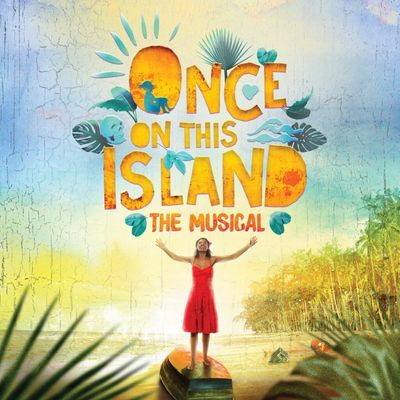
We also talk all things Once On This Island, their historic Tony win for Shucked and why you might not be hearing them sing Independently Owned forever – well, at least not the original key! Plus, the one signature role and show they've got their eye on.
Host: William J Connolly
Produced by: William J Connolly/Darren Bell
cadoganhall.com
Welcome to eleven. The official theatre podcast that brings the biggest stars and creatives together in one place to discuss life in the arts. Follow eleven on social media via @elevenpodcast and via elevenpodcast.com.
Transcript
This transcript was automatically generated and might contain errors.
[0:01] Alex Newell: My name is Alex Newell, and you're listening to Eleven, the official theatre podcast.
[0:15] William J Connolly: Hello and welcome to Eleven, the official theatre podcast that brings the biggest stars and creatives together in one place to discuss life in the arts. They are the legendary Tony winner and two-time Grammy loser, their words, not mine, that's become loved across the globe for their extraordinary vocals and show-stopping musical moments. From Glee to Once on This Island and to Shucked, they're no stranger to stepping into the spotlight and making the world their stage. So here, in an exclusive conversation direct from the US, we discuss what we can all expect from these exciting live dates in London, why life is all about leading with honesty and vulnerability and the power of paving a way for the next generation.
Plus, we talk all things Once On This Island, their historic Tony win for Shucked, and why you might not be hearing them sing Independently Owned forever. Plus, why one legendary and iconic show remains their ultimate leading role to tackle. And like everything they do, it's a full slay choice. They are the moment, and it's a great honor to welcome the iconic Alex Newell here now on this, the next episode of Eleven, the official theatre podcast.
[1:28] William J Connolly: To ensure the safety of all involved in this episode of Eleven, Alex and I connected for this conversation digitally, so please forgive any brief moments while we wait for the internet to catch up. Enjoy.
[1:43] William J Connolly: Please let me welcome to this, the next episode of Eleven. They are the Tony-winning stage icon that's bringing their unmatched talents to British shores for an exclusive set of London concerts. And I'm very honored to say that they join me here now. So hello, Alex Newell. How are you?
[1:57] Alex Newell: I'm well. How are you?
[1:58] William J Connolly: I'm doing very well. Thank you so much for agreeing to do this. It's very exciting for us to get you back on British shores because you've not been gone too long. You were here very recently.
[2:05] Alex Newell: Yeah.
[2:07] William J Connolly: Do you miss us?
[2:08] Alex Newell: Always. Constantly.
[2:10] William J Connolly: Well, you're coming back into our loving embrace, and we're very, very happy to have you back with us. This is so exciting for us. So you're gonna be performing these concerts here in London. And for us, it feels like such a gift to have you here to be able to hear from you, to get to learn from you, for you to teach us about who Alex Newell is. I guess for you right now, or what are we? Sort of, I guess, around about a month out from you performing here. How are you feeling?
[2:33] Alex Newell: Exhausted still. You know, it's funny. You I feel like when I did Pippin, I was shot out of a cannon because I had like two weeks of rehearsal, but like chopped into twos. So I was there for a week and then I went to Italy to film a movie, and then I like did what I needed, and then I had time off, and then I came back for five days and learned all the blocking, met the cast, met the orchestra, everything in five days, and then was on stage performing it.
[3:01] William J Connolly: Well, just a normal week in your life then.
[3:03] Alex Newell: Yes, it's a normal week in everybody's life.
[3:05] William J Connolly: Are you the sort of person then that's sort of while it's absolutely terrifying, as I think it should be and crazy, do you like that sort of level of excitement or is it actually secretly terrifying?
[3:11] Alex Newell: It's secretly terrifying, but like I do everything last minute anyways, so it's just part for the course.
[3:17] William J Connolly: And I think sometimes the excitement is almost part of the adrenaline, right? You sort of have to lean into it and go, "This is crazy, but I'm gonna do this."
[3:22] Alex Newell: Yeah, I try to psych myself and lie to myself a lot.
[3:25] William J Connolly: So, how do you then cope with the idea of it not being a character this time? But this being our opportunity, particularly for people who obviously have seen you have this soaring success in New York, and then for the opportunity for you to come here and for to introduce us to you, not with a character, I guess. How does how do the nerves feel about that prospect?
[3:41] Alex Newell: You know, I've done it so often now. It's not the first time that I've done my little cabaret show where I bleed on stage, not just hemorrhaging singing eight shows a week, but like my actual self. And I find it so it's really fun because yeah, everybody knows me from the TV, and yes, everybody knows me from stage and all the works prior. But I like to tell everybody how I got there because that's what people don't understand because mainly because I've been doing it for so long.
[4:10] William J Connolly: But also, it feels so fresh as well to get the opportunity for somebody of your caliber actually to be that vulnerable. I think that's kind of the extra thing that you don't get as you say with a character is that that's somebody else, but this is you, right? And this is you telling us about the journey to there. So, do you envisage this concert of being a journey, I guess, of your life? I guess what sort of what would a concert like you like this feel like?
[4:30] Alex Newell: Almost it's really my ADHD coming out where I just give clips the entire time and I ramble and I get sidetracked and like give another story and another anecdote, and then somehow I all tie it in to a song in that moment. It's very strange, it's very obscure. I don't know how I put it together.
[4:49] William J Connolly: As a fellow ADHD, I think that's the technical phrase for two of us. I absolutely feel that. And you'll see with these questions that I very much get an idea, and then we suddenly go into a different direction. But absolutely, I love the fact that that's also real. Do you know what I mean? Like as a performer, that's like a realistic real response. So, therefore, if that's what you're thinking, Alex, I want to know it.
[5:06] Alex Newell: Yeah, but like, and like it's just banter, and I get so much from like laughter from the audience because it tells me that they're actually engaged and actually listening, and it makes me feel more comfortable and it feels more like a safe space. There's no judgment when you're laughing the entire time.
[5:23] William J Connolly: I totally agree with you, but also I love the fact that like comedy is, I think, and I know some people obviously are pretty scared of comedy for all the obvious reasons. I think comedy is a great vessel for truth, often truth that we don't feel we can say in sort of a normal rhyming pattern. Have you found that comedy has given you, I guess, greater strength in a way?
[5:42] Alex Newell: Well, yes, because you I look at comedy as a tool to bring everybody's guard down because you're you're laughing, you're laughing, you're laughing, you're in it, but you're also so comfortable when you hear truth, you can accept the truth.
[5:56] William J Connolly: Totally. And I think truth is I assume and would assume for from your behalf, like truth is the name of the game, right?
[6:02] Alex Newell: Yeah.
[6:02] William J Connolly: But because it also shows that, like, though I am this actor that's had so much success and some fame, it's just like I'm still a normal human being at the end of the day. Like we all relate on that level.
[6:14] Alex Newell: 100%.
[6:15] William J Connolly: Do you feel like truth, if you were to sort of summarize your career so far? Do you think truth has always been the beacon that shone bright for you?
[6:21] Alex Newell: Well, yeah, because you know, when you start your career as a bright-eyed, bushy-tailed 18-year-old on national television, all you have to be and all you know to be is yourself. And whether that's especially if you start on a reality show like I did, you're telling your truth, you're showing your truth, you're being nothing but yourself, and you have nothing to obscure it. It's not like you can walk down the halls of your high school or your middle school and like pretend to be somebody you're not when you have the world watching you essentially.
[6:53] William J Connolly: And then I guess you enter this era where people celebrate you for your truth, right? So, does that help you be more truthful if that's even the correct English?
[7:01] Alex Newell: I don't know. I don't know if it helps or hinders. I think it does make me more of a real person, and sometimes I do share far too often. And it's like a lovely balance that we have to deal with. It's hard when you're in a public eye because you can't give every truth away because what is the mysterious or what is the allure of it all, especially when you're a diva? It's like, why do I love this person so much? Like you have to have some allure to it all. But like, yeah, you do get to hide behind some of the what you want to show. And like you can be truth forward. And then you once you find what that truth is that people ride or die for, that's the one you can lean into for the rest of your life while still giving people what they want while still keeping your own private life at the same time.
[7:50] William J Connolly: And there's also a power in keeping stuff back, right? We don't have to deliver everything in order to be truthful. You allow the separation. I imagine that's a key part for your life is the separation of private and very public.
[8:00] Alex Newell: Well, yeah. I think when you are thrust into one of the number one television shows in the world when you're a teenager, you learn very quickly about scrutiny and how anything you can say can be turned against you and used against you. And so you realize what you can and cannot say, and so you do have to keep your cards held to yourself.
[8:19] William J Connolly: So do you think something like these concerts where this is you controlling the narrative, which I think again as an audience member selfishly, I'm like, this is very exciting. But for you, is this a vessel there for you to be able to be even more truthful because it's in a space I hope that you would consider safe?
[8:34] Alex Newell: It's about you celebrating you, driven by you. The space is what you create, and so I think since I do use comedy as a tool to create a safe space, and I can control the narrative, and I get to say what I want to say. Even if I slip up and say something, I know what I'm slipping up and saying. I'm not giving the whole thing away, but I'm still giving you a glimpse in. Everybody can window shop.
[8:59] William J Connolly: How do you begin to build a show like this that you hope will cater towards your needs? Absolutely. But also to people that may have only listened to you on a cast album or may have been over to New York and seen you on stage. I guess how do you start to build a show like this?
[9:13] Alex Newell: Um, I really it's so organic. I think I like choose songs with the musicians and like and my MDs, and I kind of you know, every singer has a catalog that they do regardless. And so I have a catalog of songs that have poignant stories to them. Or if not, I can learn, I know how to turn a song into something that feeds into a story that I have, an anecdote or something. But um, I it's just so organic. It's really how I feel that day. What journey I really want to take people on, where my vocal health is on that day. Because listen, someone told me once, they said your best vocal day is never gonna be when you're singing on stage. It's gonna be like when you're doing something mundane, like cooking or like doing your laundry.
That's gonna be your most vocal healthy day. And so I like to make my shows and tailor make them wherever I go because you know that it is life, and life throws a bad vocal day, and you're very fatigued because you've been traveling across the world for three months. But um, yeah, I think I mold my shows off of like my life experience, and people want to see that more of how I got there. Like I said before, people want to know how did you just show up on the scene? Where did you come from? That's literally what most people say after my shows. Literally, where did you come from? I'm just like, I don't know. Did you not listen? Hello, I've just worked really hard for three hours. Well, you're not paying attention? Also, my greatest vocal days are I mean, I'm basically Celine Dion in my kitchen when I'm giving it some.
[10:45] Alex Newell: So, you know, we all everybody is. Everybody is Celine Dion in their kitchen. Oh, I'm Lady Gaga by showers, sorry, just for just a lot of things. Oh, that's right. That's fine. I'm Beyonce everywhere, so it really doesn't matter. It's very much an approved message. But like I love this idea of you controlling the narrative and but you also being very conscious of the fact that, like, I know you referenced back, people have like their wheelhouse, like people have songs that they want, but also that we do get to hear something that perhaps I haven't heard you sing before. Do you lean into something that is newer to an audience? And I guess how do you find they might want, right?
[11:18] Alex Newell: Well, yeah, you know, I like to start with like the songs that inspire me to do musical theater, which is always like Nell Carter and Aitless Behaven and Shirley Ralph and Titus Burgess, like things like that. Um, and Barbara Streisand, because Barbara Streisand is the second coming of Jesus in musical theater in my book. Um done Broadway twice. She said, never again. She won her Tony and said, I won't be back. Sorry, babes. Thank you. Goodbye. Thank you so much. This is lovely. Um, good night. And also, I like to like create a vocal show of things that people like you said have not heard me sing before. Because when you do a majority of your life on two TV shows that are literal covers of pop songs, and you're known for doing musical theater, but you're also known for pop music that you've recorded on your own terms.
It's like people like, what is your musical identity? And I'm just like, Well, my musical identity is musical theater down because that's what I started off with, and so that's how I craft my shows, and I want people to see that the other textures of the voice, because you know, everyone knows me for being the Beltrist Chanteuse.
[12:25] Alex Newell: We're literally many an hour listening to you on the uh on the YouTubes and on the uh my Spotify. But when you know that people have an expectation, there's this lovely balance I think that artists have of what you want to tell, what people want to hear, you make them wait, you mo in most cases people give them what they want because you know that's always nice and polite. But also I feel like there's an appreciation of you being able to teach new things. And I love this idea of this this like relationship marrying, if that makes sense. Like it's a lovely way, it's a lovely way to do both. And I think what a place for you to be where you can do both, because that's not afforded to everybody, right?
[12:57] Alex Newell: It is not afforded to everybody. I mean, my favorite quote that I always say is not everybody is able. And uh when I I'm so happy that I have a versatile voice and I can do so many things with it. And it's nice that I can give everybody what they want while still breaking expectations, essentially. I guess this is like the part two to that question, but when you know that and you can do that and you are afforded opportunity, is is that exciting, or is that like, oh fuck, I know that they want the very, very big thing part of my voice. Like, how does it play out in real time?
[13:32] Alex Newell: I I don't think I put too much weight into it. Okay. Mainly because it doesn't really I'm gonna do everything that everybody wants. Like it all comes back to me screaming to the top of my register and my the precipice of my existence. People I think are respectful of that. I know we can make sort of light joke out of it, but it's an extraordinary gift that you have that people want you to be safe and sensible with. So I do feel like you sit in a very nice place with it. Do you know what I mean? It's not just an expectation that's unrealistic, say.
[13:59] Alex Newell: Yeah, no, I mean, as I get older, I know that there's only a finite amount of time that I can scream up into the rafters. That's any voice. Like if you stretch an overband so many times, it's gonna it's gonna go away. Or it's gonna get tired, it's gonna be fatigued, and it happened to the best of everybody. Like in my 80s, I'm not gonna be singing independently owned in its original key, God willing. I mean, you never know, but I I I know I really I'm hoping to God that I won't be singing that song in its original key in my 80s.
[14:34] Alex Newell: Obviously, that song did change your life, and that song continues to change your life. And I imagine to have a gift like that song come into your life, like that doesn't happen to a lot of people. Torch songs that are relevant to certain artists are very rare, and you have arguably one of the best.
[14:46] Alex Newell: Thank you. But you know, it's an attestement. Like I can't take too well, I can't take a lot of credit for it, but I can't take take too much credit for it because when I got the song, it wasn't the song. Like the song that you hear that we have now was not the song when I initially got the role. It was so completely utterly different. Not completely, like I think it ended a lot sooner than it than it uh did. I think I did the W O, the key change in the W M M-A-N. Why can't I spell W-O-M-A-N? And then I didn't do as many key changes. There weren't as many key changes, and the whole ending of the parade, that was never there. That was only added when we started Broadway rehearsals because they wanted something bigger at the end and bigger and bigger, and so we landed on that.
[15:38] Alex Newell: And so like it's like a it's like a good, like I that's what musical theater is essentially. Torch songs are not, it's they're all tailor-made to whoever has the torch at this at the beginning. And so that's a collaboration a lot of times because you want the artist to feel free to have their own art attached to it, but also know what they can do and play around with it. Then they can exceed those uh expectations, also while being able to maintain it eight shows a week absolutely for almost a year. Which actually I'm sweating at it because it's hot, but that actually gives me hives almost the idea of me too. Where was the moment in that journey from the Alex that made some decisions there? I imagine there are some like Wednesday rainy afternoons where you're like, curse you, Alex, for making it so crazy.
But where was the moment in that journey where you went, Oh, like this is becoming more than just uh, you know, respectfully more than just a song in a theater show. This is becoming something that people online are paying attention to. When was the moment?
[16:34] Alex Newell: My moments happen so infrequent. Like, I remember we were I remember my first inglation, which was at in um the rehearsal room at New 42, where we had like an invited, invited closed, closed invite only. Like, if we don't know you, please get out. Um, runs, and that's when I got my first innovation. And I said, Oh, it's this is the song, this is what's going to separate. I'm like, Yeah, I get this sounds so pretentious and such a fucking asshole. But like I I always know, I was I I saw I went to see Cat's a jetical ball uh a couple nights ago, and I was very honored to see it with the original old generity uh Ken Page. And he was we were talking about like shows and picking shows and what it's like to pick shows and how fast shows come and go.
And I say, I like to think that I have discernment and really good discernment when I pick projects. I don't do flops, I've never done a flop. Because I have discernment and I let you and I we were agreeing on like, yeah, that that's what it takes. You always know when you read something, whether it's good or not. You always know if something's going to be successful when you hear the music. You always, there's always something that lets you know because the Kool-Aid's not that strong. Like you can be delusional and all you want in the rehearsal process and believe in the project, but still know that there's that little voice in the back of your mind that's like, that's not that good. Oh, that's not good.
I would change this. And if you have those and you have a lot of those, then you know the project's not good. And the entire time when I read Shuck for the first time, I was like, oh, I know what this show is. It's someone that's very sassy, comfortable in their body, um, can sing, even though the song wasn't that like big of a song, but like it was a role that could potentially be a singer, like a really good singer, and the song positioning was in such a great place. Like you, I knew before even starting the project, but that first innovation, that's when I knew that the song and the version of the song that we had was it.
[18:38] Alex Newell: Do you pay attention then when the song becomes not just property of you in the show, but the outside world, and when you know, inevitably the bootlegs start coming and it's you on whatever day of the week singing it and other people covering it. Do you but do you become aware of the noise outside? Do you pay attention to how we do it?
[18:52] Alex Newell: You know, I wish that I could say I was not, but alas, I have trolley friends that they don't care about my feelings. They will send me every clip that I've ever done in my life because they hate me. And my mother also has me on Google Alerts, so there's no hiding. I have friends that will send me like drop box links of someone else's audio recording of the show. But I don't know if that's healthy, Alex. I don't know if I like that or not. I'm aware. As soon as I walked off stage of Pippin, I had a drop box link of the audio recording of it. I said, excuse me, we're crazy. They think that I want to hear myself. And let me tell you, I don't.
[19:31] Alex Newell: Do you know what I thought you were going to say? I'm gonna be like, of course I do. Of course I know. Oh no, I never uh babes and I never want to listen. So you don't have Alex Newell on a uh Google like your mom. No, I can't. It would drive me up a wall. Have you ever gone down the YouTube hill of YouTubeing yourself? No. No. Okay. Well, there is a lot of videos of you online with a lot of very comments, I promise. This conversation was supposed to make you feel better. I'm so sorry, I promise. Oh, it's fine. As long as they're good com like great comments. That's also why I don't watch the stage door anymore. I know, like I can't because I do get in my head because people, especially over here, they've said some mean and nasty things to my face, and I'm just trying to keep them safe.
[20:14] Alex Newell: But one thing I did love, and one thing I thought was very respectful, which is I guess a little bit of a sidebar. Maybe this is the ADHD kicking in, but I love the fact that when you were doing Shucked and it was this huge thing and you had covers and understudies, that they weren't trying to be you. That there was they very, you know, the internet sort of took it a light and said there are varying different people and versions and sounds that are trying to do it. And that felt very inclusive for theater, but it also felt very rare that we weren't trying to just copy and paste the lead. Was that a deliberate decision from your knowledge? And I guess why do you think that was important?
[20:45] Alex Newell: I don't know. I know that I say this all the time. It's just like you don't have to emulate or try to be anyone other than your true self. And I know that me singing that song was I mean, it's ridiculous. Let's call a spade a spade. The song is fucking ridiculous. It's too high, it's too much, it's too, it's just so much. And that's what makes it thrilling. That's why I go to theater. I want to see somebody do something that is thrilling to watch. I think that's why we all do it. And like even like watching Caroline Invickler sing Walls and all the other songs that she had, they were all so high. They were all high, but she sounds so effortlessly up there that you don't realize it until you're trying to sing it.
[21:30] Alex Newell: And then you're just like, well, I'm untalented. I'm untalented. And I know that our MD worked with all of the covers of Lulu to kind of find their own identity because that's really what the stamp is. Once you get to the key changes of the W O M A N's, W M A N, like singing all of that up an octave plus some is hard. And so finding how you sound best in it and finding how you interpret the notes is great because at the end of the day, people want to feel, be impressed and hear the story that you're saying. Like there are matinees where you didn't care what I was singing, which is, I mean, because it's a Wednesday matinee. People are tourists in the city and they're just like, I just want to be entertained.
Sure, sure. I mean, and you have to think about that in levity, like it's hard to hear, but like you have to remember that that's a thing. Not everybody, as famous as somebody can be on in one media, there's going to be somebody that doesn't know who that person is. I mean, those audiences are completely canceled in my mind, but I see the point that you're trying to make. Bless you for being humble, but yes, how dare they cut off his Alex. Like it's like there, there are people, like I have done one of my best matinees in the world and gotten the most tempted reaction out of an audience. Couldn't even bear to clap their hands. And I said, well, I'm still here. Let's give them a show, y'all. You don't applaud it into this podcast, Alex.
I'm gonna be so upset, but just a note for you for I've also seen Wicked where she sings Defying Gravity, it's this big thing. The girl's absolutely belting a you know what's off. And then it's just like clap clap, where's the toilet? I think you have no freaking idea. But that's what it is. And so that's like the expectation to be perfect and to sing what's on the page brilliantly every show. That expectation is so hard to live up to, especially when you're greeted with people that just want to be entertained. They don't care about the notes of the page, they don't care, they just want to see a good story. And I think that's what's great about your talent, if I may be so bold as to say that you lead with story knowing you have this voice in your wheelhouse, but it's not the principal part of what you're performing.
And I think that's between, you know, performers that do respectfully rely a lot on their voice and not on what they can deliver. And I think that's a losing game to rely on. But it also gives you so much freedom as an artist to not have to like rely on one thing. Like there are days that I walk on stage without a single voice. And I still will get on stage and I will give whatever voice I have that day to the audience and act the girls down.
[24:05] William J Connolly: Did you find that this approach, which I think is probably the principal approach that you have, remained or did it change pre to post Tony win? Did anything change for you or was it business as usual?
[24:17] Alex Newell: You know, it was business as usual because it's this sounds crazy. It's like so you work, work, work, work, work, work so hard to get to Tony. It's me work, work, work, work, work, work, work, work after Tony to prove why you got the Tony. Especially, which I always I don't know why it I like side eye it a little bit because like all the plays at the Tony's are always closed by the time they get their Tony awards and things, and so they don't have to go to work. The musical theater girlies are out here slinging their throats after winning, partying and getting one day of bereavement. And also probably also doing a show on the same day as the Tonys as well, so often like hello. I think that is an abomination to be honest.
I mean, we love you, Tony Awards. Thank you for the award. It will keep in mind my head. I love it. I love it. It has nothing to do with them. It has nothing to do with them. I want to talk to the Broadway producers, darling. Please stop making us work so hard. Let's vouch for a one show week. How about that? I think everybody would listen. I feel like if you'd make so much money, still be cheaper than some shows that I've seen on Broadway. But anyway, we digress.
[25:20] William J Connolly: We digress. I did want to just ask you about Once On This Island because I feel like that show not only changed your life, but also did inevitably play a huge part in it coming to London. And so many audiences here just fell in love with that show and continue to demand that there is a proper West End run for it. Do you like the fact that there's so much love for that show? And in particular the fact that I think it was like part of this sort of duo of you being on stage where people were just so desperate to see you perform that show. And you know, you must be proud for the fact that it did continue and it did come to London, and I guess the journey lives on.
[25:51] Alex Newell: But you know, I've always had a special extreme soft spot for Once On This Island in my heart. Like it was I've had two dream roles my entire life and career. It's been Effie in Dreamgirls and Asaka in Once On This Island. And to play one of the two, and that being my Broadway debut was so crazy. Because like who, what, when does that happen for anybody? When is like when are you playing your one of your dream roles on Broadway at your debut? That never really happens. And to have such an all-star cast and such a very new ideology and interpretation of it was so brilliant and so poignant. And to get to honor all the Asakas that have come before me, Lillius White, sorry, Keisha Lewis, who was the original, Lillius White, who's a replacement, and then Sharon DeClarke, who did it on the West End years and years and years ago.
The first one over there, it was truly beautiful because both Lillius and Keisha came to see it. And it just really just like validated all my feelings and all of the work that I've done and just really made me fall in love with the process of like doing a revival. Because there's a difference between creating a new show where you are the person, but doing a revival and being able to honor the people that created it and gave it its life and have that special connection with them is so beautiful.
[27:22] William J Connolly: Absolutely. I should say in my introduction there, I just said Once Upon This Island, but Once On This Island. I do know that before the musical theater stans and TikTok's not coming for me. I'm not a complete and utter idiot. I read the word a part on my screen, but I know it's not that. So don't at me, don't hate me. But also you did for that for the musical theater album obviously get your Grammy nomination as well, which is crazy for you to be celebrated also for your performance and then also your voice as well, which I think must be a great honor to be able to marry the two.
[27:48] Alex Newell: It is. You know, I'm a two-time Grammy loser. But we don't talk about that often.
[27:54] William J Connolly: You're also a Tony winner, so you just be like two fingers to anybody else.
[27:57] Alex Newell: I got it. It's truly, truly, truly. Like, you know, every time there's always a little bit of hope, a little bit, a little bit. Well, isn't it? What's it? Two, two third times the charm? Is that the phrase?
[28:06] William J Connolly: Third time's the charm.
[28:08] Alex Newell: Yeah. Third time, that's what they say. It was well, when I won my Tony, it was the first time. So I was very happy about that.
[28:17] William J Connolly: Okay. You mentioned your other dream role, which is obviously Dreamgirls there. Do you think there's a world in reality where you may make that happen?
[28:24] Alex Newell: I have no idea. You know, I keep saying it. I'm almost aging out. I'm not aging out whatsoever. But like I don't know. We'll see. You know, all of my friends who I love have played Effie. Like I love all of my friends. I love my Anne Riley, I love my Rich Wallace, I love my boy Angela. I love all my girlies. But it's like, can I get a turn just really quick? I mean, I'm not being funny, but Broadway would literally eat that up. I mean, the West End would everywhere in the world would eat that up. So but also I do feel, if I may be bold, I do feel like you're setting yourself up here a little bit because that is a fucking huge thing, and that's like a lot. Like that is a lot. Only doing five a week. One a week. I thought that's what you said. I thought you said one. I thought we said five. I get bored at the house if I'm doing one. Five is not eight or nine or even saw a ten-show week in the West End the other. No, no, no. I'll go back in a shop. I'm okay.
[29:21] William J Connolly: You can respectfully stick that Tony up, you know what anyway. We digress and you'd be very calm with your time. But for people that are gonna get all of this that you've been very kind sort of tell walking me through in person, for people that are sat there in Cadogan Hall, so freaking excited for the prospects of getting to see you and to experience you live. Is there a particular thing that you hope audiences are gonna take away from getting the opportunity to spend an afternoon or evening with you?
[29:45] Alex Newell: You know, I truly hope that people think more about community and what that means. When we lift each other up more and we actually want to invest time into each other, we learn that we're so much better as humans together. Because that's really what it's all about. I have nothing without the community that's raised me up my entire career. I'm not just doing it for myself. I'm doing it for the people that have sacrificed just to make me a success, essentially.
[30:11] William J Connolly: And it's about paying it forward, right?
[30:12] Alex Newell: Yeah. We have to because it's not about what we do today. It's about what the world's going to look like tomorrow.
[30:18] William J Connolly: For you, when you think of all these massive, massive milestones and history-making, groundbreaking, record-breaking moments that you've had, when you think back to the younger version of Alex, who probably one day went, I'd really like to explore what that thing called theater is or live singing or live performance is. What would that Alex think of the Alex that's been talking to me for the last sort of 30, 40 minutes? What would they think of this journey?
[30:39] Alex Newell: Honestly, so flabbergasted that it actually happened. I think that that's truly what it is. It's someone that would just be so elated to know that everything that they thought could happen in a fat in not a way that they thought would happen. Like little Alex was like, yeah, I'll move to New York, I'll be a waiter, I'll be a hostess, I'll do everything that I can. I'll go to college, get a BFA in musical theater, I'll move to New York, I'll do everything. And to have TV fall into my lap, like that's it set everything different. So it would be truly one unnerving for little baby Alex, but so excited to know that it was going to happen.
[31:23] William J Connolly: Congratulations on the journey so far. Good luck, and most importantly, congratulations on what's about to happen because it's all gonna happen for you because you are the most extraordinary talent and such a wonderful human as well. So thank you so much for continuing to sort of blaze the trail for all of us queer people as well.
[31:32] Alex Newell: Thank you so much for that.
[31:36] William J Connolly: Good, good, good luck when you come to our shores in a very not so distant future. I'm very excited to see you. So, Alex Newell, thank you so much for your time. I really appreciate it.
[31:45] Alex Newell: I love it. Thank you, honey.
[31:48] William J Connolly: You've been listening to Eleven, the official theatre podcast. Find out more about Eleven at elevenpodcast.com or via the Broadway Podcast Network.
© Broadway Podcast Network, All Rights Reserved