

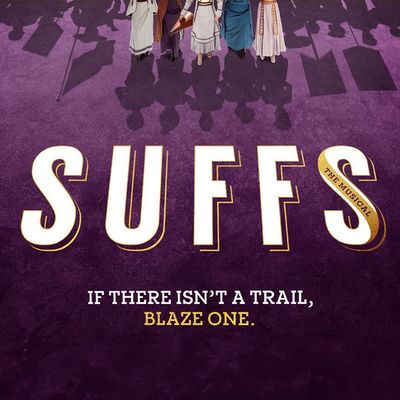
In this episode, Jennifer talks to Rachel Sussman about her various creative identities, specifically through the producing lens. Rachel shares her experience of what led her to choose this particular path within the arts, the history and creation of the new musical about women’s suffrage called “Suffs,” and why she co-founded The Business of Broadway... Read More
From the show: Empowered Artist Collective Podcast - for actors, singers, dancers, writers, creators and performers
Featured Shows
About
In this episode, Jennifer talks to Rachel Sussman about her various creative identities, specifically through the producing lens. Rachel shares her experience of what led her to choose this particular path within the arts, the history and creation of the new musical about women’s suffrage called “Suffs,” and why she co-founded The Business of Broadway. She talks about her guiding 3 P’s, clarifies what producing is and can be, and shares wonderful tools & resources specifically (but not exclusively!) for those interested in producing.
About Rachel: Rachel Sussman (she/her) is a Tony Award-nominated producer, educator, and entrepreneur committed to cultivating collaborative theatrical work built on trust and transparency. A producer with Plate Spinner Productions, she is also a co-founder of The MITTEN Lab, an emerging theatre artist residency program in her native state of Michigan and The Business of Broadway, an educational initiative to democratize knowledge about the commercial theatre industry. Broadway and national tour: Co-producer on Heidi Schreck's Pulitzer Prize finalist and Tony Award-nominated play, What the Constitution Means to Me. Other producing credits include the Obie Award-winning production of The Woodsman (New World Stages/59E59), Saturday Night Seder (Story Course), The Peculiar Patriot (Audible Theater at The Minetta Lane), and Eh Dah? Questions for My Father (Next Door at NYTW). In development: Suffs by Shaina Taub, now premiering at The Public Theater. A past Women's Project Lab Time Warner Foundation Fellow, Rachel was the recipient of the 2018-2019 Prince Fellowship in Creative Producing. She is a graduate of the Commercial Theater Institute and a University Honors Scholar alumna of NYU Tisch. She is an Adjunct Professor at Columbia University’s School of the Arts and New York University’s Tisch School of the Arts.
Rachel’s IG: @rachsuss
Rachel’s website: www.rachel-sussman.com
The Buisness of Broadway: www.thebusinessofbroadway.com
Want to coach with Jennifer? Schedule a session here! https://appt.link/jenniferapple
Monologue Sourcing Promo Link! https://empoweredartistcollective.com/podcastpromo
Learn more: https://www.empoweredartistcollective.com/podcast
EAC IG: @EmpoweredArtistCollective
EAC TikTok: @EmpowerArtistCollective
EAC Facebook: https://www.facebook.com/empoweredartistcollective/
Check Out Our Merch! https://www.empoweredartistcollective.threadless.com/
Any thoughts you'd like to share? Email us at EmpoweredArtistCollective@gmail.com
Transcript
This transcript was automatically generated and might contain errors.
[0:02] Jennifer Apple: Hello, welcome to this week's episode of the Empowered Artist Collective Podcast.
[0:06] Jennifer Apple: My name is Jennifer Apple, she/her, and this week I got to talk to the Tony Award-nominated producer, educator, and entrepreneur, Rachel Sussman.
[0:16] Jennifer Apple: I have been a huge fan of Rachel's for a while, and although I have not met her in person, I was so grateful that she took some time out of her wildly busy schedule to sit and talk to us about producing generally, about her experience from inception to creation of the musical "Suffs" that has just closed at The Public, and about co-founding The Business of Broadway, which is an educational initiative to democratize knowledge about the commercial theater industry.
[0:45] Jennifer Apple: Rachel's energy alone is enough of a reason to listen to this episode. But the resources, tools, history, frankly, that is shared throughout this episode is incomparable. And I am so excited for you to tune in. Enjoy.
[1:02] Jennifer Apple: Hello. Welcome everyone to this week's episode. I am really excited for today because I have somebody on here that I've been a really big fan of from afar, and this is our first encounter ever. And I'm really, really grateful and excited to have Rachel Sussman here on the podcast. Welcome.
[1:23] Rachel Sussman: Thank you, Jennifer. I'm so honored to be here.
[1:26] Rachel Sussman: I'm so glad we can make this happen. I know it was like a little, y'all, as everybody knows. I feel like what is time? But like a flat circle.
[1:34] Rachel Sussman: Literally a flat circle. And it was just, I feel like this is the moment, but it has been leading up to the moment, so the anticipation of the moment has just been really wild. So thanks for finding time on your wild schedule.
[1:47] Rachel Sussman: Oh my gosh, no worries. Before we jump on in, and I like get to congratulate you for all the things that you're doing. Um, tell the listener who you are today.
[1:58] Rachel Sussman: Yeah. Hi, listener. Um, my name is Rachel Sussman. Um, my pronouns are she, her. I am uh talking to you from um Muncy Lenape land in Harlem, New York, um, in my brand new apartment that I just moved into recently.
[2:15] Jennifer Apple: Oh my god, congrats.
[2:17] Rachel Sussman: This is the only background I can share in the entire apartment. The rest of it is chaotic. So you're seeing a beautiful background.
[2:24] Rachel Sussman: Yeah. Because I had to have one background, presume. So I I made that happen. Um and I am very excited, as I was saying to Jennifer, uh, to have a bit of time this summer to hopefully balance some of the work with some life stuff and um take take a beat to re-energize myself and prepare for all the work that's to come in the next season.
[2:48] Jennifer Apple: Yes. Um I guess if you had to put hats on yourself, or I don't like labels is like a phrase, but like what hats do you wear?
[2:58] Rachel Sussman: I love that phrase, what hats do you wear? I also I call it creative identities too.
[3:03] Rachel Sussman: Great. Um, I creatively identify as an educator. I run The Business of Broadway, which I'm sure we'll talk about. It's an educational initiative. I'm an adjunct professor at Columbia and NYU and Berkeley School of Music. Uh and I'm a producer. I am producing every form of the word, um, creatively, strategically. Um, and I and those are my two biggest identities, I would say. Producing is fairly all encompassing of my trajectory in this business.
[3:39] Jennifer Apple: How did you come to those hats? Like, I mean, obviously, like we're in the theater lands, I would imagine. And I'm totally assuming, and that's not fair that like as a kid you were in some sort of theater something, and then it was like move, or was it like no, we're like in business land and like action?
[3:59] Rachel Sussman: Such a good question. I mean, so like so many people who find their way into the theater. I began as a performer.
[4:06] Rachel Sussman: Yeah, I was a competitive dancer for a long time.
[4:11] Jennifer Apple: What kind of dance?
[4:13] Rachel Sussman: All of it, ballet, probably some bad version of whatever we thought hip hop was. Um lyrical point. Like I I really, you know, at one time was doing 17 classes a week and um was like very involved in my dance company. Um, but I also loved theater, and what I learned is there's dance and theater, but there isn't so much theater and dance. So I figured I could by moving more intentionally into the theater space, I was able to continue my dance education and find the joy in it.
[4:48] Rachel Sussman: So I started performing when I was seven. I was in a group called the Knapsack Players, which was like a recreational theater company in our you know town in Metro Detroit. And then I graduated to the Rising Stars, which was sixth to ninth grade.
[5:05] Jennifer Apple: Okay.
[5:06] Rachel Sussman: Which was so formative. And I've uh many of my closest friends today are friends I made in that program when we were kids. And I had very I had a very um wonderful comprehensive high school training. I had I went to public school, um, I took theater for four years. I did uh the musical, I did the play, I was the president of the International Lesbian Society, our troop. For those who are listening, we were Troop 2296. I still involved.
[5:37] Rachel Sussman: And then like, you know, culminated in um because I had this incredibly well-rounded education. I knew from the time I was 14 that there was more to just being on stage or being running crew off stage. So I got to explore these other facets of the business in this really, you know, safe and exciting way.
[6:01] Rachel Sussman: Um in my senior year, I did a dramaturgical analysis. I was very into dramaturgy on a Michael Frayn play, um, Copenhagen, which is like a very dense piece of literature when the Tonian 2000. Um, and I I knew that I loved that. I also loved performing, but you know, it sort of had opened the door for me in high school to realize there's so much more out there. And I ended up going to NYU to study drama.
[6:28] Rachel Sussman: Um, I was in Strasbourg and then I transferred into the ETW studio, experimental theater wing. And while I was there, I sort of convinced my parents as this sort of ambitious, precocious kid that I really wanted to be in New York. And here were the things that made NYU the right school for me versus any of the others.
[6:52] Rachel Sussman: Um coming from Michigan, of course, the University of Michigan is such a prestigious, wonderful theater program, but I knew I wanted to be in New York. So I really pitched my parents on. I was going to be networking and intermingling. And I don't quite know if I even knew what their buzzwords though. Of course, like I'm gonna take the buzzwords, I'm gonna justify them.
[7:13] Rachel Sussman: Um, but I did that. I my freshman year, every semester of school, I used elective credit for an internship.
[7:21] Rachel Sussman: Oh my god. Um I had this amazing internship, my sophomore year. I was had the opportunity to work with Chris Burney, who was then the associate artistic director of Second Stage in New York, now artistic director of New York Stage and Film. And I got to be the fly on a wall, a fly on the wall for this process um of a new play development.
[7:50] Rachel Sussman: And it was like an epiphany for me to be like, oh, I want to make the thing. I want to be in the room with these people, a director, these generative artists, talking about, you know, what are we trying to do here? What are we trying to make? Why is now the moment? Who's it for? You know, all those big questions when you throw all the paint at the wall, and um, and I I had been feeling very much like acting from my perspective.
[8:19] Rachel Sussman: I knew there were other things I liked, and I had known that in high school, and I watched many of my friends who've gone on to have extraordinary careers where this was it. They were like, this is what I want. And I knew that there were other things out there that could make me happy. And um, and I was so I'm I'm a Capricorn, so I also like really like being charged.
[8:40] Rachel Sussman: I'm a Capricorn Aquarius cuss.
[8:43] Jennifer Apple: Oh wow, you are right at the you're January baby.
[8:47] Rachel Sussman: I am January 20th.
[8:49] Jennifer Apple: Okay, I'm December. I am a Capricorn everything except my rising is a Taurus, which should tell you everything you need to know about me.
[8:56] Rachel Sussman: Yes, yes. Um but I I just you know, I liked being in a position of leadership. I like sort of but in a collaborative leadership capacity. And that I felt like as I started that that experience I had at Second Stage really opened the door for me in thinking, oh maybe this is the path.
[9:17] Rachel Sussman: And I found that I was really gravitating toward creating opportunities for producing, and I found it so creative, and um, and also like I I'm a person who likes numbers and likes to make budgets too, and so I got to sort of think strategically and numerically, and um and the the business end of it was really interesting to me too, and so you know, throughout school, because I was in the experimental theater wing, they kind of let me do my own thing.
[9:49] Rachel Sussman: Um, and so my my senior year, what you what you typically do at NYU and the experimental theater wing is you um create your own project and then they give you space and you present it as a part of you know your last semester as a senior, and I wasn't really interested in doing that. I actually wanted to produce a fellow student's work for them, and that could be my project.
[10:15] Rachel Sussman: And so I ended up um producing that at school, and then you know, through my other internships, finding these collectives of other young artists who were interested in producing. Um, and at the time, you know, there there weren't you we can talk about now there are some opportunities that really do exist if you're interested in producing in the theater, but at the time, you know, it was just learn on the job, like put on put on a show and um and figure out like what are the elements that you need to make that happen.
[10:50] Rachel Sussman: And so that to me, I I would say very much so. My experience in the Graves Performing Arts Comp at high school primed me for for my career in producing.
[11:04] Jennifer Apple: Wow. I love hearing how people, I mean, get where you are is like such an I mean, we're continuously hopefully growing and continuing to quote unquote get where we are. But I love seeing how people's trajectories get them to where they are in this moment, and then obviously hopefully beyond.
[11:21] Jennifer Apple: Just because it really is nothing is linear in especially in this field, and so often as humans, we want to rationalize and make sense of stuff so that we can get things straight and do them well. And it's just there's such a wonderful release for me, at least when I remind myself how truly every single person's experience is unique, and that is exactly what makes what we do so fascinating and beautiful, because there really is no one way, and therefore there is no right way, and therefore everybody can do what they need to get to where they need to go. Like it's just really inspiring.
[11:55] Rachel Sussman: Exactly.
[11:58] Jennifer Apple: How cool that you've also had these opportunities to prime you for the thing that you love, which isn't exactly exactly. And I think that you know having a BFA and and understanding, you know, human interaction and the psychology of people, like all the things you learn when you're in acting school makes me a better producer, makes any of us who maybe don't end up being actors better at whatever we do because it just allows you to have more a deeper, more honest connection with other people.
[12:33] Rachel Sussman: And empathy and also just understanding all sides of it as opposed to just the one side.
[12:38] Jennifer Apple: Oh, yeah, completely. Well, I want to hear when you decide to work on a project and produce a project. How do you go about finding it and what draws you to it? What makes you want to work on that type of thing? What's speaking to your heart now with the work that you're doing?
[12:56] Rachel Sussman: That's such a good question. I mean, it really does there's so many factors. I mean, I like to break it down to three Ps, which are people, projects, profits, and typically I would take them in that order. And I I would say that you need you might not have all three, but you should at least have two of the three as a producer.
[13:18] Rachel Sussman: Well depends circumstances, obviously, um will maybe change what those priorities are in any sort of given moment. Um, but for me, you know, I'm really interested in work that has something to say that feels connected to the moment that we're in, um, uh without being heavy-handed.
[13:37] Rachel Sussman: Yeah. Um, but I'm interested in in work that has elements of uh call to action and feels sort of um, you know, politically or socially relevant. Um, and in particular, stories that haven't yet been told. And I focus a lot on stories um by and about women and queer individuals and um people of color, um, because I feel like we've seen so many of the living room dramas as they were pitching some dramas.
[14:11] Rachel Sussman: Um, and I think that, you know, audiences are excited and ready for new experiences.
[14:21] Rachel Sussman: And I think that has been proven over the past few years, pandemic aside, by the kind of work that has been elevated into the commercial space. And, you know, I think I work as a commercial producer. I have a background also working in nonprofit. I don't think it's, I think it's reductive to say one is about art and one is about business. They're both intertwined in both sectors. But in the commercial business, you know, it really is a market. It's, you know, what is going to, you know, not only be artistically successful, but what has financial success. And I was very grateful to be a co-producer on What the Constitution Means to Me, which had a very, very special benefit reading for the National Network of Abortion Funds.
Heidi Shreck came back after years off the show, a tour that she was not in to perform last night. And I think, you know, Constitution, which is a very sort of intimate piece based on Heidi's own experience debating on the Constitution, and then also what she thinks of it today. That piece of theater has many people, of course, thought it was artistically brilliant. But there were questions around, well, you know, can this be successful on Broadway? And by that it's can it make money, right? And like what we say, like can it recoup? Can it make the investors who are gonna put the money in whole again and then make a profit on top of that? And I as of now, Constitution has returned far over a hundred percent of its ROI.
And I mean, there was a tour that completed. So we I think things like Constitution going to Broadway, you know, open the door for all these other experiences because now we can say people do want to see those works, right? And um, it felt like a very um deeply American play, which it is, but people are interested in that, and you know, I think that Broadway for many is it for many reasons is the um goal because there is not only an opportunity to you know make money and and you know then participate in various revenue streams from there, but also for people like me, shift the paradigm in terms of the kind of subject matter we're saying has commerciality and has the potential um and should be seen by so many, right?
Because it's also like the the biggest stage in so many ways, and so that that makes me feel really excited about about um about the world, and that's just an example of a project I'm so deeply proud of.
[17:15] Jennifer Apple: Yeah, that show is everything. Um I have so many thoughts and feelings on it. We can probably like talk about that as like the whole episode of but I feel like kind of in the same vein. I do want to talk about Suffs because I feel like it does have a similar women forward conversation. So we are not usually having forward. It kind of feels akin to Constitution a little bit, and I'd love to hear how that came to be. First of all, congratulations on an incredible run. But um how that came to be and um how it was working on it for you as a particular project.
[17:55] Rachel Sussman: Yeah, I mean, um, so unlike Constitution, which already was fully formed and I helped raise money on as a co-producer. You know, I wasn't actively creatively involved. We had three brilliant lead producers who really shepherded it from New York Theater Workshop to Broadway. Suffs was um an idea I conceived of when I was 12. So I have, you know, a very deep, I was talking to an artist friend. It's like, you know, when when you work on something so deep and so long, it feels like an extension of you in some ways. And um, so um when I was in seventh grade, I had the opportunity to do a project in my history class on turn of the 20th century America. And so I chose women's suffrage. Um believe it or not, this was like pre Google really existing in the way it did now. It does now. So I went to my middle school library, just like typed in ask cubes.com and it was like women's suffrage. Unbelievable. We love a library though, we really do.
[19:01] Rachel Sussman: We love a library, yeah, but there wasn't really much available in the library, and um not sure what your sort of um education was, but for for most, and I was in a public school system, you know, I I would say broadly, the education of women's suffrage in the American system is Susan B. Anthony, Elizabeth Cady Stanton, and they sort of put abolition and suffrage together in a in a quick way. And then you sort of get to the 14th and 15th amendments, and then you know, you're really in World War One, that's a huge focus. And then, you know, just a little cursory note about women got the right to vote in 1920, also prohibition, like all the other things. It's just sort of couched in there. And I found it so interesting.
And I mean, I I could talk about women's suffrage and history forever because the ways in which abolition and suffrage also created tension. Um, the thing that I I really came to learn is, you know, men hold the pen of history, as we know, and all of those books are written by men and from a male gaze in terms of you know, they don't know what these women went through. And so there wasn't really much available in my middle school library, but being the kind of kid I was that made me even more passionate and more determined to find that information. I went to the county library and suddenly like opened up this world of like biographies about Alice Paul and Ida B. Wells and Carrie Chapman Catt.
And I was like, this is insane. Why are these women being kept from me? Like, why don't I know about the women, the legacy of these women that I'm now a part of? Right. And um, you know, women as a whole are pretty uh removed and erased from US history. So I became like a big suffrage nerd and read a bunch about it throughout middle school and high school, and then you know, went off to college to be a performer. And when I made the shift into producing, this sort of found its way back to the forefront of my mind. And I thought, you know, why isn't this a piece of theater so dramatically, like inherently dramatic? Um, and for those who don't know, I mean, um Suffs which focuses on the 10 years leading up to the passage of the 19th Amendment, um, really tells a story of um Alice Paul, who was uh sort of younger radical suffragist in Carrie Chapman Catt, who was more moderate leader of the movement at the time.
And um it's really about you know the two people fighting for the exact same goal, which is to get women the right to vote, with completely different means of getting there and sort of how that tension actually creates progress, and that you need both a moderate and a radical to actually get for change to happen. Um Alice Paul and the National Women's Party, which is the political party she founded, um, they were really pioneers of civil disobedience and tactics of um nonviolent direct action in the United States, which she learned from the Brits, from the WSPU, um and Gandhi also learned a lot from them. And so, you know, I it's very interesting to think that that is in many ways the foundation of how you know we protest, which of course the civil rights movement really solidified.
And now we in New York, I mean, we we protest here all the time. And the fact that it has origins back dating to the suffrage movement in the United States is very powerful. Um, and they were the first to ever picket the White House, um, the more radical end. And they were silent and they were nonviolent, and so they didn't really know what to do with these women. Ultimately, they were arrested for obstructing traffic. They like didn't know how to get rid of that. And um, you know, they they went to prison and they went on hunger strike and it was really like a uh deeply dramatic moment in our nation's history that I feel like so few of us understand or or were taught. And while I think in many ways, you know, the goal of Suffs is of course to share this history so that people know it and learn it for the first time, it's it's not purely educational, it's also about connecting with these women and recognizing the ways in which you know this movement has so is resonating today.
And sort of this was the first wave of feminism, 70s was the second, we're in the third now, and um, and the ways in which you know intersectionality now plays into so much of our um action towards real equity, right? Because and this is a piece of our show, which is examining the blind spots of the white suffragists who at the time many thought, you know, this is single issue focused. We cannot also focus on race. We have to focus on gender. And of course, today, you know, we have the hindsight to recognize you can't actually fight for two things at the same time or or multiple things and exist as with multiple identities. And so it's really, you know, I think all of that is so um profound. And as we gear up for our next chapter of Suffs, we're really digging in to continue to find what you know makes that engine hum even more.
[24:41] Jennifer Apple: Uh oh okay. I learned a lot. Now I'm like I need to why don't I know these things and now I'm gonna go to a library and get my own info. Um can I ask what the next chapter is for Suffs? Is that am I allowed to ask that? I guess I can I'm allowed to ask you don't even answer it however I want um no to the best of my ability I I will say you know our our work is not done. I feel like um the show is extraordinarily ambitious and and epic and it feels I think to so many people important and we want to to do the work to to present this not only this history but this story right because ultimately we're here to serve the the dramatic story um as um effectively as we can so our next step is to continue to do that.
[25:43] Rachel Sussman: I love the and and I promise we will hear more about it soon. I have no doubt I have no doubt we will especially considering it was one of the hottest tickets and no one can see it um unless we had a ton of COVID and COVID oh I know yeah we lost 25 performances due to COVID um which I mean Suffs is only one case I could list a number of other shows in particular off Broadway like Soft and Which Way to the Stage um which were so impacted by COVID and and it's hard, you know, we just don't have the coverage off Broadway and you're no, we're working with much smaller budgets than Barber shows. And I just want to commend I our company, but all the companies and artists who are trying to make live theater right now because it is so hard and it can feel so disheartening.
And we didn't get to open our show. We camped with our opening night of Suffs. And quite frankly, we weren't entirely sure we were gonna close it. We ended up having two shut COVID shutdowns. And we came back the Thursday before a Sunday closing and I had sort of um you know set myself up to say like you know we might not get to close the show. I like sort of had to prepare myself mentally and emotionally and then I was sitting in the theater at intermission and it finally hit me that like we were really doing our last performance and we had an audience there who you know had been trying to see the show mostly since our opening night like all the friends and family who hadn't been in yet and it felt overwhelming and also like I'm just so grateful in some ways I feel like we beat COVID by getting to do our final weekend and finally getting to celebrate.
[27:34] Jennifer Apple: Yeah it's such it's such a complicated endeavor normally and then throwing this in as a logistical nightmare and also just yeah it's not for the faint of heart. And so congratulations for even getting the run and congratulations for having an incredible run despite the fact that you lost many a performance due to the circumstances. But yeah no we know we I I anticipate we will be hearing more about this. Kind of doubling back, how did you find when you had this idea, how did you find your team for it to kind of start going from there? And I guess maybe this is the secondary question and you can decide how you want to navigate it. What is producing then, right? Because it's like if you had this idea, I feel like there's many different types of producers.
And so it's not fair to be like, there's only one way to produce. But this one is like producing from inception versus say a co-producing moment with Constitution. So I guess for this one, navigating how you found the team and then got to produce it from inception up, but also just generally producing.
[28:46] Rachel Sussman: Totally. I mean I can share, you know, first of all, there I mentioned there are two sectors. There's nonprofit and commercial and there's producing within both and often now producing nonprofit and commercial in a hybrid form, which is what we did for Steps in our original world premiere production, the public theater is a nonprofit and we partnered with them, me and my producing partner Joe Furman, as commercial producers to enhance their production. So we did that together. I mean I primarily think of, you know, the producer that most of us think of and I think our recognition of producing in the commercial theater is the person who gets to stand at the microphone when you know you win the Tony Award for best play or best musical or whatever.
The person who talks into the microphone is the lead producer. And then there's normally like a gaggle of other people around them who are all the co-producers who helped them raise money to make it happen. But the lead producer or producers, because there can be multiple, are really the folks who are decision makers and who, you know, pave a path for a show's commercial life. And so something like Suffs, that was a producer-generated idea that I think is more rare than artist-generated ideas. More often than not, you hear of an artist who goes to a producer and says, I have an idea for a project, or here's a draft, and then, you know, it really stems from them. But Suffs was unique. I will say Hairspray is another example of a producer-generated project.
Margot Lyon had that idea to adopt the John Waters film. She, late great Margot Lyon, for those of you who don't know her, she's a very extraordinary producer in our business. But I, you know, having had this idea for so long, Shaina Taub, who is our creator of Suffs, we went to school together. We weren't in the same year. She graduated before me. But we started to be in similar social circles after school. And she was also a musical artist. She wrote a lot of her own music, in addition to sort of working in the theater space as a composer lyricist. And I started to go see a lot of her shows at Rockwood and Octo's pub. And I really like got a sense of the kind of work she was interested in and also her musical style and sound, which is, you know, I think at one point she said to me, it's like Stevie Wonder and Regina Spektor and Stephen Sondheim like all rolled into one.
And I was like, pretty accurate. And I knew that she was interested in, you know, women's stories and she'd been trying to work on this one story which was sort of a gender flip story and I reached out to her and said, hey, I have an idea for a project I think you should write it. I think you're the right person to write it. Can we meet and can I share the idea with you? And she said, hey, I'm happy to hear it. I am doing a show at ART in Cambridge right now. I won't be back for like two months, but if you want to come up and see the show and then go out to dinner, like happy to do that. So I ended up going up to ART. I saw her in the show, we went out to dinner and I pitched on the idea. I said, do you know who Alice Paul is?
And she said, no, I've never heard of her. And I said, okay, but do you know who Susan B. Anthony is? And she said, oh, of course I know who Susan B. Anthony is. Whenever you ask someone that question, they're almost offended because she is like a historical figure. And I said, well, you know, Susan B. Anthony was long dead when women got the right to vote. It actually took three generations of women. So the women who started the movement, you know, Seneca Falls, didn't live to see the end and the women who sort of got the amendment passed weren't there at the beginning, and I felt like that was a really exciting tension. And I told her, you know, I'm sort of interested in telling the story that nobody knows, which is how the amendment got passed.
And as we well know today, and Shayna and I uncovered in the last eight years, you know, in a real journey, the amendment, the 19th amendment, was really just a step toward gaining full equality for women. And that's something that, you know, we try and explore that in the piece, which is, you know, these were flawed human beings at the end of the day, and sometimes they made, you know, politically expedient choices over justice-based ones, and ultimately, you know, this fight continues, and quite frankly, the fight will always continue. And I think that's part of like the generational, you know, Alice Paul never met Susan B. Anthony, she passed the torch. And, you know, young activists today, I think of Greta Thunberg and folks like that who are also, you know, of this legacy, right?
And maybe not necessarily in the fight towards women's rights, but all rights or climate justice, and so I really thinking about it as this cycle of, you know, mothers and daughters and how intergenerational so many of these struggles are, and the fact that our rights are about to be decimated by the Supreme Court any day on the, so I mean, and I will share, so we did a, we went to a rally, our company did a rally and sang one of the songs, which is How Long Must Women Wait for Liberty, which was a real slogan in 1917, and here we are, they're a hundred years later asking that same question. So it just feels to me so potent in terms of the subject matter. And so Shayna, back to Shayna. I took her out to dinner, I asked her these questions, I pitched her on this idea, and I handed her this book, which is the only firsthand account that really exists from the more radical end of the movement.
The National Women's Party was written by their secretary Doris Stevens, who's a character in our piece. And I said, you know what, read this when you get time. Let me know what you think. And then I went home to New York City, and I woke up the next morning with an email from Shayna. She had stayed up reading the book, and she just said this we have to do this, yes. And that was 2014, so that was eight years ago. And then, you know, I being a young producer who understood the boundaries of my skill set, you know, it would be beneficial to us to bring in someone who's more experienced and also has the financial capacity that I don't yet have. And I brought in a producing partner, Joe Furman, who's an extraordinary producer, in the Heights and Hamilton.
And that was 2016, and then, you know, a year or so later, our director Lee Silverman came on board because Shayna, you know, for a while we weren't sure Shayna didn't write the whole thing herself. Are we gonna have a book writer? And then it became very clear that Shayna was feeling very committed to writing it as a solo artist, and that can be very lonely. So we brought in a director dramaturg to really be a sparring partner with her and decided to do that earlier. And then the public did a reading in 2018 and we sort of turned to each other and they said let's continue to develop this together. Let's make it happen at the public. So the rest is really history. Wow. Wow. Oh and I should say we also brought our choreographer Raja Feather Kelly into the fold, which and Raja's an amazing artist, choreographer of A Strange Loop.
That happened, you know, sort of after the pandemic when we had to sort of recalibrate, figure out, you know, who else is joining our team and quite frankly in the wake of George Floyd's murder, you know, the ways in which we wanted to really deeply examine race within our storytelling and our dramaturg Iana Thompson also became so invaluable to our process.
[37:50] Jennifer Apple: Yeah. It's so important to surround yourself with like-minded artists who also believe in the same thing and it seems like throughout every single aspect of this you were so intentional about the way in which the story could be told and continuing to be intentional about the world that we're living in and how perhaps one must shift from initial inception to the ways in which it needs to be, you know, analyzed through whatever we're living through. I think it's really, it takes a certain type of person to be a bit humble and have a bit of humility to recognize that you don't know everything and other people do know more and that actually strengthens the idea anyway. So congratulations on this whole thing. I cannot wait to see it in its next iteration, wherever and however that might be.
[38:44] Rachel Sussman: So I want to shift a little bit now to the Business of Broadway. Talking about that as it's, is it a company organization, foundation, how did, what is the actual label for it before I, I mean I guess we call it a few different things.
[39:02] Rachel Sussman: It's a company really. It was founded by Eric Rothstein, Heather Shields, Dana Lerner and myself, and we've also brought Sammy Lopez into the fold now to join us. And it began really, you know, Erica Rothstein, who's an incredible producer and an artist manager. We were out to dinner in like mid-2019, and she said to me, you know, I'm so interested in like getting in helping people understand what we do. Because the very question you asked, like, what is a producer doing? What does that look like? And it's something I'd also been thinking about, and then separately, you know, Heather had been having these conversations with Erica and we just said, you know what? We just have to do it. And that's also so much of what producing is.
It's like, well, the thing doesn't exist, I guess you have to make it happen. And so it's an educational initiative that really focuses on democratizing knowledge around how the commercial business operates. We're trying to help really, I think artists understand what producers do, and also students who maybe want to be producers or folks who maybe work in another realm of the business. Maybe they're investors who are interested in becoming producers. And so we really try to remove the iron curtain because so much of this, the business end of things has been actively withheld from the creative end. They've like bifurcated those things. And I think, you know, it has led to a lack of trust, a lack of understanding and has created in some ways a hierarchy wherein there are people who know things and people who don't. And from our view at Business of Broadway, we call ourselves Bob or Bob Z. From our view it actually would be more beneficial if we could, you know, share that information because it will lead to more effective collaboration ultimately and building a real trust and communication wherein, you know, I know what my playwright's doing, right?
But they have no idea what I'm doing. And to a degree I think, you know, I trust them to do the work. I don't need to sit there with them while they're writing in the same way they don't need to sit there with me in meetings. But that there's a real respect and trust built that says I know you're gonna do your job and I'm gonna do my job and I understand, you know, like the goals you're working towards in the same way you understand the goals I'm working towards ultimately serve our project at large.
[41:55] Jennifer Apple: Yeah. I mean that's, it's literally how I initially found you was through Heather because of Business of Broadway because y'all's mission is so similar, obviously in a different sector to what we do here at EAC, but really about bridging that breadth of knowledge that we're not taught these things. And it just boggles my mind and I can go on my little high horse about it, but like this whole entire industry is built on the premise of collaboration. And so the fact that we have these, it's gatekeeping, frankly, but we have the gatekeeping and we have, you know, these iron curtains that are separating us from better collaborating is defeating the entire purpose of why most of us enter into this to begin with. Like it really, it makes literally no sense to me and it deeply infuriates me to my core.
[42:52] Rachel Sussman: I know and I can tell and I think, but in a great way. Like, I think, you know, so much of this business and so many businesses are built on this like scarcity mentality, which is like if I have this information, I can succeed, and if I keep it from you, I'll succeed more than you.
[43:14] Rachel Sussman: Instead of your success is my success, your success is my success and like in your success we all succeed. And um, and so I think that's sort of much more of in some ways like I consider it like a growth mindset and this belief in abundance which is, you know, real sharing of knowledge and resources and opportunities which I do with all of my producing colleagues. Um, I think it's a real shift generationally. I think that, you know, this upcoming generation of producers, you know, we I understand it's a competitive, we're working in a commercial industry, there is a certain level of competition. There are only 41 Broadway theaters. Sometimes you might want something that a colleague of yours has, but just because they get it doesn't mean you failed.
Right. Um, and I think you know, that has become so ingrained in us, and you know, to really shift and to say, okay, well, you know, you can actually be a better artist by understanding sort of the building blocks of you know, the management end of things. And quite frankly, I think if we all want to begin to really question and challenge some of the systems, it's hard to do that if you don't understand how they operate. Um, and I find so often that I'm I will talk to artists who, you know, they're angry about certain things because they just don't understand them or information has been withheld from them. And once you know, we have a deeper conversation and I explain, well, you know, how the unions operate, for example, or why certain rules and regulations are in place, they're like, Oh, well, how do we fix that? And then we can have a deeper conversation about like, okay, well, it's great to think abstractly about obviously this is broken, but what how can we find a solution?
[45:13] Jennifer Apple: Exactly. Well, what are some of the things that you all teach, or how does it work if, say, I am an artist who wants to expand my breadth of knowledge about those other things, and I don't quite know how or where to begin? Like, what do I do when I contact you all the business of Broadway?
[45:30] Rachel Sussman: Yeah, I mean, so we're on the business of Broadway.com. Um, and we teach all the time. We teach in the pandemic, I think, you know, we really taught virtually and have been teaching virtually. But um, we started to add and incorporate in-person classes again, which we had done when we were founded in fall of 2019, which is just before the pandemic. Um, but we've really, you know, figured out how to exist in a digital format. Um, so we teach a producing one-on-one course. Um, we try and keep our classes very accessible in terms of pricing, in particular for the one-on-one class, which we consider more foundational, and then we've we have these sort of um 200-level courses, which are more in-depth topics, uh, including creative development, talk about how a show gets made, talk about you know, what does a nonprofit commercial enhancement relationship look like?
Um, we also talk about unions and guilds, the history, how they function today, assessing and transacting and investment, you know, if you were interested in in either becoming an investor or co-producer, how to talk about you know that big stack of paperwork you're given, read and operating agreement. Um, and we also have uh a marketing and social media strategy course. We've really built out this curriculum and are actually working on a few other things now, but uh we we teach uh one-on-one every single month, and then we teach all of our 200 level courses every other month. And if anyone is interested, they can go and look at our schedule on our website, the businessabroadway.com.
[47:10] Jennifer Apple: Thank you for sharing all of that. For anybody who's listening who is interested in producing, obviously, like go to business abroadway and take their classes. But in addition to that, what would be your advice to future producers or aspiring producers about where to even begin?
[47:31] Rachel Sussman: Such a good question. I mean, you know, I I certainly think that producing as as much as you can learn in a classroom. Um, producing is really a skills that you develop by doing because so much of it is interpersonal and um understanding, you know, not only what what the role and responsibilities are, but how to then interact with all of these various other collaborators in a process. Remember, it's not just for producer, it's not just the writer or the director or the creative team, it's also production management, it's general management, advertising and marketing. So there's so many different facets that you are, you know, you have your hand in so many different paths. Um, I would recommend um a couple books.
Um the the first is this great book um called The Secret Life of the American Musical. It's written by Jack Rattell. Um and then there's this more of a memoir um by the great Ted Chapin, former head of Rogers and Hammerstein organization, called Everything Was Possible, The Birth of Musical Follies. It's one of my favorite books. I've read it more times than I know. Um, but Ted was like a gopher, like the guy who goes to get coffee for um Sondheim and Hal Prince on while they were building Follies, like out of town. And they, you know, it's like these young cult these young star collaborators who just finished company, and you know, for those of you who don't know, Follies was not like a massive commercial hit.
In fact, I think many would call it a commercial flop, but it was like this really interesting concept musical, and um and it's just like such a fascinating journey of development. And you know, Ted talks in the book about when Stephen Sondheim stayed up and like wrote I'm still here, and was like, I wrote this last night, you know. Now we think of I'm still here as like such uh part of the canon. So it's really um an incredible book that I can't recommend enough because I think it's also so dramatically compelling. Um, and then uh there is another book that I hold very near and dear to my heart, the commercial um theater institute CTI is um not active right now, but they did put out a book uh a while ago in the early 2000s called The Commercial Theater Institute's Guide to Producing Plays and Musicals, and it's basically just a bunch of interviews with producers, and you learn about you know, they tell you all these sort of anecdotes about their experiences and you know how to raise money and you know their philosophy on producing.
And I there were particular stories in that book that I did not agree with, and then others that like still resonate with me today. So I think it's also understanding the landscape, and for those who maybe do want to consider a career in the commercial theater, you know, I this is one of our fun facts that we always share in our business of Broadway 101 class. You know, when you go to the theater and you pick up your playbill and you open it to the title page, you know, that first line of names, those are the lead producers. And if you start to get to know those, you'll see there are often many co-producers, but the folks who are lead producers, um they uh they have a lot of other shows, and you could sort of figure out like what's their career band and get to sort of understand where did they start many many start as um in other aspects like I was a performer and then I did a lot of interning and I also interned in general management in addition to second stage and like that having that foundation has made me a better producer understanding sort of the general management which we like to consider more of like the CFO if the producer's the CEO.
And so I I really recommend that you that you do some research on all that and then you have to reach out to those people and start to build relationships with them. I'm a huge um proponent of you know you have to you have to ask and I always feel very um gratified when I get emails from young or aspiring producers who are like your career or what you've done has made an impact on me and um and then we can sort of start to build a connection.
[51:54] Jennifer Apple: I was gonna ask you what has if you had to pick one what was the most memorable reach out that you have gotten from a random person and how has that morphed from that initial reach out what did they do and how did it go?
[52:10] Rachel Sussman: I mean it's so interesting it sort of like leads me into a little bit of my philosophy which um I I joke a lot with friends you know I'm sure you get them too Jennifer like pick your brain emails which is like a two sentence email where somebody's like hi it sort of feels like they feel like they're supposed to email you and they're supposed to know you and they just want to pick your brain um and you know, I am always those emails I find really challenging because I know nothing about you. You haven't asked me anything specific. But when I get an artist who, you know, can point to a particular project or, you know, tell me about their own challenges and ask some questions about how I um how I was able to move through a challenge similar, you know, like I find those to be such compelling conversations.
And often, you know, I'll say, we should really like meet up or Zoom about this. Like this is requires more than an email conversation. And then that will really begin to build a meaningful relationship. Um, because I'm really interested in like, you know, I think it's it's important at the part of this business to network and just, you know, say hello and and pick pick your brain. I I absolutely understand that. But I'm also like interested in the folks who are like really deep and invested in their career.
[53:29] Jennifer Apple: Yeah.
[53:29] Rachel Sussman: And our people, right? Because then you're learning. You're learning about a person on the other side of it a little bit more. And then there's it's not just like let me be transactional about career advice. It's like, no, I'm a human being, you're a human being. How can we both connect and and grow together and learn from one another and becomes more of a symbiotic situation rather than just a yep.
[53:49] Jennifer Apple: I hear that. Exactly. Um I I'm so grateful for how open you have been and also how much I've learned in this conversation, which honestly again is like a huge reason why I reached out, A, because like I feel like the ethos of what you do is is in alignment with a lot of what I do, but also I'm really I really admire the way in which you do navigate through your career and it seems so intentional and you're surrounding yourself with people who are dope artists. And I'm just grateful that you've given me and this community some time of your precious time um to distill a little bit of what it means to be a producer in this day and age to have your ideas and to um put them into the world and so thank you for this conversation of which I could continue for so much longer hours I mean I'm I'm so glad to connect with you and get to learn more about you know the empowered artist collective and and know that we are in such like keep alignment and you know there'll be more to come from both of us I'm sure we'll be crossing paths.
[54:21] Rachel Sussman: Oh yeah oh yeah so for anybody who's listening how in the method that is most respectful of your own boundaries can people reach out to you whether they do have a specific desire to express themselves or they're more curious about you know obviously the business of Broadway as we mentioned but what are some of those ways to reach out to you respectfully?
[54:21] Rachel Sussman: Totally um and thank you for asking um so the business of Broadway.com is an easy way to go and sign up for courses I have a website too which is Rachel slash Python I guess Sussman.com um but I'm also on Instagram at Rachess and I'm pretty active and always responding to folks on there um but I do have a section on my website if anybody is interested in sort of sending me an email and then I will respond to you from my real email.
[55:51] Jennifer Apple: Beautiful beautiful um thank you so so much and more soon.
[55:56] Rachel Sussman: Yeah thank you for having me.
[55:58] Jennifer Apple: My pleasure nothing inspires me more as an artist than listening to other inspired and empowered artists doing what they do best in ways that are changing this industry, and Rachel is a perfect example of that. I'm so grateful for the conversation that we had and the resources and tools that were shared. I hope that you found it equally as inspiring and motivating, and perhaps a door was opened for you in a way that you might not have seen before within this industry. If you liked this episode, please like, rate, follow, and most importantly, review us. I cannot express enough how much this means to this podcast and also fellow artists out there who need to hear these conversations. If you did not like this conversation, just let all of that slide.
If you've not yet done so, please follow us on Instagram at Empowered Artist Collective, on TikTok at Empowered Artist Collective, and on our website at Empowered Artist Collective.com. I'm so grateful that you keep tuning back into these conversations. And I cannot wait to have you back again next week. Until then.
© Broadway Podcast Network, All Rights Reserved