

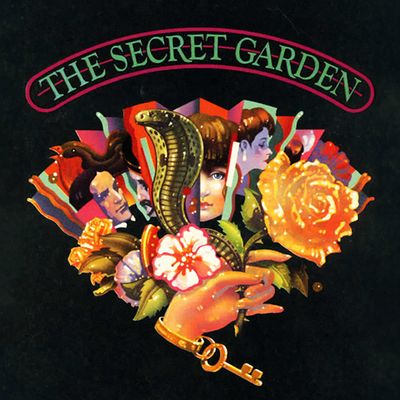
THE SECRET GARDEN. COMPOSER: Lucy Simon. LYRICIST: Marsha Norman. BOOK: Marsha Norman. SOURCE: Frances Hodgson Burnett’s book The Secret Garden (1911) DIRECTOR: Susan H. Schulman. CHOREOGRAPHER: Michael Lichtefeld... Read More
From the show: Fifty Key Stage Musicals: The Podcast
Guests

Featured Shows
About
THE SECRET GARDEN
COMPOSER: Lucy Simon
LYRICIST: Marsha Norman
BOOK: Marsha Norman
SOURCE: Frances Hodgson Burnett’s book The Secret Garden (1911)
DIRECTOR: Susan H. Schulman
CHOREOGRAPHER: Michael Lichtefeld
PRINCIPLE CAST: Daisy Egan (Mary), Alison Fraser (Martha), Mandy Patinkin (Archibald)
OPENING DATE: Apr 25, 1991
CLOSING DATE: Jan 03, 1993
PERFORMANCES: 709
SYNOPSIS: After her family dies of cholera, young Mary Lennox is sent to live with her austere, widowed Uncle Archibald. At night she is convinced that she hears the sounds of crying and discovers that Archibald’s bed ridden son, Colin, has been locked up out of sight for many years. Determined to bring sunshine to the boy, Mary begins to discover the other secrets the house protects.
Director Susan H. Schulman traces the development of The Secret Garden as the first collaboration between an all-female creative team in a Broadway musical. Amongst a female writing team (Marsha Norman/Lucy Simon), producer (Heidi Landesman), and design team (Florence Klotz/Tharon Musser), there are noted recurring instances of significant memories reading Frances Hodgson Burnett’s novel about a little girl struggling with life in a new home. By broadly describing the educational and professional obstacles overcome by three women involved in the premiere of the musical in their studies at Yale School of Drama, a bleak case is outlined for gender parity within commercial American theatre. Despite mixed reviews, audience responses to The Secret Garden were collectively positive and led the show to international success. This chapter examines the ways later female-helmed Broadway productions, such as Waitress, have benefited from or even overshadowed The Secret Garden.
Susan H. Schulman: Broadway credits: the Tony Award-winning musical The Secret Garden as well as its highly-successful U.S./Canadian national tour (Drama Desk nomination), the revival of Sweeney Todd†at Circle in the Square (Tony Award, Drama Desk nomination), the revival of The Sound of Music (Tony nomination Outstanding Revival) and Little Women and its successful national tour. For her direction of the premiere of Violet at Playwrights Horizons (New York Drama Critics' Circle Award for Best Musical), Susan received a Drama Desk nomination for Best Director. She received an Obie Award for directing Sondheim and Furth's musical Merrily We Roll Along at the York Theatre. Susan also directed the national tour of Sunset Boulevard with Petula Clarke as well as three productions for City Center Encores. She has directed for regional theatres throughout U.S.A., Canada and Australia, and most recently a new musical in Denmark. Susan is a graduate of Yale Drama School, Hofstra University and New York's famed High School of Performing Arts. Susan holds a full professorship at Penn State University where she heads the Graduate Program in Directing for the musical theater stage.
SOURCES
The Secret Garden, Original Cast Recording, Columbia (1991)
The Secret Garden by Marsha Norman and Lucy Simon, published by Samuel French Inc (2010)
Transcript
This transcript was automatically generated and might contain errors.
[0:16] Andrew Child: I'm Andrew Child and welcome to Fifty Key Stage Musicals: The Podcast, a companion piece to the Routledge Press publication Fifty Key Stage Musicals, which is available for purchase by going to Routledge.com or clicking the link below in today's show description.
[0:33] Andrew Child: Today's episode focuses on chapter 36, The Secret GARDEN.
[0:38] Andrew Child: And with us today is director of the original production, Susan H. Schulman.
[0:43] Andrew Child: Schulman has directed Broadway's Little Women, as well as the 1989 revival of Sweeney Todd, which garnered her a Tony Award nomination, and the 1998 revival of The Sound of Music, as well as the original off-Broadway production of Violet. Her other credits include productions at the Stratford Festival, City Center Encores, and York Theatre Company. She's currently a professor at Penn State University, where she heads the graduate directing program. Susan, thank you so much for chatting with me today.
[1:13] Susan H. Schulman: Sure, my pleasure.
[1:15] Andrew Child: So tell me just a little bit about your relationship with the musical in question today, The Secret GARDEN.
[1:24] Susan H. Schulman: Well, as you stated, I was the director of the original Broadway production. I met Lucy and Marsha through Heidi Ettinger, who was the original producer, one of the original producers, and the Tony-winning set designer for that production. She came to me one day when I was actually teching Sweeney Todd at Circle on the Square. Heidi came to me and asked me if I knew the story of The Secret GARDEN, and I said, sure. Yeah, yeah. Of course, I had brought it as a younger person and I loved the story. And she told me that they were, you know, in the middle of sort of developing this musical, and wanted to know if I'd be interested in coming aboard in this kind of secondary development stage. And I said, yeah, I mean, I think so, sure.
And so they sent me what they did was they sent me a demo recording of Lucy Simon singing the score. And this is so interesting, Andrew, but a number of people have had this reaction from the opening chords of Clusters of Crocus, which is the little opening sequence that Lily sings. I was hooked. I almost didn't have to hear anything else. It was something about those chords, and we called them the lily chords, you know, that just grabbed my heart in a way that is inexplicable. You know, these things happen rarely in life, and then of course I did go on to listen to the rest of the score, and I was completely captivated by the melodic nature of it, and the smart poetic lyrics, you know, they were just not expected, everything in it was sort of caught you off guard, and you went, oh, whoa, yeah, okay. The imagery, you know, all of that. So I said, yeah, come on, let's do this.
[3:43] Andrew Child: So something that is talked about at length in the chapter is sort of looking at The Secret GARDEN as an early example of a work that is being helmed by women, is being led by women. Was that something that you were aware of and conscious of when agreeing to be able to do that?
[4:05] Susan H. Schulman: We were aware of it after the fact. You know, I can't speak for Heidi, but I know that when she was the originator of this project, she felt that it should be a musical. And she was the one I think who contacted Lucy and Marsha originally. She might have thought this was a story that should be written by women. I mean, after all, it is about, you know, Mary Lennox. It's about a female child going through this traumatic experience. And I think she came to me because of Sweeney Todd. I think she had seen that production at York and something about that. It was her husband at the time was Rocco Landisman, and I think he suggested that she go see it and then contact me. It's only after the fact that we looked around and went, oh my goodness, we're mostly women.
And that includes the designers. All three designers were women as well. Michael Lichtefeld, who's the choreographer, poor guy, was the only male on the creative team. And it was very it was so it was an after the fact kind of revelation. And who knows, it could have subliminally could have been, because when they asked me who I wanted to design the show, we already had Heidi aboard. You know, I was a newbie. I had only done one Broadway show, and I just said, okay. I thought of who's the best costume designer at the time, Theoni Aldridge. Who's the best lighting designer at the time? Farin Messer. I went, I'll take those two. And you know, to our great delight, they said yes. So I think it was just, you know, a question of the things all falling into place that way. And it was I think it was the right decision, anyway, as things go.
[6:00] Andrew Child: Do you think the show gained anything because there were women sort of at the helm of the ship?
[6:06] Susan H. Schulman: Certainly, certainly. I mean, Heidi was the only mother among us at the time. No, I guess I think Marsha had a little boy. Yeah, uh yeah. So there were a couple of mothers involved, but the woman, I mean you know what is interesting, Andrew? During the course of the show, I have many interviews, and people would say, does being a woman affect the way you directed this? I got the same questions by the way on Sweeney Todd. Did being a woman affect the way you directed it? I went, well, of course, being a woman affects the way I do everything. I am a woman, you know. Um, and I guess, yeah, I mean, were we saying this is going to be from a female point of view? Yes, this is going to be from a female child's point of view.
This is a little girl, and she is stripped of any sense of power in that time and under those particular circumstances. Were she a little boy? Her circumstances would not be quite as dire, quite frankly. Um so yeah, I mean I did that answer your question.
[7:21] Andrew Child: No, absolutely. I immediately it brings to mind a Nadia Boulanger quote. Um, that I'm sure I'll misquote it a little bit, but essentially she's asked in an interview. Um, is she shocked that she's the first woman to ever conduct for the New York Philharmonic? And she responded, um, no, I got over the shock of being a woman a long time ago. Um which sounds, you know, is not exactly what you're saying, but it kind of, you know.
[7:52] Susan H. Schulman: Yeah, but the implications are all there, right?
[7:55] Andrew Child: The implications are all there, and good for her. So isn't that shocking?
[8:01] Susan H. Schulman: Right, right, right. What sort of considerations did you have going on in your mind? You know, you mentioned you're hooked by this score the minute it happens. What are you bringing into the room on those first early rehearsals, those first reads, those first workshops?
[8:21] Susan H. Schulman: I think in the discussions about the writing too, we wanted to make sure we did a lot of work on childhood trauma. And just were very clear that we wanted to tell this story through Mary's eyes and through the eyes of a child who has suffered a traumatic, catastrophic traumatic event in her life. I mean, the worst thing, given many child psychologists that we consulted, the worst thing that can happen to a child is abandonment. Okay. Right? Is for their parents to leave them, to abandon them. And in this particular instance, through no choice of theirs, the parents abandon her. But not only her parents, everyone abandons her. Everyone that she had any connection to is gone. And this was, you know, The Secret GARDEN is told in a very non-literal fashion.
And that was a choice to tell it through mainly her nightmares and her daydreams and things that would happen to children where they carry all this emotional baggage with them, which are those ghosts which we call the dreamers, which are all these people from her past life that she tries to hold on to in some way possible. And the only way you can hold on to someone who is dead is through memory, right? And it's Archie says, you know, they're not gone, you know, they're just dead. And um that's such a poignant moment when she says, you know, do you see dead people too? And he says, well, you know, they're not gone, they're just dead. And um, so the this was discussions we had, a lot of discussions about how what is the storytelling going to be.
And this was tricky because non-literal storytelling wasn't exactly the way most musicals were being told in that time, right? And we got a lot of criticism for it, truth be known. The reviews we got were all over the place. They were the best thing ever, the worst thing ever. I mean, they were polar opposites of each other.
[10:30] Andrew Child: Wow.
[10:30] Susan H. Schulman: And um, which is, you know, in retrospect, because it's so beloved, is interesting. But you know, we're not the only show that had that response early on. And um, but it was very important that we be true to this little girl's loss and also to her sense of powerlessness, which so many women go through and experience, right? And especially in that time, right? And that it was very important that she regain her stamina, regain her sense of grit, regain her, you know, the agency is the word is very popular now, right? But it was important to us that that was the story that we see her able to rescue herself, and she does it through rescuing others. And that was the story we wanted to tell. You know, the garden is the perfect symbol, right?
The garden seemed dead, and that's again Dickens says very much what Archie says. He says, things just look dead. You gotta dig deep, and then you'll see the roots are alive. Right? When he sings wicked, essentially it's what he's saying to her. So she encounters these people, all of whom say to her, you can you can come alive again, you can be alive again. And it's so necessary for her to find a home as well, the garden being, you know, we talk a little a lot about the Virginia Woolf room of one's own, right? A woman needing a place where she can be herself, where nobody's gonna tell her what to do or how she should be. And the garden and the rescue of the garden becomes a symbol of that too for Mary.
Um anyway, so this was a discussion, lots of discussion about that, to make sure that the storytelling stayed on track and that it was told through her eyes, so that there was a lot of non-literal storytelling that goes on. You know, people were so concerned about that, you know, people whose job it is to be concerned about that.
[12:47] Andrew Child: Right. It's confusing, people won't know what it's about, you know, it's too symbolic, it's too non-literal, they're not gonna understand what's going on.
[12:55] Susan H. Schulman: I mean, I was so paranoid at one point that I would go out during previews, I'd go out in the lobby and ask parents if I could interview their children.
[13:05] Andrew Child: Wow.
[13:05] Susan H. Schulman: And then I would say to some seven-year-old, I said, Hi, you know, introduce myself and all that. And I said, So did you understand the beginning of the show? And to a little person, they said, You mean Mary's nightmare? I went, Yeah, thank you. See, kids are non-literal. Kids live in a different world. They don't start analyzing, going, well, this and that, you know, a lot of adults, they understand it, but they project that someone else won't understand it, right? So they say it's unclear. I get it, but someone else won't get it. But kids just get it. Was there a consciousness that you wanted this show to be for a young audience or acceptable to a young audience?
[13:56] Susan H. Schulman: No, well, we wanted it accessible to a young audience, but we wanted it, and it turned out to be a show for all ages. That is what it actually turned out to be. It um it's a very romantic show, so it was a date night show, which we liked a lot too, to see people grabbing each other's hands during, you know, certain parts of the show. It's very romantic. Obviously, it's about great love. Um and also, you know, letting go, how you let go of some of loss, which is something we all experience at one point or another, you know, and how you move on, right? Um so we wanted it to be to answer your question. Yes, we wanted to be accessible to young audiences, but we wanted it to be potent for every age.
[14:44] Susan H. Schulman: So again, and I apologize, but I'll keep coming back to the score because this is for listeners who maybe aren't familiar with The Secret GARDEN, just get your hands on the soundtrack. It is uh so exquisite. Could you uh sort of walk us through, you know, these songs are beautiful on their own, and I'm sure listening to the demos was incredible. What was it like to start hearing some of the greatest singers alive perform the score?
[15:13] Susan H. Schulman: Yes, well, she's a wonderful melodist. I mean, Lucy is a melodist, that's her soulless melody, you know. Um and they're transformative melodies, they invade your whole body in ways you're not even aware of. And uh, and I think that um the element of being able to work on a show and have it orchestrated for your production was amazing to have Bill Brown there, you know. Lucy's music, people say was sort of Appalachian. Well, it's really Yorkshire, and Yorkshire became Appalachian, you know. So she's very, she's she's very on target there. Um but she it it's they're emotional, heard Melly is emotional, but they're also um I put this. They're um they're motivational, okay? They're also motivational.
So they're beautiful, but they move you forward. They don't move, they don't lull you, they move you into action in ways. I mean, come to my garden. How beautiful is that? How would I ever know? They're ballads, but they move you to do something, right? They move you forward, they move your emotions to go on to the next thing you need to do. Does that make sense to you, Andrew?
[16:43] Andrew Child: Oh, absolutely, absolutely.
[16:45] Susan H. Schulman: And I think you hit on two great songs that sort of epitomize that.
[16:50] Andrew Child: Right, right. And I think that's what was so unusual to me was to hear a ballad that that didn't just sit back on itself, but was really about I need to do this, or you need to do this, or you know. Um I mean, quite literally Martha's uh hold on.
[17:09] Susan H. Schulman: Hold on, right, exactly. Giving instructions, giving it imperative, you know. It's imperative, right? Um and and you know, I go back to that beautiful lyric that uh, and people quote it to me all the time it's this day, not you that's bound to go away. I I want to cry every time I hear that lyric because we've all been through so much. Yep. And you have to keep holding on to that, right? Mm-hmm. This will get better, this will go away, but you will still be here. How important is that about going through trauma? You know. It also wise coming, it's such a simple thought, and so wise coming from such a visceral person as Martha.
[18:02] Susan H. Schulman: I was just gonna say, when we contrast that with, you know, her song in Act One, you know, she's singing about if I had a wooden boat to all of a sudden have the chambermaid singing to hold on is one of the highlights of the show amidst so many highlights in this score and in this show. Is this a piece that you would have interest in going back to in reviving in doing well?
[18:29] Susan H. Schulman: Interesting. We were supposed just before the pandemic hit, we were going to do a big revival in Australia. Australia had done the show originally. I think um this is a great story. I was seeing the show, uh, the tour ran two years and closed in Vancouver, and I went to the closing. I flew out to Vancouver to be there for the last performance. And there was a man sitting in front of me, and he turned to me at intermission and he said, Would you like to bring this strip this show to Australia? I went, sure. And um, he turned out to be John Frost, who uh is a very well-known Australian theater producer, probably the best known theater producer. And and we did. They packed up the whole show in Vancouver, put it on a boat, and sent it across the Pacific Ocean to Sydney.
Um it arrived unscathed. It was amazing. When they unpacked it several months, you know, a year later, whatever. I mean, it took months for it to get there. It was completely unscathed. Wow. Whoever had packed that up in Vancouver, every little teacup was perfect because they use all the props and everything. Anyway so we had done it then in Australia. Um, and it was a huge success. We had Anthony Warlow and Philip Quast, Marina, very, very high-end Australian musical theater stars in it. And um, it was a big success, and they wanted to revive it 25 years after they had done it. And we were going to do it at the opera house, and it was going to be a big deal. And of course, the pandemic hit, we were all cast, all designed. Kathy Zuba had done the new costumes, and um we were ready to go and the pandemic hit.
[20:17] Andrew Child: So do you think that was that when you were tasked with approaching that production, would that that would have been 2019 or 20 somewhere in that range?
[20:17] Susan H. Schulman: 2020, yeah.
[20:31] Andrew Child: 2020.
[20:32] Susan H. Schulman: Yeah. Is there a difference in the way you are approaching the show all these years later?
[20:39] Susan H. Schulman: Well, you know, Heidi was going to design it again. Heidi was going to stay with it as a set designer because the producers wanted it not to be just dust it off and put it back on, but they wanted it to resonate to the original production. That was part of our mission. They definitely wanted, they weren't interested in re-imagining. Okay. Because everybody's love of that original production was so great that, but it's 30 years later. Of course, I'm 30 years older. There have been innovations in theater technology, right? So Heidi and I went through it with a set that pretty much resonated the original set, but moved in different ways because now you can. Right. But I will tell you, going back, and because Heidi and I at that time, which was about two and a half years ago, went back to see the video at Lincoln Center that captured the Broadway production.
And we were very moved by how um modern it looked. It did not look like an old-fashioned musical. There were no in ones, there was nothing, everything was very uh uh cinematic in its movement. And we thought, oh, look at that. We weren't so stupid, see. Um it that impressed us, and we were delighted. And we were also the other thing that impressed me in watching the video was Sharon's lighting. Oh, how on earth she managed to light those ghosts, those dreamers, and not have any corporal individual walk into their light was amazing. You know how hard that is? That's yeah, that's crazy. Crazy hard, right? And so I I asked our stage manager at the time, I said, You were how did she do that? He said, Well, Susan, it was a bit of a collaboration, you were helpful. It and you know, there's a long way to do it, but we also had five spotlights, which is helpful, you know.
[22:36] Andrew Child: Do you think that your push and your insistence that you tell this story in a non-literal way? Did that sort of keep it timeless, keep it seemingly?
[22:48] Susan H. Schulman: I think so. I do think so. I think because of that, um, it looks modern, it looks modern, even looking at it 30 years ago. You know, of course, we made changes and we added things, we cut certain things we didn't like, made certain transitions better, you know, now that we could, now that we had the technology to do it. Um, but I think yes, I think that's exactly correct. And do you think that sort of now we can say it's pretty standard for a Broadway musical to be staged in a non-literal way. Do you think that has anything to do with The Secret GARDEN and its success?
[23:26] Susan H. Schulman: I hope so. I mean, I can't answer that question, right? Okay. But I hope so. I think that as an example. I hope it motivated certain directors and choreographers and designers. I hope so. Um, you know, it's always been I've always preached non-literal storytelling in musical theater. Um I taught um, I taught the libretto workshop at BMI for years. Okay. And uh, you know what that is, the BM, the Lemmon Angle BMI musical theater workshop. I talked taught the libretto class for many years, and I emphasized um non-literal storytelling. I mean, to me, the more furniture you have, the more walls, doors, and windows, the less you can sing. That's how I feel. You know, the less you can dance, the less you can sing.
I mean, keeping all that stuff away opens up the ability for all sorts of musical storytelling, song, dance, where you know, an upholstered sofa just does not. Uh some years later, I ran into the um, and I said that in a lecture. I said that in a lecture, I ran into the um authors of Book of Mormon, the young guys, and who were at some function, and one of them came up to me and said, Hey, by the way, I remember your lecture at BMI, no upholstered sofas. I laugh. I said, Yep. And he said, Well, you've seen Book of Mormon. I said, Uh-huh. He goes, see, no upholstered furniture. There you go. There you go. And yeah, when is the last big musical that put a couch on stage, you know?
[25:05] Andrew Child: Right.
[25:06] Susan H. Schulman: I well, yeah. I mean, but you know, I mean, we're expanding that into watching um, you know, it's it's stuff. I just had a discussion with one of my grad students last night, and um we were talking about she's working on a uh set and she said, I keep saying to the designers, less stuff, less stuff, you know.
[25:27] Andrew Child: Um, and I go, yeah, yeah. Would you say if a young person came to you and they were about to direct The Secret GARDEN? Would there be anything that you would say this will be the kiss of death?
[25:41] Susan H. Schulman: Avoid it for this show. I would just say literalness will be the kiss of death. Okay. I will say, but I saw a production, I only saw, isn't this interesting? And the truth, I only saw one other production of SECRET GARDEN. I've heard of the other ones and I've been talking about and people have sent me photographs, but I only saw one, and it was done in Honolulu, and it was a community theater, and Michael Lichtefeld and I were flying to Australia, and they invited us, not knowing that we actually could make it, but we were flying to Australia and we thought, well, you know, you can fly from New York to Honolulu, and then from Honolulu, we'll fly to, you know, Auckland and then on to Sydney, and it seemed like, you know, not too far out of the way.
So we did that. And we went to see it. It was terrific. Now it was obviously a community theater production, right? So, but it was diverse because Hawaii is diverse. So the casting was diverse, which didn't in any way impede the storytelling whatsoever. But the director had done such a brilliant job of keeping it not literal, non-literal. And he had never seen the New York production. Wow. So this was his own, you know, his own vision. But he knew how to tell that story. He knew to tell it from the heart and emotion of that child, and through her eyes. And it was beautiful. I mean, it was nothing like the original production, which of course we always appreciate, right? When directors use their own imagination and own vision.
And there were some things in that that I went, gee, I wish I had thought of that. That's beautiful. Oh wow. You know. And so I was very happy about that. I was very happy to see that. So that's the advice that I would give. I would get, you know, just remember, I would say, remember whose story it is, remember what she's going through, remember how she's carried these people with her and for what purpose. And then when she lets them go at the end, then you understand she's home.
[27:53] Andrew Child: I'm curious this non-literal storytelling that you seem to really advocate for throughout your career. How does that intersect with when you are tasked with reviving The Sound of Music?
[28:10] Susan H. Schulman: Which of course, yeah, I mean, it's that's interesting. Yeah, something. Well, The Sound of Music, if you remember the revival, we cut all the interior scenes. So all the scenes, with the exception of the bedroom, the scene in which there's the storm, you know, okay, which was just one little scene, but even that set was non-literal. We put everything outdoors. So there's no interior, no interior scenes. That was the best I could do. Okay, you know, keeping this out of easy, but also if you look at that set, the way the Alps sort of are part of the environments all the time. So you're always aware of where they are and how imprisoned they become when the Nazis take over, you know, so there's that thought too.
And we try to do that, try to keep that surround there all the time. So there was that feeling, you know, of place and what that meant for people in Salzburg at that time, you know. They were caught. Interesting. Uh yeah, and you know, the use of the Nazi flags, which were oversized and expressionistic. People yelled at me for that. They said, you know, it's not real. I went, well, have you looked at pictures of Salzburg when the Nazis marched in? Go online. Look at pictures of Salzburg when the Nazis marched in. They covered every single bit of architecture with Nazi flags. So that was my expressionistic way of saying how the Nazis were trying to obliterate the Austrian consciousness.
[30:01] Andrew Child: Was there pushback from fans of the movie with different artistic options like that?
[30:08] Susan H. Schulman: No, no, actually, we I've had permission, um, which has since not been granted to actually change the position of certain songs. Okay. So I we moved "Lonely Goatherd" to the concert, you know, and "Favorite Things" to the bedroom, and we took "Favorite Things" away from the Mother Abbess. Just because the whole scene leading up to that, she's talking about not singing in the abbey. So I was always like, excuse me, you just spent 10 minutes saying don't sing in the abbey, and now we're singing in the abbey. So that was a little for me, you know, right, a little problematic. Um, so I like the way the movie positioned it better.
[30:54] Andrew Child: Yeah, certainly an improvement.
[30:56] Susan H. Schulman: Yeah, and we got permission to do that. So yeah, that was good. What are the sort of if you look at Little Women, that set is very non-literal.
[31:08] Andrew Child: So did was that a conscious choice as well for that story?
[31:13] Susan H. Schulman: Yeah. Also, I was working with Derek McLean, and Derek and I had already done Violet together. And I remember that was the first time I worked with Derek. I mean, how lucky was I? I work with Kathy Zuber and Derek McLean on Violet. Um, and I remember discussions we had, because you know, Violet takes place, quote, on a bus, right? So, but I also know that I'm not gonna do a musical on a bus the whole time. They're not gonna be sitting in a literal bus. Right. So once we got past that, once Derek, you know, he we were getting to know each other, he was bringing the ideas. And at one point he said, you know what? We don't need a bus. I said, yes, we don't need a bus. We got it. They say they're on a bus, you know.
Um, and so we used all those benches that we just moved around that became everything, became the bus, it became the cafe, became the waiting room, it became anything we needed it to be. And I think it worked great at Breakbirth and keeping it that again, that non-literal storytelling.
[32:27] Andrew Child: And do you think, I'll go ahead and sort of similar to The Secret GARDEN? Does that keep these shows being sort of timeless, being sort of undated?
[32:36] Susan H. Schulman: I'm listening, yes, yes, exactly. I mean, and also it's really not about her bus journey, right? It's about its journey of the heart. So the truth of the matter is what is it really about? Um, is it about that Greyhound bus or is it about what's in Violet's heart, right?
[32:54] Andrew Child: Hmm. Did you see at all or did you see anything from the ART production that was on a moving bus at all?
[33:05] Susan H. Schulman: No. No, okay. No. Um, they had the audience sort of on a bus and you went around Cambridge. And all right. Well, I mean, just um, sorry, just backing up a little bit. The other part of the non-literalness was the decision not to have a scar, not to have an actual literal scar on her face. Yeah, that was something else that Janine and Brian Crawley and I discussed, and that was our decision. And that has sort of been honored in later productions as well.
[33:35] Andrew Child: It has, yeah, it has. Well, it's actually in the licensing agreement.
[33:38] Susan H. Schulman: Okay. They say it's their preference, but they don't demand it.
[33:43] Andrew Child: And can you elaborate a little on the reasoning behind that or the thought process there?
[33:48] Susan H. Schulman: Sure, but it's not about her scar. I mean, the scar reminds me of um Glass Menagerie, right? And her limp. She has a little limp, but in her head, it's huge, right? We she's got a scar, but that's not her issue. Okay. And we didn't want the scar to be the issue. We wanted it to be about her soul and her spirit and her need to find who she is, right? To discover this journey of self-discovery. Okay. Um, forgive the cliché, but um, so we didn't want it to be fixated on something that in her mind was actually much bigger than it really was. And so, how do you do that? How can you show that on stage that it's not really as bad as you think it is, right? If you have an actual scar there. This way it could be anything, right?
It could be little, it could be big, whatever. But we wanted it to be not as bad as she thinks it is. And people say that. Hey, it's not so bad. What do you just the little scar over there? But in her mind, it's the reason for all her issues, right? It reason for all her problems. And as we know that as human beings, we often fixate on one thing. If I were taller, if I were thinner, if I were but right, when you know it's rarely about anything like that.
[35:16] Andrew Child: I'm a little bit curious about your work on a show that for sort of from its original production was very non-literal. Sweeney Todd, which you did at York Theater Company, and then you did the first Broadway revival.
[35:35] Susan H. Schulman: Yep. Was that uh sort of process where you actually were working with the original creators?
[35:44] Susan H. Schulman: Well, um, only one of the original creators was alive at the time. So um, Stephen Sondheim was in London. So he was he was in the UK, he was doing the lectures, that series, very famous series on musical theater writing. So he wasn't there for the York theater production. He came at the very end, uh, when we were actually having a dress tech, but I did talk to him before about the production. I knew him slightly because I had done Company and A Little Night Music already. So I'd had a a slight relationship with him, was you know, a passing relationship with him. And he had liked those productions, which is why I got permission to do this, because they at that time to do a Sondheim show within the metropolitan New York area, you needed to be approved by the authors.
[36:38] Andrew Child: Okay.
[36:39] Susan H. Schulman: So um, Hugh Wheeler, of course, was gone at that time. We talked about, I said to him, he know he knew the York Theater very well. He had seen my production Company, he knew exactly what the space was. So I said to him, um, I, you know, I'm thinking I can't, you know, the big production was wonderful, it was terrific, but there's no way we can do that at York. And I would love to investigate doing a small chamber opera piece with Sweeney Todd, making it as small as I possibly can without, and this is important, without cutting one note or one line of dialogue. And he said, Okay, what are you thinking? And I said, Well, I've gone through the script and the score, and I think I can get it down to the principal cast and a quintet.
[37:22] Andrew Child: Okay.
[37:22] Susan H. Schulman: And he said, Okay, uh, three men and two women. I went, okay, he goes, fine. That was it.
[37:45] Andrew Child: Oh wow.
[37:48] Susan H. Schulman: And then, and then uh, so we did it. And um, of course, I did it on a basketball court. I think this is important to understand. I wish I could say, oh my god, I'm so brilliant. But I had a basketball court with my stage. So I had to come up with inventive ways of using that space because in the daytime it was a gymnasium.
[38:11] Susan H. Schulman: So usually the shows that were done there, they had a small stage, they did them proceeding, but I decided that because Sweeney Todd again takes place mostly in outdoor spaces, that I wanted to use the whole gym.
[38:29] Susan H. Schulman: So in doing that, I um and also I'm a child of uh regional theaters that were all uh thrust, right? When I grew up and I was at Yale and I went out in the world, all the regional theaters were thrust. So having audiences on all sides thrust around are not intimidating to me. That was sort of what I grew up with. So I thought, okay, let's do that. So we did it stadium wise with audience on two sides because we had the basketball hoops at the end. So we obscured them a little bit, you know. And um, anyway, so that's what we did, and it it was moved really beautifully in that space. I was very happy with it. And Steve came um, as I said, to the last uh dress tech, and he walked in. I know we were so nervous.
Michael and I was Michael Lippenfeld of the choreography, we were so nervous that we actually had dinner beforehand and drank a whole bottle of wine. And if you know the two of us, that's a lot. Um but we were just, you know, I mean, it's Sweeney Todd and it's Steven Sondheim, and you know, what if it's not good and he doesn't like it? And um, so he came in and he said, Um, you know, where do you want me to sit? And I went, Oh God. I said, you know what? Sit next to me. And he said, Isn't that gonna make you nervous? And I said, not as nervous as watching you across the room taking notes. So he laughed and he said, Okay. So he sat down next to me and uh we did the first act, and he had a legal pad, a yellow legal pad, and he started to write from the first note of music he started to write.
Oh wow. And he had about five pages of notes at the end of the first act, handwritten it. He wasn't saying anything, he was still writing as the lights came up at intermission, and I was like, okay, so my life is over, it's fine, you know. You know, I can find other things to do, it'll be okay. He's not saying anything, he's still writing. So I said, okay, boss. I used to call him boss all the time. I said, okay, boss, um, what do you think? He goes, What? I said, what do you think? He goes, about what? I went, the show. What do you think about the show? He goes, Oh, oh, it's swell. It's absolutely swell. I went, then what are you writing? He went, Oh, you know, I'm very picky about musical things.
It's a little picky things, nothing. I said, Oh my God. All right. I thought my life was over. And the two things, he had two notes for me. Uh-huh. Cut the organ prelude, which he said he always hated, which we did. And also we had done uh the entire um the shaving sequence. We had also we also did the tooth pulling, which follows it, right? Which hadn't been, and he said, You don't need it. It's very good, it's wonderful, it's very funny, but the shaving section is enough. The Pirelli is enough. He said, I just think it's, you know, gilding the lily. I said, okay. And we put back in the um, we put back in the Joanna for um the what's his name, the villain. Um, anyway, which he liked. Yeah, the judge Turpin, which he liked.
He liked that a lot. I thought it made a lot of sense to put that back in. So that was that. Um, when we got the word that we were gonna move to Circle in the Square, um, she was around more, uh, because he was now in New York, and he was very, very helpful and very, very generous. It was my first Broadway show, and he said to me, I mean, can you imagine making a Broadway debut with Sweeney Todd? I mean, honestly, it yeah, I wow you're fortunate, but also sort of horrified because it's a masterpiece, and you don't want to be the one to mess it up, right? Right. So he said to me that um, he said, Look, Susan, um, this is your first Broadway show. You don't have a lot of clout, the producers are gonna come to me all the time, and I'm not gonna let that happen.
Uh, if they come to me, I'm gonna say, I don't know, talk to Susan. And I'll tell you something else. I will never disagree with you publicly. I was so moved, and he to his word, he never disagreed with me publicly. He rarely disagreed with me, actually, on the entire show. We had discussions, but we never had any altercations or disagreements. But if producers came to him and asked him a question, he would always say, Let's go talk to Susan. Let's see what she thinks. And he kept throwing the power back to me all the time. That's incredible. And um opening night, I thanked him for that. And I said, Um, I just have to tell you, your generosity gave me a great deal of um encouragement. And um he said, Oh, it's easy.
He said, Look, giving is the easy part, learning how to take is the hard part. And I'll never forget that. I mean, when you think about collaboration, isn't that true? Giving the ideas is the easy part. Sitting back and shutting up and listening to other people on your creative team is the hard part. And uh he was he was wonderful to us, to the entire company to Michael and me. He he never ever insisted, even if we had a discussion about something he liked or didn't like, and I liked he said, Well, you're the director, I don't feel that strongly about it. Fine. Wow. Yeah, he was I I'm very, very, very fortunate to have had so many collaborations with him. And he was the same way on Merrily, he was wonderful on Merrily.
[44:27] Andrew Child: So I'm curious about you've done a lot of work reviving these masterpieces, reworking them. Do you approach that with a different mindset than when you're going in because you've also done so much work to new shows?
[44:43] Susan H. Schulman: Yeah. Yeah. Well, you know, when something's been revived, when you're doing a revival, um, I always want to make sure that I'm still true to the original intent of the authors. It's very important to me that I'm not just um, you know, it's not becoming a director's ego trip. Okay. That it is really in, and you know, a great work of art sustains many interpretations. The truth of the matter is, right? If it's if it's good, it it sustains many interpretations. And when we were doing, well, you know, first of all, Sweeney Todd was isn't a masterpiece. What we were doing narrowly, Merrily was thought of at the time as being a flawed, difficult show with a lot of diff a lot of problems. This was the first revival in New York that we did at the York, and they were gonna do some work on it.
George Furth wanted to do some work on it, and um I remember before I started, I talked to Steve. I didn't have a relationship with George initially. That only we started working, but prior to that I didn't. So I I talked to Steve and I said, Steve, you want to tell me something about the show? Tell me what you feel was missing the first time, why it was a problem that it is. I'll never forget this. Because I burst out laughing. He said, Susan, if I knew the answer to that, I would have gotten it right the first time. And I just burst out laughing. And um anyway, um, so you know, he said, I'm interested. He said, truly what I'm interested in is your vision. That's what I'm interested in. And so I was it was lovely to have George there at the time.
I mean, he was alive at the time. I mean, a very, I mean, truthfully problematic collaborator. If we disagreed on anything, well, not disagreed, even had a discussion about something, he would say, and this in retrospect is very funny, right? He'd go, You're betraying me. And I would go, no, no, George, I'm not betraying you. We're having a discussion. When I betray you, you will know it. This is not betrayal. Anyway, it was it was fine. I mean, I had a I got a sense of humor about it all. And he made changes that I thought were helpful in the storytelling. What they wanted to clarify, which is you know, all in the now licensed script, is uh how you got back, you know, because it's it's a story told backwards.
So they oh they wanted to make sure that when you flipped back and you flipped back and you flipped back, there was a transition that made sense, right? That helped people, that you knew why things came after things instead of before them anyway so he did he did some lovely work on it and in the end they were very pleased with the production so um it was fun do you have a show that you are dying to sink your teeth into that you would love to stage a revival of somewhere
[47:25] Susan H. Schulman: no no I really I can I it's so interesting I um you know I'm old and I've done a lot of shows and when I worked at Pittsburgh Civic Light Opera I did sometimes five or six shows a season can you imagine being that young um it it did so many of them and I think West Side Story maybe I'd love to do again because I only did it at Pittsburgh and it we only had 10 days of rehearsal but um 11 days but I had a wonderful cast I had Stephen Bogardis and Judy Blazer I mean at the time it and I had done the other show Follies was another show that I did at Civic Light Opera that I wouldn't mind doing again because I I love it and I had a great time doing it. It's so such an emotional piece for me. But um but no nothing out there no I have to truly say that I mean new shows love to work on new shows.
Great love to uh you know that always is um to me so exciting sitting down with writers and composers and um telling them that the first 30 pages need to go. Um you know it's it's so funny. It's a joke I have with some other directors and I because so much of uh uh many new shows initially have the problem of uh too much exposition, right? And it's also mainly upfront, right? So you're always in there going, okay. I have some seriously bad news for you. All these pages here in the front, we don't actually need them. So what was interesting in watching the workshop of SECRET GARDEN, uh, and then which is pretty close to the final Broadway production. What we cut was all chatter, was all um exposition that we found out anyway in the course of conflict in the course of the show going on.
We didn't need it all up front, right? Okay. Um and so we found that and we turned certain things into musical numbers that had been scenes and they became a musical number, which is always better in a musical. Um and uh yeah, anyway.
[50:20] Andrew Child: That's fabulous. Thank you so much for talking with me today and highlighting so many of your major works.
[50:32] Susan H. Schulman: My pleasure.
[50:33] Andrew Child: Thank you, listeners, for joining us as well. Please make sure to purchase a copy of Fifty Key Stage Musicals by visiting Routledge.com or by clicking in today's show description. If you want to learn more about The Secret GARDEN, please also review the links in the below description. I'm Andrew Child, and thank you for listening to Fifty Key Stage Musicals, the podcast.
© Broadway Podcast Network, All Rights Reserved