

About. This week on Odd Woman Out, Tutz sits down with Broadway icon Ann Harada—and we are getting into ALL of it. From originating Christmas Eve in Avenue Q to entering the wonderfully unhinged world of Schmigadoon!, Ann has built a career by doing something that sounds simple but definitely isn't: knowing who she is and refusing to pretend to be anyone else... Read More
From the show: Odd Woman Out
Guests
Featured Shows
About
About
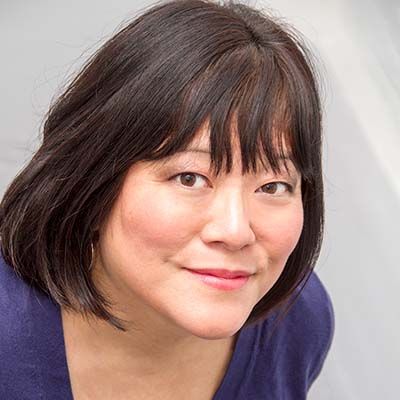
This week on Odd Woman Out, Tutz sits down with Broadway icon Ann Harada—and we are getting into ALL of it.
From originating Christmas Eve in Avenue Q to entering the wonderfully unhinged world of Schmigadoon!, Ann has built a career by doing something that sounds simple but definitely isn't: knowing who she is and refusing to pretend to be anyone else.
Recorded at the Welcome to Times Square Studio, we go back to Avenue Q and talk about the role that changed everything. Ann gets candid about playing a character that she personally felt comfortable with—even when some people in the Asian community didn't feel the same way. We talk representation, stereotypes, changing conversations, and what happens when something can feel completely okay to you and completely NOT okay to someone else.
Because two things can be true at once.
Then there's Schmigadoon!—the TV series, the musical, the comedy, the chaos—and Ann takes us behind the scenes of getting to live in that deliciously weird world.
And yes... we go there.
Ann opens up about her dispute with September L. Davis, what happened, and what she learned from finding herself in a situation she never exactly planned on being in.
Through all of it, Ann is refreshingly Ann: funny, opinionated, self-aware, and completely uninterested in becoming the version of herself somebody else thinks she should be.
We get into:
• The Avenue Q audition that changed everything
• Becoming the original Christmas Eve—and everything that came with it
• Representation, stereotypes, and being comfortable with something other people weren't
• Why you can hear someone else's perspective without pretending it's your own
• Staying true to yourself when people have opinions about who you should be
• Going from Schmigadoon! on Apple TV+ to Schmigadoon! onstage
• What really goes into making that ridiculously fun world work
• Her dispute with September L. Davis—and yes, we talk about it
• Navigating uncomfortable conversations without losing your sense of humor
• Why Ann Harada is still doing things her own damn way
This episode is powered by WelcomeToTimesSquare.com — the billboard where you can be a star for a day.
If you've ever wondered whether you need everyone to agree with you in order to trust yourself... you don't.
Sometimes being the odd woman out is kind of the whole point.
Follow @oddwomanshow
Follow @SammyTutz
Transcript
This transcript was automatically generated and might contain errors.
[0:00] Samantha Dawn Tuozzolo: Hi, my Odd Squad. It's me, Samantha Dawn Tuozzolo, your host of Odd Woman Out, a podcast where we talk to women artists about what it is like to be a woman in the entertainment industry, the struggles we face, how to overcome our insecurities, how to stand in our power, and we have so much fun while we have these conversations and we laugh a lot. So thank you for tuning in. I promise this episode you're going to listen to is going to be so iconic. So don't forget to like, subscribe and follow. Call up a friend, tell them about this really cool podcast you listen to called Odd Woman Out. And also call up a woman in your life and remind her how absolutely fierce she is. I love you, my Odd Squad. Hi, Ann Harada. Welcome to Odd Woman Out.
[0:47] Ann Harada: Hi.
[0:48] Samantha Dawn Tuozzolo: Thank you so much for being here.
[0:51] Ann Harada: Thank you.
[0:52] Samantha Dawn Tuozzolo: We've been trying to get you on for quite a while. And so I'm happy it worked out.
[0:56] Ann Harada: I cannot imagine why, but okay.
[0:57] Samantha Dawn Tuozzolo: What do you mean? Broadway icon, legend, international star of stage and screen. I heard you say that recently at an interview and I go, but it's accurate.
[1:03] Ann Harada: International because I did a project in Ireland once.
[1:08] Samantha Dawn Tuozzolo: Yes.
[1:14] Ann Harada: Okay.
[1:15] Samantha Dawn Tuozzolo: Yes. Whatever you can do to elevate it. That's what I do. I'm like, guys, people will believe it.
[1:20] Ann Harada: Yeah, I know.
[1:22] Samantha Dawn Tuozzolo: But it is true. You're an icon.
[1:23] Ann Harada: Oh, yes.
[1:24] Samantha Dawn Tuozzolo: Broadway's Ann Harada. We're so happy to have you here.
[1:25] Ann Harada: Thank you very much.
[1:26] Samantha Dawn Tuozzolo: We're so lucky. So obviously we have so much amazing career stuff to talk about. Also, we need to figure out when your real Broadway debut is. The internet is very confused.
[1:33] Ann Harada: Oh, I'll see.
[1:35] Samantha Dawn Tuozzolo: But the show is called Odd Woman Out. I always love talking about the woman of it all. So I want to take it back to a younger version of yourself and wanting to know if there was a woman influence either in your personal life or somebody you admired who was famous or a working artist that inspired you to want to become an artist?
[1:55] Ann Harada: Oh, that's so interesting. You know, I feel like it's really more women in my life. My mother has a large family and she had a ton of sisters and a couple of brothers, but we don't care about them as well. And so they were always kind of around. We were very close family and we all lived in the same town. And so we were always all over at each other's houses all the time. And I so remember like my aunts coming over and that it always seemed very special when they would come over and hang out. And it was really just a chance for them to catch up and have coffee. But, you know, lots of times we'd be together doing projects like baking or puzzles or whatever it was. And I just felt like I was raised by a bunch of strong women.
[2:42] Ann Harada: That's it. And I just sort of felt like, even though it was a really long time ago because I'm super old, it was like the late 60s, early 70s. And back then this was before like the women's movement, you know, and there was definitely kind of a sense of boys do this and girls do that. And I just remember looking at my aunts going like, well, but that just can't be true because all of these women do more than kind of like this prescribed norm. And I remember my uncles giving me a hard time about being a feminist or about saying like that I deserved equal rights and things like that, you know. And I just remember just thinking like, these guys are so old and out of touch and like, come on, it's a new world.
[3:28] Samantha Dawn Tuozzolo: Yeah. Like, get with it. The hell?
[3:31] Ann Harada: You know, and now, of course, it's so different that all of those guys would not be able to process it.
[3:36] Samantha Dawn Tuozzolo: Yeah. Right. They'll be like, what the hell is going on? But unfortunately, you know, we have come such a long way, obviously. But I had an Uber driver the other day telling me he's looking for a woman who is going to be able to cook and clean for him. And I was like...
[3:52] Ann Harada: Yeah, a trad wife.
[3:53] Samantha Dawn Tuozzolo: Get me. Okay. Trad wife. I don't know what that is, but I just saw all over the Internet about a trad wife. Am I behind?
[4:02] Ann Harada: It's sort of a thing now. I don't really know why, because it's so not about what I want to do with my life.
[4:09] Samantha Dawn Tuozzolo: It's not about me either.
[4:10] Ann Harada: But it just feels very like, it's like people who are like super traditional, conventional, like the man is the breadwinner, the woman stays at home and takes care of the kids and does all of the housework involving cooking and cleaning and sewing and blah, blah, you know, and is the childminder and all this and that. I will tell you something about myself.
[4:31] Samantha Dawn Tuozzolo: Tell me.
[4:35] Ann Harada: When I... Okay, I have one child. And my husband was kind of bugging me like, hey, when are we gonna have a baby? This is a really long time ago. Because that child is now 21. But prior to that, my husband was like, I really feel like we should have a baby. And I was just like, I feel a little pressure. And I said to my husband, okay, I have some demands. If we're going to have a child, this is what I want. Yes. And I said, I have just seen too many of my friends have a baby and then leave the business because it was too hard to do both. And that it was always on the woman to give up her career path to take care of the children and all this and that. And I said, I have no intention of doing that.
I have worked way too hard to be a performer. And I said, if I have a child, okay, these are the rules. It's like I have to be in a hit show so that when I have the baby, I can come back to a job. Okay. I said, when said baby appears, I am not the default caretaker. Every conflict is going to be a negotiation for you in terms of like, who's got the time, what's more convenient. I said, it's not just going to automatically be, it'll do it. Right. I was like, no way. No, not happening. I am not the only one working. That is right. And we are going to have to sort this. And I said, case by case. And you're like, here's a contract, sign it with your blood.
[6:28] Ann Harada: Well, it wasn't like that, but it was just like, I just want to make sure that we're on the same page. We're on the same page. Yeah. You know what I mean? And that you know that I am not going to automatically be like, these are my jobs and they involve staying at the house. Right. So it's not going to happen.
[6:47] Samantha Dawn Tuozzolo: Well, good for you because a lot of women don't.
[6:51] Ann Harada: I know. Well, that's it. And then you sort of just feel like, well, I should do it because I'm the mommy. And it's like, no, no, no, no.
[6:57] Samantha Dawn Tuozzolo: Well, it worked out because look at you had, you've had such an amazing career.
[7:01] Ann Harada: Yeah. I can do it all. I've had this, you know, well, I mean, I had a lot of help. Yeah. You know, um, my, my parents literally moved from Hawaii into our house to help take care of my baby.
[7:07] Samantha Dawn Tuozzolo: That's amazing.
[7:12] Ann Harada: And then we all traveled to London together when I did Avenue Q over there.
[7:18] Samantha Dawn Tuozzolo: Oh my God. So that I always had built in babysitting.
[7:22] Ann Harada: That's amazing. Shout out to your parents and shout out to all the support you had. And also let's shout out your cast member from Schmigadoon. I'm sorry. I don't know her name.
[7:27] Ann Harada: I can't remember that. Oh, Kaylee Crow did performed until she was eight months pregnant.
[7:31] Samantha Dawn Tuozzolo: Yeah, I know. That was insane. I came to the show and she was doing cartwheels or whatever. Being lifted up in the air upside down, you know, pregnant, pregnant, just like, I'm kicking my leg over my head. It's no big deal. I was just like, I just don't understand first. I don't understand how she doesn't look bigger because the costume was so amazing. And then you don't remember the same week she had to go on for Sarah Chase and Anna Gasteyer. I think that was the week I came. And then everyone was so mental. It was so crazy. And it was, it was just like, oh, you know, problem. And I was just like, and then, you know, Sarah's character is this line. I'm not pregnant. I'm like, she's so eight months pregnant.
But it was so, you know, just that's an astonishing. She's a superwoman. And, you know, my God, incredible, incredible performing like an inspiration to everybody. And really, so that's the sort of thing that I know, women are capable of, right? I mean, not analogous at all. But I was at Avenue Q until a week before I gave birth.
[8:40] Samantha Dawn Tuozzolo: Were you really? Yes. A week. That's because my kid came early. Okay. I didn't plan it like that. I was going to have a month off. But then boop, boop, until until a week before, and it was literally like, my company threw me a surprise baby shower that you know, and so like, I show up, my husband takes me to this thing. He's like, we should just go and have lunch at this place. I'm like, Okay, I don't know why we're going to Times Square. But all right, fine. And I'm literally wearing like, you know, some ugly outfit, not even clean, really. And I'm showing everyone like, Oh, God, this is a baby shower for me.
[9:22] Ann Harada: You're like, Hey, you don't want to tell me to change?
[9:27] Samantha Dawn Tuozzolo: Yeah, change? Yeah, no, brush your hair, whatever. I'm sure you looked fierce no matter what. But really, you know, but that's okay. I mean, I wasn't cute, thin, pregnant, like Kaylee. I was big, housey, waddler, pregnant.
[9:39] Ann Harada: Well, thank you for sharing that. Because I still think women struggle with the making sure the man is doing 50% or like, it's not all on me. And it's so important to talk about that. And to make sure, hey, guys, it's okay, because there's two parents, you know, most of the time, to take the responsibilities and women should be able to still follow their dreams and continue on a career that they've worked so hard for. So fierce and good for you.
[10:07] Ann Harada: Thanks for sharing that.
[10:12] Samantha Dawn Tuozzolo: So now I want you to think about a time when you first started working in the industry, and you were still learning the ropes, a woman supporting woman type of thing. Was there somebody who sort of took you under their wings? Another woman?
[10:22] Ann Harada: You know, I feel like women get such a bad rep of like the competitiveness. So I want to positive women. Well, when I first graduated from college, my first job in the city was being an intern for a Broadway producer, a woman who had gone to my college, which was Brown University. And she was looking for a recent graduate to be her intern and, you know, answer the phones and make copies and deliver messages and do things that we did in the 80s. You know, typing, I mean, so weird. So weird now. But yeah, and so this woman became my mentor, in a sense, because not that I wanted to be a producer, but I definitely wanted to work in the theater. And all I knew when I came out of college was that I wanted to work in the theater in some capacity.
Yeah, I did not know that it was going to be an as an actor. Really, I liked acting. But you know, you go to school and you're like, I'm okay, but I'm not even like the best actor in school. Am I going to be able to be competitive in the most competitive industry right in the world city in the world? Yeah, it's like, yeah, it's like really, I mean, I don't know, right? You know, I'm not even that great here.
[11:40] Ann Harada: Um, well, but wait, so when I was at Brown, you know, who the best actor actress in my school was Laura Linney. If you're the same class, well, she was a year behind me. But like, you know, we were all in the same pool, right? And I'm like, if I'm not as good, I can't be as good as her. I'll never be as good as her. Yeah, you know, different. So how, obviously, but like, you know, at the time, you're like, Oh, no, I could not possibly make it in this industry. I'm not anywhere near as good as the best people at my school. Right? You know, and it wasn't just her. There are plenty of other famous actors, Tim Blake Nelson, you know, people who are like real achievers. Right, right, right. And I was just like, I'm okay.
You know, yeah, but like, I just didn't know. Right. So I came to New York thinking, well, but I can work in the theater in some capacity. I know I can always take tickets. Yeah. And I could be a dresser. I could do a million things. Yeah. You know, so I was just like, I'm ready to go to New York. And this woman said, Well, you could be my intern. I was like, I accept. I accept. Who was it? Suzanne Schwartz Davidson, who now produces.
[13:01] Ann Harada: But Lincoln Center. Wow. Yeah. Wow. Amazing. Shout out to her. I think it's so important in those instances to have these connections, right? And to give people opportunities because we all had, you know, times in our lives where we needed that. And so shout out to Suzanne. And then because I was her intern on and we were, she was producing this Broadway play that lasted for a week. Um, but a week, but yeah, but I got to sit in on that whole process. Right. I got to help. I mean, I got to see her raise the money and do the backers auditions and go to the poster meeting and go, you know, go into auditions and watch actors audition. Yeah. And I was literally sitting there going, I, I'm better than that actor.
Like, Oh no, but I'm not better than that one. You know what I mean? Like as they would come in and you'd go like, all right, I think I could do this professionally because obviously people that I think I better than are doing it, you know, but then of course there are people that like so much more than I could ever be are also doing it. So it's sort of just like, well, you got to try, right? You don't know. Um, so that's how that started.
[14:19] Samantha Dawn Tuozzolo: That's amazing. Do you think if you didn't have the opportunity to watch these people auditioning, you would have ever been like, I'm going to go audition?
[14:26] Ann Harada: I don't know. Right. How can we know? We don't, we get, we can't, we can't know. We can't know. What was the play that ran a week?
[14:33] Ann Harada: A Sleight of Hand. Great. Check it out. Never heard of it.
[14:38] Ann Harada: I know, but it ran a week. So did Merrily We Roll Along. It's different. Okay. Um, Sleight of Hand was a straight play. Got it. I love straight play. It was a thriller. Great. Yeah. It was written by John Peelmeyer who wrote Agnes of God. Great. Yeah. It was a, it was actually had incredible people working on it. It just didn't work. Unfortunately, that happens a lot. Oh, I know. Like, you're like, I've been in it. I'm very aware of projects that don't quite work. That are so amazing though. So everyone check out Sleight of Hand. What's it called? Sleight of Hand. Yeah. It's about a magician. Great. I love magicians. Excellent. Perfect. Okay. Now I want you to tell us about a time in the industry specifically, or sometime in your life in general, where you felt like the odd woman out.
[15:32] Ann Harada: All the time. A time in my life where I felt like the odd woman out. All the time. Right. For whatever reason. Right. Sometimes I'm like the oldest person by a mile in a room. Lots of times I'm the only Asian person in a room. Um, lots of times I'm the only person of color in a room. Lots of times, uh, you know, I'm the only person who's not rich or wasn't born rich, or has not achieved richness. I don't know what I'm trying to say. Richness thrust upon them. That's true. Uh, not me, but I mean, there's so many moments where one can feel like the odd woman out.
[16:15] Samantha Dawn Tuozzolo: Yeah. And you are the odd woman.
[16:18] Ann Harada: Sure. The only way you can get through that is to just keep going. Right. I mean, how do you overcome it? How do you just not give a, how do you not give a fuck about those feelings?
[16:27] Ann Harada: Cause sometimes they're so debilitating. Right. Oh, lots of times. Right. Um, but it's like the thing about letting that sort of fear rule you is that you're only hurting yourself because you're not allowing yourself the possibility of what might happen if you stayed or kept going. Right. The thing is that lots of times the uniqueness of you is what's going to be your superpower. And I truly believe that has been true of my life. Yes. You know, as my friend. Okay. So my husband once said, you know what? This guy said to me once he was like, Ann is like Whoopi Goldberg. It's like nobody knew they needed her until she was there. I love that. You know, it's like somebody who kind of came out of left field.
Nobody was saying we need somebody really interesting and quirky and not the normal. Right. You know, but when somebody is like Whoopi Goldberg, somebody so distinctive and has such a unique take on the world and a voice, a specific voice, then it's sort of like, well now there is a place for you. Right. Right. Right. And, and they said, and it's like that. And I was like, I think that's true. I think I just have to keep on keeping on. There's being yourself, being myself because obviously not being myself was not working. Right. That's the bummer of it.
[18:09] Samantha Dawn Tuozzolo: It is. And it's so hard to, to get to the place to be comfortable with it because I feel like in this industry we're drilled with, you have to look like this and you have to be like this and you have to act like this. Right. And then you're like, well, what about like, I can't do that because I'm fighting against myself, which is why I started the show so we can really just embrace our odd. Yeah. Which it shouldn't be odd. Right. Because it's just us.
[18:35] Ann Harada: Yeah. I mean, okay. So I remember getting dressed to go to auditions in the early days, late eighties, early nineties. And you know, I swear to God, we all had the same uniform and would show up to the auditions looking, I mean, I had like my Laura Ashley dress and my character. I was just going to say the character shoes at the audition, you know, and then you'd, we all had the same length hair and then you'd pull your hair back and put it in a lip or a bow right here. You know, I mean, look at me. Am I that girl? I never was that girl. I didn't even want to be that girl, but that's what I thought we all had to be. Right. You know what I mean? And I just looked back and I'm like, you're not fooling anybody.
[19:20] Ann Harada: Yeah. I was trying so hard to be what at the time I referred to as a long hair girl. Yeah. You know what I mean? Yeah, I do. And, and, and it's just like, what are you crazy? What was the turning point where you, you know, started dressing more like yourself at auditions? Did it take a job to give you the confidence?
[19:34] Ann Harada: I, it must have been something like that. I don't really remember because I can't remember when I stopped dressing. I mean, I know when I stopped dressing in Laura Ashley dresses, but I mean in terms of like, there's a look jewel tone dress and you know, that whole mess. Um, I, I just think it, um, we, okay, this is another thing. To the part of the Testament of having your friends and doing work with your friends. Um, there was this production of Falsettoland that I was in an all Asian production of Falsettoland that got a really, got really good reviews and elevated all of us because everybody in the industry came to see it. And all of a sudden we all started getting more work and different kinds of work.
And I just thought like, Oh, people are seeing me for who I really am. Right now they're seeing that I'm capable of more than just sort of the, this is the slot that we think you, you know what I mean? And I just thought I just can be myself. It's, it's probably going to lead to better work because if you're yourself, you're not trying to sell something. You're not.
[21:01] Ann Harada: That's it. Burn it up. Peter says a quote, something I'm going to misquote it, but she's like, if I don't even know what, if, if, if you're not yourself, what do they need you for? Right. So it's not that, but it is that. And that's sort of how I look about roles now. It's like sometimes I'll read a thing and I'll be, you know what? I don't want to because they don't really need me. You know, I could do it, but I don't feel a connection with it. It's not really tuned to my humor or what I could bring to something. And also lots of times I'll just speak up even when I have a job and I'll just raise my hand and go like, you know what? I think this joke would be better if, or, and lots, you know, writer will be in the room and I'll just be like, can I just workshop this joke with you?
Cause I think it would land better if we did it like this. And people are always like, how are you so brave about talking to them like that? You know, speaking up and saying this might be better. And I was like, well, if you don't want me to do that, why did you hire me? Right. You know, like I'm right in the room for a reason. You're the one doing it. Right. And this, I, you know, I'm just, I'm not saying you have to change it. I'm saying what if, what if, you know, that's amazing. Um, it's, it's so important to be confident and be secure with your art and yourself and the way you are. Because as we've just said, being repetitive, it translates so much better than if you're not comfortable in your own skin and you're trying to like be something you're not so fierce. Thanks everyone. Follow that tip. Okay. Let's talk about Avenue Q.
[22:37] Ann Harada: Let's talk about it. You were the only cast member to originate the role on Broadway and in the West End.
[22:44] Ann Harada: Correct. But that was a last minute thing. They had hired a British Christmas Eve. Did they? But she booked a TV show at the last minute and had to bail. And so now they're stuck. Do you know what I mean? Yeah. Like, they were like going into rehearsal tomorrow. It was like one of those, like it was so last minute. And I literally got a phone call from Karen McIntosh, like who's producing it over in London. And I was like, and I'd love to have it come over. And I was like, look, I mean, I had my baby. I have this baby. My parents live with me and you know, I have a husband and he's like, bring everybody. I will arrange the visas, you know, like literally, because he can. Yeah. He's kind of King of London.
Yeah. And I was like, Oh, bring everybody. I was like, well, uh, where would, where would we live? And it was like, I will find, you know, it's like, it's like talking to God. What do you need? I will find you. I was like, you're like, I want this. I need, I need a flat that has, you know, a lift because I have old people and a baby and a lot of baby gear and I need to be within walking distance of the supermarket and a pharmacy and a freshly brewed coffee, you know, like all this stuff. And I need to be near the tube station if that's how I'm getting to work. And I need all this stuff. And he was like, done, done, done, fierce. You know, I was like, okay. And he was like, great. You know, and so literally we all, I'd looked around and I said, everybody we're going to London for six months, pack your bags.
And they were like, fierce, let's go. And everybody was like, yeah, great. I mean, no, my baby didn't care, but everybody else was like, I have this baby. That sounds interesting. You know, like nobody had ever thought about it. Right.
[24:41] Ann Harada: So nobody had had any reason to put up a bunch of ideas. Like why would this, wasn't a good idea. Right. Cause it happened so quickly. So fast. Oh my gosh. Amazing. And so, yeah. And like, I swear to God, within like three days we had all the passport visa things. I had a baby. I did that baby did not have a passport. So I was just like, okay, okay. I guess we're going. So we went. Incredible. It was incredible. It was like such a crazy big adventure that I got to do with my whole family, which is extraordinary.
[25:07] Samantha Dawn Tuozzolo: That is cool to like experience a new place and go back to something familiar, but with a different group of people.
[25:13] Ann Harada: Different group of people. And that I was coming in as like the established Broadway star from, I mean, not really a star, but they thought I was because they're so easily swayed because I'd been on the original cast recording. Of course. And because if you, honestly, if you live in Britain and you look at these original cast recordings, like this is the, you know, Torah, like we've got to study these things. Like, and I'm just like, guys, do whatever you want. You don't have to say it. Like so-and-so said it, you know, it's fine. It'll work. But like, you know, they're all like, and they were like, oh, it's, and I came, I went to rehearsal and I remember the musical director, the guy who was teaching the music, who was the same guy who was teaching music over in New York was like, Ann Harada is here everyone.
[26:03] Ann Harada: You like walk in with big sunglasses. My fur, yeah, you know, I'm like, what are you doing, but they literally treated me like, oh, please sit down, Miss Harada. I was like, how long is this?
[26:21] Samantha Dawn Tuozzolo: Your rider, you're like, did you get my rider? That's amazing. I mean, Avenue Q is such a groundbreaking show and was so important at that time. Do you have a favorite memory either from the Broadway? I know it's a crazy question. Maybe one, maybe two, something that sticks out in your mind from that time or maybe something you learned from that experience.
[26:44] Ann Harada: Oh, this is what I learned from that experience again: lean into the you of you. You know what I mean? At every point in Avenue Q, I felt so protected by my cast and by the artistic team, you know, and I, you know, things would happen in rehearsal and I'd be like, I don't like that. That makes me uncomfortable. I said to the director one time because once I had exit entrance music that was sort of like, and I was like, can we lose that chinky dinky do music? When I never liked, oh, hundred percent. It was like instant. There was so much kind of like respect and understanding, and that's amazing that that was happening then because that was, I can't do math, 25 long time ago. It was 2003, so long time ago.
Times were different, yes, and so the fact that your suggestions and what was making you comfortable is taken seriously, yeah, then because I didn't say, and you know, there are people now who are so sensitive to whatever perceived slight there might be in a piece, right? I did a production of South Pacific out at Aspen where two Asian violinists walked out from the orchestra. They were so offended by Bloody Mary having an accent and my character having an accent, and I was like, so then I had to go, then I had to give a little talk to the rest of the orchestra, right, about the context, how why I felt like it wasn't insulting, right? That I, as a performer, would never do something that I felt was insulting. Oh, it's just like, okay, guys, this is the reason why I don't think it is.
[28:43] Samantha Dawn Tuozzolo: Yeah, that's all you can say, right? And how was it received when you explained?
[28:47] Ann Harada: You know, I think they all sort of went like, okay, you know, not that they necessarily agreed. At least nobody else walked out, right? But it was, you know, it was a thing. Yeah, and so now, you know, I'm very low because my character Christmas Eve has a very pronounced accent and a lot of it is for comedic value, right? You know, and when people kind of give me a hard time about that, and they have, I'm like, okay, guys, people in the world have accents. This is true. You know what I mean? And if she doesn't have an accent, then there is no reason for her to be in this show. There is no reason for her to be a part of a song called "Everyone's a Little Bit Racist," right? Because the whole point of it is that there's something different about you that people can comment on, and that makes you feel uncomfortable, and that, you know, that's right.
So somebody, everybody in has to have something or else, what are we doing the song for, right? So, right, and I was just like, so for the integrity of the show, I feel like it's very important, but like, I mean, I literally have had so many discussions about this, and I feel like Christmas Eve is now a very controversial character because of that. I just want to say, like, she is the smartest person on Avenue Q. She, you know, is completely self-confident and knows who she is. She's not, I mean, I was just like, look, if you're offended by this, I'm sorry for you. There's so many worse things in the world to be offended by, so many, and to, you know, feel something about this is not one of those things.
But again, everybody has the right to not like something for whatever reason, and that's fine for sure. So now I, you know, I just loathed, I just, I worry about her legacy, not my legacy, and that's so much, but her legacy, yeah, because I just think that character is so great.
[30:52] Samantha Dawn Tuozzolo: You're still getting this feedback all these years later.
[30:57] Ann Harada: Oh, yeah.
[31:00] Samantha Dawn Tuozzolo: Like how often?
[31:00] Ann Harada: No, something comes up once or twice a year, you know, and you're just navigating it, explaining it like, this is how I feel. This is why I did what I did, how I feel, and this is how I felt.
[31:11] Samantha Dawn Tuozzolo: Yeah, you can't speak for anybody else's experience.
[31:19] Ann Harada: That's right. So, you know, well, people are like, you know, are you, sometimes people say like, are you offended by XYZ? I'm like, I am so hard to offend. I really don't care. Yeah, to me, it's like you do you and I'll do me, and you know, do I have to like every single thing somebody does? No, then you don't have to like every single thing I do, right? But I don't necessarily think I would write you off forever because of one thing, yeah, you know, right. I mean, I'd like to think I wouldn't, yeah, I don't know. I don't know. We don't know because it really hasn't come up, but I'm just saying, yeah, you know, everybody has to have be their own barometer of, yeah, for sure.
[32:01] Ann Harada: But I am, you know, it's sort of like, okay, so I used to do the show for Broadway Cares every year, every, not every year, whatever. I've done it like ten times. It's called, it was called Christmas Eve's Holiday Hunk Fest. Okay, okay. And so in this benefit, I basically would play Christmas Eve, okay, and I would force myself onto like a ton of Broadway leading men, and they would come up, they would come on, and we would sing love songs together, it's in duets together, and Christmas Eve would be Christmas Eve, right, and they would just be them, right? And so I would humiliate them, harass, you know, just basically be in love with each and every single one of them. It might make them take off their shirt or whatever it was, and we would sing these beautiful songs otherwise I, Ann Harada, would never get to sing, right, with them.
That's what was my motivation for doing it. Now, now I'm scared to do it, right, because I feel like Broadway Cares would take the flack for something that I made up in my little head. Yeah, and I don't think that's fair, and I don't want to make them feel like responsible for the content, and then this, and then like great, like cause, right, there's great cause having some sort of backlash that is not worth it to me, right? But I'm just very like kind of sad about it because I miss her. I love playing Christmas Eve.
[33:25] Samantha Dawn Tuozzolo: Oh, well, we got to figure out a way.
[33:30] Ann Harada: Oh, maybe it's a break her back, you know, in London. There's a big revival of Avenue Q now, and it's doing very well. I'm very happy. Yeah, if I can, I just, you're just, I'm a little busy right now.
[33:41] Samantha Dawn Tuozzolo: Well, congratulations on Avenue Q. Like I said, it was so groundbreaking, and thank you for all of your work. But you had a long career before Avenue Q.
[33:47] Ann Harada: Well, it wasn't a long career. I mean, it was, but I wasn't a prominent career, right? I worked a lot off-Broadway and regionally.
[33:59] Samantha Dawn Tuozzolo: What was your Broadway debut? Because the Internet is so confused.
[34:03] Ann Harada: Well, this is the question. Do you remember I've talked to you about sleight of hand? Yes, sometimes Broadway, whatever, ABDB seems to think that sleight of hand was my Broadway debut because I'm listed in the Playbill as production assistant, okay? Okay. My Broadway debut as a performer was M. Butterfly, right? Okay. This is another thing that I got because of a woman who had an eye out. When I was being the production assistant for sleight of hand, part of my job was to go over to the casting agency, okay, you know, and like it was Meg Simon, okay? At the time, maybe Simon and cumin, but maybe just Meg Simon. Anyway, she was also the casting director of M. Butterfly, and when I was a casting assistant, me and my friend in the office who was a director put together a cabaret for me that we performed at the Duplex.
Fun. You can see how this is where this is going. And we invited Meg to come, and bless her, she came. She actually came to see the intern and somebody else's office do their cabaret. Now this, I don't know why, obviously a glutton for punishment this woman, but she came and she remembered me, and when they were recasting a role in M. Butterfly, she thought of me and brought me in. Wow, and I got it, and you booked it. That's right, and you booked it, which is, you know, it's so important to like live your life and have fun, and you want to do a show, do a show. You want to make a podcast, make a podcast. Send messages, write whoever, because you never know what's gonna happen. That's not why you do it.
You didn't do that cabaret thinking someone's gonna see me help me get my Broadway, no, of course not. You did it to bring yourself joy and have fun and perform, and then look, I love that shout out to her, man. Oh, you know, she did her job, and I did mine, and that's how that happened now.
[36:15] Ann Harada: How often is that gonna happen to somebody? Probably not very often, but it happened to me, so it could happen to somebody else here. Store, and I'm not exactly copy-paste exactly like that, but I hear stories like this through these interviews all of the time. Yeah, I've like, I met this person here, and then they remembered me for this, and then I booked it, right, and then my whole life changed essentially, right? You just never freaking know. So, M. Butterfly, 1988, yes, to Avenue Q. Can you tell me about that, the hardest part of that journey and how you kept going?
[37:52] Ann Harada: Yeah, well, the hardest part of that journey is staying in the business, right? You know, because you, I just, I don't know. I just had to keep asking myself, is this what I want? Yeah, and every single time it was, you know, I was doing a lot of work, like day jobs, you know, to keep to like make money, pay your rent, whatever it is, and you, I just kept thinking like, is this worth it? You know, I went to Brown, I have a degree, I could do things, I'm proud. It's like, you know, it's not real. Yeah, it's like, you know, but it was like, no, I really think I'm supposed to be an actor, and I just kept pursuing it and saying yes to every dumb thing that kind of came along that I could get in for, and that's important too, saying yes to everything to an extent, like, yeah, I mean, yeah, obviously, but I'm just saying like I didn't knock things out just because like I don't know you, yeah, right, you know, I'll show up, and I'm here. I'm here.
[38:58] Samantha Dawn Tuozzolo: That's amazing. You have to, that's what they always say, like if you find something else you're passionate about, do it, and when you don't, you got to just keep plowing.
[39:04] Ann Harada: Yeah, and then look, and then look, okay, let's talk about Schmigadoon! Okay. Oh my gosh, you're in the original cast of two Tony Award-winning musicals for every 22 years. Can't wait for the next, me too. I can't wait to see what part that's gonna be like. It'll be fun, right? So are you, you're the only one that was in the TV show. Yes. So, how did you take, did you have to do much shifting to take Florence from the screen to the stage? Or it's just you're so big in that world that it was just like transferring over?
[39:04] Ann Harada: There's nothing I don't love about her. She's a hoot. We are not alike. I think that's my favorite part about it. Yeah, yeah. You know, it's a stretch. It's a little bit of a personality stretch because she's so relentlessly positive. And she's so relentlessly understanding and kind and sweet. And I'm not any of that. I'm not any of that I am positive, but I'm not like to that point, right, you know, and also, you know, people perceive her as being a little dim, which is honestly, my favorite thing to play is a little dim. Why? Because it takes out so much worry from my head. Yeah, it's just sort of like, oh, you're telling me something. I believe it. Yeah, there's that quality. That's just so much fun to play. Yeah, which is so not a part of your everyday life. For sure. At least not my everyday.
[40:03] Samantha Dawn Tuozzolo: Yeah. So not a lot of people. Well, I don't know about that. That show is so much fun. Like as an audience member, you cannot sit there and not have the best time. I'm so glad we spoke to Mackenzie Kurtz on the show as well. And I asked her, you know, how do you not break? And when you do? How do you get over it? And continue on with the show? So do you have a good story you could share about like a time where you broke in the show?
[40:27] Ann Harada: Oh, is it so funny? And things go wrong all the time. How could it not? How could it not? I know, you know, well, and it's always obviously like the thing that you don't expect, right? So one time, you know, we're all going on spoilers. If you haven't seen the show, one of the character dot characters dies, and we have a funeral for him. Okay. So we all walking out on stage in our line for the funeral. And I know that I always follow Anna Gasteyer out onto the stage. Well, one day, she wasn't there. Mr. Q. And I was like, you guys, Anna's not here. Where should I do? Should I go? Should I stay? They were like, you have to go on right now. I was like, okay, because I had a whole line of people behind me, we all had to get on.
I was like, okay, but I don't think this is gonna go very well. We all go, we all march out on stage. I'm like, I'm leaving. There's like an Anna shaped hole, right in the line. I'm like, I'm like, okay, here we go. And you know, and so poor Malik, who plays her husband, who's the Reverend has to start the service. So like, he's like, oh, God, because like, she is literally interrupting in this whole service. She talks, she interrupts, she has all this stuff to do. Yeah. Well, what if we start? Well, too bad, we're just gonna try to like, fake our way through this. So he starts, then. Okay, then you hear because her mic is on. Oh, no. It's like, oh, my God. Where the hell was she? Running, running, running steps.
During the funeral. Running, running, running. Is everybody crying? Everybody is laughing so hard. Okay, so now here she comes. She's coming. We can see her. She's in the wing. She comes and she trips. Because she's running in her skirts. Trips like to the ground? Yeah. Face plant. Okay, now. On stage? On stage. Okay. Trying to get to her spot in the center in the front. Yeah. Not super on stage, just sort of a little bit on stage, but just like in the wing. You know what I mean? So then now, so now she gets up, she comes on. Now, forget it. Everybody at the funeral is done. I've never seen an entire group go down like that. Everybody was laughing so hard. And the audience knows what's going on.
The audience obviously is like, well, they heard, you know, so, you know, we're all out. Like every single person trying to cry, trying to pretend to cry. Trying to make them laugh or cry is so good. You know, people like just obviously turning their head upstage, you know, which never works. Right. Everybody just, and I was just like, you're in the front. You're in the front. You're right in the front. Like where all this stuff happens. Right. Because, you know, stuff happens to me in that scene too. So, and I'm lit because of that. And I'm just like, this is a terrible. That is so good. It was terrible. It took us forever to get out of that. Was that recently or when was that?
[43:53] Ann Harada: No, not that recently. Whoa, but it was, it took, it was a while and that was a lot. I mean, lots of other honor related things have happened. Yeah. Yeah. She is hysterical. Oh my God. Oh my God. I mean, that show is just so much fun. If somebody hasn't seen it yet, other than that, like amazing story of obviously all funny, why do they need to come see Schmigadoon with the Needle Lander?
[44:15] Samantha Dawn Tuozzolo: Even when that stuff like that doesn't happen, it's a very funny, good show. And I know, cause I was on the TV show and we worked very hard to translate that TV show to the stage. And I think it's better than it was. I do too. I think it's better because it's, it's really an homage to what we are, which is a Broadway musical. And it's the mediums are different. And it just on TV it's while it's still funny and wonderful, you get the sense like it's filmed. So, you know, after the song, we broke, that was the end of the song, that was the end. You go to craft services. You go to craft services. Whereas on stage, it's like, we're just going to keep throwing it at you. And there's something about that energy and the wonderfulness of watching an audience experience it in real time that you just don't get from.
It's the best. I miss my cue. It's so good. Oh my God. And you know, one, did any, did she tell you the story about, what was her story? Mackenzie's story was, Mima's funeral. Oh, Mima's funeral. Okay. She, she tried to wake my Mima up. She was, she had a weed gummy or something when they're in the auction for the baskets. That was that story. Okay. One time, I think all the ensemble would pick this as their favorite mess up. We were going into Lover's Pat, which is a song that goes like, you know, they start, it's a little slow. Okay. And there's harmony and everything like that. So for some reason, again, Anna's warming up in her dressing room, right? A flight up, a flight up from deck. She's warming up in her dressing room.
This happens every day. For some reason, her mic got turned on and you could hear her vocalizing while they were trying to sing Lover's Pat. This ballad? This Lover's Pat. On top of that, I hate you. I hate you. Like Anna just, you know. That's so good. We, those of us who were on deck, like we were not on stage. Brad, Oscar and I were, you know, waiting to go on where we all sit, where we always sit. He's like, what is that? I was like, just Anna. He was like, doesn't that seem really loud? I was like, well, yeah, but sometimes you can't tell. Not realizing that her mic was on. I could not, I did not know that it was, you could hear it on stage. You know, I did not, I did not realize the intensity of this problem.
And it just, it just felt like went on forever. That is so funny. It was so great. That is so good. And so like literally watching the ensemble come off after that, like wiping their eyes. They laughed, you know, they just could not. They were dying. And how fun. Like this is your job. Yeah. Like this is your job. Just like crying and laughing. Just crying, laughing. What a gift that is. I know, it was great. This is actually a really good segue, I'm talking about Anna because I did hear that you have a restraining order against September L. Davis.
[47:30] Ann Harada: No, no, that's wrong. She has a restraining order against me. What did you do? We have no idea. We just found out on social media one day. You did? Yeah. Wow. I'm sorry about that. But I saw you, I saw her talking to you at Broadway Barks, which confused me. How are you feel like a part of this cast about this whole feud?
[47:54] Ann Harada: It's shocking. I think that September, I don't know how to put it. I feel like she might be slightly bipolar. I think that is probably right. And so in some states, she feels that Brad and I have a beef with her. And so she, you know what I mean? So she put the restraining order on. But since neither Brad nor I can remember this, that we don't think this really happened. And that it's all in her head. Poor girl. Yeah, I know. Well, I think after she died for a while, too. Sure. I mean, anything can happen. Yeah. Anytime you have a death experience. After she died and came back, yeah. It's really hard to tell. Well, we wish her nothing but the best. No, of course. But thank God Ana got the part because these stories are just unbelievable.
I love Ana, yes. And this was so much fun. I feel like we've been talking for two hours and we might have. I have no idea. I like blacked out and laughing. Before we wrap up, we talked about odd women. We talked about how you have felt like an odd woman always. What is your advice for any woman listening, specifically working towards a life as an artist who might feel like an odd woman out and their oddness or their uniqueness is holding them back from getting their true dreams?
[49:10] Ann Harada: Your oddness and uniqueness is what makes you special. I know that now. And I will never forget that again. You know, there's what I like to be. Other things that I am, of course, wouldn't we all? I would really like to be taller and thinner. So hard. So hard. It's not going to happen. But you know what I mean? Okay. It's okay. Yeah. You know what? I like to wear fancy clothes. Yes. It's not going to happen. This is so cute. Thank you very much. But even when I wear non-fancy clothes, I still have to go to the dry cleaner and get five inches cut off the hem. Do you know what I'm saying? Yeah. There's just nothing like people are always like, I just read the runway. I'm like, I can't do that. I can't do that.
[50:17] Samantha Dawn Tuozzolo: This is actually a great business for you to start around the runway.
[50:23] Ann Harada: How would I do it though? I don't I can't even use a sewing machine, right? We're going to get a team together.
[50:27] Samantha Dawn Tuozzolo: Yeah, we would need it. We would need a very experienced team. You know what I mean? Yeah. I'm the one that's always coming in and asking my dresser like, okay, so do you think it would show if I like move the shoulder strap and tucked it over here? Because I do everything like hand sewing because I don't know machine and I don't know how it's just like, she's like, yeah. Or you could just take it to the stitcher downstairs. Who's a professional? Oh, this is good. So do you utilize the costume people? Yes. Yes. Yes. Oh, I know. And sometimes I'm like, you know, just for advice, right? Because I'm always like, what if I, do you think this would look better if I did this? You know what I mean? Yeah. You're like, ask the professional.
[51:13] Ann Harada: Ask the professional. Yeah. That's another good piece of advice. Ask the professionals and embrace your uniqueness. That's right. Don't try to be like anybody else. Even if you sometimes want to be, it's not going to work. It's not at all. You know, thank you so much. You're officially an odd woman. Thank you. And a part of the odd squad. This was such a joy. Thank you for having me. Thank you for coming. So fun. So fun. That was so fun. Hey, odd squad. It's me again, Samantha Dawn Tuozzolo, your host of Odd Woman Out. Thank you so much for listening to this episode. I hope you enjoyed listening as much as I enjoyed talking. Again, reminding you to please like, subscribe and follow. Go follow us on Instagram and TikTok at Odd Woman Show and stay odd babies. Love you.
© Broadway Podcast Network, All Rights Reserved