

After establishing a career in stage management, Matt discusses his shift to directing. Thank you for taking the time to listen to our chat with Matt DiCarlo! If you are listening to this on Apple Podcast, we'd love it if you could share your love in a review!.. Read More
From the show: Page To Stage
Guests

Featured Shows


About
After establishing a career in stage management, Matt discusses his shift to directing
Thank you for taking the time to listen to our chat with Matt DiCarlo!
If you are listening to this on Apple Podcast, we'd love it if you could share your love in a review!
About Matt DiCarlo:
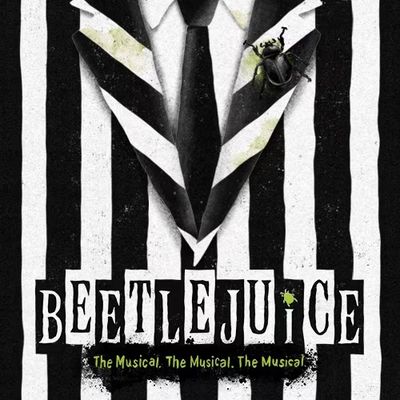
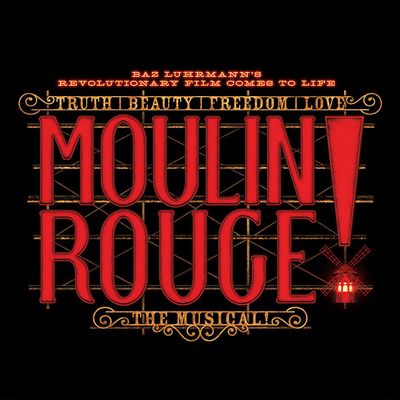
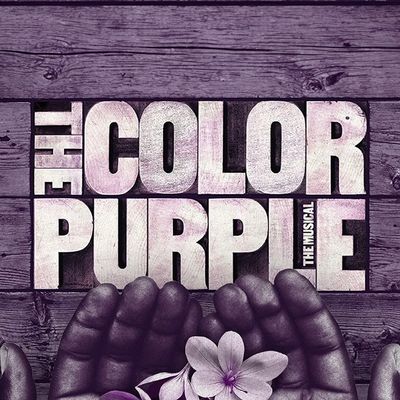
Matt is currently the Resident Director for Moulin Rouge! on Broadway and the Associate Director for the show’s upcoming North American Tour. He staged the Off-Broadway production and North American Tour of The Play That Goes Wrong and recently returned from South Korea, where he restaged the Broadway production of Beetlejuice for its run in Seoul at the Sejong Center for the Performing Arts. Matt was the Associate Director for the first national tour of The Color Purple revival and the second national tour of Rock of Ages.
As a Production Stage Manager, Matt helmed the Broadway productions of Beetlejuice, The Play That Goes Wrong, the Tony-winning revival of The Color Purple, Honeymoon in Vegas, and Rock of Ages. He also worked as the PSM for the world premieres of A Walk on the Moon (A.C.T.), Up Here (La Jolla Playhouse), and Piece of My Heart: The Bert Berns Story (Off-Broadway). Other stage management credits include Broadway Bares 2017, Broadway Backwards 6, 7 & 8, and over 12 productions at Paper Mill Playhouse, including The Sound of Music, Peter Pan, Steel Magnolias, Little Shop of Horrors, and The Full Monty.
Matt’s corporate event experience includes projects with Empire Entertainment, David Stark Design, and Civic Entertainment. Favorites include events with Target, McDonald’s, and the AMC Upfronts. Matt currently is on the faculty at Columbia University and has guest lectured at several universities including Yale and Carnegie Mellon. He graduated with a BFA from Mason Gross School of the Arts at Rutgers University. Matt currently lives in South Orange, NJ with his financé, Joey, and their sweet little Morkie, Max.
Resources from this episode:
Come say hi to us!
Facebook: @PageToStagePodcast @BroadwayPodcastNetwork
Instagram: @PageToStagePodcast @TheMaryDina @BrianSedita @BroadwayPodcastNetwork
Twitter: @TheMaryDina @BwayPodNetwork
Youtube: @PageToStagePodcast @BroadwayPodcastNetwork
#PageToStagePodcast
Transcript
This transcript was automatically generated and might contain errors.
[0:00] Mary Dina: Hey everyone, welcome to Page to Stage. A conversation with theater makers. We're your hosts. That's Brian. And that's Mary. Join us as we focus the spotlight back on the theater maker to uncover their process. We speak with folks in the industry that often aren't heard from, such as stage managers, producers, crew members, marketing professionals, and everything in between. We hope you enjoy this episode.
[0:25] Matt DiCarlo: Hi, my name is Matt DiCarlo. I am the resident director for Moulin Rouge on Broadway, and also directed The Play That Goes Wrong that's running at New World Stages.
[0:36] Brian Sedita: Amazing. Welcome to Page to Stage. We're so excited to have you. And you've been on like my wish list for quite a while to have on the show, specifically now because you've transitioned to directing from stage management. I was wondering if we could begin by actually talking about that pivot that you've made from being a director.
[1:03] Matt DiCarlo: Yeah, for sure. I've always been interested in both directing and stage management. When I was a kid, I wanted to be an actor. I think that's probably everybody's like gateway drug into theater, so to speak. It wasn't until I was in high school that I ever thought about doing something that wasn't on stage. I sort of had my mind set that I was gonna be an actor on Broadway all the way until my senior year in high school. It was sort of by accident that I stumbled upon anything else. I broke my leg in high school, I wasn't able to perform in the musical, so they asked if I wanted to be the student director. I did that and I loved it. I loved sort of being on the other side of the proscenium, being really involved in the show, but in a really different way.
And I loved being able to help shape what the show would ultimately be. My high school didn't have a stage manager that really did anything like I have come to know a stage manager does. So when I was applying to colleges, I sort of stumbled upon the idea of majoring in something like stage management and really stumbled upon the idea of what a Broadway production stage manager is. I did as much research as I could. Back then, people weren't nearly as accessible as they are today with Instagram, Facebook, Twitter, all the things. So I did as much as I could, scoured every playbill that I had, sort of knocked on stage doors, tried to talk to people, and I decided to go to Rutgers University. I majored in theater production, and my concentration on paper was stage management.
But the entire time I was there, my advisors knew that I also had this passion for directing. They didn't have a BFA for directing, so I sort of forged my own path a little bit in that way, took additional classes when I could, did a lot of independent study projects. And when I sort of hit the ground running in the workforce, as it were, my first professional job was actually directing summer stock at Bucks County Playhouse back when it was a summer stock theater. I did that for a couple summers while also during the year being a production assistant at Paper Mill Playhouse in New Jersey, which is ultimately where I got my equity card. My first job in the city was with Rock of Ages off Broadway.
I was the PA, was supposed to only be there for a couple weeks. Rock of Ages ended up being a show that changed my life professionally, and I ended up becoming, flash forward many years, I took over as the PSM at Rock of Ages when I was 25. That was a show that ran for a really long time. So I did have the experience of putting in replacements, helping launch other companies of the show, noting the show a couple times a week and really understanding what it was like to sort of be a part of a long-running show and help make sure that that show stayed tight, stayed great, stayed fresh. That journey sort of continued for me. Every show has its own makeup of the team. Every show has its own way of functioning.
Every show has its own sort of journey in terms of how the show is maintained and then replicated. I've always sort of made it really clear to the people that I'm working with that it's something that I'm really interested in and feel really passionately about. I always thought it was one of my biggest strengths as a PSM was being able to keep the show fresh and tight and understanding how to talk to actors and interact with them about the show and to be able to keep the original intention of the show always, but also sort of keep it fresh and alive. I've been doing sort of more and more of that. Of course, shows like The Color Purple and The Play That Goes Wrong and ultimately Beetlejuice in Korea, being able to sort of replicate and recreate and restage shows I had originally PSM'd had been something that had sort of been growing in my life.
And I've always wanted to give it my full-time attention. I've always wanted to start to cultivate projects of my own. I've always wanted to really be able to sort of claim my space as a director, not as a stage manager who also directs. I think for a long time I claimed space as a stage manager and really wanted to give myself the opportunity to do the other thing. And the pandemic turned out to be a huge catalyst in sort of recalibrating a little bit and rethinking about what my approach to work was gonna be. And this full-time job at Moulin Rouge came into my life at the exact right time.
[5:41] Matt DiCarlo: It's so rare. Talking about every show having its own journey, it's so rare that shows have full-time resident directors and choreographers that are available to the show and with the show on a full-time basis and are given a full-time salary, and it, you know, that's the big thing.
[6:00] Brian Sedita: That's what I was actually wondering if we could talk a little bit about. Where do you think that the crossover lies between the stage manager and a director in the capacities that you've been a director?
[6:10] Matt DiCarlo: The truth is Moulin Rouge is the first show I've ever done with a resident director. As the PSM of the shows, Rock of Ages has never had one, and we didn't have an associate director that came around often. It was me doing that. Does it come down to budget or does it come down to what the show requires?
[6:28] Matt DiCarlo: I think unfortunately, sometimes maybe it comes down to budget originally, but also a show needs what a show needs. I think more than anything, it comes down to the people who are in the mix and the people who are sort of in the makeup of the show. Not all PSMs want to take that responsibility on, though it could be considered and often is considered a part of the job. Some don't necessarily want that and aren't equipped necessarily to do it in the way that the show requires it being done. Some directors have strong preferences about how it's set up. Some directors want a full-time resident or associate. Some like the PSM to be the person who does it with them checking in. It all depends on those things.
And again, every show I've done has sort of been a little bit different in that way. I think I had heard, I don't know if it was through this podcast or elsewhere, but I think I had heard that it really has the idea of a resident or an associate director who takes on and that role of what used to be the PSM and in some cases still is came from the UK. I think I could be wrong, but I feel like with a lot of UK productions, a lot of West End transfers to Broadway specifically, I wonder if that kind of was introduced that model. And then I also feel like with relationships too. I mean, I feel like if a director has a really good relationship with a specific PSM, if they might really want that to be included there, or to have that person play that role in that way.
I'm not a PSM, so I'm not sure, but I feel like a lot of what the PSM or the stage management team does is very technical, and then what you could argue that what the director does is more artistic. I don't know, would you agree with that, or do you find a little bit of both in both positions now?
[8:11] Matt DiCarlo: This is such a good question, and it comes up a lot. It actually came up yesterday. I teach a class at Columbia called directing for stage managers. You could ask a hundred people this answer and get probably 97 variations on the answer. I am someone who always has thought of a stage manager as an artistic position. I would have never done it if I didn't think that that was the case. I think that there is a real art to the sort of marrying of the collaborative elements of the show. I think there's a real art to the leading of a company and a real art, of course, to the calling of a show, just like there's an art to conducting a show. Very specifically, in a show like The Play That Goes Wrong, you would be hard pressed to make a case that the stage manager who's calling the show isn't a participant in the show.
Meaning the timing, the intricacy, the specificity of how laughs land. If you wait too long, if you hold a beat too short, you'd be hard pressed to make a case that that's someone with no artistic sensibility. I think we get into trouble when we think that stage managers are only technical, directors are only artistic. Some of the best directors I know are the ones who have a real understanding, while not necessarily knowing all the details and how the sausage gets made, have like enough of a sensibility to understand the world around what they can see, meaning understanding everything that's happening that they can't see. Those are some of the strongest directors I know, and some of the strongest stage managers I know are able to look at the technical stuff from an artistic perspective when they have to. And I'm sure it forms a mutual respect all around.
[9:51] Matt DiCarlo: Always. And I think what you said earlier about the director PSM relationship, there's a reason why it's such an important one. There's a reason why I think directors form relationships with PSMs and sort of carry them with them from show to show. And it's this exact thing, right? It's about the sort of relationship and the dialogue and the sharing of responsibility and the real sort of dividing and conquering, as it were, as you're trying to sort of launch and lead a show to its opening and beyond. I think my relationship with Alex Timbers is a great example of that. I mean, had we not had the relationship we had on Beetlejuice and all of our projects before that, there's no way I would be here at Moulin Rouge today.
[10:35] Brian Sedita: I think that's a great transition. We would love to speak with you about the process, maybe a little more like micro focused, specifically with Moulin Rouge, since that's what you're doing on right now. So can you talk about how the position came up?
[10:50] Matt DiCarlo: There was a point in time at Beetlejuice when Moulin Rouge was getting ready to launch its Broadway production, and then ultimately was planning before shutdown to start this huge international rollout that is happening now. It was gonna start earlier. At that time, Alex Timbers, who of course I've been collaborating with for a long time and is a dear friend of mine, said to me at the theater, I know you are looking to do more directing. He's always been super supportive of my career as a director, lending advice, cheering me on. He said, "Look, we were gonna be looking for someone to do a job like this. I think at the time they weren't sure exactly how the team would expand, but he asked me if I was interested and if I would want to do that."
And of course, I jumped at it, and he set me up with a meeting with the producers of Moulin Rouge. And after many, many meetings and many, many conversations, we landed here. And it was really exciting to join him and Ashley Rodbrough, who is the worldwide supervising associate director.
[11:59] Matt DiCarlo: She was the original associate for Moulin Rouge on Broadway. And so, in the expansion of the team, as they launched this rollout, as companies open all over the place, the directing team expanded. I was fortunate to sort of have a relationship with Alex when it was time for that. So, this is a brand new position, at least the resident director. Because you consider yourself resident director and associate director at the same time.
[12:24] Yeah, well, on paper, I'm the resident director for the Broadway production and the associate director for the US tour. So, the titles in there always get confusing depending on what show you're doing and how everybody sort of structures it. But I'm the resident director on Broadway, yeah.
[12:44] Brian Sedita: So how are those responsibilities different, you know, between the tour and Broadway?
[12:48] Matt DiCarlo: We're super early in the touring process. It's been well on its way. It's been in pre-production for what feels like forever because it's been postponed a bunch. But we're finishing casting the tour right now and figuring out exactly how the makeup of our team will function as the tour launches. At this point, we're all still sort of learning what the differences in the job will be, but in its simplest form, I think being the resident director on Broadway means my home base is here. My home base is the Hirschfeld. I will go out to visit the tour probably every couple of weeks, more so in the beginning as it's getting ready and launching. I won't be traveling with it. If the tour had a resident director, that person would be traveling with them all the time. But instead, for now, I'm the resident director in New York and I'll go visit the tour.
[13:40] Brian Sedita: So is Alex going to be putting the show up or the tour up in New York, or will that be your responsibility to work with that new cast?
[13:49] Matt DiCarlo: Alex, Ashley Rodbrough, and myself will probably all have hands in certain things doing the tour. We're still figuring out exactly what that is, but because it's the first national tour, Alex will definitely be involved.
[14:00] Brian Sedita: So you've been in the role of the resident director on Broadway for a few weeks now, a few months, at least since the show's been reopened on Broadway. I'm curious, now that you're hopefully settled into the role, what is your day-to-day looking like?
[14:15] Matt DiCarlo: It's a great question. It depends day to day, and I think that's always the case, and I sort of love that. The biggest difference for me in my life is that being the resident director doesn't mean I watch the show eight times a week, where I'm used to, as the PSM, being in the building eight times a week for the performances. We could talk about this week, for example, because it's fresh in my mind. Yesterday was our day off. Today, we did have a couple of Zooms about Moulin Rouge related things with the team who's in London right now launching the London production. Alex and Ashley are over there with the choreography team, you know. So we all sort of Zoom to talk about some upcoming things.
[15:02] Today is Tuesday. It's the day after the day off, which means that Broadway shows you don't often rehearse the day after the day off unless you have to. So there's no rehearsal today. I'll go to the theater tonight before the show. I'll check in with everybody. I usually at the first show of the week sort of make a round and say hello to everybody, check in, see if anybody needs anything, make sure everybody's feeling good. I will check in with a couple of the understudies who were on over the weekend and give them a couple thoughts and a little bit of feedback. I'll watch the show tonight. Tomorrow is Wednesday. We have understudy rehearsal from 12 to 5, and I'll be working with some of the we're on a sort of like second batch of covers learning the show. They are working through act two scene work tomorrow. So I'll be doing that for the afternoon, and then I will go to the theater, give some notes from last night's show to the company that was on.
[16:00] Matt DiCarlo: Thursday, I'm in casting work sessions all day for the tour and some Broadway future replacements. So I'll be doing that. TBD if I'll watch the show or not. It probably depends on the first two nights and who's on. Friday, nothing going on. That's not true. Friday, we have casting in the morning, and then I have understudy rehearsal in the afternoon. Then Saturday is a two-show day, Sunday's a one-show day. I'll watch a couple of the shows over the weekend, depending on where the chips fall. I actually, this is a little bit off topic, but I've been curious watching the shows and their production schedules coming back since the shutdown. So many of them are two-show Saturday and two-show Sunday.
I think I know that Six, their day off is like Wednesday or sometime in the middle of the week. So I can't even imagine doing a show. I mean, their show is much shorter than Moulin Rouge, but I can't imagine having like five or six shows over the weekend and then still having to go through Monday and Tuesday before a break. I know it's everybody's doing a different schedule. Moulin Rouge's schedule actually is changing often. It's like every other week or every week. We sort of have a different makeup right now.
[17:17] Brian Sedita: How do you prepare for a week like this? And what are you doing on the back end before you get in the room to do all these things?
[17:26] Matt DiCarlo: That is a great question. I have, of course, being someone who is new to Moulin Rouge in a sea of people who have been doing it for a long time, and also some other people who are new. There was a fairly large group of new cast members who joined the show when we came to Broadway. The resident choreographer Nancy Renee Braun also started with me. So we both sort of came into this together. I spent a lot of time during the pandemic learning the show and doing what I could to sort of prepare for this. Now that I'm sort of in it, what I'm doing to sort of get ready for a big week like this is just make sure that, you know, this week, since we're focusing on act two scene work, making sure that I have all my ducks in a row and that I'm ready to go when those understudies hit the stage and are ready to work.
I'm doing my best to sort of anticipate and stay ahead as much as I can. It is a different kind of anticipating and staying ahead than I knew as a PSM. It's a different kind of detail and a different kind of responsibility, but just doing a lot of that and also trying to lean into the fact that my professional work-life balance is way different than I'm used to. It's way different than I've ever known it to be, and I'm trying to really embrace that, lean into it, and I'm still learning sort of what it is.
[18:56] Brian Sedita: What I find most interesting about the fact that you jumped on after the show was already running was that whole idea of you having to learn the show, right? So, how do you get on the same page as Alex? And since you weren't in the room with him when they were rehearsing the show originally, how do you have those same thoughts? Does he give you a manual?
[19:24] Matt DiCarlo: Well, here's the one thing I will say, Ashley Rodbrough has been incredible. She's been with the show forever. As it was time for me to start learning the show, she and I Zoomed a whole bunch during the pandemic. The Australia Company was launching at the same time, so that resident director was also learning the show. Her knowledge of the show is so great that she was amazing at sort of catching me up and giving me as much information as I could going in. Here's the thing that is the pandemic shifted all of this because Moulin Rouge had a full rehearsal process in the studio and Alex was there. So I ended up actually being in the room with Alex while the show got back on its feet. We spent almost a month in a studio together and then in tech putting in a new Sateen, reshaping the show, reminding everybody what it is.
I sat with Alex during a lot of performances and run-throughs and took his notes. I really did get the experience of sort of going through a truncated version of the process with him, even including table work, you know, because we happened to be putting in Natalie as Sateen. A lot of things started all the way back at the beginning. I'm really fortunate for that. I think that has been the biggest gift in all of this is that I ended up getting a full process with him that I never thought I would get before.
[20:49] Brian Sedita: So yeah, it's super unique.
[20:51] Matt DiCarlo: Yeah. As a stage manager, you're taking notes, you're taking notes probably in a very specific way for a very specific reason or a purpose. Do you find that your note-taking as the resident director is similar or very, very different?
[21:04] Matt DiCarlo: When I'm watching the show, yeah. I was originally thinking since we were speaking rehearsals, but yeah, we could talk about when you're noting the show. I mean, I guess that's an approach thing, and I think for me as a PSM, I was always sort of taking the director's notes down and writing down ideas about scene work again with the idea that someday I'm gonna have to put understudies into this show. It's always better to be able to talk to actors about the moments and the characters and the relationships and the intentions, rather than just say you cross to the desk and pick the cup up on this line. There's just something about that that is a completely unfulfilling process for everybody. I also feel like it doesn't help the covers and or the replacements really live in the material.
So I've always been someone who, while I was writing things down, of course, about the technicalities of every moment and the scenery and the lights and the timing, I was also sort of writing down notes about backstory, the key words that we would use to talk about certain things.
[22:12] Matt DiCarlo: Now, my notes aren't that different than that. I just don't write down the notes about calling cues. You know, like that's the thing. Those things sort of go away. When I'm noting the show, my notes are maybe sometimes slightly more nuanced. I mean, I don't even want to say that. I don't even know that that's true. I think like noting Beetlejuice, for example, as the PSM at the Winter Garden, I wouldn't have taken any notes differently than if my title was different. Because that's just how I look at the show. It was with the same responsibility of making sure that the show was the show. Even when it comes down to the different departments, lighting, sound, scenery, you're looking at it from the director's point of view in that case when you're noting as well.
[23:05] Matt DiCarlo: Yes, because anybody who's looking at the show, whether it's Michael Pissarro, the PSM, or me, certainly if it looks like a light is out of focus or something is off, or a costume quick change isn't working a particular way, again, with the ultimate goal of wanting the show to be as great as it can be, there's no reason to not jot those things down when they come. Certainly, Alex would note them if he was there, and that's what I always keep in my mind.
[23:39] Brian Sedita: And how do you like to deliver notes? I know you said today you would maybe sit some actors down that were on over the weekend.
[23:47] Matt DiCarlo: Yes. This is another, you could ask a hundred people this and get 97 answers. I am someone who always, as a director, as a resident director, as a PSM, I really think that you need to give notes in a way that people are gonna hear them.
[24:05] Matt DiCarlo: And not everybody can hear notes the same way and wants to hear them the same way. I'm also a big believer in having conversations about the show, not just dictating what the notes should be. So I always check in with everybody about, you know, the people who I think I'm gonna be noting a lot, the people who carry the scene work, things like that. I'll check in and say, hey, what is your pre-show routine like? What's the best way? When is the best time for me to come talk to you? Everybody will have a different answer to that. Some will say, oh, half hour's fine, whenever you want. Some will say, I'm usually here an hour before the show, if we can do it then. Some people will say, can you email me my notes and then talk about them after I have time to process them?
Like sort of whatever that is, I try to meet them there and then also let them know, I'm gonna try to do this, but just know sometimes I'm gonna have to just come in and give you the feedback. And usually that goes a long way. Usually, if I sort of take the extra step to see how they're gonna receive the information the best, they're one more willing to receive the information, two, they become dialogues rather than dictations in some way. And three, if I have to sort of detour from what the expectation is and what the norm is, it's okay because I've made a big attempt to sort of meet them where they want to be.
[25:38] Brian Sedita: Yeah, I was gonna actually ask you about how you build trust because there's a lot of trust that needs to get built in order to, I think, have the conversation of feedback in any sort of capacity. And I think especially for someone who's joined, you know, the production after it's already originally opened. I think you've made the point of like you were in the rehearsal, you've had the time to develop those relationships in this unique world that we're in right now. But is that really the key? You just taking the time and like asking them how they prefer, just keeping the line of communication open. Is that really a good way to build trust?
[26:13] Matt DiCarlo: It's definitely keeping the line of communication open. And while I was in the room for this process, I certainly haven't been in the room for the years of work that many of these actors and creative team members have put into making the show. And a big way to sort of build trust in that way is to ask questions to understand why things are a certain way when I'm giving notes to somebody, really letting that dialogue flow and understanding sort of where they're coming from, where I'm coming from, why they've made certain choices, not feeling like I have to know the answer to every single thing at every single moment. This is especially true when you're a PSM trying to note something. And in this situation specifically with Moulin Rouge, it's been a lot of careful, sort of easing into it, right?
That I didn't want it to feel like all of a sudden the show was open and I was stepping in and sort of being bold and making these sort of big statements about the show that's not really my MO anyway, but I wanted to make sure that I was as available to people as I wanted them to be available to me, and that they always knew those people who have been with the show for years and years, that I wanted the show to be the same show that they wanted it to be, and often that's in dialogue.
[27:44] Brian Sedita: Has the pandemic changed anything about your process that maybe our listeners or us may not have expected in, you know, of course, the logistics of a show coming back after so many months off. But is there anything like either logistically or artistically, that you know is just different about being in a rehearsal room or about being in the theater and doing the job?
[28:10] Matt DiCarlo: I mean, there's a lot of things that are a little bit different. I mean, there's a lot of things that feel very different, and there's a lot of things that feel exactly the same. And one of the biggest, I think, things that we're all navigating is that COVID is not gone, right? That we're just living in it and working in it. And so varying degrees of people's comfort levels with mask, no mask, testing, social distancing, all of those things I think we're all very, very aware of. I think that the idea of the show must go on and people muscling through, being under the weather and sort of doing the show anyway, I think that's changing in a huge way, and I think it should. But for me personally, it's, you know, it's constantly making sure that we're ready for any time somebody has a sniffle, anytime somebody wakes up and has a little bit of a tickle in their throat.
Chances are if they might have pushed through a two-show day with that before the shutdown, they're not going to now. So just always sort of anticipating that and being more ready than we were before in that way, that feels like one of the biggest differences in a show like The Play That Goes Wrong, for example. There's a lot of moments where there is audience interaction, and there are a lot of people who in the company have varying degrees of readiness to sort of dive back into that kind of experience with sort of breaking the fourth wall and crossing it. So it's being really aware of that and again, meeting people where they are, trying to make sure that none of us feel like we are forcing anything on the process and trying to give space when we have to give space for things like that.
[30:04] Brian Sedita: Just as you were talking it reminded me of something. So typically in a rehearsal process and you even in the latest Moulin Rouge process, you're not rehearsing understudies during that, you're waiting until after you open to start working with understudies and standbys?
[30:20] Matt DiCarlo: Well usually yes, in Moulin Rouge this past time we did have understudies who were rehearsing during the studio rehearsals. So we were a leg ahead in that way, we were a step ahead in that way. We didn't think it was worth waiting so we sort of had like extra team support around so that we could have enough rooms going at once where understudies could be getting up on the material again while the show was rehearsing in the other room.
[30:56] Brian Sedita: That makes sense. Yeah, I think for just coverage coming back I think that makes a lot of sense. The Play That Goes Wrong did the same thing when it was relaunching at New World, the understudies rehearsed at alternate times.
[31:07] Matt DiCarlo: Oh amazing, awesome.
[31:09] Brian Sedita: Did you want to jump to the lightning round? What is one thing in the theater industry that confuses you?
[31:07] Matt DiCarlo: The schedule. It's, I especially yours.
[31:19] Brian Sedita: Yeah, the schedule is really complicated always no matter what, post-pandemic, pre-pandemic, the schedule is hard.
[31:27] Matt DiCarlo: What are three adjectives that describe your ideal working environment?
[31:31] Matt DiCarlo: Collaborative, supportive, empathetic.
[31:34] Brian Sedita: Is there something in your process that you'd find unique to you, whether it be in stage management or in directing?
[31:42] Matt DiCarlo: I am a huge musical theater nerd and a huge musical theater fan. So getting to do this feels equal parts like my job and my hobby every single day.
[31:55] Brian Sedita: What is one job in the theater industry that you would trade jobs with for one week?
[32:00] Matt DiCarlo: The plant operator in Little Shop.
[32:02] Brian Sedita: What is one show that you've already directed that you would like to direct again?
[32:07] Matt DiCarlo: Oh, Into the Woods. I directed it in college and I'm desperate to direct it again.
[32:12] Brian Sedita: What is one show that you would love to direct a revival of?
[32:18] Matt DiCarlo: Maybe the same answer.
[32:23] Brian Sedita: Ooh.
[32:24] Matt DiCarlo: I have a new idea.
[32:25] Brian Sedita: Oh, all right. Can't talk about it.
[32:27] Matt DiCarlo: I love revivals. Producers, call me.
[32:30] Brian Sedita: What's one hobby that you have outside of the theater?
[32:32] Matt DiCarlo: Cooking. I love cooking, and it got even more intense during the pandemic. I'm also like many people, obsessed with The Great British Bake Off and feel like it's now time for me to expand my cooking into the baking world. I have like all the baking books and all the supplies, but I haven't stepped in yet.
[32:52] Brian Sedita: I dove into Great British Bake Off during quarantine too.
[32:57] Matt DiCarlo: So good.
[32:58] Brian Sedita: Awesome. Okay, is this gonna be our last question again, Brian? Are we bringing it?
[33:01] Matt DiCarlo: Oh my gosh, I forgot to, yeah.
[33:03] Brian Sedita: Actually, it's a great idea. Okay, so we used to ask this question about halfway through the pandemic, we decided to change it because it didn't make sense, but we're gonna bring it back now. What is the last great piece of theater that you saw?
[33:17] Matt DiCarlo: I, oh, it's such a good question. I feel like that, well, I have tickets to see The Lehman Trilogy, and I am very excited about that. That will be the first show I have tickets to, I think, since Broadway has been back. I saw the Wicked invite address. It was incredibly moving. I had seen it before, so I don't want to use that as my answer. I guess I'll say the last great piece of theater I was sitting in an audience for was the Korean production of The Great Comet.
[33:49] Brian Sedita: Oh wow.
[33:50] Matt DiCarlo: It was really, really incredible to sort of experience that show in the Korean language and their interpretation of it. I mean, I was just as confused watching it on Broadway because of all the Russian names. Couldn't keep track of anything. So seeing it in another language.
[34:12] Brian Sedita: Yikes.
[34:14] Matt DiCarlo: Yeah.
[34:14] Brian Sedita: It's an experience.
[34:16] Matt DiCarlo: Yes.
[34:17] Brian Sedita: Was it immersive in the way that it was here?
[34:20] Matt DiCarlo: It was like as immersive as it could be in the space they were in.
[34:23] Brian Sedita: Okay.
[34:23] Matt DiCarlo: Yeah.
[34:24] Brian Sedita: Cool.
[34:25] Matt DiCarlo: Yeah.
[34:26] Brian Sedita: Amazing.
[34:26] Matt DiCarlo: Awesome.
[34:27] Brian Sedita: That was so exciting. I that like made me so happy that we asked that question again.
[34:29] Matt DiCarlo: I missed that.
[34:31] Brian Sedita: I saw it on the list and I was like, oh my God, we have to ask it again. So thank you, Matt, for joining us. I would love to. You can feel free to plug anything you'd like. Is there any way for our listeners to find you, chat with you, DM you, those sorts of things?
[34:54] Matt DiCarlo: Yes, you can find me on Instagram and Twitter at MattyD0804. I'm pretty active on the gram. You can find me there. My website is MattDiCarlo.com. And everybody should go see a show. Everybody should go support live theater. Definitely support Moulin Rouge and The Play That Goes Wrong. You still gotta see Moulin Rouge. Yeah, but go see anything. Theater needs audiences. And yeah, buy tickets to a show.
[35:17] Brian Sedita: Oh. Thank you so much for coming on and joining us for an episode. I'm so I'm such a fan of you both and of this podcast. I'm so glad to be here.
[35:26] Mary Dina: Thanks everyone for listening to this episode of Page to Stage. To keep up with us, you can find us on Instagram and Facebook at Page2Stage Podcast. And if you're enjoying these conversations, we would really appreciate it if you could take a couple minutes to rate and review us wherever you're listening to this podcast. Until next time. That's Brian. That's Mary. We'll see you later. Bye.
© Broadway Podcast Network, All Rights Reserved