

The Broadway favorite ("Hamilton," "Spring Awakening") talks about working with the famously meticulous director David Fincher in Netflix series "Mindhunter" -- and also spills the truth about the rap that Lin-Manuel Miranda wrote for Kelli O'Hara, explains why he's not on social media and reveals with Miranda calls him "the Snowden of Broadway.".. Read More
From the show: Stagecraft with Gordon Cox
Guests
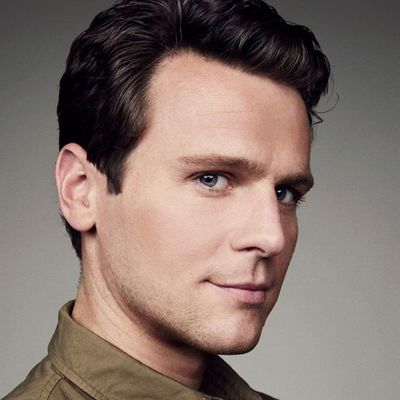
Featured Shows




About
The Broadway favorite ("Hamilton," "Spring Awakening") talks about working with the famously meticulous director David Fincher in Netflix series "Mindhunter" -- and also spills the truth about the rap that Lin-Manuel Miranda wrote for Kelli O'Hara, explains why he's not on social media and reveals with Miranda calls him "the Snowden of Broadway."
Transcript
This transcript was automatically generated and might contain errors.
[0:00] Gordon Cox: Hi, I'm Gordon Cox. I'm your host, Variety's Theatre Editor, Gordon Cox. On this episode of Stagecraft, I'm talking with Jonathan Groff, the Broadway favorite from shows including Hamilton and Spring Awakening, and the star of David Fincher's new Netflix series, Mindhunter. Jonathan is here in the studio to talk about Mindhunter, his enduring connection to Hamilton, and more. Jonathan, thanks for being here.
[0:38] Jonathan Groff: Thank you for having me in Episode 5.
[0:41] Gordon Cox: Episode 5, Stagecraft.
[0:42] Jonathan Groff: It's so exciting.
[0:43] Gordon Cox: Yeah. Your new show on Netflix, Mindhunter, is based on the true story of the two men who expanded our understanding of criminal science by sort of probing the psychology of serial killers, and it feels kind of like a departure for you. It's dark subject matter, and it's David Fincher, which we'll talk about, but he has a very specific style that seems unlike, I mean, the way most people work, right?
[1:08] Jonathan Groff: Yeah.
[1:09] Gordon Cox: Did it feel like a departure for you as you were going into it?
[1:11] Jonathan Groff: In some ways, yes. In some ways, no. David Fincher's world is so specific, and he has this amazing way of taking actors, really I saw him work with, and kind of pushing you to your limits and daring you to do things that you've never done before, which is thrilling and kind of an actor's dream. And when it's a director like David Fincher, as an actor, I felt really safe kind of jumping and trying new things because he's so brilliant that I feel like it's, you know, he says jump and you say how high.
[1:49] Gordon Cox: Can you give me an example of a moment?
[1:51] Jonathan Groff: Yeah, of course. So he was like, you smile a lot and you are charming as Jonathan, the actor in the world. And this character has absolutely no, not that he has no sense of self, but he's not savvy enough to know how to charm people. And so you smile a lot in your life. So you can't smile as Holden Ford. This is not a charming, sunny, people pleaser. This is an intellectual, curious, deep diver. So you need to turn up that, you know, aspects. And stop smiling was the running joke through the entire first season. Because sometimes I smile and I don't even know that I'm smiling. But this is his thing, he sees everything. And he's like, you're always smiling. And so he'd be like, even like, he'd be like, okay, and we're rolling and Jonathan, stop smiling. And you're still smiling. And okay, action.
[2:47] Paul Wiltz: You can smile at all, period.
[2:48] Jonathan Groff: Well, I mean, that's an exaggeration. There are moments when the character smiles. But you know, as an actor, I have these ticks that I don't even know exist. And that kind of are your toolbox, the notes that you hit often. And I think when you say this character is a departure, it's an example of that is that I'm used to doing certain things a certain way. And David has an ability to spot those things and eviscerate them and allow you to show a different side of yourself. I mean, in the ways that he's casted a bunch of his movies, even like Justin Timberlake in The Social Network, and Tyler Perry in Gone Girl, all like really amazing and surprising performances that you weren't really expecting. But even everybody in Mindhunter, I mean, he's giving all the actors really great opportunities to step outside of what they're used to.
[3:36] Paul Wiltz: And what do you feel like you found in yourself as an actor working that way?
[3:39] Jonathan Groff: It's actually a whole scene about it in Mindhunter where Debbie, my girlfriend, talks about – spoiler. This isn't too much of a plot spoiler. But she says, you know, she's doing this study in class about women smiling and looking to be nice and warm and accepted. And when, as a woman, she describes in the scene, when you don't smile, it makes people feel uncomfortable and weird and strange. And we have that whole culture of the resting bitch face is like a thing for a woman. And so I'm so used to smiling all the time that it really did teach me about a different part of my personality, which is just one sort of little anecdotal thing that I've learned during the course of the making of the show.
[4:22] Paul Wiltz: And what was it specifically that drew you to the project? Were you fascinated with the subject matter or working with the director?
[4:27] Jonathan Groff: Yeah, it definitely was David. I said yes to the audition before reading anything because I knew that it was his baby and his vision. So when I saw David Fincher on the email from my agent to audition, I said yes. And I was doing Hamilton at the time.
[4:45] Paul Wiltz: You went straight from Hamilton into filming that, right?
[4:50] Jonathan Groff: I did.
[4:50] Paul Wiltz: Am I correct about that?
[4:51] Jonathan Groff: I actually left my contract in Hamilton a couple of months early in order to go to Pittsburgh to start shooting. I left before the Tony sweep of Hamilton to go to Pittsburgh. But then when I read the material that they sent me, the scenes were so interesting and psychological and the characterizations of the FBI agents, in particular Holden, they were just so dense and complicated. And so the material plus David Fincher, it was kind of a no-brainer. It really was like, well, this is the only thing that I would want to leave Hamilton for because this is also exciting in its own special and unique way.
[5:31] Jonathan Groff: Right. And we talked a little bit about this before we turned the recorder on, but David Fincher is famously meticulous as a director. And as we were discussing, you took a month per episode to film, which is what, four times what it takes most TV shows, right?
[5:49] Jonathan Groff: Yeah.
[5:50] Gordon Cox: Tell us about that.
[5:51] Jonathan Groff: It wasn't the intention. It wasn't like they said, okay, we're going to be here from May until March doing an episode a month. It just sort of was how it all worked out. We shot a lot out of order because of the weather. So they needed to shoot the third, fourth, fifth, and sixth episodes last to capture fall and winter. So we did episodes one, two, seven, eight, nine, ten, and then three, four, five, six. And you can see when you watch the show, they really wanted to capture the atmosphere of the outside during those episodes as it related to the story and just the time of year and the mood of the whole piece.
[6:33] Jonathan Groff: So because of that, there was some rewriting that happened and an evolution and jumping to the end. We then had to cover our tracks and fill holes that we'd missed and et cetera, et cetera. And so it just ended up taking a little bit longer than we anticipated because we had to sort of fill in holes in the schedule and the scenes that sort of arose out of that sort of time disparity.
[6:57] Jonathan Groff: But there are still the stories of 100 takes to get one very small shot exactly right. Are those stories true?
[7:04] Gordon Cox: I mean, they are. It's complicated because, or it's actually not complicated. That's the thing that's so interesting about it. David works in a really specific way. It's very pragmatic. It's very focused on problem solving. It's very unromantic and very direct.
[7:24] Jonathan Groff: And so it's not like he's this omniscient presence on set speaking into a microphone saying, do it again, do it again, do it again, do it again, do it again, do it again.
[7:35] Gordon Cox: Did you kind of think that's what it would be like?
[7:38] Jonathan Groff: I didn't know what to expect. And the minute that I met him, it was just immediately clear, there's just no bullshit. He's very direct. And so the moments when we did do multiple takes, it was very clear every time why we were doing it again. It wasn't a mystery, whether it was for camera or to change a line or for an actor or to everybody find their rhythm together. It was just a constant evolution. And sometimes we would get things quickly and sometimes we wouldn't, but he was so committed to getting it as right as he possibly could in that moment that you just did it until you felt like you got it.
[8:18] Gordon Cox: Do you think he is a good director to work with for actors?
[8:21] Jonathan Groff: Oh my gosh, yes. Absolutely. In that he, what we talked about earlier, really, well, first of all, he sees everything. He sees absolutely everything. And he's got, I'm sure he would roll his eyes so deeply at me saying this, but I think he can do everybody's job better than they can. That's such a hard thing to find at one person. But he would have notes for picture, for the crew, for the actors, for the writers. I mean, just notes for everyone that were so 10 steps ahead already of everybody else. It's just mind boggling to be on a set with him and to watch his brain work. So there's that is really exciting to be around. And then he's so in tune with the emotional and technical aspects. He can just talk to you in whatever language is appropriate, which is so for that particular actor, which is really rare to find as a director, someone that's so intellectually fluid and can approach things in a psychological way or in an emotional way or in a just physical technical way.
[9:30] Jonathan Groff: I feel like Mindhunter arrived at a really interesting cultural moment because Netflix released the first season October 13th, just as Hollywood started grappling with Harvey Weinstein revelations and the entertainment industry and kind of workplaces in general were dealing with kind of rampant harassment and abuse and the culture of it these days. And here's the show that's about violence perpetrated almost entirely against women. Right. And the psychology of the men who perform those acts and what's going on in their brains and what are the cultural forces at work in creating these men. Right. Totally. Did your work on the show. Do you feel like your work on the show gave you some insight into what's happening right now that maybe you wouldn't have had otherwise?
[10:15] Jonathan Groff: Oh, gosh, no, I feel like it's what's like that thing of I'm not a doctor, but I play one on TV. I'm not an I'm not a profiler, but I play one on Netflix.
[10:25] Gordon Cox: Well, I can't have you in the studio without talking about Hamilton. Right. Right. I mean, for the listeners who don't know, maybe you were living under a rock. I don't know. Jonathan played King George in the original Broadway cast that included Daveed Diggs, Leslie Odom, Jr., Renee Elise Goldsberry, Philippa Soo, and of course, Lin-Manuel Miranda. How much how much of a part of your life is the show these days?
[10:51] Jonathan Groff: Oh, on a daily basis. It's so funny. That's the weird thing about theater is when you do a show, you go every day and it's ritualistic and you see those people every day. I just officiated Steve Pasquale and Pippa Soo's wedding.
[11:06] Gordon Cox: Oh, all right.
[11:07] Jonathan Groff: That was three weeks ago.
[11:10] Gordon Cox: Yeah, that was the first time I'd seen-
[11:11] Jonathan Groff: That was Philippa Soo was-
[11:13] Gordon Cox: Yeah, it was Eliza.
[11:15] Jonathan Groff: I set them up and then I married them.
[11:17] Gordon Cox: I did not know. You did?
[11:18] Jonathan Groff: Yeah, I totally set them up.
[11:19] Gordon Cox: I did not know that story.
[11:20] Jonathan Groff: And so that was actually the first time I'd seen Renee since like we texted and we actually talked on the phone at length.
[11:27] Gordon Cox: Isn't she in a Netflix series?
[11:29] Jonathan Groff: Exactly. Because she was actually considering taking that job. I was like, girl, you got to get in with this Netflix thing. It's so amazing. But yeah, so I talked to them and we stay connected, but it wasn't until their wedding that I'd seen all of them. It's like family. But so Hamilton, I did in the shower the other day, put on the Schuyler Sisters-
[11:50] Gordon Cox: Oh, all right.
[11:51] Jonathan Groff: While I was getting ready and helpless. I think I listened to that as well, but not nearly as much of a daily situation as it used to be while I was in the show.
[11:59] Gordon Cox: Yeah. I feel like for so many of those actors that we were talking about, Hamilton was such a life changer of an experience. Was the same true for you?
[12:07] Jonathan Groff: It was different for me because I did Spring Awakening on Broadway when I was 21, I think, when the show opened. And that for me was like every Broadway dream I had come true, changed the trajectory of my life and my career and was like the jumping off point for everything for me in so many ways. And I think a lot of the cast of Hamilton experienced that with Hamilton. I joined Hamilton a week after they opened off-Broadway replacing Brian Darcy James.
[12:35] Jonathan Groff: Was it just a week? Wow.
[12:36] Gordon Cox: Yeah, it's weird, right?
[12:37] Jonathan Groff: Yeah. And so I did it downtown for two months and joined them on Broadway. So there was this, I felt like I was in it, but I also felt like a fan of it as well, because I got to see it before I was in it. And I was only on stage for nine minutes, so I wasn't pouring my blood, sweat, and tears into the show every night. So it was a really unique, amazing, and specific experience for me. I spent more of my time watching the show because I would go into the audience and watch it when I wasn't on stage than I was actually in the show.
[13:08] Gordon Cox: How elaborate was that costume to get on and off? Could you-
[13:11] Jonathan Groff: Well, the cape was really big. So I never wore the cape. The cape they would put on me right before I actually walked on stage and the crown. And then the minute I stepped off stage-
[13:19] Gordon Cox: They took it off you.
[13:20] Jonathan Groff: Yeah, exactly, because it was just so giant. But then I would sneak out into the box of the theater and sit behind audience members. They had no idea they were going to see it.
[13:27] Jonathan Groff: King George was looming over their shoulder. I did that several times a week, the whole run of the show, because it was such a thrill to watch that show.
[13:34] Matt Stauffer: Were there certain parts that you made it a point not to miss in the show?
[13:38] Jonathan Groff: Yes, my favorite sequence was from, well, it was like, so I would finish my song, my first song, "You'll Be Back," and then I would take my cape off, and then I would grab a yogurt or something, and then I would go into the audience, and I would watch from, it's like the helpless, satisfied sequence to me is my favorite part of the show. I think it's incredible. Just the rewind, that whole thing. And then I would usually stay through "Wait For It," which is also one of my favorite songs, but sometimes I would stay all the way up through "Yorktown." But that was the section of the show that I never missed.
[14:19] Matt Stauffer: And were there any parts that you wish you had played?
[14:23] Jonathan Groff: Angelica.
[14:24] Matt Stauffer: Yeah?
[14:24] Jonathan Groff: Yeah, that's my dream role.
[14:26] Matt Stauffer: All right, yeah.
[14:26] Jonathan Groff: I could probably perform the rap, yeah. I keep joking with Tommy Kail, who is the amazing director of "Hamilton." I'll send him texts being like, all right, so the London cast, you know, I'm free.
[14:39] Matt Stauffer: Needs an Angelica?
[14:39] Jonathan Groff: Yes. I'm ready.
[14:42] Matt Stauffer: Well, but—
[14:42] Jonathan Groff: I know that "Hamilton" pushes boundaries, so why not have a 32-year-old white dude play Angelica? Is that interesting? I don't know.
[14:49] Matt Stauffer: But would you go back in the show to play King George at some point? Have you thought about it? Would you?
[14:55] Jonathan Groff: You know, it's such a unique experience to do it with the original cast that, I don't know, if Lin went back in for like a holiday season, we shared a dressing room together, essentially on Broadway, where he was in the big room and I was in the small room and we shared a bathroom and we called it the year that we shared a studio apartment in Midtown. And so if he went back in and we got to sort of live in our space together again, I would be down. I love him.
[15:29] Matt Stauffer: Have you seen him lately? I feel like I see you in YouTube videos occasionally singing together.
[15:34] Jonathan Groff: Yeah, we do. Yeah, no, I saw him. I actually got him. This is so insane. Should I be telling this? Yeah, it doesn't matter. I got him to write a rap for Steve and Pippa's wedding to be performed by Kelly O'Hara.
[15:51] Matt Stauffer: What? Stop it.
[15:52] Jonathan Groff: That we surprised them with. Yeah.
[15:54] Matt Stauffer: This is headline news.
[15:55] Jonathan Groff: Because I was like, I was appreciating their wedding and they were so sweet and they didn't want to make a big deal about anything and they wanted it to be fun and not too formal and whatever. And they were like, you know, all of our friends are performers, so we don't want to ask them to perform at the wedding because why make them perform? And I was like, okay, okay, okay, okay, okay. And then I was sitting with their wedding planner and we were just talking about it and I was like, I'm going to get Lin to write a rap and I think Kelly O'Hara needs to do it. So I had lunch with him the week before that. That's the last time I saw him.
[16:30] Matt Stauffer: How is Kelly's rapping?
[16:32] Jonathan Groff: Incredible.
[16:33] Matt Stauffer: Yeah?
[16:34] Jonathan Groff: I have an amazing video of her in the coat closet of the Wythe Hotel practicing her rap that is just one of the gems on my phone that I'll have forever.
[16:51] Matt Stauffer: Why haven't we seen this yet? Why hasn't she performed it live?
[16:54] Jonathan Groff: Yeah, I know. Lin calls me the Snowden of Broadway because I have all these videos of people, but I am not on social media and I don't share anything and I've got it all on lockdown.
[17:10] Matt Stauffer: You are not on social media at all, period.
[17:12] Jonathan Groff: I'm not, no.
[17:13] Matt Stauffer: Was that a conscious choice?
[17:14] Jonathan Groff: Yes and no. I didn't have it. It didn't exist when I was in high school. I had AOL Instant Messenger and that was the extent of it. So I think that if I grew up as a teenager with Facebook, I would probably still have it just because it was what you did. But I don't know. I was in my 20s when all of it came out and the idea of curating my life for the internet makes me feel anxious.
[17:40] Matt Stauffer: You don't get pressure from, I don't know, Netflix to promote your show.
[17:43] Jonathan Groff: No. Because I also think that it's amazing and it can be really effective, social media, but you have to really be into it as an actor. I have lots of actor friends that are on it and it's incredible. Also though, because actually it was during "Looking," when "Looking" was kind of like, is it going to happen? Is it not going to happen? That was the closest I came to getting on social media. But I had this revelation, A, that it's not something that I feel really passionate about and you can't really hide that when you're on social media. And B, there's a lot of people with giant social media followings who have flop movies and TV shows. So it's not the key to making, it certainly can be a useful tool and an element of it, but I just wasn't into it enough to really make it effective. And ultimately it isn't the only thing I think that makes or breaks somebody's career or any particular project.
[18:42] Matt Stauffer: We should also talk about "Frozen," because I think people can forget that you were in "Frozen" because it's your voice and not your face. But you're in that little half hour, what is it, 20 minutes that is released this Christmas, right? "Olaf's Frozen Adventure," it's called.
[18:56] Jonathan Groff: "Olaf's Frozen Adventure." Yes, good job. It's attached to the film "Coco." I haven't seen "Coco" yet. I'm going to go to the premiere in a couple of weeks, actually. That'll be my first time seeing it. But I have seen "Olaf's Frozen Adventure." I think it's incredible. I think it's incredible.
[19:13] Matt Stauffer: You kind of went from "Frozen" to "Hamilton." It's kind of like being in back-to-back mega blockbusters a little bit.
[19:20] Jonathan Groff: So weird, yeah.
[19:21] Matt Stauffer: What was your experience of the "Frozen" phenomenon?
[19:23] Jonathan Groff: Well, it's so different.
[19:24] Matt Stauffer: I mean, yeah, it's an entirely different thing. Nobody stops you on the street, right?
[19:27] Jonathan Groff: Right, exactly. They're like, you look like that cartoon. I mean, your voice sounds so, yeah. It's actually hilarious when parents are with their kids and they're like, "Sarah, this is the voice of Kristoff." And Sarah's like, "No, it's not. He's not blonde and he's not a cartoon." So that doesn't exist. It doesn't make any sense. It's hard to draw the line sometimes with three-year-olds, to connect the dots in that way. But yeah, "Frozen" was a total surprise when it came out at Thanksgiving a couple of years ago, and then "Let It Go" was this big sensation. And it was so cool to be a part of it. Although "Hamilton" was so different, and theater is so different in that way, because you're promoting it and you're experiencing the success of it while you're doing it, or you're experiencing the failure of it while you're doing it. So I always think that actors that do theater, you can't be thin-skinned because whether it's a hit or a total flop, you're doing it eight shows a week.
[20:29] Matt Stauffer: Right. It seems like theater is still an important, that you think of theater as still an important part of your career. Do you feel like you want theater to be a part of it going forward?
[20:39] Jonathan Groff: Oh, absolutely.
[20:40] Matt Stauffer: An important part?
[20:41] Jonathan Groff: Yeah, absolutely. Theater, I learned so much from doing theater. It's so interesting because the David Fincher experience in "Mindhunter" was so like doing theater in that we got to do the repetition and really explore the material in a very meticulous and deep way. And theater to me is almost religious. You have to be careful what you choose to do in the theater because you repeat. It's like when you go to church or something and you repeat mantras over and over again. And when you do theater, it's part of why I really wanted to do "Hamilton" on Broadway. I wasn't anticipating doing it on Broadway. I just came in as a replacement for Brian Darcy James and then it worked out. And hearing material that is meaningful and intelligent and challenging changes you.
Because just by saying things over and over and over and over and over again, really gets into your body on a cellular level. So I love doing theater for that purpose. Like "Spring Awakening," I did that show for a year and a half and I was playing this rebellious student of which was so the opposite of every part of who I was at the time and still am in certain ways. But he was a person who didn't let the world define him and really followed what he believed in. And just like parts of that character have stuck in my soul in a really specific way from having done it eight times a week.
[22:22] Matt Stauffer: So you will go on to do the second season of "Mindhunter."
[22:27] Jonathan Groff: Yeah. Well, I guess it hasn't been technically—
[22:31] Matt Stauffer: Oh, I thought it had. I believe I saw that.
[22:32] Jonathan Groff: It is being written about.
[22:32] Matt Stauffer: But yeah, they haven't done the official. It's happening. So I guess TBD.
[22:37] Jonathan Groff: Okay, TBD. So—
[22:39] Matt Stauffer: TBD. But I hope it goes back and I'd love to go back because it feels like there's a lot of story left to tell.
[22:44] Matt Stauffer: Yeah. What else is on your plate that we should be talking about?
[22:47] Jonathan Groff: I'm doing a concert with Sutton Foster in December at Lincoln Center. That's a huge deal for me because I got Sutton Foster's autograph at the stage door.
[22:57] Matt Stauffer: Oh, I've heard that story.
[22:57] Jonathan Groff: Yeah. I saw her six times in "Thoroughly Modern Millie." And we've crossed paths over the years. And she was set to do a songbook at Lincoln Center for in December. And she asked me to be a part of it and create something with her. So I'm super pumped about that. And then I'm doing a lot of musical stuff. I guess in a subconscious way, I'm missing singing.
[23:20] Matt Stauffer: Yeah.
[23:22] Jonathan Groff: I'm doing this a couple of nights of the Bobby Darin story at the 92nd Street Y at the end of January as part of their lyrics and lyricist program to sort of investigate him not only as a sort of iconic 50s, 60s music superstar, but also he also wrote a lot of his own music and his personal life story is incredibly intriguing and fascinating. So we're sort of exploring his life at the 92nd Street Y in January.
[23:55] Matt Stauffer: Sounds cool.
[23:55] Jonathan Groff: Yeah.
[23:57] Matt Stauffer: Is there a secret origin to the nickname Groffsauce that everybody knows that I do not?
[24:03] Jonathan Groff: Lynn coined it during "In the Heights" days. And I think it's kind of, I don't really know. But I think it came from, remember when people used to say like cool beans and awesome sauce?
[24:14] Matt Stauffer: Mm-hmm.
[24:15] Jonathan Groff: It was like that. Remember awesome sauce?
[24:16] Matt Stauffer: Yeah. Oh, yeah.
[24:16] Jonathan Groff: That was a thing that people said. So I think he changed it to Groffsauce.
[24:20] Matt Stauffer: So back in "In the Heights" and you were doing "Spring Awakening," did that overlap?
[24:24] Jonathan Groff: Exactly, yeah. We met through Karen Olivo, who was doing "In the Heights" at the time. They were moving from off-Broadway to Broadway. And I was doing "Hair" in Central Park with Karen Olivo.
[24:34] Matt Stauffer: Oh, right. With Karen, right.
[24:35] Jonathan Groff: And she was like, you have to meet my friend Lynn. He's going to come to the Delacorte. And he's doing a video where he's singing Zac Efron's song from "High School Musical 2."
[24:48] Matt Stauffer: Oh, I remember this. I remember this.
[24:51] Jonathan Groff: I know that you've never met Lynn, but I promise he's really great and he's really smart. And "In the Heights" is a great show. And he's making this "bet on it" video as a commercial for "In the Heights" on Broadway and he wants you to be in it. And that was such an appropriate first meeting of Lynn. It's like never forget your first impression. That sort of is Lynn in so many ways to me, getting to meet him and be like, wow, this guy's so amazing and we're making this video. And he's dressed like Zac Efron and he's running through Central Park.
[25:22] Matt Stauffer: And it was a very appropriate first meeting. I think now we have to end this episode here to give everyone the opportunity to go onto YouTube and find that, right? Because it's still there.
[25:27] Jonathan Groff: Hi, my name is Lynn Miranda. I know you don't know who I am, but I wore these pants and I'm willing to dance like an idiot if you just give me the chance.
[25:38] Matt Stauffer: Yeah, that was part of his rap.
[25:39] Jonathan Groff: All right. That was well done.
[25:41] Matt Stauffer: But that was also an old rap because it says, hi, my name is Lynn Miranda. I know you don't know who I am.
[25:44] Jonathan Groff: Yeah, no, that's true. Those days are so over.
[25:48] Matt Stauffer: Do you work on that in preparation for Angelica? Is that the—
[25:52] Jonathan Groff: No, I just work on the Angelica material.
[25:54] Matt Stauffer: No, that makes sense.
[25:56] Jonathan Groff: Thanks for being here, Jonathan. I really appreciate it. Great to talk to you.
[25:59] Jonathan Groff: It's great to talk to you, too. Thank you for having me.
[26:01] Matt Stauffer: And we'll see you soon.
[26:02] Jonathan Groff: I'm going to resist the urge to rap the Angelica song right now.
[26:04] Matt Stauffer: No, come on, do it right now.
[26:05] Jonathan Groff: No, it's okay.
[26:05] Matt Stauffer: No, they can do it as they like.
[26:06] Jonathan Groff: I'm going to save it. I'm saving it. I'm saving it.
[26:08] Matt Stauffer: No, what about for who? Lynn?
[26:10] Jonathan Groff: For when I do it.
[26:11] Matt Stauffer: For Tommy.
[26:11] Jonathan Groff: Yeah, yeah, yeah. It's not polished enough yet.
[26:14] Matt Stauffer: Right. No, that makes sense.
[26:23] Matt Stauffer: That was Jonathan Groff, the Broadway favorite who's currently starring in David Fincher's Netflix series "Mindhunter." On the next episode of "StageCraft," I'll be talking to Lynn Ahrens and Stephen Flaherty, the songwriting team behind Broadway's "Anastasia" and "Once on This Island," the 1990 musical opening on Broadway in a new production in December. Until next time, see you at the theater.
© Broadway Podcast Network, All Rights Reserved