

Actors Phillipa Soo and Jenn Colella on singing American history, filming musicals and acting in the moment... Read More
From the show: Stagecraft with Gordon Cox
Guests
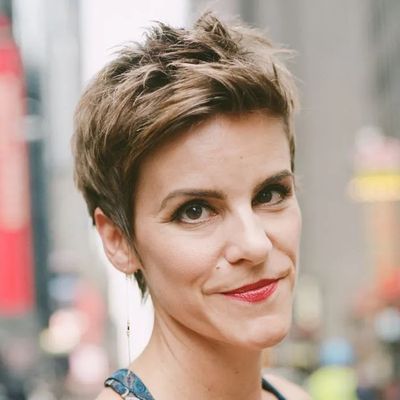
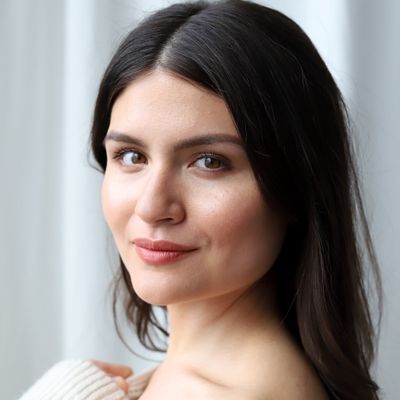
Featured Shows
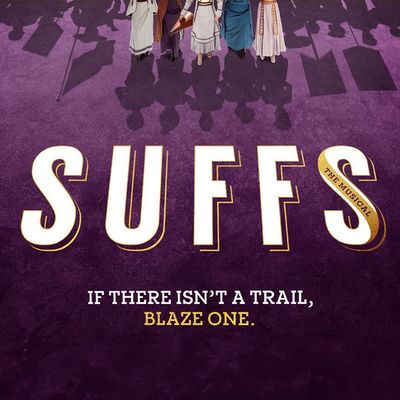
About
Actors Phillipa Soo and Jenn Colella on singing American history, filming musicals and acting in the moment.
Transcript
This transcript was automatically generated and might contain errors.
[0:06] Gordon Cox: Welcome to Stagecraft, Variety's Theater Podcast, bringing you backstage and behind the scenes with the stars, creators, and industry leaders on Broadway and beyond.
[0:16] Gordon Cox: I'm your host, Gordon Cox.
[0:19] Gordon Cox: On this episode of Stagecraft, I'm talking to the actors Phillipa Soo and Jenn Colella.
[0:24] Gordon Cox: Soo, whose TV work includes Dope Sick and the upcoming Shining Girls, created the role of Eliza in Hamilton, and Colella created the role of Captain Beverly Bass in Come From Away, two performances that we all had a chance to see or see again during the pandemic, with Soo in Hamilton streaming on Disney Plus, and Colella in Come From Away on Apple TV Plus.
[0:46] Gordon Cox: Now, the two are appearing together in a new off-Broadway musical at the Public Theater called Suffs.
[0:53] Gordon Cox: Written by and starring Shayna Taub, Suffs follows the fight for women's suffrage in the early 20th century.
[0:59] Gordon Cox: And the actors play two important suffragists.
[1:24] Gordon Cox: Thank you for having us with you.
[1:26] Gordon Cox: So for listeners who don't know much about Suffs other than that it's about the suffragist movement, how do you describe what the show is and what your role is in it? Philippa, let's start with you.
[1:36] Phillipa Soo: Sure. Um, well, I play a suffragist named Inez Millholland, who is probably best known for leading the suffrage parade that happened in 1913. It was the first women's march and the first march in Washington. And she sat on a white horse named Grey Dawn and led the march down Pennsylvania Avenue. Um, I think to sum up the story, it's essentially at its core the story of the suffragist movement and getting the 19th Amendment passed through the eyes of Alice Paul and her comrades and her fellow suffragists that are also fighting for the vote at the same time.
[2:26] Phillipa Soo: Yeah, and that was one thing that I learned in the show the other night is that no one had marched, there had been no protest marches in Washington before that one. That was a surprise to me.
[2:35] Gordon Cox: Yeah, it seems late for that to have happened. Um, but Jen, tell us about your role.
[2:39] Jenn Colella: Um, I played Carrie Chapman Catt. She was the leader of the National American Women's Suffrage Association, NASA, for over 30 years. She was Susan B. Anthony's protégé and successor, and she represents the old guard in our particular production, meaning her way of working towards getting the 19th Amendment passed is through gentility and grace and trying to approach the men like suffrage isn't anything to be afraid of. Um, and then Alice Paul and her team comes in and they kind of shake up the system that my character has had in place for many, many decades.
[3:22] Gordon Cox: Yeah. And how and when did each of you get involved in the project?
[3:27] Jenn Colella: I've been involved for six years. I was at the very first reading of it.
[3:31] Phillipa Soo: Well, playing the same role.
[3:32] Jenn Colella: Yes.
[3:33] Phillipa Soo: Yeah, yeah. And what about you, Phillipa?
[3:35] Phillipa Soo: I got involved a little bit later. I was maybe, gosh, I remember there was like a reading of Act One. I think we hadn't quite gotten to Act Two yet. Uh, and that was I want to say in 2018.
[3:48] Jenn Colella: Uh, didn't you play Alice Paul in that one?
[3:51] Phillipa Soo: Yes, I did. I started out playing Alice Paul and then eventually started playing Inez Millholland. And yeah, I mean it's been quite a journey seeing it, you know, and for you, Jen, seeing it from the very, very beginning. But, you know, I just feel so lucky that I get to be in rooms where I get to see these beautiful ideas, you know, start from the seed and germinate into a whole entire living, thriving organism. It's just really thrilling.
[4:20] Gordon Cox: Can you tell us a little bit about what that experience has been like seeing like how has the story shifted? Because it is such a sort of big sprawling story. There are a lot of characters. What has the show focused on as the years have gone on?
[4:35] Phillipa Soo: It's changed a lot. It's changing, it changed just a second ago. Um, we're in rehearsals right now and in previews. So changes have been constant throughout the entire process. I'd say the biggest change has come with the racial reckoning that the entire world is having right now, and Shayna going back and making sure that diverse voices are more prominent within the show. I think those are the major changes that have happened and they're good ones.
[5:04] Jenn Colella: Yeah, yeah. Would you agree, Phillipa? Is that what you've...
[5:06] Phillipa Soo: Yeah, and just I guess the only thing I would add to that, how exciting it is to be in a room where we get to come together and tackle those issues in our storytelling, but also at the same time, the Public Theater, this particular rehearsal room has done such a beautiful job at trying to embrace the cultural transformation that is happening in our world. And you know, we're holding it with multiple things at the same time, holding multiple things together. One is our ideals and what we hope that this process and this story and this world can be, and also at the same time our own internalized biases that we carry with us, our privileges, and how do we progress? How do we tell a story? How do we come together and seek the change that we want to see in the world and acknowledge all of those things coming into play at the same time?
[6:05] Gordon Cox: Yeah. And you just recently started preview performances, pretty recently. Um, how is what have you learned from the audience reaction to the show?
[6:16] Phillipa Soo: So many things. Oh my gosh, everything. On a base level, it's just people are so thrilled to be in a room again seeing theater. Um, it's just really powerful. And, you know, there's still some getting used to, I don't know how you feel, Jen, but I look out and I expect to see all these faces, and I'm seeing a lot of masks, but I am seeing a lot of bright, you know, engaged eyes behind those masks, and you can feel it, you can feel the love in the room, you can feel the energy coming back to you. And you just learn a lot in this part of the process where you're working on something that's maybe changed recently, you're trying to see how an acting moment is gonna land, you know, and it's nice to have that feedback.
[7:04] Jenn Colella: Yeah, it makes a big difference absolutely to hear laughter, to hear sighs, to hear applause in places where we weren't expecting it. And then it's also quite beautiful and humbling and very valuable when we're like bad and they're like, "Yeah, sure." And you're like, "Oh yes." I thought it was amazing, but maybe. Yes, I'm gonna take a look at that.
[7:26] Gordon Cox: Yeah. Have there been any on-stage mishaps yet? As you're putting the show together with all the tech and everything.
[7:32] Jenn Colella: You should ask, have there not been any mishaps?
[7:36] Jenn Colella: Yes, I mean, I mean, here's the beauty of making a musical. There's so many moving parts, and I say that figuratively and literally. The stage is moving underneath us sometimes.
[7:49] Phillipa Soo: Yeah, and we're wearing skirts, we're wearing heels, we're wearing corsets, there's props, there's, you know, lights, like it's just so many elements that are coming together all at once. And um, that's honestly what is so thrilling is that, you know, everybody's gotta be on their A game in order to make it work. So, like we I have to acknowledge our backstage crew. We just have this amazing stage management team and backstage crew that are just working just as hard, if not harder than we are, to make all of these things happen.
[8:21] Jenn Colella: Um, and then you know, every once in a while you might trip on a step, or you know, you might miss, there might be something missing that you need that you have to carry on stage with you, but that's what the preview process is for is to learn all of that stuff.
[8:37] Jenn Colella: I think it's actually interesting because I didn't realize this until getting into this process, but a lot of people actually don't understand what previews are. And I just find it fascinating because I think there's this expectation that, like, we're open, like once the show's open and we're selling tickets, like it's done. But there's a whole for us. I mean, sometimes it's two weeks, but sometimes for us, like it's a month of previews before we open, before the show freezes, where we're changing things constantly, we're retacking things, and the show that people saw last night is not the show that they're seeing tonight. And that's really thrilling.
[9:17] Jenn Colella: It's also quite vulnerable to have a world premiere musical on its feet for the very first time in New York City. I understand why you would take a show out of town. Um, to be out of town, you're not necessarily gonna have like Lynn Manuel came the other night, Leonardo DiCaprio came to like our fourth preview. Um, all of these people are descending on our rehearsal process, in essence. And so it's quite vulnerable and thrilling.
[9:44] Jenn Colella: You're right, Pippa. It really is. What do you with this project that you have both been involved in for several years now? What do you feel is particularly resonant about the show right now when it's finally landing?
[9:59] Phillipa Soo: I think what's particularly resonant is that it's exciting to hear about these women we didn't hear about and to know, wow, women have been kicking ass for a very long time, and to also know there's still work to be done, that we haven't quite gained the equality that we have been seeking for all these many decades, and that we are literally passing the torch on to the younger generation to continue that fight so that we can continue to strive to be equals.
[10:28] Gordon Cox: Walking into the public the other night, I feel like Suffs, at least as you're going into it without seeing it yet, it has some sort of superficial similarities to Hamilton. Like it's at the public in the same theater, and it's about, you know, a very important moment in American history. And there's a central character who can't stop working and is encouraged by a character played by you, Phillipa, you know, to maybe take a breath sometime. But all those superficial things aside, do you feel like those two projects, Hamilton and Suffs, are in any way similar? And in what ways is it doing something completely different, do you think? Some people are calling it Hermulton, which I like very much.
[11:12] Phillipa Soo: I haven't heard that! I love that. Isn't that incredible? I see what you're saying, Gordon, about the similarities, but I will also add that I think you make a point that both shows expertly take the form of musical theater and play with it and make it their own. And truly, you have two writers who are quite genius in how they approach not only the work and the technicality of it but how open they are with their hearts and their souls in the work. And so, you know, of course, you're gonna see similarities because you have two writers who are really taking everything that they know and love about this art form and bringing it to their work. I think that shines through in both cases, and yes, there's American history there.
But I think it just goes to show you that, at the end of the day, we're really interested in hearing and seeing stories where we see ourselves in it, and there's a part of us as audience members that have to contribute to that experience in order for it all to work.
[12:37] Gordon Cox: And how do you describe the music, the musical style to folks who haven't seen it yet?
[12:42] Phillipa Soo: Oh man, it ranges from Tin Pan Alley to vaudeville to gospel to pop to what Shana describes as the music they were working to create to build this movement. It's unlike anything else you've ever seen. And that's, to also answer your last question, Gordon, what makes it unlike anything else? It has so many different styles that are interwoven and also seem to fit very cohesively. The cool thing about what Shane is doing is that some of her hooks feel brand new and exciting and also like something that's been in your soul for a long time, and she does it really brilliantly.
[13:24] Jenn Colella: Yeah, there's a lot of great anthems, that's for sure.
[13:29] Gordon Cox: Yeah, you've both played real people in the past. You know, Eliza Skyler and Beverly Bass for each of you. How do you approach honoring a person who existed, playing a person who existed and honoring their truth and then also creating your own character that lives in you? How do you balance that?
[13:52] Jenn Colella: Lee Silverman, the director, and Shana Taub, the writer and composer, have been really wonderful about telling us to do our own research and to bring ourselves into whomever we have thought the character to be and match that with what's on paper. And so I think that's what everybody's doing. It's been super fun to learn about these women and to read not only the books that Carrie wrote, but I've actually found it more interesting to hear what other people would say and how they would describe Carrie Kat and then bring little things into the rehearsal room. And now on stage, as Pippa said earlier, now that we have all the elements with the petticoats and the corsets and everything, all of that’s kind of locking in now.
But for me, the best kind of acting, and there are many different methodologies and thoughts on this, is bringing one's own self and matching that with all of the research and what's actually in the script and combining it. Some people are a vessel, and they're like, I become something else, and the person drops in. And if you can do that, that's dope. That feels like a magic trick to me. I can only gather as much information as possible and then information from my own life story and meld the two. And that part of the craft is still very much in process for me.
[15:13] Phillipa Soo: I have a saying that I use, which is tools, not rules, which I've stolen from like a teacher. I'm pretty sure like an acting teacher. But I just think that you're right, Jen. There's so much history, there's so many facts, there's so many photographs from the time and stories, and you could really go down so many different paths in order to, you know, find this person and this character. I read, and it as biography was very informative. It opened my eyes to a whole different side of her that I didn't know about based on, you know, a Wikipedia page. And so, you know, that stuff is really useful. And also at the end of the day, we're here to be present in the moment of the story and tell a very specific story and play a very specific role within that story.
Not to let go of all the other elements, but to let it influence what we're ultimately trying to do and what we're ultimately trying to communicate to an audience. And so, you know, I just think that, especially in live performance, there are things that I'll learn in Ez's biography that maybe aren't useful to me now, but down the road when we've gotten, you know, 50 performances under our belt, I'll think, oh gosh, like that moment isn't fresh for me anymore. Maybe I'm gonna go back to her biography and just read a little bit of, you know, and I'll find something that'll sort of bring to that performance to sort of spark something new and something interesting for myself just as an actor in something, so that my mind is sharp and you know, I'm not sitting back on my heels.
[16:49] Gordon Cox: I'll have more with Jen and Phillipa right after the break.
[17:01] Gordon Cox: And now here's more with Jenn Colella and Phillipa Soo. This is the first time back on stage post-lockdown for both of you, is that right?
[17:11] Jenn Colella: Um, I shot the Come From Away film. I guess I'm in front of a live audience, that's right. Um, yes, other than concerts, a couple of concerts here and there, indeed.
[17:22] Phillipa Soo: Yes, it is.
[17:23] Gordon Cox: And did the experience of lockdown and, you know, all our uncertainty about theater at the time, did that make you approach the work differently now as you're coming to it?
[17:38] Jenn Colella: I just had a deeper appreciation for, you know, the fact that I get to be a storyteller and call that my job. You know, I'll never take it for granted ever again. I don't think I did before, but I think I just have a deeper level of love for not only the process in making something, the conflicts that you might have when you're trying to find a moment, but that beautiful relationship to an audience to all be in a room together and have this shared experience is so, so special. And you really can't, I mean, these days there are very few places where you can go and sit and not have your phone on for two and a half hours and all mutually agree that that's what you're gonna do, you know. I don't think it really happens in movie theaters. You know, I'm not sure how many places you can do that. So it feels really special. And I just feel like I hold that with me, you know, every time I get to step on stage, like, God, how lucky are we?
[18:41] Gordon Cox: Yeah. What about for you, Jen?
[18:44] Jenn Colella: Um, I love that answer so much. I'm still kind of bathing in it. That was really sweet, Pips. I think that I am trying to be more mindful about my self-care regimen, about rest and about slowing down my pace a little bit so that I have the energy to do what I need to do on stage. I'm really trying to honor the whole we were moving too fast and saying yes to too many things. Um, so I'm just focusing on this. I'm just focusing on taking care of myself. And it feels good to try to slow down. I'm not like completely successful at all times, but I'm trying to slow down so that I can bring as much care to myself so that I can bring my full self to the stage.
[19:27] Gordon Cox: Yeah. You mentioned the Come From Away filmed performance that is now on Apple TV Plus and, Phillipa, you did you film Hamilton a while ago but it came out during the pandemic. I wonder if that seems like theater's relationship to the possibilities of digital and streaming and filming is shifting and that might be something that happens more often going forward. Is that a process you enjoy and what's it like for you to be in a show that is sort of pitched differently in a way or is it pitched differently? What do you learn from that process?
[20:05] Phillipa Soo: Well, Leslie would always say, you know, when we were doing some press for the Hamilton film, he would be like, this is the best rehearsed film you've ever seen, totally. And it's true. I mean, you know, I don't know how many performances did you do, Jen?
[20:24] Jenn Colella: 1200.
[20:25] Phillipa Soo: Now that is the most rehearsed film that you will ever see because, you know, I did Hamilton on Broadway for a year and then with some change, you know, like six months public.
[20:38] Jenn Colella: And it felt so freeing to be able to know your show and get to play within it. And you know all the technical elements and the cameras coming in a little bit closer like that was just an opportunity to find something new after having done the show a lot, many, many times to be able to actually go back and dig deeper or go a little bit tighter and be a little bit more subdued in certain moments just to play. And I think it's just fun and refreshing as an artist to get to do something like that. And it's just so rare. I mean, you know, there's only a couple of shows that have done it up to this point and it's beautiful. And then there's a thing at the end of it, there's a product, there's something that you can watch to, you know, at least for us to look back and say, oh my gosh, remember that?
Like that I never saw that moment on stage. I'm so glad that it was caught on camera because I was backstage, you know, drinking water and drinking some tea. So it's exciting to see the work of the other people you're working with and really just, you know, get to celebrate it.
[21:50] Phillipa Soo: Yeah. I agree that was the most thrilling part for me of coming back to Come From Away, making friends with the camera. You know, it's like a little alien, another scene partner in my face. I was like, I have to make friends with you and pretend like you're not here, right? And yes, and find new things, trust that if I raised an eyebrow, I didn't have to worry about the balcony seeing that, that I could have more internalized thoughts and emotions and actions within the character. That was super fun. And then, yes, seeing it, having this thing after that we can see. I mean, we're on stage pretty much the whole time for Come From Away, but we're usually seated behind whatever scene is going on. So I'd been listening to my colleagues say these things for the past five years, but had never seen their faces. I was so moved by what they were doing and how good they are in the show that that was also an added bonus to the whole experience.
[22:47] Gordon Cox: What for each of you do you consider the particularly sort of formative musicals for you growing up or plays that kind of inspired you to develop a passion for theater and choose to pursue it?
[23:05] Phillipa Soo: Do you want me to go, Jenn?
[23:08] Jenn Colella: Um, okay. Well, Barbara Streisand was the first voice that I heard with consistency in my house, and I can remember being very, very small, held by my mom. She was dancing and singing along with Barbara, and I connected in that moment joy to the vibration of my mother's voice matching with Barbara Streisand's voice. Something in me in that moment was like, wow, there is joy in Barbara. So Barbara was definitely a gateway into following something that opened up my heart. I lived in South Carolina, was born in Charleston and grew up in a small town named Somerville, just outside of Charleston. There wasn't a lot of theater, so I didn't get to see a huge production until high school. I went to go see Phantom of the Opera. And that for me, seeing how big the set was, the costumes, the grandeur of it all, matched that tiny vibration of like what Barbara had kindled into a full-on passion.
[24:10] Phillipa Soo: Babs can't go wrong with Babs. You know what I mean? Well, just the best. I think my, I mean, well, yeah, I think I think my first exposure to musical storytelling was probably the Mary Martin Peter Pan. Oh yeah. And it was like shot live. I'm pretty sure that that was live. And then also Mary Poppins, Julie Andrews, you know, a voice for the ages. And ultimately, I think with both, it really spurred this part of my imagination that could come out and be for other people. You know, I was a kid that was always sitting in my room, and all my toys and objects were like people and characters, and they all had names and stories. And eventually that play turned into playing those games with my friends.
But then eventually, after seeing something like Mary Poppins, after seeing Mary Martin's Peter Pan, it was like, oh, but this can also be shared for other people because I'm enjoying this. So maybe there's a part of me that also wants to create things like this so other people can watch it. And you know, I got into dance, I got into some improv classes, some singing lessons, and that's just where I felt the most joyful. And so I just kept following that. You know, here I am.
[25:38] Gordon Cox: And what do you consider sort of your most formative moments as an artist?
[25:46] Jenn Colella: The hard moments. I feel like whenever I've had any sort of epiphany or breakthrough in what I'm doing, it usually comes after a moment where I feel like I'm in the dark. And so, you know, I learned, I went to drama school and I learned there how to deal with failures, how to deal with feeling like you're not quite getting there, or you're doubtful. And really taking it as a sign that there's something to be learned there. There's an opportunity there to dig deeper, to not shy away from it and embrace it. I did stand-up in Los Angeles after my graduate school stint, and I learned a lot because I could fail on stage and I did miserably, and I had no one to blame. It was my joke, it was my delivery, it was my timing.
And I realized that I could fail miserably on stage and then get them back in the next breath. And the world kept right on spinning. And so I really try to remember that when I am feeling insecure, when something does go wrong, to let it go, to trust that I can get them back, that I can get me back and keep moving forward. Stand-up really helped me in that regard.
[27:13] Gordon Cox: Yeah. So you're both in Suffs for the run, however long it runs. And what else is what's on your plate coming up after that? Do you know?
[27:22] Phillipa Soo: I shot a TV show last summer for Apple TV called The Shining Girls, and that's actually coming out at the end of April. So I'm really excited for that. And I wrote a children's book. So hopefully, you know, that's a little more further off into the distant future, but I'm really excited for that.
[27:47] Gordon Cox: Can you tell us about it? What age range, what it's about?
[27:51] Phillipa Soo: Um, yeah, I mean, well, it's definitely, I would say closer to like a three to eight age range. It's for younger kids, you know, definitely like a hardcover picture book. But I wrote it with my sister-in-law, Maris Pasqual Doran, and it was, you know, one of those things that we always talked about, and then the pandemic happened and life happened, and we were both like, let's do it. Let's not wait, let's just do it. And it's the first time I've ever written anything. And it's really essentially its focus is around the story of this little girl who's basically my avatar. Her name's Piper, and she loves music and she loves to sing, and so it sort of follows her journey in understanding her love for singing and her stage fright and dealing with that. It's very sweet.
[28:50] Gordon Cox: Did you work with an artist on that? Was your sister-in-law the artist?
[28:55] Phillipa Soo: Yeah, yes, yes, yes. We're working with an illustrator, yes. Her name's Chin Lang, and she's a Canadian artist. And she's just great and extremely imaginative and beautiful and vibrant. We love her, so we're really excited.
[29:14] Gordon Cox: Do you know when we should look out for that?
[29:15] Phillipa Soo: Yeah, not sure. There's nothing official yet, but yes, we are working on it, and yeah, we're really excited.
[29:23] Gordon Cox: Great. I'm excited for that. That's awesome.
[29:25] Phillipa Soo: So fun, that's so cool.
[29:28] Jenn Colella: Thanks.
[29:30] Phillipa Soo: Um, I do have some things in the pipeline, but I can't speak of them yet. So stay tuned.
[29:37] Gordon Cox: Stage or beyond?
[29:37] Jenn Colella: It's on stage.
[29:40] Gordon Cox: Great. All right. Well, we will look out for that. But first we will see you both in Suffs. Thank you so much for joining me. It was great to speak with you.
[29:47] Phillipa Soo: Thank you, Gordon. Appreciate you.
[29:48] Jenn Colella: Thank you.
[29:52] Gordon Cox: That was Phillipa Soo and Jenn Colella, now appearing in Suffs at the Public Theater. If you like what you're hearing on this and other episodes of Stagecraft, I'd really appreciate it if you took the time to rate and review us wherever you listen to podcasts. It really helps us grow our audience of folks who love theater as much as you and I do. Or tell a friend about Stagecraft, or give us a shout-out on social media. Find past episodes and subscribe on all the pod places, including Spotify, Apple Podcasts, and on the Broadway Podcast Network, which is a great place to find more theater for your ears. I'll be back in two weeks with another new episode. Until then, find me on Twitter at G CoxVariety. Thanks for listening and see you at the theater.
© Broadway Podcast Network, All Rights Reserved